“We know how to preserve the values of our Russian world. And your world, if it does not wake up, will die of its own fears.”
“Your Russian world is a world of fear,” Mikhail Barishnikov, a ballet legend who opposes Russia’s invasion of Ukraine, wrote in an open letter to Russian President Vladimir Putin, AFP reported.
The famous ballet dancer, born in the USSR and crossing the Iron Curtain in 1974, turned to the Russian president after the website of the charity project “True Russia”, supported by famous cultural figures in exile who oppose the hostilities in Ukraine, was blocked in Russia. The site is available outside the country.
In the letter, Barishnikov wrote: “We know how to preserve the values of our Russian world. And your world, if it does not wake up, will die of its own fears. You know what to fear. And rightly so. You know exactly which weapon strikes. “, Barishnikov concludes.
The project, founded by Barishnikov, Boris Akunin and economist Sergei Guriev, raised 1.2m euros in support of Ukrainian refugees. He is supported by artists such as writer Ludmila Ulitska, musician Andrei Makarevich and journalist Leonid Parfionov.
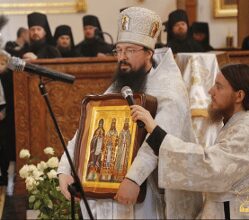
On May 30 in the Svyatogorsk Lavra “St. Assumption of the Virgin “killed two monks and a nun. The bombs fell on the third and fourth monastic corps, the UOC reported. The victims are the trustee of the monastery, Archim. Galaktion (Vuychenko), monk Aristocles and nun Barbara. Hieromonks Joasaph and Amphilochius and Hierodeacon Alypius were wounded. The number of dead and wounded lay people is currently unknown.
The Holy Archimandrite or Abbot of the Lavra is the Metropolitan of Donetsk and Mariupol Hilarion. “I pray for your holy prayers for the peace of the victims and the speedy recovery of the wounded,” he said in a succinct statement.
This is another shelling of the third largest monastery in Ukraine since the beginning of the Russian invasion of the country. Until now, bombs had fallen near the monastery and damaged buildings, but there were no casualties among the monks and about 300 refugees.
In the photo: the murdered archim. Galaktion (Vuychenko)
After more than 6 years of consideration in three instances, the Islamic case is returned in April to the District Court in Pazardzhik and starts from the very beginning – with a pretrial hearing. This is a decision of the Supreme Court of Cassation (SCC), which is not subject to appeal and protest.
The proceedings in the Supreme Court of Cassation were instituted on complaints of 12 of the defendants and their defenders. They are challenging the decision of the magistrates of Pazardzhik, who found guilty all 14 accused of preaching anti-democratic ideology and religious hatred in sermons and social networks with mujahideen gestures, as well as distributing the book “Apostasy”. The alleged spiritual leader, Ahmed Musa, and some of his associates were also convicted of promoting war through photos or videos of the Islamic State flag, as well as providing T-shirts, headbands, hats and flags with the terrorist’s logo. Islamic State organization.
We remind you that the district magistrates sentenced Musa to 8 and a half years in prison and a fine of BGN 9,500. Four of the group were sentenced to 3 and a half years in prison and fined BGN 7,000. Another eight received 2 years in prison each, six of them – and fines of BGN 6,000 (ab. 1500 EUR). A suspended sentence of 2 and a half years on a 4-year probation period was given only to the only woman in the group – student Alexandrina Angelova. This decision was fully confirmed by the Plovdiv Court of Appeal in February last year.
However, their lawyers are challenging many of the arguments for this decision. The complaints say there is no evidence of religious hatred, that the mujahideen gesture with a raised index finger means monotheism, it is not specified where the gesture was made and against which groups of people it is directed to incite hatred. The items with the Islamic State logo were bought from Turkey for a wedding, for commercial purposes, and not to promote war. Criticism was also leveled at a disregarded request to drop the case and return it to a previous phase due to the dismissal of supervising prosecutor Nedyalka Popova, who drafted the indictment (she was taken away in March 2018, but defenders insist her bias this should have happened much earlier). The lawyers want their clients to be acquitted or their sentences reduced.
The cassation appeals contain objections for significant violations of the procedural rules, which led to restriction of the rights of the defendants. Despite the claims of the referring parties for violation of substantive law and for unfairness of the imposed penalties, the allegations of substantial procedural violations should be discussed in the first place, as such a finding would invalidate the ruling on the other arguments put forward by the parties.
In summary, the objections of the cassators can be defined as aimed at omissions in the analytical work of the appellate court in assessing the evidence sources or rather lack thereof, as the impugned decision completely repeated the reasons for the first instance verdict, lack of response to defense of objections, crediting conclusions of expertise prepared by experts who do not have the appropriate qualifications and are not included in the lists of experts, representation of one of the defendants by a lawyer who is related to a person who performed procedural – investigative actions on the case, as well as the bias of the prosecutor supervising the pre-trial proceedings and preparing the indictment under consideration – it is said in the decision of the Supreme Court of Cassation, which returns the case for a new hearing in the Pazardzhik District Court.
Apart from Musa, the accused in the case are Angel Simov, Stefan Alexandrov (Suleiman), Svetoslav Manchev (Zekeria), Ercan Smail, Stefan Dimitrov (Tafik), Alexandrina Angelova (Melekshen), Yosif Minchev (Yusnyu), Rangel Iliev (Little Ramzi), Alexander Ivanov (Bango), Orhan Barzak (Mazgala), Rayko Kartalov (Remzi), Nenko Shterev and Veselin Stefanov (Vaidin).
However, the three-member panel of the Supreme Court of Cassation accepted the appeals of Musa and the others convicted as admissible and well-founded in relation to some of the arguments presented. In their reasons, the Supreme Judges wrote that the appellate court had announced that it had independently established a factual situation, which was not in fact objectified, because in describing the facts the court had quoted and retold the testimony of witnesses in the case, the investigative actions and conclusions expertise, without based on them to give a description of the factual situation adopted by him. This leads to a lack of motivation in the issued secondary act.
Diligent enumeration of the information through its retelling cannot replace the facts related to the actions of the defendants and the specification of the actions for which they were found guilty. Such clarity is not present in the reasons for the first instance act.
According to the panel of judges of the Supreme Court of Cassation, the defense’s reproaches to the prosecutor and the court for ambiguity are justified, both for the time parameters of preaching hatred on religious grounds and for the manner of its preaching. Declarative statements that the defendants through sermons created religious intolerance towards non-Salafists, without indicating the specific expressions or content of these sermons, cannot be convincing evidence.
The Supreme Court judges are adamant that in practice the act of the district court suffers from a lack of reasons. Violations of the procedural rules were also found, so in this case the case should be returned for a new hearing to the District Court – Pazardzhik.
The first hearing of the trial was more than 6 years ago – in February 2016.
The 14 accused were arrested during a large-scale operation of the special services on November 25, 2014 in Pazardzhik, Plovdiv and Asenovgrad.
How venture differs from futures, what is lend-lease and in what form exactly the concepts of “acquiring” and “grace period” are present in our lives – we understand the meanings of business terms – especially if English is not your mother tongue.
Venture, or venture business, is an investment in an innovative business with a high risk. In other words, these are investments in startups at an early stage, when it is not very clear whether the project will succeed or not. Venture investors usually invest in several projects at once and are ready for the fact that not all of them will bring profit. From English, the word venture is translated as “adventure”.
The word “futures” is borrowed from English, where futures are goods purchased for future use. The “Big Explanatory Dictionary” defines the meaning of the word as follows: “a type of sale and purchase transaction on the stock or commodity exchange, at the conclusion of which the parties agree only on the price and delivery time of the goods.”
Simply put, the meaning of a futures transaction is to protect yourself from financial risks – to sign a contract that will fix the price of the product, protect the buyer from its possible fluctuations in the future, and the seller from the fact that the buyer’s plans will change.
Judging by the “Big Explanatory Dictionary”, this word has two main meanings: affiliated is a structure attached to a larger company / organization as a junior partner; also this word can characterize a company or a person closely related to a larger structure or organization, depending on it.
“Affiliate firm” – attached to a larger structure in the form of a branch or subsidiary. An “affiliate” is a person (usually an investor) who has the ability to exercise direct influence over the operations of the company.
Another borrowing from English: the verb acquire is translated as “acquire” or “receive”. In the modern world, acquiring refers to all technologies of non-cash payment acceptance using bank cards and contactless payment systems.
There are five types of acquiring: merchant (payment terminals in places of trade); Internet acquiring (virtual purchases using bank cards or virtual money); ATM-acquiring (ATMs through which you can pay for services); mobile acquiring (a technology that allows you to accept payments using a smartphone and a special terminal through a payment application issued by the bank). Payment by QR code is also one of the types of acquiring.
Lend-Lease (spelled with a hyphen) is an American system invented during World War II for the transfer (on loan or lease) of weapons and / or food to the countries of the anti-Hitler coalition.
The Lend-Lease Act was signed in March 1941 to transfer industrial and agricultural products to countries whose defense system was recognized as critical to US security. At first, only Great Britain and Greece were such countries. In November 1941, the USSR joined them. After the Great Patriotic War, the USSR owed the United States $1.3 billion in lend-lease debt. The last payment on it was made on August 21, 2006.
The English word grace has more than twenty meanings, including “mercy”, “grace”, “decency”, “favor” and even “prayer”. In the financial world, the concept of “grace period” is used to refer to a grace or interest-free period of lending. In most cases, the grace period applies only to non-cash transactions, some banks extend it to cash withdrawals as well.
The word “issuer” is of Latin origin. Emittens is translated as “issuer”. It is used to refer to companies and financial institutions that issue securities that anyone can buy. In addition, the issuer can be called a bank that issues credit or debit cards. The state, which has the right to issue money, is also an issuer, as are municipal governments that sell bonds to make up for the budget deficit.
American experts have found that advanced Russian weapons and communications systems were built on Western chips, the supply of which has been cut by more than 90 percent.
Representatives of the Pentagon in May 2022, at the invitation of the authorities, visited Ukraine, where they studied captured Russian military equipment for a week. American experts have found that almost all the advanced equipment that is used in Russian weapons includes parts from companies located in the United States and the European Union. The New York Times writes about it.
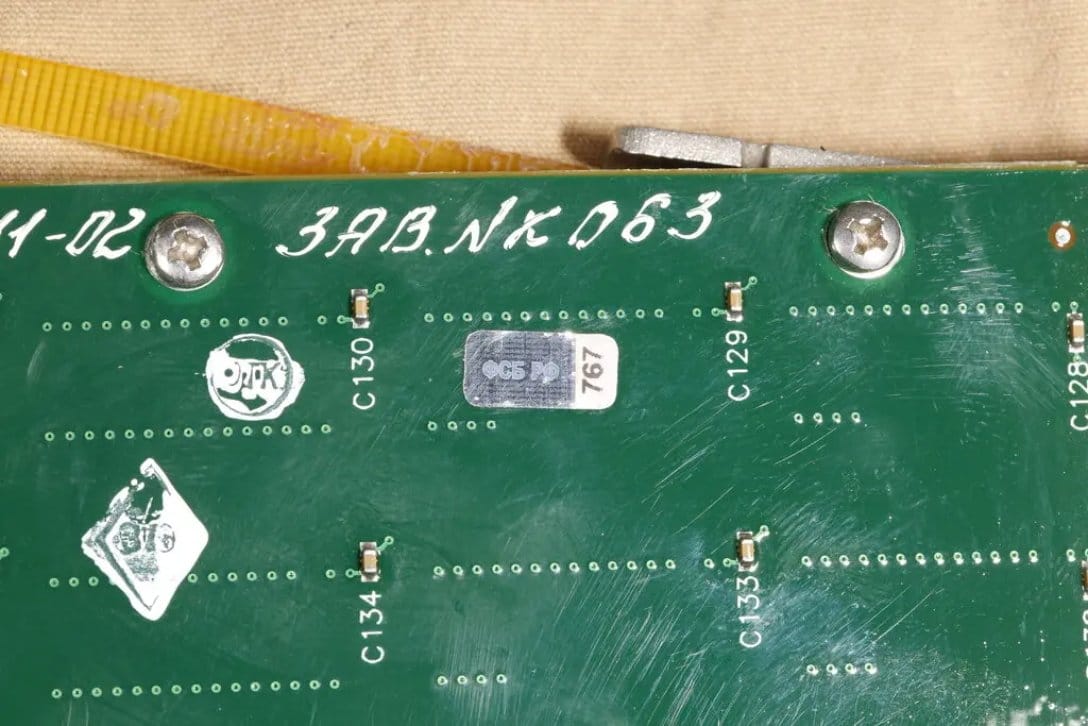
Researchers invited by the SBU for an independent analysis of Russian equipment found that ammunition and equipment, including missile guidance systems and laser rangefinders, contain microchips, printed circuit boards, motors, antennas, etc. manufactured in the United States and EU countries.
Damien Spleeters, a researcher at Conflict Armament Research, which specializes in the identification and tracking of weapons and ammunition, concluded that advanced Russian weapons and communications systems were built on Western chips. He added that Russian companies have had access to an uninterrupted supply of Western technology for decades.
However, Western anti-Russian sanctions have limited Russia’s ability to produce high-tech weapons to replace those destroyed during the war in Ukraine. Since the West announced sweeping restrictions on the export of semiconductors, computers, lasers, telecommunications equipment and other goods in February, the Russian defense industry has struggled to obtain microchips to restock precision-guided munitions.
What did the Pentagon experts investigate?
During their trip to Kyiv, Spleeters and his colleague unscrewed three buildings that housed modern encrypted Azart radio stations that provide secure communication channels for Russian troops.
They found that the first two walkie-talkies contained microchips with their manufacturing markings carefully erased, apparently in an attempt to disguise their origin. But inside the third walkie-talkie was an identical chip that was made by a company based in the US.
The expert said it is not clear who changed the markings and when the chips were delivered to Russia. But the attempt to hide their origin, he said, was deliberate.
US Secretary of Commerce Gina Raimondo, answering a question about the lack of chips for Russian weapons, said “definitely yes.”
“U.S. exports to Russia in categories that we have export controls on, including semiconductors, have fallen by more than 90 percent since February 24. It’s just a disaster,” she said.
Economist Matthew Klein, who tracks the impact of export controls, said Russian imports of manufactured goods from nine major countries fell 51% in April from the average from September 2021 to February 2022.
According to him, the bombing of tank factories and shipyards is now irrelevant.
“Democracies can replicate the effects of bombing with the right set of sanctions, precisely because the Russian armed forces are dependent on imported equipment,” Klein said.
Earlier it was reported that Russia was forced to use computer chips from refrigerators and dishwashers in military equipment, as imports of American technology decreased by 70% due to sanctions.
Poland believes that a new alliance should be formed with France and Germany at its core
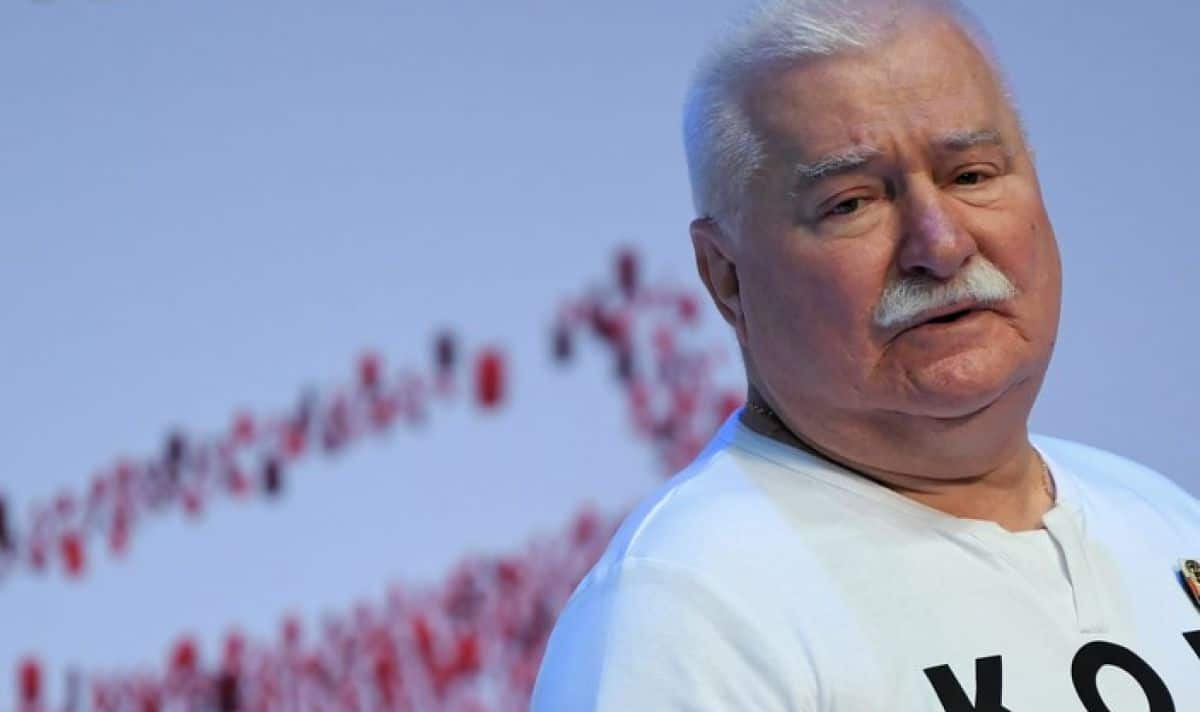
The European Union (EU) must dissolve itself and create a new union with France and Germany at its core, without Poland and Hungary. This was stated in an interview published on Saturday, 4 June, with the portal Interia, the winner of the Nobel Peace Prize, former President of Poland Lech Walesa. “Instead of compromising with Poland, the EU must disintegrate and in a few minutes create a new community based on Germany and France, but without Poland and Hungary,” he said.
Walesa regretted that his views on the matter had not been taken into account. “And this is a simple idea: if we want to join a new union, then in addition to rights, we will have to accept certain obligations. And to put them in such a way that the things that are happening today will not happen again, “he added.
The PR manager of the singer Vera Brezhneva said that she no longer works with the artist, who condemned the Russian special operation in Ukraine.
“Vera Brezhneva is no more, she will not return here,” manager Anastasia Drapeko told News.ru.
At the end of March, it became known that Brezhneva left Russia and plans to do volunteer work in Poland, helping refugees from Ukraine.
The singer was among the artists of Ukrainian – and not only – origin, who strongly condemned Moscow’s policy towards Kyiv, for which they paid with the loss of the opportunity to continue working in the Russian Federation. Some artists remaining in the country are reporting the cancellation of their scheduled concerts, such as Yuri Shevchuk and his band DDT. Others became banned from entering Russia, like the singer Nargiz Asadova.
The court cited Shevchuk’s song and dismissed his case materials at the end of May.
The Dzerzhinsky District Court of St. Petersburg returned to the compilers – the Ufa police – the materials of the administrative case filed against the leader of the DDT group, Yuri Shevchuk, after his statements at the concert.
As previously reported, the musician from the stage told Ufa fans what his homeland is for him, and also uttered pacifist statements. After the concert, law enforcement officers talked with the artist in the dressing room for an hour – eyewitnesses reported that at first they allegedly wanted to detain him, but then the case was limited to a protocol under the article on discrediting the RF Armed Forces. Shevchuk himself later stated that he explained his point of view to the security forces and that, according to him, at the end of the conversation they even wanted to be photographed together.
According to the joint press service of the St. Petersburg courts, the Dzerzhinsky court returned the case materials “to eliminate shortcomings.” It is indicated that the event of the offense was not described in the protocol. Also in the materials “there is no indication of what exactly the public calls to prevent the use” of the RF Armed Forces expressed. These shortcomings the court considered significant and irreparable in the consideration of the case.
“We will announce the return of materials to the court,” the press service of the courts said in a Telegram post.
The post itself is titled with a line from the song “DDT” “Whistled” – “and in the open field there are angels, cornflowers.” Further, as you know, the line follows: “And we are free, and there is neither burning nor longing.”
The leader of the DDT group, Yuri Shevchuk himself, spoke about the situation at a concert in Ufa, where he told the audience about his understanding of the Motherland and uttered a number of pacifist phrases. As it became known earlier, immediately after the concert, law enforcement officers came to the artist’s dressing room.
Producer Radmir Usaev reported that the security forces talked with the musician for about an hour, “not even missing the director of the band.” He also reported that they wanted to detain Shevchuk, but nevertheless the conversation ended with the drawing up of an administrative protocol. Under Part 1 of Article 20.3.3 of the Code of Administrative Offenses (public actions aimed at discrediting the use of the RF Armed Forces), the musician faces a fine of 50 thousand rubles.
In a conversation with Kommersant, Shevchuk confirmed that this was the case: “After a stormy and prolonged applause, we went into the dressing room of the opera.”
He also stated that he did not know what exactly the police indicated in the protocol as a violation: “I said a lot of things there.”
Additional investments are also needed to increase the throughput at border crossings.
Infrastructure Minister Alexander Kubrakov said that the conversion of one railway line to the EU standard would cost between $2 billion and $3 billion.
He told the FT about this, writes “Economicheskaya Pravda”.
And at the same time, according to him, additional investments are needed to increase the capacity at border crossings.
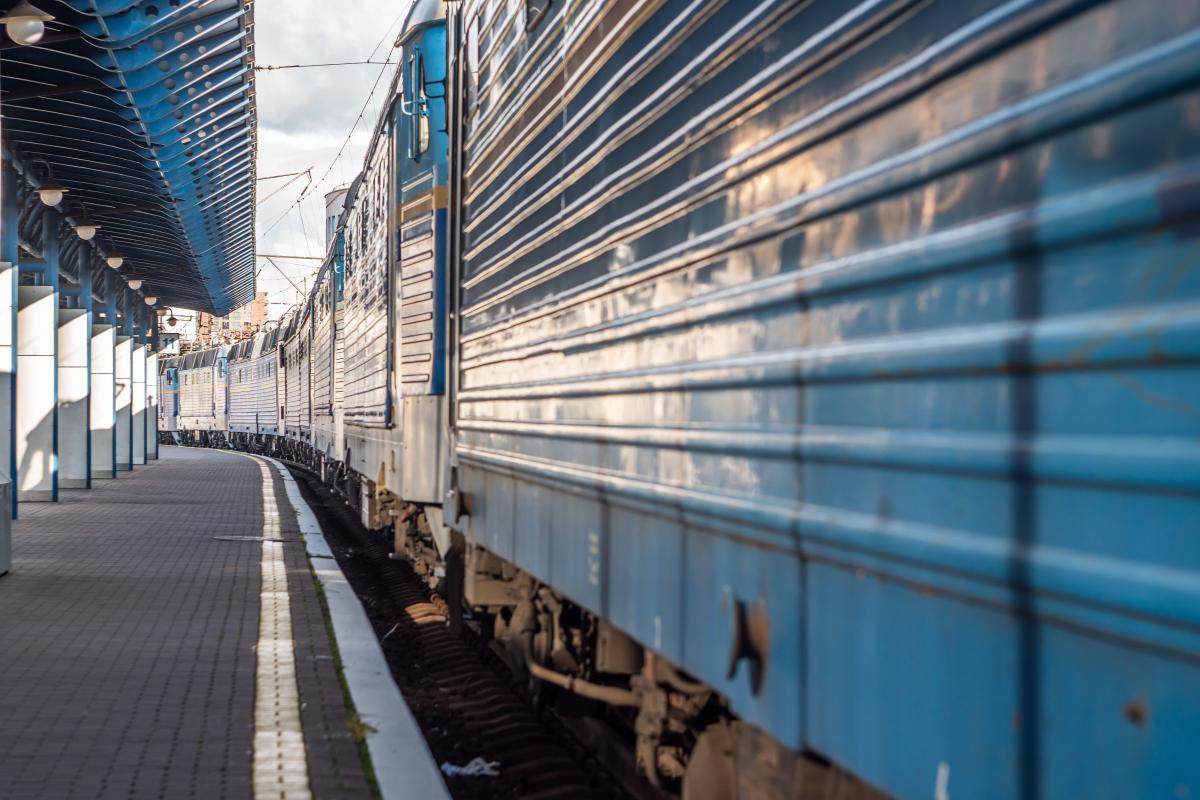
As you know, Ukraine will begin the phased construction of a narrow European gauge in order to connect its railway with the European one. At the first stage, it is planned to connect major hubs and major cities.
Earlier, the operating director of Ukrzaliznytsia, Vyacheslav Eremin, noted that changing the path is “expensive, long and difficult, but necessary.” According to him, the following stages are being considered: Lvov-Kyiv, Lvov-Odessa, Lvov-Krivoy Rog.
The strategic goal in the future is a complete transition to the European gauge, but if you look at neighboring Poland now, they still have lines where there is still a Soviet gauge.
Statement by the Permanent Representative of Russia to the UN
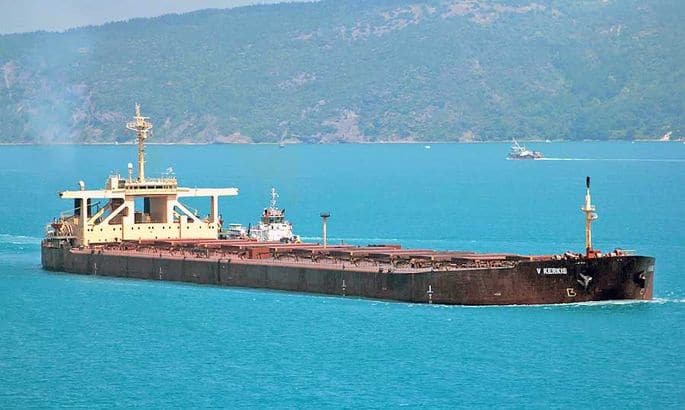
The Russian Federation is ready to provide a safe corridor in the Black Sea to ensure the export of Ukrainian grain as reported by TASS.
“Russia is ready to provide safe passage for ships to export grain from Ukrainian ports,” said Russia’s permanent representative to the UN Vasily Nebenzya.
At the same time, according to him, Ukraine must clear the sea.
Recall, earlier it became known that Turkey has prepared a roadmap that can help ensure the export of Ukrainian grain through the Black Sea. Representatives of Russia, Ukraine and the UN are expected to discuss it in the near future.
For his part, Senegalese President Macky Sall said on Friday that Russian President Vladimir Putin had told him he was ready to allow Ukrainian grain exports to alleviate the global food crisis, which has hit Africa particularly hard.
“President Putin has expressed his readiness to facilitate the export of Ukrainian cereals,” Sall wrote on Twitter after meeting with Putin as president of the African Union, Reuters reports.
Russia is also ready to secure exports of its own wheat and fertilizers, Sall said after talks in the Russian Black Sea resort of Sochi on the 100th day of Putin’s invasion of Ukraine.
Sall did not say whether Putin had set any conditions for his proposal. Russia has previously said it is ready to allow food vessels to leave Ukraine in exchange for lifting some Western sanctions against it, a proposal Ukraine has described as “blackmail”.
Africa is heavily dependent on grain supplies from Russia and Ukraine, which have been severely disrupted by the war.
“I came to see you to ask you to be aware that our countries, even far from the theater (of the war), are victims of this economic crisis,” Sall told Putin earlier.
Russia’s army has captured much of Ukraine’s southern coast and its warships control access to the country’s Black Sea ports. However, she continues to blame Ukraine and the West for the resulting suspension of Ukrainian grain exports.
In an interview broadcast Friday night, Putin told Russian state television that Ukraine could export grain from ports, including Odessa, if it cleared them of mines.
“Let them remove the mines, we guarantee them free passage in international waters,” he said.
Ukraine did not comment immediately. Odessa and the surrounding region have been hit by Russian missiles more than once, and President Vladimir Zelensky said last month that the port had been paralyzed for probably the first time since World War II.
Putin said the easiest way to export Ukrainian grain was through neighboring Belarus, but that required the West to lift sanctions against Belarus.
Moscow says the sanctions have also affected its own exports of grain and fertilizers, exacerbating shortages. Ukraine and Western governments accuse Russia of using the weapons of the food crisis.
“We are currently witnessing attempts to shift responsibility for what is happening on the world food market, to the emerging problems in this market, to Russia. This is an attempt, as our people say, to transfer these problems from the sick head to the healthy,” he said. Putin.
African countries have been hit hard by the growing crisis, which has led to a sharp rise in prices for cereals, cooking oils, fuels and fertilizers.
Russia and Ukraine provide almost a third of the world’s wheat supplies, with Russia being a key global exporter of fertilizers and Ukraine a major exporter of corn and sunflower oil.
Judging by the rush demand for sugar, which arose in late May and early June, it may suffer the same fate as salt. Analysts told whether there will be a shortage of sugar in Ukraine this year, and how this deficit is economically justified.
Following salt, the demand for another bulk product, sugar, has sharply increased. Ukrainians are sweeping it off store shelves, despite rising price tags and government assurances that there is plenty of sugar in the country.
Analysts from UAK (Ukrainian Agrarian Club) told how things really are with this product in Ukraine, and what can lead to a shortage of sugar in the country.
It must be said that sugar has been one of the irritants on the Ukrainian food market for several years. The annual demand of Ukrainians for this product is 1.2 million tons. However, in the 2020-2021 season, only 1 million tons were produced in Ukraine. This, of course, led to a shortage of sugar and its purchases abroad.
However, by the next year, the farmers improved, increased the sown area under this crop, and as a result, sugar production this year increased to 1.4 million tons. And if we consider that millions of our citizens were forced to go abroad because of the war, it turns out that there can be no sugar shortage in 2022.
“The produced sugar is enough to cover Ukraine’s annual demand for sugar calmly and even with a margin. And given the fact that part of the population of Ukraine has temporarily gone abroad, the consumption fund has also decreased and, accordingly, the transitional balance is increasing,” the analysts noted from UAC.
But there is no shortage, and sugar disappears from the shelves. And sweep it away at any cost.
Analysts explain this by the fact that Ukrainians succumbed to the general hype because of the salt. But if salt began to disappear for an objective reason, then there are no such grounds for sugar.
Excessive demand for this product can be explained by two reasons:
• the canning season has begun, which this year is also catalyzed by uncertainty in the food market;
• Because of the war and gloomy forecasts, Ukrainians are trying to stock up on long-term storage products, and sugar is just one of them.
Therefore, it is not surprising that it has become in high demand, and a shortage of sugar, even artificial, is quite likely. But after the war, Ukrainians will use what they have in store for another year, and sugar in stores can be bought at a ridiculous price.
Recall, meanwhile, supermarket chains announced a two-fold reduction in prices for salt in June.