Tuesday, June 23, 2026
Home Blog Page 1026

Thoughts change the universe

0

Incredible, but true: thoughts change the universe. The world is suffering because of our evil thoughts. God saw in the antediluvian people that “all the thoughts and thoughts of their hearts were evil at all times” (Genesis 6: 5) – and brought a flood to the earth. The world was perishing from an angry element – the downpours lashed, the waves mercilessly swept away everything on their way – and only because “the thought of the human heart is evil from his youth” (Genesis 8: 21).

God also saw the heartfelt thoughts of the proud builders: “Let’s make a name for ourselves” (Gen. 11: 4) – and mixed their language in Babylon – a sociocultural catastrophe took place. What were the thoughts of the Sodomites busy with? It’s a shame to write, and it’s disgusting to imagine – even those punished by the Angels with blindness, they groped to find the entrance to Lot’s house, and Lot himself was told: “Come here” (Genesis 19: 9-11) – passion is in the head all their thoughts, and the cataclysm that happened then is known to everyone. No grass, no fish, no birds – the flora and fauna of the Dead Sea are not pleasing to the eye. The stars will go out, the sky will twist like a scroll, the sun will turn into darkness and the moon – into blood due to the fact that the thoughts of people are both Babylon and Sodom, and the proud depravity of the antediluvian world.

So thoughts are too essential. For it is said about a person: “As the thoughts are in his soul, such is he also” (Proverbs 23: 7). Our essence is determined by our thoughts. Let no one think that in thoughts one can do this and that, but the main thing is to do well. It will not work if there is nothing good in the thoughts. “A double-minded man is unstable in all his ways” (James 1: 8). Do not shake hands with the weak, do not let someone else pass ahead (in the same traffic jam on the road), do not say a warm word even to the most beloved ones – wife, children, parents – because there is no good in thoughts.

***

It turns out that thoughts are changing? Yes, and not only the Universe. Thoughts change everything. Here was the “overshadowing cherub” (Ezek. 28: 16) – “the seal of perfection, the fullness of wisdom and the crown of beauty” (Ezek. 28: 11). But he just thought: “I am better than everyone else” – and “you fell from heaven, day girl, son of the dawn” (Isa. 14: 12). Slipped on my own pride! “Thy heart was lifted up because of thy beauty; Thou hast ruined thy wisdom because of thy vanity” (Ezek. 28: 17). “I” became the center of the universe – and evil invaded the pure God-created world.

***

God created the world with His thought. This is what the holy fathers teach us. “He creates thoughts, and this thought, supplemented by the Word and completed by the Spirit, becomes a deed” (St. John of Damascus). The thought of God is unspeakably beautiful, unspeakably wise, inexpressibly blessed. And therefore the universe in its breathtaking beauty, in its infinite wisdom reflects God’s plan, God’s logo, God’s thought.

Man-creation is in the image of the One who created. A person’s thought creates a person’s life as it will be. Man – a reflection of God – is called to beautify the world. And above all, decorate with your pure, kind, beautiful thought. Do we really think that the main thing is decors, designs, outfits and other labels of outer life, and even inside of us, even a complete disgrace?

***

Deeds are the embodiment of thought. As a river begins from the source, and a tree – from the root, so does a person’s work – from his thought

The thoughts of some are like a wonderful symphony. The thoughts of others are like the grinding of iron on glass or like wild blows with a stick along the edges of a rusty barrel. Such thoughts burst forth in dissonance in a disorderly word and a disorderly deed. For deeds are the embodiment of thought. As a river begins from the source, and a tree begins from the root, so the work of a person begins with his thought.

The Holy Fathers say that Angels are quick as thought. But our thoughts can become like Angels – when they become messengers of Purity, Light, Love. When they carry evil in themselves, they become like a fallen angel.

For some, the mind is the devil’s chariot. He famously rules the behavior of a person, turning his thoughts like reins. The evil rider, riding the soul, directs it to the cliff or to the swampy and viscous places, where death is cheekily tyrannizing. In others, said the Monk Macarius the Great, the mind is the throne of the Divine. Such a mind contemplates the Heavenly secrets, and it also sees the secrets of the earthly path. He will help those who are stuck in swampy places to get out. For a pure mind sees the way, but a darkened mind does not see its own trouble.

The thoughts of some are like the pure reflections of an Angel, the thoughts of others are the ominous reflections of a demon. But more often in one and the same person strange changes take place: either the heavenly light shines, then the gap of gloomy darkness gapes. And therefore we live in an incessant struggle.

***

Let no one say that no one sees our thoughts: they say, it doesn’t matter what’s on your mind. The other does not see your thoughts, but he will see what your thoughts have led you to. Dirty thoughts spoil both your life and your face. A face twisted with anger is the fruit of bad thoughts. Green with envy, black with hatred, pale with cowardice, fear, despondency. Prodigal, bad wishes – and they will leave a seal. Do not even think that your thoughts will not appear on you in any way.

The other does not see your thoughts, but he will see what your thoughts have led you to

Clean springs, even if no one knows about them, will water the forests. Without them, the life of our nature will dry up, dry up. Likewise, pure thoughts, even if they are not known to others, are the springs of our life. A head full of evil thoughts is like a nuclear reactor, emitting deadly radiation. Even if such a reactor is hidden somewhere in the desert, it will still harm someone. Sooner or later, its radiation will affect someone. And now imagine that people walk around like nuclear reactors – seething with anger, indignation. From time to time someone will break through, and then an explosion happens – in the form of a terrible crime, what has accumulated inside spills out.

The stages of the spread of evil on earth are as follows. First, a person is gnawed by his own sinful passions. They boil inside, we recognize them by their sensations, feelings, thoughts – evil, nasty, languid. They are haunted. As if bitten by wild wasps, the person finally gives up and begins, in turn, as if mad, to bite, gnaw those who are nearby. Poisoned by evil thoughts, it poisons the lives of those closest to you. If they surrender, they will be infected with the same malice. Yet together they turn into the bubbling mouth of a volcano. And how can cataclysms, wars, and chilling crimes not occur after this?

Evil, sinful thoughts draw out all forces from the soul, suck out vital energy

The wasp stings, the mosquito drinks blood, and evil, sinful thoughts draw out all forces from the soul, suck out vital energy. After a storm of evil thoughts, you will certainly come out exhausted. But you’re not only hurting yourself. A person accustomed to nourishing evil thoughts is like a hive of wild wasps. They buzz and hurt anyone who gets close. Their poison is useless, poisons, and causes acute pain.

It turns out that our worst enemies are our evil thoughts. If your thoughts stink and rot inside you, how can you not feel bad? But you feel bad from yourself. Why do you always think that someone else is to blame for your troubles? “How long will evil thoughts nest in you?” (Jer. 4:14).

***

The truth is bitter, but you need to know it.

Do not hold back the wind with open hands, do not stop the formidable gusts of the storm by your desire alone. So just the power of your mind alone will not hold back the wind of thoughts. They obey the Humble One, Who said: “Shut up, stop.” “And the wind ceased, and there was a great silence” (Mark 4:39). And in order for it to be so in our life, we must sail with Him in the same boat, complete the course of life as He asks, and humbly ask Him: “Lord Jesus Christ, Son of God, have mercy on me, a sinner.” There is deep wisdom in the text of the Gospel. From pride, which had once invaded the world, storms and evil elements arose, but now the Humble One appeared – and everything obeyed Him.

One brother asked Abba Pimen the Great how to deal with rebellious thoughts. The elder answered:

“This deed is like a person holding fire in his left hand and a bowl of water in his right. If a fire flames, then it takes water from the bowl and extinguishes the fire. Fire is the suggestions of the enemy, and water is fervent prayer before God. “

Prayer is the same thought, only addressed to God

Who gave a man a mind – to Him and turn your mind. Who has planted a mind in you – raise your mind’s eye to Him. For you cannot clear your mind on your own.

Lightning, flashing in the east, is visible even to the west. And the ray of the rising Sun in the blink of an eye illuminates the face of the earth. So a kind, pure thought is able to illuminate our life. For there is nothing faster than thought. Prayer is the same thought, only directed to God.

Do we really think that prayer is bowing without thought and feeling, like a soulless action of the body? Is prayer really a mechanical sign of the cross, without feeling and meaning, like a conditioned reflex? Is prayer really a text in itself, without a clear content for us? – No! Prayer is a thought that soars to Heaven, pure to the Purest. Prayer is a warm sighing of the heart, with a thought alive and light.

Here is Moses and the people, they dared to the exodus. Ahead is the Red Sea, waves are beating against the shore. And behind – the chosen chariots, the fury of the Egyptians is immeasurable, their mood is decisive. The Israelites are desperate: “Aren’t there tombs in Egypt that you brought us to die in the wilderness?” (Ex. 14:11). Moses tries to calm the people down. And then God Himself turns to Moses: “Why are you crying to Me?” (Ex. 14:15). But Moses did not open his mouth, the air was not filled with loud prayer. His heart screamed, and his thought ascended to the Almighty like a fragrant incense. And a miracle happened – the sea parted, the people passed like dry land. Intelligent prayer, filled with a deep heartfelt feeling, was accepted by God – and the usual for the laws of the earth was transformed into the unusual, for it took something from the laws of Heaven.

Nature obeys not so much the laws of physics as the Creator of nature, who established these laws

The world changes where the mind of a person through prayer ascends to union with God. “Elijah was a man like us, and he prayed with prayer that there would be no rain: and there was no rain on the earth for three years and six months. And he prayed again: and the sky gave rain, and the earth brought forth its fruit ”(James 5: 17-18). Nature obeys not so much the laws of physics as the Creator of nature, Who established the laws of physics. But how will you ask God for rains or lack of rain, if there are thunders and lightnings inside yourself? How will the world around us change if the world inside us does not change? And therefore, the meaning of prayer is that first of all our own minds are transformed.

***

Silence reigns in thoughts from the most unexpected reasons. For example, you felt pity for someone, in a difficult moment you helped from your heart – and your soul felt better. He helped another, but acquired it himself. Even your thoughts have become calmer, for peace has reigned in your heart. That is, the silence of the mind suddenly and unexpectedly comes from mercy. And therefore, an unmerciful person, no matter how much he prays, will not acquire either purity of mind or silence of heart.

The world is also born from forgiveness – when you stopped holding evil on the offender. This experience is inexplicable and inexplicable rationally. It is impossible to convince someone to forgive if his heart is resolutely against it. But unforgiveness is enmity. And where there is enmity, there is a storm of thoughts. Forgiveness is the sacrament of the transformation of a soul from a hating, punishing, revengeful soul into a loving, merciful, pitying soul. Where the Kingdom of goodness is, the thoughts of evil do not tyrannize. Forgiveness brings peace.

But the most effective weapon is humility. It is mysterious and sometimes seems elusive. It’s even more difficult to explain. Humility is inexplicable – just as the Lord Himself is inexplicable, shining with the light of humility. But those who acquired it, learned from the Meek and Meek, and took His yoke upon themselves, they find peace (see Matthew 11:29). Saint Ignatius told about himself how, as soon as he entered the monastery, he underwent obedience in the refectory. Once he put the dish on the last table, at which the simple novices were sitting, and mentally said: “Take from me, servants of God, this wretched service.” At the same time, he suddenly felt in his heart a gracious consolation, which did not leave him for about a month. Humility is the door of God’s grace, and grace heals the soul as a fragrant, healing myrrh.

Pure thought brings us back to pure childhood. At the dawn of our years, we perceive the world in a completely different way – the picture of the world is fresh, saturated with bright colors, full of the breath of life. We seem to see the world in its pristine beauty and innocence, we partly come into contact with the paradise vision. But the happiness of childhood is not in the absence of problems and worries. Childhood happiness lies in pure and innocent thoughts. There is no adult dirt experience. The child looks with a clear eye at the world as a kingdom of joy. And therefore, he who has purified his mind looks at the world through the eyes of childish wonder and childish joy.

The thought is not restrained in those who are not restrained in life.

***

Saint Nicholas of Serbia once said:

“If you can help a person – help, if you cannot help – pray, if you do not know how to pray – think well of the person! And this will already be a help, because bright thoughts are also a weapon. “

If you want to do something good for people – have good thoughts about them.

So, if you want to do something good for people – have good thoughts about them. A good thought is a good beginning. A good attitude is born from a kind thought. A kind word will be born from a kind thought. And a deed cannot be kind if your thoughts are not kind.

A doctor, undertaking to heal with evil thoughts, will certainly hurt someone. A teacher who starts a lesson with evil thoughts will turn into a monster. A policeman or a military man – it’s scary to even imagine what their evil thoughts will turn into. A builder and a seller, a driver and an engineer, a representative of any profession – depending on his thoughts, he either creates or destroys.

Good thoughts – and good life. Thoughts are evil – and life is evil. A handsome person is a person with beautiful thoughts. A kind person is a person with good thoughts. As well as the one who nurtures evil, ugly thoughts, is evil and ugly himself.

One of the saints said: “Think about the good, so as not to think about the bad, because the mind does not tolerate being in idleness.” This truth was conveyed to us by the Monk Ephraim the Syrian, relying on what the saints said before him. The mind is never idle. If you do not give him a good occupation, he will slip into an evil deed. If you do not sow good seeds in it, tares will sprout. Fill your mind with a prayer to the King of Paradise, so that hell does not rule within you while still here.

But what then? If thought is purified, will you become happy? No! The heart will inevitably be filled with pain. If you are like an Angel in life, you will still experience suffering here on earth. Someone else’s pain will not give you rest. And the filthiness of the sins of this world will cause you grief. But something will change inside you. The universe of your soul will be transformed – and this is already a lot! Everything is interconnected here. One’s sin affects all. But the righteousness of one becomes the hope of others.

Metropolitan Athanasius of Limassol recalled how, while still a very young novice, he, together with others, visited Elder Paisius the Holy Mountain. They asked a question that worried them. The elder answered in the simplest words. But what happened at the same time was remembered for a lifetime. During the simple but kind-hearted words of the elder, everything literally smelled around – rocks, stones, trees, the air itself. Everything was filled with a wonderful fragrance (it did not last long, while the elder gave them an answer, and then he shut himself up in his cell). Such a sign was given because the soul of Elder Paisius was fragrant with the grace of the Holy Spirit.

Morning dew refreshes the face of the earth, and the pure prayers of pure souls bring life to the whole world. For the sake of these prayers, cities stand, kindness and love are still held in the world, and for the sake of the same prayers people have not yet destroyed each other.

The gospel helps us think about many things. When the mental eye is clear, then your whole body is light. And if there is not a single dark part in you, then your whole nature becomes light, as if a lamp illuminated you with radiance (cf. Luke 11: 34–36). “Then the righteous will shine like the sun in the kingdom of their Father” (Matthew 13:43). For in their thoughts, in their minds and hearts, the Kingdom of God is still shining here.

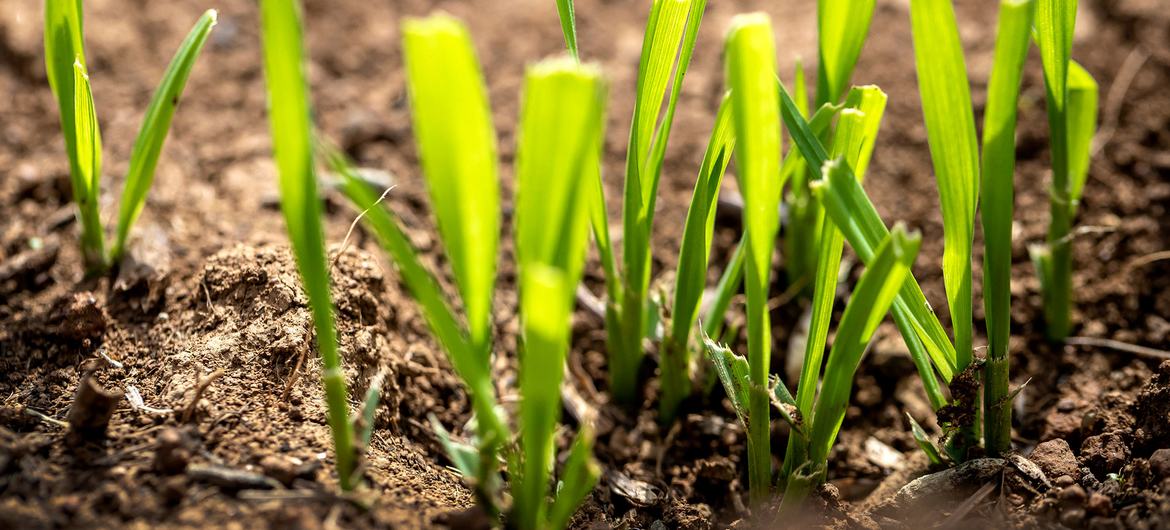
Small can be great, insignificant – significant. And our eternal destiny can be decided by what we do not attach much importance to. But a tree grows from a small seed. Look what seeds you sow every day.

One of the largest ghettos in Europe

0

Old buildings, disease and poverty.

There is a pungent odor in the air, the smell of laundry and the stench of sewage. Bed linen hangs sadly from the balconies of the buildings, there are real Soviet bars from the 70’s, which have not been renovated since.

Cables for illegal connection to electricity are coming out of the old buildings, which are without water. This is the type of Lunik IX district on the outskirts of Košice (eastern Slovakia), the largest Roma ghetto in this Central European country and one of the largest in Europe, where unemployment exceeds 90 percent.

Lunik is today considered one of the largest Roma communities in Slovakia, Paudal writes.

The only oasis in this place, which currently has about 4,000, is the Salesian-run parish, which is surrounded by a fence that children climb before the priest asks them not to.

 “We have to lock everything here,” says Father Marian Peciar.

“The big difference between us and the other organizations working here is that we’re always here,” he says. “The locals know we’re here for them and we trust them for that.”

Mothers at 15, grandmothers at 30

The Salesians came to Lunik in the summer of 2008 in agreement with the diocese, whose priests could no longer perform their ministry in the neighborhood, spending only a few hours a month there.

Born in Kosice, Father Petar Besheni is responsible for opening this community, a mission he has committed himself to “out of obedience, not choice.”

“This experience with the poor has made me change a lot since then because I realized the importance of redirecting to a few things that really make us happy,” he says.

If the Salesians are not perceived as “social workers” and their “primary mission is to lead to Christ,” they still offer specific services to the people of the area, the community leader said.

“After our arrival, we helped many people leave Lunik and build a better life elsewhere,” said Father Besheni.

“Our mission is to act constantly. We also work with young people, the residents are open to living with many children, but often do not have the strength to educate them. In Lunik, women are mothers at 15 and grandmothers at 30.”

Pope Francis also came to the area on Tuesday, September 14 last year.

South Ossetia plans to join Russia

0

The president of Georgia’s breakaway and self-proclaimed republic of South Ossetia, Anatoly Bibilov, said in late March that the territory would take steps to become part of Russia in the near future, Reuters reported.

Moscow has recognized the republic and Georgia’s other breakaway region of Abkhazia as independent states after waging war with Tbilisi in 2008. Russia has provided significant financial support, offered Russian citizenship to its people and deployed thousands of troops there.

“I believe that unification with Russia is our strategic goal, our path, the aspiration of our people,” Bibilov was quoted as saying by the press service of Russia’s ruling United Russia party.

“We will take the appropriate legal steps in the near future. The Republic of South Ossetia will become part of its historic homeland – Russia,” said the leader of the self-proclaimed republic.

The most valuable coin in the world, minted by the assassin of Julius Caesar, for sale

0
Numismatica Ars Classica roman Coin
Photo provided by Numismatica Ars Classica NAC AG

Some define it as the Holy Grail in numismatics, for others it is just an investment, for others it is the bloody steam cut in praise of the most dramatic scene in Roman history.

One of the most famous coins of the ancient world Eid Mar, in its gold version (aureus) will be sold at auction in Switzerland in late May.

The precious piece of metal was cut by order of Mark Junius Brutus, who went down in history as the traitor who organized the assassination of Julius Caesar on March 15, 44 BC, reports “Standard”.

The extremely rare gold coin has been on display at the British Museum for the past ten years, rented by a private collector whose name is kept secret. This is not the first time that the same Eid Mar has entered the famous museum. In 1932, numismatist Oscar Ravel was introduced there.

A plaster cast of the coin, made at the time, is still kept in the British Museum today. The valuable object was also prominent during the exhibition “Shakespeare: Staging the World” (Shakespeare: Staging the World) for the London 2012 Olympic Games.

In addition to the Eid Mar aureus in the British Museum, there are two other gold variants from antiquity – one in the collection of the Deutsche Bundesbank (Central Bank of Germany) and another that sold for a record for a Roman coin 4 = 2 million. dollars at a numismatic auction in 2020

Aureus Eid Mar is the more valuable option, and the lighter (about 2 grams) and silver-carved denarius is more common, but it is also very expensive and cherished by numismatists around the world.

On one side of the coin is a portrait of Brutus with the Latin inscription BRVT IMP, which marks him as a recognized military winner. On the opposite side are two daggers representing Brutus and Cassius, as well as a pylos (in Latin Pileus), known as the “hat of freedom” (symbol of the freed from slavery in ancient Rome).

This particular aureus is overvalued because of another feature of it. It has a hole drilled just above Brutus’ head to be worn around the neck. At the same time, there is a high probability that a high-ranking participant in the conspiracy against Caesar was showing off with him, even if one of the senators personally pierced the dictator.

The coin is estimated at about 750,000 Swiss francs in advance, which is equivalent to nearly 820,000 dollars, but according to auction experts, it is likely to reach a higher value. And there’s no way it can’t happen, because it’s undoubtedly one of the most intriguing coins on the market.

Not just a piece of precious metal, but almost a fantastic part of history, an incredible document that survived more than 2,000 years to take us back to one of the most dramatic events of antiquity, writes the newspaper Standard.

Everyone already knows that “And you, Brutus?” (Et tu, Brute?) Is not the last thing in the world that Caesar said, but only a line brilliantly used by William Shakespeare in his play Julius Caesar. There is no evidence that the great general said anything while dying pierced by the daggers of traitors.

A century and a half after the landmark event, the Roman historian Suetonius claims that Caesar said nothing, but there were witnesses to the contrary.

According to them, the last words of the dictator Kai su, teknon (from Greek), which translates as “And you, child” or “And you, young man”, were addressed to Brutus. There is a version that teknon is an insulting address to a child or young person, ie. it may sound, say: And you, pickle? And in Shakespeare’s case, this is not the last line of the hero, there he dies, saying: “Death, then come!”.

Another Roman historian, Plutarch, wrote that after the assassination, Brutus stepped forward to say something to his fellow senators, but they fled the building. Brutus and his companions pass through the Capitol and declare, “Romans, we are free again!”, But the inhabitants of the Eternal City respond in silence.

Murder of a tyrant or ugly betrayal?

The assassination of Gaius Julius Caesar, committed by the March Ides (March 15) in 44 BC, is the result of a conspiracy led by Mark Junius Brutus and Gaius Cassius Longinus. It is noteworthy that Brutus undertakes the ugly task, although he is the son of Caesar’s longtime mistress – Servilia, and is one of the people close to the general.

In history to this day, he is destined for the fate of a controversial figure – on the one hand a fighter for freedom, and on the other – the most heinous of traitors. Brutus was born around 85 BC, a child of the union between two of the most prominent families in ancient Rome – the Uniates, of whom his father was Mark Junius Brutus the Elder, and the Serviles – his mother’s family.

Was he the illegitimate son of Caesar?

Brutus became a protégé of the famous senator and defender of the republic Cato the Younger, married his daughter Portia. As a quaestor (treasurer) in the Brutus provinces, he amassed wealth through high interest rates on loans and extortion of debtors using the army.

When dictator Julius Caesar crossed the Rubicon on January 10, 49 BC. and immerses the republic in a civil war, Brutus faces a dilemma: whether to support his friend (and his mother’s lover) Caesar or the republican cause embodied by his benefactor Cato, but currently embodied by his father’s assassin Pompey.

Hating Pompey, Brutus nevertheless chose to side with him and joined the Republicans in exile in Greece in the mid-49s BC. After Pompey’s defeat at Pharsalus the following year, Brutus was pardoned by Caesar. He supported him and then won very strong positions in the ranks of the dictator, which led to rumors that Brutus was, in fact, the illegitimate son of Caesar.

However, Caesar’s appetite for power led Brutus to fear for the fate of his beloved republic. When his friend Guy Cassius Longinus invited him to join a conspiracy against Julius Caesar, Brutus readily accepted and became one of the main conspirators.

The battle against the Thracians made him emperor

At the March Ides (March 15) 44 BC. there is a session in the Senate at which Julius Caesar must set out plans for an impending invasion of the Party. The conspiratorial senators, led by Brutus and Cassius, surrounded Caesar and stabbed him to death in a fierce bloody scene (it is still debated how many assassins there were, how many times each of them stabbed the dictator and how many of them also suffered). They are, of course, expected to be hailed as liberators, but the Romans are horrified by Caesar’s assassination and even demand that the perpetrators be punished.

Brutus left Rome in April, barely avoiding a lynching from the crowd. He went to Cassius in Macedonia, where they built their republican base to wage war against the legions of the successors of Caesar, Mark Antony and Octavian.

A successful campaign against one of the most rebellious Thracians – the Bessi, won him the title of emperor (imperator – the highest military position in republican Rome). He then began minting coins to pay his growing army.

Brutus’ legacy on gold and silver

The early coinage, started by Brutus, follows traditional themes, but in the last stage, when Eid Mar’s were produced in the middle of 42 BC, an old republican taboo was broken. Brutus places his own portrait on the obverse, combined with the pile between the daggers used to execute Caesar.

The irony here is palpable. Earlier, Julius Caesar minted his face on coins, worrying his opponents that he aspired to become king of Rome. Brutus follows the bad example, praising with his portrait the betrayal of Caesar on the iconic reverse side.

This thematic choice seems to be the last desperate act of disobedience at a time when the armies of the warring factions are meeting in the last clash in northern Greece – Brutus and Cassius against Mark Antony and Octavian.

And the final twist of fate is that Brutus used the same dagger he stabbed in Caesar to take his own life after the final defeat of his and Cassius’ troops in the second battle of Philippi on October 23, 42 BC. .

Denarii, and especially the Eur Mar aureus, are rare today, not only because of their remoteness, but also because they were collected and melted down by the victors Mark Antony and Octavian, who applied the ancient Roman tradition of erasing the memory of those forgotten by the Roman people – damnatio memoriae .

Whether aureus (gold) or denarius (silver), Eid Mar is undoubtedly the most important of all ancient coins – the only one from Roman times with a specific date (albeit only a day of the month), and the unique one that openly praises murder. Facts that increase their value with each passing century.

Painting  of Degas renamed because of the war in Ukraine

0

The National Gallery in London has renamed the painting of the famous French Impressionist Edgar Degas from “Russian Dancers” to “Ukrainian Dancers”, reports The Guardian.

The work is a pastel depicting a group of dancers, whose performance in Paris the artist remains deeply fascinated.

Yellow and blue – the national colors of Ukraine, can be seen in the decorated ribbons in the hair of the dancers.

“The title of this painting has been the subject of debate for many years and is reflected in the scientific literature. However, in the last month there has been a greater focus on it due to the current situation. We think it is a good time to update the title of the painting so that it better reflects the theme of the painting, said a spokesman for the National Gallery in London.

 Photo: Russian Dancers. Date: c.1899. Edgar Degas

Insurer Zurich Insurance refused the logo with the letter Z – association with the aggression of the Russian Federation

0

Major Swiss insurance company Zurich Insurance removed the Z logo on social media. The firm believes it could be “misinterpreted”. The letter Z is used in Russia in support of Russian aggression, reports Reuters.

See also: Yandex customers in Russia complain about the Z sign and refuse to take a taxi with the symbol

“We are temporarily phasing out the use of the letter Z on social media where it appears in isolation and may be misinterpreted / Zurich Insurance is monitoring the situation and intends to take further action if necessary,” the company said in a statement.

One of the company’s logos is a blue letter Z on a white background. Now social networks use the logo with the name of the company Zurich.

Zurich Insurance earlier in March refused to serve new customers in Russia. The company does not intend to resume business in the Russian Federation.

Read more about what is happening in Ukraine now, about the reaction of the world to ongoing events – in the GuildHall text chronicle.

Over half a million Russian properties in Bulgaria on the counter, is there anyone to buy them

0

Brokers at the Bulgarian Black sea are flooded with requests to look for new owners

While in London, Milan and Paris the richest Russians have properties worth billions of euros, Bulgaria has become an attractive destination mainly for the middle class of Vladimir Putin’s compatriots. The purchased apartments and houses are used both for vacation and for investment.

Accurate statistics of Russian property in our country are still missing. However, one thing is known – entire resorts and huge complexes along our Black Sea coast have been bought by Russians in the last ten years. In our country they were attracted by the low prices and the huge supply of holiday homes for every pocket and taste.

According to Atanas Krastin, the Bulgarian ambassador to the Russian Federation, a total of more than 300,000 Russians own nearly 450,000 properties in eastern Bulgaria alone, more than 95% of which are concentrated on the coast. Citizens of Russia and other former Soviet republics are among the most active foreign investors in Bulgarian real estate. Their interest is focused mainly on holiday properties in prestigious resorts.

Low property prices in Bulgaria and the lack of a language barrier are the main drivers of Russian investors. A huge plus for the boom in the market of properties purchased by foreigners was the stable economic growth that Russia recorded for years (by an average of about 5% between 2011 and 2019), which made credit products in the country much more profitable and affordable for the mass Russian. Apart from the purely pragmatic economic moment, according to the brokers, many Russian citizens have preserved their childhood memories of our native beaches and resorts.

As for the picture throughout the country – interest in native property by Russian citizens is not only by the sea, but also in winter resorts. According to realtors, Russian property is nearly 15 percent of all holiday apartments in the three major winter resorts.

Which means that in Bansko, Pamporovo and Borovets there are about 60 thousand apartments and villas with owners in Russia.

However, Russian investors have no serious interest in the interior of the country, an inspection by Maritza showed. Just over 250 properties in Plovdiv are owned by Russians, according to a reference from the Property Register. In the capital this number is significantly higher (nearly 2300 in number), but even there the lag behind the resort towns is serious.

At the moment, there is no evidence that any of the EU-sanctioned individuals close to President Putin or their relatives have real estate in the country, which means that there will probably be no seizures or confiscations of Russian property in Bulgaria. The brokers are adamant that the profile of clients who have bought in Bulgaria in the last 10 years is very different.

Kalina Dimitrova is a broker in one of the largest companies on the Black Sea coast, specializing in working with Russian clients. Dimitrova says that for many years our country has been a top destination for the middle class Russians. “We can safely say that in the last 10 years the middle class in Russia has increased significantly as a percentage of their society,” said the broker. According to her, in 2010-2015 was the real boom of foreign investment in property in our country. Dimitrova says that out of 10 clients in this period, 7 were foreigners, and at least 3-4 of them were Russians. “Literally almost every second deal was either with a Russian company or with their citizen,” she said.

The bill shows that at least BGN 30 billion in real estate has been invested by Russians in our country over the past 10 years. However, Kalina Dimitrova is adamant that this trend has seriously reversed in the last two years. “On the one hand – the coronavirus has hit the Russian economy and in 2020 we had a huge supply of real estate both through domestic agencies and through contractors in major Russian cities,” said the broker.

However, the big sale started last summer. However, the withdrawal of the Russians from the market is not because of the coronavirus, but because of the depreciation of the Russian ruble, the brokers are adamant. “Many Russians have taken out loans in euros in their homeland to buy property here. And judging the loan through the ruble’s exchange rate against the euro, it is already unprofitable for them to have property in Bulgaria,” Dimitrova said.

According to both the owners of complexes and real estate traders, nearly 80% of Russians’ apartments by the sea remained locked last summer. Brokers expect this number to grow only in the coming months. The Russians will travel less and less, and this is not due to the fact that Bulgaria is already an “enemy state” for them, but to the sanctions that have already hit even the middle class Russians. property owners, because coming to Bulgaria will have to be done by transferring through Azerbaijan or Serbia which will make the trip even more expensive, “said Radostin Krumov, an investor in holiday villages and resorts.

Both builders and brokers are adamant – the Russians can no longer afford to own property in our country. Kalina Dimitrova explains that a large number of her former clients from major Russian cities have sought contact with her agency in recent months with a request for assistance. “Most of them directly tell us to look for sellers for their apartments, while others send us keys to courier companies and offer to advertise their properties on sites for short-term or long-term rent, thus receiving at least a minimum return,” said the Varna broker.

According to builders and brokers, the demand for holiday properties on the market can not withstand the supply, which increases with each passing day. The industry also reports the lack of new buyers from England, Germany and Scandinavia, who have traditionally also had a serious interest in their native resorts. Although in the last two years brokers have reported increased demand from Turkish citizens, whose desire to buy property in Europe is mostly related to the possibility of doing business, the crisis in our southern neighbor has “frozen” and this interest .

Thus, in practice, it turns out that nearly half a million properties owned by Russian citizens in our country will remain almost completely empty during the summer months, and the vast majority of them will be looking for a new owner. However, neither brokers nor builders are optimistic. According to Kalina Dimitrova, there is a market for domestic consumers for these 500,000 properties for only 4 to 5 percent of them.

It is still №1 cheaper

Bulgaria is still the cheapest country for real estate deals from Russians, according to a poll by the Tranio website among 414 experts from 35 countries.

The average budget that Russian-speaking buyers in Bulgaria have set aside for deals in 2020 has reached 180,000 euros, making Bulgaria the cheapest country to buy investment property. In second place is Thailand with an average budget of 200 thousand euros. At the other pole is Austria, where the Russians have set aside an average of 3m euros to buy investment property.

In general, the average budget for transactions of Russian real estate investors in all surveyed countries has doubled compared to 2019 and reached 620 thousand euros. Russian investors expect an average return of 5% per year on their investment property. The activity of Russians who invest in real estate in our country has halved twice in a row – once in 2020 and again last year. It is expected that this year the interest will be even lower.

The key driver for Russians when buying property abroad is to become a resident of another country. 71% of real estate investors in Russia say they bought a property to acquire citizenship or residence, according to the survey. The next two most popular reasons are to maintain or increase capital. Globally, Russian investors prefer to buy residential properties for this purpose, followed by hotels, retail space and plots.

The City of Moscow has a huge holiday complex near Kamchia

Kamchia Sanitary and Health Complex near the mouth of the river of the same name is the largest Russian holiday complex in Bulgaria. In 2003-2004, the Moscow government began buying land in the area. However, the most serious deal became a reality only in 2008, when the Bulgarian state sold to “Kamchia” EAD, a company that is the sole property of the Property Department of the Government of Moscow, nearly 80 decares in the village of Bliznatsi. municipality of Avren. The price is only BGN 9.70 per square meter.

The contract for the construction of the SOC Kamchia complex was signed in September 2008 by then-Minister of Social Policy Emilia Maslarova. In order to facilitate the realization of the Russian investment, the government of Sergei Stanishev adopted a “thematic” decision and allocated BGN 7.7 million for the construction of a 10.5 km highway to the complex. Thus, the children’s camp “Rainbow”, built by “SOC Kamchia”, was opened in 2010.

At the end of 2019, Russian senators publicly commented on the idea of ​​turning Kamchia SOC into a “cultural and humanitarian platform” after Russian Foreign Minister Sergei Lavrov announced that Russia’s National Security Council would discuss the transfer of ownership of the holiday complex. as the situation around him was not good.

The Russian base near Kamchia includes a huge amount of assets, including the hotel complex “Longoz” with a capacity of 450 beds, swimming pools, conference halls; the children’s health camps “Rainbow” and “Black Sea” with accommodation for a total of 1,200 children; the holiday village “Pirin”, consisting of a hotel and eleven two-storey villas with accommodation for 250 people; medical-diagnostic and balneological center “Zdravets”; Yuri Gagarin Training and Education Center; Kamchia sports complex, which meets all Olympic standards, and even an amphitheater with a capacity for 2,000 spectators.

 Photo: “Kamchia” Sanitary and Health Complex, owned by the Property Department of the Government of the City of Moscow

Sahara sand increases the risk of COVID-19

0

Sahara sand, which the winds brought to Europe in April, provides a very good shelter for viruses. Thus, it increases the risk of infection with COVID-19. The Turkish professor warned about this.

The sand from the desert also covered Turkey. It will continue its impact, increasing the risk of accelerating COVID-19 cases in the area, said Hussein Toros, a meteorologist at Istanbul Technical University.

The Turkish State Meteorological Service warned residents to take action against heavy dust clouds over the weekend.

 “We recommend everyone, whether old or young, to stay indoors. Keep the windows tight, “said Hassan Bayram, head of the Turkish Lung Association.

Especially patients with chronic diseases and cardiovascular are at risk, Bayram said that inhaling dust can cause headaches, flu or sore throats.

All experts advise people to wear face masks if they have to go out. Well-known meteorologist Orhan Shen is one of them who suggests that there is no need to panic. “We expect rain on Sunday,” he said, marking the end of the desert storm.

Dokuz Aylul University professor in the western province of Izmir and climatologist Dogan Yashar have warned of an increase in coronavirus cases due to the desert storm.

Yashar stressed the importance of desert dust: “It contains multi-layered silicate. Every year, approximately 2 billion tons of dust leave the deserts and fertilize the world. This is good for agriculture, which leads to increased yields. The more desert dust comes, the higher the yield. From the end of March and the beginning of April, when the desert dust is observed, nature wakes up. This creates a great agricultural and biological wealth, but desert dust also provides a very good shelter for viruses. Layered silicate is usually present in very small proportions in the air, but this ratio increases when desert dust is transported.

When an infected person sneezes, the virus reaches the ground in three seconds. But the cloud of dust in the air helps him stay for hours, the doctor said, reminding people to wear masks. This has been proven by the World Health Organization, he said.

Prof. Dr. Yashar recalled: “The dust brought from the Sahara Desert in 2020, also began to come to our country in late March and early April. Then we warned our citizens. We have stated that this is a dangerous situation. In April 2020, the Covid-19 record of 5,000 people was broken. We made the same warning in 2021. The number of cases then reached a record 63,000 with coronavirus on April 14. Here and today again desert dust came to our country. The spring heat has begun. The same event will be repeated. “The environment is very conducive to the spread of the virus,” he said.

Spider monkeys prefer fruits with worms

0

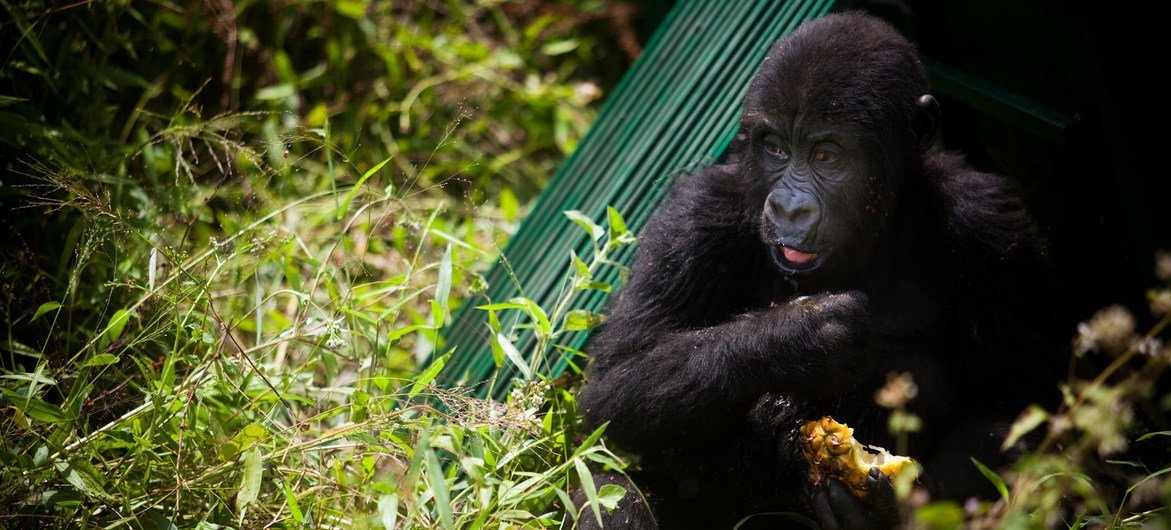
Spider monkeys prefer fruits affected by insects, Brazilian and American scientists have found out. Eating fruits along with larvae, monkeys compensate for the lack of protein in the diet. Previous studies have shown that koats get protein from ficus fruits, inside which pollinating wasp larvae develop. However, where these trees are rare or do not grow at all, the monkeys have to make do with wormy fruits. The results of the study were published in an article for the International Journal of Primatology.

Monkeys from the genus Ateles, common in Central and South America, feed almost exclusively on ripe sweet fruits. Such a diet is rich in carbohydrates and fats, but it lacks protein. It is assumed that koats compensate for their deficiency by eating young leaves, shoots and buds or fruits with a high protein content. And Peruvian coats (Ateles chamek) from some populations get proteins from ripe fruits of ficuses (Ficus), in which larvae and wingless males of wasps from the Agaonidae family – pollinators of these plants (as well as parasitoid larvae developing in them) hide.

However, pollinating wasps are not the only insects found inside fruits. The pulp of the fruit feeds on the larvae of many Hymenoptera, Lepidoptera, flies and beetles. Most ripe fruits in tropical forests are affected by one or another larvae, and it is not uncommon to find representatives of several insect species in one fruit at once. By choosing the most wormy fruits and eating them along with the larvae, the koats could thus obtain a deficient protein. This strategy would be beneficial, at least in those regions of the Amazon where ficuses are rare. A similar strategy has already been recorded in related primates from the subfamily Pitheciinae – uakari and saki. They feed on immature seeds and, in order to compensate for the lack of protein, they try to choose those that are most affected by larvae.

A team of zoologists led by Adrian A. Barnett of the National Amazonian Institute decided to test whether koats actually prefer wormy fruits. To do this, the researchers went to the region of the middle reaches of the Tapajos River in the Brazilian state of Para. They chose two sites where ficuses are rare: one on the edge of a seasonally flooded forest, and the second in a forest that never floods. Here, the authors observed two species of coats: Peruvian and barnacles (A. marginatus). The former live to the west of the Tapajos River, and the latter to the east.

Barnett and his colleagues found feeding Peruvian spider monkeys in the forest and collected fresh fruit samples that they had not eaten and dropped down from the trees. The researchers also included in the sample fruits that they themselves cut from trees along with branches. Then the authors identified the species of all fruits and the larvae found inside them.

In total, the researchers analyzed 2,836 fruits from 74 trees belonging to 27 species. The larvae of beetles, flies and lepidoptera affected fruits of 23 species, which corresponds to 85 percent. 11 percent of larval species were found in 35–78 percent of fruits. Comparing the proportion of diseased specimens between fruit fed by koats and fruit hanging on a branch, the authors found that the monkeys selected the most wormy fruit from 12 of the 20 tree species for which they were able to collect multiple specimens.

However, in the case of four more species of monkeys, on the contrary, they tried to eat fruits untouched by insects. It is possible that in these plants the presence of larvae in the fruits provokes a defensive reaction and the release of unpleasant or toxic substances. In the case of four more species, the fruits of which showed the highest and lowest infestation with larvae, they did not show clear preferences. The authors suggest that it does not make sense for monkeys to look for the most wormy fruits of these species, since they are too common or too rare, respectively.

Apparently, spider monkeys usually compensate for the lack of protein by eating ficus fruits. However, where these trees are scarce or non-existent, monkeys have to eat the most wormy fruits. These may not be the only sources of protein for coats. Barnett et al. suggest that monkeys also eat insects that hide in young shoots and leaves and swallow aquatic insect larvae when they drink from bromeliad rosettes and leaf axils.

Earlier we talked about how Geoffroy’s coat (A. geoffroyi), spider monkeys from Central America, are looking for fruits. Zoologists have found that these primates form subgroups whose size adjusts to the number of fruiting trees. At the same time, they are guided not only by their own considerations, but also by the behavior of their relatives. This strategy allows you to efficiently find food in changing conditions.

Photo: Peruvian Ateles chamek

The United Arab Emirates is the most stressful country to drive

0
oznor

Poor road infrastructure is one of the main factors in a huge number of accidents, but road quality is not the only factor that insurers at confused.com have taken into account when compiling the ranking of the world’s most stressful driving countries. Their survey covers 48 countries, with the main parameters on which the rating was made being road quality, congestion levels, number of speed cameras and road accidents.

The United Arab Emirates ranks first in this anti-ranking, which means that drivers in the UAE experience the most stress while driving. The main culprit for this highest result is the large number of fatal accidents – as many as 2,724 per 100,000 population. The emirate is third in the Top 20 in terms of road quality, and the ratio of kilometers to speed cameras is staggering: there are an average of 1.45 cameras per kilometer, which means that it is impossible to drive at high speeds. But on the other hand, there are as many as 552.5 cars per kilometer! The next closest parameter is 392 in Hong Kong and 192 cars per kilometer in Singapore.

And immediately after the UAE is Bulgaria, to which analysts give 80 points (out of 100) for stress while driving, ahead of even Turkey and Italy.

Its highways have turned into cemeteries, and intercity roads have been so broken that driving has long since turned from fun to stressful so that another tire and rim doesn’t go. But the quality of road infrastructure is not the only factor that insurers at confused.com have taken into account when compiling the ranking of the world’s most stressful driving countries. Their survey covers 48 countries, with the main parameters on which the rating was made being road quality, congestion levels, number of speed cameras and road accidents.

From many cameras on the road we can not complain in Bulgaria – 1 per 100 km. The problem is that there are 171 cars per kilometer, with only Turkey (173), the UAE, Hong Kong and Singapore ahead of us. This, combined with the worst road infrastructure (40 points out of 100 possible) ranks the unenviable second place in the ranking. Only Brazil (33.5), Colombia (39.7) and Romania, which has the worst roads (32.6), have worse roads than it, but the country is in 15th place, and in this case, the further back, the better. Interestingly, in Romania there is a speed camera on 765 kilometers of roads.

Photo: Traffic in Sofia, Bulgaria