Friday, March 27, 2026
Home Blog Page 126

Social development up close: UN News heads to Doha summit

0

At Second World Summit for Social Development In Doha, our team tested a quick, understandable format designed to bring readers closer to the action – to what is actually being said, decided and debated in real time.

Working side-by-side with the UN Meetings Coverage Section – the press officers who follow every statement and development in the international debate – we distilled hours of discussions into precise end-of-day snapshots.

Each update details the position of the countries, their agreements (or not) and what’s next.

Over three jam-packed days of high-level plenaries and panel discussions, delegates celebrated 30 years of the historic 1995 Copenhagen Summit, reflecting on how far social development has come – and how far it still has to go.

Poverty reduction, decent jobs, social protection and inclusion were at the top of the agenda, along with how climate impacts and rising debt are reshaping policy priorities around the world.

What you will find in the summaries:

  • The main messages and priorities of the governments of the different regions
  • Emerging areas of consensus – and tension
  • How global pressures are changing the social policy landscape

This pilot project is part of our efforts to make UN decision-making clearer, faster and closer to the people affected.

Read the full daily recaps:

Day 1: Doha: World Summit opens with commitment to accelerate social progress

Day 2: Doha: Second day of World Summit highlights urgency to invest in people and peace

Day 3: Doha: World Summit ends with renewed commitment to leave no one behind

Originally published at Almouwatin.com

Gazans continue to return home despite maintaining ‘fragile ceasefire’

0

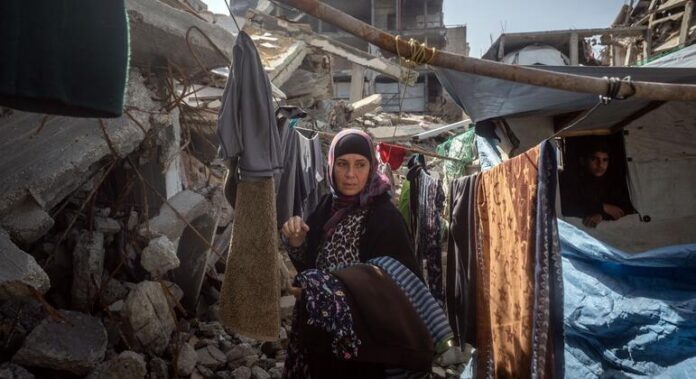
A month after the start of the ceasefire in Gaza, families continue to slowly return to their former homes and communities wherever access is allowed, the United Nations agency that helps Palestinian refugees, UNRWA, said Monday.

Source link

Originally published at Almouwatin.com

World news in brief: update on the war in Ukraine, the latest typhoon in the Philippines, demographic developments in Europe and Central Asia

0

Between Friday and Monday morning, at least 15 civilians were killed and more than 70 injured, according to OCHA.

On Saturday evening, missile and drone attacks hit 10 regions: Chernihiv, Dnipro, Donetsk, Kharkiv, Kherson, Kirovohrad, Mykolaiv, Odessa, Poltava and Sumy.

Matthias Schmale, the country’s humanitarian coordinator, sentenced attacks, asserting that “civilians and civilian objects are fully protected by international humanitarian law and are not a target.”

Power outages in major cities

The attacks also disrupted electricity, heating and water supplies, making it even more difficult for vulnerable people to cope with cold winter temperatures.

Energy and residential infrastructure have been damaged in many regions, including Chernihiv, Odessa and Poltava, while major cities like Kyiv, Kharkiv and Odessa are experiencing power outages, with electricity only available for a few hours a day.

The UN and its partners quickly mobilized to provide emergency shelter materials, blankets, hygiene items, hot drinks and psychosocial support in several areas. OCHA said.

Philippines: Typhoon Fung-Wong displaces hundreds of thousands of people

The UN is proof Government-led efforts in the Philippines after super typhoon Fung-Wong – known locally as Uwan – hit northern Luzon on Sunday, triggering mass evacuations and widespread disruptions.

According to the aid coordination office, OCHA, more than 1.3 million people were evacuated in 13 of the country’s 18 regions before the storm made landfall, in one of the largest preventive operations ever carried out in the Philippines.

More than 480,000 people remain displaced and have taken shelter in some 6,000 evacuation centers.

The government is leading the emergency response, with support from UN agencies and partners.

Early warnings that save lives

Cash aid has already been distributed, while food, tents, hygiene kits and other supplies have been pre-positioned in advance.

The World Food Program (PAM) said its teams were on standby and assessing needs in affected areas, with ready-to-eat meals and rice stocks prepared for distribution in coordination with national authorities.

Arnaud Peral, resident and UN humanitarian coordinator, praised the Philippines’ rapid evacuations and early warning systems, saying they had “undoubtedly saved lives”.

OCHA has warned that more intense typhoons like Fung-Wong are likely as climate change warms regional seas, highlighting the need for better preparation.

Demographic changes are reshaping Europe and Central Asia

Europe is aging while parts of Central Asia are seeing a surge in the number of young people – a demographic divide that could transform the region’s economies and societies, a study suggests. new UN report.

Analysis warns that Europe’s shrinking and aging workforce and low birth rates are putting pressure on health systems, pensions and labor markets, while Central Asia’s growing youth population offers both opportunities and challenges if decent employment and education can keep pace.

The employment challenge

Experts say countries need to rethink how they prepare for the future – by expanding access to quality jobs; encouraging women, migrants and older people to participate in the labor market and investing in lifelong learning and social protection.

The joint brief, published by the International Labor Organization (ILO), the United Nations Economic Commission for Europe (UNECE) and the United Nations Population Fund (UNFPA), calls for stronger policies that make economies more inclusive and resilient.

Demographic change, he notes, is not just about numbers; it is about how societies adapt to ensure that everyone, regardless of age or background, can contribute to and benefit from growth.

Originally published at Almouwatin.com

Opening remarks by President António Costa at the EU-Caribbean Leaders' meeting in Santa Marta, Colombia

0
Opening remarks by President António Costa at the EU-Caribbean Leaders' meeting in Santa Marta, Colombia

On 10 November 2025, European Council President António Costa attended the EU-Caribbean Leaders’ meeting in Santa Marta, Colombia. In his opening remarks, he emphasised that the meeting demonstrates a shared commitment to strengthening the visibility and strategic depth of the EU-Caribbean partnership.

Source link

Refugee camps set to be uninhabitable by 2050 as extreme weather worsens

0
Refugee camps set to be uninhabitable by 2050 as extreme weather worsens

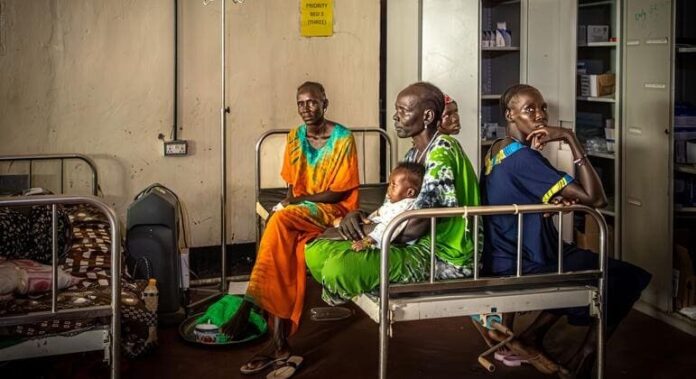
“Whether it is floods sweeping South Sudan and Brazil, record-breaking heat in Kenya and Pakistan, or water shortages in Chad and Ethiopia, extreme weather is pushing already fragile communities to the brink,” the UN agency said.

Over the past decade, weather-related disasters accounted for 250 million internal displacements, the equivalent of around 70,000 every day, or two displacements every three seconds. Returns to Syria and Afghanistan this year have contributed to lower global displacement than in 2024. 

Frontline struggle

In a new report, UNHCR also pointed out that three in four of all those who’ve been uprooted now live in countries where frontline communities face “high-to-extreme” exposure to climate-related hazards.

Extreme weather is putting people’s safety at greater risk; it is disrupting access to essential services, destroying homes and livelihoods and forcing families – many who have already fled violence – to flee once more,” said Filippo Grandi, the outgoing UN High Commissioner for Refugees.

“These are people who have already endured immense loss, and now they face the same hardships and devastation again. They are among the hardest hit by severe droughts, deadly floods and record-breaking heatwaves, yet they have the fewest resources to recover.”

Protection system strung out

Around the world, basic survival systems for refugees are already under strain, UNHCR warned.

In parts of flood-affected Chad, for instance, newly arrived refugees fleeing the war in neighbouring Sudan receive fewer than 10 litres of water a day, which is far below emergency standards.

Evidence also indicates that by 2050, the hottest refugee camps could face nearly 200 days of extreme heat stress per year, with serious risks to health and survival.

“Many of these locations are likely to become uninhabitable due to the deadly combination of extreme heat and high humidity,” the UN refugee agency maintained.

African land degradation threat

It noted that 1.2 million refugees returned home in early 2025 but half of this number arrived in “climate-vulnerable” areas. Meanwhile, UNHCR also noted that a full 75 per cent of land across the continent of Africa is deteriorating and that more than one in two refugee settlements are located in “high stress” areas.

“This is shrinking access to food, water and income,” the UN agency insisted, driving recruitment to armed groups in parts of the Sahel, fuelling conflict and repeated displacement.

Despite rising needs, funding shortfalls and what UNHCR calls “a deeply inequitable climate finance system” have left millions unprotected. Today, conflict-affected countries that host refugees receive only one quarter of the climate finance they need, while the vast majority of global climate funding never reaches displaced communities or their hosts.

“Funding cuts are severely limiting our ability to protect refugees and displaced families from the effects of extreme weather,” Mr. Grandi said, speaking on the opening day of the UN COP30 climate summit in Belem, Brazil.

“If we want stability, we must invest where people are most at risk,” the UNHCR chief added. “To prevent further displacement, climate financing needs to reach the communities already living on the edge. They cannot be left alone. This COP must deliver real action, not empty promises.”

Key UNHCR report findings:

•    Three in every four refugees or people displaced by conflict are currently living in countries facing high-to-extreme exposure to climate-related hazards.
•    1.2 million refugees returned home in early 2025, half to climate-vulnerable areas.
•    75 per cent of land in Africa is deteriorating, with over half of refugee settlements in high-stress areas.
•    Nearly all current refugee settlements will face an unprecedented rise in hazardous heat. By 2050, the hottest fifteen refugee camps in the world – located in Gambia, Eritrea, Ethiopia, Senegal and Mali – are projected to face nearly 200 days or more of hazardous heat stress per year.
•    By 2040, the number of countries facing extreme climate hazards could rise from three to 65.
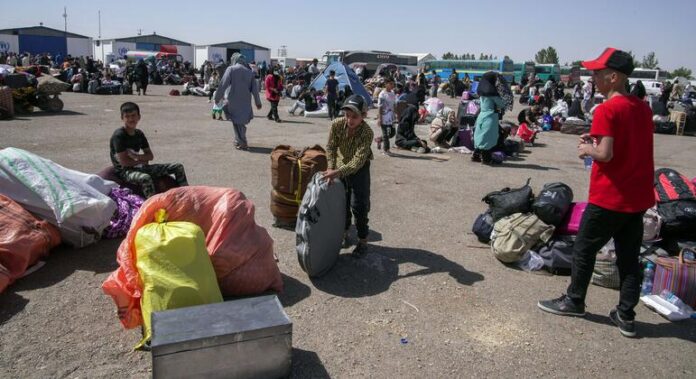
•    Since April 2023, nearly 1.3 million people fleeing the conflict in Sudan have sought refuge in South Sudan and Chad, two countries among the least equipped to cope with the growing climate emergency.

Source link

One-year badge 2026 – accreditation is open

0
Opening remarks by President António Costa at the EU-Caribbean Leaders' meeting in Santa Marta, Colombia

Information about accreditation requirements for the one-year badge (2026)

Source link

Refugee camps expected to become uninhabitable by 2050 as extreme weather worsens

0

“Whether it’s floods ravaging South Sudan and Brazil, record heat in Kenya and Pakistan, or water shortages in Chad and Ethiopia, extreme weather is pushing already fragile communities to the brink. » » said the UN agency.

Over the past decade, weather-related disasters have caused 250 million internal displacements, the equivalent of around 70,000 people per day, or two displacements every three seconds. Returns to Syria and Afghanistan this year have contributed to a decrease in global travel compared to 2024.

Frontline struggle

In a new report, UNHCR also highlighted that three in four uprooted people now live in countries where frontline communities face “high to extreme” exposure to climate-related risks.

Extreme weather conditions further endanger people’s safety; it disrupts access to essential services, destroys homes and livelihoods, and forces families – many of whom have already fled violence – to flee once again.said Filippo Grandi, the outgoing United Nations High Commissioner for Refugees.

“These are people who have already endured immense loss, and now they face the same hardship and devastation again. They are among the hardest hit by severe droughts, deadly floods and record heatwaves, and yet they have the fewest resources to recover.”

Protection system deployed

Across the world, refugees’ basic survival systems are already under strain, UNHCR has warned.

In some areas of Chad affected by flooding, for example, Newly arrived refugees fleeing war in neighboring Sudan receive less than 10 liters of water per day, which is well below emergency standards.

The data also indicates that by 2050, the hottest refugee camps could face almost 200 days of extreme heat stress per year, with serious risks to health and survival.

“Many of these places are at risk of becoming uninhabitable due to the deadly combination of extreme heat and high humidity,” the UN refugee agency said.

Threat of land degradation in Africa

It noted that 1.2 million refugees returned home by early 2025, but half of that number arrived in “climate vulnerable” areas. At the same time, the UNHCR also noted that 75 percent of the land on the African continent is deteriorating and that more than one in two refugee camps are located in “high tension” areas.

“This reduces access to food, water and income,” the UN agency insisted, leading to recruitment into armed groups in parts of the Sahel, fueling conflict and repeated displacement.

Despite growing needs, the funding gap and what UNHCR calls “a deeply inequitable climate finance system” have left millions of people unprotected. Today, conflict-affected countries hosting refugees receive only a quarter of the climate finance they need, while the vast majority of global climate finance never reaches displaced communities or their hosts.

“Budget cuts significantly limit our ability to protect refugees and displaced families from the effects of extreme weather,” Grandi said, speaking on the opening day of the UN COP30 climate summit in Belem, Brazil.

“If we want stability, we must invest where people are most at risk,” added the UNHCR chief. “To prevent further displacement, climate finance must reach communities already living on the margins. They can’t be left alone. This COP must result in real actions, and not empty promises.

Main findings of the UNHCR report:

• Three in four refugees or displaced people due to conflict currently live in countries facing high to extreme exposure to climate-related hazards.
• 1.2 million refugees returned home by early 2025, half of them to climate-vulnerable areas.
• 75 percent of land in Africa is deteriorating, with more than half of refugee settlements located in high-stress areas.
• Almost all current refugee camps will face an unprecedented increase in dangerous heat. By 2050, the world’s fifteen hottest refugee camps – located in Gambia, Eritrea, Ethiopia, Senegal and Mali – are expected to face nearly 200 or more days of dangerous heat stress per year.
• By 2040, the number of countries facing extreme climate hazards could increase from three to 65.
• Since April 2023, nearly 1.3 million people fleeing the Sudanese conflict have sought refuge in South Sudan and Chad, two countries among the least equipped to deal with the growing climate emergency.

Originally published at Almouwatin.com

Miniscule wave machine opens big scientific doors

0


University of Queensland researchers have made a microscopic ‘ocean’ on a silicon chip to miniaturise the study of

Source link

Joint declaration of the CELAC-EU summit 2025, 9 November 2025

0
Opening remarks by President António Costa at the EU-Caribbean Leaders' meeting in Santa Marta, Colombia

Joint declaration of the CELAC-EU summit 2025, 9 November 2025

Source link

Your EU – Your projects in Spain: boosting circular economy

0
Your EU – Your projects in Spain: boosting circular economy

Spain is undergoing a decisive transformation in its environmental and economic model through the España Circular 2030 strategy, a long-term plan adopted in 2020 to drive the transition towards a circular, climate-neutral economy. Supported by the European Union, this strategy seeks to decouple growth from resource use and waste generation, setting ambitious goals: 

  • to reduce national material consumption by 30% relative to GDP
  • cut overall waste generation by 15%
  • halve food waste per person by 2030 compared to 2010 levels

It also aims to improve water efficiency by 10% and ensure that greenhouse gas emissions from the waste sector remain below 10 million tonnes of CO₂ equivalent by the end of the decade.

To make this vision a reality, Spain is combining EU funding, innovation plus regional cooperation to help businesses and communities embrace circular solutions. From developing sustainable materials and improving recycling systems to promoting reuse and reducing emissions, the country is redefining how resources are produced, consumed and recovered. Across Spain, EU-funded projects are already turning ideas into tangible results – creating green jobs, protecting natural resources and building a more resilient, sustainable future for all.

Among the many initiatives bringing Spain’s circular ambitions to life, several EU-funded projects stand out for their innovation and real-world impact – from transforming waste into valuable new materials to reducing emissions and creating cleaner industries. Let’s have a look at some of the projects managed by CINEA (the European Climate, Infrastructure and Environment Executive Agency).

LIFE POLITEX: Transforming textile recycling

Spain’s textile and clothing sector remains a vital economic engine, closing 2024 with over 7 500 companies, 128 000 employees and €11.6 billion in turnover. Exports reached €18.4 billion – mainly to France, Italy, Portugal, Poland and Germany – while imports totalled €24.8 billion. This makes Spain the fourth-largest contributor to turnover and exports in Europe’s textile and clothing industry.

Yet behind this economic strength lies a pressing environmental challenge: only 12% of textile waste from Spanish households is properly collected for reuse or recycling. Most discarded fabrics still end up in landfills or are incinerated – representing both a sustainability problem and a lost economic opportunity.

This is where the LIFE POLITEX project comes into play. With nearly €3 million in EU funding from the LIFE Programme, it is developing cutting-edge technologies to recycle polyester fabrics — one of the most common and hardest-to-recover textile materials. By transforming thousands of tonnes of textile waste each year into new, high-quality fibres that can re-enter the production chain, the project reduces dependence on new materials and cuts emissions from textile manufacturing.

“LIFE POLITEX shows how EU funding is not just supporting cleaner industries, but also driving new opportunities for green growth, skilled employment and sustainable fashion made in Europe,” says Javier Pascual Bernabeu, POLITEX Project Coordinator.

Climate Positive Circular Communities: Building greener cities

Circularity, integrated energy and human centric design are reshaping how we conceive and build the spaces we live in. The construction sector accounts for about 50% of all extracted materials and more than 35% of the EU’s total waste.

In the Llevant Innovation District in Palma de Mallorca, Climate Positive Circular Communities is tackling this challenge. The project, funded under Horizon Europe, is testing innovative ways to make buildings and neighbourhoods more circular, energy-efficient and climate-resilient.

This mixed-use area — home to around 2,500 residents — serves as one of six demonstration sites across Europe, showing how data-driven design, digital tools such as digital twins and virtual and augmented reality, and community participation can accelerate deep energy renovations and integrate new positive energy buildings. With €20 million in EU funding, the project demonstrates how circular construction can reduce waste, improve living conditions and inspire greener urban development.

“Both the new construction and renovation activities here use digital technologies to help residents and planners make smarter, more sustainable choices. Operation of the buildings pursuing best use of integrated renewables is important, as well,” explains Inger Andersen, the coordinator of the Climate Positive Circular Communities project.

Waga4World: Turning landfill gas into clean energy

In the Barcelona region, the Waga4World project is proving that even the most challenging waste sites can become sources of clean energy. The Can Mata landfill, spanning 78 hectares, has stored more than 22 million tonnes of waste over three decades and naturally produces around 40 million cubic metres of gas annually. With €2.4 million in Innovation Fund support, the project is deploying WAGABOX technology to turn landfill gas into cost-competitive, grid-compliant biomethane, renewable gas that is a substitute of fossil fuels.

This breakthrough process significantly increases the site’s energy generation capacity while cutting greenhouse gas emissions.

“During the first year of operation, Waga4World has already achieved over 14,200 tonnes of CO₂-equivalent reductions, exceeding its initial targets. Mechanisms as the Innovation Fund are crucial to deploy innovative technologies in European countries” says David Agudelo-Romero, Waga4World Project Coordinator.

CLIC RECYCLE: Giving hair a second life

Even small everyday actions can have circular potential. In Spain, CLIC RECYCLE, a clean-tech start-up is proving that innovation can come from unexpected sources: in this case, human hair. With advisory support from Green Assist (an advisory service for sustainable investments funded by the EU) the company is scaling up its environmental solutions to reuse salon hair waste that would otherwise end up in landfills or incinerators. 

Founded in 2020, CLIC RECYCLE collects hair from salons across Spain, Portugal and the Netherlands and transforms it into nature-based, biodegradable products.

Its CLIC SEA solution helps clean ports and coastal waters by absorbing hydrocarbons and heavy metals, while providing real-time data on water quality. Meanwhile, the CLIC TERRA solution supports soil regeneration and replaces plastic mulch in agriculture, conserving water, enhancing biodiversity and improving soil health.

“Green Assist gave us critical insights to strengthen both our financial and environmental impact” says Valérie Itey, Founder and CEO of CLIC RECYCLE. “This support has been key to preparing for our next phase of growth.”

Closing the loop together

Through its support for such innovative projects such the European Union is helping Spain move closer to a truly circular economy – one where waste becomes a resource and innovation drives sustainability. These initiatives show how targeted EU investment and cross-border collaboration translate ambitions into concrete benefits: cleaner industries, new green jobs, and communities that thrive in balance with nature.

Discover more stories and see how EU investment is shaping a more sustainable future for everyone.

More information about the projects

Source link