Saturday, March 28, 2026
Home Blog Page 133

Towards a new Eurosystem balance sheet

0
Towards a new Eurosystem balance sheet

Speech by Isabel Schnabel, Member of the Executive Board of the ECB, at the ECB Conference on Money Markets 2025

Frankfurt am Main, 6 November 2025

Key messages:

  • Quantitative normalisation is proceeding smoothly, with strong liquidity positions of banks and abundant excess liquidity
  • Fixed-rate full allotment in standard refinancing operations ensures that liquidity is always available when banks need it
  • Operational framework suggests a sequence for how to supply reserves in the future, with a persistent take-up of standard refinancing operations to precede the launch of structural operations, starting with longer-term refinancing operations and followed by a structural securities portfolio
  • Considerations about stance neutrality, policy space and financial soundness suggest tilting the new structural securities portfolio towards shorter-term securities

The Eurosystem balance sheet is a mirror of the shocks that have hit the euro area economy over the years. It tells a story of crisis and recovery, of inflation and disinflation.

After reaching a peak in 2022, the size of our balance sheet has now been declining for three years. Over this period, our holdings of monetary policy-related assets have fallen by 45%, steadily reducing our financial market footprint.

This process has been remarkably smooth. Banks’ liquidity positions remain strong and the ten-year GDP-weighted sovereign bond yield for the euro area stands almost exactly where it was when we started the gradual run-down of our monetary policy bond portfolios in March 2023.[1]

Although balance sheet normalisation still has a long way to go, it is worth reflecting on what the Eurosystem balance sheet should look like in the future.

This is what I would like to do today.

I will argue that our operational framework, which we published in March 2024, implies that the size of our balance sheet will become more responsive to banks’ liquidity demand, and its composition more heavily shaped by collateralised lending operations.

I will then illustrate the sequence of instruments envisaged by our framework for supplying reserves in the future, before outlining some principles and trade-offs that could guide the choice of parameters for the new structural operations, including longer-term refinancing operations and a structural securities portfolio.

My remarks today reflect my own current thinking on the matter, which may evolve as the Governing Council reviews the key parameters of our operational framework – a process we will start in the course of 2026.

Quantitative normalisation rather than quantitative tightening

Central banks are the monopoly supplier of base money, which consists of two main parts: banknotes and central bank reserves that commercial banks use to settle interbank payments.[2]

Base money is the main liability of a central bank and determines the size of its balance sheet in normal times.[3]

The demand for base money can be met in different ways. In the euro area, prior to the global financial crisis, the Eurosystem primarily provided reserves through collateralised lending to banks, or repos.

At the end of 2006, these loans accounted for almost 40% of our assets (Slide 2, left-hand side).

This changed dramatically when the Eurosystem started to implement balance sheet policies to safeguard monetary policy transmission and stave off downside risks to price stability.

During this period, the asset side of our balance sheet became a policy instrument in its own right and, as a result, the main driver of the size of the balance sheet.

After the full repayment of the targeted longer-term refinancing operations (TLTROs) at the end of 2024, securities accounted for more than 70% of our assets, while loans to banks constituted less than 1% (Slide 2, right-hand side).

With the gradual unwinding of our monetary policy bond portfolios that began in March 2023, we entered a new phase in the evolution of our balance sheet (Slide 3, left-hand side).

This process is commonly referred to as quantitative tightening – a term that is, however, misleading.

When we raised our key policy rates, we made a distinction between monetary policy normalisation and tightening. Normalisation describes the process of bringing policy back to a broadly neutral setting, whereas tightening refers to raising interest rates above neutral territory to curb inflation.

This distinction is also relevant for balance sheet policies.

Today, ten-year sovereign bond yields in the euro area are estimated to be still some 60 basis points below the level that would have prevailed in the absence of quantitative easing (QE) (Slide 3, right-hand side).

By running down our monetary policy bond portfolios, we contribute to a normalisation of our balance sheet and thus bond term premia.

In that sense, the term quantitative normalisation (QN) better captures the mechanics and intent of the current run-off of our policy portfolios, as we are gradually removing the residual monetary stimulus from the system.[4]

QN, however, is more than balance sheet normalisation – it is a transformative moment that raises important questions. What role do central bank reserves play in the post-pandemic world? What mix of assets and liabilities best supports the effective implementation of monetary policy? And how will these choices affect market functioning?

These are not merely technical questions; they are strategic choices that will influence how monetary policy will operate in the decade ahead.

The changing role of reserves and the new operational framework

In our operational framework review last year, we provided insights into our thinking on these questions and how we see the future destination of our balance sheet.[5]

At the heart of our framework is the recognition that central bank reserves play a different role in the financial system today than they did before the global financial crisis.[6]

Back then, banks hardly ever held more deposits with the central bank than needed to fulfil their reserve requirements. They relied heavily on government bonds and interbank markets to manage liquidity.

This was also the result of central bank choices.

Until 2008 in the euro area, for example, banks had to pay 100 basis points of interest to keep funds they had borrowed in our standard refinancing operations as overnight deposits with the ECB.[7] High opportunity costs disincentivised banks from holding excess reserves.

QE has turned that system on its head. As liquidity has become abundant and effectively cost-free, the way banks are treating reserves has changed fundamentally.

Today, reserves are an important part of banks’ efforts to comply with liquidity regulations. Moreover, the introduction of instant payments and digital banking services more broadly are likely to have prompted banks to hold larger precautionary reserve buffers.

Even if, in times of QE, the aggregate level of reserves was not a matter of choice for banks – making it hard to predict the level of reserves that banks will choose to hold in a more normal environment – surveys suggest that banks want to hold a substantial amount of reserves as part of their liquidity, also in the future.[8]

There are also normative reasons why scarce reserves may no longer be desirable from a social welfare perspective.

To understand why, we can look at how banks’ liquidity holdings have evolved recently.

Over the past three years, the repayment of TLTROs and QN have reduced the overall supply of reserves in the system by more than €2 trillion (Slide 4, left-hand side).

As excess reserves count one-to-one towards the high-quality liquid assets (HQLA) that banks hold, the decline in reserves mechanically leads to a fall in their HQLA, unless banks choose to absorb the newly issued bonds replacing the maturing central bank holdings.

In a counterfactual scenario without such bond purchases, the liquidity coverage ratio (LCR) of significant institutions would already have fallen below 130% (Slide 4, right-hand side).[9]

In reality, however, we have seen banks purchase sizeable amounts of government bonds, effectively transforming part of their reserve holdings into securities that qualify as HQLA.

As a result, the aggregate LCR of significant institutions in the euro area has fallen only marginally since 2022 and remains well above pre-pandemic levels.[10] In fact, banks’ HQLA holdings have even marginally increased over this period (Slide 5, left-hand side).

In some countries, government bonds as a share of Common Equity Tier 1 capital are now at the upper end of the historical distribution (Slide 5, right-hand side).

To some extent, this shift in the mix of banks’ HQLA simply reflects changes in relative returns. For the first time in years, it is more profitable to invest in government bonds than to hold excess reserves with the ECB, even if this entails duration risk (Slide 6, left-hand side).

But to the extent that current large HQLA holdings also reflect banks’ liquidity preferences, their composition will ultimately also depend on central bank decisions.

In particular, excessively high opportunity costs for holding reserves incentivise banks to hold a larger part of their HQLA in government bonds. This may be undesirable as the liquidity position of banks would weaken if the value of government bonds were to fall (Slide 6, right-hand side).

Reserves, on the other hand, are risk-free. They don’t fluctuate in value and can be immediately used for payments.

In other words, in today’s world, where HQLA is a central tool of banks’ liquidity management, it is not socially optimal for a central bank to make reserves scarce. We should hence not excessively discourage the holding of reserves.

A balanced approach, which considers central bank reserves as an integral component of banks’ liquidity holdings, helps strengthen resilience, preserve market functioning and reduce systemic risk.

Elastic reserve supply decouples the pace of QN from interest rate control

This fundamental insight is embedded in our operational framework.

Through our standard refinancing operations, we provide as many reserves as banks demand at a fixed rate against a broad set of collateral (fixed rate full allotment).

Supplying reserves elastically as balance sheet normalisation proceeds will go a long way towards allowing banks across the currency union to hold what they find to be an optimal level of reserves.[11]

A key advantage of a framework in which the marginal unit of liquidity is provided on demand, rather than through asset purchases, is that liquidity is always available when banks need it, but is never intentionally supplied in excess.

Another advantage is that it frees the central bank from having to estimate the uncertain volume of reserves necessary to steer short-term money market rates towards the key policy rate, as would be the case in a supply-driven framework.

If reserves are primarily supplied through asset purchases, as in the US Federal Reserve System’s operational framework, the central bank needs to calibrate the pace of QN carefully, as money market rates could rise abruptly if liquidity becomes scarce (Slide 7, left-hand side).[12]

By contrast, in a demand-driven framework, there is no direct link between the pace of QN and interest rate control. In the euro area, a rise in repo rates would therefore not lead to a slowdown in, or the end of, QN.[13]

We expect that our monetary policy bond portfolios will be run down completely, unless monetary policy considerations were to require renewed asset purchases at some point in the future.

Rather, a persistent rise in money market rates to levels closer to the rate on the main refinancing operations would lead to more banks accessing our standard refinancing operations, thereby endogenously adding new liquidity to the system.

So far, we have not seen this happening.

Even if the number of banks participating in our operations has steadily increased over time, the overall volume of demand for reserves has remained limited so far, for two main reasons (Slide 7, right-hand side).

One is that excess liquidity remains abundant. While in other countries upward pressure on short-term interest rates has been rising as liquidity conditions have tightened, repo rates in the euro area have remained close to the deposit facility rate (Slide 8, left-hand side).

The other is that reserves, which are unevenly distributed across both banks and countries, are being redistributed effectively.

This is visible in the measurable increase in term repo transactions collateralised by non-HQLA over the past years, especially across borders (Slide 8, right-hand side). These transactions are largely driven by regulatory considerations, as they directly improve the LCR of the banks that receive cash.

A significant share of these trades reflects a redistribution of reserves from banks that are still comfortably above their liquidity targets to banks that are closer to their target.

Operational readiness is key to ensuring the effectiveness of repo-led framework

In a demand-driven framework, interest rate control requires two elements.

One is to set the appropriate price for holding reserves – that is, the spread between what banks pay for borrowing reserves and what they receive when depositing them back with the ECB.

The famous Friedman rule suggests that, in a frictionless world, central banks should provide reserves at the marginal social cost, which is approximately zero.[14]

However, applying the Friedman rule in a world in which central bank balance sheet expansion is costly from a social welfare perspective implies that a marginal cost should be attached to reserve provision.

For example, providing reserves for free would risk disintermediating private markets. By contrast, a positive opportunity cost for holding reserves incentivises banks to trade reserves in the market.

Research also suggests that providing reserves for free could undermine sound liquidity management and lead to a ratcheting up of the central bank’s balance sheet, with potentially negative consequences for financial stability.[15]

Against this backdrop, the Governing Council decided that a spread of 15 basis points between the main refinancing operations rate and the deposit facility rate appropriately balances this trade-off, also considering our broad collateral framework.

Such a narrow policy rate corridor effectively limits interest rate volatility and sets the right incentives for liquidity management.[16]

The second element needed for interest rate control is to ensure that banks are ready to use the operations if and when they need liquidity.

In a demand-driven framework, the central bank’s operations are not a liquidity backstop. They are there to be used by banks as part of their day-to-day liquidity management, which is also acknowledged by banking supervision.[17]

Our framework also relies on large dealer banks supporting financial intermediation. The more connected these banks are to our operations, and the more frequently they use them, the less likely it is that repo rates will spike, as dealer banks often act as liquidity hubs within countries and banking networks.

Ensuring a broader use of our operations may require these banks to set up appropriate governance processes to cater for liquidity needs arising not only from treasurers but also from bond and repo desks.

To make sure that banks are ready to use our operations, it is important to conduct coordinated testing exercises for banks across the Eurosystem.

Diversifying liquidity provision: principles and sequencing

A natural outcome of our operational framework is that, over time and as excess liquidity declines, collateralised loans to banks are going to once again gradually become the main asset that the ECB holds on its balance sheet.

This does not mean, however, that we will return to the past, neither regarding the size nor the composition of our balance sheet.

In 2006 currency in circulation was in the order of €630 billion. Today, it is around €1.6 trillion, as the demand for banknotes has grown steadily over time.

Moreover, for reasons of precaution, heightened investor scrutiny and regulatory as well as technological changes, banks today may want to hold a significant buffer of excess reserves, depending on their liquidity preferences.

According to scenario analysis by ECB staff, demand for excess reserves could range from €600 billion (if banks held only 10% of total HQLA in reserves and allowed the aggregate LCR to drop from 158% today to 130%) all the way up to €2.2 trillion if reserves were to account for 30% of the HQLA and the LCR was allowed to decline only marginally from today’s level (Slide 9).

Even if demand for reserves was ultimately at the lower end of this range, it would not be prudent for a central bank to rely exclusively on short-term refinancing operations.

Concentrating liquidity provision in just one instrument would give rise to operational risks and encumber a significant amount of collateral.

For these reasons, we clarified in our operational framework review that, in the future, we will also offer structural operations, including new longer-term refinancing operations and asset purchases under a new structural securities portfolio.

These operations are expected to make a substantial contribution to covering the banking sector’s structural liquidity needs arising from autonomous factors and minimum reserve requirements.[18]

Importantly, they will provide liquidity for monetary policy implementation rather than steering the monetary policy stance.

While the date for launching these operations is uncertain and will depend on how fast excess liquidity declines and how banks react to this decline, our framework suggests the following sequence.

Persistent take-up of standard refinancing operations to precede structural operations

First, before we launch structural operations, we need to see a persistent and broad-based rise in the take-up of our standard refinancing operations (Slide 10, blue area). These act as our marginal instrument to provide liquidity. The time, extent and pace of the take-up will provide us with valuable insights into banks’ demand for reserves.

As QN proceeds, there will come a point when the level of outstanding reserves is no longer sufficient to meet the aggregate demand from the banking sector, meaning that it will not be possible to satisfy liquidity demands via the redistribution of reserves.

At that point, overnight and term repo rates could rise more meaningfully, and take-up of our operations will increase. However, this would not be a signal of looming stress but rather a sign of a functioning system that endogenously steers banks towards our refinancing operations.

Terms of structural refinancing operations subject to trade-offs

Second, once the recourse to our standard refinancing operations reaches a level where banks constantly roll over a significant amount of short-term borrowing to meet their liquidity needs, we should consider offering structural operations.

Given the still large legacy bond holdings from earlier monetary policy operations, this naturally starts with structural longer-term refinancing operations.

One option would be to shift a fraction of the recurring demand from our standard operations into structural longer-term refinancing operations (LTROs) at regular intervals (Slide 10, green area).

Under this approach, the Eurosystem could, for instance, allot a fixed quantity of reserves in a variable rate tender, where the quantity to be allotted could be revised over time, just like we used to do before the global financial crisis.

In choosing the appropriate length of the operation, central banks face a trade-off.[19]

On the one hand, the longer the tenor, the lower the operational costs of rollover and the higher the regulatory benefits for banks. Any central bank borrowing with a residual maturity above six months counts not only towards the LCR but also towards the net stable funding ratio.

On the other hand, the longer the tenor, the less agile central banks are in adjusting their balance sheet to unanticipated shocks and the higher the risk of crowding out market-based funding solutions, which may conflict with regulatory objectives by making banks overly dependent on the central bank to meet regulatory requirements.

In the past, the ECB has varied the maturity of the loans it provided to banks. Only in exceptional circumstances, such as in response to the sovereign debt crisis or the pandemic, did the term of these operations exceed one year.

In any case, the structural LTROs have to be designed in a way that preserves the crucial feature of our operational framework, which is that the marginal unit of liquidity is provided via our standard refinancing operations.

Structural and national securities portfolios contribute to meeting liquidity demand

Finally, sometime after the launch of the structural LTROs, we will start building up a new structural securities portfolio (Slide 10, purple area).

The size of this portfolio will depend on the decision by the Governing Council on the relative contribution that securities holdings should make to covering banks’ structural liquidity needs arising from autonomous factors and minimum reserve requirements.

The timing of the launch of this portfolio is therefore closely linked to the run-off in our legacy monetary policy bond portfolios. In addition, national central banks also have non-monetary policy securities holdings, including euro-denominated asset portfolios (Slide 10, red area).

These non-monetary policy holdings fall under the agreement on net financial assets, which limits the amount of liquidity national central banks can create via non-monetary policy activities, referred to as the net financial asset position.[20]

During QE, for example, this position declined, thereby providing monetary policy space (Slide 11, left-hand side). More recently, it started to grow again, also reflecting efforts to rebuild financial buffers.

So, as was the case before the global financial crisis, these national portfolios will make a contribution to covering the euro area banking system’s structural liquidity needs in the future, together with the new structural operations.

As a result, purchases under the new portfolio will only start once the liquidity injected through our legacy monetary policy bond portfolios and the net financial asset position falls short of covering the share of reserves the Governing Council decided to provide through securities holdings.

Passive balance sheet run-off implies that this point is still far away (Slide 11, right-hand side).

How to choose the maturity structure of the structural securities portfolio

The final question that I would like to address this morning is the type of assets the ECB may choose to buy as part of its new structural securities portfolio.

In taking this decision, we must weigh up a range of factors.

For example, in our operational framework review in 2024 we announced that we will aim to incorporate climate change-related considerations into the structural monetary policy operations.[21]

While these issues are relevant, I will focus today on the considerations related to the maturity structure of a new portfolio. Three principles are relevant in this context.

One is policy stance neutrality. The goal of the operational framework is to implement the desired monetary policy stance and not interfere with it.

Outright purchases of long-term bonds transfer interest rate risk from the private sector to the public sector. This eases financing conditions and hence affects the monetary policy stance.

For example, before the 2008 global financial crisis, the Federal Reserve’s Treasury holdings were tilted towards shorter-term securities, with a weighted average maturity of three to four years.

Overweighing purchases of shorter-term securities minimises duration extraction from asset purchases and is hence more stance neutral.

A second factor relates to maintaining policy space for future asset purchases.[22]

ECB staff estimate that there is still a non-negligible risk of again hitting the effective lower bound in the future.[23] Also, in a more fragmented and shock-prone world, risks to monetary policy transmission may become a concern again.

As a result, also in the future, there could be episodes in which the Eurosystem may be forced to purchase significant volumes of longer-dated bonds in its pursuit of maintaining price stability and monetary policy transmission.[24]

In view of this, holding shorter-dated assets in the structural securities portfolio could preserve valuable policy space.

A third factor relates to the central bank’s financial soundness.

While central banks are not profit-maximising institutions, preserving financial soundness helps maintain central bank credibility and independence.[25]

One important risk to financial soundness stems from interest rate risk arising from central banks being exposed to a duration mismatch, which occurs when they hold significant amounts of long-term assets with fixed interest rates.

While the exposure to such interest rate risk may at times be necessary to preserve price stability, such as during the period of QE, it should remain limited in normal times.

For parts of our balance sheet, the design of our operational framework embeds a deliberate alignment of the duration of assets and liabilities. By providing reserves on demand through refinancing operations, the Eurosystem matches its floating rate liabilities – reserves remunerated at the deposit facility rate – with floating rate assets, namely variable rate repos.

By contrast, a framework that supplies reserves largely through fixed rate bonds tends to create more interest rate risk. As a result, when policy rates rise, interest expenses can exceed central bank income. This is what we have experienced in recent years.

Taken together, these three factors speak, in my opinion, in favour of tilting the structural securities portfolio, to the extent feasible, towards shorter maturities.

Conclusion

To conclude, let me leave you with three central lessons that define the logic of our operational framework and the impact it can be expected to have on our balance sheet.

First, in a demand-driven framework, there is no direct connection between the run-down of our legacy monetary policy bond portfolios and interest rate control.

A narrow policy rate corridor and fixed rate full allotment of our standard refinancing operations can limit interest rate volatility and ensure that reserves remain sufficiently ample. We therefore encourage banks to use our operations if and when they need liquidity.

Second, there is a sequence embedded in the operational framework for how to supply reserves in the future.

Our standard refinancing operations are the marginal source of liquidity for banks. Once the Eurosystem balance sheet begins to grow durably again, we will start launching structural operations, starting with longer-term refinancing operations and followed later by the build-up of a structural securities portfolio.

The latter will be launched once the legacy monetary policy portfolios have run off sufficiently, also considering non-monetary policy securities holdings.

Finally, policy stance neutrality, the need to maintain policy space and considerations related to financial soundness are important factors that will guide the maturity of assets the ECB will buy under a new structural securities portfolio. These factors suggest tilting the structure towards shorter-dated assets.

Thank you.

Source link

Doha Social Summit: Business and civil society walk side by side for a fairer future

0

With nearly 14,000 participants registered for the Second World Summit for Social DevelopmentCurrently underway in Doha, the gathering has become a meeting place for governments, global organizations and community voices working to shape what a more just future could look like.

UN News East on the ground in Dohafollowing two major events organized on Wednesday on the sidelines of the Summit: one led by businesses, the other by civil society.

Business Forum: No charity – a smart investment

The Private Sector Forum, co-hosted by the International Organization of Employers, the United Nations Global Compact and the United Nations Department of Economic and Social Affairs (DESA), focused on how businesses can support inclusive growth while adapting to technological developments, climate pressures and changing labor markets.

Opening of the event, UN President of the General Assembly Annalena Baerbock sharp at the narrowed window to reach the Sustainable Development Goals (SDG) – and the financing needed to get there.

“With the annual financing gap for the SDGs currently standing at US$4 trillion, one of the biggest obstacles we face is financing,” she said. “But we know, and you know, that money as such is not the problem. The question is rather how and where this money is invested.»

She noted that companies with strong environmental, social and governance performance “report 10 percent higher operating margins and 20 percent lower cost of capital.”

Simply put: they are more profitable,” she said.

“We are not asking the private sector to act out of charity. Inclusive economic models strengthen societies and [boost] market confidence…and help create the very environment in which businesses can grow and thrive.

Later, the Director General of the International Labor Organization (ILO) Gilbert Houngbo closed the Forum with a call for cooperation, emphasizing that “no country or company can tackle today’s challenges alone» and that “universal and lasting peace can only be established on the basis of social justice”.

Participants at the Qatar National Convention Center (QNCC) participating in the second World Summit for Social Development.

Civil society forum: people power in action

A few rooms away, the Civil Society Forum opened with stories of community solutions already transforming lives – from Moroccan women’s cooperatives producing argan oil to Cameroon’s “Solar Mamas” installing solar panels in rural villages.

“We see how far the global social vision has come,” said the Deputy Secretary-General. Amina Mohamedrecognizing grassroots groups for holding governments accountable and ensuring that social justice and inclusion “weren’t just words on paper.”

You are proof that social development is important and always will be, because you make it happen every day in communities and in people’s lives.“, she told the participants. “You are our co-pilots.”

The Forum ends on Thursday (just like the Summit), with discussions structured around ten themes drawn from the Copenhagen Declaration of 1995 – all focused on how to ensure that policies translate into real improvements in everyday life.

Originally published at Almouwatin.com

Afghanistan: opium cultivation declines sharply, but regional trafficking increases

0

According to a new report from the United Nations Office on Drugs and Crime (UNODC) published Thursday, 10,200 hectares were under opium cultivation this year, compared to 12,800 hectares in 2024 and well below the 232,000 hectares recorded before the ban..

Production of the drug fell even more sharply, falling by almost a third to 296 tonnes, and farmers’ income from the sale of opium almost halved during the period.

In the report, UNODC highlights the need to combine eradication efforts with support for alternative livelihoods and demand reduction measures.

While many farmers have shifted to grains and other crops, worsening drought and poor rainfall have left more than 40 percent of agricultural land barren.

At the same time, the return of around four million Afghans from neighboring countries has increased pressure on jobs and resources, raising fears that economic woes could make illicit crops attractive again.

With the support of the United Nations Office on Drugs and Crime (UNODC), Zahoor and thousands of other Afghan farmers transitioned from opium to legal agriculture, transforming the land into a source of hope and sustainable income. It also helps make the world safer from drugs.

Growth of the synthetic drug market

At the same time, the production of synthetic drugs, particularly methamphetamine, is increasing, and seizures in and around Afghanistan were 50% higher at the end of 2024 than the previous year.

UNODC warns that organized crime groups may increasingly favor synthetic drugs, which are easier to produce, harder to detect and less vulnerable to climate shocks.

Georgette Gagnon, Deputy Special Representative of the Secretary-General for Afghanistan and Officer-in-Charge of the United Nations political mission in the country (MANUA), says the problem goes beyond Afghan borders:

The dynamics of supply, demand and trafficking involve both Afghan and international actors.. Meeting this challenge requires collaboration among key stakeholders.

The report calls for counternarcotics strategies that go beyond opium, integrating synthetic drugs into surveillance, interdiction and prevention efforts.

Originally published at Almouwatin.com

Sudan crisis: UN agencies race to aid civilians as violence engulfs El Fasher

0
Sudan crisis: UN agencies race to aid civilians as violence engulfs El Fasher

“We are deeply alarmed by mounting reports of grave violations against civilians,” M. Haq said, citing accounts of “executions, sexual violence, humiliation, extortion and attacks” following the capture of El Fasher, the state capital, by the Rapid Support Forces militia last week.

According to the UN migration agency, IOM, nearly 82,000 people have fled El Fasher and surrounding areas since 26 October, many heading towards Tawila, which is already hosting hundreds of thousands displaced by previous fighting.

The UN reproductive rights agency, UNFPA, warned that women and girls have suffered rape, abduction and “other extreme violence” while fleeing.

M. Haq said that local sources have reported some 1,300 people with gunshot wounds arriving in Tawila after being attacked as they escaped the city.

“We again call for an immediate cessation of hostilities and for all parties to uphold their obligations under international humanitarian law,” he added, stressing that the safety of civilians and humanitarian workers must be guaranteed.

Meanwhile, the UN refugee agency (UNHCR) said Chad now hosts 1.4 million refugees, mostly from Darfur, and warned that more people are likely to cross the border as the violence worsens. “With escalating violence in El Fasher, another major influx into Chad is anticipated, further straining host communities,” M. Haq said.
 

Source link

Gaza: Aid teams race to push back hunger; one million food parcels delivered

0
Gaza: Aid teams race to push back hunger; one million food parcels delivered

Last month, hundreds of thousands of people returned to northern Gaza – where famine was declared at the end of August – but their access to food is “severely limited”, said Abeer Etefa, Senior Spokesperson at the World Food Programme (WFP). 

And while many returnees have found their homes in ruins, the displaced who remain in the south are “often living in tents and without access to food and services”, she warned.

Speaking from Cairo, Ms. Etefa said that three and a half weeks into the fragile ceasefire, WFP has distributed food parcels to around a million people across the Strip against a target of 1.6 million, as “part of the broad operation to push back hunger in Gaza”.

“Supplies are still limited, so each family is receiving a reduced food ration, which is one parcel, and that’s enough food for 10 days,” she explained.

To continue to expand operations to the level required, “we really need more access, more border crossings to be opened and… more access to key roads inside Gaza”, the WFP spokesperson insisted.

Aid crossings still closed

UN aid coordination office OCHA said on Monday that no food aid convoy has reached the north via any direct crossings since 12 September.

“We still have only two border crossing points that are operational,” Ms. Etefa emphasized, referring to Kerem Shalom in the south of the enclave and Kissufim in central Gaza. “This severely limits the quantity of aid that WFP and other agencies are able to bring in to stabilize the markets and to address people’s needs,” she said, highlighting the fact that the continued closure of the northern crossings into the Gaza Strip means that aid convoys are obliged to “follow a slow, difficult route from the south.”

The UN food relief agency spokesperson also said that some 700,000 people receive fresh bread on a daily basis through 17 WFP-supported bakeries, nine in south and central Gaza and eight in the north, with a goal to ramp up to 25.

Speaking from Gaza, WFP Communications Officer Nour Hammad said that while she was witnessing “apocalyptic scenes” across the enclave she also saw on people’s faces “the joy that the guns have fallen silent after all this time and the fear of whether or not the silence will last”.

She said that Gazans likened the destruction brought on by over two years of war to “the aftermath of an earthquake”.

‘This help matters’

“In every distribution point I have been to across the Gaza Strip over the past couple of days, people tell me one thing: this assistance matters,” she said. After months of “surviving on bits and pieces, rationing food, stretching one meal over days”, people are finally accessing “fresh bread, food parcels, cash transfers, nutrition and support”.

“This is where the journey to recovery starts,” she stressed.

While 200,000 of the most vulnerable are now receiving digital cash payments in order to “complement the food baskets with fresh foods” from local markets, prices there remain prohibitive.

“Food is slowly coming back to the shelves, but prices are still beyond the reach of families, considering… that they have depleted their resources to survive two years of war,” Ms. Hammad said. “Today, for example, I buy one apple at the cost of a kilo before the war,” she explained.

The fragility of the ceasefire and of aid flows is at the centre of people’s preoccupations, Ms. Hammad said, as she told the story of a displaced mother whom she met in Gaza City. Even though the woman is receiving assistance she has warned her children against eating the rations right away as “she cannot trust that tomorrow we’ll bring food too,” the WFP communicator said.

“Families invite us into their tents…worn out by winter cold and summer heat, and they want to show us their reality. And their reality is that people need food. People need shelter, people need warm clothing because winter is around the corner and they need continued support,” she concluded.

Source link

EU investments in defence: Council and Parliament agree to support faster, more flexible and coordinated investments in European defence

0
EU investments in defence: Council and Parliament agree to support faster, more flexible and coordinated investments in European defence

The presidency of the Council and European Parliament negotiators reached a provisional agreement on the proposal to incentivise defence-related investments in the EU budget to implement the so-called ReArm Europe plan.

Source link

Sudan crisis: UN agencies rush to help civilians as violence grips El Fasher

0

“We are deeply alarmed by increasing reports of serious violations against civilians,” Haq said, citing accounts of “executions, sexual violence, humiliation, extortion and attacks” following the capture of El Fasher, the state capital, by the Rapid Support Forces militia last week.

According to the United Nations migration agency, IOM, nearly 82,000 people fled El Fasher and surrounding areas since October 26many are heading towards Tawila, which is already home to hundreds of thousands of people displaced by previous fighting.

The United Nations agency for reproductive rights, UNFPAwarned that women and girls had suffered rape, kidnapping and “other extreme violence” as they fled.

Mr Haq said local sources reported some 1,300 people injured by gunfire arrived in Tawila after being attacked while fleeing the town.

“We once again call for an immediate cessation of hostilities and for all parties to respect their obligations under international humanitarian law,” he added, stressing that the safety of civilians and humanitarian workers must be guaranteed.

Meanwhile, the United Nations refugee agency (UNHCR) said Chad now hosts 1.4 million refugeesmainly from Darfur, and warned that more people would likely cross the border as the violence worsens. “With the escalation of violence in El Fasher, a new major influx into Chad is expected, further straining host communities,” Mr Haq said.

Originally published at Almouwatin.com

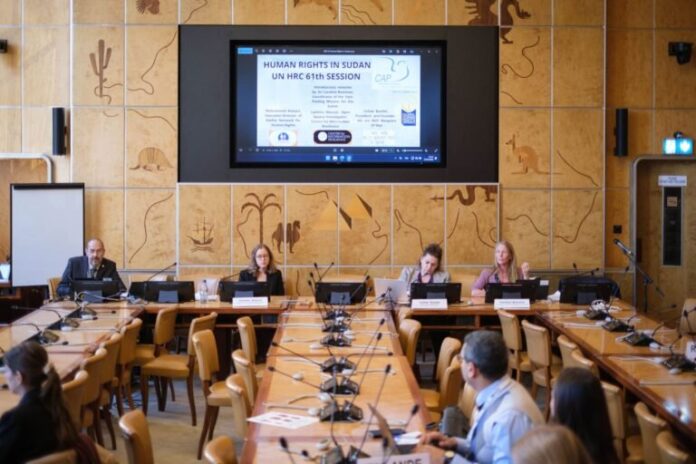
Sudan war and political uncertainty block progress in Abyei peace talks

0

Relations between the neighboring countries remain deeply affected by the war in Sudan, where the national army and its former allies, the Rapid Support Forces (RSF), have been fighting for power since April 2023.

Two senior UN officials briefed the Council on developments in this fertile strip of territory and the peacekeeping mission taking place there, UNISFAwhose mandate includes monitor and verify the redeployment of forces of the oil-rich region, in accordance with a 2011 agreement.

The political process is at a standstill

Assistant Secretary-General for Africa Martha Ama Akyaa Pobee said the political process remains stalled, as it has since the start of the war in Sudan.

Although there have been moves toward dialogue, “considerable challenges remain to make progress on Abyei’s final status.” They include dynamics related to conflict in Sudan and political uncertainty in South Sudan.

She noted that the recent strategic review of UNISFA – requested by the Council last November – “underscored a reinvigorated political role for the Mission, which stands ready to provide support to the parties as they plan a resumption of talks.”

Presence of RSF and community tensions

At the same time, UNISFA continued to report an increased presence of RSF elements and associated individuals in northern Abyei.

This has contributed to increased crime rates, particularly at Amiet Market, a popular shopping center for the Ngok Dinka and Misseriya communities.

The market’s rapid growth in recent years has made it a potential flashpoint for intercommunal tensions.adding a new challenge for UNISFA,” Ms. Pobee said, pointing to illegal checkpoints set up by the RSF and other armed groups.

UNISFA had no choice but to engage regularly with the armed actors present in the area to facilitate their withdrawal.remind them that their presence in the Abyei administrative area is contrary to Abyei’s demilitarized and arms-free status, and prevent their return.

Additionally, South Sudanese security forces also remain present in southern Abyei, which constitutes another violation.

“I reiterate the call for the immediate withdrawal of all armed forces and other armed actors from Abyei, in line with Abyei’s arms-free status,” she said.

“Untenable” operating environment

Ms. Pobee said the strategic review also detailed how the operating environment at the former mission logistics center and Joint Border Verification and Monitoring Mechanism (JBVMM) headquarters in Kadugli, Sudan, “has become simply untenable.”

The fighting endangers peacekeepers and “the situation has become even more dire with an increase in targeted drone strikes» by the RSF, which had a negative effect on UNISFA air operations.

In addition, the Sudanese conflict and the continued influx of displaced people continue to create economic difficulties in Abyei, and the mission has had to facilitate the activities of humanitarians helping the population.

Impact in South Sudan

The war also continues to impact security in South Sudan, UN Special Envoy for the Horn of Africa Guang Cong told the Council.

Cross-border movements of armed groups from both sides have led to increased insecurity in and around the border area.

The war and deteriorating security are also affecting South Sudan’s main source of income, as the flow of oil and exports through Sudan have been significantly disrupted, causing the economy to contract by almost 25 percent.

“Only after increased bilateral engagement and new arrangements to improve security along the pipeline route and other facilities did oil production and transportation resume earlier this year,” he said.

However, subsequent RSF attacks on oil installations, which took place in May and August, “resulted in oil spills, environmental damage and led to an emergency shutdown of operations.”

Support dialogue

In her briefing, Ms. Pobee noted that Sudan and South Sudan have indicated their openness to resuming contacts on Abyei.

Last month, the two countries announced plans to reactivate cooperation agreements focused on security and the economy.

As the African Union (AU) continues to play a critical role in facilitating engagement between the parties, UNIFSA will continue its close coordination with the organization, she said.

Mr. Cong also welcomed renewed efforts to revive Abyei’s political process and hopes to support the AU in this regard.

Originally published at Almouwatin.com

Not just dreams, but rights: Social justice in focus at Doha summit

0
Not just dreams, but rights: Social justice in focus at Doha summit

The Global Coalition for Social Justice Forum brought together ministers, workers’ and employers’ organizations, UN agencies and civil society to accelerate action on poverty eradication, decent work and social inclusion.

The gathering came at a moment described as both hopeful and urgent. Since the coalition’s launch in 2023, governments and partners have expanded efforts to close inequalities and strengthen social protections.

Progress has been made in education, life expectancy and gender equality. Yet discrimination, exclusion and gaps in rights at work remain deeply entrenched in many countries.

Against this backdrop, the Forum served as a space to share achievements, examine where commitments are falling short, and discuss how to accelerate coordinated efforts to bridge these divides.

Not just dreams – rights

Addressing the event, Annalena Baerbock, President of the UN General Assembly, spoke of social justice not as a vision but a right.

“We all have dreams,” she said, recalling her childhood hopes and the encouragement that hard work could make anything possible.

“But we know that is not true for everyone. The world, as it stands, is not equal. It’s not fair. The world is not just.

She warned that millions of young people around the world still see their futures constrained by poverty, lack of education, conflict and discrimination.

“These are not just dreams. These are rights,” she said, calling on governments, the private sector and civil society to dismantle systemic barriers: “We have to ensure that we end these injustices once and for all.

An elderly flower vendor in Jogyakarta, Indonesia. According to UN estimates, 58 per cent of world’s older persons live in Asia and the Pacific, a figure expected to rise in the years to come.

A pathway to justice

Speaking to UN News on the sidelines, Srinivas Tata, Director of the Social Development Division at the UN Economic and Social Commission for Asia and the Pacific (ESCAP), underscored the moment’s significance.

This is about putting social development back at the centre,” he said. “Social justice is the goal – social protection is one of the means to get there.”

Asia and the Pacific has lifted millions out of poverty over recent decades, he noted, but inequality remains high, populations are rapidly aging, and climate change is deepening vulnerabilities.

To help address these pressures, ESCAP works with governments to identify who is being left behind and how to reach them. Its Social Protection Toolbox includes a simulation tool to show the returns of expanding social protection.

“It demonstrates that social protection is not a cost…it is an investment.

Listen to the interview with Mr. Tata.

Human rights at the core

While ESCAP highlighted regional policy tools, the UN human rights office, OHCHR, emphasised the universal principles underpinning social protection efforts.

Nada Al-Nashif, UN Deputy High Commissioner for Human Rights, told us the Summit is “a golden opportunity to revisit the vision of Copenhagen,” noting that poverty eradication, decent work and social inclusion are “completely anchored in human rights.”

On social protection, she highlighted close partnership with other UN agencies, in particular the International Labour Organization (ILO), and “incredible success stories” where schemes are anchored in law and target the most vulnerable.

Looking ahead, she stressed the need to shift into action: “We have momentum now to turn all our plans, our aspirations into action. We know how it works, and we have the solutions.

UN News on the ground

UN News is on the ground in Doha, providing continuing coverage throughout the week, including live updates, interviews and analysis from the Summit. Follow our coverage here.

Source link

World news in brief: Famine alert in South Sudan, tsunami preparedness and peacekeeping activities reported along Lebanon’s ‘blue line’

0

According to UN-backed hunger experts, more than half the population – or around 7.56 million people – will face “crisis or even more severe levels of hunger” between April and July 2026, the lean season.

In addition, more than two million children are expected to suffer from acute malnutrition during the same period, the United Nations World Food Program has warned (PAM).

The UN agency said food insecurity is “widespread and worsening” in parts of South Sudan.

Constant warnings

“We have consistently warned of the serious food and nutrition crisis that the country continues to face,” UN deputy spokesperson Farhan Haq said during Wednesday’s daily press briefing in New York.

Fears are greatest for the 28,000 people living in Luakpiny/Nasir and Fangak counties, where hunger levels are described as catastrophic, in the latest report from UN-backed international food security experts the IPC – recognized as the most authoritative source for monitoring extreme hunger and famine around the world.

They point out that southern parts of Luakpiny/Nasir County are at risk of famine if conflict persists and access restrictions remain, due to flooding and disease outbreaks.

Ending hunger depends on cultivating South Sudan’s fields and reopening markets, UN agencies say.

Be prepared for tsunamis: investing in preparedness to save lives

Over the past 100 years, tsunamis have claimed more than 260,000 lives – an average of 4,600 per disaster – more deaths than any other natural hazard, according to the United Nations disaster risk reduction agency (UNDRR) said Wednesday.

In line with efforts to reduce disaster losses and build resilience to protect lives, livelihoods and economies from the devastating effects of tsunamis, the theme of this year’s edition World Tsunami Awareness Day is Be Tsunami Prepared: Invest in Tsunami Preparedness.

Tsunamis are rare but highly destructive, posing an existential threat wherever the monster wave phenomenon occurs. “Let us commit to building on the progress we have made and investing the funds needed to improve tsunami preparedness and resilience for all,” said UNDRR Chief Kamal Kashore.

Tsunamis disrupt livelihoods, industries, agriculture and essential services such as education and healthcare.

Early warnings save lives

The recent 8.8 magnitude earthquake off the coast of Russia on July 30, 2025 clearly demonstrates why early warnings are essential.

Rapid action then allowed communities to evacuate in time, preventing large-scale loss of life.

Rapid urbanization and tourism development in tsunami-prone regions are putting more people at risk – making risk reduction a key factor if the world is to achieve substantial reductions in disaster-related mortality.

“With rising sea levels and more people living near coasts, early warning systems require investment and improvement,” UN Secretary-General Antonio Guterres said in today’s message.

Lebanon: UN peacekeepers report intensified military activities along the Blue Line

UN peacekeepers in southern Lebanon have reported increased military movements and exchanges of fire along the Blue Line separating Lebanon and Israel, UN deputy spokesperson Farhan Haq said Wednesday.

UNIFIL Peacekeepers continue to observe the presence and military activities of the Israel Defense Forces,” he told reporters, noting that over the past two days they had seen “more than 100 IDF vehicles moving in the eastern sector and around 60 in the western sector, including several Markava tanks.”

He said peacekeepers reported “around 300 small arms fire” from south of the Blue Line near Kfar Shouba on Monday and “another 100 direct fire” near Shab’a the next day.

Mr. Haq reminded all parties of “their obligation to ensure the safety and security of UN personnel and assets.” UNIFIL also discovered and reported several weapons caches and continues to organize joint patrols and training with the Lebanese army.

Originally published at Almouwatin.com