Monday, March 30, 2026
Home Blog Page 143

Ukraine: Russian attacks on energy could trigger major ‘crisis within crisis’

0
Ukraine: Russian attacks on energy could trigger major ‘crisis within crisis’

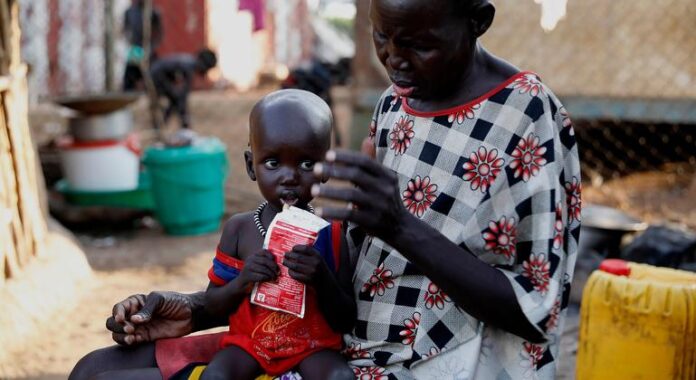
The heavy humanitarian and psychological toll of these strikes is compounded by the expectation that this year’s winter will be much colder than last year’s – with the level of destruction of power facilities outpacing the ability to recover.

We are very worried about people living in high-rise buildings in cities near the frontline – that could turn into a major crisis,” Matthias Schmale, the UN Resident and Humanitarian Coordinator in Ukraine, told reporters in Geneva.

Mr. Schmale’s comments came a day after a massive Russian attack across Ukraine reportedly targeted critical energy infrastructure in civilian areas.

High rise target

With 705 munitions reportedly deployed, the barrage was among the largest since Russia’s full-scale invasion began in 2022.

If people in frontline cities like Zaporizhzhia, Kharkiv or Dnipro in high rise apartment buildings are “stuck without electricity or safe water for days on end” during a harsh winter, Mr. Schmale explained, then “there is no way that with the available resources we would be able to respond to a major crisis within a crisis.”

“Destroying energy production and distribution capacity as winter starts clearly impacts the civilian population and is a form of terror,” Mr. Schmale insisted. “The continued strikes throughout the country also give a sense of nowhere is safe… in my almost one and a half years there, [I] feel and sense that the mental health impact of this war is increasing,” he added.

Drone wars

This is increasingly a technological war, a drone war,” the UN official said, highlighting that drones were responsible for one third of all recorded civilian casualties in 2025.

This year has seen a 30 per cent overall increase in civilian deaths compared with 2024.

Civilian casualties of Thursday’s attack included a seven-year-old girl who died in the hospital following a strike in the central region of Vinnytsia.

Earlier this week an attack severely damaged a children’s hospital in Kherson City, injuring a child and health workers.

The World Health Organization (WHO) has recorded 364 attacks impacting healthcare facilities in Ukraine between January and October 2025.

School horror

Mr. Schmale recounted his own recent experience, which he described as a “poignant moment,” visiting a kindergarten in Kharkiv right after it had been struck by three missiles.

“I just imagined as a parent, you drop your children in the morning at a kindergarten, you then get called back two and a half hours later… to pick up your traumatised children who’ve just experienced three missiles hitting their kindergarten,” he said.

“This notion of safety for vulnerable people and children is really being violated all the time.”

Turning to the situation in the Ukrainian territories occupied by the Russian Federation, the UN humanitarian coordinator said that the longer the war goes on for, “the more we are at risk of forgetting the vulnerable people” in those areas.

According to estimates “about a million people are vulnerable in the so-called temporarily occupied territories,” he said.

Attack on citizenship

Mr. Schmale also warned of the “attacks on fundamental rights” which are ongoing there, “including attacks on citizenship.”

“My understanding is that the occupying forces are insisting that Ukrainians are now registering for Russian documents in the occupied territories, and if they don’t do so, they will be considered illegal and are subject to either deportation or arrest,” he said.

The UN official expressed further concern over dwindling funds for the Ukraine humanitarian response, describing a “downward trend.”

“In 2022, we had over $4 billion for humanitarian work in Ukraine. [In] 2023, it was still $2.6 [billion]. Last year, remarkably, 2024, with everything else going on in the world, still $2.2 [billion],” he said.

“This year we stand at $1.1 [billion], so far half of what we got last year and with two months to go” till the end of 2025, he added.

Source link

ESMA publishes data for quarterly bond liquidity assessment

0

The quarterly liquidity assessment of bonds will be discontinued following the current publication, considering that new transparency requirements in respect to bonds will start applying from 2 March 2026. Further details are provided on the relevant webpages of the calculations. 

Bonds quarterly liquidity assessment 

ESMA has published the latest quarterly liquidity assessment for bonds available for trading on EU trading venues. For this period, there are 1,195 liquid bonds subject to MiFID II transparency requirements. 

ESMA’s liquidity assessment for bonds is based on a quarterly assessment of quantitative liquidity criteria, which includes the daily average trading activity (trades and notional amount) and the percentage of days traded per quarter. Additional data and corrections submitted to ESMA may result in further updates within the quarter, published in ESMA’s Financial Instruments Transparency System (FITRS)which shall be applicable the day following publication.   

The full list of assessed bonds is now available through FITRS in the XML files with publication date 31 October 2025 through the Register web interface.

ESMA also publishes two completeness indicators related to bond liquidity data. 

The transparency requirements for bonds deemed liquid today will exceptionally apply from 17 November to 1 March 2026. The extended application dates reflect the application of the new RTS 2 provisions (see ESMA’s public statement on the application of the revised rules on non-equity transparency). The quarterly liquidity assessment will not be performed in the future. 


Further information:

Cristina Bonillo

Senior Communications Officer
press@esma.europa.eu

Source link

‘Normalising’ Taliban rule would betray Afghan women, warns UN expert

0
‘Normalising’ Taliban rule would betray Afghan women, warns UN expert

Richard Bennett, the Special Rapporteur monitoring human rights in Afghanistan – who serves independently under a mandate of the Human Rights Council and is not a UN staff member – told the General Assembly the human rights situation in the country “continues to deteriorate with few grounds for optimism.

He warned of intensifying gender persecution, a rise in corporal punishment, enforced disappearances and attacks against former officials despite a declared amnesty.

There are also increasing restrictions on media freedom and civil society, and discrimination against ethnic and religious minorities, including forced evictions affecting Hazara communities.

Restrictions on women and girls continue

He noted that no Taliban edicts restricting women’s rights have been reversed.

“Many Afghan women are denied their right to work,” he said, pointing to recent moves preventing Afghan women working for the UN from entering UN compounds. “This is a serious breach of fundamental rights and the UN Charter’s principles of equality and non-discrimination.”

Mr. Bennett also criticized the sharp reduction in humanitarian and civil society funding, which he said is removing “the last lines of protection” for a population already facing widespread deprivation.

He urged governments to recommit to long-term, sustained support, particularly for Afghan and women-led organizations.

Protect refugees from harm

The Special Rapporteur further warned of the mass forced return of Afghan refugees, urging all States to respect the international legal principle of non-refoulement, which prohibits returning people to places where they face persecution or serious harm.

While the situation remains grave, Mr. Bennett highlighted signs of progress in accountability.

These include the International Criminal Court’s issuance of arrest warrants for senior Taliban leaders, and the Human Rights Council’s recent establishment of an independent investigative mechanism to collect and preserve evidence of serious crimes for future trials.

‘Not a lost cause’

“Afghanistan is not a lost cause,” Mr. Bennett told delegates, stressing that accountability is an “essential part “of building a future rooted in justice, equality and the rule of law.

Turning away now would not only betray the Afghan people – it would undermine the foundations of our shared international system,” he said.

He urged States to engage with Afghanistan “in a principled manner that avoids normalisation of Taliban rule until there are demonstrated, measurable and independently verified improvements in the human rights situation – particularly for women and girls.”

Source link

EUSR for Human Rights reply to letter from Abdulhadi Al-Khawaja

0
EUSR for Human Rights reply to letter from Abdulhadi Al-Khawaja

EUSR for Human Rights reply to letter from Abdulhadi Al-Khawaja

Source link

Placing people at the heart of cities, key to improving urban life

0

Yet, in the face of this rapid transformation, one question arises above all: how can innovation truly serve people, as more and more of them migrate to cities?

This question is at the heart of this year’s debate World Cities Daywhich will be celebrated in Bogotá, Colombia, under the theme of people-centered smart cities.

Organized by the UN urban agency, UN-HabitatThe event brings together mayors, urban living experts and community leaders from around the world to explore how data, design and digital tools can build communities that are not only smarter, but also fairer, greener and more inclusive.

By 2050, almost 70% of humanity is expected to live in urban areas, increasing demand for housing, services and climate resilience.

In its message of the day, the UN Secretary-General António Guterres emphasized that innovation must close gaps, not widen them.

“A truly smart city puts people first, especially the most vulnerable,” Mr. Guterres said. “When we put people at the center, digital innovation can help drive equity and sustainability for all. »

The great Bogota experience

Bogotá, long known for its urban experiments, has gained global recognition for its combination of technology and civic engagement.

From TransMilenio, its influential bus rapid transit system, to Ciclovía, which transforms streets into car-free community spaces every Sunday, the city has redefined how urban design can foster social connection and sustainability.

For Elkin Velásquez, UN-Habitat regional director for Latin America and the Caribbean, Bogota offers a compelling example of how data and dialogue can shape a better future.

“This global celebration will foster international dialogue on people-centered smart cities, where technology improves quality of life and strengthens community connections,” he said.

© Unsplash/Delaney Turner

Bogotá, the capital of Colombia.

Listening to the city

Key speakers in Bogotá include Carlo Ratti, architect, engineer and director of the MIT Senseable City Lab in the United States, as well as curator of the 2025 Venice Architecture Biennale.

Mr. Ratti, one of the world’s leading thinkers on urban innovation, believes that cities must evolve beyond the notion of the “smart city” towards what he calls the “responsive city.”

“I don’t like the term ‘smart city,’” Mr. Ratti said. “This often involves a top-down system driven by technology alone. Cities must be people-first – responsive, inclusive and adaptive. A ‘sensible city’ uses technology not for its own sake, but to better listen to and serve its citizens.”

For Mr. Ratti, Bogotá embodies this spirit. “It has long intrigued me as a leading city in urban experimentation,” he said. “Projects like TransMilenio and Ciclovía have become global case studies.

“They show how local interventions, when scaled and adopted, can change urban trajectories. »

As a matter of principle, Mr. Ratti believes that in times of climate emergency and demographic transition, “the most radical act is perhaps not to build or to build differently”. As an alternative, he suggests prioritizing reuse, renovation and transformation.

“And if you really need to build on greenfield sites, learn from the logic of nature. In terms of energy and circularity, a tree is still much smarter than any building we can design,” he concluded.

A people-centered vision

According to Anacláudia Rossbach, executive director of UN-Habitat, the city’s approach illustrates what a human-centered smart city should look like.

“In Bogotá, the smart city approach is people-centered and aims to improve well-being and quality of life,” said Rossbach.

“Programs like Ecobarrios and Mi Casa focus on resilience and sustainability, while digital initiatives like Chatico, a virtual agent, use artificial intelligence to help citizens access information about public services and participate in consultations.

These initiatives, she explained, represent a broader effort to advance sustainable mobility, data-driven policymaking and reduce the digital divide.

© Bogota City Hall/Cristia

Bogota, Colombia is recognized as a leader in smart city initiatives, with a focus on digital transformation, mobility and urban sustainability.

“These are great examples of technology and innovation serving people and communities,” added Rossbach. “It is essential that such experiences are shared globally, allowing other cities to adapt these lessons to their own context. »

A global conversation

World Cities Day marks the conclusion of Urban October, UN-Habitat’s month-long campaign for sustainable and inclusive urbanization. This year’s celebration in Bogotá aims to leave behind a legacy of collaboration, learning and shared commitment to a more equitable urban future.

“The legacy we seek is twofold,” concluded Ms. Rossbach. “First, highlight the creativity of cities in promoting smart, people-centered approaches. And second, strengthen cooperation networks that ensure that innovation serves people, not the other way around.”

As digital tools become increasingly integrated into urban life, the challenge for cities is clear: ensuring that smart solutions remain human.

Originally published at Almouwatin.com

“Normalization” of Taliban regime would betray Afghan women, UN expert warns

0

Richard Bennett, the Special Rapporteur for monitoring human rights in Afghanistan – who serves independently under a mandate from the Human Rights Council and is not a UN staff member – said the General Assembly on the human rights situation in the country »continues to deteriorate and there is little reason for optimism.»

He warned of intensifying gender-based persecution, increased corporal punishment, forced disappearances and attacks on former officials despite the declared amnesty.

There are also increasing restrictions on media freedom and civil society, as well as discrimination against ethnic and religious minorities, including forced evictions affecting Hazara communities.

Restrictions on women and girls continue

He noted that no Taliban decree restricting women’s rights has been reversed.

“Many Afghan women are denied their right to work,” he said, highlighting recent measures preventing Afghan women working for the UN from entering UN premises. “This is a serious violation of fundamental rights and United Nations Charterprinciples of equality and non-discrimination.

Mr Bennett also criticized the sharp reduction in humanitarian and civil society funding, which he said removes “the last lines of protection” for a population already facing widespread deprivation.

He urged governments to reaffirm their commitment to providing sustained, long-term support, particularly to Afghan-led and women-led organizations.

Protecting refugees from danger

The Special Rapporteur further warned against the mass forced return of Afghan refugees, urging all States to respect the international legal principle of non-refoulement, which prohibits the return of people to places where they risk persecution or serious harm.

Although the situation remains serious, Mr. Bennett highlighted signs of progress on accountability.

These include the International Criminal Courtthe issuance of arrest warrants by the Human Rights Council for senior Taliban leaders and the recent establishment by the Human Rights Council of an independent investigative mechanism to collect and preserve evidence of serious crimes for future trials.

“This is not a lost cause”

“Afghanistan is not a lost cause,” Bennett told delegates, emphasizing that accountability is an “essential element” of building a future rooted in justice, equality and the rule of law.

Turning away now would not only betray the Afghan people – it would undermine the foundations of our common international system.» he said.

He urged states to engage with Afghanistan “in a principled way that avoids the normalization of Taliban rule until there are demonstrated, measurable and independently verified improvements in the human rights situation – particularly for women and girls”.

Originally published at Almouwatin.com

Hurricane Melissa Displaces Thousands in Caribbean

0

The hurricane caused significant damage to homes, infrastructure and crops, displacing thousands of people.

However, intensive storm preparation by governments, with help from UN agencies and other NGOs, appears to have helped mitigate the impact and save lives in many areas.

In Cuba, the hurricane hit the province of Santiago de Cuba with winds exceeding 200 km/h per hour and six hours of torrential rain. “Melissa is one of the three most powerful hurricanes ever recorded in Cuba and the strongest in the world this year,” Francisco Pichon, United Nations resident coordinator for Cuba, said during a videoconference press briefing in New York.

More than three million people have been exposed to life-threatening conditions and nearly 240 communities are isolated due to flooding and landslides.“, he added, speaking by video.

Existing vulnerabilities

The storm exacerbated existing vulnerabilities. Many affected areas had already suffered from Hurricane Oscar and last year’s earthquakes, while drought, rising viral diseases and energy shortages have made the situation even worse.

Despite these challenges, Cuba’s civil protection system helped evacuate more than 77,000 people to protection centersincluding schools temporarily converted into shelters.

Mr. Pichon highlighted the UN’s anticipatory action framework, which prepositioned relief supplies and personnel before the storm struck. “This mechanism allowed us to respond quickly and ensure that essential goods reached the people who needed them most.“, he said.

Plans are underway to reach two million people in the coming days, including food security, health, education, shelter, water and sanitation, and logistics.

Early preparation saves lives

In Haiti, the slow movement of the storm caused flash floods, landslides and severe crop damage, said Grégoire Goodstein, acting U.N. humanitarian coordinator.

“At least 24 people died, 17 were injured and 18 are still missing,” he reported. Around 15,000 people are currently housed in more than 120 temporary facilities.

Early preparation saved lives. “We deployed emergency stocks, set up evacuation shelters and sent 3.5 million early warning messages. » Mr. Goodstein told reporters. “Rapid response teams worked alongside national authorities to ensure communities could evacuate safely,” he added.

Haiti faces the storm amid a continuing humanitarian crisis, with 1.4 million people displaced, widespread famine affecting half the population and cholera outbreaks in some areas.

Mr. Goodstein highlighted that the UN Humanitarian Response Plan is currently 87 percent underfunded, putting life-saving operations at risk.

“Humanitarian needs remain immense and international cooperation is crucial. »

The UN continues to coordinate aid in the Caribbean, supporting both immediate relief and longer-term recovery efforts following Hurricane Melissa.

Originally published at Almouwatin.com

World news in brief: Ukrainian energy targeted, nuclear test warning, rights violations in Nicaragua

0

This is the third large-scale combined strike in October against energy facilities in civilian areas, leading to significant power outages.

At least two other civilians were killed – and 23 injured, including six children – in Zaporizhzhia, which was reportedly hit by more than eight ballistic missiles and 20 drones.

A seven-year-old girl was among those killed in the central Vinnytsia region.

More than 700 keystrokes

Thursday’s strikes were among the largest since Russia’s invasion began in 2022, with 705 munitions reportedly deployed.

Danielle Belle, who heads the UN monitoring team, stressed that if the pattern of attacks continued it would have “dangerous consequences” for civilians during the harsh winter months.

Ms Belle reiterated that these disruptions would disproportionately affect vulnerable groups, including older people, people with disabilities and families with young children.

Ukraine’s armed forces reportedly responded to long-range Russian attacks with their own drone and missile strikes.

Nuclear tests “cannot under any circumstances be authorized”, reiterates the UN

In response to a statement by the US president that his administration would resume testing nuclear weapons, the UN warned against proliferation on Thursday, calling for a moratorium to be maintained.

The risk of nuclear war is “already alarming”, UN deputy spokesperson Farhan Haq said in response to a question at the regular midday press briefing in New York.

President Donald Trump said on social media that he had asked the Pentagon “to begin testing our nuclear weapons on an equal footing,” in response to Russia’s testing of new nuclear delivery systems and China’s deployment of new ballistic missile silos, according to media reports.

China has reportedly not carried out any nuclear weapons tests since 1996. The last confirmed test by Russia dates back to 1990.

Miscalculation and escalation

Mr. Haq said any nuclear activity that “could lead to miscalculations or escalation with catastrophic consequences must be avoided. We must not forget the disastrous legacy of more than 2,000 nuclear weapons tests that have been carried out over the past 80 years.”

He added that in the Secretary-General’s view, “under no circumstances can nuclear testing be authorized.”

Robert Floyd, Executive Secretary of the Comprehensive Nuclear-Test-Ban Treaty Organization (CTBTO), said in a statement The treaty prohibits all nuclear explosions, while its agency “can and will detect any nuclear weapon test explosion anywhere on the planet and has successfully detected all six reported nuclear tests carried out this century.”

Mr. Floyd added that at this difficult moment, there was “an opportunity for world leaders to move forward and work together, as equals, towards the ratification of the CTBT and the common goal of a world without nuclear weapons testing.”

UN experts warn of human rights violations in Nicaragua, call for protection of exiled citizens

A group of independent human rights experts urge the international community to hold the Nicaraguan government accountable for serious rights violations and international crimes, as it presented its findings to the General Assembly for the first time.

Jan-Michael Simon, president of the Group, noted that Nicaragua once championed peace, freedom and democracy in Central America – but now faces allegations of dismantling the rule of law and democratic institutions.

Silencing dissent, at home and abroad

The experts’ report to the New York General Assembly describes a deliberate state policy to silence dissent and consolidate absolute power through violence, fear, and the systematic erosion of rights.

Some documented human rights violations, they say, constitute crimes against humanity.

The group also condemned the growing number of enforced disappearances, calling them an act of cruelty that torments both the victims and their families.

The independent experts also warned that the government had extended the repression abroad by stripping some exiles of their nationality – as a tool to punish dissidents.

Originally published at Almouwatin.com

UN Envoy hails Colombia peace process as global model, calls for more funding

0

Following the signing of the peace agreement in Colombia in 2016, more than 13,000 former FARC fighters laid down their arms in one year, returning nearly 9,000 weapons, 38,000 tons of explosives and millions of rounds of ammunition.

Mr Jenča noted that despite ongoing challenges, the implementation of the agreement has significantly improved security and trust between communities. Around 11,000 ex-combatants are now engaged in development projects and other implementation activities.

They are building a new, peaceful and productive future – building sustainable homes, solving problems together and moving forward.“, he said UN News.

He also highlighted the first convictions handed down by the Special Jurisdiction for Peace for crimes committed during the conflict, calling them a “crucial step towards accountability.”

Support and control

At a recent UN conference Security Council During the session, the United States questioned the Mission’s expanded mandate, saying it reflected “excessive political priorities” and pledged to “carefully consider” its continued support.

Mr Jenča responded that such assessments were “normal”, but stressed that the other 14 Council members had expressed clear support for the renewal of the Mission’s mandate, a vote scheduled for the end of this week.

Elizabeth Yarce/UN Colombia Verification Mission.

The new head of the United Nations Verification Mission in Colombia, Miroslav Jenča, visits some of the projects implementing the peace agreement.

On the ground, the Mission enjoys broad support from the Colombian government and across the political spectrum.

“I spoke with members of the opposition and representatives of the government – ​​all supported the continuation of the Mission, although some adjustments were suggested,” Mr Jenča said.

He acknowledged that maintaining operations would require additional funding and highlighted hopes for closer cooperation as Colombia joins the Security Council in 2026 as a non-permanent member.

A global example of peacebuilding

At a time when multilateralism is met with skepticism, Mr. Jenča said that the peace process in Colombia stands out as “a shining example of negotiation and collaboration”, benefiting not only the country but the whole world.

Looking ahead to the upcoming electoral period in Colombia, Mr. Jenča reaffirmed the Mission’s commitment to ensuring a safe and peaceful campaign.

“Our objective is to promote understanding between political actors and to guarantee an environment of peace, security and respect for human rights,” he concluded.

Originally published at Almouwatin.com

World News in Brief: Ukraine energy targeted, nuclear test warning, rights violations in Nicaragua

0
World News in Brief: Ukraine energy targeted, nuclear test warning, rights violations in Nicaragua

It marks the third large-scale combined strike in October on energy facilities in civilian areas – leading to major power outages.

At least two more civilians were killed – with 23 injured, including six children – in Zaporizhzhia, which was reportedly hit by over eight ballistic missiles and 20 drones.

A seven-year-old girl is among those killed in the central region of Vinnytsia.

Over 700 strikes

Thursday’s strikes were among the largest barrage since Russia’s invasion began in 2022, with 705 munitions reportedly deployed.

Danielle Belle, who heads the UN monitoring team, highlighted that if the pattern of attacks continues it would have “dangerous consequences” for civilians during the harsh winter months.

Ms Belle reiterated that these disruptions would disproportionately affect vulnerable groups – including elderly people, people with disabilities and families with younger children.

Ukrainian armed forces reportedly responded to Russian-long-range attacks with its own drone and missile strikes.

Nuclear testing ‘can never be permitted under any circumstances,’ UN reiterates

Responding to a statement from the United States President that his administration will start testing nuclear weapons again, the UN warned against proliferation on Thursday calling for a moratorium to remain in place.

The risk of nuclear war is “already alarmingly high,” Deputy UN Spokesperson Farhan Haq said in response to a question at the regular noon briefing in New York.

President Donald Trump said on social media that he had instructed the Pentagon “to start testing our nuclear weapons on an equal basis,” in response to the testing by Russia of new nuclear delivery systems and the deployment by China of new ballistic missile silos, according to news reports.

China has reportedly not carried out a nuclear weapons test since 1996. The last confirmed test by Russia was in 1990.

Miscalculation and escalation

Mr. Haq said that any nuclear activity that “could lead to miscalculation or escalation with catastrophic consequences must be avoided. We shouldn’t forget the disastrous legacy of over 2,000 nuclear weapons tests that have been carried out over the last 80 years.”

He added that from the Secretary-General’s standpoint “nuclear testing can never be permitted under any circumstances.”

Robert Floyd, Executive Secretary of the Comprehensive Nuclear-Test-Ban Treaty Organization (CTBTO), said in a statement the treaty bans all nuclear explosions, while his agency “can and will detect any nuclear weapon test explosion anywhere on the planet and has successfully detected all six declared nuclear tests conducted this century.”

Mr. Floyd added that in this challenging moment there was “an opportunity for world leaders to step forward and work together, on an equal basis, towards the ratification of the CTBT and the shared goal of a world free from nuclear weapons testing.”

UN experts warn of rights violations in Nicaragua, urge protection for exiled citizens

A group of independent human rights experts are urging the international community to hold Nicaragua’s Government accountable for grave rights violations and international crimes, as they presented their findings to the General Assembly for the first time.

Jan-Michael Simon, Chair of the Group, noted that Nicaragua once stood for peace, freedom, and democracy in Central America – but now faces allegations of dismantling the rule of law and democratic institutions.

Silencing dissent, home and abroad

The experts’ report to the General Assembly in New York describes a deliberate State policy to silence dissent and consolidate absolute power through violence, fear, and the systematic erosion of rights.

Some human rights violations documented, they said, amount to crimes against humanity.

The group also condemned the rising number of enforced disappearances, calling them an act of cruelty that torments both victims and their families.

The independent experts also warned the Government has extended repression overseas by depriving some exiles of their nationality – as a tool to punish dissenters.

Source link