Monday, March 30, 2026
Home Blog Page 144

European Ombudsman appoints new Secretary-General

0

Following an open call, Lampros Papadias has been appointed Secretary-General at the European Ombudsman Office. Mr Papadias, a lawyer and EU official, has been Head of Cabinet at the European Ombudsman since March 2025. Prior to this, he was the Head of the Secretariat of the Supervisory Committee of OLAF. Mr Papadias will start as Secretary-General on 1 January 2026.

Source link

‘Repeated bouts of violence’ endanger Syria’s reconstruction, independent human rights investigator says

0

In December 2024, Bashar Al-Assad’s regime was toppled by a coalition of opposition groups, led by the Hay’at Tahrir al-Sham militia, sparking a widespread wave of relief at the end of the decade-long civil war, signaling the return of more than a million Syrian refugees.

After being excluded from the country during the Assad years, the Independent international commission of inquiry on Syria – appointed by the UN Human Rights Council in 2011 to investigate and document human rights violations and abuses committed during the conflict – granted full access to the country by the transitional government of President Ahmed al-Sharaa.

In August, the Commission published a report on the wave of violence that engulfed coastal and west-central Syria starting in January 2025, which revealed that acts that may amount to war crimes, including murder and torture, were committed.

Massacres in Latakia and beyond

UN Photo/Jean-Marc Ferré

Paulo Pinheiro, president of the United Nations Independent International Commission of Inquiry on Syria. UN Photo/Jean-Marc Ferré

An estimated 1,400 men, women and children were killed in massacres in Latakia, Tartus and Hama governorates, including by members of government security forces.

Updated Third Committee of the General Assembly – which focuses on human rights issues – on Thursday, Mr. Pinheiro said that investigators had carried out on-site visits to Latakia and Tartous in June this year, and more recently to Suweyda and its surroundings.

Mr. Pinheiro indicated that his team continues to receive reports of extrajudicial executions, torture and ill-treatment, and forced displacement of Alawite civilians in Damascus and the western governorates.

In Sweida, more than 30 villages in Druze-majority areas were completely depopulated, looted and burned, and Commission investigators met with numerous families and witnesses who recounted the brutal killings of loved ones taken from their homes.

© ONUCHA/Ali Haj Suleiman

City of Sweida, during the armed conflict in July 2025

The stage is set for further violence

There is growing distrust, he explained, between the Druze and Bedouin communities and the interim government, which must hold those responsible for the killings to account and ensure that such acts do not happen again.

The Commission is deeply concerned that the stage will be set for further violence if prompt action is not taken.“, warned Mr. Pinheiro. “Rebuilding trust will require dedicated efforts towards dialogue, inclusion and justice for all victims.”

The UN-appointed independent rights expert has expressed growing concerns about violence and discrimination directed against women, citing multiple reports of women and girls abducted by unknown armed actors, some of whom were allegedly victims of sexual violence and forced marriages.

“In many cases, despite reporting their disappearance to local authorities, families report that no action has yet been taken to investigate or follow up. »

Mr. Pinheiro called on UN member states to halt Israel’s advance into southern Syria, which, he said, had seen civilians forcibly displaced and arbitrarily detained, as well as airstrikes that reportedly caused civilian casualties: “intervention by third states risks further inflaming the conflict and inflicting even greater suffering on the Syrian people.”

Noting recent steps taken by several states and the EU to ease sanctions against Syria, Mr. Pinheiro said such steps are welcome and urged member states to continue supporting the 2025 humanitarian appeal for the country, which is currently only 19 percent funded.

Originally published at Almouwatin.com

Hurricane Melissa leaves thousands displaced across the Caribbean

0
Hurricane Melissa leaves thousands displaced across the Caribbean

The hurricane caused widespread damage to homes, infrastructure and crops, leaving thousands displaced.

However, extensive storm preparation by governments, assisted by UN agencies and other NGOs, appears to have helped lessen the impact and saved lives in many areas. 

In Cuba, the hurricane struck the province of Santiago de Cuba with winds exceeding 200 km/h per hour and six hours of torrential rain. “Melissa is one of the three most powerful hurricanes ever recorded in Cuba and the strongest worldwide this year,” said Francisco Pichon, UN Resident Coordinator for Cuba, during a press briefing via videoconference in New York.

More than three million people were exposed to life-threatening conditions, and nearly 240 communities are cut off due to flooding and landslides”, he added speaking via video.

Existing vulnerabilities

The storm compounded existing vulnerabilities. Many affected areas had already suffered from last year’s Hurricane Oscar and earthquakes – while drought, rising viral diseases, and energy shortages caused further strain.

Despite these challenges, Cuba’s civil defence system helped evacuate over 77,000 people to protection centres, including schools temporarily repurposed as shelters.

Mr. Pichon highlighted the UN’s anticipatory action framework, which pre-positioned relief supplies and personnel before the storm hit. “This mechanism allowed us to respond quickly and ensure that essential goods reached the people who needed them most,” he said.

Plans are underway to reach two million people in the coming days, including food security, health, education, shelter, water and sanitation, and logistics.

Early preparedness saves lives

In Haiti, the storm’s slow movement brought flash floods, landslides, and severe damage to crops, said Gregoire Goodstein, the UN’s interim Humanitarian Coordinator.

“At least 24 people have died, 17 were injured, and 18 remain missing,” he reported. Around 15,000 people are currently sheltering in over 120 temporary facilities.

Early preparedness helped save lives. “We deployed emergency stocks, set up evacuation shelters, and sent out 3.5 million early warning messages,” Mr. Goodstein told journalists. “Rapid response teams worked alongside national authorities to ensure communities could evacuate safely,” he added.

Haiti faces the storm amid an ongoing humanitarian crisis, with 1.4 million people displaced, widespread hunger affecting half the population, and cholera outbreaks in some areas.

Mr. Goodstein noted that the UN’s Humanitarian Response Plan is currently 87 per cent underfunded, putting life-saving operations at risk.

“Humanitarian needs remain immense, and international cooperation is crucial.”

The UN continues to coordinate assistance across the Caribbean, supporting both immediate relief and longer-term recovery efforts in the wake of Hurricane Melissa.

Source link

“Blood on the sand. Blood on its hands: the UN denounces the failure of the world after the fall of El Fasher in Sudan

0

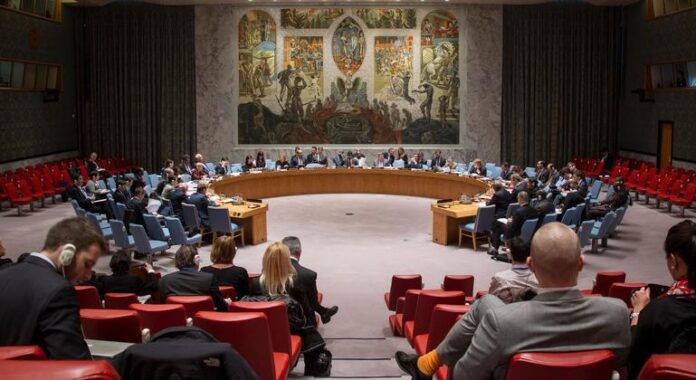
Briefing of ambassadors in the Security Counciltop UN relief official Tom Fletcher said “women and girls are being raped, people are being maimed and killed – with impunity,” adding: “We don’t hear the screams, but – as we sit here today – the horror continues.»

After overrunning the last major Sudanese Armed Forces (SAF) stronghold in Darfur, which had held out for more than 500 days, RSF fighters moved from house to house, he said, with “credible reports of widespread executions” as civilians tried to escape.

Nearly 500 patients and their companions are believed to have been killed at the Saudi maternity ward, one of several health facilities targeted by the fighting.

Tens of thousands of terrified and hungry civilians have fled or are on the move,” Mr Fletcher said. “Those who are able to flee – the vast majority of women, children and the elderly – face extortion, rape and violence during this perilous journey.»

The horror spreads

Assistant Secretary-General for Africa Martha Pobee called the fall of El Fasher a “significant shift in security dynamics,” warning that the implications for Sudan and the region as a whole are “profound.”

Fighting has already intensified in the Kordofan region, where the RSF captured the strategic town of Bara last week.

RSF and SAF drone strikes, she explained, are now hitting new targets in Blue Nile, South Kordofan, West Darfur and Khartoum. “The territorial scope of the conflict is widening,” she warned.

The risk of mass atrocities, ethnically motivated violence and further violations of international humanitarian law, including sexual violence, remains extremely high,» Pobee told the Council.

“Despite commitments made to protect civilians, the reality is that no one is safe in El Fasher. There is no safe passage for civilians to leave the city.”

The UN human rights office, OHCHRdocumented massacres, summary executions and ethnically motivated reprisals in El Fasher and Bara. In the latter country, at least 50 civilians have been killed in recent days, including five Sudanese Red Crescent volunteers, Pobee said.

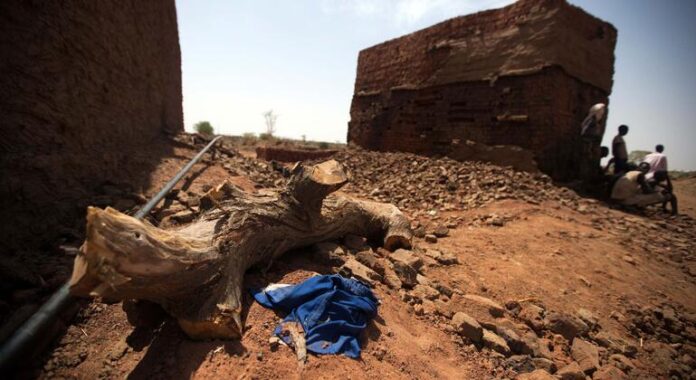
A woman searches through the burned remains of her shelter in an internally displaced persons camp in Darfur, Sudan.

History of atrocities in Darfur

What is happening in El Fasher is reminiscent of the horrors to which Darfur was subjected twenty years ago.“said Mr Fletcher, referring to the atrocities of the early 2000s which shocked the world and ultimately led to International Criminal Court indictments.

“But somehow we are seeing a very different global reaction today – a reaction of resignation,” he continued. “It’s also a crisis of apathy.”

“The Sudanese crisis is, at its core, a failure of protection and our responsibility to uphold international law,” Mr. Fletcher said. “Atrocities are committed in the brazen expectation of impunity… the world has failed an entire generation.»

Descent into total war

The conflict in Sudan began in April 2023, when a long-simmering power struggle between the SAF and the RSF escalated into open war.

The RSF traces its roots to the Janjaweed militias accused of atrocities in Darfur 20 years ago, while the SAF represents the remnants of long-standing military rule in Khartoum.

The two forces once shared power after the ouster of former President Omar al-Bashir in 2019, but a dispute over the RSF’s integration into the national army triggered a nationwide collapse.

What began as a struggle for control of the state has since evolved into a brutal struggle marked by ethnic killings, urban siege warfare, mass displacement and starvation conditions in large parts of the country.

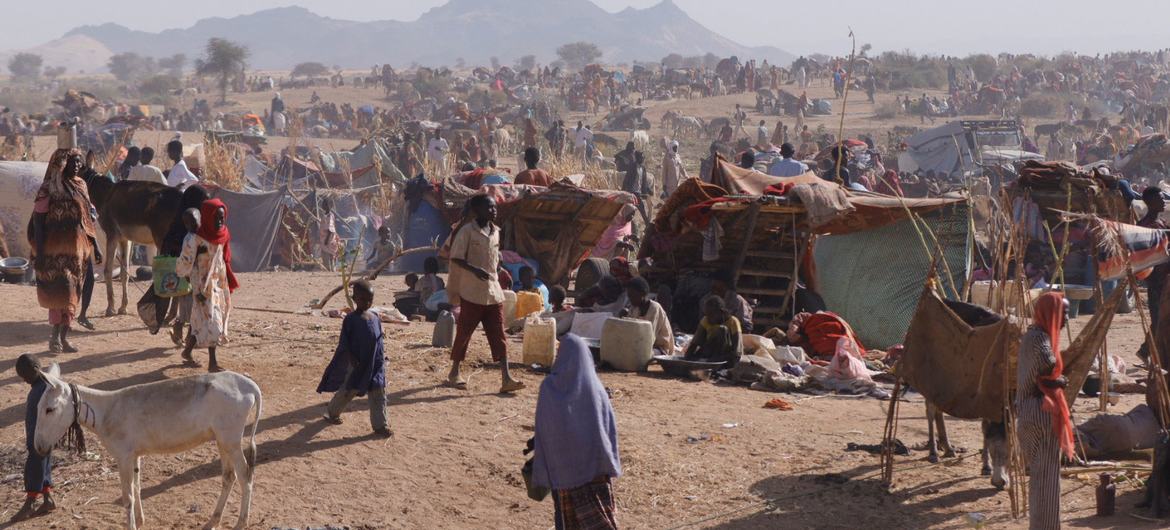
Sudanese refugees arrive in the border town of Adre, Chad. (deposit)

Regional overflow and humanitarian collapse

More than four million people have already fled to neighboring Chad, South Sudan and the Central African Republic, straining humanitarian operations and deepening instability in already fragile border regions.

In Sudan, more than 24 million people – more than 40 percent of the population – suffer from food insecurity. Tawila, the main destination about 50 km away for those fleeing El Fasher, is already home to hundreds of thousands of people displaced by previous attacks.

“Our teams in Tawila are seeing traumatized people arriving with shocking signs of malnutrition,” Mr Fletcher said.

“Blood on the sand. Blood on your hands

Mr. Fletcher said the Council must act “with immediate and strong action” to end atrocities, ensure safe humanitarian access and end the flow of arms that fuel the war.

“I urge my colleagues to study the latest satellite images of El Fasher; blood on the sand“, he told the ambassadors. “And I urge my colleagues to to study the world’s continuing failure to put an end to this. Blood on your hands.”

Originally published at Almouwatin.com

Joint press release: EU-Western Balkans Ministerial Forum on Justice and Home Affairs (Sarajevo, Bosnia and Herzegovina, 30-31 October 2025)

0
Joint press release: EU-Western Balkans Ministerial Forum on Justice and Home Affairs (Sarajevo, Bosnia and Herzegovina, 30-31 October 2025)

Joint press release at the occasion of the EU-Western Balkans ministerial forum on justice and home affairs, Sarajevo, Bosnia and Herzegovina, 30-31 October 2025.

Source link

Innovative Robotics Advances Reshaping Supply Chains

0


The supply chain world is experiencing striking progress due to robotics. New machines and software are solving tricky

Source link

Security Council LIVE: Ambassadors meet in emergency session on Sudan

0

Reports of mass atrocities in and around the newly captured Darfur town of El Fasher mark a new low point in Sudan’s brutal civil war and the Security Council is meeting in an emergency session Thursday morning in New York to address the rapidly deteriorating situation. Civilians face starvation and mass displacement as the UN continues to provide lifesaving aid across the country. Hospitals, schools and camps for displaced people are attacked, and entire neighborhoods have been emptied as families flee the RSF militias. Follow our in-depth live coverage; UN News app users can go here.

Originally published at Almouwatin.com

Customs seize 2,858 kg of cocaine

0

On Tuesday October 28, Customs seized 2,858 kg of cocaine on quay 730 in the port of Antwerp. The cargo was hidden in a container from Costa Rica which contained pineapples. The drugs will be destroyed. Source link

Originally published at Almouwatin.com

Born in 2007? #DiscoverEU with a free travel pass

0
Born in 2007? #DiscoverEU with a free travel pass


Are you turning 18 this year, living in one of the EU or Erasmus+ countries, and want to travel and discover Europe? This is your chance! 

The EU will award selected young people with a travel pass to explore the EU and countries associated with Erasmus+. This year, we celebrate 40 years of the Schengen Agreement, the foundation of border-free travel. On this occasion, the EU is offering 40 000 DiscoverEU travel passes. Applications are now open – apply before 13 November 2025 (midday, Brussels time). You can travel with a group of friends if they meet the eligibility criteria and you submit the application together.

If you are selected, you will receive a travel pass for the most environmentally friendly means of transport, such as trains (or other modes of transport in specific cases). You can travel for only 1 day and up to 30 days during the travel period, which is planned to start on 1 March 2026. You will also receive a DiscoverEU discount card offering numerous discounts on accommodation, culture, sports, local transport, and other services.

If you have a disability or a health problem that makes your travel challenging, you can get assistance and support.

Supporting young people is one of the Commission’s key priorities. DiscoverEU is part of the Erasmus+ programme. It offers 18-year-olds the opportunity to travel and explore Europe’s diversity, learn about its cultural heritage and history, and connect with people from all over the continent. 

For more information

DiscoverEU – apply now!

European social fairness

Feature story European Youth: Dream big. Act now.

Source link

Reported massacre at hospital in Sudan’s El Fasher leaves 460 dead

0
Reported massacre at hospital in Sudan’s El Fasher leaves 460 dead

The World Health Organization says it’s appalled and deeply shocked by reports that 460 patients and their companions have been killed at Saudi Maternity Hospital in the city.

Director-General Tedros Adhanom Ghebreyesus said that prior to this latest attack, WHO has verified 285 attacks on healthcare in Sudan with at least 1,204 deaths and over 400 injuries of health workers and patients, since the start of the conflict.

The once allied RSF and forces of the military government began fighting in and around the capital Khartoum in April 2023 – a conflict which has since engulfed the entire country.

All attacks on healthcare must stop immediately and unconditionally,” said Tedros demanding protection for all health workers and civilians under international law.

Many civilians fleeing the RSF takeover have sought safety in Tawila some 60 kilometres from the regional capital of El Fasher, which until a few days ago was the last remaining government-controlled city which had been holding out against the RSF for over 500 days.

Many have arrived in Tawila “dehydrated, injured and traumatized,” said the UN aid coordination office, OCHA, on social media. “The UN and aid organizations are providing life-saving support, but the violence must stop.”

‘No child is safe’

“No child is safe,” said UNICEF chief Catherine Russell. “While the full scale of the impact remains unclear due to widespread communications blackouts, the estimated 130,000 children in El Fasher are at a high risk of grave rights violations, with reports of abduction, killing and maiming, and sexual violence.”

There are also reports of humanitarian workers being detained or killed.

UNICEF is calling for an immediate ceasefire to stop the violence, safe, unimpeded humanitarian access, the protection of civilians – especially children – and guaranteed safe passage for families seeking refuge, in line with international humanitarian law.

She said all those responsible for violations must be held accountable.

Red Cross workers killed

The International Committee of the Red Cross (ICRC) on Wednesday expressed deep sorrow over the killing of five local staff working as volunteers in Bara, North Kordofan state.

“We received this news with profound shock and outrage and we condemn in the strongest possible terms this horrific and senseless act,” a statement read.

ICRC pledged to support the ongoing humanitarian work across Sudan “striving to uphold the safety, dignity and protection of all people and communities” impacted by the violence.

UN’s head of humanitarian operations in Sudan, Denise Brown, told UN News after recently visiting the Darfur region before the fall of the city this week, that it’s proving hard to verify information from the stricken city, but all atrocities needed to be accounted for so that “justice can be served”.

Listen to the full interview with Denise Brown:


Source link