
Researchers at ETH Zurich and the University of Basel have succeeded in changing the polarity of a special
Light changes a magnet’s polarity
Some bottled water worse than tap for microplastics, study shows
Some brands of bottled water contain significantly higher levels of microplastics than tap water, according to new research
Cuba: UN warns of possible humanitarian ‘collapse’ as oil reserves dwindle
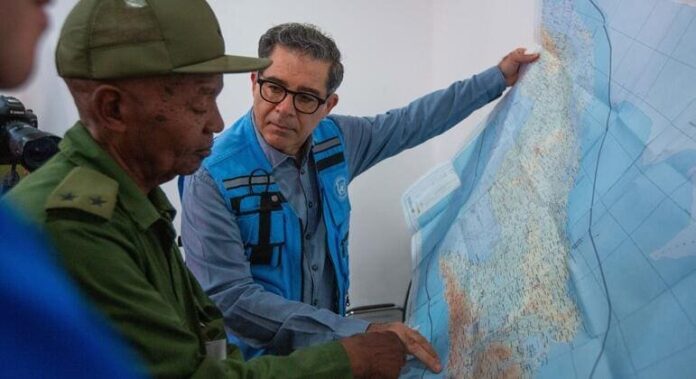
 The United States has threatened to impose tariffs on any country supplying oil to Cuba, increasing pressure on the island nation after a decades-long trade embargo and the U.S. seizure of Venezuelan leader Nicolas Maduro last month. Venezuela was Havana’s main oil supplier, […]
Originally published at Almouwatin.com
Guterres welcomes resumption of Iran-US talks

 The development follows weeks of tension over Iran’s nuclear program and threats of a US military attack. Delegations led by US Special Envoy to the Middle East Steve Witkoff and Iranian Foreign Minister Abbas Araghchi held indirect talks in Oman, according to media reports. It was the first time that […]
Originally published at Almouwatin.com
Alpine splendor meets urban grandeur: Milan-Cortina Games ignite Italian Olympic winter

 MILAN — February 7, 2026— Under the spotlights of the iconic San Sirol Stadium, Italy welcomed the world Friday evening as the Milan-Cortina 2026 Winter Olympics officially began in a ceremony blending Italian Renaissance art with the raw majesty of the Dolomites. Stretching from the cosmopolitan energy of Milan to the historic heights of […]
Originally published at Almouwatin.com
Alpine splendor meets urban grandeur: Milan-Cortina Games ignite Italian Olympic winter
 MILAN — February 7, 2026— Under the spotlights of the iconic San Sirol Stadium, Italy welcomed the world Friday evening as the Milan-Cortina 2026 Winter Olympics officially began in a ceremony blending Italian Renaissance art with the raw majesty of the Dolomites. Stretching from the cosmopolitan energy of Milan to the historic heights of […]
Originally published at Almouwatin.com
Alpine Splendour Meets Urban Grandeur: Milano-Cortina Games Ignite Italy’s Olympic Winter

MILAN — February 7, 2026— Under the floodlights of the iconic San Siro Stadium, Italy welcomed the world Friday evening as the Milano-Cortina 2026 Olympic Winter Games officially commenced in a ceremony weaving Italy’s Renaissance artistry with the raw majesty of the Dolomites. Spanning Milan’s cosmopolitan energy to Cortina d’Ampezzo’s storied peaks—and venues from Livigno to Bormio—these Games redefine the Winter Olympics through intentional decentralization.
The opening ceremony broke tradition: football legend Zlatan Ibrahimović reflected on resilience and legacy, while Grammy winner Mariah Carey and Italian icon Laura Pausini delivered musical tributes resonating across the 75,000-seat arena. Unlike past Winter Games anchored to a single mountain town, Milano-Cortina deliberately bridges piazza and peak—a symbolic union of urban innovation and alpine heritage.
“This is not merely a sporting event,” stated International Olympic Committee President Thomas Bach. “It is a testament to resilience—to hosting Games that honour environmental sustainability and the authentic character of our host communities.” Organisers emphasise reuse: 93% of venues are existing or temporary, with legacy planning prioritising post-Games community use and ecological stewardship.
Competition surged before the flame was lit, with women’s ice hockey and mixed doubles curling underway February 5. By Saturday, snowboarders launched big air qualifiers under brilliant sun at Livigno’s purpose-built park, speed skaters carved precision arcs at Baselga di Piné’s new oval, and figure skating pairs delivered emotionally charged performances at Milan’s Olympic Ice Skating Arena.
Cortina d’Ampezzo—host of the 1956 Winter Olympics—welcomes alpine skiing’s elite to slopes steeped in history, while its newly renovated sliding track challenges luge and skeleton athletes at speeds exceeding 130 km/h. A coordinated transport network seamlessly links venues up to three hours apart, turning geographic dispersion into a showcase of Italy’s diverse winter landscapes.
Security protocols remain robust across host zones following planned demonstrations in Milan Saturday afternoon. Officials confirm all venues operate smoothly, with spectator safety prioritised without dampening the festive atmosphere. For Italy—a nation globally celebrated for football and summer tourism—these Games mark a strategic reclamation of its deep-rooted winter sporting identity, spotlighting regions long central to European alpine culture.
As the first medals are awarded beneath Dolomite peaks tonight, Milano-Cortina 2026 offers more than podiums and records. It presents a vision: winter sport evolving responsibly amid climate conversations, human grit meeting elemental beauty, and a nation sharing its mountains not as backdrop, but as heartbeat.
Event Details:
❄️ Olympic Winter Games: February 6–22, 2026
♿ Paralympic Winter Games: March 6–15, 2026
📍 Host Regions: Lombardy, Veneto, Trentino-Alto Adige
🌐 Full Schedule & Tickets: milano-cortina2026.org
The European Times is committed to sustainable journalism. This coverage is produced with minimal carbon footprint. Follow #MilanoCortina2026 for live updates.
Keeping hope ‘alive for younger generations’ in Haiti as funding falters
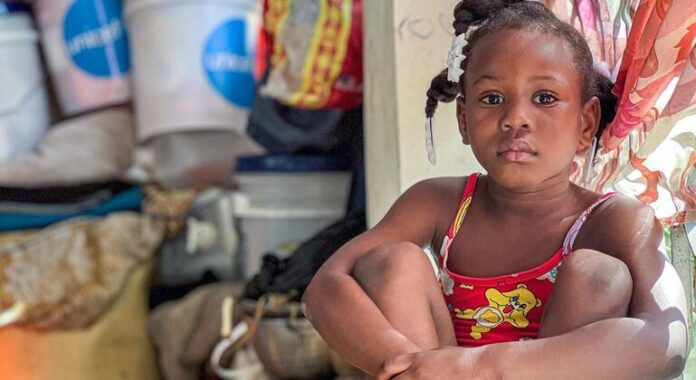
Armed groups control large swaths of Port-au-Prince, forcing more than 1.4 million people from their homes and cutting access to food, health, water and education services.
Half the population is not getting enough to eat, and malnutrition among children is rising sharply. Humanitarian efforts are hampered by insecurity and blocked access routes.
According to the UN, six million people of Haiti’s population of around 11.4 million need some form of humanitarian assistance in 2026.
Why funding Haiti matters
Funding for humanitarian aid in Haiti is a lifeline for millions. The UN’s 2026 Humanitarian Response Plan seeks $880 million to assist 4.2 million of those six million vulnerable people, covering emergency food, shelter, protection, health and education services.
Without these resources, basic lifesaving operations, such as nutrition support for children and protection services for women and girls, cannot reach all of those in need.
UN agencies stress that sufficient donor funds are essential not only to save lives but to stabilise communities torn apart by violence and displacement.
Thousands of people have died as a result of gang violence in Haiti’s capital, Port-au-Prince.
Violence by armed groups has forced 1.4 million people, or 12 per cent of the population, to flee their homes.
Mass displacement has left children without education, healthcare, or safety.
What is the UN saying?
The UN’s most senior humanitarian official in the Caribbean country, Nicole Boni Kouassi, said that said the high level of funding was needed “to preserve the life and dignity of every Haitian, and to keep hope alive for younger generations.”
Speaking to donors in August 2025, the UN Secretary-General, António Guterres said “Haiti remains shamefully overlooked and woefully underfunded.”
What services have been reduced?
- Significant cuts to food security services, leaving many people without regular food assistance as food insecurity rises nationwide.
- Access to drinking water curtailed, with reductions in water distribution and WASH (water, sanitation, and hygiene) services.
- Primary healthcare services scaled back, including community‑level health support and clinical services.
- Education-related humanitarian support reduced, affecting children already impacted by school closures and displacement.
- Protection services restricted, including programs addressing gender‑based violence, child protection, and support for survivors.
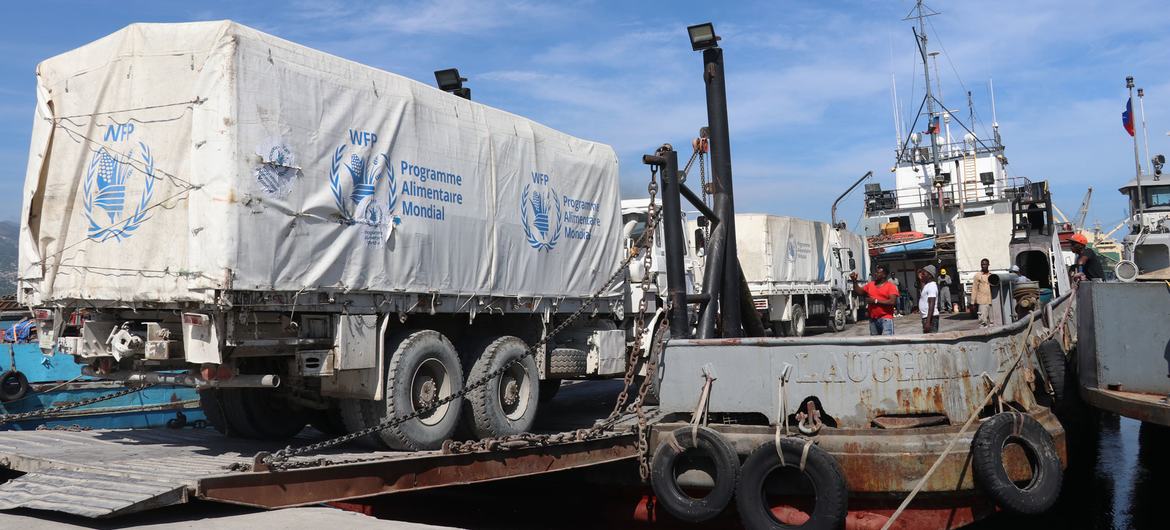
Trucks carrying aid to Haitians are loaded onto boats to bypass areas controlled by gangs.
Why funding has been so difficult to raise
Despite the scale of need, Haiti’s humanitarian appeal is among the least funded crises in the world. For 2025, the UN sought $908 million but received only 24 per cent of that target.
Competing global crises and donor fatigue, together with attention on other emergencies, including in Sudan, Ukraine and Gaza, have left Haiti’s requirements under-resourced.
Funding shortfalls also jeopardize essential operations, such as humanitarian air services that are often the only means of reaching isolated communities.
The result: agencies are forced to prioritize the most urgent cases while many go without assistance.
Regional or international consequences of not funding humanitarian aid in Haiti
Failing to fully fund Haiti’s humanitarian response risks broader instability beyond its borders.
The UN’s International Organization for Migration (IOM) warned that unchecked violence, mass displacement and lack of basic services could fuel:
- Irregular migration
- Heighten pressures on neighbouring countries
- Undermine regional economic and security cooperation
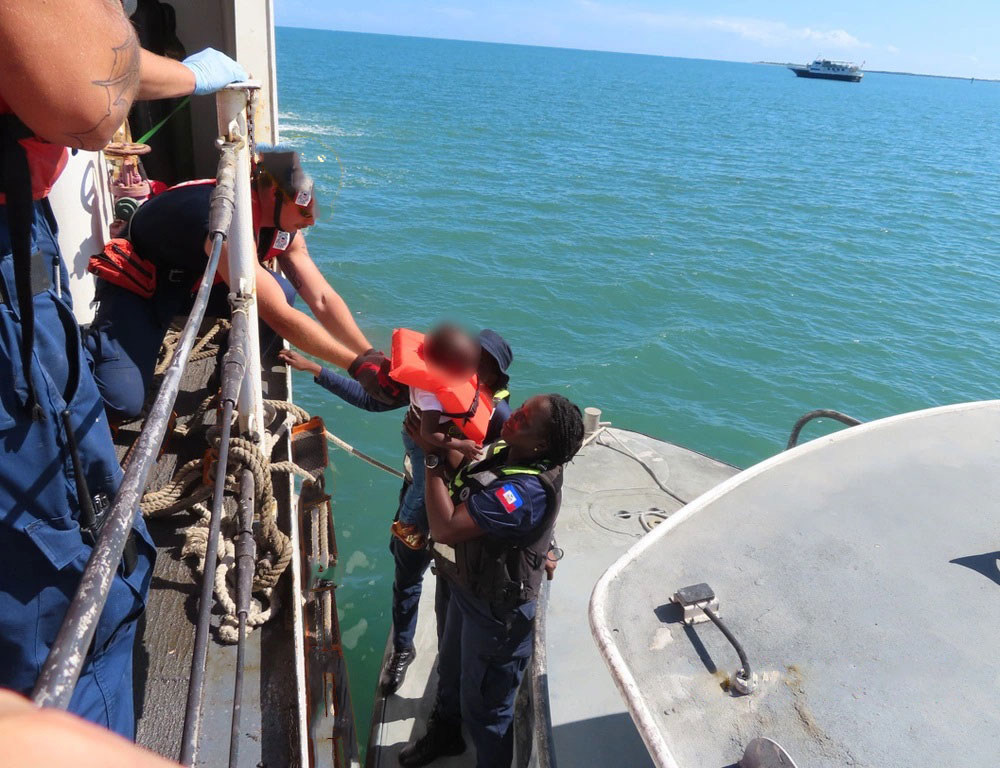
A child who was rescued at sea off a boat of migrants is handed back to the Haitian authorities by the US Coast Guard.
Prolonged instability also increases the likelihood of secondary crises, such as public health emergencies and cross-border crime, with ripple effects across the Caribbean and the Americas.
In this context, donor engagement is framed as investment in regional resilience.
What happens next?
In late 2025, the UN officially launched Haiti’s 2026 Humanitarian Response Plan, calling on governments and partners to step up commitments to preserve life and dignity amidst violence and deprivation.
If funding and access improve, aid agencies aim to expand food support, restore basic services, enhance protection for vulnerable groups, and create more resilient pathways to longer-term recovery.
But without stronger financial backing and security improvements, millions of Haitians face increasingly desperate conditions — and humanitarian needs are likely to deepen.
At the beginning of February, the 2026 appeal was less than four per cent funded.
Maintaining “hope for younger generations” in Haiti as funding falters

 Armed groups control large swaths of Port-au-Prince, forcing more than 1.4 million people from their homes and reducing access to food, health, water and education services. Half the population does not have enough to eat and malnutrition among children is on the rise. Humanitarian efforts […]
Originally published at Almouwatin.com
Cuba: UN warns of possible humanitarian ‘collapse’, as oil supplies dwindle
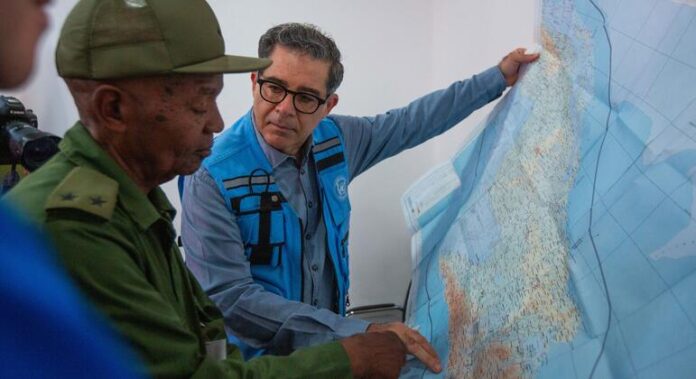
The United States has threatened to impose tariffs on any country providing oil to Cuba, increasing pressure on the island nation following a decades-long trade embargo and the US seizure of Venezuela’s leader Nicolás Maduro last month.
Venezuela had been the main supplier of oil to Havana but Washington has been ratcheting up pressure on Cuba in recent weeks, including an executive order last Thursday threatening to impose additional tariffs on countries that sell oil to Cuba, including Mexico.
“I can tell you that the Secretary-General is extremely concerned about the humanitarian situation in Cuba, which will worsen, and if not collapse, if its oil needs go unmet,” said UN Spokesperson Stéphane Dujarric.
The UN chief noted that the General Assembly has been calling for an end to the US embargo for more than three decades: “The Secretary-General urges all parties to pursue dialogue and respect for international law.”
Fuel crisis
The fuel crisis has pushed up food prices for Cubans, led to severe fuel shortages and major power cuts throughout the country.
“Clearly what we see now, especially after the recent events in Venezuela, is a combination of emotions,” said Francisco Pichon, the most senior United Nations official in Cuba, describing “a mix of resilience, but also grief, sorrow and indignation, and some concern about the regional developments.”
Thirty-two Cubans were killed in Venezuela on 3 January in the US operation to capture Mr. Maduro.
The UN’s humanitarian work in Cuba
Mr. Pichon spoke to UN News from Havana last month, where the power had just gone out in his office. The UN team said that the vast majority of Cubans are being hit by rolling blackouts, at a time when the number of people in vulnerable situations has increased significantly.
Even before the latest regional developments, the UN has been working with the Cuban Government to incubate ideas and support development, including ways to diversify the Cuban economy.
“The energy transition is a major priority due to reduced access to fuel and infrastructure challenges,” Mr. Pichon said, noting that investment needs remain a bottleneck.
Urgent changes needed
“The last two years have been quite tough,” he added, stressing that urgent changes are needed to sustain Cuba’s social model “in the midst of the severe economic, financial and trade sanctions”.
Cuba’s economy, which has historically relied on tourism as a key source of hard currency, was severely disrupted in the COVID pandemic and remains well under 2018 levels.
As the Cuban economy has deteriorated, the country’s social indicators – such as universal healthcare, universal education, and extensive social safety nets like subsidised healthcare and food rations – are under strain.
“All of this is happening in the context of the US embargo against Cuba,” said Mr. Pichon, noting that Cuba has also been relisted by the United States as a state sponsor of terrorism.
“From the UN perspective, our guiding principles remain unchanged: To be present. To support. To act based on cooperation, respected for international law, and the UN values.”
Mr. Pichon, as UN Resident Coordinator, oversees the work of 23 UN agencies, funds and programmes. Here is a snapshot of some of the work underway.
Hurricane Melissa
Hurricane Melissa tore through Cuba as a Category 3 storm on 29 October. For the first time in the country, anticipatory action was taken through the release of funds from the UN Central Emergency Response Fund (CERF), enabling supplies, such as water purification units, food, hygiene kits, generators, medicines, medical and shelter supplies to be pre‑positioned.
The UN launched a $74 million Plan of Action to support national recovery and assist more than 2.2 million people affected by the storm’s destruction. So far, about $23 million has been mobilised targeting the one million most vulnerable.
“No lives were lost directly due to the hurricane,” Mr. Pichon said, owing to the solid capabilities of Cuba’s civil defence, although recovery needs remain enormous, including rebuilding tens of thousands of homes.
Cooperation Framework
The UN’s long‑term engagement in Cuba is undergirded by a cooperation framework aligned with Cuba’s National Development Plan and the 2030 Agenda for Sustainable Development. This framework has four key pillars:
- Institutional: The UN supported the development of around 30 laws following the 2019 constitutional reform, advancing equity, inclusion and rights for women, children, LGBTQ+ persons, people of African descent and persons with disabilities.
- Economic: Focuses on productive transformation and access to financing amid ongoing sanctions and the US listing of Cuba as a state sponsor of terrorism. Utilizing the Joint SDG Fund, which helps countries pay for projects related to the Sustainable Development Goals.
- Environmental: Disaster risk management and climate resilience are central, especially given Cuba’s exposure to hurricanes, such as Melissa. UN support in anticipation and response seeks to protect lives and livelihoods.
- Social: Social protection systems and attention to differentiated needs with a focus on leaving no one behind, including vulnerable groups vulnerable groups such as people living with AIDS, the LGBTI community, children, adolescents, women, and the elderly, who are a very relevant sector in an aging society.
