
OpenAI just rolled out Frontier, a new service designed to help companies deploy AI agents that handle real
AI Coworkers Are Here: OpenAI Launches Enterprise Platform That Deploys AI Agents for Companies
Child malnutrition hits catastrophic levels in parts of Sudan
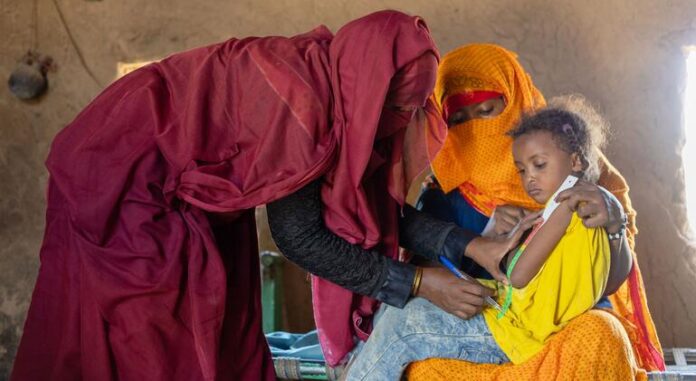
According to an alert from the IPC, a global food security monitoring system, thresholds for acute malnutrition were surpassed in two new areas of North Darfur – Um Baru and Kernoi – following the fall of the regional capital, El Fasher, in October 2025 and a massive exodus.
December assessments found acute malnutrition levels among children of 52.9 per cent in Um Baru – nearly twice the famine threshold – and about 34 per cent in Kernoi.
The IPC stressed that the alert does not constitute a formal famine classification but warned that conditions are deteriorating rapidly – and action is urgently needed.
“These alarming rates suggest an increased risk of excess mortality,” the experts said, adding that many other conflict-affected or inaccessible areas may be facing similarly catastrophic conditions.
Projection acute food insecurity in Sudan from February to May 2026.
▶ See our UN News explainer on the evidence-based IPC index here.
Um Baru and Kernoi
Um Baru and Kernoi are in remote areas of northwestern North Darfur, near key displacement corridors leading toward the Chadian border.
Both areas have absorbed large numbers of civilians fleeing fighting in and around El Fasher, where conflict has shattered markets, disrupted livelihoods and sharply curtailed humanitarian access.
Sudan’s war, which erupted in April 2023 between the once-allied Sudanese Armed Forces (SAF) and the Rapid Support Forces (RSF), has devastated food systems nationwide, triggering mass displacement, market collapse and repeated disruptions to health, water and nutrition services.
Across the country, nearly 4.2 million cases of acute malnutrition are now expected in 2026, including more than 800,000 cases of severe acute malnutrition, representing a sharp increase from 2025 levels, according to IPC projections.
What the alert means
The IPC alert is intended to draw urgent attention to the worsening conditions and does not introduce any new formal classification.
It builds on earlier IPC analyses that confirmed famine (IPC Phase 5) in El Fasher, North Darfur in 2024, and Kadugli, South Kordofan, in September 2025 – and projected famine risk in at least 20 other areas across greater Darfur and greater Kordofan.
The new findings indicate that famine-like conditions are likely spreading beyond previously assessed locations, driven by continued fighting, displacement and the collapse of food, health and water systems, IPC analysts said.
Greater Kordofan at risk
The IPC also warned of rapidly deteriorating conditions across Greater Kordofan, where famine was already confirmed in Kadugli and severe conditions were projected in Dilling and the Western Nuba Mountains.
Renewed fighting since late October has displaced more than 88,000 people in the region, pushing total displacement above one million. Markets there are among the least functional in Sudan, with food prices far above national averages.
Without an immediate end to the fighting and large-scale humanitarian access, IPC experts said preventable deaths are likely to rise.
Chad: Africa’s refugee shelter faces its own challenges

 Here’s what you need to know: The fighting and dire humanitarian conditions triggered by the conflict that erupted between rival armies in Sudan in April 2023 have so far displaced 14 million people, spreading to the country’s seven neighboring countries, according to the UN. Few places feel the effects of […]
Originally published at Almouwatin.com
Chad: Africa’s refugee haven struggles with its own stark challenges
Here’s what you need to know:
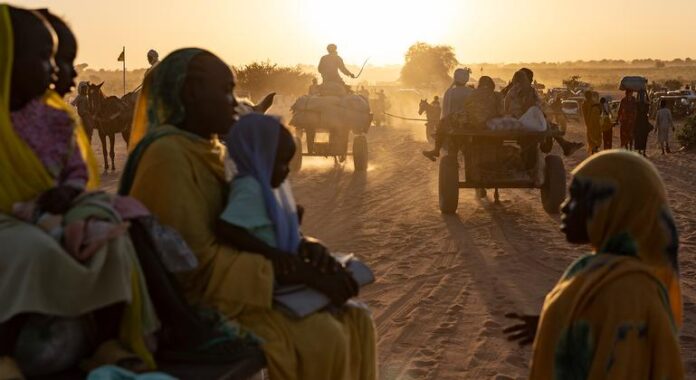
Fighting and dire humanitarian conditions triggered by the conflict that erupted among rival militaries in Sudan in April 2023 have so far displaced 14 million people, spilling over to the country’s seven bordering neighbour nations, according to the UN.
Few places are feeling the effects of the ongoing war as acutely as Chad, which is now Africa’s largest refugee host per capita, according to the UN refugee agency, UNHCR.
“Chad’s generous welcome of refugees is a powerful act of solidarity,” said UN High Commissioner for Refugees Barham Salih.
But, as landlocked Chad has welcomed more than 900,000 Sudanese refugees across its eastern border since the start of the conflict, 40 per cent of its own population already needs humanitarian assistance.
Why it matters
Often called the “Babel Tower of the world”, reflecting its more than 200 ethnic groups and 100 languages, Chad’s challenges are multifaceted.
With over 42 per cent of the population living below poverty, the country is among the poorest in the world.
Now hosting over 1.5 million refugees, Chad continues to keep its borders with Sudan open while also battling climate and security shocks.
Floods and food insecurity
The word Chad translates in a local language as “large body of water,” and reflects the cultural importance of Lake Chad, which gives the country its name.
As the lake continues to shrink due to climate change and other issues, the country has endured large floods that have devasted its food security.
In 2024 alone, floods destroyed more than 432,000 hectares of crops, equivalent to over 600,000 football fields, affected nearly two million people and exposed gaps in water and sanitation infrastructure, with cholera outbreaks reported in July last year.
With a rapidly growing population, Chad far exceeds its resource capacity at a time when malnutrition rates are alarmingly high.
An estimated two million Chadian children aged six to 59 months are suffering or expected to suffer acute malnutrition between October 2025 and September 2026, including nearly 484,000 children expected to suffer severe acute malnutrition, according to the global hunger monitor – the Integrated Food Security Phase Classification.
Security pressures
The security landscape is equally concerning.
Violent extremist groups, including Boko Haram and its affiliates, have continued to drive insecurity in the Lake Chad Basin, displacing over 250,000 people.
Security forces patrol in Adré in Chad.
In the north, trafficking networks and illegal coal mining overlap with gender-based violence and exploitative child labour.
With 87 per cent of the total refugee population in Chad being women and children, these concerns continue to increase.
What the UN is doing
Since April 2023, Chad’s Government and UNHCR assisted 67 per cent of those fleeing war-torn Sudan to relocate to extended and newly established settlements, where refugees and host communities benefit from the services delivered by humanitarian teams.
UN agencies and partners continue to respond to provide humanitarian assistance, including in Chad and war-torn Sudan.
On 19 February, the UN Security Council will convene to discuss the ongoing crisis in Sudan, focusing on the need to end the fighting and alleviate suffering, particularly concerning the widespread violence against women and girls in the country.
As for needs, the UN emergency relief agency, OCHA, released its Humanitarian Action Plan 2026, which shows that the number of people in need in Chad decreased by 42 per cent, but continues to remain high.
The Action Plan calls for $986 million and aims to help 3.4 million people, including $540million dedicated to refugees alone. The UN Spokesperson, Stéphane Dujarric said on Wednesday, “We and our partners will focus our efforts on the most impacted regions including in the east, the Lake Province and parts of the south.”
Radwa Abdelkarim, a 37-year-old mother of six, fled to Chad in June 2023 after “the war took everything.”
“We lost our money, our relatives and neighbours,” she said. “Some were killed, others disappeared and are still missing.”
Safely out of Sudan, Ms. Abdelkarim combined her entrepreneurial skills with cash assistance from UNHCR to start baking and selling bread from her home in Farchana refugee settlement, and has since opened two grocery stores, a restaurant, and employs 12 other refugees.
“I support [refugee women] so that we can grow together and no one is left behind,” she said. “It is important to stand with our brothers and sisters, to help them heal.”
Fitbit Founders Return With Luffu AI That Watches Over Your Whole Family’s Health
James Park and Eric Friedman built Fitbit into a household name. Now, two years after leaving Google, they’re
Brussels Anniversary: Scientology marks 51 years in Belgium and its efforts for social improvement

 KINGNEWSWIRE / PRESS RELEASE / Destination: Scientology revisits European headquarters site in Brussels, linking cultural heritage, community access and a landmark 2016 court ruling on religious freedom BRUSSELS, Belgium — February 5, 2026 – The Churches of Scientology for Europe in Brussels celebrates 16 years […]
Originally published at Almouwatin.com
Brussels Anniversary: Scientology marks 51 years in Belgium and its efforts for social improvement

KINGNEWSWIRE / PRESS RELEASE / Destination: Scientology revisits European headquarters site in Brussels, linking cultural heritage, community access and a landmark 2016 court ruling on religious freedom BRUSSELS, Belgium — February 5, 2026 – The Churches of Scientology for Europe in Brussels celebrates 16 years […]
Originally published at Almouwatin.com
Brussels Anniversary: Scientology Notes 51 Years in Belgium and Social Betterment Efforts

KINGNEWSWIRE / PRESS RELEASE / Destination: Scientology revisits the Brussels European headquarters site, linking cultural heritage, community access and a landmark 2016 court ruling on freedom of religion
BRUSSELS, Belgium — 5 February 2026 — The Churches of Scientology for Europe in Brussels is marking 16 years since the dedication of its Boulevard de Waterloo headquarters, while noting that Scientology’s presence in Belgium now spans more than five decades. The anniversary follows renewed attention generated by the Destination: Scientology episode on Brussels and a related feature published by Freedom Magazine, which frames the building as a local landmark and revisits the long legal proceedings that ended with the dismissal of all charges against the Belgian Church and affiliated defendants.
The Brussels site—dedicated on 23 January 2010—occupies an early 20th-century building on Boulevard de Waterloo 100–103 and is described as an 88,000-square-foot facility serving both local parishioners and visitors from across Europe. The premises include a chapel for congregational gatherings and ceremonies, rooms for religious training and pastoral counselling, and a public information space presenting Scientology beliefs and practices and the life and works of Scientology founder L. Ron Hubbard, alongside information on Church-supported social betterment programmes.
While the Brussels headquarters dates to 2010, Belgium’s national timeline extends further back. Public registry information lists the Église de Scientologie de Belgique (ASBL) as founded in 1974—placing Scientology’s organised presence in the country at more than 51 years. Church representatives say the Brussels building has become a focal point for activity in a city where diverse communities and European institutions share the same streets, and where questions of pluralism and freedom of religion or belief are regularly debated in civic and policy settings.
Scientology Network Brussels episode of Destination: Scientology presents the site through the lens of the capital’s multilingual culture and its reputation for compromise, spotlighting community events and interfaith engagement as part of the Church’s daily rhythm. The programme includes on-camera reflections on dialogue and social cohesion, with one staff member describing a goal to “unite people” through better communication and understanding—an emphasis echoed in the Freedom Magazine account of the episode’s theme of “unity while still being diverse.”
A personal narrative featured in the programme describes how applying Scientology communication principles affected a Belgian entrepreneur’s workplace and relationships—an example used in the episode to illustrate how Scientologists describe their religious practice in everyday life. Such testimonials appear alongside broader context: the programme and related coverage revisit a long period in which the Belgian Church faced scrutiny and criminal allegations—an episode that became, in the programme’s telling, a defining test of Belgium’s commitments to due process and equal treatment of minority faiths.
The legal proceedings culminated on 11 March 2016, when a Brussels court dismissed the case and rejected all charges against the Church’s Belgian branch, its European headquarters and individual defendants. Contemporary reporting by outlets noted that the court found serious issues affecting the fairness of the proceedings. For Scientology representatives, the decision is cited as reaffirming a basic democratic principle: that people should not be prosecuted merely because of their religion.
Ivan Arjona, Scientology’s representative to the European Union, OSCE, Council of Europe and United Nations, said the Brussels anniversary is also a reminder of how European values are tested in practice—especially when minority communities face pressure.
“Brussels is where Europe’s institutions speak most often about rights, pluralism and non-discrimination,” Arjona said. “Those principles become meaningful when they are applied consistently to everyone—including minorities. A community building is not just bricks and mortar; it is a visible commitment to dialogue, civic responsibility and due process, the foundations of social cohesion in a diverse Europe.”
In Belgium, the Brussels Church and local Scientologists show their community engagement extending beyond religious services into social reform and social betterment work delivered through secular educational initiatives—notably drug-prevention outreach and human-rights education. These activities are part of a wider approach encouraged by Scientology founder L. Ron Hubbard, emphasising practical tools, public information resources and cooperation with local partners, educators and civic groups.
On drug prevention, Belgian initiatives linked to the Foundation for a Drug-Free World and local partners have focused on distributing and explaining “Truth About Drugs” materials in public settings and community events. Recent examples described in programme coverage include outreach in Brussels at the Percusounds Festival in August 2023, where organisers said the priority was equipping young people, parents and teachers with factual information about substances and their risks. Other activities include nationwide visibility actions such as a “10 Days to Say No to Drugs” tour timed around the UN International Day Against Drug Abuse and Illicit Trafficking, and Belgium-wide bike tours associated with Julie Delvaux, presented in Voices for Humanity as a sustained effort to bring prevention materials to communities across the country.
On human-rights education, Brussels-based work connected to Youth for Human Rights programming has been framed around making the Universal Declaration of Human Rights (UDHR) understandable and usable in everyday civic life—through workshops, public presentations and multimedia public-service announcements illustrating specific UDHR articles. Brussels has also served as a venue for youth-focused rights programming, including the International Human Rights Summit held in the city in 2012, and community forums such as the Brussels open-house events promoting tolerance and inclusion, where Youth for Human Rights representatives presented UDHR-focused materials. Arjona linked this approach to Europe’s emphasis on democratic resilience: “Rights are protected most effectively when they are understood in practical terms—by students, families and local communities—and when institutions and citizens share the responsibility of making human dignity a daily reality.”
The Church of Scientology, its churches, missions, groups and members are present across the European continent. Scientology Europe reports a continent-wide presence through more than 140 churches, and missions and communities in at least 27 European nations, alongside thousands of community-based social reform initiatives focused on education, prevention and neighbourhood-level support, inspired by the work of Scientology founder L. Ron Hubbard.
Within Europe’s diverse national frameworks for religion, the Church’s recognitions continue to expand, with administrative and judicial authorities in Spain, Portugal, Sweden, the Netherlands, Italy, Germany, Slovakia and others, as well as the European Court of Human Rights, having addressed and acknowledged Scientology communities as protected by the national and international provisions of Freedom of Religion or belief.
Building the European frontline against future pandemics

 Preparing for emerging infectious diseases is not just about responding to emergencies. It also means having suitable research systems in place every day, so that new knowledge can be generated quickly and shared across borders when needed. This is the ambition of the European Clinical Research Alliance in Infectious Diseases […]
Originally published at Almouwatin.com
Nearly 40% of cancer cases could be avoided, UN study finds
 The study by the United Nations World Health Organization (WHO) and its International Agency for Research on Cancer (IARC) looks at 30 preventable causes, including tobacco, alcohol, high body mass index, physical inactivity, air pollution and ultraviolet rays. Nine cancer-causing infections – such as the virus […]
Originally published at Almouwatin.com
