Tuesday, March 31, 2026
Home Blog Page 161

New guidance from ECDC and EACS aims to raise standards of HIV care, focusing on lifelong health

0

These standards of care provide a framework to enhance the quality of HIV prevention and care throughout the region. In the WHO European Region, it is estimated that 2.3 million people are living with HIV (778,000 in the EU/EEA). Effective treatments have transformed HIV into a manageable long-term condition, shifting the focus of care from survival towards ensuring people live long and healthy lives. The standards were developed through a collaboration of clinicians, public health experts, and community representatives representing people living with HIV. This person-centred approach ensures the guidance is grounded in the latest evidence, and is also practical, equitable, and empowering for the individuals it is designed to serve. 

The Commencement of ART module reinforces the consensus that all people should be offered treatment immediately upon diagnosis. It sets a clear target for initiating therapy as soon as possible, ideally within seven days, which benefits individual health outcomes while also acting as a tool for preventing onward transmission. Evidence has shown that those who begin HIV treatment late, especially those with weakened immune systems (CD4 ≤ 350 cells/μL), are more likely to face serious health risks, including early mortality, compared to those who are diagnosed and treated early

With increasing life expectancy due to effective HIV treatment programmes, people living with HIV face a growing burden of non-communicable diseases (NCDs), including cardiovascular disease (CVD), diabetes, cancers, chronic renal, liver, and pulmonary diseases, as well as mental and neurocognitive disorders. Recognising that people with HIV face a higher burden of age-related health conditions, the module on HIV and Co-morbidities provides a structured approach to integrated care. It outlines essential protocols for regularly screening and preventing issues like cardiovascular disease, certain cancers, and mental health disorders, aiming to support healthy ageing and improve overall well-being.   

By establishing a clear benchmark for high-quality, holistic care, the series of standards provides a tool for healthcare systems to audit and improve their services. It also empowers people living with HIV by defining the care they should expect to receive at every stage, from prevention and testing to immediate treatment and long-term health management. 

Source link

UN urges opening of all Gaza crossings to deliver three-month food supply

0
UN urges opening of all Gaza crossings to deliver three-month food supply

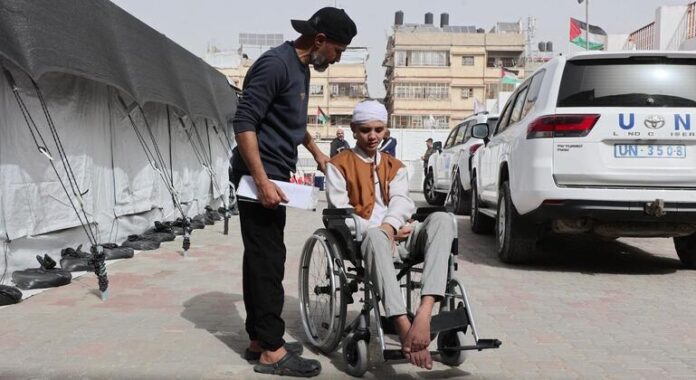
The agency says it already has enough supplies in place to feed the entire population of the Strip for three months – if full access is granted by Israel.

One week into the fragile ceasefire, WFP has been bringing in an average of 560 tonnes of food each day.

The ceasefire deal has opened a narrow window of opportunity, and WFP is moving very quickly to scale up food assistance and reach families who have endured months of blockade, displacement and hunger,” said Abeer Etefa, WFP Senior Regional Communications Officer and Spokesperson for the Middle East, North Africa and Eastern Europe.

Speaking to journalists in Geneva, Ms. Etefa said teams and supply networks were fully mobilised.

Five distribution points now open

“We’re still below what we need, but we’re getting there,” she noted. Five food distribution points are now operating across Gaza, focusing on women and children. “Our goal is to expand to 145 distribution points across all of Gaza—that’s the scale we’re aiming for,” she added.

Aid agencies stress that sustained access and multiple crossings are essential to reach everyone in need. Only two crossings are currently open, and those in the north remain closed, restricting deliveries to the hardest hit areas.

Roads are blocked and destroyed. This is a huge limitation to transport,” Ms. Etefa said.

Because of access and security constraints, no food distributions have yet taken place in Gaza City, only nutrition supplies for children and pregnant or breastfeeding women.

Jens Laerke, spokesperson for the UN aid coordination office (OCHA), said the northern crossings remain closed “because the Israeli authorities have not opened them”.

He added that road repairs and clearance of unexploded ordnance are also essential for safety and access. “It is very important to have these openings in the north, as that is where the famine took hold,” he said.

Fletcher says UN determined to deliver

UN relief chief Tom Fletcher joined the aid effort in Gaza on Friday, saying humanitarian teams are delivering on a 60-day plan to massively scale up life-saving work.

He said though the challenges ahead are immense, the UN is determined to deliver on the humanitarian possibilities created by US President Donald Trump’s peace deal.

The Humanitarian Affairs chief drove to Deir al Balah, where he visited the Castle Bakery – one of nine that the World Food Programme (WFP) supports across southern and central Gaza.

UN Spokesperson Stéphane Dujarric said the ceasefire has meant that the bakery can access fuel and flour, allowing it to produce up to 300,000 loaves of pita bread per day.

170,000-tonne aid scale up

According to WFP, 57,000 tonnes of food are already pre-positioned in Egypt, Jordan and inside Israel, with plans to scale up to 170,000 tonnes – enough for 1.6 million people over three months. “Beyond that, we need to maintain at least three months of stocks at all times,” Ms. Etefa said.

On 16 October, 950 trucks entered Gaza, including eight carrying fuel and three carrying gas, according to OCHA. Around of third of them passed through UN-coordinated mechanisms.

© UNICEF/Mohammed Nateel

A woman celebrates the ceasefire in Gaza.

UN Women: Recovery must be led by women and girls

UN Women’s Chief of Humanitarian Action, Sofia Calltorp, urged the international community on Friday to turn Gaza’s fragile ceasefire into a recovery led by women and girls.

“We have heard from so many women and girls across Gaza since the ceasefire began – a mix of fragile hope, deep exhaustion and quiet strength,” she said.

“For the first time in months, some can seek care, receive aid and sleep without the sound of airstrikes. But hope, on its own, is not enough.”

Ms. Calltorp stressed that over one million women and girls need food aid and a quarter of a million require urgent nutrition support. “This ceasefire is our window to deliver fast, to stop famine where it has begun and prevent it where it looms,” she said.

Source link

Vista Group and EIB sign € 30 million in loans to support SMEs and agricultural value chains in Guinea and Sierra Leone

0
Vista Group and EIB sign € 30 million in loans to support SMEs and agricultural value chains in Guinea and Sierra Leone

EIB
  • Through this new cooperation with Vista, the EIB is extending its first-ever intermediated loans to domestic banks in Sierra Leone and Guinea to support SMEs.
  • Centred on agricultural value chains, the cooperation is fully embedded in EU strategies: the TRANSFORM programme in Guinea, which supports 100 high-potential agribusinesses, and the Salon Access to Finance initiative in Sierra Leone, which incentivises agricultural lending to MSMEs.
  • This cooperation is signed under the Women for Stronger Communities and Growth initiative, which will mobilize €1 billion by 2027 to boost women’s and communities’ economic resilience to climate change and food insecurity.

The European Investment Bank (EIB), through its development branch EIB Global, and Vista Group have signed two financing agreements of respectively € 20 million with Vista Gui and € 10 million with Vista Bank (SL) to strengthen access to finance for SMEs and mid-caps in Guinea and Sierra Leone. This important initiative is enabled by the European Fund for Sustainable Development Plus (EFSD+) which serves to mobilise public and private financing under the EU’s Global Gateway strategy.

The signature ceremony was held in Washington in the margins of the Annual Meetings of the World Bank Group and the International Monetary Fund, in the presence of Simon Tiemtoré, Chairman of Vista Group, Marjeta Jager, Deputy Director-General at the European Commission’s Directorate-General for International Partnerships, and EIB Vice-President Ambroise Fayolle.

The loans will focus on enhancing private sector development, with at least 70% of the funding targeting agricultural value chains, such as cashew, infant food, fruits and vegetables processing and rice value chains across both countries, and country-specific priorities, such as fish and seafood processing, as well as cereals, including fonio and rice, in Guinea, and cocoa, palm oil, cassava, and coffee in Sierra Leone. In parallel, at least 30% of the loans will support women-led or women-serving businesses in line with 2X Challenge criteria, and at least 50% will target youth-led or youth-inclusive enterprises.

This initiative contributes to the EU’s Global Gateway strategy and two Team Europe Initiatives: the Green and Blue Economy in Guinea and the Green Pact in Sierra Leone. The investments will be closely aligned with ongoing EU programmes in both countries:

  • In Guinea, the TRANSFORM programme will support 100 high-potential agribusinesses (“gazelles”) with productivity improvements and better access to finance. Vista Gui will sit on the programme’s Steering Committee.
  • In Sierra Leone, the Salone Access to Finance initiative, led by the EU Delegation, will establish a matching grant facility to incentivise agricultural lending to MSMEs, potentially including clients of Vista Bank (SL).

In addition, a complementary Technical Assistance programme will be launched to support the banks in deploying the funds effectively. It will strengthen their agricultural lending capacity, support gender-responsive financial product development, and help align their Environmental and Social Management Systems with EIB standards. It will also help familiarise Final Beneficiaries with EU-aligned sustainability certifications, particularly in sectors covered by the EU Deforestation-Free Products Regulation (EUDR).

Vista Group Chairman Simon Tiemtoré commented: “This partnership is a major step forward for Vista’s strategy to empower African SMEs, especially in the agribusiness sector. With the support of the EIB and the EU, we will strengthen our offering of long-term finance and advisory services that create jobs, build resilience, and unlock the region’s immense potential.

European Commissioner for International Partnerships Jozef Síkela commented: “By unlocking long-term capital for small and medium-sized businesses in agriculture, we are strengthening local entrepreneurship, food security, and job creation in Guinea and Sierra Leone. This partnership with Vista Group and the EIB is a clear example of what Global Gateway stands for: strategic investment in sustainable development that empowers people, builds resilience, and creates real opportunities on the ground.

EIB Vice-President Ambroise Fayolle stated: By partnering with Vista Group, we are empowering local financial institutions to support entrepreneurs in agriculture in Guinea and Sierra Leone, which is key to sustainable and inclusive growth. With a strong focus on women, youth, and sustainable value chains, this operation is a concrete demonstration of the EIB’s commitment to the Global Gateway strategy in West Africa.”

Background information

About the European Union’s priorities in Guinea

The EU-Guinea partnership aims at supporting the country’s democratic transition and strengthening its institutions. It also aims to improve migration management, enhance economic and investment opportunities for inclusive growth and decent jobs, and combat climate change and environmental degradation. The EU intends to create inclusive opportunities for young people by investing in human capital, such as vocational training and healthcare, and in productive capital, like infrastructure and equipment, with a particular focus on priority green and blue value chains.

@UEenguinee

About the European Union’s priorities in Sierra Leone

The EU-Sierra Leone partnership is centered on generating sustainable jobs, particularly for youth, in agriculture and renewable energy sectors. This will be achieved through infrastructure investments, skills development, and support for SMEs. The partnership also emphasizes responsible resource management and promotes governance and electoral reforms to foster peace, stability, and transparency.

@EUinSierraLeone

About EIB Global

The EIB is the long-term lending institution of the European Union, owned by the Member States. It finances investments that contribute to EU policy objectives.

EIB Global is the EIB Group’s specialised arm devoted to increasing the impact of international partnerships and development finance, and a key partner in the Global Gateway. It aims to support €100 billion of investment by the end of 2027 – one-third of the overall target of this EU strategy. It is designed to foster strong, focused partnership within Team Europe alongside fellow development finance institutions and civil society. EIB Global brings the EIB Group closer to people, companies and institutions through its offices around the world.

x.com/EIB

https://www.linkedin.com/company/eib-global/  

About Vista Group

Vista Group is a financial services’ holding company which has the objective of building a world-class pan-African financial institution group and contributing to economic and financial inclusion in Africa. Vista has entered into strategic partnerships with various global financial institutions to drive its growth strategy by focusing on MSME (SME banking, leasing, factoring, mesofinance, women’s banking, etc.), trade and supply chain finance, corporate banking and bancassurance. Through these partnerships, Vista also aims to increase profitability while reducing operating costs and mitigating risk. Vista Group is focused on maximising the opportunities in its respective markets to become the financial institution of choice through innovative banking and insurance products.

www.x.com/vista_bank

www.linkedin.com/company/vista-bank-group

Source link

Crypto-asset data exchange

0

On the proposal of Minister of Finance Jan Jambon, the Council of Ministers approved a preliminary draft law transposing European Directive 2023/2226 amending Directive 2011/16 relating to administrative cooperation in the tax field.

Source link

Originally published at Almouwatin.com

UN calls for all Gaza crossings to be opened to deliver food for three months

0

The agency says it already has enough supplies to feed the entire population of the Gaza Strip for three months – if full access is granted by Israel.

A week after the start of the fragile ceasefire, PAM brings an average of 560 tons of food every day.

The ceasefire agreement has opened a narrow window of opportunity, and WFP is moving quickly to scale up food assistance and reach families who have endured months of blockade, displacement and hunger.“, said Abeer Etefa, WFP senior regional communications officer and spokesperson for the Middle East, North Africa and Eastern Europe.

Speaking to journalists in Geneva, Ms Etefa said teams and supply networks were fully mobilized.

Five distribution points now open

“We’re still short of what we need, but we’re getting there,” she noted. Five food distribution points are now operating across Gaza, focusing on women and children. “Our goal is to expand to 145 distribution points throughout Gaza.– that’s the scale we’re aiming for,” she added.

Humanitarian agencies emphasize that sustainable access and multiple crossings are essential to reach all people in need. Only two crossing points are currently open, and those in the north remain closed, limiting deliveries to the hardest-hit areas.

Roads are blocked and destroyed. This is a huge limitation to transportation“, said Ms. Etefa.

Due to access and security constraints, no food distribution has yet taken place in Gaza City, only nutritional supplies for children and pregnant or lactating women.

Jens Laerke, spokesperson for the UN aid coordination office (OCHA), said the northern crossings remain closed “because the Israeli authorities have not opened them.”

He added that road repairs and clearance of unexploded ordnance are also essential for safety and access. “It’s very important to have these openings in the north, because that’s where the famine has set in,” he said.

Aid increase of 170,000 tonnes

According to the WFP, 57,000 tonnes of food are already pre-positioned in Egypt, Jordan and Israel, with plans to increase this to 170,000 tonnes, enough for 1.6 million people over three months. “Beyond that, we must maintain at least three months of stock at all times,” Ms Etefa said.

On October 16, 950 trucks entered Gazaof which eight were transporting fuel and three were transporting gas, according to OCHA. About a third of them went through mechanisms coordinated by the UN.

© UNICEF/Mohammed Nateel

A woman celebrates the ceasefire in Gaza.

UN Women: Recovery must be led by women and girls

UN WomenGaza humanitarian chief Sofia Calltorp on Friday urged the international community to transform Gaza’s fragile ceasefire into a recovery led by women and girls.

“We have heard from so many women and girls across Gaza since the ceasefire began – a mixture of fragile hope, deep exhaustion and quiet strength,” she said.

“For the first time in months, some can seek care, receive help and sleep without the sound of airstrikes. But hope alone is not enough.”

Ms Calltorp highlighted that more than a million women and girls are in need of food and a quarter of a million people need urgent nutritional support. “This ceasefire is our chance to act quickly, to end famine where it started and to prevent it where it threatens,” she said.

Originally published at Almouwatin.com

Haiti is subject to a UN arms embargo: so why are 500,000 illegal weapons circulating?

0

Haiti faces an acute security crisis as rival gangs fight for control of the capital, Port-au-Prince, and surrounding areas, while terrorizing local communities through extortion, sexual violence, kidnapping for ransom and murder.

UN member states agreed to impose an arms embargo on Haiti in 2022 – so what went wrong? Here are five things you need to know.

How many weapons are there in Haiti?

Haiti does not manufacture firearms or ammunition, but according to the latest figures According to information published by the Office of the United Nations High Commissioner for Human Rights, it is estimated that between 270,000 and 500,000 illegal weapons are in circulation.

They are not only in the hands of the many murderous gangs that control most of the capital, they are also common among the growing number of “justice” vigilante groups trying to protect people and property in Port-au-Prince’s troubled neighborhoods.

The impact of so many weapons in a metropolitan area of ​​approximately 2.6 million people is devastating. According to the UN, in 2024 alone, more than 5,600 people have been killed due to gang-related activities.

In early December 2024, in just five days, at least 207 people were killed by gangs controlling the Quai Jérémie district of the capital.

Thousands of people have been killed in Haiti because of gang warfare.

Human rights violations and abuses documented by the UN include massacres, kidnappings for ransom, rape and sexual exploitation, destruction of property and severe restrictions on access to essential services, particularly health care and education.

What firearms are in circulation?

It is difficult to accurately estimate the number of illegal firearms in the hands of gangs and vigilante groups, but there is evidence that more sophisticated and lethal weapons are being used.

Haitian authorities have had limited success in stopping the flow of weapons. A shipment of weapons purchased in Miami in the United States and intercepted in the Dominican Republic in February 2025 included a Barret M82 heavy semi-automatic rifle, sniper rifles, an Uzi submachine gun and more than 36,000 rounds of ammunition.

A man is being treated for serious burns in hospital after gangs attacked and started a fire at the petrol station where he worked.

What does the embargo say?

The arms embargo as well as travel bans and freezing of individuals’ assets were authorized by the UN. Security Council in October 2022.

Specifically targeting gangs and individuals deemed responsible for threatening the peace and security of Haiti, it calls on UN member states to prohibit the supply, sale or transfer of weapons and related materiel of all types, including technical assistance, training and financial support related to military activities.

He recognizes that the situation in Haiti constitutes a threat to regional peace.

How to circumvent the embargo?

Well-established trafficking routes from the United States, primarily from Miami – but also from New York via the Dominican Republic – continue to be exploited, often due to weak customs controls and corruption.

Some shipments are intercepted by American authorities before reaching Haiti.

Weapons seized by American law enforcement and destined for Haiti are on display.

There is also evidence of weapons being shipped from Venezuela and other South American countries.

Weapons are frequently concealed in mixed shipments or declared as humanitarian or commercial goods to evade inspection.

There are also growing concerns that assault rifles originally registered to private security companies operating in Haiti will end up in the hands of gang members.

What needs to be done to ensure compliance with the embargo and what help is the UN providing?

The United Nations Office on Drugs and Crime (UNODC) who works on trafficking issues, said ensuring compliance requires a “comprehensive and coordinated approach at national, regional and international levels.”

© UNICEF/Ralph Tedy Erol

This means equipping Haitian customs, port and border control authorities with the technical capacity to detect, interdict and investigate illicit arms shipments. Currently, there is not even a single large format scanner in all of Haiti that can effectively identify the contents of a shipping container or truck.

Given that most weapons enter Haiti by sea, it is essential to improve maritime and port security – including inspections – as well as work more effectively with law enforcement authorities in countries of origin.

Providing more resources along the porous border with the Dominican Republic, which shares the island of Hispaniola with Haiti, would help end illicit trafficking through unofficial crossings.

The UN is helping coordinate Haiti and other countries in the region to ensure compliance and providing technical assistance to strengthen arms tracing, customs controls and financial investigations.

“The fight against corruption and illicit financial flows also remains essential to respecting the embargo,” UNODC said.

Since Haiti does not manufacture weapons or ammunition, simply cutting off the supply of bullets would end the gangs’ ability to fight and terrorize communities.

Originally published at Almouwatin.com

Media advisory – Transport, Telecommunications and Energy Council (Energy) of 20 October 2025

0
Media advisory – Transport, Telecommunications and Energy Council (Energy) of 20 October 2025

Main agenda items, approximate timing, public sessions and press opportunities.

Source link

Financial crisis forces deep cuts to UN peacekeeping missions

0

The crisis, which UN peacekeeping chief Jean-Pierre Lacroix called “more intimidating than ever,» follows the partial non-payment of assessed contributions – the mandatory contributions that member states pay to fund UN operations in some of the world’s most unstable regions – which are operating at a level well below the approved budget for 2025-26.

He echoed those warnings this week in a speech to defense officials and diplomats at a peacekeeping conference in New Delhi, saying: “Unfortunately, we have no other option.” »

Our peacekeepers, your peacekeepers, protect people – they mean the difference between life and death for hundreds of thousands of civilians.» he said.

Massive cuts in the field

The UN Secretary-General has asked all missions to identify spending reductions equal to 15 percent of their annual budgets, a move that will result in an approximately 25 percent reduction in uniformed and civilian personnel due to the tight schedule.

These reductions will affect all major areas of peacekeeping work – from patrols and protection functions to logistics, air operations and civil support functions.

The Department of Peace Operations (DPO) warned that fewer peacekeepers on the ground will mean fewer patrols to monitor ceasefires, fewer safe zones for civilians and less support for humanitarian relief in places like the Democratic Republic of the Congo, South Sudan, the Central African Republic, Lebanon and the Golan Heights.

Call for solidarity

Mr. Lacroix urged all member states to pay their contributions “in full and on time” and called for collective advocacy to counter what he described as “campaigns that spread misinformation and disinformation about peacekeeping operations.”

We need your understanding and support, but we also need to work together to remedy this situation.» he said.

UN Secretary-General António Guterresin his own remarks to troop- and police-contributing countries last week, echoed that call, emphasizing the importance of peacekeeping missions.

But without predictable, adequate and timely funding, peacekeeping cannot achieve its objectives. Security Council mandates.

UN peacekeepers on patrol in rural South Sudan.

A budget under pressure

The General Assembly in July approved a $5.38 billion peacekeeping budget for 2025-2026 – down slightly from $5.6 billion the previous year – covering missions and global support centers in Entebbe, Uganda, and Brindisi, Italy.

However, budget execution depends on the contributions actually received.

Peacekeeping represents less than 0.5% of global military spending, estimated at $2.4 trillion in 2023, but it remains one of the UN’s most crucial and visible tools for maintaining international peace and security.

Some wonder why peacekeeping missions are still necessary,» Colin Stewart, the former head of the United Nations Peacekeeping Force in Cyprus (UNFICYP) said UN News shortly before retiring from the Organization.

The answer is simple: it is peaceful because the missions have done their job. Without this, distrust between the parties could easily degenerate into confrontation.”

A pivotal moment

Since 1948, more than two million member state peacekeepers have worked in some of the world’s most hostile environments, contributing to the implementation of ceasefires and the space for political dialogue and peace processes. More than 4,400 peacekeepers have lost their lives in the quest for lasting peace.

As the UN celebrates its 80th anniversary, Mr. Lacroix said the Organization finds itself at “a pivotal moment” and must adapt peace operations to new global realities.

“The challenges ahead are real,” he warned, “but so is our ability to meet them – if we stay united in their goals, pragmatic in their actions and unwavering in their commitment to peace.»

Originally published at Almouwatin.com

EU eyes budget leverage to push pension reform

0
EU eyes budget leverage to push pension reform

The European Commission is weighing whether to give its country-specific recommendations real bite by linking parts of the next seven-year EU budget to pension reform progress. With Europe’s aging population squeezing public finances and underdeveloped supplementary pensions, Brussels sees “reform-for-funds” as a way to nudge capitals to act—yet clashes in Belgium and France’s pause on its own reform show just how politically explosive pensions remain.

Demographics make delay costly

Europe is getting older and its traditional pay-as-you-go systems are strained by fewer workers supporting more retirees. The EU’s audit watchdog recently concluded that efforts to build up second- and third-pillar pensions have fallen short, leaving many countries heavily reliant on state schemes. A Financial Times summary of the findings noted that the flagship pan-European personal pension (PEPP) has attracted only a few thousand users and roughly €11.5 million in savings since 2022—far from its aspirations.

From guidance to leverage

Under the Commission’s proposal for the 2028–2034 Multiannual Financial Framework, Brussels wants a more flexible, results-driven budget. Think-tank assessments suggest this could generalise the post-pandemic “reform-for-funds” blueprint across programmes—using financial incentives to unlock investment when reforms are delivered. The European Policy Centre argues the next MFF is likely to extend this approach, while Bruegel highlights the political battle ahead over scope and ambition.

For pensions, the Commission’s push would stop short of dictating retirement ages. Instead, it would lean on budget conditionality to encourage auto-enrolment into private savings, stronger occupational schemes, and measures that broaden coverage—steps many member states have struggled to implement. Advocates say auto-enrolment could both boost retirement adequacy and channel long-term savings into Europe’s capital markets.

Political peril is real

Recent events underscore the risks. On 14 October, a national strike paralysed Belgium as unions protested austerity and pension changes, with police using tear gas amid clashes in Brussels—Reuters and AP reported widespread travel disruption and arrests. Context matters: Belgium has legislated a rise in the statutory retirement age to 66 in 2025 and 67 by 2030, a timetable that has become a lightning rod for anger. Our own coverage captured the day’s scenes in Brussels (The European Times).

In France, newly appointed Prime Minister Sébastien Lecornu has moved to suspend the 2023 reform that raised the legal retirement age from 62 to 64, a step aimed at stabilising a fragile parliamentary arithmetic. EU executive vice-president Valdis Dombrovskis acknowledged the pause will be costly but said France plans offsetting measures to keep fiscal plans on track, according to Reuters. Le Monde breaks down how the suspension would work in practice.

How conditionality might work

Legally, pension design is a national competence. But the Commission can still use milestone-based disbursements—as it did under the Recovery and Resilience Facility (RRF)—to encourage “soft” reforms like coverage expansion, auto-enrolment, or incentives for later retirement. Parliamentary briefing notes on the new MFF emphasise the scale and direction of the next budget and the likelihood of more performance-linked funding (European Parliament Research Service). The Commission has also been convening a “reality check” on retirement savings to spread best practices across the bloc.

The roadblocks: bureaucracy and buy-in

Not all capitals are convinced. Governments struggled with the paperwork burden of the RRF’s milestone system, leaving funds on the table in some cases. Critics warn that expanding conditionality could slow delivery and inflame sovereignty disputes just as the EU faces costly transitions and enlargement pressures (see analyses by Hertie Center and CAN Europe).

What to watch

  • Scope of conditionality: Whether pensions become an explicit priority within the MFF negotiations.
  • Design over diktat: Emphasis on auto-enrolment, occupational coverage and adequacy—rather than headline retirement ages.
  • Social consent: Whether governments can build coalitions for reform amid unrest like the recent Belgian strike.
  • Capital markets link: Momentum for turning pension savings into productive investment as part of a revived Capital Markets Union (see policy signals).

Brussels is preparing to use money to move policy. Tying slices of EU funding to credible pension fixes could help shore up sustainability and adequacy—but only if it avoids one-size-fits-all ultimatums and secures domestic buy-in. The demographic clock is ticking; the politics remain unforgiving.

Source link

Piero Cipollone: Stablecoins and monetary sovereignty

0
Piero Cipollone: Stablecoins and monetary sovereignty

Piero Cipollone: Stablecoins and monetary sovereignty

Source link