
After successfully scooping up a sample from asteroid Bennu and sending it to Earth for study in 2023, Source link
OSIRIS-APEX spacecraft takes selfie with Earth during flyby
After successfully scooping up a sample from asteroid Bennu and sending it to Earth for study in 2023,
2026: the year AI stops helping and starts replacing workers?

Venture capital investors are warning that 2026 will mark a critical turning point for artificial intelligence in the workplace: the moment AI transitions from a productivity tool to a direct replacement for human workers.
The consensus among enterprise investors surveyed by TechCrunch is striking precisely because it emerged unprompted. When asked about venture capital predictions for 2026, multiple venture capitalists spontaneously flagged workforce impacts despite not being asked about employment. That unsolicited alignment suggests the investment community sees labor disruption not as speculation but as inevitable.
The numbers supporting these fears are sobering. MIT researchers determined in November that 11.7% of current U.S. jobs could already be automated using existing AI technology, representing approximately $1.2 trillion in wages across sectors including finance, healthcare, and professional services.
THE ICEBERG INDEX: A HIDDEN CRISIS
The MIT study deployed a sophisticated simulation tool called the Iceberg Index, developed in collaboration with Oak Ridge National Laboratory, to model how AI will affect the labor market across all 50 states, down to individual zip codes.
Unlike earlier automation studies focused on theoretical exposure, the index assesses where AI can perform the same tasks at a cost competitive with or cheaper than human labor. The researchers modeled 151 million U.S. workers as distinct agents, cataloging more than 32,000 skills across 923 job categories in 3,000 counties.
The critical finding: what is visible today represents only the tip of the iceberg. Visible AI disruptions—such as tech sector layoffs—account for just 2% of total wage exposure, roughly $211 billion, while the underlying exposure reaches $1.2 trillion. The vulnerable occupations are not concentrated in coastal tech hubs but distributed across all 50 states, including inland and rural areas often excluded from automation discussions.
VENTURE CAPITALISTS PREDICT BUDGET REALLOCATION
The investment community’s predictions for 2026 center on a straightforward dynamic: companies will shift hiring budgets directly toward AI infrastructure, creating a zero-sum trade-off between labor and capital.
Marell Evans, founder and managing partner at Exceptional Capital, stated plainly: “I think on the flip side of seeing an incremental increase in AI budgets, we’ll see more human labor get cut and layoffs will continue to aggressively impact the U.S. employment rate.”
Rajeev Dham, managing director at Sapphire, predicted that 2026 budgets will show a clear resource shift from personnel to AI systems. Jason Mendel, a venture investor at Battery Ventures, framed 2026 as the inflection point where AI crosses from assistant to replacement: “2026 will be the year of agents as software expands from making humans more productive to automating work itself, delivering on the human-labor displacement value proposition in some areas.”
EVIDENCE OF LAYOFFS ALREADY UNDERWAY
The predictions are not merely theoretical. Employers are already eliminating entry-level positions citing AI capabilities. Some companies have publicly blamed the technology for recent workforce reductions, and recent corporate announcements support this trend. HP announced it would cut up to 6,000 jobs by 2028 to “fund AI investment,” while UPS has eliminated significant numbers of positions.
THE UNCERTAINTY REMAINS
Not all investors predict labor displacement will be catastrophic. Eric Bahn, co-founder and general partner at Hustle Fund, expressed uncertainty about the precise outcome: “I want to see what roles that have been known for more repetition get automated, or even more complicated roles with more logic become more automated. Is it going to lead to more layoffs? Is there going to be higher productivity? Or will AI just be an augmentation for the existing labor market to be even more productive in the future? All of this seems pretty unanswered, but it seems like something big is going to happen in 2026.”
Some research suggests a more nuanced picture. Vanguard’s analysis found that the approximately 100 occupations most exposed to AI automation are actually outperforming the rest of the labor market in terms of job growth and real wage increases, suggesting current AI systems may be enhancing worker productivity rather than displacing workers outright—at least so far.
However, skepticism abounds about whether companies will use AI as a genuine efficiency tool or as convenient cover for cost-cutting rooted in other strategic failures.
THE SCAPEGOAT PROBLEM
Antonia Dean, a partner at Black Operator Ventures, offered a cynical but plausible interpretation: companies may claim AI justifies workforce reductions regardless of whether they actually implement the technology effectively.
“The complexity here is that many enterprises, despite how ready or not they are to successfully use AI solutions, will say that they are increasing their investments in AI to explain why they are cutting back spending in other areas or trimming workforces. In reality, AI will become the scapegoat for executives looking to cover for past mistakes.”
THE AI INDUSTRY’S COUNTER-NARRATIVE
AI developers and companies building AI products typically argue their tools do not eliminate positions but rather liberate workers from repetitive tasks, allowing them to focus on complex problem-solving and higher-value activities. This narrative positions AI as an enhancement rather than a threat.
Yet this reframing has not assuaged widespread worker anxiety about automation. Concerns about job displacement continue escalating in tandem with AI capabilities. Based on investor predictions for 2026, those worker fears appear justified. The technology keeps advancing, adoption keeps accelerating, and the people who fund AI companies don’t expect the workforce to emerge unscathed.
IMPLICATIONS FOR POLICY AND WORKERS
The MIT study was designed as a resource for policymakers to explore hypothetical scenarios prior to making significant financial and legislative commitments. Tennessee, North Carolina, and Utah have already begun using the Iceberg Index to formulate policy responses, examining scenarios ranging from reallocating workforce funding to modifying training programs.
For workers, the challenge is acute. If venture capital consensus proves accurate, 2026 will be the year the labor market inflection becomes visible. The question is no longer whether AI will disrupt employment—the consensus says it will—but how deeply, how quickly, and whether policy responses can keep pace with the technology’s advancement.
This article draws on reporting from TechCrunch, CNBC, MIT, Fortune Magazine, Vanguard, and Yahoo Finance.
Maduro’s Arrest: Inside the US Operation & Europe’s Sovereignty Concerns

The United States launched a large-scale military strike against Venezuela early Saturday morning, resulting in the capture of President Nicolás Maduro and his wife, Cilia Flores, according to an announcement by President Donald Trump.
The operation, executed by Delta Force special operations troops, marks the first direct military intervention by the United States to capture and remove a sitting head of state since the 1989 invasion of Panama. The Trump administration has accused Maduro of running a narco-terrorist state, a characterization reflected in a 2020 narco-terrorism indictment filed in the Southern District of New York.
“The United States of America has successfully carried out a large scale strike against Venezuela and its leader, President Nicolas Maduro, who has been, along with his wife, captured and flown out of the country,” Trump announced on Truth Social at approximately 5:21 a.m. Venezuelan time Saturday morning.
OPERATION DETAILS REMAIN LIMITED
At approximately 2 a.m. Venezuelan Eastern Time, residents across Caracas reported at least seven major explosions followed by observations of low-flying military aircraft. Strikes targeted military installations including La Carlota airfield and Fuerte Tiuna military headquarters, traditionally believed to be a residence and operational center for the president.
The strikes lasted less than thirty minutes, with the southern sector of Caracas losing electrical power following the operation. Trump scheduled a press conference for later Saturday at his Mar-a-Lago residence in Florida.
Venezuelan Vice President Delcy Rodríguez responded to Trump’s announcement by stating: “We do not know the whereabouts of President Nicolás Maduro and First Lady Cilia Flores. We demand proof of life.”
THE CHARGES: NARCO-TERRORISM INDICTMENT
Maduro was formally indicted in March 2020 in the U.S. District Court for the Southern District of New York on charges of narco-terrorism conspiracy, conspiracy to import cocaine, and possession of machine guns and destructive devices.
According to prosecutors, Maduro allegedly “flooded the United States with cocaine in order to undermine the health and wellbeing” of the nation and worked with Colombian rebel groups in drug production and trafficking.
In August 2025, Attorney General Pam Bondi announced a $50 million reward for information leading to Maduro’s capture, double the previous $25 million bounty. Bondi alleged that Maduro worked with the Sinaloa Cartel and Tren de Aragua gang and cited the seizure of 30 tons of cocaine linked to Maduro and his associates.
Maduro has consistently denied all allegations regarding drug trafficking.
EU RESPONSE: INTERNATIONAL LAW EMPHASIS
The European Union issued a carefully measured response emphasizing legal principles while acknowledging Maduro’s lack of democratic legitimacy.
EU foreign policy chief Kaja Kallas stated that she had “spoken with Secretary of State Marco Rubio and our Ambassador in Caracas“ and confirmed the EU was “closely monitoring the situation in Venezuela.”
Kallas emphasized that “the EU has repeatedly stated that Mr Maduro lacks legitimacy and has defended a peaceful transition” but added a critical qualifier: “Under all circumstances, the principles of international law and the UN Charter must be respected. We call for restraint.”
This formulation—emphasizing international law “under all circumstances”—functioned as an implicit critique of the operation without explicitly condemning it.
Spain, as the EU member state with the largest Venezuelan diaspora, offered to mediate in the crisis, calling for a “peaceful, negotiated solution.”
GLOBAL REACTIONS DIVIDE SHARPLY
Russia condemned the operation as “an act of armed aggression” and called for an emergency UN Security Council meeting. Cuba characterized the strikes as “a criminal attack”.
Argentina, under right-wing President Javier Milei, endorsed the operation with his characteristic political slogan, while Chile under left-leaning President Gabriel Boric expressed concern about the military operation.
Colombia, despite traditionally being aligned with Washington, expressed significant concern about humanitarian consequences and regional destabilization.
LEGAL AND CONSTITUTIONAL QUESTIONS
Legal experts immediately raised concerns about the operation’s legal basis. Senator Mike Lee (R-Utah) initially sought clarification on the constitutional justification, but after speaking with Secretary of State Marco Rubio, stated that Maduro “has been arrested by U.S. personnel to stand trial on criminal charges in the United States.“
However, the New York Times reported that legal experts questioned the legality of the strikes, noting that Congress had not authorized the operation nor declared war on Venezuela.
Venezuela’s government requested an urgent UN Security Council meeting, accusing the U.S. of violating the UN Charter and seeking international condemnation.
THE EVIDENCE QUESTION
While the indictment against Maduro exists as a matter of public record, the specific evidence supporting the narco-terrorism charges remains classified. US intelligence agencies have indicated that there is no evidence connecting Maduro to Tren de Aragua, according to reporting from Al Jazeera.
The distinction is legally significant: a grand jury indictment establishes probable cause, but does not constitute proof of guilt. Maduro has not been tried, and defense counsel has not had the opportunity to challenge the government’s case in court.
STRATEGIC CONTEXT
The operation followed months of escalating US military pressure on Venezuela, including a major military buildup in the Caribbean featuring the deployment of the USS Gerald Ford, the world’s largest aircraft carrier, and repeated strikes on vessels allegedly involved in drug trafficking.
The operation has significant geopolitical implications for Europe, raising questions about international law, sovereignty, and the precedent it establishes for unilateral military action by powerful states.
This article draws on reporting from Reuters, BBC, Al Jazeera, NBC News, PBS NewsHour, ABC News, CNN, the New York Times, the Associated Press, Fortune, and official statements from the U.S. Justice Department and European Union.
Breakthrough gives hope in fight against aggressive form of blood cancer
Researchers at the University of Southampton have identified a new subtype of lymphoma which could pave the way Source link
Breakthrough gives hope in fight against aggressive form of blood cancer
Researchers at the University of Southampton have identified a new subtype of lymphoma which could pave the way
The Earliest Stage of Embryos Show Specialized Asymmetry
As nearly one in six couples experience fertility issues, in-vitro fertilization (IVF) is an increasingly common form of
New European Scientific Advisory Board on Climate Change appointed
DISCLAIMER: Information and opinions reproduced in the articles are the ones of those stating them and it is their own responsibility. Publication in The European Times does not automatically means endorsement of the view, but the right to express it.
DISCLAIMER TRANSLATIONS: All articles in this site are published in English. The translated versions are done through an automated process known as neural translations. If in doubt, always refer to the original article. Thank you for understanding.
AI Takes Aim at Your Job: What 2026 Holds for Workers
Venture capitalists see the writing on the wall: artificial intelligence isn’t just changing how we work anymore—it’s about Source link
Gaza aid lifelines under strain as winter worsens
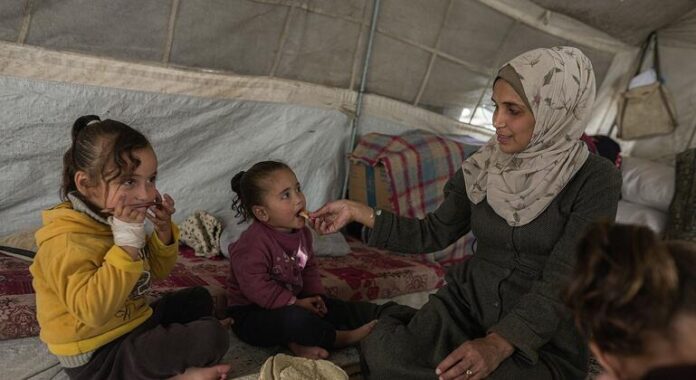
Since the fragile October ceasefire began as phase one of the US-led peace plan, thousands of tents and hundreds of thousands of tarpaulins have been distributed.
Yet partners estimate that over one million people – around half of Gaza’s population – still urgently need shelter support. “The needs remain immense, and the harsh weather only deepens the suffering of families living in tents or war-damaged buildings,” said the UN Spokesperson’s Office on Friday.
Water, sanitation and hygiene services are also under pressure. Storms have damaged already shattered infrastructure, while fuel shortages and limited landfill access have left waste piling up.
UNICEF-supported teams continue to remove around 1,000 tons of solid waste each month, helping protect children and families from health risks.
Heavy rains and floods cause widespread destruction in the Gaza Strip, displacing residents and leaving streets filled with mud and rubble.
West Bank demolitions
In the West Bank, demolition of 25 buildings in Nur Shams refugee camp has displaced around 70 families. UN Palestine relief agency, UNRWA, continues to support those who have had to flee from Jenin, Tulkarm and Nur Shams, covering rental costs for three months during the cold winter.
Humanitarian agencies continue to advocate for safe access and the entry of specialised equipment to maintain essential services, underscoring the critical role of UN and NGO partners in delivering life-saving assistance across the Occupied Palestinian Territory.
Lives at stake as Israeli curbs tighten: UNRWA chief
New Israeli restrictions on international non-governmental organisations (NGOs) risk further crippling humanitarian operations in Gaza at a moment of acute need, the head of the UN Palestine refugee relief agency warned Friday.
Philippe Lazzarini, Commissioner-General of UNRWA, said the measures would reduce life-saving assistance for civilians already struggling to survive after months of conflict and deprivation.
In a social media statement on Friday, Mr. Lazzarini said he was echoing concerns raised by principals of the Inter-Agency Standing Committee (IASC) – the forum that brings together heads of UN and non-UN humanitarian organisations.
Matter of survival
“New Israeli restrictions on international NGOs are further compromising the humanitarian operation in the Gaza Strip,” he said, stressing that “people in Gaza need more aid, not less, simply to survive”.
He warned that the measures would also undermine efforts to assist communities affected by escalating violence in the West Bank, where humanitarian needs have surged alongside displacement and access constraints.
According to the IASC, the planned restrictions include new registration and operational requirements for international NGOs that would significantly limit their ability to deliver.
Humanitarian leaders have urged Israeli authorities to revoke the measures, warning that they would severely disrupt aid delivery and contravene Israel’s obligations under international humanitarian law.
UNRWA targeted
Mr. Lazzarini said the latest steps follow the adoption of Israeli legislation targeting UNRWA, which has already had a chilling effect on humanitarian operations. Taken together, he said, they form “a troubling pattern” that risks setting a dangerous global precedent.
“Failing to push back against attempts to control the work of aid organisations will further undermine the basic humanitarian principles of neutrality, independence, impartiality and humanity,” he said.
Humanitarian agencies have repeatedly warned that access constraints, insecurity and bureaucratic impediments are preventing aid from reaching people in need across the Occupied Palestinian Territory.
They say any further restrictions could have immediate and potentially fatal consequences for civilians who are dependent on humanitarian assistance.
UN officials and aid leaders continue to call for unimpeded humanitarian access, respect for international law and the protection of humanitarian personnel and operations.
