
If you’ve lived with a suction-side cleaner for years, you already know the deal: it’s dependable, it “usually”
Robot Pool Cleaner vs. Suction Side Pool Cleaner, Which One Is Better?
New year dawns amid rubble and resolve in Gaza
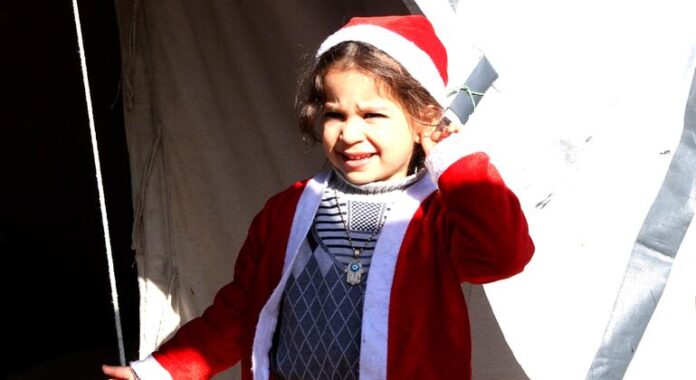
Hundreds of thousands of Palestinians remain uprooted, many living in makeshift tents pitched on bare ground or squeezed into damaged buildings without reliable access to water, electricity, healthcare or sanitation.
Winter rains have compounded the hardship, flooding shelters and turning camp pathways into heavy mud.
Fragile hope
Yet, amid the destruction, displaced families say the arrival of a new year has stirred fragile hopes for stability, safety and a chance to rebuild lives interrupted by conflict.
Standing in front of her tent, Umm Rabee’ Al-Malash appealed for more international engagement.
“The Palestinian people must be supported, as they have endured immense suffering,” she told our correspondent. “Help us rebuild the Gaza Strip, bring about peace, and allow us to have a State where we can live in peace and security.”
Falling behind
For parents, the toll on children is among the deepest scars of the war. Schools across Gaza have been damaged or destroyed, while thousands of young people have missed out on months of learning.
Wafaa Al-Khawaja voiced her fears for the next generation. “I wish that, just as the rest of the world lives, we could live the same way.
“Our children today have no education or anything else,” she said, describing days consumed by the struggle to find food, water and warmth.
In northern Gaza, displacement has cut off families from homes and livelihoods built over decades.
Turn back the clock
Kamal Abu Hsheish, originally from the Jabalia camp, said his only wish is to return to the life he knew before the war. For now, daily reality inside the camps continues to impose severe humanitarian conditions on thousands of families.
Aid agencies warn that relief efforts face mounting challenges, including damaged infrastructure, restricted access and the sheer scale of need.
Our children today have no education or anything else
Reconstruction, they say, will require sustained international commitment once conditions allow if the Gaza peace deal can advance to the next stage.
As Gaza’s displaced population marks the start of another year – with no return to their old life in sight – hopes remain bound to an end to violence and meaningful political progress on the 20-point plan which established the fragile ceasefire between Israel and Hamas in early October.
Until then, families wait, enduring loss and uncertainty, while clinging to the belief that the coming months may finally bring safety, dignity and the possibility of going home to rebuild.
Vatican New Year 2026: Te Deum, Mass and a Peace Plea
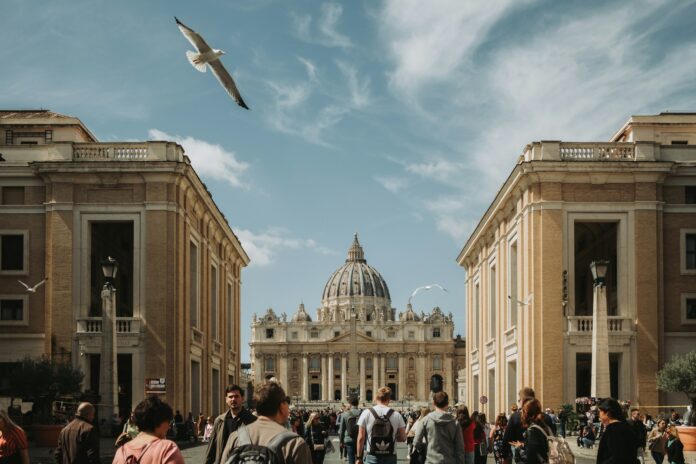
From a year-end Te Deum in St Peter’s Basilica to the World Day of Peace Mass on 1 January, Pope Leo XIV used the Vatican’s New Year rituals to press a simple idea: peace begins by “disarming” hearts.
VATICAN CITY — 1 January 2026 — The Vatican’s passage from 2025 into 2026 unfolded less like a countdown and more like a two-day liturgical “bridge”: an evening service of thanksgiving on 31 December, followed by a New Year’s Day Mass that also marks the Catholic Church’s annual World Day of Peace.
This year, in his first Vatican New Year as Pope, Leo XIV framed both moments around a consistent message—rejecting violence, urging forgiveness, and presenting peace as a moral duty with public consequences. The Vatican’s official programme lists the Te Deum service on 31 December and the papal Mass on 1 January as the central public celebrations.
Two headline moments in St Peter’s
- 31 December (evening): First Vespers and the Te Deum, the traditional hymn of thanksgiving, were celebrated in St Peter’s Basilica—an established Vatican way of formally closing the year in prayer.
- 1 January (morning): Leo XIV presided at Mass for the Solemnity of Mary, Mother of God, which the Church also marks as the World Day of Peace, before addressing pilgrims at midday.
While New Year’s celebrations across Europe often centre on fireworks and public parties, the Vatican’s tone is deliberately reflective. The two services—one looking back with gratitude, the other looking ahead with a peace agenda—are designed to set priorities for the year to come.
“Unarmed and disarming”: the peace theme for 2026
In the New Year’s Day liturgy, Leo XIV returned repeatedly to the idea of an “unarmed and disarming” peace—language that also anchors his official message for the World Day of Peace. In the Vatican’s text, the emphasis is not only on ending wars, but on refusing the logic of threat and exclusion at every level of society.
Vatican News, reporting on the Mass and homily, highlighted the Pope’s insistence that peace is built through concrete choices—beginning with the “disarming” of hearts and a rejection of violence as a solution. See: Vatican News coverage of the New Year Mass. In his midday remarks, he again urged people to begin “today” with daily acts that make peace possible: Vatican News on the Angelus.
The wider peace message is published in full by the Holy See: World Day of Peace 2026 message. International Catholic reporting also underscored how the Pope extended his appeal to families and communities affected by violence and loss: USCCB/CNS report.
A Jubilee backdrop as Rome turns the page
The New Year celebrations also took place in the final stretch of the Catholic Church’s 2025 Jubilee (Holy Year), a pilgrimage cycle that draws large crowds to Rome and shapes the Vatican’s public messaging around themes of hope and renewal.
For Europe—where debates over war, social cohesion, and migration remain politically charged—the Vatican’s Jubilee framing functions as a steady values-based reference point: dignity, reconciliation, and responsibility without slogans.
In an earlier profile, The European Times reported on Leo XIV’s election and expectations around his approach—context that helps explain why the Vatican’s 2025–26 “celebration” leaned less toward spectacle and more toward a disciplined moral theme.
Why it matters beyond St Peter’s Square
Vatican New Year liturgies are often described as symbolic, but symbols can carry public weight—especially when they reinforce norms that European institutions also claim to defend: human dignity, non-violence, and the protection of the vulnerable.
In that sense, the Vatican’s passage into 2026 was less a party than a public audit of conscience—closing one year with thanksgiving, and opening the next with a direct challenge: if peace is a gift, it is also a responsibility.
Scientology closes 2025 making gala of its expansion and plans for 2026

“Auld Lang Syne” has echoed through New Year’s festivities for over a century, symbolizing the bridge between where we’ve been and where we’re going. But on this night inside the Shrine Auditorium, that timeless sentiment took on a whole new dimension.
From the outset, the evening embodied the hallmarks of a Scientology New Year’s Celebration—elegance, anticipation and a sense of purpose. Dressed in formal evening wear, more than 6,500 guests filled the historic hall to honor the momentous feats of 2025, their gaze cast upon a boundless horizon unfolding before them.
“For most of the world, New Year’s is something they wait for. They count down seconds, watching the clock, as if time is the one telling them when life begins again,” said Mr. David Miscavige, ecclesiastical leader of the Scientology religion. “But we’ve never lived time that way. So while the rest of the planet may still be winding down its clocks—we’re here for something else entirely: to see what happens when a full year of Scientology accomplishments is unleashed all at once.”
And with that, Mr. Miscavige set the stage for a night showcasing a series of highlights from a year of endless expansion. Among those achievements, the numbers tuning in to Scientology Network continue to grow, drawing 11 times the viewership since network launch, while earning more than 170 awards for creative and technical excellence. And those viewers become doers, as over a million students have now enrolled in online courses—another record-breaking milestone.
The year was further defined by a panorama of Grand Openings illuminating the globe. Beginning with the ribbon-cutting for the newest Ideal Org half a world away in South Africa’s Eastern Cape—a landmark 10-story masterpiece now rising into the Nelson Mandela Bay skyline.
The wave of expansion rolled on as L. Ron Hubbard’s enduring legacy came vividly to life this past summer with the Grand Opening of three new L. Ron Hubbard (LRH) Landmark Sites—each meticulously restored to its original grandeur in honor of his milestone breakthroughs:
- In Elizabeth, New Jersey, dedicating the site of the first Dianetics Foundation, where Mr. Hubbard trained the first Dianetic Auditors 75 years ago.
- In Phoenix, Arizona, inaugurating the location where he unified the subjects of Dianetics and Scientology, forever shaping the course of the religion.
- And in Harare, Zimbabwe, unveiling the site where he filmed the legendary Clearing Course lectures and delivered his only filmed interview, An Introduction to Scientology.
From expansion to empowerment, the night next ascended to a succession of living triumphs—each one illustrating the impact of LRH Technology in action, transforming communities and inspiring lasting change.
Association for Better Living and Education (ABLE), addressing society’s most urgent challenges—drug abuse, illiteracy, immorality and crime—through its wide-reaching programs:
- In Sonora, Mexico, where widespread addiction has reached alarming levels, a government-sponsored Narconon for men proves so effective that civic leaders open a dedicated wing for women. Altogether, the facility has provided more than 100,000 rehabilitation hours, restoring a life every six days. In the wake of that success, regional officials partner with Narconon to establish a youth facility for teens in crisis, extending rehabilitation to the next generation. As a result, Narconon Navojoa is now the model for government-funded Narconons across Mexico.
- In Kenya, sprawling slums drive a relentless cycle of crime and imprisonment known as “the revolving door.” But a former inmate joins fellow ex-prisoners to break that pattern for his people. Upon discovering The Way to Happiness, they set out to bring the 21 precepts to schools and community groups, steering youth from gangs and slashing drug use in schools from 80 percent to just 5. Then returning to Kenya’s prisons, they cut recidivism by 51 percent—ending the cycle of crime and opening the door to a new beginning for Kenya’s youth and families.
- In Colombo, Sri Lanka, where students are only taught rote memorization, a teacher sets out to instill actual understanding. After discovering Applied Scholastics, she integrates Study Technology at her school and, before long, her students are advancing three grade levels in a single year. Building on those gains, she creates a program for widespread teacher instruction on the barriers to study, ultimately training over 2,000 educators and transforming education for more than 80,000 students. All culminated in a national partnership to bring Study Technology to all 10,000 schools of Sri Lanka.
World Institute of Scientology Enterprises (WISE), disseminating L. Ron Hubbard’s Administrative Technology (Admin Tech) for group survival and prosperity:
- In the United Kingdom, a WISE member of Scottish heritage takes on the relentless rain of the British Isles when he assumes control of a failing gutter cleaning business. Applying Admin Tech, he rebuilds the operation—establishing an Organizing Board, codifying company policies and launching an apprenticeship program. Accordingly, his enterprise has expanded more than 140 times and now fields a fully trained force of 250 specialists, safeguarding 2,500 homes a week—more than 125,000 in the last year alone. Serving every county across the kingdom, his company today is the number one gutter and roof care service in the UK.
- In Colombia, customs delays and disorganization trigger trade backlogs that are triple the international average. But a WISE member and logistics expert applies Admin Tech to design his enterprise as a high-efficiency import-export engine. By consolidating every phase of cargo and customs and coordinating production flows, he compresses a 35-day cycle into just three days, transporting everything from white marble to steel and from animals to automobiles. Delivering more than 70,000 tons of cargo annually by land, air and sea across 91 nations, his company has expanded 46 times in the past decade, becoming Colombia’s leading full-service logistics operator.
- In Hungary, where 9 out of 10 businesses fail due to a lack of organizational know-how, a WISE Consultant sets out to apply LRH solutions across the nation’s commercial sector. His company’s seminars equip leaders with the tools to implement proper procedures, driving Admin Tech into 6,000 companies and training over 25,000 professionals, ranging from a children’s furniture factory earning prestigious Superbrands status to a theatrical tailoring house named Entrepreneur of the Year. Today, out of 1.8 million businesses in Hungary, this WISE Consultant firm ranks in the top one percent for stability and proven excellence.
International Hubbard Ecclesiastical League of Pastors (I HELP) and Scientology Missions International (SMI) provide Dianetics and Scientology introductory services in communities planetwide:
- In Japan, where three-quarters of the population say they live under stress and anxiety, an educator exploring psychology simultaneously discovers Dianetics and changes course completely. Establishing a Dianetics Group in Ashiya—the Beverly Hills of Japan—she sets out with a singular purpose: to rekindle the spirit of the Japanese people. She drives Dianetics throughout the region—from delivering introductory lectures to giving radio interviews—altogether introducing thousands to Dianetics. Whereafter, a city Mayor praises her for “bringing hope and true solutions,” as she ignites the glow of a Book One wildfire spreading across her region of Japan.
- In Valencia, Spain, residents increasingly face rising crime and public insecurity. But the city’s Ideal Scientology Mission stands as a pillar of freedom in Valencia’s District of Light, delivering Scientology services from introductory levels to the State of Clear. From that foundation, the Mission extends its humanitarian impact with nearly 200 volunteers advancing Church-sponsored initiatives—United for Human Rights, The Way to Happiness and Drug-Free World—to residents and tourists alike. All as their Volunteer Minister disaster response proved decisive during Spain’s deadliest floods of the century, leading Valencia’s Civil Guard to hail the Mission for strengthening the city’s social foundation.
- Finally, an international showcase of ribbon-cutting ceremonies marked an unprecedented year of worldwide Mission growth. From the City Center of Plzeň, Czech Republic’s Gateway to Europe; to Budapest, Hungary, the Jewel of the Danube; and Shizuoka, Japan, beneath the sacred silhouette of Mount Fuji, new Ideal Missions arose to uplift communities. In California, three more cut ribbons: in Montrose, just north of Los Angeles, nestled beneath the San Gabriel Mountains; in San Jose, surrounded by the Santa Cruz Mountains; and in Riverpark, near the state capitol in Sacramento. While just last month, Lakeway, Texas, hosted the final Ideal Mission opening to cap an outstanding 12 months.
The evening’s celebration soared on with the superlative results from Ideal Organizations helmed by executive teams just graduated from Golden Age of Administration training—immediately demonstrating explosive advances. Mr. Miscavige led the audience on a global tour, beginning in the US with stops at Churches in New York; Washington, DC; and Twin Cities—then to Europe for Milan and Stuttgart, and in the Far East from Tokyo and Kaohsiung, culminating in the newest Ideal Org in Eastern Cape in South Africa. Perfectly primed with the most important training in Scientology history, this new breed of executive has fueled double-digit growth in Churches around the world—propelling individuals toward total spiritual freedom.
“There is one last story still waiting to rise,” Mr. Miscavige continued, before the Shrine erupted in a crescendo of celebration as he unveiled the forthcoming Ideal Org in Puerto Rico. Salsa music next lifted the night, as a cinematic preview of the dazzling new building in the heart of San Juan sparked a wave of Puerto Rican flags across the auditorium. The historic ribbon-cutting, heralding the first Ideal Org for the Caribbean, is set to take place in the coming weeks.
The celebration swelled once again, with anticipation filling the air as over 240 Scientologists were honored as Power Field Staff Members (FSMs) for having helped at least 100 individuals onto and up the Bridge to Total Freedom in 2025. Even more remarkable, an astonishing 12 Scientologists were awarded as Elite FSMs, having helped 1,000 or more individuals up the Bridge in just the past year.
The final dramatic revelation came as Mr. Miscavige announced the newest broadcast message for the curious—an anthem for the indomitable human spirit and the soul of humanity. Set to premiere during Super Bowl LX and the World Cup in 2026, the message will reach more people in more nations than ever before.
With that look toward tomorrow, the evening drew to its close. And just as “Auld Lang Syne” marks the promise of a new year, it is a time-honored Scientology tradition that Mr. Miscavige sets the course for limitless horizons that lie ahead.
“And so, as we stand at the threshold of a new year, you have just seen what happens when LRH Technology meets the real world,” Mr. Miscavige said. “But the truth is, everything you saw tonight now turns to you.”
“Because if every Scientologist here tonight moves forward with the certainty of LRH, if every Scientologist here tonight takes the next step and helps another take theirs, then there is no distance we cannot close, no barrier we cannot break and no future beyond our reach.”
UN chief condemns Israeli amendments targeting UNRWA operations

The amendments, adopted on December 29, to The law must stop UNRWA Operations “seek to further hamper the ability of UNRWA to function and carry out the activities entrusted to it,” said a statement published by the spokesperson for the Secretary-General Antonio Guterres.
“The law and its amendments are inconsistent with the status and international legal framework applicable to UNRWA and must be immediately repealed,” the text adds.
Stressing that UNRWA is an integral part of the United Nations, the Secretary-General recalled Israel’s obligations under the United Nations Charter and the Convention on the Privileges and Immunities of the United Nations.
“The Convention remains applicable to UNRWA, its property and assets, as well as its officials and other personnel. Property used by UNRWA is inviolable,” the statement said.
The UN chief noted that the advisory opinion issued on October 22, 2025 by the International Court of Justice concluded that Israel is required to ensure full respect for the privileges and immunities accorded to the United Nations, including UNRWA and its personnel, in and in relation to the Occupied Palestinian Territory.
Reiterating his strong support for the agency, he said UNRWA plays an indispensable role in serving the Palestinian people – in Gaza and elsewhere in the region.
He added that UNRWA’s continued operations in Gaza contribute to the effective implementation of Security Council resolution 2803 (2025) and the Comprehensive Plan to End the Gaza Conflict on the Ground.
Originally published at Almouwatin.com
WHO study shows COVID vaccines remain key to preventing serious illness

Although COVID-19 no longer causing the widespread disruption seen during the global health emergency, the virus continues to hospitalize and kill people across Europe and neighboring regions.
Studies carried out by the WHO The European Regional Office confirms that people who receive timely booster doses are much less likely to develop severe illness, require intensive care or die.
THE results are based on data from the European network EuroSAVE (European Severe Acute Respiratory Infection Vaccine Effectiveness), which monitors respiratory infections in hospitals in parts of Europe, the Balkans, the South Caucasus and Central Asia.
Important results
“Studies highlight that while COVID-19 does not cause the widespread illness we have seen during the pandemic, it has nonetheless caused considerable numbers of hospitalizations and deaths. » said Mark Katz, medical epidemiologist at the WHO regional office.
Between May 2023 and April 2024, nearly 4,000 patients were hospitalized for acute respiratory infections in the countries covered by the network.
Nearly 10 percent of these cases were caused by COVID-19, although the pandemic was declared over. Among patients hospitalized with COVID-19, only 3% had received a dose of vaccine in the previous 12 months.
The consequences have often been serious: 13 percent of COVID-19 patients required admission to intensive care units and 11 percent died.
Comparative research also showed that patients hospitalized with COVID-19 were more likely than those with the flu to need oxygen, intensive care or succumb to the illness.
Vaccines provide strong protection
On the other hand, vaccination offers strong protection.
A EuroSAVE study found that an up-to-date COVID-19 vaccine received within the last six months was 72% effective at preventing hospitalization and 67% effective at preventing the most serious outcomes, including intensive care admission and death.
A separate multi-country analysis found that vaccines reduced COVID-related hospitalizations by about 60 percent.
Originally published at Almouwatin.com
Health progress marked 2025 as wars and budget cuts strain systems

Although funding cuts, conflict and climate shocks have strained health systems around the world – disrupting essential services in many countries – governments and partners have nevertheless made notable progress in disease control, prevention and preparedness.
The United Nations health agency said the mixed picture of progress and pressure in Looking ahead to 2025 highlights both what is possible through evidence-based cooperation and what is at risk if momentum and funding are not sustained..
Victories for disease control
Several countries have reached historic milestones in eliminating infectious diseases.
The Maldives became the first country to achieve “triple elimination” of mother-to-child transmission of HIV, syphilis and hepatitis Bwhile Brazil has eliminated mother-to-child transmission of HIV, making it the most populous country in the Americas to achieve this goal.
Progress has also been made in the fight against neglected tropical diseases. Burundi, Egypt and Fiji have eliminated trachoma; Guinea and Kenya have eliminated sleeping sickness; and Niger became the first African country to eliminate river blindness. Since 2010, the number of people requiring treatment for a neglected tropical disease has fallen by almost a third.
Deaths from tuberculosis (TB) continued to declineparticularly in Africa and Europe, which have seen reductions of more than 45 percent over the past decade. Yet the disease has claimed the lives of an estimated 1.2 million people in 2024, underscoring continued risks from HIV, undernutrition and other factors.
The fight against malaria has also made progress. Georgia, Suriname and Timor-Leste were certified malaria-free, while seven other African countries introduced malaria vaccines in 2025. Combined with newer tools, including improved bed nets, these efforts prevented an estimated 170 million cases and one million deaths in 2024.
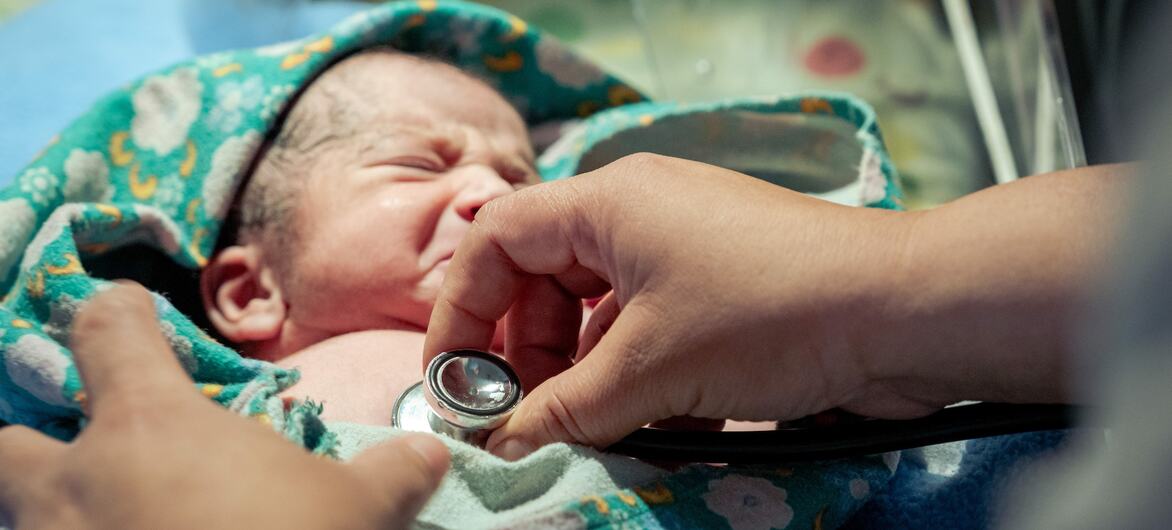
A doctor examines a newborn baby at a hospital in Kathmandu, Nepal.
Global health cooperation
Beyond disease-specific progress, 2025 also marked significant advances in global health cooperation.
Countries have adopted the the first global agreement on the pandemic and strengthened the International Health Regulations (IHR), laying the foundation for a faster and more equitable response to future health emergencies.
World leaders approved a historic political declaration on noncommunicable diseases and mental health. New evidence-based guidance has also been published covering areas from maternal care and meningitis to diabetes in pregnancy and anti-cancer drugs suitable for children.
Healthier lives, uneven progress
WHOThe World Health Statistics 2025 report revealed that 1.4 billion more people live healthier livesthrough reduced tobacco consumption, cleaner air and improved water and sanitation.
Vaccination has remained at the heart of this progress. Global vaccination efforts have reduced measles deaths by 88 percent since 2000, saving nearly 59 million lives. By 2025, several countries have expanded vaccination against human papillomavirus (HPV), bringing the world closer to eliminating cervical cancer.
Yet challenges persist. Twenty million children have not received essential vaccines due to conflicts, supply disruptions and misinformation. Maternal and child deaths are also not decreasing fast enough to achieve the global goals, highlighting the need for greater investment in primary health care and safe childbirth programs.
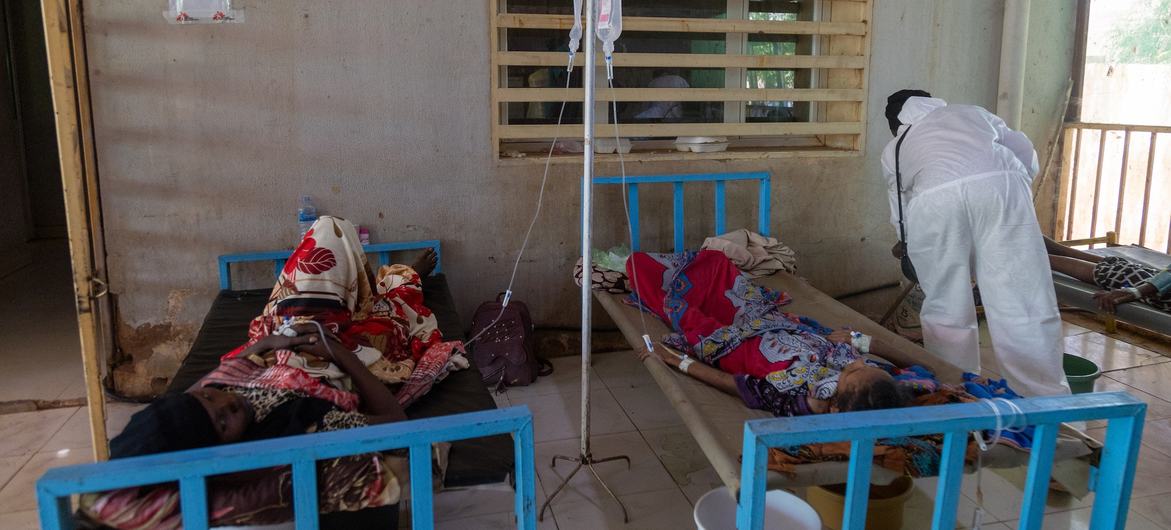
Children and adults suffering from cholera are treated in an isolation center at a hospital in Khartoum, Sudan.
Financial pressures, response to the crisis
Funding cuts in 2025 disrupted services including maternal care, immunization, HIV prevention and disease surveillance, with the WHO warning that reduced funding could reverse hard-won progress.
Despite these pressures, WHO has supported rapid responses to health emergencies and crises in 79 countries and territories, including Gaza, Sudan and Ukraine, providing emergency medical aid and helping to contain outbreaks.
He delivered medicines, helped keep hospitals open, participated in vaccination campaigns and ensured people could still access regular health services – “because babies still need to be born, heart attacks still need to be prevented, and diabetes still needs to be treated, even in an emergency.”
Looking to the future
Looking ahead to 2026, WHO sees the adoption of the first pandemic agreement and the strengthening of the International Health Regulations as signs of a renewed global commitment to preparedness.
He emphasizes that it remains guided by the principle stated at its creation in 1948: according to which the best state of health that it is capable of achieving must be a right for everyone and not a privilege for a few.
“Together,” WHO stress“through science, solutions and solidarity, we can build a healthier, safer and more promising future for all.»
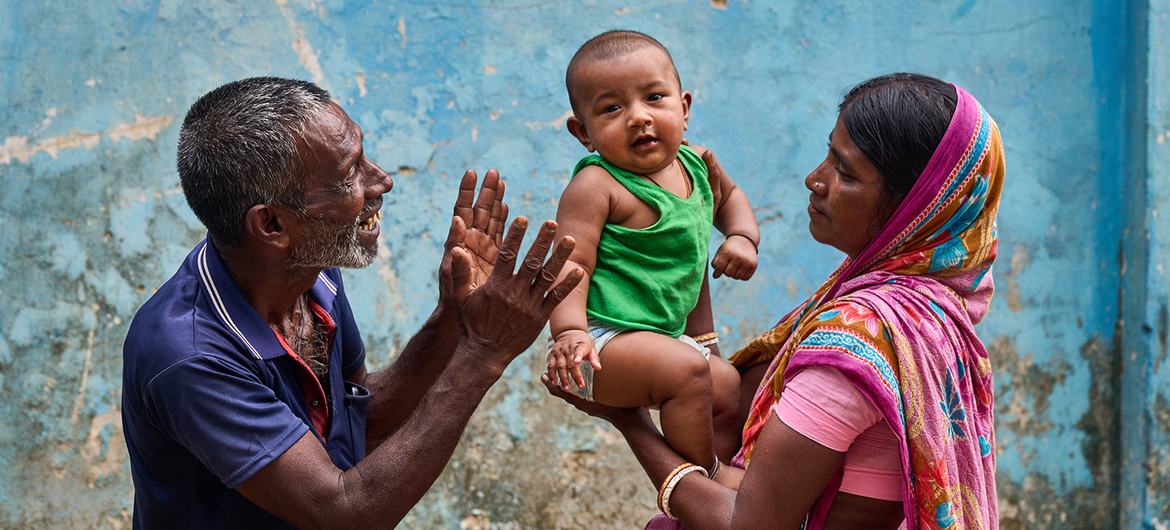
A baby is held by his mother and entertained by his grandfather at a community clinic in northern Bangladesh.
Originally published at Almouwatin.com
Results expected on January 5 after historic elections in the Central African Republic

According to has MINUSCA, preliminary reports from observers indicate that more than 99 percent of polling stations across the country opened as scheduled on Election Day.
The transfer of envelopes containing the results from 19 prefectural capitals to the national capital, Bangui, is now underway, with the logistical and security support of the mission.
The vote of December 28 marked a unprecedented moment in the political history of the countrybringing together four ballots in a single electoral exercise. Municipal elections, in particular, have not taken place in the Central African Republic (CAR) since 1988 and are a key provision of the 2019 Political Agreement for Peace and Reconciliation.
Vast, sparsely populated and landlocked, the CAR is crisscrossed by dense forests, rivers and long, often impassable roads. Outside of Bangui, many communities are only accessible by plane or multi-day trips.
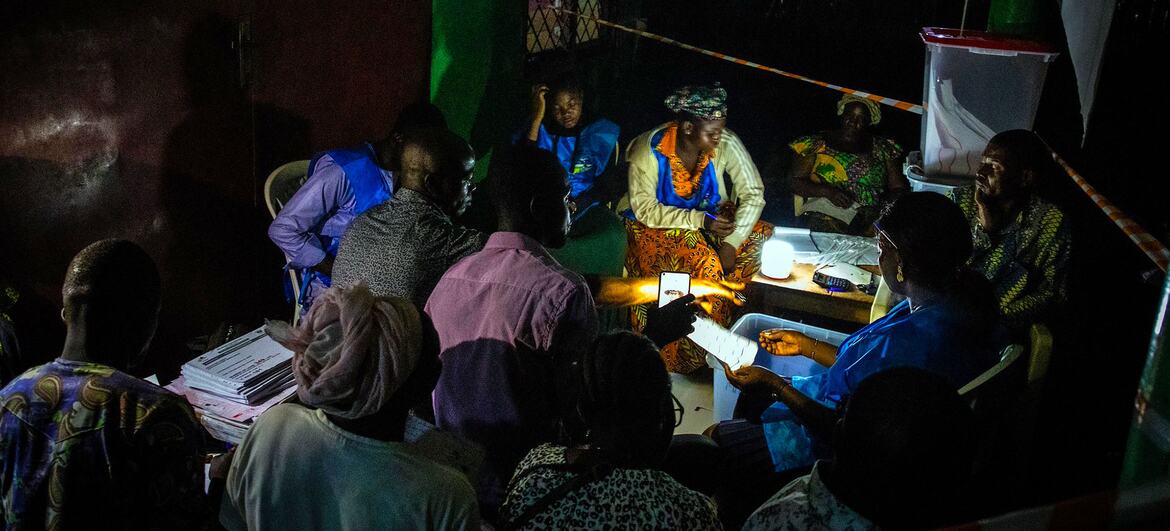
Ballots are counted under flashlights after elections in the Central African Republic.
Massive UN support for a complex operation
MINUSCA said it worked closely with national authorities and United Nations agencies to support the electoral process.delivering all voting materials on time despite difficult terrain and security constraints.
In total, the mission carried out 84 flights and eight road convoys to transport more than 230 tonnes of electoral materials, including ballots, indelible ink, voter cards, voting booths and ballot boxes.
Election materials were delivered to 6,679 of the country’s 6,700 polling stations, allowing them to operate normally in 20 prefectures.
Technically and operationally, some 34,500 people – including election officials, supervisors and polling station staff – were trained with UN support.
Security measures
Poll security was strengthened thanks to the deployment of additional national troops and police, logistically supported by MINUSCA, alongside patrols reinforced by UN peacekeepers and police personnel.
The mission also provided the Central African armed forces and internal security personnel with vehicles and motorcycles to reach remote and isolated areas.
Speaking at a press conference On Wednesday in Bangui, the Special Representative of the Secretary-General for the CAR, Valentine Rugwabiza, said the mission had successfully fulfilled its mandate despite a difficult environment.
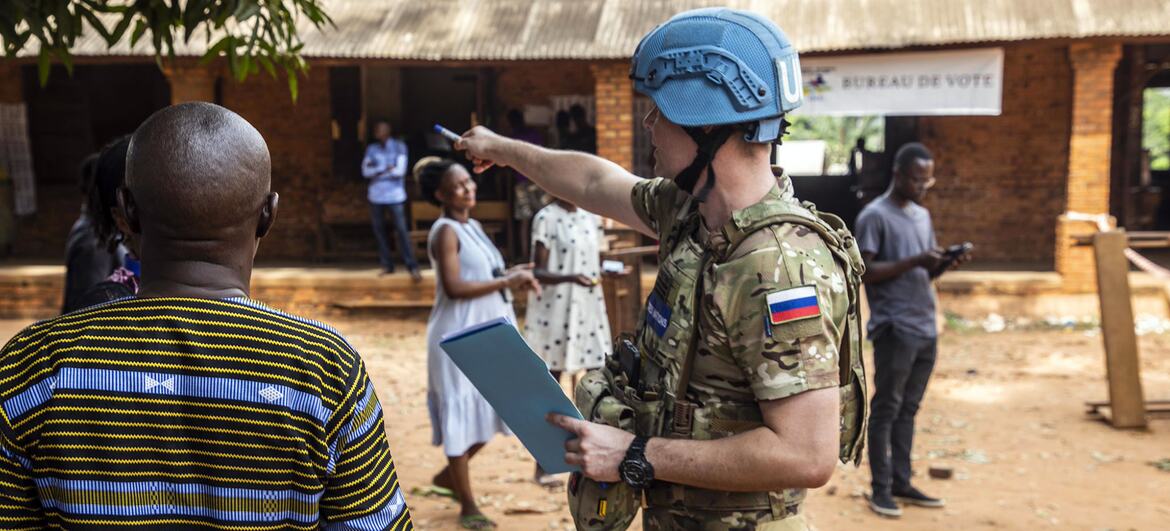
UN peacekeepers patrol a voting center in the capital Bangui during the elections.
Incident in Haut-Mbomou
Ms. Rugwabiza strongly condemned an attack in Bambouti, in the southeastern Haut-Mbomou prefecture, near the border with South Sudan, which prevented voting there due to insecurity.
The attack, carried out by the armed group Azandé Ani Kpi Gbe (AAKG), was also accompanied by hostage-taking, including the sub-prefect.
She said MINUSCA had been working tirelessly since Sunday to facilitate the release of those taken hostage.
Results expected next week
The National Elections Authority (NEA) is expected to announce the preliminary results of the presidential election on January 5, 2026..
Originally published at Almouwatin.com
Ukraine: attacks disrupt heating as temperatures fall

According to the Office for the Coordination of Humanitarian Affairs (OCHA), since December 26, nationwide attacks have also caused significant damage to civilian infrastructure, leaving parts of the country without power, heat and water as temperatures fall below freezing.
Nationwide, authorities reported nearly 100 civilian casualties during that period.
The most serious consequences were reported in the city of kyiv, where a large-scale attack on December 27 killed and injured several people. Energy facilities, residential buildings, a kindergarten, a university dormitory, civilian vehicles, shops and other civilian premises were damaged.
No heating in winter
OCHA cited an energy company reporting that more than a million homes in and around Kyiv lost electricity as a result of the strikes. Water supplies were disrupted and around a third of the capital’s population was left without heat at the height of winter.
The same wave of attacks affected the Chernihiv, Dnipro, Donetsk, Kharkiv, Kherson, Sumy and Odessa regions, causing new victims and damaging homes, educational institutions and infrastructure.
Electricity has since been restored to almost 750,000 homes in Kyiv and almost 350,000 homes in the surrounding Kyivska region. However, heating and electricity remain disrupted by emergency and planned power cuts.
Humanitarian partners have set up warming tents where residents can seek shelter, receive food, charge their mobile phones and access basic assistance.
Essential services under threat
The strikes come against a backdrop of continued pressure on essential services. Ukraine was behind about 42% of all attacks on healthcare recorded worldwide in 2025, according to the World Health Organization (WHO).
Of more than 1,000 attacks on healthcare facilities worldwide this year, 561 took place in Ukraine, leaving 19 people dead and 201 injured.
Over the weekend, another health facility was damaged in a strike on the town of Izmail in the Odessa region, highlighting continued risks to civilians and medical services as winter conditions intensify.
Originally published at Almouwatin.com
Another child dies in extreme conditions in Gaza: UNICEF
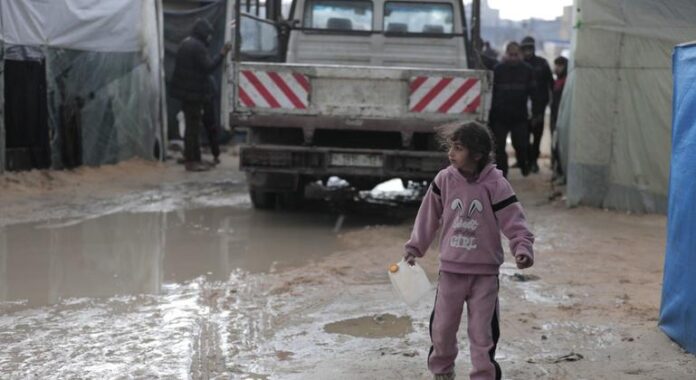
In a statement, UNICEF identified the latest victim as seven-year-old Ata Mai; he drowned on 27 December during “severe flooding” in an improvised camp for internally displaced people in Sudaniyeh, northwest Gaza City.
He is just the latest child in Gaza to succumb amid “extreme winter conditions and lack of safe shelters”, said UNICEF’s Edouard Beigbeder, Regional Director for the Middle East and North Africa.
“Teams visiting displacement camps reported appalling conditions that no child should endure, with many tents blown away or collapsing entirely,” he said.
Desperate search
Information indicates that Ata had been living in a camp of some 40 tents when he went missing one afternoon. Despite search and rescue efforts supported by heavy machinery, his body was only recovered hours later.
The UN agency noted that Ata’s siblings “are all under 10 years old…the family had already endured the loss of their mother during the war. UNICEF is currently supporting the family with essential aid, including blankets, tarpaulins, and psychosocial support, while assessing their broader needs”.
In addition to Ata Mai, at least five other children have lost their lives this month “after being exposed to such harsh conditions”, Mr. Beigbeder said.
Across Gaza, shelter needs are acute, with more than 1.9 million people displaced and only limited shelter supplies entering the enclave. Specifically, internally displaced families who have been sheltering in worn-out tents or makeshift shelters have faced prolonged rains, strong winds and freezing temperatures. Aid teams have repeatedly flagged the dangers for underfed youngsters and other vulnerable Gazans whose tents have been flooded time and again.
In an update issued on Tuesday, UN aid coordination office, OCHA, confirmed flash flooding caused by new rainstorms, “affecting people living in low-lying areas, coastal zones and those sheltering in substandard structures and tents”.
“Seawater has once again inundated tents housing displaced families, including in the Al Mawasi area of Khan Younis, rendering many shelters uninhabitable,” the update noted.
The rains have forced many families often previously uprooted by the war to move to higher ground after their belongings were soaked.
Heavy winds have made matters worse, destroying or severely damaging numerous tents and makeshift shelters, OCHA said.
Shelter solutions remain elusive and since early December, 18 residential buildings “have completely collapsed, resulting in significant human and material losses”, according to the agency update.
An additional more than 110 additional buildings have sustained dangerous partial damage, posing an immediate threat to thousands of residents in and around them.
“This tragedy underscores the extreme vulnerability of children in Gaza’s hardest-hit areas, where the near-total destruction of homes and water and sewage infrastructure has left families exposed to the elements,” UNICEF said.
The development comes after a week of heavy rainfall, strong winds and freezing temperatures that have affected around 100,000 families.
With further rain and colder conditions forecast, the situation is expected to worsen.
Still saving lives
Working alongside aid partners, UNICEF provides critical support to thousands of affected families. This vital work includes:
- installing temporary water pipelines,
- distributing hygiene items, tarpaulins, blankets and dignity kits,
- ensuring access to latrines,
- working to clean and reopen sewage pipelines, clear stormwater inlets and protect tents from flooding.
UNICEF warned that heavy rains are making the situation worse by driving up fuel needs for sewage pumping and stormwater drainage. Water levels at the Sheikh Radwan lagoon have risen from 1.8 to 2.2 metres, requiring 7,000 litres of fuel per day to prevent overflow.
Humanitarian efforts in jeopardy
From 1 January, a reported 37 international aid organizations risk losing their licences to operate in Gaza under Israel’s new registration system, potentially forcing a large-scale suspension of humanitarian operations, UN agencies and partners warn.
“If INGOs are forced to stop operations, one in three health facilities in Gaza will close,” UN and partners in the Occupied Palestinian Territory (OPT) said earlier this month.
In a joint statement, they insisted that the new INGO registration system “fundamentally jeopardizes the continuation of humanitarian operations throughout the OPT”.
The new system “relies on vague, arbitrary, and highly politicized criteria and imposes requirements that humanitarian organizations cannot meet without violating international legal obligations or compromising core humanitarian principles”, the aid agencies stated.
Unless Israel reconsiders, dozens of INGOs face deregistration by Wednesday 31 December 2025, followed by the forced closure of operations within 60 days.
Suspension of aid agencies ‘outrageous’
The UN High Commissioner for Human Rights, Volker Türk, also expressed deep concerns over the move, calling Israel’s suspension of aid agencies from Gaza “outrageous.”
“This is the latest in a pattern of unlawful restrictions on humanitarian access,” Mr. Türk said on Wednesday, citing Israel’s ban on UNRWA and broader constraints on UN agencies, Israeli and Palestinian NGOs.
“Such arbitrary suspensions make an already intolerable situation even worse for the people of Gaza,” he said, urging States with influence to “take urgent steps and insist that Israel immediately allows aid to get into Gaza unhindered.”
Mr. Türk reminded Israeli authorities of their obligations under international law to ensure the essential supplies of daily life in Gaza, including by allowing and facilitating humanitarian relief.
