Statement by High Representative/Vice President Kallas and Commissioner for Enlargement Kos on Georgia
State of Europe’s environment not good: threats to nature and impacts of climate change top challenges | Press releases
Significant progress has been made in reducing greenhouse gas emissions and air pollution, but the overall state of Europe’s environment is not good, especially its nature which continues to face degradation, overexploitation and biodiversity loss. The impacts of accelerating climate change are also an urgent challenge, according to the European Environment Agency’s (EEA) most comprehensive, ‘state of environment’ report, published today. The outlook for most environmental trends is concerning and poses major risks to Europe’s economic prosperity, security and quality of life.
Country press releases in EEA languages
The report stresses that climate change and environmental degradation pose a direct threat to Europe’s competitiveness, which depends on natural resources. It adds that achieving climate neutrality by 2050 also hinges on better and responsible management of land, water and other resources. Protecting natural resources, mitigating and adapting to climate change, and reducing pollution will build the resilience of vital societal functions that depend on nature, such as food security, drinking water and flood defences.
The report urges stepping up implementation of policies and longer-term sustainability-enabling actions already agreed to under the European Green Deal. Such actions align with the European Commission’s Competitiveness Compass priorities on innovation, decarbonisation and security.
Europe’s environment 2025 is the most comprehensive analysis on the current state and outlook for the continent’s environment, climate and sustainability, building on data from across 38 countries.
The report highlights the European Union is a world leader in climate efforts, reducing its greenhouse gas emissions and fossil fuel use while doubling the share of renewables since 2005. Good progress has also been made in improving air quality and increasing waste recycling and resource efficiency over the past 10-15 years. Progress on a range of factors that enable the shift towards sustainability – such as innovation, green employment and sustainable finance – also gives cause for hope.

We cannot afford to lower our climate, environment and sustainability ambitions. Our state of environment report, co-created with 38 countries, clearly sets out the science-based knowledge and demonstrates why we need to act. In the European Union, we have the policies, the tools and the knowledge, and decades of experience in working together towards our sustainability goals. What we do today will shape our future.
Executive Vice-President for Clean, Just and Competitive Transition, Teresa Ribera, said:
This report is a stark reminder that Europe must stay the course and even accelerate our climate and environmental ambitions. Recent extreme weather events show how fragile our prosperity and security become when nature is degraded, and climate impacts intensify. Delaying or postponing our climate targets would only increase costs, deepen inequalities, and weaken our resilience. Protecting nature is not a cost. It is an investment in competitiveness, resilience and the well-being of our citizens. By scaling up action now, we can build a cleaner, fairer and more resilient Europe for future generations.
Commissioner for the Environment, Water Resilience and a Competitive Circular Economy, Jessika Roswall, said:
While progress has been made, the state of our environment is a clear call to action to continue to cut pollution, restore nature and protect biodiversity. We need to rethink the link between the environment and the economy and look at the protection of nature as an investment, not a cost. Healthy nature is the basis for a healthy society, a competitive economy and a resilient world, which is why the EU is committed to stay the course on our environmental commitments.
Commissioner for Climate, Net Zero and Clean Growth, Wopke Hoekstra, said:
This report reinforces the urgent need for the EU to maintain its strong climate ambitions. As the fastest-warming continent, Europe has witnessed firsthand the devastating impact of climate change – most recently through the severe forest fires that swept across the summer. The costs of inaction are enormous, and climate change poses a direct threat to our competitiveness. Staying the course is essential to safeguarding our economy.
Complex challenges ahead
Biodiversity is declining across terrestrial, freshwater and marine ecosystems in Europe due to persistent pressures driven by unsustainable production and consumption patterns, demonstrated most notably in the food system. Looking ahead, the deterioration in the state of Europe’s biodiversity and ecosystems is expected to continue, with agreed policy objectives unlikely to be met by 2030, the report says.
Similarly, Europe’s water resources are under severe pressure, with water stress affecting one third of Europe’s population and territory. Maintaining healthy aquatic ecosystems, protecting watersheds and ensuring that groundwater resources are replenished is crucial to ensuring Europe’s future water resilience, the report says.
On climate change, Europe is the fastest-warming continent on the planet. The climate is changing at an alarming rate, threatening security, public health, ecosystems, infrastructure and the economy. The increasing frequency and magnitude of climate-related disasters, as well as the knowledge that the climate will continue to change even with the EU’s ambitious mitigation efforts, underscore the urgent need to adapt the European society and economy, while at the same time ensuring that no one is left behind.
These top challenges call for a need to rethink the links between our economy and the natural environment, land, water and natural resources, the report says. Only by restoring the natural environment in Europe will it be possible to maintain a competitive economy and a high quality of life for European citizens.
Scaling up and out
Transformative change to production and consumption systems — decarbonising the economy, shifting towards circularity, reducing pollution and exercising responsible stewardship of natural resources — is urgently required, the report says. EU policies, including the Green Deal, provide a clear pathway towards sustainability.
The report points specifically at efforts to restore habitats through nature-based solutions, which will build resilience and also help climate change mitigation and adaptation efforts. It also emphasises the need to decarbonise key economic sectors, especially transport, and to address emissions from agriculture. Increasing circularity has the potential to reduce Europe’s dependency on imports of energy and critical raw materials. Further, investing in digital and green transition of European industry, Europe can enhance productivity and become a global leader in green innovation, developing technologies to decarbonise hard-to-abate industries like steel and cement.
Background
The EEA publishes a state of environment report every five years as mandated in its regulation. Europe’s environment 2025 is the 7th such report published by the EEA since 1995. It offers solid, science-based insights on how we must respond to the huge and complex challenges we face, such as climate change, biodiversity loss and air and water pollution.
The report has been prepared in close collaboration with the EEA’s European Environment Information and Observation Network (Eionet). The report draws on the vast expertise of Eionet’s leading experts and scientists in the environmental field, across the EEA’s 32 member countries and six cooperating countries.
Press conference: The findings of the report will be presented by EEA Executive Director, Leena Ylä-Mononen, at a joint press conference with the European Commission, namely with Executive Vice-President for Clean, Just and Competitive Transition, Teresa Ribera, and Commissioner for the Environment, Water Resilience and a Competitive Circular Economy, Jessika Roswall. The press conference, on 29 September starting at 11.00 CEST, will be streamed on EBS Live.
Our latest press releases
Researchers create novel metamaterial that can potentially revolutionize implantable, ingestible devices
Researchers led by Rice University’s Yong Lin Kong have developed a soft but strong metamaterial that can be controlled remotely
Pope Leo XIV Urges All People of Faith to Unite as “Bridges of Hope” in Divided World
Vatican City – October 5, 2025 — In his October 2025 prayer intention, released globally through The Pope Video on September 30, Pope Leo XIV issued a universal appeal for “collaboration between different religious traditions,” inviting not only Catholics but all people of faith to work together to “defend and promote peace, justice and human fraternity.”
The message—entrusted to the entire Catholic Church through the Pope’s Worldwide Prayer Network—opens with the Pope’s voice offering a heartfelt prayer: “Lord Jesus, you who in diversity are one and look lovingly at every person, help us to recognize ourselves as brothers and sisters, called to live, pray, work and dream together.”
While rooted in Christian language, the Holy Father’s words carry a deliberately inclusive resonance. He acknowledges the paradox of our time: “We live in a world full of beauty, but also wounded by deep divisions.” With sorrow, he notes that “sometimes religions, instead of uniting us, become a cause of confrontation.” In response, he implores: “Give us your spirit to purify our hearts, so that we may recognize what unites us, and from there, learn again how to listen and collaborate without destroying.”
Pope Leo XIV’s intention is part of a long-standing Vatican initiative. Since 2016, The Pope Video—produced by the Pope’s Worldwide Prayer Network (a Pontifical Society) in collaboration with Coronation Media and distributed with the support of La Machi and Vatican Media—has reached over 247 million views across the Vatican’s social networks, appearing in more than 23 languages and gaining press coverage in 114 countries. Each monthly video aims to mobilize Catholics and people of goodwill through prayer and concrete action in response to humanity’s most pressing challenges.
In this month’s message, the Pope points to “the concrete examples of peace, justice and fraternity in religions” as proof that “it is possible to live and work together, beyond our differences.” His vision is clear: “May religions not be used as weapons or walls, but rather lived as bridges and prophecy, making the dream of the common good credible, accompanying life, sustaining hope and being the yeast of unity in a fragmented world.”
Though he does not name specific faiths, the ethical and spiritual foundations he invokes find strong echoes across the world’s diverse religious landscape. The Church of Jesus Christ of Latter-day Saints (LDS) teaches that “all truth is part of the gospel of Jesus Christ” and emphasizes service, moral agency, and the divine potential of every human being—principles aligned with the Pope’s call to collaborative dignity. Sikhism’s central tenet of sarbat da bhala—“welfare of all”—embodies a universal concern for justice and compassion that transcends boundaries. Even among communities with distinctive theological identities, such as Jehovah’s Witnesses, there is a consistent commitment to peace, neutrality in conflict, and humanitarian relief—values that contribute meaningfully to the common good.
In Dharmic traditions, the resonance is equally profound. Hinduism’s ancient teaching of Vasudhaiva Kutumbakam—“the world is one family”—and its emphasis on dharma (righteous duty) provide a natural framework for interfaith cooperation. Buddhism, with its core practices of non-harming (ahimsa) and loving-kindness (metta), encourages engagement with all beings to alleviate suffering—a vision closely aligned with the Pope’s plea for religions to “accompany life and sustain hope.” Jainism’s radical reverence for all life further reinforces this shared ethical ground.
Even newer spiritual paths find common cause in this vision. Scientology, for instance, articulates a goal of “a civilization without insanity, without criminals and without war,” emphasizing individual worth and social betterment, and their Way to Happiness “respect the beliefs of others”—principles that, while expressed differently, contribute to the collaborative spirit the Pope envisions. Though their doctrines, rituals, and histories vary widely, these traditions all contain seeds of fraternity, justice, and peace.
The Pope’s message culminated in a powerful image: “May religions not be used as weapons or walls, but rather lived as bridges and prophecy, making the dream of the common good credible… and being the yeast of unity in a fragmented world.” This metaphor—religion as yeast—suggests quiet, transformative influence rather than domination; cooperation rather than conversion.
The Vatican has framed this message as part of Pope Leo XIV’s broader effort to foster a “culture of encounter,” where differences are not erased but honored within a shared commitment to human flourishing. Religious leaders and interfaith advocates worldwide have responded with appreciation for the Pope’s tone of humility and practical solidarity. Many see in his words not a theological statement but a moral summons—to build real-world partnerships on climate action, refugee support, poverty alleviation, and peacebuilding, without requiring doctrinal agreement.
In a time marked by polarization, rising xenophobia, and the instrumentalization of faith for political ends, the Pope’s prayer offers a quiet but revolutionary challenge: that religion, in all its forms, must become a force for healing—not division.
As he concluded in his prayer: “Amen.”
The full video, titled “For collaboration between different religious traditions,” is available globally through The Pope Video initiative, which continues to serve as a bridge between the Holy See and people of conscience around the world.
Play
ESMA 2026 Work Programme – advancing on more integrated, accessible and competitive financial markets in the EU
The European Securities and Markets Authority (ESMA), the EU’s financial markets regulator and supervisor, has today published its 2026 Annual Work Programme.
Guided by its multi-annual strategy for 2023–2028 which sets out three strategic priorities and two thematic drivers, ESMA’s 2026 work programme focuses on delivering on core policy and supervisory mandates while contributing to ambitious reforms for more integrated, accessible, and innovative EU capital markets.
Verena Ross, Chair of ESMA, said:
“A core focus in 2026 is ESMA’s ambitious, and at the same time pragmatic, approach to simplification and burden reduction. We are pursuing a holistic strategy to streamline rules, enhance risk-based supervision and ensure proportionate reporting requirements across the ESMA remit. In that spirit, we will continue the work linked to three landmark consultations already launched in 2025, on integrated funds reporting, transactional reporting and the investor journey.
We also stand ready to play a central role in the legislative initiatives set out in the upcoming SIU Strategy, including the removal of barriers in trading and post-trading, facilitating cross-border provision of funds, and strengthening supervision across the EU single market.”
Natasha Cazenave, Executive Director of ESMA, said:
“ESMA’s ongoing supervisory responsibilities will expand in 2026, through the authorisation and supervision of Consolidated Tape Providers (CTPs), external reviewers under the European Green Bond framework (EUGBR), ESG rating providers, and the extension of third-country benchmark supervision. ESMA and its fellow European Supervisory Authorities will also, for the first time, jointly exercise the oversight of critical third party providers under the Digital Operational Resilience Act (DORA).
These new responsibilities will complement our existing mandates and be subject to our risk based, data driven and outcome focused supervision. Through extensive outreach and preparatory work, ESMA supervisory teams are gearing up to take on these new responsibilities.”
Supporting the Saving and Investments Union (SIU)
In 2026, ESMA will continue to build on existing priorities, supporting the forthcoming strategic developments set out by the Commission’s Saving and Investments Union (SIU) Strategy. This includes aligning supervisory practices across Member States, enhancing market data capabilities, and actively contributing to upcoming reforms designed to create a more integrated and globally competitive EU financial system. ESMA also aims at seizing opportunities arising from digitalisation, for example by facilitating the simplification and use of clear language in disclosures.
ESMA’s activities will remain closely aligned with the agenda of the European Commission and co-legislators, maintaining the agility needed to address evolving regulatory, economic, and technological landscapes. This responsiveness is crucial as volatility, uncertainty, and rapid change shape the global environment and impact EU financial markets. Given the significance of the forthcoming proposals under the Savings and Investments Union, ESMA stands ready to provide its technical expertise and support to the preparation and implementation of the new legislative files that will be launched.
Other regulatory and supervisory priorities for 2026
Beyond the priorities coming from the SIU strategy, ESMA will continue supporting implementation of key legislative files agreed under the previous legislature, notably the European Market Infrastructure Regulation (EMIR 3) and the European Single Access Point (ESAP).
Other ongoing legislative files which, depending on progress, may require ESMA’s attention in 2026 are the Retail Investment Strategy (RIS), as well as the review of the PRIIPS, SFDR and Securitisation Regulation. ESMA will ensure that it integrates the principles of Simplification and Burden Reduction across all its activities and will follow up on the 2025 ‘flagship’ projects seeking simplification and efficiencies in disclosure and reporting frameworks.
Driving data innovation and market integration
ESMA will focus on enhancing data capabilities and promoting innovation across the EU financial sector. Key projects for 2026 include the rollout of the ESMA Data Platform, centralisation studies, and the development of AI-powered supervisory tools. These initiatives will bring common benefits to both ESMA and the National Competent Authorities, improving market efficiency and transparency through the support that data provides for risk-based and data-driven supervision across Europe.
In the digital finance sector ESMA will continue to focus on the effective implementation of MiCA, as it is key to ensuring investor protection and the orderly functioning of crypto-asset markets. ESMA’s supervisory convergence efforts will remain focused notably on the authorisation and supervision of CASPs.
Finally, in line with the EU’s ambition to accelerate the settlement cycle to T+1 by 11 October 2027, ESMA will also coordinate closely with market participants to ensure the smooth transition and preparedness of the financial sector for this event.
Further information:
Solveig Kleiveland
Team Leader – Communications
press@esma.europa.eu
Europol conference warns: cybercrime fight hinges on access to data
Criminals are exploiting encryption, anonymisation and emerging technologies faster than regulators and law enforcement can respond – making access to data the decisive challenge in the fight against cybercrime. This was the warning sounded at Europol’s 4th Annual Cybercrime Conference this week.
Durga Puja of India, where cult meets social change
Inscribed by the United Nations Cultural Agency, UnescoIn 2021 as an element of the intangible cultural heritage of humanity, Durga Puja is not only a festival, it is an act of reimagination on the scale of the city, which resonates with the Bengali diaspora and others in the world.
For a few fall nights, the city of Kolkata (and other parts of Western Bengal) has become an outdoor gallery where local communities build dazzling temporary temples or pandalsThe craftsmen of Kumartoli sculpt the goddess of the Clay river, Drummers (dhaakis) Roll the thunder in the streets and millions that walk from a dream landscape illuminated to the other.
The festivities ended on Thursday.
Festival -goers visit a Durga Puja Pandal in Kolkata.
What looks like a show is in fact a community community: local clubs collect funds, families who volunteer, collaborating craftsmen and whole local economies that come to life around food, lights, music and art.
Families map their “hopping” routes, the musicians have put the rhythm, the food stands weave the city together and the city itself becomes a scene. All kinds of divisions – class, caste, ethnicity – in this city grouping millions, melt.
UNESCO recognition
Unesco recognized the Durga Puja, named after the Hindu goddess Durga, in 2021, describing it as “the best example of the public performance of religion and art, and flourishing ground for collaborative artists and designers”.
Like Tim Curtis, UNESCO representative in Indiaexplained: “He embodies the spirit of Sarbojonin -” for everyone ” – which has defined community worship since 1926. Clay sculptors with drummers, from designers to local organizers, the whole city contributes to one of the most dynamic cultural expressions in the world.”
It is a heritage not locked up in monuments but living in practice, passed to hand -to -hand by crafts, redesigned each year with new themes and binding communities through class, faith and language.
Durga Puja is also a power of the creative economy. A 2019 study estimated that the festival industries generate $ 4.53 billion and 2.58% of Western Bengal GDP.
Art with a message
For Shombi SharpUnited Nations resident coordinator in India, This year marked his first visit to the centenary pandal by showing sustainable agriculture, highlighting the broader importance of the Sustainable development objectives.
UN resident coordinator in India, Shombi Sharp visits a Pandal Durga Puja in Kolkata, India.
He said UN News“Normally, you see the goddess Durga defeat evil – here” evil “is pesticides and unsustainable agricultural practices. Behind me, a display with 280 varieties of eastern rice and northeast of India. It is 12 to 13 million visitors exposed to powerful messages on organic agriculture, biodiversity and sustainability. ”
Another title is a pandal on the theme of the AI which merges devotion with digital imagination. The Durga goddess appears in her traditional form – ten arms and a lion – while the backdrop bursts with circuit panel patterns, bright data flows and neon light.
The point is clear: faith and technology can coexist; Even in a futuristic setting.
The reactions of visitors reflect this mixture of wonder and caution. A Kolkata 30 -year -old laboratory technician, Nupur Hajara said “The more people receive positively receiving AI, the better. If they take it negatively, it won’t help – right? ”
The figurines made with electronic waste is displayed in a pandal or a temple.
It Professional, Sumitam Shom explained: “Durga Puja is our largest and most special festival – and now AI is part of the conversation. It can do a lot of good, but there are also risks, especially fraud. Deep buttocks and viral images are real concerns. Without backup, someone could abuse photos and deceive people. It is therefore crucial that we used these technologies responsible. ”
Adding another emergency register, Another pandal with the theme of “Shabdo” (“sound”) Attracts attention to its poignant focus on nature’s flight sounds – chirping birds, rustling leaves, co -assisted frogs – captured through an immersive and sensory design.
A meditation on nostalgia
It was a meditation on environmental loss and nostalgia, asking what it means for the sounds of nature in a city to become quieter as habitats shrink.
Raja, a Pandal visitor, In other words, “You barely see more birds. My grandfather told me how common they were; Now they are rare – in part, we believe, due to the impacts of the mobile network. This pandal is our way of waking up the community, to learn to bring birds back and start working there together. »»
Many other pandals also echo urgent social themes. We honor the survivors of acid attacks, not only awareness, but celebrating their dignity and their contributions. Another highlights water conservation.
A Pandal Puja explores the theme of bird flight noises in urban areas.
For young visitors too, messages resonate. Taa, an 18 -year -old student in a pandal dedicated to the conservation of water, reflected that “groundwater exhausts day by day. This is the best way to raise public awareness. ”
Make puja accessible to all
Durga Puja also takes a step towards inclusiveness.
In June 2025, UNESCO and No in IndiaIn collaboration with organizational organizations, has launched full accessibility directives for festival organizers.
The results are visible on the ground. The ramps and the without barrier arrangements facilitate mobility, Braille signaling and sign language interpreters broaden communication, and silent seat rooms allow people to rest.
As the UN Shombi Sharp reminded us: “We heard a father who, for the first time in 17 years, was able to bring his daughter, a wheelchair user, to celebrate Durga Puja. It was an incredibly emotional moment. ”
Originally published at Almouwatin.com
Europe on High Alert: Lagarde Warns of ‘Geopolitical Storm’ as New Economic Order Takes Shape
BRUSSELS—The European economy is facing an unprecedented convergence of external shocks and structural challenges, described by European Central Bank (ECB) President Christine Lagarde as a dire “geopolitical storm” that threatens to leave the continent behind. Her urgent warning comes amidst stalled key trade talks, escalating geoeconomic espionage, and crucial internal budget negotiations hanging in the balance.
The traditional models that guided Europe’s prosperity are increasingly failing in an era defined by US tariffs, geopolitical conflict, and the deepening economic integration of rivals like China. Lagarde, in a recent address, underscored the threat of deindustrialization and demanded that European leaders act “urgently and decisively” to ensure the Eurozone’s future.
The New Geoeconomic Battleground
Perhaps the most insidious new threat is the asymmetric advantage being gained by strategic rivals. Reports indicate that Europe is lagging significantly in economic intelligence, specifically concerning China.
The Chinese leadership is allegedly using new export restrictions, such as those on rare earths and permanent magnets, as a mechanism to collect granular data on European companies. By requiring Western firms to hand over sensitive information on suppliers, technical processes, and end-users to secure export approvals, Beijing is gaining a detailed map of European corporate vulnerabilities and supply chain chokepoints.
Experts are calling on European policymakers to close this gap by creating a legal framework for businesses to share sensitive data with their own governments. The argument is clear: in this new era of economic security, companies should find it safer to share information with national authorities than with the Chinese Communist Party.
Stalled Trade and Internal Friction
While facing these external pressures, the EU’s trade agenda remains fraught with obstacles. Negotiations for the crucial India-EU Free Trade Agreement (FTA) are ongoing, with important issues yet to be resolved. Despite a shared geopolitical interest in concluding the pact, divergences persist, notably in key sectors like automobiles and agricultural products. Negotiating teams are working to achieve a “meaningful” trade package by the end of the year, which aims to diversify trade and create higher levels of foreign direct investment (FDI).
Internally, Europe’s ambitions are facing political headwinds. Major political blocs in the European Parliament are reportedly poised to block a key part of the Commission’s budget proposal. This political friction threatens to cast a shadow over the ambitious timeline for agreeing on the next long-term EU budget, risking a severe setback for future strategic investments.
Resilience and the Path Forward
Despite the headwinds, the bloc has a massive instrument for resilience: NextGenerationEU. This €648 billion stimulus package, funded by loans and grants, continues to underpin Europe’s recovery and long-term structural changes. It is directing massive investments toward the green and digital transitions, fostering innovation, and boosting economic, social, and institutional resilience across member states.
The path ahead for the European economy requires a clear-eyed view of its new geopolitical reality. The coming months will test whether European leadership can translate urgent warnings into the decisive, united action needed to secure its economic future and avoid being left behind in a rapidly reshaping global order.
You can watch an analysis of the ECB President’s address in this video: Christine Lagarde’s Urgent Warning: Europe’s Economic Storm.
Drone victims, terror and death: 30 minutes inside a Gaza hospital
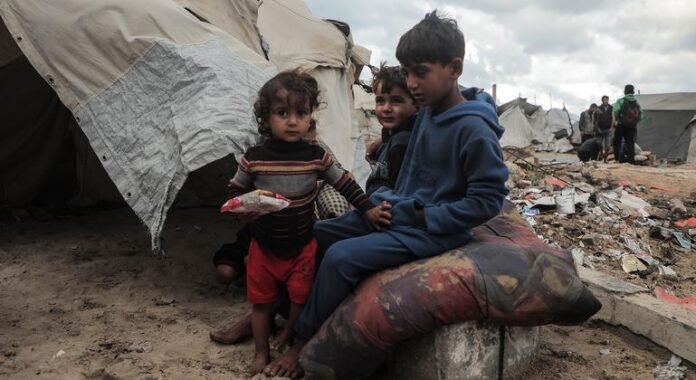
Speaking from the war-shattered enclave amid the ongoing Israeli military push to take full control of Gaza City, UNICEF spokesperson James Elder described one short visit to a hospital where youngsters were either suffering or dying everywhere he looked.
As we’re talking to the surgeon there, she dies on the bed in front of us
One victim at Al Aqsa Hospital in Deir Al-Balah, central Gaza, was six-year-old Aya, injured by an airstrike. “I’m really noticing not just the wound, but the attention that the bobs in her hair, the care that a parent’s given before the airstrike,” he said. “As we’re talking to the surgeon there, she dies on the bed in front of us. That’s 30 minutes in a hospital.”
No space to move
At the same hospital, Mr. Elder reported seeing three children “all shot by quadcopters” – an attack drone with four propellers.
“It’s a war zone, children … bleeding out on the floor” with others wounded by shooting, shrapnel or burns.
The UNICEF spokesperson underscored reports that 1,000 infants have been killed in the last two years in Gaza since Hamas-led terror attacks in Israel triggered the war. “We have no idea how many more have died from preventable illnesses,” he continued.
With only around 14 of Gaza’s 36 hospitals still open and partially functional after almost two years of war, they are often “absolutely packed” with people needing help, Mr. Elder stressed.
Rescued, terrified
“I turn around and there’s a little girl, Sham, who has just been pulled from the rubble; so, she’s covered in that dust and smoke with that terrified expression on her face, being held by an aunt or an uncle… Now Sham didn’t have any broken bones nor internal injury, [she] was not told though, that her mother and her sister were both killed in that attack.”
Turning to Gaza City, the veteran UN aid worker stressed that many thousands of people remain there unable to leave, amid continuing Israeli evacuation orders airstrikes that have left children “shuddering” and gazing skywards “to track the fire” from helicopters and quadcopters.
“You’ve got shoeless children who push grandparents around the rubble, amputee children are struggling through the dust, mothers are carrying exhausted children – literally their skin is bleeding because of the severity of rashes,” Mr. Elder continued, before warning about “continued indiscriminate attacks in densely populated civilian areas despite official statements”.
Another aid worker killed
On Thursday, the NGO Médecins Sans Frontières (MSF) confirmed the killing in Gaza of its fourteenth medical worker, occupational therapist Omar Hayek, in an attack that also injured four of his colleagues in Deir Al-Balah.
Until 13 September he had worked at an MSF clinic in Gaza City before finally evacuating amid “relentless attacks and forced displacement from Israeli forces”, the NGO maintained.
“People are scared and rightly so…“If you ask me now, can we do our work? I say no, of course we cannot do our work in the north,” said Dr Rik Peeperkorn, UN World Health Organization (WHO) Representative in the Occupied Palestinian Territory.
The level of violence in Gaza is such that nowhere is safe, including field hospitals, which offer no protection from stray bullets, said Christian Cardon from the International Committee of the Red Cross (ICRC).
“We had several occasions of people being injured, brought to the hospital and while they were being treated, were wounded again because of stray bullets coming in the hospital,” he said, noting another such incident on Thursday.
Europe’s Environment: Climate Threats & Nature’s Crisis
Significant progress has been made in reducing greenhouse gas emissions and air pollution, but the overall state of Europe’s environment is not good, especially its nature which continues to face degradation, overexploitation and biodiversity loss. The impacts of accelerating climate change are also an urgent challenge, according to the European Environment Agency’s (EEA) most comprehensive, ‘state of environment’ report, published today. The outlook for most environmental trends is concerning and poses major risks to Europe’s economic prosperity, security and quality of life.
Country press releases in EEA languages
The report stresses that climate change and environmental degradation pose a direct threat to Europe’s competitiveness, which depends on natural resources. It adds that achieving climate neutrality by 2050 also hinges on better and responsible management of land, water and other resources. Protecting natural resources, mitigating and adapting to climate change, and reducing pollution will build the resilience of vital societal functions that depend on nature, such as food security, drinking water and flood defences.
The report urges stepping up implementation of policies and longer-term sustainability-enabling actions already agreed to under the European Green Deal. Such actions align with the European Commission’s Competitiveness Compass priorities on innovation, decarbonisation and security.
Europe’s environment 2025 is the most comprehensive analysis on the current state and outlook for the continent’s environment, climate and sustainability, building on data from across 38 countries.
The report highlights the European Union is a world leader in climate efforts, reducing its greenhouse gas emissions and fossil fuel use while doubling the share of renewables since 2005. Good progress has also been made in improving air quality and increasing waste recycling and resource efficiency over the past 10-15 years. Progress on a range of factors that enable the shift towards sustainability – such as innovation, green employment and sustainable finance – also gives cause for hope.

We cannot afford to lower our climate, environment and sustainability ambitions. Our state of environment report, co-created with 38 countries, clearly sets out the science-based knowledge and demonstrates why we need to act. In the European Union, we have the policies, the tools and the knowledge, and decades of experience in working together towards our sustainability goals. What we do today will shape our future.
Executive Vice-President for Clean, Just and Competitive Transition, Teresa Ribera, said:
This report is a stark reminder that Europe must stay the course and even accelerate our climate and environmental ambitions. Recent extreme weather events show how fragile our prosperity and security become when nature is degraded, and climate impacts intensify. Delaying or postponing our climate targets would only increase costs, deepen inequalities, and weaken our resilience. Protecting nature is not a cost. It is an investment in competitiveness, resilience and the well-being of our citizens. By scaling up action now, we can build a cleaner, fairer and more resilient Europe for future generations.
Commissioner for the Environment, Water Resilience and a Competitive Circular Economy, Jessika Roswall, said:
While progress has been made, the state of our environment is a clear call to action to continue to cut pollution, restore nature and protect biodiversity. We need to rethink the link between the environment and the economy and look at the protection of nature as an investment, not a cost. Healthy nature is the basis for a healthy society, a competitive economy and a resilient world, which is why the EU is committed to stay the course on our environmental commitments.
Commissioner for Climate, Net Zero and Clean Growth, Wopke Hoekstra, said:
This report reinforces the urgent need for the EU to maintain its strong climate ambitions. As the fastest-warming continent, Europe has witnessed firsthand the devastating impact of climate change – most recently through the severe forest fires that swept across the summer. The costs of inaction are enormous, and climate change poses a direct threat to our competitiveness. Staying the course is essential to safeguarding our economy.
Complex challenges ahead
Biodiversity is declining across terrestrial, freshwater and marine ecosystems in Europe due to persistent pressures driven by unsustainable production and consumption patterns, demonstrated most notably in the food system. Looking ahead, the deterioration in the state of Europe’s biodiversity and ecosystems is expected to continue, with agreed policy objectives unlikely to be met by 2030, the report says.
Similarly, Europe’s water resources are under severe pressure, with water stress affecting one third of Europe’s population and territory. Maintaining healthy aquatic ecosystems, protecting watersheds and ensuring that groundwater resources are replenished is crucial to ensuring Europe’s future water resilience, the report says.
On climate change, Europe is the fastest-warming continent on the planet. The climate is changing at an alarming rate, threatening security, public health, ecosystems, infrastructure and the economy. The increasing frequency and magnitude of climate-related disasters, as well as the knowledge that the climate will continue to change even with the EU’s ambitious mitigation efforts, underscore the urgent need to adapt the European society and economy, while at the same time ensuring that no one is left behind.
These top challenges call for a need to rethink the links between our economy and the natural environment, land, water and natural resources, the report says. Only by restoring the natural environment in Europe will it be possible to maintain a competitive economy and a high quality of life for European citizens.
Scaling up and out
Transformative change to production and consumption systems — decarbonising the economy, shifting towards circularity, reducing pollution and exercising responsible stewardship of natural resources — is urgently required, the report says. EU policies, including the Green Deal, provide a clear pathway towards sustainability.
The report points specifically at efforts to restore habitats through nature-based solutions, which will build resilience and also help climate change mitigation and adaptation efforts. It also emphasises the need to decarbonise key economic sectors, especially transport, and to address emissions from agriculture. Increasing circularity has the potential to reduce Europe’s dependency on imports of energy and critical raw materials. Further, investing in digital and green transition of European industry, Europe can enhance productivity and become a global leader in green innovation, developing technologies to decarbonise hard-to-abate industries like steel and cement.
Background
The EEA publishes a state of environment report every five years as mandated in its regulation. Europe’s environment 2025 is the 7th such report published by the EEA since 1995. It offers solid, science-based insights on how we must respond to the huge and complex challenges we face, such as climate change, biodiversity loss and air and water pollution.
The report has been prepared in close collaboration with the EEA’s European Environment Information and Observation Network (Eionet). The report draws on the vast expertise of Eionet’s leading experts and scientists in the environmental field, across the EEA’s 32 member countries and six cooperating countries.
Press conference: The findings of the report will be presented by EEA Executive Director, Leena Ylä-Mononen, at a joint press conference with the European Commission, namely with Executive Vice-President for Clean, Just and Competitive Transition, Teresa Ribera, and Commissioner for the Environment, Water Resilience and a Competitive Circular Economy, Jessika Roswall. The press conference, on 29 September starting at 11.00 CEST, will be streamed on EBS Live.