
The European Commission has presented a new set of measures to support the automotive sector in moving towards clean mobility. The European automotive sector has been key to Europe’s economy for decades, employing millions of people and driving technological innovation. Today, it is at a critical turning point, challenged by rapid technological changes and […]
Taking action for a clean and competitive automotive sector

The European Commission has presented a new set of measures to support the automotive sector in moving towards clean mobility.
The European automotive sector has been key to Europe’s economy for decades, employing millions of people and driving technological innovation. Today, it is at a critical turning point, challenged by rapid technological changes and increasing competition. To address these challenges, the new measures set out ambitious and pragmatic rules for the industry and EU countries to adapt to clean mobility and a low-carbon economy, while ensuring the competitiveness of the industry.
Key proposals include
- revision of the CO2 standards for cars, vans, and heavy-duty vehicles to help manufacturers meet their 2035 targets
- greening corporate fleets to accelerate the uptake of zero- and low-emission vehicles
- battery booster strategy with €1.8 billion for a fully EU-made battery value chain
- automotive omnibus to ease administrative burdens, cut costs and introduce a new vehicle category of ‘small affordable cars’
- revised car labelling rules for consumers to have complete information about the cars’ emissions, empowering them to make more informed choices when buying a car
The proposals build on the automotive action plan and strategic dialogue on the future of the automotive industry. The dialogue, launched in January 2025, brings together industry representatives, social partners, EU countries, regions, and civil society. So far, three dialogue meetings have taken place, providing a platform to discuss the challenges and opportunities the sector faces.
For more information
Factsheet – clean and competitive European automotive sector
Corruption costs lives and livelihoods: why this week’s UN summit in Doha matters

Heads of state, civil society and private sector leaders will discuss the most pressing issues related to corruption and how to combat it at a meeting UN conference against corruption (COSP11) this week in Doha, Qatar.
“When corruption infects the justice system, cases are mishandled, justice is delayed or denied, and victims are silenced.“, President of the General Assembly Annalena Baerbock said to the opening of the conference.
What is the COSP?
Taking place from December 15-19 this year, COSP is the world’s largest international gathering dedicated to the fight against corruption and economic crime.
It is the main decision-making body of the United Nations Convention against Corruption – the only legally binding universal anti-corruption treaty.
This session, entitled Shaping the integrity of tomorrowwill address the role of AI and new technologies in meeting the realities of today’s complex crime patterns.
The links between corruption and financial and organized crime will also be discussed, as well as steps countries can take to improve the transparency of their public financial systems and efforts to combat corruption in the private sector.
Technology can help or harm
“Rapid advances in technology provide corrupt actors with new tools to hide assets, falsify documents, and move between jurisdictions.“, warned John Brandolino, acting executive director of the United Nations Office on Drugs and Crime (UNODC).
However, he acknowledged that technology can also be a “transformative” force against corruption, notably by facilitating investigations.
“Governments must strive to reap the benefits of revolutionary solutions“, said Mr. Brandolino, adding that these technological solutions must respect human rights and close the loopholes that allow criminals to misuse digital tools.
Why COSP is important
Corruption deprives people of their basic needs such as education, healthcare, clean water and infrastructure.
The conference aims to translate international commitments into action by assessing how countries implement the anti-corruption treaty and strengthening cross-border cooperation.
The decisions of the COSP have led to real changes, notably the creation of a peer review system which helped 146 countries improve their anti-corruption laws and policies.
“Shaping the integrity of tomorrow is about protecting people from exploitation through crime and corruption,” said Mr. Brandolino. “And it’s also about safeguarding our common aspirations for the future. »
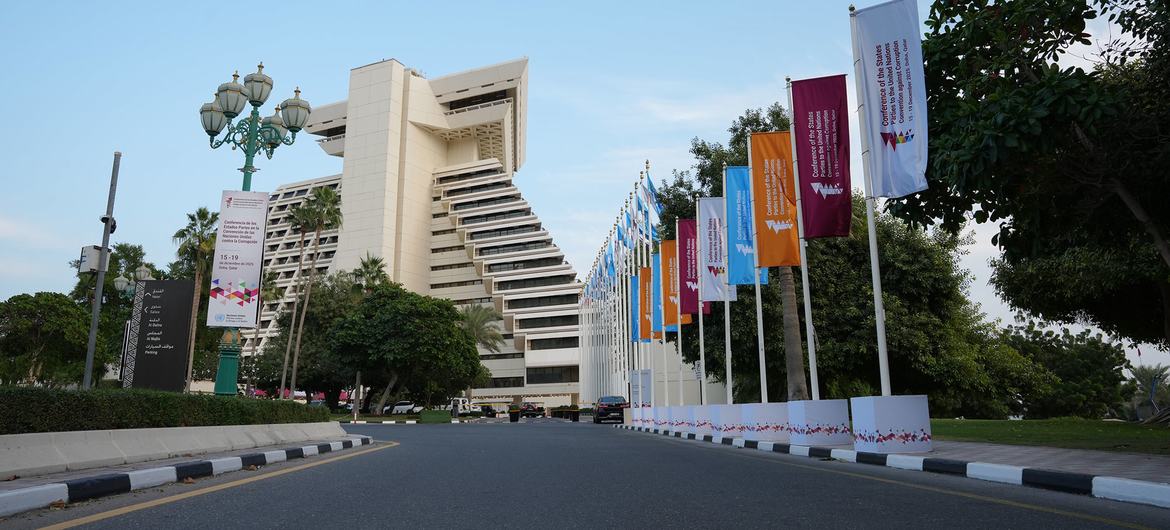
Location of the eleventh session of the Conference of States Parties to the United Nations Convention against Corruption taking place in Doha, Qatar.
Originally published at Almouwatin.com
World news in brief: Türk condemns ‘heinous’ attack in Sydney, UNHCR chief calls for solidarity with refugees, latest in Ukraine

Volker Türk said the “heinous” shootings targeting a Hannukah celebration on Bondi Beach revealed once again that “anti-Semitism is real and heinous”.
Australian Prime Minister Anthony Albanese said the killings were motivated by “extremist ideology.” The suspected shooters, Sajid Akram, 50, and his son Naveed, 24, are believed to have pledged allegiance to the ISIL terror group.
Video of Ahmed al Ahmed, filmed fighting one of the attackers with one of the weapons used in the assault, went viral and the fruit shop owner was hailed as a hero whose intervention saved many lives.
“Reaffirm our commitment to our common humanity”
THE UN human rights chief said the mass shooting was another reminder of the “hate crimes and hate speech that are all too common in our world today.”
He added that it is time to “reaffirm our commitment to our common humanity and collectively fight this scourge.”
Mr. Türk said this deadly anti-Semitic attack must not sow more hatred and division.
“I stand in solidarity with the victims and those who courageously helped and protected them,” he concluded.
UNHCR chief Grandi calls for solidarity to counter toxic scapegoating rhetoric
Asylum is becoming increasingly politicized as humanitarian funding declines – and it is in this context that it is essential to reaffirm global support for refugees, the head of the UN refugee agency has said (UNHCR) said Monday.
Speaking at a key meeting on refugees in Geneva, UN High Commissioner Filippo Grandi said host countries taking in asylum seekers must be told: “You are not alone.”
“Solidarity saves lives,” Mr. Grandi insisted, highlighting the “endless atrocities” that have affected the world’s most vulnerable people, from Myanmar to Sudan to Ukraine.
He said it had been a year in which refugees were frequently vilified and scapegoated “with their suffering cynically used by traffickers for profit”, as well as by politicians to win votes.
Mr. Grandi reflected on a year of repeated attacks on the 1951 Refugee Convention “and on the very institution of asylum.”
Global Compact
It has been almost a decade since the United Nations General Assembly adopted the Global Compact on Refugees, to promote international solutions and support for host countries.
The agreement resulted in commitments that have made a real difference in the lives of refugees and the communities that host them, insisted Mr. Grandi.
He said that since 2023, thousands of commitments have been made to support solutions for refugees, with more than $2.6 billion already provided to support more inclusive policies in host communities.
Going forward, the High Commissioner insisted that host countries would need more help to strengthen their support systems for those uprooted from their homes.
Ukraine: Humanitarian teams respond as Russian attacks continue
In Ukraine, UN-backed humanitarian partners continued to offer a lifeline to at-risk communities on Monday, after large Russian strikes targeted homes and other critical infrastructure over the weekend.
An update from the United Nations aid coordination office, OCHAdocumented attacks in the port cities of Odessa, Mykolaiv and Kherson, involving 300 missiles and drones.
These strikes cut off electricity, water and heating to around a million people.
Humanitarian teams also provided emergency shelter and protection to residents of Zaporizhzhia after an attack on Sunday morning injured several residents, damaging homes and a shopping center.
“With freezing temperatures, aid is urgent” while essential services are restored, OCHA said in a statement.
Authorities report that between December 12 and Monday, hostilities and frontline attacks across the country killed at least nine civilians and injured more than 70 others, including three children.
The Odessa region suffered repeated attacks that injured six civilians and damaged energy infrastructure over the weekend. As a result, the city of Odessa – home to more than a million residents – was left without electricity, heat and water.
Breakdowns in Odessa
“While electricity has been restored to around 100,000 consumers and water supply has resumed, 20,000 residents remain without heat this morning,” said UN deputy spokesperson Farhan Haq.
In the neighboring Mykolaiv region, attacks damaged the power supply and injured five civilians, including a child.
The Kherson region was also hit hard, with around 20 civilians injured. In the city of Kherson, more than 40,000 residents remain without heating following damage to the combined heat and power plant earlier this month.
With temperatures falling around freezing or below and snowfall reported in parts of the country, attacks on critical energy infrastructure are leading to widespread water and heating outages across the country, Haq added.
“Our humanitarian partners, with support from the UN, are providing hot meals, bottled water, shelter materials, water trucking and psychosocial support. »
Originally published at Almouwatin.com
Former UN chief Ban warns Security Council risks becoming irrelevant without reform
The call came during a public debate on “Leadership for Peace,” during which former Secretary-General Ban Ki-moon and academic Anjali Dayal urged members to address both the external crises facing the UN and the internal constraints that have weakened its capacity to act.
Mr. Ban, now a senior member of The Elders, warned that the global situation has deteriorated since he left office end of 2016, marked by an intensification of clashes between great powers, an erosion of multilateralism and conflicts in which civilians continue to pay the highest price.
“This deeply disappointing situation is characterized by confrontation rather than cooperation among the great powers,” he told the Council, citing the war in Ukraine, massive civilian casualties in Gaza and weakening international cooperation – even as the global climate crisis accelerates.
Lurching towards irrelevance
Former UN chief says global crisis cannot be separated from Security Councilhis own failures.
“The continued failure of the Security Council to function properly constitutes the most glaring cause,” he said, highlighting the repeated use of the veto by permanent members “to shield themselves, their allies and proxies from accountability.”
Without meaningful reform, Mr. Ban warned, civilians will remain unprotected and impunity will persist. “Without this, the UN risks either collapsing or becoming irrelevant,” he said.
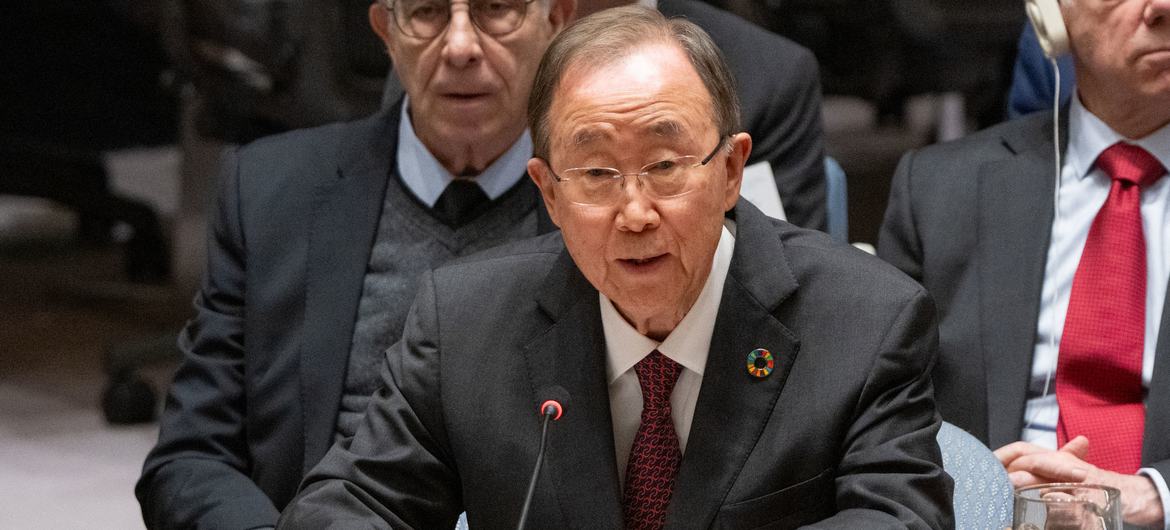
Former Secretary-General Ban Ki-moon addresses the Security Council.
Reduce political pressures
Regarding the selection of the next secretary-general, Ban called for a single, non-renewable seven-year term to strengthen the independence of the office.
The current practice of two five-year terms, he said, leaves secretaries general “too dependent on the permanent members of this Council for an extension”, even though this arrangement is a convention rather than a requirement of the United Nations Charter.
“The General Assembly has the power to set the terms of appointment itself,” Mr. Ban noted, urging Member States to use this authority to empower the next UN leader.
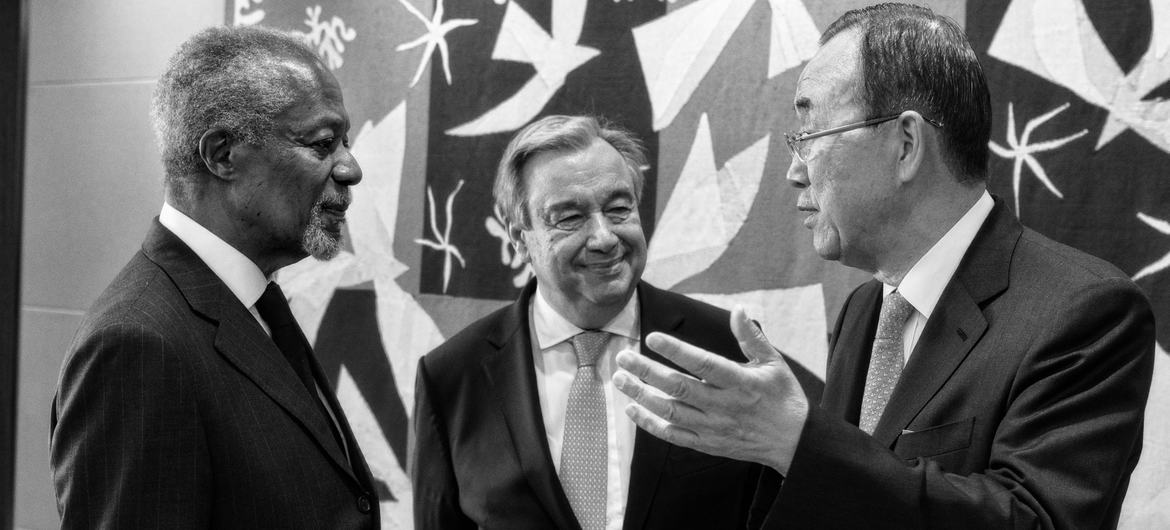
Former Secretaries-General Kofi Annan (left) and Ban Ki-moon (right) with Secretary-General António Guterres at UN headquarters in New York.
The selection process
Secretary-General António GuterresThe second term expires at the end of next year and the formal selection process is already underway.
In November, the presidents of the General Assembly and the Security Council started the process together, in accordance with the General Assembly resolution 79/327which emphasizes transparency and inclusiveness.
According to the established procedure, candidates are nominated by member states or groups and must submit a vision statement, curriculum vitae and campaign financing information. THE President of the General Assembly organizes publicly broadcast interactive dialogues with all candidates, while working closely with Member States throughout the process.
As of mid-December, only Rafael Mariano Grossi, director general of the International Atomic Energy Agency (IAEA), the UN nuclear watchdog (IAEA) – was nominated by Argentina.
You can find the list of candidates on the UN website here.
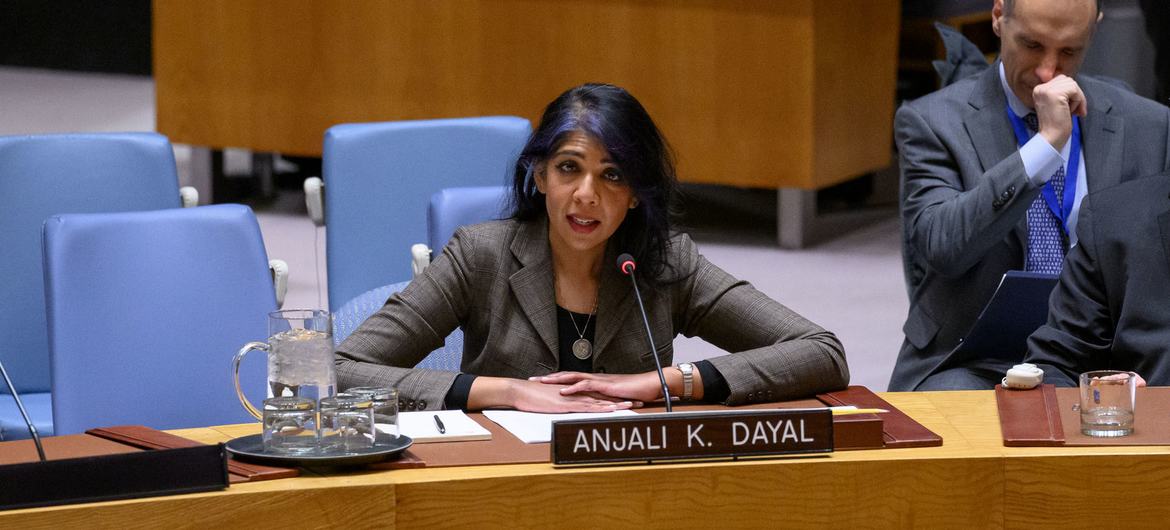
Anjali Dayal, associate professor of international politics at Fordham University, addresses the Security Council.
Unprecedented tension
Anjali Dayal, associate professor of international politics at Fordham University, told the Council that the next Secretary-General will take office at a time of unprecedented tension, including a deepening funding crisis that is already reducing the UN’s ability to provide essential services.
“This will result not only in a shrinking of this Organization, but also in a reduction in the work that only the United Nations can do on a large scale,” she said, pointing to fewer vaccinations, reduced humanitarian aid and mine clearance efforts, even as global needs increase.
Ms. Dayal said history shows that even in periods of intense division, the Council has been able to choose leaders who have advanced peace and cooperation.
She recalled the prolonged stalemate that preceded the selection of Javier Pérez de Cuéllar in 1981 and the criticism of U Thant, but they ably managed to end the Iran-Iraq War, resolve conflicts in Cambodia and Nicaragua, and help end the Cuban Missile Crisis.
Jaw-jaw better than war-war
These examples, she said, underscore that the Secretary-General’s influence lies less in material power than in the ability to shape ideas, narratives and long-term cooperation – “to make the boardroom ever more attractive than the battlefield.”
For Mr. Ban, this responsibility ultimately lies with the Council itself. Reforming the use of the veto and renewing support for UN leadership, he said, are essential if the Organization is to remain relevant in the 21st century.
“The path of every man for himself is no different from the path of mutual destruction,” he warned.
Originally published at Almouwatin.com
From Tbilisi classes to virtual classrooms, young women are reinventing peace beyond divisions

To the United Nations Alliance of Civilizations (UNAOC) meeting underway in Riyadha Youth Forum took place on Monday with, among others, young women from the South Caucasus.
They are redefining what reconciliation can look like, not through grand negotiations but through classroom conversations, late-night virtual sessions, and the kind of cross-border friendships that many in their communities never dared to imagine.
They are not diplomats. They are the next generation. And they rewrite the script.
From borders to bridges
On the sidelines of the Forum, UN News met three of them: Ana Kuprava from Georgia, Maria Yesayan from Armenia and Shahim Afandiyeva from Azerbaijan – all alumni of the UNAOC Young Peacebuilders programme.
Ana runs a youth project called From Borders to Bridges, a four-month initiative supported by her friends Maria and Shahim.
For her, the idea took root in her hometown of Tbilisi. Georgia’s diversity is often celebrated, she says, but the daily reality – especially in remote areas – is much more fragmented.
“We live together, different nationalities, different religions, but when it comes to collaboration and interculturality, it becomes a question. We don’t collaborate much with each other.”
His project brought together 50 young people of Georgian, Armenian and Azerbaijani origins, some from large cities, others from remote minority villages. Many had never spoken to anyone from a neighboring community.
Through online modules, creative exercises, and what Ana calls “courtyard conversations” from Tbilisi’s ancient courtyards, participants discovered something powerful: coexistence has always been rooted in the region’s history; we had simply forgotten about it.
“It all depends on the first step”
Shahim joined Azerbaijan’s initiative by participating in sessions on preventing extremism and radicalization among young people. For her, trust is built slowly – often through the smallest gestures.
“We come from a region with a complex history and fragile trust,” she said. “But it all depends on the first step. The rest will come later.”
Even in virtual sessions, she remembers how conversations caught on camera helped participants let down their guard, revealing emotion, humor, hesitation and, ultimately, confidence.
On impact, she said young people have proven that they do not need abundant resources to combat extremism. What they needed was intention.
“Diversity is not something to be afraid of. It is something beautiful to be proud of.”
Women at the center of peacebuilding
Speaking from Armenia, Maria focused on an often overlooked topic: the role women play in peace processes, particularly in regions with a long history of mutual suspicion.
Despite language challenges and political tensions, she saw young people lean in, interrupt, ask difficult questions and, above all, challenge themselves.
“They were interrupting us, asking questions. They were really interested. They want to know more, they want to express themselves and they are the agents of change.”
His message to young people around the world is direct:
“We need to stand up, speak out and stand up for each other. Anyone can do that if they really want to.”
The project’s influence extended beyond its formal end. Participants stayed in touch, sent follow-up questions, added her on social media, and began exploring cross-border collaboration.
Maria also runs another initiative at home, helping young people – particularly in rural communities – develop life skills. Some of its participants, once unsure of their abilities, are now planning their own small-scale projects.
“At first, they weren’t sure they could do it. But then they started taking the lead with bigger ideas. They see themselves as the changemakers of today.”
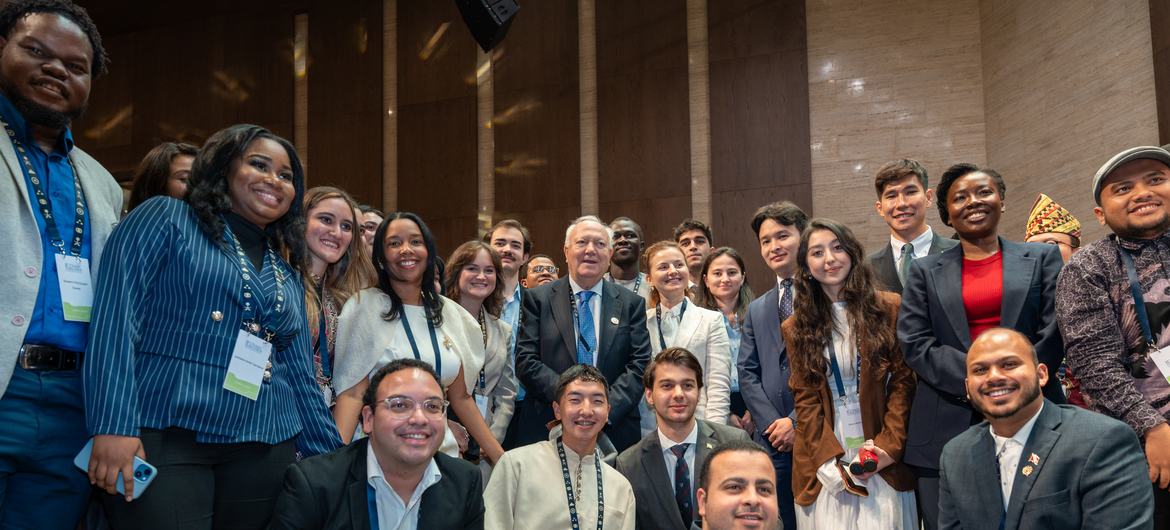
The High Representative of the United Nations Alliance of Civilizations (center) with a group of young people participating in the Youth Forum organized by the Alliance as part of its Global Forum in Riyadh, Saudi Arabia
Learn to lead – one conversation at a time
For all three women, the UNAOC Young Peacebuilders program was the spark. It offered mentorship, practical tools and the confidence to work with communities that, at first glance, may seem hesitant or divided.
They learned to design projects, assess risks, communicate across generations and build trust face-to-face or screen-to-screen.
But the deeper lesson was something else: change doesn’t need to make headlines.
A conversation in a courtyard. A shared story. A moment of recognition.
“We live in a region that is moving from conflict to peace,” Shahim said. “Peace cannot be built through geopolitics alone. We need a more inclusive and humane peace and we need young people to build it.”
Ana heard something similar from her own participants. Many told him it was the first time they had spoken with peers of different nationalities.
“They felt safe, happy and appreciated,” she said. “Even if the actions are small, the impact can be enormous. »
And for anyone, anywhere, who thinks their idea is too small to matter, Maria leaves them with this:
“Be creative, take action and stand up for each other. Don’t do it alone, do it as a team.”
Originally published at Almouwatin.com
Sudan: Intensification of hostilities leads to new displacements and more victims
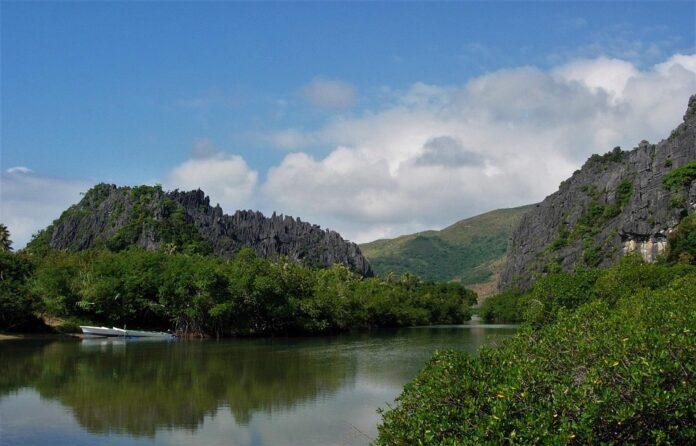
Hostilities have intensified between the Sudan Armed Forces (SAF) and two armed groups: the rival Rapid Support Forces (RSF) militia, which has been fighting for control of the military government since April 2023, and the Sudan People’s Liberation Movement-North.
During the weekend, targeted drone attacks a UN base killing six peacekeepers from the UNIFSA mission, while six others were killed in an attack on a hospital in South Kordofan state, according to initial reports from the UN human rights office (OHCHR).
In the meantime, OCHA said artillery shelling was reported on Monday, posing new threats to civilians.
“I urge all parties to the conflict and influential States to ensure an immediate ceasefire and prevent atrocities.,” said UN human rights chief Volker Türk in a statement.
Mr Türk also warned that medical facilities are protected by international humanitarian law.
New move
The United Nations International Organization for Migration (IOM) estimates that more than 1,700 people were displaced between Thursday and Saturday from several towns in Southern Kordofan.
Meanwhile, in North Darfur State, displacement continues to increase from the besieged El Fasher region to Tawila, where the UN is providing emergency assistance.
More than 25,000 people in Twila have been registered since the end of October, having fled through unsafe routes where they face extreme danger.
Despite severe access and logistical constraints, the World Food Program (PAM) reached around half a million people in Tawila in November and has steadily reached around 2 million people each month in the Darfur region.
Attacks on peacekeepers
Providing an update at Tuesday’s midday briefing in New York, UN deputy spokesperson Farhan Haq said injured peacekeepers who underwent life-saving surgery in Kadugli, Sudan, were evacuated Tuesday morning to the headquarters of the UN mission in the disputed Abyei region.
Other injured personnel were also evacuated thereand four of them have since been sent to Nairobi, Kenya, for further medical treatment.
The remains of the six fallen soldiers have been transported to Entebbe, Uganda, and arrangements are being made for their repatriation to Bangladesh.
Mr. Haq stressed that “attacks targeting United Nations peacekeepers may constitute war crimes under international law and call for accountability.”
Originally published at Almouwatin.com
Gaza ceasefire still fragile as cold turns deadly, Security Council hears
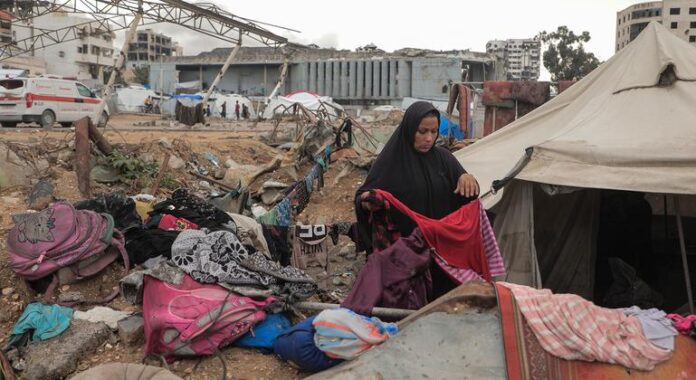
Ramiz Alakbarov, Deputy Special Coordinator for the Middle East Peace Process, provided the update during his quarterly briefing on Council resolution 2334 (2016) which calls for Israel to cease settlement activity in the Occupied Palestinian Territory.
He said the UN is doing its part to support the ceasefire.
Key to recovery
The truce came into effect in October and is based on a plan put forward by United States President Donald Trump, with mediation by the country alongside Egypt, Qatar and Türkiye.
Speaking from Jerusalem, Mr. Alakbarov urged Israel and Hamas to fully implement the ceasefire, exercise maximum restraint, and adhere to international law, including relevant UN resolutions.
“The ceasefire must be consolidated to enable recovery and reconstruction in Gaza,” he said.
Cold kills newborn
Meanwhile, winterization efforts are underway, and the UN is distributing tents, blankets and other essential supplies to the population. Still conditions remain dire, and the risk of hypothermia is increasing.
“Tragically, the first hypothermia-related death of a two-week-old newborn boy from Khan Younis was confirmed earlier today,” he said.
He stressed that “preserving and expanding operational space for the UN and its humanitarian partners, including through the renewal of NGO registration, is critical.”
Clean water shortage
Mr. Alakbarov expressed deep concern over the humanitarian situation in the enclave.
“While hunger has improved due to increased aid and commercial foodstuffs, key protein sources remain out of reach for most of the population, alongside severe shortages of clean water, medical care, and shelter,” he said.
As humanitarian access remains restricted, with aid convoys facing logistical and security obstacles, he called on all parties to allow the full, unimpeded entry of humanitarian assistance.
Heavy rains and flooding continue
Heavy rains are compounding the already dire conditions families in Gaza are facing, UN Deputy Spokesperson Farhan Haq said, briefing journalists on Tuesday.
“Our partners report that the storm continued overnight and into today, causing severe flooding of more than 40 designated emergency shelters – mostly in Khan Younis and Gaza City,” he said.
Latest estimates indicated that some 700 tents were damaged or otherwise impacted by the flooding and thousands of people are affected.
Teams helping to manage displacement sites are clearing blocked drains and pumping floodwater away from shelter yards.
Commitment to deliver
Despite the ongoing challenges, the UN and partners have been working to address needs across the Gaza Strip.
On Monday, they coordinated nine humanitarian shipments with the Israeli authorities. Four were facilitated and three were impeded but eventually completed their journeys.
“These missions allowed us to collect critical supplies from the Kerem Shalom and Zikim crossings – including food, fuel, blankets, tents, and winter clothing,” said Mr. Haq.
The final two missions were impeded and only one was able to be partially accomplished.
Rapid response system
Mr. Haq explained that humanitarians continue to provide support to affected families through a system that was set up for a rapid, joint response to flooding alerts.
It brings together UN agencies and NGOs to distribute tents, tarps, warm clothes, blankets and dignity kits.
Last Saturday, partners provided some 7.5 kilos of high-energy biscuits per household to more than 1,000 families in various areas who were affected by the latest rainstorm.
Additionally, distribution of veterinary kits resumed on Sunday after the bad weather forced a temporary halt.
Distributions initially began on 9 December, and 400 herders have received kits and animal fodder since then.
New flu variant emerges, but vaccination remains our best option, says WHO

Influenza and other respiratory viruses are surging, said Dr. Wenqing Zhang, unit head of global respiratory threats at the World Health Organization’s Department of Epidemic and Pandemic Threat Management (WHO) told reporters in Geneva, and this year is marked by “the emergence and rapid expansion of a new subclade of the AH3N2 virus.”
The new variant – called J.2.4.1 or subclade K – was first seen in August in Australia and New Zealand and has since been detected in more than 30 countries, she said.
DNA shape changer
“Current epidemiological data do not indicate an increase in disease severity, although this genetic change is leading to notable evolution of the virus,” Dr. Zhang said.
Flu viruses are constantly evolving, she explained, which is why the composition of the flu vaccine is regularly updated.
“WHO monitors these changes, assesses the associated public health risks and makes recommendations on vaccine composition twice a year, through a long-standing global system – the Global Influenza Surveillance and Response System (GISRS), in collaboration with other global experts,” said Dr Zhang.
The new variant (has not been integrated?) is not part of the composition of the latest vaccines produced for the Northern Hemisphere flu season, explained the WHO expert.
Still, “early evidence suggests that current seasonal vaccines continue to provide protection against severe disease and reduce the risk of hospitalization,” she said.
The WHO estimates that there are around one billion cases of seasonal flu each year, including up to five million cases of severe respiratory illness. Each year, up to 650,000 deaths are caused by respiratory illnesses linked to seasonal flu.
Risk reduction advice
“Vaccination remains our most effective defense, including against derived strains, particularly for high-risk populations and those who care for them,” insisted Dr. Zhang.
The WHO expert shared the results of an initial estimate of the vaccine’s effectiveness against the new variant, published in the United Kingdom a few weeks ago.
“It’s pretty promising,” she said, pointing to data that shows the vaccine is about 75 percent effective against severe illness and hospitalizations in children and about 35 percent effective in adults.
Dr Zhang warned that the upcoming holiday season could bring a further rise in respiratory illnesses. “Advanced planning and preparedness efforts, including encouraging the uptake of vaccination and strengthening health system preparedness, are strongly recommended,” she said.
The WHO expert advised countries to strengthen laboratory diagnostics and disease surveillance throughout the year and participate in the WHO GISRS surveillance network.
Global surveillance remains essential
The network includes influenza centers in 130 countries as well as a dozen reference laboratories.
Asked whether the United States would remain a member of the network next year despite the country’s decision to leave the WHO, effective January 22, 2026, Dr. Zhang responded that “from an influenza perspective, from a respiratory surveillance and preparedness perspective, we would certainly need all countries in the world to participate in surveillance, preparedness and response to influenza and other respiratory viruses, because we don’t know the next strain pandemic, when and where it will appear.
“And that time between emergence and detection, characterization and rollout of vaccines… that would make a big difference in terms of how many lives could be saved,” she concluded.
Originally published at Almouwatin.com
UN rights chief warns of deepening repression in Venezuela, rising toll in Ukraine

The UN’s top human rights official warned on Tuesday that repression is tightening its grip in Venezuela while civilians in Ukraine face an ever-rising toll, as global attention drifts from two crises marked by deepening abuses and shrinking accountability.
