Joint Statement on Gaza by Foreign Ministers and the EU High Representative
Prepare the next flood: protection of women’s health in Bangladesh
Sunamganj is a district of the ecosystem of wetlands in northeast Bangladesh, which is particularly vulnerable to climate change. Floods arrive quickly and suddenly and can last weeks. They disrupt life, move families and cut access to services.
For more than 670,000 reproductive women living in the region, increasingly extreme weather events threaten their access to reproductive health care.
Preparation and planning
To help prepare these crises, Unfpa Train women of reproductive age to protect themselves and protect themselves and their children during the next flood.
Shakila Akhter, a mother of two 24 -year -olds, was eight months pregnant in the last flood.
“Thanks to the training I received, I knew what to wear, how to prepare and how to protect my family,” she recalls. She now uses family planning tools that she did not know before: “I want to choose when I am ready for another child. »»
She also underlined the link between climate change and these serious floods: “We understand that the climate has changed in the past 20 years. In Bangladesh, the flood season has become longer, the sudden floods are more frequent, heat waves have intensified and winters are now shorter.
“So we must all be ready to manage it to survive.”
Local volunteers
This training is made possible by volunteers trained to help others prepare for climatic shocks.
Shakila Begum, 26, began to volunteer with only two days of training. She works with the health system for climate resilience and the community initiative – supported by the UNFPA and the Swedish International Development Cooperation Agency – which educates women on subjects of menstruation to childbirth during floods.
Ms. Begum is now the point of contact for 75 families, helping them with problems such as family planning and maternal health care.
“A woman had dangerously high blood pressure just before giving birth,” she recalls. “I advised her family to go to the local hospital, where she delivered safely – completely for free.”
The representative of the UNFPA, Catherine Breen Kamkong (Center), meeting Shakila Begum (right, green), a 26 -year -old volunteer with the health system for climate resilience and a community project in Sunamganj.
Empowerment through safe spaces
The initiative also offers safe community spaces where women can learn more about sexual and reproductive health.
In Kurban Nagarn, a Sunamganj region, volunteers began to welcome “street dramas”. Volunteers exercise scenes related to questions such as maternal health, preparation for disasters and child marriage prevention, with more than 500 people participating in each performance.
Taskira Hauque Tazin, a local student, is one of the basic members of the moving theater. She has attended numerous conferences in Bangladesh and abroad, where she shares her experiences and is recognized for her work.
“I am proud to work for the empowerment of women and to support disadvantaged communities. “Whether in the sun, rain or storm – we will continue to do this job for people. »»
The villagers come together for an afternoon street drama in Bodipur, Kurban Nagar Union, Sunamganj, as part of the climate resilience health system and the community project.
Anima Akhter, a 24 -year -old mother in Kurban Nagarn, explained that street dramas offer a safe space for difficult conversations: “We want to share our problems, especially on our body – but we often cannot speak.”
With the support of local volunteers, Anima delivered her youngest child safe in the hospital.
Amina’s husband, Nurul, is now accompanying him to community sessions and has become a model in the community, receiving volunteer training to teach his neighbors the health of women and girls.
“Since my wife has undergone training, I took her very seriously and I felt inspired to help our neighbors, especially concerning the health of women and girls,” he said. “I regularly talk about these important messages with other men at the tea stand, encouraging them to prepare for disasters and take the same precautions.
“I urge them to ask for the help of service providers if they are faced with problems, especially concerning deliveries of pregnant women and family planning methods.”
Anima Akhter, 24, with her husband Ruhul Amin, 30, a sidral, and their two children outside their home in the village of Bodipur in Kurban Nagar Union.
Current challenges
But the challenges remain despite the best efforts of UNFPA and other UN partners.
In the villages subject to the floods of Sunamganj, more than half of the deliveries occur at home.
Many women and girls also feel the shame of discussing subjects such as menstruation, and cultural norms often restrict women who try to generate their own income.
These vulnerabilities faced by women and girls are exacerbated by climate -related disasters, which often strike them the hardest.
Continuous commitments
From July 28 to 31, global experts gathered at the World Symposium on Climate Justice and had an impact on the populations of Brasília, co-organized by the UNFPA and the Government of Brazil.
There, the leaders worked to combat the disproportionate impact of climate change on women and girls. The event called for inclusive climatic negotiations and a renewed commitment to understand the impact of climate change on health and sexual and reproductive rights.
Diene Keita, acting executive director of UNFPA, underlined the sexual impact of climate change during the event: “Evidence tells us that climate change increases the risk of maternal mortality, disturbing access to contraceptives and increases the risk of sexist violence.”
“Our collective efforts must strengthen the resilience of women, girls and health systems to resist and adapt to climatic shocks,” said Keita. “Being prepared, responding quickly and building better must be central pillars for our work.”
Originally published at Almouwatin.com
Belarus: Joint Statement by EU High Representative/Vice-President Kaja Kallas and Commissioner Kos on the 5th Anniversary of the Fraudulent Presidential Elections
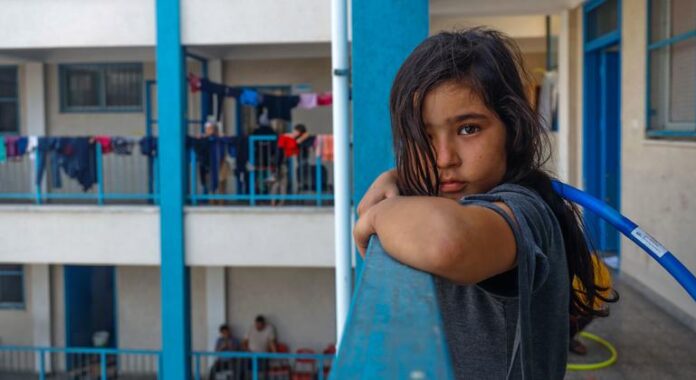
Gaza: Hospitals ‘at near-total collapse’, staff overwhelmed by the injured
Meanwhile, UN agencies confirmed the deaths of three Palestinians from Guillain-Barré Syndrome (GBS), a rare auto-immune disease that can cause sudden muscle weakness and even paralysis.
Before war erupted in Gaza in October 2023, only a handful of cases surfaced every year.
Mass casualties now the norm
“Hospitals are overwhelmed by mass casualty incidents, with an average of eight incidents per day,” said the UN aid coordination agency, OCHA, citing health partners.
In an update on the dire health crisis in Gaza, OCHA noted that specialised rehabilitation facilities were also overstretched handling complex trauma injuries and cases of Guillain-Barré.
To date, three deaths out of around 64 cases of GBS have been confirmed by the health authorities in Gaza. Two of the deceased were children.
According to the UN World Health Organization (WHO), 30 per cent of GBS patients require intensive care but there is no available stock of the primary medication needed to treat it, intravenous immunoglobulin.
Aid-drops are inadequate: WFP
In a related development, the UN World Food Programme (WFP) echoed repeated calls for aid to flood into Gaza, as opposed to the very limited amounts being allowed by the Israeli authorities.
“We can’t airdrop our way out of an unfolding famine. Not in Gaza,” insisted Cindy McCain, WFP Executive Director in a social media post late Wednesday.
The UN agency chief underscored that “500,000 people are starving today” and the only way to help them is to get food to them at scale and by land.
“We can’t afford to wait; Gaza is out of food and out of time,” Ms. McCain said.
WHO stocks destroyed
The destruction of WHO’s main medical warehouse in an attack on Deir Al-Balah late last month continues to impact lifesaving care.
In particular, the critical shortage of antibiotics has hampered treatment of meningitis, whose numbers are now in the hundreds – “the highest number recorded since the beginning of the escalation”, the OCHA update noted.
Isolation measures have been implemented, including the separation of the external department at Al Khair Hospital from the Nasser Medical Complex and the establishment of isolation tents at Al Aqsa Hospital to safely manage suspected cases.
Explosive weapons such as bombs and grenades have accounted for 83 per cent of medical consultations, said OCHA.
It cited partner NGO Médecins Sans Frontières (MSF) whose data covered more than 200,000 medical consultations in six MSF-supported health facilities in Gaza in 2024.
What is Guillain-Barré Syndrome?
Guillain-Barré Syndrome (GBS) is a neurological and autoimmune disease that affects the nervous system and causes progressive muscle paralysis. It is not contagious and is often triggered by a prior infection – viral or bacterial – that disrupts the immune system.
In most cases, patients can recover fully within a few weeks. But WHO stressed that even in the best healthcare settings, three to five per cent of patients die from complications of the disease, such as respiratory muscle paralysis, sepsis, pulmonary embolism, or cardiac arrest.
There have been several outbreaks of infectious diseases in Gaza since war erupted following Hamas-led terror attacks in Israel, including polio, cholera, hepatitis A and scabies.
Joint statement by President Costa of the European Council and President von der Leyen of the European Commission on the initialling of the Armenia-Azerbaijan Peace Treaty and on the declaration between President Aliyev and Prime Minister Pashinyan in…
European Council President António Costa and European Commission President Ursula von der Leyen welcome today’s meeting of President Aliyev of Azerbaijan and Prime Minister Pashinyan of Armenia, hosted by US President Trump, to initialise an Agreement on Peace and Establishment of Interstate Relations between Armenia and Azerbaijan.
Researcher uses laser and diamond technology to simulate meteorite impacts
It’s a reminder of the research that has defined the start of her professional career – exploring meteorite
Afghan women returnees face rising risks, UN warns
UN Women – which champions gender empowerment and equality – alongside the international humanitarian agency CARE International and partners, issued the call in a report published on Thursday that also highlights the key challenges and needs of women aid workers assisting the returnees.
The Gender Alert comes amid a surge in returnees to Afghanistan, where the Taliban has ruled for four years, implementing numerous decrees that restrict women’s rights amid economic crisis, climate shocks and immense humanitarian needs.
Strangers in a strange land
Since September 2023, more than 2.4 million undocumented Afghan migrants have returned, or were forced to return, from Pakistan and Iran.
Women and girls account for a third of returnees from Iran so far this year, and about half of those coming from Pakistan.
Many arrive in a country they have never lived in, with no home, income or access to education and healthcare.
Women and children who have returned to Afghanistan, wait to be seen at a maternity clinic.
A myriad of risks
Like all women and girls in Afghanistan, the returnees face increased risks of poverty, early marriage, violence, exploitation and unprecedented restrictions on their rights, movements and freedoms.
“Vulnerable women and girls arriving with nothing into communities that are already stretched to breaking point puts them at even greater risk,” said Susan Ferguson, UN Women Special Representative in the country.
We need a place to stay, a chance to learn and a way to earn.
“They are determined to rebuild with dignity, but we need more funding to provide the dedicated support they need and to ensure women humanitarian workers are there to reach them.”
Housing, income and education
The report outlines urgent and long-term needs, such as safe and affordable shelter, livelihood support and girls’ education.
As one participant in a focus group in Nangarhar province put it, “We need a place to stay, a chance to learn and a way to earn.”
Currently, only 10 per cent of women-headed households live in permanent shelter, nearly four in 10 fear eviction, and all girls are banned from attending secondary school.
Impact of aid cuts
Although women humanitarian workers at border points are critical to reaching female returnees, cuts in foreign aid and movement restrictions increasingly hamper their efforts.
For example, women humanitarians are required to be accompanied by a male guardian, or mahram, when travelling. However, “funding cuts have sharply eroded staff mahram support in the provinces of Kandahar and Nangarhar, leaving provision inconsistent, delayed, or absent altogether,” the report said.
The funding cuts have severely weakened the capacity of humanitarian organizations to respond, and women humanitarian workers at border points report that they are overwhelmed by the sheer number of arrivals and being unable to meet even their basic needs.
‘Distressed, disoriented and without hope’
“Witnessing the volume of arrivals and the hardship faced by women, children and families – many distressed, disoriented and without hope – has left a deep impact on all of us responding to this crisis,” said Graham Davison, CARE Afghanistan Director.
He underscored the urgent need for support to provide basic services, safe spaces and protection for women and girl returnees.
The report noted that Afghanistan is already facing one of the world’s most dire humanitarian crises, driven by decades of conflict, poverty and natural disasters.
As this latest wave of returns threatens to push already fragile communities further into crisis, the partners urged the international community to act now to protect the rights of Afghan women and girls and to invest in the women humanitarians who support them.
Arafat Jamal, the UN refugee agency (UNHCR) Representative in Afghanistan, recently spoke about the surge in returnees from Iran.
Record number of returns
Separately, the International Organization for Migration (IOM) also called for international support as Afghanistan confronts “one of the largest return movements in recent history.”
Returnee numbers are on track to increase as one million more Afghans are expected to return from Pakistan following the Government’s decision not to extend their stay.
IOM operates four reception centres at major border crossings in Afghanistan, including Islam Qala and Milak with Iran, and Torkham and Spin Boldak with Pakistan.
The UN agency is appealing for additional funding to scale up its response to address growing needs at the borders and in areas of return.
Armenia/Azerbaijan: Statement by the High Representative on behalf of the European Union on the initialling of the Armenia-Azerbaijan Peace Treaty
The EU issued a statement, welcoming the initialling of the Armenia-Azerbaijan Peace Treaty.
The economies “linked to the field” of Africa are proven to lead the prosperity of the continent
“We hold at a central moment, which marks a deep passage to consider these nations as isolated and constrained by geography to recognize them as economies linked to dynamic land at the heart of the socio-economic resurgence of Africa,” said Samuel Doe, a resident representative of the United Nations Program for the Development of the United Nations (Predict) in Ethiopia.
A new UNDP position paper – Economies linked to the terms of Africa: paths of prosperity and development – explores the new account of African LLDCs, “rewrite the history of one of the geographic limits to strategic advantage”.
Mr. Doe, speaking on behalf of the UNDP in Africa, presented the document at a press conference on the margins of the third United Nations Conference on the LLDC (LLDC3), which has been underway since Tuesday in Awaza, Turkmenistan.
“For decades, African LLDCs have been defined by their lack of direct access to the sea, often perceived as a drawback that limits trade, growth and development,” he said.
“Today, African LLDCs take advantage of their strategic centrality and their regional connectivity to become vital centers of economic, trade and innovation activity.”
He cited, among others, the Kigali logistics platform of Rwanda of 130,000 hectares-a lively regional center, connecting Uganda, the Democratic Republic of Congo and Burundi to the coastal economies of Kenya and Tanzania.
In addition, Ethiopia facilitates the crucial commercial roads of South Sudan in Djibouti – including the shortening of public transport by rail from 72 hours to 12 hours – and operates its national airline, emerging as a vital vital air transport connector that is breeding Africa with international markets.
Meanwhile, Botswana, Malawi, Zambia and Zimbabwe anchor the North-South Pivot corridor, connecting southern Africa to the wider continental markets.
Globally, the LLDC represent seven% of the world’s population but contribute only about 1.1% of world trade.
The UNDP notes that although the contribution of African LLDCs to world trade can be minimal, they provide regional and continental markets with strategic goods and services, including diamonds, copper, gold, coffee, sugar, as well as textiles and clothes.
“Linkled moves the story”
An essential element of the quarter-work on the continent is the African continental free trade area (AFCFTA), which entered into force in January 2021 and represents the largest free trade area in the world with a market of 1.2 billion people.
Most African LLDCs are members of the AFCFTA, which already reduce commercial obstacles, unlocking large opportunities for LLDCs to participate actively and to benefit from intra-African and global trade, according to the UNDP.
“The land link returns the story: the domestic countries become bridges, not obstacles. With AFCFTA, the LLDC can transform geography into a competitive advantage-goods, services, services and data faster and more affordable across Africa and beyond, “said Doe.
The change also requires coordinated political reforms, as well as to take advantage of innovation, inclusive governance, resilience and financing to stimulate sustainable and inclusive growth.
The document also cites digital connectivity as a “transformative path” for African LLDCs to transcend geographic constraints and establish direct links with regional and global markets.
According to the 2024 International Telecommunication Union (Itu) Facts and figures, 39% of the LLDCS population is online, with Internet access in African LLDCs reaching up to 20%.
The current digital landscape, although difficult, demonstrates that African LLDCs are positioned to take advantage of innovative connectivity solutions that bypass traditional dependencies on neighboring coastal countries, according to the PUDP Paper. Despite these LLDCs continue to count on neighboring coastal countries for access to submarine cables.
“We are also concerned about the fact that developing countries without coastline do not easily have access to submarine cables” Cosmason Zavazava, director of the ITU telecommunications development office, told journalists in Awaza.
“And for those who are doubly landlocked, it is a biggest challenge because you must have good relations with your neighbors so that you can communicate.”
Find all our cover on LLDC3 here.
Originally published at Almouwatin.com
Aboriginal peoples highlights the risk and opportunities of AI
It is estimated that 476 million indigenous peoples live in 90 countries, representing 5,000 different cultures.
Without appropriate guarantees, AI risks harming indigenous rights thanks to an inequitable distribution of revolutionary technology, environmental damage and the strengthening of damaged colonial inheritances.
The growing quantity of electricity production necessary for AI data centers and other infrastructures also intensifies the pressures of climate change, according to the UN.
When located near the land of indigenous peoples, AI data sites can exacerbate environmental degradation, negatively affecting the ecosystems on which they depend.
In addition, AI decisions are often made by governments and large technological companies excluding any consultation with Aboriginal peoples. This meant that indigenous language, knowledge and culture are regularly included in AI data sets without consent, perpetuating the appropriation and distorting models of indigenous peoples.
Despite challenges and risks, AI also presents new opportunities. Around the world, Aboriginal peoples have explored the use of AI, using it as a tool to preserve intergenerational knowledge, empower young people and preserve culture, language and identity.
The guarantees and innovations of indigenous peoples in the field of AI are at the center of the International Day of Aboriginal Peoples of this year, as well as recipients of the Equator Prize.
Ecuador Price 2025
To commemorate the day, the United Nations Development Program (Predict) announced the ten community organizations led by natives who will be recipient of the 2025 Equator price.
This prize pays tribute to the solutions based on the environment led by indigenous peoples who promote sustainable development, the winners demonstrating the theme of this year prize, “Nature for Climate Action”.
The winners will receive $ 10,000, will be honored at an online ceremony of a high level later this year and could join world events, including the United Nations General Assembly and the United Nations Conference on Climate Change, COP30, which takes place in Brazil later this year.
Recipient
The recipients of Latin America include cooperativa of Mujeres Artesanas del Gran Chaco (Comar) in Argentina, Associação uasei dos povos Indígenas de Oiapoque (Uasei) in Brazil, the Hakhu Amazon Foundation in Ecuador and the first zone of Agrobiodiversity in Péru.
Comar Supports Aboriginal women through Matriarca, a brand transforming traditional crafts into sustainable products. Uase promotes a bioeconomy led by natives around native Aça Hakhu Defends the Ecuadorian Amazon and indigenous rights by advocacy, decolonial education and the basic media.
In India, Bibifathima Swa Sahaya Supports farmers in the village through multiple crops, seed banks and a solar energy transformation – combining traditional knowledge with regenerative agriculture and renewable energies.
The winners of the 2025 Equator price illustrate the theme of this year, “Nature for Climate Action”, with a particular accent on climate action led by young people and women.
In Indonesia, MITRA BUMMA Supports community companies protecting 100,000 hectares of tropical forest while stimulating local economies and governance. THE Ranu Wellum Foundation Skilled the indigenous communities of Dayak by the conservation of forests and cultural preservation.
In Papua New Guinea, Sea Women of Melanesia Inc. Authorizes women to direct marine conservation by combining traditional knowledge with modern science.
And in Africa, Nature and people like a In Kenyaempers, pastoral communities to restore dry land using traditional knowledge and affordable restoration methods, and Sustainable ocean alliance Tanzania Restore marine ecosystems thanks to sustainable algae agriculture and authorizes coastal communities.
“On this important day, The winners of the 2025 Equator price are a reminder of the importance of honoring and recognizing the vision and leadership of the Aboriginal peoples and local communities“Said Marcos Neto, deputy secretary general of the UN and director of the UNDP office for the support of policies and the program.
Originally published at Almouwatin.com