
As people celebrated across Gaza and Israel at the news of an agreement that could hasten the end of the two-year war, UN aid teams on Thursday insisted that they were ready to deliver humanitarian relief supplies into the shattered enclave at scale. We’ll be covering all news developments across the UN system throughout the day. UN News app users can follow live coverage here.
Middle East LIVE: Israel-Hamas deal paves way for ceasefire, hostage release

Sudan: attacks on El Fasher mosque and hospital kill at least 20 people

On Thursday, the UN office of humanitarian affairs, OCHAreported that the Rapid Support Forces (RSF) paramilitary group allegedly opened fire on Tuesday and Wednesday on the Saudi hospital and a local mosque, where displaced families had sought shelter.
The Saudi hospital “is the city’s last functioning medical facility, serving thousands of war-affected people“, the agency said in a tweet.
Healthcare under attack
OCHA “strongly condemned” attacks and others carried out recently by the RSF in El Fasher – the last bastion under the control of the Khartoum government in the region, where famine was declared last year.
“Civilians must never be attacked,” OCHA said. “We once again echo the UN Secretary-General’s call for an immediate cessation of hostilities.”
The United Nations agency for reproductive health, UNFPA, said Tuesday’s attack targeted the maternity ward, killing 12 people and injuring many others, including patients and health workers.
“This is the third attack on the hospital in a week“, UNFPA said, calling for “an immediate end to hostilities, protection of civilians and health facilities, and safe and unhindered humanitarian access to provide life-saving assistance to those in desperate need.”
The inhabitants of El Fasher “are trapped, terrified and cut off from help, and their last lifeline to medical care is under threat“, declared UN spokesperson, Stéphane Dujarric, during the daily press briefing from New York.
“And it goes without saying that targeting hospitals must be condemned and never acceptable. »
City under siege
El Fasher has been under siege for more than a year.
In recent months, the RSF – formerly the Janjaweed militias responsible for atrocities against non-Arab communities in Darfur in the early 2000s – have stepped up artillery bombardments and drone attacks in a bid to capture the city.
Beyond Darfur, Sudan remains mired in a civil war that has raged since April 2023. It has created one of the world’s worst humanitarian crises, with more than 30 million people in need of assistance.
Around 12 million people have been displaced, with more than four million fleeing to neighboring countries like Chad, the Central African Republic and beyond.
Conflicts, clashes and displacements
The fighting is now aggravated by community clashes. On October 7 and 8, field teams from the International Organization for Migration (IOM) recorded some 250 people displaced from the town of Kernoi, near the border with Chad, following an intra-communal conflict between members of the Zaghawa tribe, one of the four main non-Arab communities in the region.
Civilians continue to flee El Fasher and the neighboring Zamzam camp, where the population has fallen by 70 percent in the past six months.
Humanitarians estimate that the number of people residing in the area fell from 700,000 in March to 200,000 in September.
Thousands of families have fled to neighboring towns like Tawila, which is now home to some 600,000 displaced people.
While the UN and its partners remain committed to supporting the people of El Fasher and across Sudan, Mr. Dujarric stressed the need for safe humanitarian access, greater protection of civilians and an immediate humanitarian pause in and around the city.
Originally published at Almouwatin.com
Sudan: El Fasher mosque and hospital attacks leave at least 20 dead
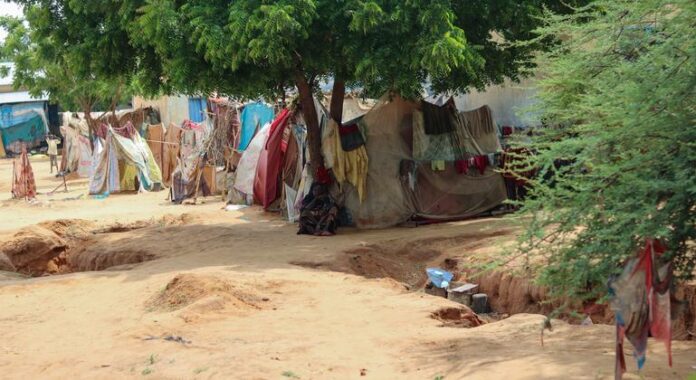
On Thursday, the UN humanitarian affairs office, OCHA, reported that the Rapid Support Forces (RSF) paramilitary group reportedly opened fire on Tuesday and Wednesday at the Saudi hospital and a local mosque, where displaced families had sought refuge.
The Saudi hospital “is the last functioning medical facility in the city, serving thousands of war-affected people,” the agency said in a tweet.
Healthcare under attack
OCHA “strongly condemned” the attacks and others carried out recently by the RSF in El Fasher – the last bastion under the control of the government in Khartoum in the region, where famine was declared last year.
“Civilians must never be attacked,” OCHA said. “We once again echo the UN Secretary-General’s call for an immediate cessation of hostilities.”
The UN reproductive health agency, UNFPA, said Tuesday’s attack targeted the maternity ward, killing 12 people and injuring many others, including patients and health workers.
“This marks the third attack on the hospital in one week,” UNFPA said, calling for “an immediate end to hostilities, protection of civilians and health facilities, and safe, unhindered humanitarian access to deliver lifesaving aid to those in desperate need.”
People in El Fasher “are trapped, terrified and cut off from aid, and their last lifeline for medical care is under threat,” UN Spokesman Stéphane Dujarric said in the daily media briefing from New York.
“And it goes without saying that the targeting of hospitals is to be condemned and never acceptable.”
City under siege
El Fasher has been under siege for more than a year.
Over the past few months, the RSF – formerly the Janjaweed militias responsible for atrocities against non-Arab communities in Darfur in the early 2000s – have intensified artillery shelling and drone attacks in efforts to capture the city.
Beyond Darfur, Sudan remains engulfed in a civil war that has raged since April 2023. It has created one of the world’s worst humanitarian crises, with more than 30 million people in need of assistance.
Around 12 million people have been displaced, including over four million who have escaped to neighbouring countries such as Chad, the Central African Republic and beyond.
Conflict, clashes and displacement
The fighting is now compounded by communal clashes. On 7 and 8 October, field teams from the International Organization for Migration (IOM) recorded some 250 people displaced from the town of Kernoi, near the border with Chad, following an intra-communal conflict between members of the Zaghawa tribe, one of the four major non-Arab communities in the region.
Civilians continue to flee El Fasher and nearby Zamzam camp, where the population has plummeted by 70 per cent in the past six months.
Humanitarians estimate that the number of people residing in the area has fallen from 700,000 in March to 200,000 in September.
Thousands of families have fled to nearby towns such as Tawila, which now hosts some 600,000 displaced people.
While the UN and partners remain committed to supporting the people of El Fasher and across Sudan as a whole, Mr. Dujarric stressed the need for safe humanitarian access, greater protection of civilians, and an immediate humanitarian pause in and around the city.
Gaza deal: UN and humanitarian partners ‘ready to act – now’, says António Guterres

Speaking to reporters at UN headquarters in New York on Wednesday, Mr Guterres welcomed the agreement, based on a proposal from US President Donald Trump, and said it must be “fully implemented”.
“We’ve all waited for this moment far too long. Now we have to make it really count,”“, he declared. “All hostages must be released with dignity. A permanent ceasefire must be ensured. The bloodshed must stop once and for all.
According to media reports, the Israeli cabinet is expected to approve the internationally negotiated agreement on Thursday. A ceasefire is expected to begin in Gaza within 24 hours of this approval. The agreement would also include a 72-hour window during which Hamas must release the remaining hostages, both living and deceased.
The people of Gaza welcomed the ceasefire agreement.
“Complete, safe and sustainable access”
Guterres said the UN and its partners were ready to “act now”, with teams and supplies already in place to increase food, water, medical and shelter assistance inside Gaza.
“To turn this ceasefire into real progress, we need more than silencing the guns,» he added, emphasizing the need to “full, safe and sustainable access for humanitarian workers» and sufficient funding for recovery efforts.
The UN chief urged all parties to seize the opportunity for a “credible political path” towards ending the occupation and achieving a two-state solution for Israel and Palestine.
UN human rights chief calls for accountability
UN High Commissioner for Human Rights Volker Türk called the announcement “extremely significant” and urged all states to ensure that the ceasefire is implemented in good faith.
“Any future action must be guided by the immediate objectives of ending the massacres, famine and destruction,» he said from Geneva.
Mr. Türk also called for a “comprehensive transitional justice process” to ensure that those responsible for gross human rights violations are held accountable, warning that peace would remain fragile without it.
“The best medicine is peace”
World Health Organization (WHO) Director-General Tedros Adhanom Ghebreyesus said the agency was ready to support Gaza’s crumbling health system.
“The best medicine is peace,” he declared, calling for respect for the agreement “thus the suffering of all civilians finally comes to an end.»
World Food Program (PAM) Executive Director Cindy McCain said her agency was “on the ground, ready to ramp up operations, but we must act now – there is no time to lose.»
Philippe Lazzarini, commissioner general of the United Nations agency for Palestine refugees (UNRWA) called the deal a “great relief,” noting that enough food is ready to be trucked to Gaza to feed the entire population for three months.
“There are more than 660,000 children eagerly waiting to return to school,“, he stressed. “UNRWA teachers are ready to help them rebuild their lives.”
Originally published at Almouwatin.com
Middle East LIVE: Israel-Hamas deal paves way for ceasefire, release of hostages

As people in Gaza and Israel celebrated the announcement of a deal that could hasten the end of the two-year war, U.N. aid teams insisted Thursday they were ready to provide large-scale humanitarian relief in the destroyed enclave. We will cover all news developments within the United Nations system throughout the day. UN News app users can follow live coverage here.
Originally published at Almouwatin.com
Jubilation in Gaza as news of possible ceasefire deal sinks in

“There is a very positive, jubilant mood in Gaza this morning and there was overnight,” said Olga Cherevko from the UN aid coordination office, OCHA. “There were people whistling and partying and celebrating.”
Speaking to UN News from the devastated enclave, Ms. Cherevko stressed that immediate humanitarian priorities remain unchanged: “to reach the most vulnerable with the assistance that we need to be entering now at adequate volumes and to be able to deliver it to the people in need…Obviously no amount of humanitarian aid will ever be able to take the place of peace. So, this deal is more important than ever.”
UN humanitarians have some 170,000 metric tons of food, shelter, medicine and other critical items waiting in storage outside Gaza.
These can be loaded onto trucks and enter the Strip as soon as a ceasefire is implemented, the aid worker explained, adding that fighting had not stopped on Thursday morning.
“We are looking forward to seeing what our role will be down the line and how to quickly and efficiently get this aid to the people now who of course need it desperately.”
US plan progress
The development follows the announcement by US President Donald Trump on Wednesday evening that Israel and Hamas had “signed off” on the first phase of his 20-point peace plan, following days of intensive indirect negotiations in Egypt.
President Trump published the news on social media that Hamas had agreed to release all hostages, later adding that that this could happen on Monday.
His comments came at the end of a third day of indirect talks between Hamas and Israel in Egypt, where in addition to US mediators, representatives from Qatar and Turkey also steered the talks.
During the Hamas-led terror attacks on Israel that triggered the war on 7 October 2025, 251 people were taken hostage. Reports indicate that 48 of them are still being held in Gaza and around 20 are still alive.
Other elements of the reported deal include the withdrawal of Israeli military forces to “an agreed upon line”, Mr. Trump noted.
In reportedly confirming the deal, Hamas political leaders called on the international community to ensure that Israel abides by its terms, which include the release of Palestinian prisoners.
Israeli Prime Minister Benjamin Netanyahu hailed a “great day for Israel”, ahead of a meeting of his security cabinet on Thursday afternoon to approve the first phase of the deal – including an immediate ceasefire which would begin immediately, according to news reports.
Guterres encouragement
“I welcome the announcement of an agreement to secure a ceasefire and hostage release in Gaza, based on the proposal put forward by President Donald J. Trump,” said UN chief António Guterres in a statement.
Echoing those comments and welcoming the development, UN aid chief Tom Fletcher echo issuing an appeal to “get the hostages out and surge aid in – fast”.
He added: “Our teams are fully mobilised to get the trucks moving at scale and save lives. They need safe access.”
Philippe Lazzarini, head of the UN agency for Palestinians, UNRWA, described the “huge relief” felt by all those impacted by the war, which has killed tens of thousands of Gazans, in addition to the nearly 1,200 Israelis murdered by Hamas in their unprecedented attack across southern Israel two years ago.
“The agreement to finally secure a ceasefire in #Gaza and release the hostages is a huge relief,” Mr. Lazzarini said in an online post. “It will bring respite to people who survived the worst bombardment, displacement, loss and grief for two long years. After their excruciating ordeal, hostages and Palestinian detainees will finally join their families.”
WHO stands ready: Tedros
Also welcoming the announcement of a deal, head of the UN World Health Organization (WHO), Tedros Adhanom Ghebreyesus highlighted the still “dire” needs of patients across Gaza and said that the agency “stands ready to scale up its work…to support rehabilitation of the destroyed health system”.
From the UN World Food Programme (WFP), Executive Director Cindy McCain supported the UN chief’s call for an immediate ceasefire in Gaza and stressed the need to “move NOW” to get aid in.
“Unrestricted humanitarian access is urgently needed to deliver life-saving food & assistance,” she said. “WFP is on the ground and ready to scale up operations, but we need to move NOW – there is no time to waste.”
Dr. Gokcan Okur Tackles Healthcare’s $19.5 Billion Problem Through Revolutionary Diagnostic Error Prevention Technology
DISCLAIMER: Information and opinions reproduced in the articles are the ones of those stating them and it is their own responsibility. Publication in The European Times does not automatically means endorsement of the view, but the right to express it.
DISCLAIMER TRANSLATIONS: All articles in this site are published in English. The translated versions are done through an automated process known as neural translations. If in doubt, always refer to the original article. Thank you for understanding.
Dr. Gokcan Okur Tackles Healthcare’s $19.5 Billion Problem Through Revolutionary Diagnostic Error Prevention Technology
In the United States alone, medical errors cost an estimated $19.5 billion annually through added medical expenses, lost
Instant euro payments now faster and safer than ever

Thanks to new EU rules on instant payments, people and businesses can now transfer money in euro within seconds, anytime – day or night – whether within their own country or across the euro area. Your money is available immediately, making it far easier to deal with emergencies or splitting bills. Source link
Instant euro payments now faster and safer than ever

Thanks to new EU rules on instant payments, people and businesses can now transfer money in euro within seconds, anytime – day or night – whether within their own country or across the euro area. Your money is available immediately, making it far easier to deal with emergencies or splitting bills.
