Sunday, April 26, 2026
Home Blog Page 322

Statement by the High Representative on behalf of the EU on the alignment of certain countries concerning restrictive measures in view of the situation in South Sudan

0
Statement by the High Representative on behalf of the EU on the alignment of certain countries concerning restrictive measures in view of the situation in South Sudan

Statement by the High Representative on behalf of the European Union on the alignment of certain third countries with Council Decision (CFSP) 2025/1349 of 8 July 2025 implementing Decision (CFSP) 2015/740 concerning restrictive measures in view of the situation in South Sudan.

Source link

EU external borders: Irregular crossings drop by 20% in first half of 2025

0
Statement by the High Representative on behalf of the EU on the alignment of certain countries concerning restrictive measures in view of the situation in South Sudan

In the first half of 2025, irregular crossings into the European Union fell by 20% to 75 900 thanks to significant drops in the Eastern Mediterranean and West African routes, according to preliminary figures collected by Frontex.

Source link

Weekly schedule of President António Costa

0
Statement by the High Representative on behalf of the EU on the alignment of certain countries concerning restrictive measures in view of the situation in South Sudan

Weekly schedule of President António Costa, 21-27 July 2025.

Source link

Syria crisis: Hundreds killed in ongoing violence, hospitals overwhelmed

0
Syria crisis: Hundreds killed in ongoing violence, hospitals overwhelmed

Briefing reporters in Geneva, UN human rights office, OHCHR, spokesperson Ravina Shamdasani highlighted “credible” reports of “widespread violations and abuses, including summary executions and arbitrary killings, kidnappings, destruction of private property and looting of homes” in the city of Suweida.

“Among the reported perpetrators were members of the security forces and individuals affiliated with the interim authorities as well as other armed elements from the area, including the Druze and Bedouin,” she said.

Many hospitals are struggling to cope with the influx of injured, the UN refugee agency UNHCR also noted.

Forced to flee

On Friday morning, OHCHR colleagues reported that clashes were continuing and that “a lot of people are trying to flee or have fled the area”, Ms. Shamdasani continued.

The latest updates from the UN humanitarian affairs coordination office, OCHA, on Thursday indicated that nearly 2,000 families had been displaced from areas affected by the fighting.

Hundreds have reportedly been killed since sectarian violence involving the Druze and Bedouin communities erupted on 12 July, triggering an intervention by Syrian security forces.

OHCHR’s Ms. Shamdasani highlighted an incident on 15 July in which at least 13 people were killed when “armed individuals affiliated with the interim authorities deliberately opened fire at a family gathering”.

Briefing an emergency meeting of the Security Council in New York on Thursday, UN Assistant Secretary-General Khaled Khiari also referenced reports of “civilians, religious figures and detainees being subjected to extrajudicial executions and humiliating and degrading treatment”. He urged all parties to protect civilians and civilian infrastructure.

Rumours and fact-checking

Ms. Shamdasani stressed that the UN human rights office has been trying to verify the information through “contacts on the ground…families of people who were killed, eyewitnesses”, but that obtaining reliable estimates of the death toll remains challenging.

“There are lots of videos circulating,” she said. “Some claim to be fighters who are in the area filming the abuses and violations they’re carrying out. We are trying to verify some of these videos, but there’s a lot of disinformation out there and a lot of it is being used to incite further violence to inflame tensions.”

The OHCHR spokesperson also expressed concern about reports of civilian casualties resulting from Israel’s airstrikes on Suweida, Dara’a and central Damascus.

“Attacks such as the one on Damascus on Wednesday pose great risks to civilians and civilian objects,” she warned, calling for the strikes to cease.

Israel had launched the strikes pledging to protect the Druze community.

The violence and displacement have sparked “considerable” humanitarian needs, with the health and aid systems struggling to keep up, said William Spindler of the UN refugee agency UNCHR.

“Many of the hospitals have been overwhelmed by the number of people who have been injured in the recent fighting,” he said.

According to OCHA, the UN World Health Organization (WHO) has dispatched enough trauma and emergency surgery kits for 1,750 interventions to the area, but many “remain undelivered due to access constraints”.

Since the displaced had to flee at very short notice, they are in desperate need of essentials – blankets, jerry cans, solar lamps – but providing these items has been a challenge.

Too risky to enter

“We have this in stock and we are ready to deliver them as soon as the security allows it,” Mr. Spindler said. “For now, this has not been possible.”

He also warned of water shortages due to electricity outages. He said people are unable to buy bottled water or food because of the insecurity.

UNHCR has an office in rural Suweida and Mr. Spindler expressed concern about the impact of the hostilities on the agency’s operations, infrastructure and personnel.

“We know that humanitarian infrastructure has been affected,” he said, describing an incident on 15 July in which a warehouse of the Syrian Arab Red Crescent was severely damaged by shelling.

The UNHCR spokesperson called on all parties to the conflict to respect and protect humanitarian premises, personnel and assets “in accordance with international humanitarian law”.

Source link

United Front: Frontex leads International Crackdown on Human Smuggling

0
Statement by the High Representative on behalf of the EU on the alignment of certain countries concerning restrictive measures in view of the situation in South Sudan

From 13 to 23 June 2025, Frontex coordinated EMPACT Joint Action Day (JAD) Danube, bringing together border and law enforcement Agencies from Austria, 12 other EU Member States, as well as Europol, Eurojust, and INTERPOL.

Source link

Aid cuts leave refugee agency unable to shelter six in 10 fleeing war in Sudan

0
Aid cuts leave refugee agency unable to shelter six in 10 fleeing war in Sudan

Globally, $1.4 billion of the agency’s programmes are being shuttered or put on hold, UNHCR said in a new report.

“We can’t stop water, you can’t stop sanitation, but we’re having to take decisions when it comes, for example, to shelter,” said UNHCR Director of External Relations Dominique Hyde.

“We’re have people arriving on a daily basis from Sudan, from the Darfur regions…arriving in Chad, not able to be given any shelter.”

In an urgent appeal for flexible funding from donors, Ms. Hyde noted that up to 11.6 million refugees and others risk losing access this year to direct humanitarian assistance from UNHCR. The figure represents about one third of those reached by the organization last year.

On the Sudan-Chad border, the UN agency is now unable to provide “even basic shelter” to more than six in 10 refugees fleeing the conflict. Thousands more vulnerable people have been left stranded in remote border locations in South Sudan too. “If we just had a bit more support, we could get them to settlements,” she insisted.

Because of the funding cuts, basic activities have already been hit hard. These include refugee registration, child protection, legal counselling and prevention of and responses to gender-based violence.

All aid sectors hit

In South Sudan, 75 per cent of safe spaces for women and girls supported by UNHCR have closed. That means leaving up to 80,000 refugee women and girls without access to medical care, psychosocial support, legal aid, material support or income-generating activities. This includes survivors of sexual violence, UNHCR noted.

“Behind these numbers are real lives hanging in the balance,” Ms. Hyde said.

“Families are seeing the support they relied on vanish, forced to choose between feeding their children, buying medicines or paying rent, while hope for a better future slips out of sight. Every sector and operation has been hit and critical support is being suspended to keep lifesaving aid going.”

Libya influx

Many of those impacted by the war in Sudan have taken the decision to move from Chad and Egypt to Libya, into the hands of people smugglers who dangerously overload boats with desperate people seeking to cross the Mediterranean Sea to Europe.

“What we’re observing now is that in terms of arrivals in Europe of…Sudanese refugees, [it] has increased since the beginning of the year by about 170 per cent compared to the first six months of 2024,” said UNHCR spokesperson Olga Sarrado.

Support slashed from Niger to Ukraine

In camps hosting Myanmar’s Rohingya refugees in Bangladesh, education for some 230,000 children could now be suspended. Meanwhile in Lebanon “UNHCR’s entire health programme is at risk of being shuttered by the end of the year,” Ms. Hyde continued.

In Niger and other emergency settings, cuts in financial aid for shelter have left families in overcrowded structures or at risk of homelessness. In Ukraine, financial aid has also been slashed, “leaving uprooted families unable to afford rent, food or medical treatment”, she noted.

Assistance to returning Afghans has also become another victim of global aid cuts. Around 1.9 million Afghan nationals have returned home or been forced back since the start of the year, “but financial aid for returnees is barely enough to afford food, let alone rent, undermining efforts to ensure stable reintegration”, UNHCR said.

Legal aid halted

Overall, several UNHCR operations hit by severe funding gaps have now had to curtail investments in strengthening asylum systems and promoting regularisation efforts.

In Colombia, Ecuador, Costa Rica and Mexico, any prolonged lack of legal status means prolonged insecurity for people on the move, the UN agency said. This results in deepening poverty “as refugees are excluded from formal employment and greater exposure to exploitation and abuse”, Ms. Hyde explained.

Approximately one in three of the agency’s 550 offices around the world has been impacted by the cuts, Ms. Hyde told journalists in Geneva:

“We’re not in a position to do so much contingency planning; what we’re able to do is make decisions on priorities and, at this point, the priorities as I mentioned are dramatic.”

For 2025, UNHCR needs $10.6 billion. Only 23 per cent of this amount has been provided.

“Against this backdrop, our teams are focusing efforts on saving lives and protecting those forced to flee,” Ms. Hyde said. “Should additional funding become available, UNHCR has the systems, partnerships and expertise to rapidly resume and scale up assistance.”

Source link

EIT Water Call is Now Closed

0
EIT Water Call is Now Closed

On 17 June, the EIT’s Call for Proposals for EIT Water officially closed.  Over the past months, the EIT has hosted a series of information sessions, events and a networking platform designed to equip prospective applicants with the information needed for a successful proposal. Consortia consisting of businesses, higher education institutes and research organisations from […]

Source link

The offices become beds while the Haitian school houses people displaced by violence

0

The classrooms of the Anénor Firmin school in Hinche in the center of Haiti are no longer carefully silent.

Once a place of learning, it now resonates with the sounds of crying babies, the water containers that collapsed and voices whispening at night.

More than 700 people moved by violence are piled up in the ruined complex, sleeping on the soils where children once solved mathematical problems.

Among them is Edens Désir, a former teacher, who continues to believe that education should be the key to a more prosperous and peaceful future for this besieged caribbean nation.

Edens Désir teaches a class at Aténor Firmin school.

Qualified accountant and former secondary school teacher, his life was turned upside down by the violent clashes that broke out in March 2025 in Saut-d’Eau and Mirebalais, two small cities south of Hinche.

Like 6,000 others, he fled massacres, rape, criminal fire and looting.

“Everything I built, little by little, was destroyed,” he said. “I left without anything.”

The gangs at war have long checked most of the Haitian capital, Port-au-Prince, at around 30 miles (48 km).

It is only recently that their sphere of influence has moved to more rural areas of the Center department where Hinche and Saut-d’Eau are located.

Edens Désir, found refuge at the school where he once studied, a place now stripped of his goal. The offices have become beds. The classrooms have turned into shelters. Families are packed in rooms that never wanted to host them.

A classroom of the Antenor Firmin school in Hinche is now used for both shelter and an informal learning space for displaced children.

Even in these crowded rooms, he found a way to start again. Not for himself, but for children around him. With a whiteboard, a marker and a silent determination, he brought meaning to lives that have been thrown.

“Since I was a child, I liked to teach,” he said. “This is what matters most to me. I prefer to be in front of a course than to do nothing. For these children, school is the only real chance they have. ”

Living in limbo

Once on the verge of expanding a small business, Mr. Désir now lives in limbo. “This plan has disappeared. Violence has made sure. My only option now is to leave and try to start again elsewhere. But as long as I am here, I will continue to share what I know. »»

These days, he takes life one day at a time. “I can no longer make plans,” he said. “Every day, I just understand things as they come. Every night, I wonder if there will be food tomorrow. ”

Clean water is rare. Long queues extend to distribution points, where women and children wait patiently, balancing heavy containers.

Hygiene conditions are disastrous. With few latrines and showers available, hundreds are found without intimacy or sanitation. Health risks increases, especially for the most vulnerable.

The food is just as uncertain. “There are nights that I’m going to sleep without eating,” he said. “But I continue to teach because the children are there.”

IOM staff and a civil protection agent assess the needs of displaced people

Offering a help to the displaced is not an easy task. The main road between Port-au-Prince and Hinche remains blocked by insecurity, reducing supply routes and insulating entire communities.

Despite the obstacles, the International Organization for United Nations Migration (Iom) has reached more than 800 families on 17 travel sites, providing emergency items such as refuge kits, covers, kitchen sets and jerrycans.

IOM teams continue to work directly with displaced families, reception communities and local authorities to assess needs and relieve.

Site committees and civil protection teams are trained to better manage shelters. The most fragile sites are being moved to safer areas and mental health support is offered to people affected by violence.

Protect the vulnerable

These efforts aim to protect the most vulnerable children, especially children, from a crisis they have not chosen but are now forced to navigate.

Edens Désir believes that knowledge is the best defense against dehumanization. When violence tears everything, forcing children to move, divide families and cut access to education, teaching becomes an act of resistance.

Even when the days feel heavy, he continues to present himself to children who still believe in him.

“If we want things to change, we need people who become better citizens,” he said. “I don’t know if what I do is enough for it to happen, but it gives me a goal. It breaks my heart to know that one day I should leave them behind and look for a better future. ”

Originally published at Almouwatin.com

EIT Water Call is Now Closed

0
EIT Water Call is Now Closed

On 17 June, the EIT’s Call for Proposals for EIT Water officially closed. 

Over the past months, the EIT has hosted a series of information sessions, events and a networking platform designed to equip prospective applicants with the information needed for a successful proposal. Consortia consisting of businesses, higher education institutes and research organisations from across Europe were invited to apply with their vision on how EIT Water will deliver innovative solutions to the current challenges that the water, marine and maritime sectors face. We are pleased to announce that five consortia have submitted their proposals.

Next steps in the evaluation process

With the submission window now closed, the evaluation process begins. From June to September 2025, applications will be assessed by a panel of independent external experts. By the end of October 2025, the EIT Governing Board (GB) will confirm evaluation results and invite those applicants to the EIT GB hearings who have reached the threshold of 70/100. The hearings are scheduled to take place in November 2025.

Following the hearings, the EIT Governing Board will designate the winning consortium. All applicants will receive written feedback on their proposals after the evaluation process concludes. The winning consortium will be invited to submit a Startup Plan between late December 2025 and early January 2026. The Startup Grant Agreement is expected to be signed in February 2026. Upon successful completion of the startup phase, the EIT will enter into a 7-year Partnership Agreement with the new Knowledge and Innovation Community (KIC) in late 2026 or early 2027.

Find out more about the evaluation of the Call  Learn more about the EIT Water Call

Source link

Humanitarians report more deaths, displacement and desperation in Gaza

0
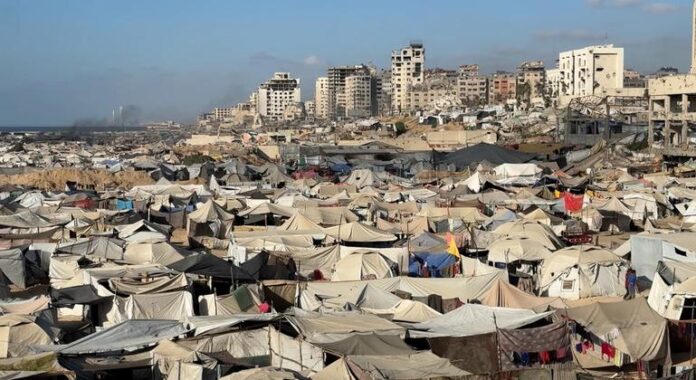
Gaza: More misery as new evacuation orders impact tens of thousands

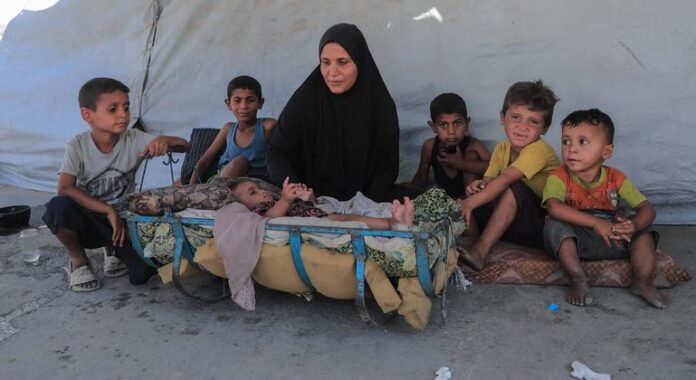
“Every day brings more preventable deaths, displacement and desperation,” the agency said in a humanitarian update.

On Friday, Israeli authorities issued another displacement order, this time for parts of North Gaza.

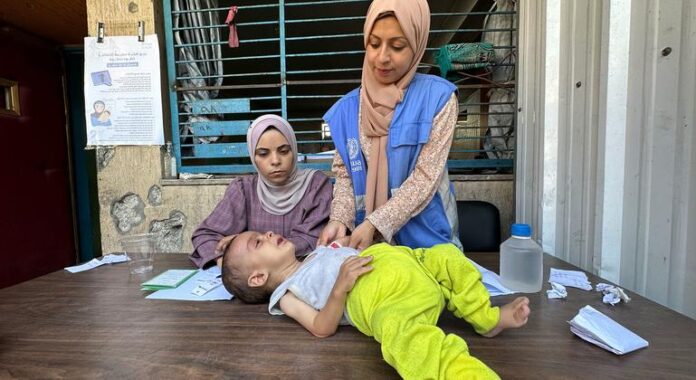
OCHA said it continues to receive deeply troubling reports of malnourished children and adults being admitted to hospitals with insufficient resources available to treat them.

Fuel crisis deepens

The energy crisis in Gaza is also deepening, despite the resumption of limited fuel imports as the quantities that are entering – while critical for continuity – “remain at lower levels than what we were previously able to extract from dwindling internal reserves, which have now been fully depleted”.

The situation has forced solid waste collection to be paused in recent days, and additional wells have had to shut down, particularly in Deir Al-Balah.

“While specific health services, including dialysis, have reduced or shut down, others could go on for a few more days before they too will have to go dark,” OCHA warned.

“With every day that passes, people have less clean water and healthcare and more sewage flooding ground floors.”

Since the limited entry of fuel entry supplies resumed on 9 July, the UN has managed to send just over 600,000 litres of diesel to Kerem Shalom. On Thursday,

it was able to send 35,000 litres of much-needed benzene for the first time.

OCHA said these volumes are limited because Israel has allowed only 14 trucks over the past week. 

The agency stressed that to maintain lifesaving operations, hundreds of thousands of litres of fuel are needed every day. The limited fuel currently entering is primarily allocated to health, water and communications services as well as to power vehicles.

Humanitarian movements curtailed

Humanitarian movements inside Gaza also continue to be restricted.

On Thursday, seven out of 13 attempts to coordinate the movement of aid workers and supplies with the Israeli authorities were facilitated.

Teams were able to retrieve some fuel, collect some water, relocate generators, provide supplies related to hygiene and sanitation and transfer much-needed medical supplies.

The six remaining attempts were either outright denied or approved initially, but then faced obstacles on the ground.

End international media ban

Meanwhile, the head of the UN Palestine refugee agency UNRWA called on Friday for the ban on international media entering Gaza to be lifted.

“650 days of atrocities against civilians with no international media allowed in,” Philippe Lazzarini wrote in social media post, adding that over 200 Palestinian journalists have been killed during this time.

“Media ban fuels dis-information campaigns questioning first-hand data and accounts from eyewitnesses and international humanitarian organizations,” he said.

Source link