Monday, April 27, 2026
Home Blog Page 328

From diamonds to dirt: the youth of Sierra Leone brings the earth back to life

0

But now, certain parts of the land have been restored. Cultures are starting to flourish and the bees are buzzing once again.

People responsible for this change are a group of melines – former taxi and minors, people who have barely completed high school and some higher education diplomas. The unifying factor? Most have young people on their side.

“” There is life beyond mining [but] We all grew up with the mentality that Diamond is the only solution“Said Sahr Fallah, Chairman of the Kono Youth Council.

More than 44% of 1.3 billion people aged 15 to 24 are employed in agrifood systems. However, this group often does not have the same access to resources as older generations. In addition, they are sidelined in conversations that could change this systemic exclusion.

© Unicef / Olivier Asselin

Young men work on a diamond extraction site near Koidu, Sierra Leone. (deposit)

“” Most of the time, what we see is that young people are included in political processes, but it’s a bit tokenist. They do not have the impression that their voice really counts, “said Lauren Phillips, deputy director of the organization of food and agriculture (Fao).

Decent work = economic growth

THE High -level political forum On sustainable development in New York was summoned this week and next, to discuss progress – or its absence – to the whole agreed world Sustainable development objectives (ODD), one of which guarantees decent work for all.

Despite this commitment, more than half of the world workforce remains in informal employment, according to the secretary general report on the SDGs released Monday. This means that they do not have adequate social or legal protections.

“” Dethered work must be at the heart of macroeconomic planning, climate and diesel transitions and social recovery strategies“Said Sangheon Lee, director of employment policy at the International Labor Organization (Ilo).

Do not ignore young people

Like other vulnerable groups, young people face unique challenges in the food sector. More specifically, they often lack land rights and find it difficult to act collectively to protect their interests.

“If you do not look at the data with an age or sex objective, you actually miss a part of the story,” said Ms. Phillips.

Among these assets are terrestrial titles – which the elderly can be reluctant to transmit due to insufficient social protections. Young people are also less able to access the credit so that they can invest in themselves and their families.

Betty Seray Sam, one of Kono’s young farmers, said her family never came to her when they were going through a crisis – they knew she had no money and a child to support.

Young farmers load tomatoes on trucks in Nubaria, Egypt.

But now, thanks to an agricultural job in Kono, she can support her family in times of crisis.

“” This project had a corrugated effect for young people in terms of not only improving their livelihoods, but also means of subsistence of their families“Said Abdul Munu, president of Mabunduku, an organization of community farmer in Kono.

Bee

Providing training to young people in Agrifood systems is absolutely essential to ensure that they can practice sustainable agriculture.

In Chegutu, Zimbabwe,, Fao helped establish schools of bee farmers where young people learn to support the apiaries through practical training activities.

“The idea is that one of the apiaries can be transformed into a classroom where young people from different parts of a neighborhood can come as a school,” said Barnabas Mawire, specialist in natural resources at FAO.

This training has helped support young local beekeepers to go beyond the production of local honey and on a small scale to a full-fledged business model which has the potential not only to fight poverty, but to create local wealth.

Evelyn Mutuda, the young representative of entrepreneurs in Chegutu, aspires to plant jacaranda who, according to her, will improve the quality of bees honey and allow beekeepers to export beyond local markets.

“We want to maximize all the profits so that we can become better and larger,” said Ms. Mutuda.

From Facebook to Tiktok

Being able to train work associations is one of the key factors for decent work. This type of collective action is even more important for young people in Agrifood who often do not have the share capital to adopt a real change in policy.

“Young people are just starting, linking their groups but also with people outside their group. These obligations are important … because there is power in number, “said Ms. Phillips.

She also noted that young people form these links on geographic distances, often using technology. Agricultural influencers on Instagram and Tiktok, for example, are increasingly shaping conversations in the sector.

Ms. Phillips also noted that it was important to consider collective action for youth as intergenerational.

“Although the report focuses on young people, it does not ignore the fact that young people live in families … There are many things that speak of the need for solidarity between generations,” said Ms. Phillips.

Young optimism

The next generation will be the food keepers we eat, so integrating them into this system is now essential for food safety and future sustainability.

“” Many young people integrate tradition into innovation, creating sustainability and community resilience“Said Venio Nala Ardisa, a representative of young people in the Aboriginal peoples in Asia, during an online parallel event during the high -level forum.

Angeline Manhanzva, one of the beekeepers of Chegutu, said that the opportunity to become a beekeeper has changed her life. One day, she dreams of having her own bee farm.

“I will be an elderly person who has so much wealth and who will be able to buy his own large land to keep my hives and treat my own honey.”

Originally published at Almouwatin.com

Unprecedented Afghan returns are “a test of our collective humanity”

0

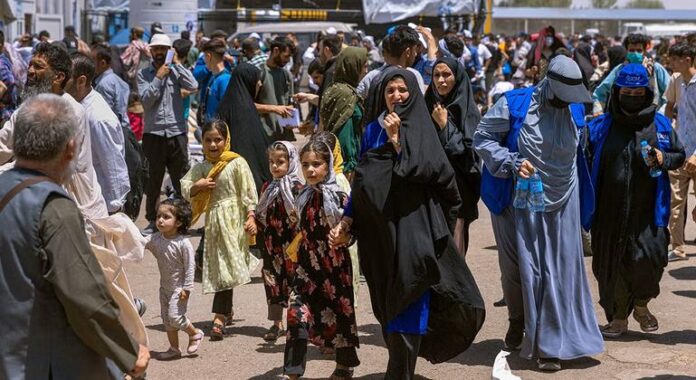
Roza Otunbayeva, the special representative of the Secretary General for Afghanistan, called on a visit to the border of Islam Qala with Iran on Tuesday where she witnessed the daily influx of tens of thousands of returnees.

She also met repatriated families, aid and regional partnersde factoofficial.

Alarm ringtones should ring

“” Which should be a time of positive return for families who fled conflicts decades ago are rather marked by exhaustion, trauma and deep uncertainty »» said Ms. Otunbayeva, who also directs the United Nations assistance mission in Afghanistan (Unama).

“The volume of yields-many abrupt, many involuntary-should trigger alarm ringtone in the world community,” she added.

“” It is a test of our collective humanity. Afghanistan, already struggling with drought and a chronic humanitarian crisis, cannot absorb this shock alone. »»

Overloaded local communities

Since January, more than 1.3 million have been largely forced to return to Afghanistan – a country where 70% of the population lives in poverty.

Women and children face the most serious risks, UNAA said, when they come back not only to disastrous economic difficulties, but to a context where their access to basic services and social protections remains seriously limited.

The UN has repeatedly highlighted the aggression against women’s rights under the domination of the Taliban, including prohibitions affecting higher education, employment and freedom of movement.

Reinstatement of critical support

The yields occur at a time when humanitarian operations remain terribly sub-financed, forcing distressing choices between food, refuge and safe passage.

Ounbayeva also underlined the critical need for immediate reintegration assistance, as initial evidence shows that stabilization of return communities requires urgent subsistence programs and community infrastructure investments.

She warned that without rapid interventions, fundraising, pressure market pressure and cyclic migration will lead to devastating consequences.

These could include the additional destabilization of populations of repatriated and hosts, renewed displacement, mass movements and the risk of regional stability.

‘We cannot afford an indifference’

She urged donors, development partners and regional governments not to turn away and abandon Afghan repatriases.

“What we are witnessing are the direct consequences of unavoidable global responsibilities,” she said. “We must act now – with resources, with coordination and resolution.”

Meanwhile, the UN in Afghanistan calls for an integrated approach that humanitarian needs need while increasing assistance in the return areas.

At the same time, regional dialogue – including with Iran, Pakistan and the Central Asian states – must be prioritized to stop disorderly yields and maintain the principle of voluntary, dignified and safe repatriation.

“Afghanistan’s stability depends on shared responsibility: we cannot afford an indifference,” said Otunbayeva. “The cost of inaction will be measured in lost lives and rolled conflicts.”

Originally published at Almouwatin.com

World News in Brief: Haiti Mite financing cutting, civil suffering intensifies in Myanmar, Belarus Deaths in Custody Alert

0

The current violence aggravates the country’s food crisis, disturbing local food production in critical areas such as the municipality of Kenscoff and the Artibonite department, often considered as the bread packets of Haiti.

While the UN and its partners respond “everywhere wherever and as far as possible”, the UN spokesperson, Stéphane Dujarric, said on Wednesday that the humanitarian workers could only reach 38% of the population they aim to support.

Several roadblocks

“This is due to the current violence and insecurity, the serious under-funding of the response and the obvious access challenges,” he said.

Halfway, Haiti is the the least funded Among the many humanitarian calls that the UN coordinates – despite the gaps for food security in the country at extreme levels – with just over $ 425 million necessary to date this year.

Myanmar: Conflict intensification obstructs humanitarian aid

Almost four months after the devastating earthquake of the Myanmar, the UN is deeply concerned about the fate of civilians caught in the devastating and continuous conflict of the country between the military regime and the country’s armed groups.

As the fighting intensifies, civilians are particularly vulnerable, with increasing attacks against infrastructure.

According to information, an air strike struck a monastery in the canton of Sagan in the sagaing region on July 11, killing 22 people and injuring at least 50 others. The monastery had offered a shelter to displaced people who had fled nearby villages.

A travel camp in the state of North Shan would also have been struck by an air strike during the weekend.

‘Wider diagram’

“These incidents are part of a wider scheme of attacks affecting people through Myanmar,” said Dujarric, with frequent reports of people killed, injured or moved by violence.

Such insecurity also has an impact on the ability of humanitarian teams to achieve people in need: with one in three people confronted with acute hunger, and the current monsoon season has caused floods, “the UN urgently calls on all parties to respect human rights and international humanitarian law,” he said.

Bélarus: Rights experts urge Probe on death deaths of opposition activists

Top Human Rights Experts called Belarus Wednesday to launch urgent investigations into the death of several people imprisoned for political dissent.

Experts – who are known as special rapporteurs – have stressed the case of the 61 -year -old businessman Valiantsin Shtermer. He died in May 2025 as he served his sentence in a so-called “correctional colony” in Šklou.

Mr. Shtermer had been imprisoned for having made critical comments on the large -scale invasion of Ukraine by Russia. Despite his serious state of health, he would have been denied sufficient care in prison.

The fifty -year -old opposition activist, Vitold Ashurak, also died shortly after being placed in isolation in the same prison.

According to special rapporteurs, Ashurak was a member of the Belarusian National Front who was imprisoned for having violated public order during demonstrations linked to the presidential elections disputed in 2020.

We must not ignore these dead

“These deaths should not be ignored,” said the experts, who added that there were solid reasons to believe that they result from abuse or negligence linked to the exercise of fundamental rights.

“It is of the utmost importance to investigate in -depth in the alleged cases of ill -treatment and negligence which led to the death of Shtermer, Ashurak, Puškin and other people designated as political prisoners by human rights defenders”, the defenders “, the defenders”, the defenders “, the defenders”, the defenders “, the defenders”. Human Rights Council The appointed experts stressed.

“There are great reasons to believe that these people have lost their lives in retaliation for having exercised their civil and political rights, including rights to freedom of expression and the Pacific Assembly.”

Independent experts expressed their concern that certain opposition figures had been stigmatized and labeled as “extremists” or even “terrorists”.

Special rapporteurs regularly report to the Human Rights Council. They are not UN staff and do not receive payment for their work.

Originally published at Almouwatin.com

First Person: How many more children must die before the world acts?

0
First Person: How many more children must die before the world acts?

Juliette Touma, the director of communications for the UN agency for Palestine refugees, UNRWA, has visited Gaza several times during and before the war and has been reflecting on the children she has met there and in other conflict zones.

“Adam has been on my mind lately, more so than usual.

I met Adam years ago in the Yemeni port city of Hudaydah, back then under siege and heavy bombardment. In the very poor hospital ward, there lay Adam, 10 years old, weighing just over 10 kilogrammes. He could not speak, he could not cry. All he could do was make a hoarse sound of breathing. A few days later, Adam died from malnutrition.

A malnourished child inside a hospital in Sana’a, Yemen.

Deadly malnutrition

A couple of years before that, my colleague Hanaa calls from Syria late at night. She was in tears and could barely say a word. Hanaa eventually told me that Ali, a 16-year-old boy had died. In yet another town under siege, caught up in a war not of his making, he had also died from malnutrition.

The following morning, my supervisor, an epidemiologist, said “for a boy of 16 to die of malnutrition, that says a lot. He’s practically a man. It means there’s no food at all in that part of Syria.”

Back in Yemen in one of the few functioning children’s hospitals in the capital Sana’a, I was walking through the children’s ward during the peak of a cholera outbreak. Boys 15 and 16 years old, struggling to stay alive.

They were so weak and emaciated, they could barely turn around in their beds.

These images and stories haunted me over the years as they have for several among us who worked in severe hunger or famine-like situations.

The author plays with students enjoying the "summer fun weeks" games in an UNRWA school in the Gaza Strip in 2023. (file)

The author plays with students enjoying the “summer fun weeks” games in an UNRWA school in the Gaza Strip in 2023. (file)

Fatal hunger grows in Gaza

In 2022, when I had the great pleasure of going in and out of Gaza, I would visit children in UNRWA schools. Immaculately dressed, healthy looking, smiling, eager to learn, jumping up and down in the school playground to the sound of music.

Back then, Gaza was already under a blockade for more than 15 years. Food was, however, available on the markets through imports via Israel and locally farmed produce. UNRWA was also giving food aid to over one million people.

Images of Adam and Ali were quickly pushed to the back of my memory until a few weeks ago when they suddenly reappeared.

A growing number of children are being screened for malnutrition in Gaza.

A growing number of children are being screened for malnutrition in Gaza.

Babies can survive, but will they?

Our Gaza teams started sending alarming photos of emaciated babies. The rates of malnutrition are rapidly increasing, spreading across the Gaza Strip. According to the World Health Organization (WHO), more than 50 children died of malnutrition since the siege began on 2 March.

UNRWA has meanwhile screened over 242,000 children in the agency’s clinics and medical points across the war-torn Strip, covering over half the children under age five in Gaza.  One in 10 children screened is malnourished.

Ahlam is seven months old. Her family was displaced every month since the war began, in search of non-existing safety. Shocked and her body weakened, Ahlam is severely malnourished. Like many babies in Gaza, her immune system has been damaged by trauma, constant forced displacement, lack of clean water, poor hygiene and very little food.

Ahlam can survive, but will she?

Bombs and scarce supplies

There are very little therapeutic supplies to treat children with malnutrition as basics are scarce in Gaza. The Israeli authorities have imposed a tight siege blocking the entry of food, medicines, medical and nutritional supplies and hygiene material, including soap.

While the siege is sometimes eased, UNRWA (the largest humanitarian organisation in Gaza) has not been allowed to bring in humanitarian assistance since 2 March.

Last week, Salam, another malnourished baby, died. She was a few months old. When she finally reached the UNRWA clinic, it was too late.

Meanwhile, eight children queuing for therapeutic support against malnutrition were killed when the Israeli forces hit the clinic they were in. One of my colleagues who drove past the clinic a few minutes later told me she saw mothers looking out into the abyss, weeping in silence, just like Adam did.

How many more babies must die before the world takes action?

Why should babies die of malnutrition in the 21st century, especially when it’s totally preventable?

At UNRWA, we have over 6,000 trucks of food, hygiene supplies and medicines outside Gaza waiting for the green light to go in.

The aid will mainly help little girls like Ahlam. UNRWA also has more than 1,000 health workers who can provide boys and girls with specialised nutritional services.

Amid the daily livestream of horrors we get from Gaza on our screens, one cannot help but ask how many more Ahlam’s and Salam’s have to die before taking action?

How much longer until a ceasefire is reached so that bombs stop falling on emaciated and dying children?”

Source link

Displacement, poverty and insecurity fueling violence against women in Gaza

0

In the past three months, a third of the Gaza population (714,000 people) has been forced to move once again, separating families and driving local support systems.

Women and girls wear a heavy burden, fearing their lives on the street – at delivery points and overcrowded makeshift shelters that lack intimacy and safety – like many sleep outdoors.

“Women have suffered an immense loss, including the death or imprisonment of parents. In search of water, living without intimacy and constantly worrying – it is exhausting, “said a worker from Unfpa.

Many young girls are also pushed into child labor and have forced marriage in efforts to deal with devastating hunger.

Suhair who works in a safe space for women and daughters of the central governorate of Deir El-Balah de Gaza.

Safe spaces in large demand

In response to this crisis on Wednesday, the UNFPA reported a strong increase in victims asking for help in their safe spaces, which provide shelter and psychological support.

However, according to women who work there – many of whom are also moved, the conditions are extremely difficult, and there are far too few facilities for the number of women and children in need, which makes it difficult to reach the most at risk.

For example, travel commands disturbed the services and have lost essential equipment and files, forcing them to restart operations from zero.

Even if the staff receives mistreatment accounts, incidents remain largely under-declared due to the stigma, fear of reprisals and the collapse of health and justice systems.

“Despite all the difficulties, I continue to support women and abused girls,” Asmaa said, who works in a safe space supported by the UNFPA in Gaza and has been moved ten times since the war.

Severe and fuel fuel intake

Fuel shortages are paralyzing critical infrastructure across Gaza. The UN has warned that humanitarian operations can collapse entirely and that 80% of health establishments should lack fuel in the coming days.

While the UNFPA tries to switch to a remote support, the fuel shortages have sparked telecommunications breakdowns, cut the hotlines of survivor and rendered a largely inaccessible distance assistance.

Since the blockade was imposed on March 7, no agency supply has entered Gaza, leaving essential items such as severely exhausted menstrual hygiene kits.

Due to these shortages, three UNFPA safe spaces have closed, while the other 14 operate at a very limited capacity.

Despite the many challenges, the reproductive health agency and its cases continue to do their best to help women and girls. “We feel the urgent needs of women and recognize the importance of supporting them. A little effort can make a big difference in their lives, ”said a social worker.

© UNFPA / Female business center

Salma, on the left, is the mother of four children and manager of sex -based violence in Khan Younis.

Originally published at Almouwatin.com

Gaza: More misery as new evacuation orders impact tens of thousands

0
Gaza: More misery as new evacuation orders impact tens of thousands

Those impacted by the orders have been told to relocate to the “already overcrowded” coastal strip at Al Mawasi, according to the UN Office for the Coordination of Humanitarian Affairs (OCHA), late Tuesday.

Al Mawasi near Khan Younis lacks “the basics for survival”, the UN agency insisted. It has also seen nearly two dozen strikes on displaced Gazans sheltering in tents there between 18 March and 11 April, the UN human rights office said

As the war drags on well into its 21st month, Gaza’s most vulnerable people continue to struggle to survive.

Dialysis emergency

They include Musbah Zaqqout, 70, one of 230 patients receiving lifesaving dialysis at Al-Shifa Hospital in Gaza City. His treatment has been disrupted by persistent supply shortages that reduced sessions from three to two per week at the end of last month, the UN World Health Organization (WHO) warned on Tuesday.

“He suffered a lot when dialysis was not available,” said Mr. Zaqqout’s wife, Saadia. “He was suffocating and was frequently admitted to the hospital, to the point where he fell into a coma, lost focus and didn’t recognize anyone.”

With support from partner organization KS Relief, WHO delivered dialysis supplies and fuel for Al-Shifa Hospital, so that it could resume dialysis treatment and other lifesaving services.

“Thank God, after restarting dialysis, his condition improved,” Mrs. Zaqqout said, while the UN health agency reiterated its calls for sustained entry of food, fuel, and health aid at scale through all possible routes.

“Critical shortages of fuel and medical supplies persist across Gaza,” WHO warned. “Without urgent and sustained replenishment, health care services risk coming to a grinding halt.”

Child malnutrition tragedy

Echoing those concerns, the UN agency for Palestinians, UNRWA, warned on Wednesday that it is increasingly difficult to help Gazans. Already, one in 10 of the children brought to its clinics suffers from malnutrition. The condition was unheard of in the enclave before the war, but it more than doubled in children under five between March and June, amid the near-total Israeli siege.

“It’s becoming more and more difficult for us to continue providing services,” said UNRWA’s Louise Wateridge. “At least 188 UNRWA installations – over half of all our installations in the Gaza Strip – are located within the Israeli-militarized zone, under displacement orders, or where these overlap.”

In an update, Ms. Wateridge said that only six UNRWA health centres and 22 of the agency’s medical points remain operational today, in addition to 22 mobile medical points inside and outside shelters.

Nearly 60 per cent of essential medical supplies are now out of stock, according to the UN agency. “Children are dying before our eyes, because we do not have the medical supplies or sustained food to treat them,” it said.

Key medicines run out

As a direct result of the Israeli blockade on Gaza which began on 2 March, UNRWA said that it has “now run out of” medicines for high blood pressure, antiparasitic and antifungal medicine, medicine for eye infections and inflammation, all skin treatments and oral antibiotics for adults.

Providing clean water to the war-shattered enclave remains a massive challenge and only two UNRWA main water wells still function. Ten were operational before the war. Another 41 smaller wells are operational in UNRWA shelters.

For the past two months in north Gaza, UNRWA has been forced to stop providing water and sanitation services for around 25,000 displaced people in shelters, owing to displacement orders issued by Israeli forces.

“The restrictions on the entry of fuel continues placing life-saving services at a severe risk,” the UN agency said. “Critical water services are at risk of shutting down if sustained fuel supplies are not permitted entry.”

Source link

EU budget 2028-2034 for a stronger Europe

0
EU budget 2028-2034 for a stronger Europe


The Commission has presented its proposal for an ambitious and dynamic long-term EU budget, the so-called Multiannual Financial Framework (MFF), which will run for seven years, starting in 2028. Almost €2 trillion, or 1.26% of the average EU’s gross national income between 2028 and 2034, will support Europe’s ambition to be independent, safe, prosperous and thrive over the coming decade.

Europe’s increasing challenges in security, defence, competitiveness, migration, energy and climate resilience require a strong and forward-looking response. Therefore, the Commission has proposed a fundamental redesign of the EU budget. It will significantly enhance the EU’s capacity to deliver on core policies, address new and emerging priorities and continue to support people, businesses, EU countries, regions, partners, and, above all, the EU’s collective future.

Key features of the new EU budget

  • more flexibility across the budget, so Europe can act and react fast when needed
  • simpler, more streamlined and harmonised EU financial programmes for easier access to funding
  • a budget tailored to local needs, with national and regional partnership plans for targeted impact where it matters most
  • competitiveness boost for Europe to secure supply chains, scale up innovation and lead in clean and smart technology
  • balanced new own resources which bring adequate revenues for our priorities while minimising pressure on national public finances

The long-term budget is designed to ensure that EU funding is steered by the EU’s political priorities, delivering results that EU countries cannot achieve alone. It focuses on:

  • investing in people, EU countries and regions
  • fostering education and democratic values
  • driving prosperity via competitiveness, research and innovation
  • protecting people and building preparedness and resilience to face new challenges
  • protecting Europe
  • building partnerships for a stronger Europe in the world
  • bringing in new own resources to match our common ambition.

The proposal will be negotiated with the European Parliament, elected by EU citizens, and the Council of the EU, representing EU countries, before final adoption. It should come into force in January 2028. 

For more information

Press release: An ambitious budget for a stronger Europe: 2028-2034

EU budget for 2028-2034 

Europe’s budget

How the EU’s long-term budget is decided

Questions & answers

Commission’s priorities

Source link

EU budget 2028-2034 for a stronger Europe

0
EU budget 2028-2034 for a stronger Europe


The Commission has presented its proposal for an ambitious and dynamic long-term EU budget, the so-called Multiannual Financial Framework (MFF), which will run for seven years, starting in 2028. Almost €2 trillion, or 1.26% of the average EU’s gross national income between 2028 and 2034, will support Europe’s ambition to be independent, safe, prosperous and thrive over the coming decade.

Europe’s increasing challenges in security, defence, competitiveness, migration, energy and climate resilience require a strong and forward-looking response. Therefore, the Commission has proposed a fundamental redesign of the EU budget. It will significantly enhance the EU’s capacity to deliver on core policies, address new and emerging priorities and continue to support people, businesses, EU countries, regions, partners, and, above all, the EU’s collective future.

Key features of the new EU budget

  • more flexibility across the budget, so Europe can act and react fast when needed
  • simpler, more streamlined and harmonised EU financial programmes for easier access to funding
  • a budget tailored to local needs, with national and regional partnership plans for targeted impact where it matters most
  • competitiveness boost for Europe to secure supply chains, scale up innovation and lead in clean and smart technology
  • balanced new own resources which bring adequate revenues for our priorities while minimising pressure on national public finances

The long-term budget is designed to ensure that EU funding is steered by the EU’s political priorities, delivering results that EU countries cannot achieve alone. It focuses on:

  • investing in people, EU countries and regions
  • fostering education and democratic values
  • driving prosperity via competitiveness, research and innovation
  • protecting people and building preparedness and resilience to face new challenges
  • protecting Europe
  • building partnerships for a stronger Europe in the world
  • bringing in new own resources to match our common ambition.

The proposal will be negotiated with the European Parliament, elected by EU citizens, and the Council of the EU, representing EU countries, before final adoption. It should come into force in January 2028. 

For more information

Press release: An ambitious budget for a stronger Europe: 2028-2034

EU budget for 2028-2034 

Europe’s budget

How the EU’s long-term budget is decided

Questions & answers

Commission’s priorities

Source link

Gaza: More misery as new evacuation orders impact tens of thousands

0
Gaza: More misery as new evacuation orders impact tens of thousands

Those impacted by the orders have been told to relocate to the “already overcrowded” coastal strip at Al Mawasi, according to the UN Office for the Coordination of Humanitarian Affairs (OCHA), late Tuesday.

Al Mawasi near Khan Younis lacks “the basics for survival”, the UN agency insisted. It has also seen nearly two dozen strikes on displaced Gazans sheltering in tents there between 18 March and 11 April, the UN human rights office said

As the war drags on well into its 21st month, Gaza’s most vulnerable people continue to struggle to survive.

Dialysis emergency

They include Musbah Zaqqout, 70, one of 230 patients receiving lifesaving dialysis at Al-Shifa Hospital in Gaza City. His treatment has been disrupted by persistent supply shortages that reduced sessions from three to two per week at the end of last month, the UN World Health Organization (WHO) warned on Tuesday.

“He suffered a lot when dialysis was not available,” said Mr. Zaqqout’s wife, Saadia. “He was suffocating and was frequently admitted to the hospital, to the point where he fell into a coma, lost focus and didn’t recognize anyone.”

With support from partner organization KS Relief, WHO delivered dialysis supplies and fuel for Al-Shifa Hospital, so that it could resume dialysis treatment and other lifesaving services.

“Thank God, after restarting dialysis, his condition improved,” Mrs. Zaqqout said, while the UN health agency reiterated its calls for sustained entry of food, fuel, and health aid at scale through all possible routes.

“Critical shortages of fuel and medical supplies persist across Gaza,” WHO warned. “Without urgent and sustained replenishment, health care services risk coming to a grinding halt.”

Child malnutrition tragedy

Echoing those concerns, the UN agency for Palestinians, UNRWA, warned on Wednesday that it is increasingly difficult to help Gazans. Already, one in 10 of the children brought to its clinics suffers from malnutrition. The condition was unheard of in the enclave before the war, but it more than doubled in children under five between March and June, amid the near-total Israeli siege.

“It’s becoming more and more difficult for us to continue providing services,” said UNRWA’s Louise Wateridge. “At least 188 UNRWA installations – over half of all our installations in the Gaza Strip – are located within the Israeli-militarized zone, under displacement orders, or where these overlap.”

In an update, Ms. Wateridge said that only six UNRWA health centres and 22 of the agency’s medical points remain operational today, in addition to 22 mobile medical points inside and outside shelters.

Nearly 60 per cent of essential medical supplies are now out of stock, according to the UN agency. “Children are dying before our eyes, because we do not have the medical supplies or sustained food to treat them,” it said.

Key medicines run out

As a direct result of the Israeli blockade on Gaza which began on 2 March, UNRWA said that it has “now run out of” medicines for high blood pressure, antiparasitic and antifungal medicine, medicine for eye infections and inflammation, all skin treatments and oral antibiotics for adults.

Providing clean water to the war-shattered enclave remains a massive challenge and only two UNRWA main water wells still function. Ten were operational before the war. Another 41 smaller wells are operational in UNRWA shelters.

For the past two months in north Gaza, UNRWA has been forced to stop providing water and sanitation services for around 25,000 displaced people in shelters, owing to displacement orders issued by Israeli forces.

“The restrictions on the entry of fuel continues placing life-saving services at a severe risk,” the UN agency said. “Critical water services are at risk of shutting down if sustained fuel supplies are not permitted entry.”

Source link

Sudan: Unicef condemns the weekend attacks that killed 35 children

0

At least 24 boys, 11 girls and two pregnant women would have been among the victims of violence, which occurred during the weekend in the communities of the city of Bara, including the villages of Shag Alnom and Hilat Hamid.

Unicef Fear that with dozens of more injured and still very disappeared, the number of victims of children could increase more.

“A complete contempt for human life”

“These attacks are an outrage,” said executive director Catherine Russell a declaration issued Tuesday.

“They represent a terrifying escalation of violence and a complete contempt for human life, international humanitarian law and the most fundamental principles of humanity.”

The former allies have become rivals – the Sudanese armed forces (SAF) and the paramilitary support forces (RSF) – have been fighting for control of the country since April 2023 and the fights have recently intensified in the Kordofan region which includes three states.

Put an end to violence now

“UNICEF condemns attacks in the strongest possible terms,” said Russell.

It called on all parties to end violence immediately and to maintain their obligations under international law, including international humanitarian law, as well as the principles of distinction, proportionality and precaution.

The head of UNICEF stressed that civilians – especially children – should never be targeted. In addition, all alleged violations must be the subject of an independent investigation and those responsible for accounting.

“” Impunity cannot be tolerated for violations of international law, especially when children’s life is at stake“She said.

Ms. Russell extended the agency’s largest condolences to the families of the victims and to any person affected by this heinous violence.

“” No child should never live such horrors“She said.” The violence against children is unacceptable and must end now. »»

Originally published at Almouwatin.com