Tuesday, April 28, 2026
Home Blog Page 350

Space is not the last border – this is the foundation of our future: the deputy chief of the UN

0

Attack delegates in a no forum on peaceful space uses, Amina Mohammed has urged greater international cooperation when the world is increasingly depending on satellites for everything, from the response to disasters to climate surveillance.

“” Space is not the final border. This is the foundation of our present“She said.

“Without satellites in open orbit at the moment, global food systems would collapse in a few weeks. Emergency speakers would lose their living lines. Climatologists would fly blind. And our hopes to achieve the Sustainable development objectives (ODD) would be out of reach, “she added.

Expansion of access to space

For nearly seven decades, the United Nations Committee on Pacific Space Use – The official name of the Forum, has advanced international cooperation through five spaces treatedGuidelines on sustainability and Space 2030 Agenda.

Ms. Mohammed underlined the United Nations efforts through the Office of External Space Affairs (OOSA), helping to make space more accessible – especially for half of the Member States of the UN which still lack an orbit satellite.

OOSA programs are opening opportunities for young people and women in developing countries, cultivating a new, more inclusive generation of space leaders.

It also helps countries strengthen their spatial capacities through technical workshops and help for emerging programs, having helped Kenya, Guatemala, Moldova and Mauritius to launch their first satellites.

Likewise, this helps countries like Tonga, Trinidad and Tobago and Ghana, use satellite data to create detailed digital models from whole cities, allowing a faster disaster response and save lives.

Sustainable space and development

Costs of the fourth international conference on Development financing in SevilleSpain, Ms. Mohammed stressed that the areas that the UN define as essential for the acceleration of sustainable development all depend on space technologies.

She also relayed a critical message from the conference: “At a constrained investment time, we must align capital with solutions with high impact,” she said. “Space is one of them. »»

“” The view from space does not show any country, no borders – a single shared planet, a common house. Let this perspective guide you when you build governance executives for exploration and use of space, ”she concluded.

“” Let’s make space a catalyst to reach the SDGs. »»

Originally published at Almouwatin.com

Adhering to bans on mines only in peace time will not work: UN rights chief

0
Adhering to bans on mines only in peace time will not work: UN rights chief

Estonia, Finland, Latvia, Lithuania, Poland and Ukraine have taken or are considering steps to withdraw from the Convention on the Prohibition of the Use, Stockpiling, Production and Transfer of Anti-Personnel Mines and on their Destruction – known also as the Ottawa Convention, after the Canadian city where the process was launched.

“These weapons risk causing persistent and long-term, serious harm to civilians, including children,” Volker Türk, UN High Commissioner for Human Rights, said in a statement. “Like other international humanitarian law treaties, the Ottawa Convention was principally designed to govern the conduct of parties to armed conflicts.”

“Adhering to them in times of peace only to withdraw from them in times of war or for newly invoked national security considerations seriously undermines the framework of international humanitarian law.”

A threat to civilians

Anti-personnel mines are one of the two main types of mines and target people – as opposed to anti-vehicle mines. However, because both of these mines are triggered automatically, they result in huge numbers of civilian deaths, especially children.

Their deadly risks linger long after hostilities end, contaminating farmland, playgrounds, and homes, and posing a constant threat to unsuspecting civilians.

Agreed in 1997, the Ottawa Convention prohibits signatories from using, stockpiling, producing or transferring anti-personnel mines due to the threat that these weapons pose to civilians, especially children.  

In the two-and-a-half decades since it was passed, the Ottawa Convention has 166 States parties, has led to the a marked reduction in the use of anti-personnel mines.  

Trends reversing

However, in recent years, these positive trends have begun to reverse with the number of civilians killed and injured by mines increasing by 22 per cent in 2024 – 85 per cent of the casualties were civilians and half of them were children.  

Despite progress, some 100 million people across 60 countries still live under the threat of landmines.

In Ukraine, for instance, the UN Mine Action Service (UNMAS) estimates that more than 20 per cent of the country’s land is contaminated – amounting to 139,000 square kilometres.

Similarly, landmines remain still a significant threat in Cambodia, decades after the end of the conflict and years of de-mining efforts.

Uphold international law

Mr. Türk urged all parties to the Ottawa Convention to uphold their international legal obligations regarding anti-personnel mines and on non-signatories to join the Convention.  

“With so many civilians suffering from the use of anti-personnel mines, I call on all States to refrain from leaving any international humanitarian law treaty, and to immediately suspend any withdrawal process that may be underway.”  

Source link

Seville: Without sustainable development, there is no hope or security

0

Development benefits all countries because it is linked to other areas of activity and society, including basic security itself. Without that, there is no hope – and no stability.

This is the key message from the director of the United Nations Development Program for the support of policies and the program (Predict),, Marcos NetoTo all the other nations gathered in Seville who have registered in the action plan, which begins immediately.

The Seville agreement is the centerpiece of the 4th International Conference on Development Financing, and it was adopted by 192 of the 193 UN members.

The United States has withdrew from citing fundamental disagreements with many political approaches and are absent from the summit which takes place in the middle of hot temperatures in the southern city of Seville, Spain.

No lack of money

In his interview at the conference, we asked Mr. Neto to explain in a clear language in what Seville’s commitment is.

This interview has been modified for duration and clarity.

Marcos Neto: We are five years from Sustainable development objectives [SDGs]. One of the biggest obstacles to this shared global solidarity program is funding. In other words: where is money? Where will the money come from?

Seville’s commitment is a document that clearly shows that this does not concern a lack of money – it is a question of aligning the flows of public and private capital to these objectives, to the Paris Agreementand towards all other international commitments.

The commitment describes what to do with all types of money – national, international, public and private. It is a roadmap that has been agreed by consensus among the member states of the UN, involving the private sector, civil society and philanthropy.

UN News: one of the main absences of this conference was the United States, which left negotiations on the company. How did the withdrawal of Washington influence the conference?

Marcos Neto: A consensus between 192 countries has been reached and approved here. Now, clearly, the United States is one of the largest economies in the world and has a significant weight. I believe it is crucial to keep the dialogue open and continue to engage all the Member States, each according to their own needs.

For example, development financing is directly linked to security. Without development, you cannot have a stable company – without conflict. What is your level of poverty? What is your level of inequality? Development is a security strategy. Development is hope. A hopeless people is a people in difficulty.

UN news: in conferences like this, documents are adopted, but often people feel that they are only empty words that do not really affect their daily life. How about these citizens to convince them that these decisions really make a difference?

Marcos Neto: I will give you a very clear example. During the last conference on development financing ten years ago in Addis Ababa, there was a sentence that envisaged the creation of what we now call integrated national financing managers (INFFS). We, at UNDP, have developed this concept in 86 countries. This is real: $ 47 billion was aligned and mobilized through this mechanism.

50 billion dividends

So, in practice, I can say that we have helped put more than $ 50 billion in the hands of the countries. We have also helped them reform their national budgetary processes so that money reaches its belt.

Our current commitment is to implement Seville’s commitment. We are committed to delivering it.

From Seville to Belém

UN News: In addition, the Sevilla platform for action will also be used to implement various initiatives …

Marcos Neto: Yes, we direct 11 initiatives under the Seville platform, and I think it was a great decision of the Government of Spain to have created this action platform in Seville to make it the implementation.

It is very similar to what Brazil wants to do at the end of the year at COP30. There is a direct link between Seville and Belém – the host city of the United Nations Climate Change Summit in Brazil later this year. These connections are important.

Originally published at Almouwatin.com

Interview: Seville “a critical test” of multilateralism

0

The promises were made at the opening of the Financing For Development Conference (FFD4), currently underway in the Spanish city of Seville, when the delegates agreed Seville engagement.

During the conference, the UN News spoke to Li junhuaThe United Nations Under-Secretary General for Economic and Social Affairs and Secretary General of the International Summit.

Li Junhua: The adoption of the Seville agreement was an exceptional moment during an event which experienced around sixty heads of state and government and saw 130 major initiatives announced within the framework of the Sevilla platform for actionwhich aims to implement the result document and the financing of the turbochang for sustainable development.

A record number of business leaders from various sectors has actively participated and contributed positively to the entire process and the results of the conference. They all undertook to support the implementation of the new roadmap.

UN News: What advantages do you think that vulnerable communities in developing countries can impatiently wait, as a direct consequence of decisions made here in Seville?

Li Junhua, Under-Secretary General of the United Nations for economic and social affairs.

Li Junhua: Seville’s commitment firmly recognizes that the eradication of poverty is essential for the realization of sustainable development. This is the most essential point for all developing countries. It offers a set of shares for a large -scale investment thrust for the Sustainable development objectives (SDD) in the long term. This includes strengthening investments in vital fields such as social protection systems, agrifood systems and inclusive, affordable and quality health systems.

In addition, it aims to strengthen the global response to crises that most affect vulnerable communities. For example, he calls for the implementation of the decision concerning the agreed climate financing of the United Nations Climate Conference in Baku, as well as the fund to respond to loss and damage.

For me, significant stages and commitments have been made to support countries in special situations in order to fill the significant infrastructure gap in the critical sectors. The most vulnerable populations can benefit significantly by obtaining essential services and employment opportunities generated by, for example, energy, transport, ICT [information and communication technology]development of water and sanitation infrastructures.

Finally and above all, there is a strong determination to extend access to financial products and services in society, especially for women, young people, disabled people, displaced people, migrants and other people in vulnerable situations. These are very tangible results for vulnerable communities.

News from the UN: How is this conference a real multilateralism test, at a time when it is more than ever to pressure than ever, and with a deeply uncertain global economic perspective?

Li Junhua: This conference is a critical test of our ability to solve problems together.

We know that, at the base, the sustainable development crisis is a crisis of financing and financing. We have to take up these challenges to bring the SDGs back on the right track, but it is far from easy. Commitments to development financing have a direct impact on national budgets and the reform of international financial architecture will inevitably move the dynamics of power between states.

The fact that the Member States have adopted the Seville agreement by consensus sends a powerful signal that multilateralism can still deliver. Of course, the real challenge now lies in the translation of these commitments into actions. I would therefore say that in the end, the success depends on the collective efforts of all the Member States and all stakeholders.

Originally published at Almouwatin.com

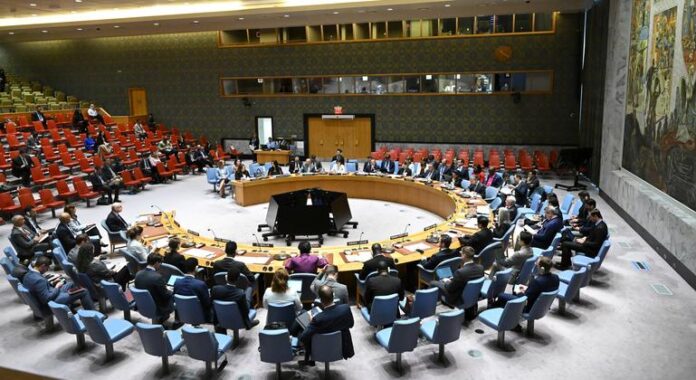
Haitian capital “paralyzed and isolated” by the violence of the gangs, the Security Council hears

0

Since January, the office has joined the UN in Haiti (Binuh), recorded more than 4,000 people deliberately killed – an increase of 24% compared to the same period in 2024.

“” The capital was all the ends paralyzed by gangs and isolated Due to the current suspension of international commercial flights to the international airport, “Miroslav Jenča, Deputy secretary general for the Americas In the Department of Political Affairs (DPPA), the ambassadors of Security advice Wednesday.

After visiting the country recently, he warned that, The gangs only “strengthen their foot”which now affects all the municipalities of the metropolitan region of Port-au-Prince and beyond, “bringing the situation closer to the edge”.

He called the international community to Act in a decisive and urgent manner or “the total collapse of the presence of the state in the capital could become a very real scenario”.

Gang Control develops

Ghada Fathi Waly, Executive Director of the United Nations Office on Drugs and Crime (Unodc), echoed this warning.

“As the gang control develops, the state’s ability to govern is quickly shrinking, with social, economic and security implications,” she told ambassadors, informed from Vienna.

“This erosion of state legitimacy has cascade effects,” she said, legal trade becoming paralyzed while gangs control major commercial roads, such conditions aggravating “already disastrous levels of food insecurity and humanitarian need,” she added.

Rise of “justification” groups

In the midst of the frustration of the growing public with regard to the limited protection capacity of the State, the groups of “justicular” or self -defense are now gaining popular attraction.

Although some are motivated by the urgent need to protect their communities, many operate outside of existing legal frameworks, in some cases, to engage in extrajudicial actions and to end with gangs.

The rise of these actors pushes the demand for firearms and military quality weapons, “fuel the illicit arms markets and increase the risk of diverting lawful weapons towards criminal elements,” said Waly.

Human beings

Meanwhile, the broader deterioration of security and the economic situation in the capital and the rest of the country continues to fuel a clearer escalation in human rights violations.

Despite the persistent sub-declaration of sexual violence due to fear of reprisals, social stigma and lack of confidence in institutions, Binuh has reported an increase in sexual violence committed by gangs in the last three months.

In May, the Haitian police went down to a medical establishment in Pétion-Ville suspected of being involved in the illicit trade in organs, as allegations of trafficking for people for the end of organs occur.

While the situation in Haiti remains desperate, “there is not a while to lose,” said Jenča.

Originally published at Almouwatin.com

Children’s lives ‘turned upside down’ by wars across Middle East, North Africa, warns UNICEF

0
Children’s lives ‘turned upside down’ by wars across Middle East, North Africa, warns UNICEF

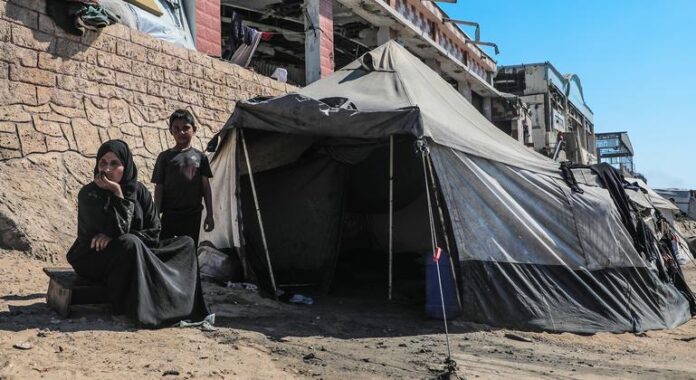
Alarmingly, 110 million children in the region live in countries affected by war, with homes, schools and health facilities damaged or destroyed in fighting.

“A child’s life is being turned upside down the equivalent of every five seconds due to the conflicts in the region,” said Edouard Beigbeder, UNICEF Regional Director for the Middle East and North Africa, on Tuesday.

UNICEF estimates indicate that 45 million children across the region will require humanitarian assistance in 2025, a 41 per cent increase since 2020.  

Funding shortfalls  

However, funding gaps are affecting vital programmes across the region.

For instance, as of May, Syria faced a 78 per cent funding gap and the State of Palestine a 68 per cent gap for their 2025 appeals. UNICEF’s regional programmes are also under increasing financial strain.

The outlook for 2026 also remains bleak, UNICEF said, noting that its funding for Middle East and North Africa is projected to decline by 20 to 25 per cent, potentially resulting in shortfalls of up to $370 million.

Conflicts must stop  

This would jeopardize lifesaving programmes across the region, including treatment for severe malnutrition, safe water production in conflict zones and vaccinations against deadly diseases.

“As the plight of children in the region worsens, the resources to respond are becoming sparser,” said Mr. Beigbeder.

“Conflicts must stop. International advocacy to resolve these crises must intensify. And support for vulnerable children must increase, not decline.” 

Source link

Debt drowning: the new forum in Seville offers borrowers a chance to rebalance the books

0

THE Borrower forum is praised as an important step in efforts to reform the architecture of international debt, supported by the UN and emerge as a key element of Seville agreement Result document.

“It is not only the conversation-it is execution,” said Egyptian Minister of Planning and Economic Development, Dr. Rania Al-Mashat. “” The borrower forum is a real plan, motivated by the countries, to create a shared voice and strategy to deal with the debt challenges. “”

Rebeca Grynspan, Secretary General of United Nations Trade and Development (Trecta), said that developing countries are often confronted with creditors as a united block while negotiating alone. “The voice is not only the ability to speak – it is the power to shape the results. Today, 3.4 billion people live in countries that pay more in debt service than on health or education. ”

The forum – one of the 11 recommendations of the group of experts from the United Nations Secretary General on Debt – will allow countries to share experiences, receive technical and legal advice, promote loans and responsible borrowing standards and strengthen the collective negotiation force.

Its launch deals with long -standing calls from the world South for more inclusive decision -making in a debt system dominated by the interests of creditors.

‘Silent but urgent’

The Minister of Foreign Affairs of Zambia, Mumbo Haimbe, told journalists that the initiative Promote “long -term partnerships, mutual respect and shared responsibility” And expressed the will of his country to organize a first meeting.

The Spanish Minister of Finance, Carlos Cuerpo, described the current debt crisis as “silent but urgent” and Called the forum a “moment of Seville” to correspond to the Paris credit club, created almost 70 years ago.

UN special envoy on financing the 2030 agenda Mahmoud Mohieldin said the forum was a direct response to a system that has maintained debtor countries for too long. “” This is the voice, equity – and preventing the next debt crisis before it begins. “”

The launch comes at a time from the distress of increasing debt in the developing world.

The agreement – known in Spanish as the Seville compromiso – Adopted by consensus at the conference, includes a group of commitments on the reform of sovereign debt.

In addition to the care of initiatives led by borrowers, he calls for better transparency of the debt, better coordination between creditors and the exploration of a multilateral legal framework for the restructuring of debt.

It also approves of the sustainability strategies of debt led by the country, suspension clauses of debt for vulnerable climatic nations and greater support for debt swaps for nature and debt for climate – although with stronger guarantees and impact evidence.

Frustration on the “missed opportunity” to fight against the debt crisis

On Wednesday, civil society groups brutally criticized the result adopted in Seville, calling this a missed opportunity to offer a significant reform of a global debt system which paralyzes many developing nations.

Speaking during a press briefing within the conference, Jason Braganza of the Forum and the African Development Network (Afrodad) said that the final result document adopted on the first day – the Seville agreement – was far from what was necessary.

“” This document did not start with a lot of ambition and still managed to be watered down“, He said.” Almost half of African countries face a debt crisis. Instead of investing in health, education and clean water, they pay creditors. »»

Mr. Braganza praised the management of the African group and the alliance of small island states, which fought for a UN framework convention on sovereign debt.

‘False solutions’

Although this ambition was not fully carried out, He welcomed a little breakthrough In the form of a new intergovernmental process which could lay the foundations for a future reform.

Civil society leaders have also warned of the dangers of the so-called “climate debt exchanges”, Mr. Braganza calling them “false solutions” which do not provide a real tax space for developing countries.

Tove Ryding of the European Network on Debt and Development (Eurodad) echoes these concerns, saying: “We are told that there is no money to fight poverty or climate change – but there are. The problem is economic injustice. And the result of this conference reflects business as usual. “”

She underlined the progress made on a new United Nations tax convention as proof that the determined countries can lead to real changes, adding: “If only we had a dollar of tax for each time that we were told that this day would never come. »»

The agreement is bearing fruit for public health

To help fill the gaps in access to public services and policies, and to combat health care reductions that could cost thousands of lives, Spain launched the global health action initiative aimed at revitalizing the entire global health ecosystem.

The initiative, which will channel 315 million euros in the global health system between 2025 and 2027, is supported by main multilateral health organizations and more than 10 countries.

Originally published at Almouwatin.com

EU Climate Law: new way to reach 2040 targets

0
EU Climate Law: new way to reach 2040 targets

The Commission has proposed an amendment to the EU’s Climate Law that would see a 2040 EU climate target of a 90% reduction in net greenhouse gas emissions, compared to 1990 levels. The proposal also sets out a more pragmatic and flexible way to reach the 2040 target. Source link

Source link

EU Climate Law: new way to reach 2040 targets

0
EU Climate Law: new way to reach 2040 targets

The Commission has proposed an amendment to the EU’s Climate Law that would see a 2040 EU climate target of a 90% reduction in net greenhouse gas emissions, compared to 1990 levels. The proposal also sets out a more pragmatic and flexible way to reach the 2040 target.

Source link

EU plan will make Europe a global leader in life sciences

0
EU Climate Law: new way to reach 2040 targets

The European Commission has launched a new plan to make Europe a global leader in life sciences by 2030. The plan will accelerate innovation, facilitate market access, and build public trust in new technologies, ensuring Europe becomes the most attractive place in the world for life sciences. Source link

Source link