
EU delivers over €4 billion to Ukraine ahead of its Independence Day Source link
World News in Brief: Gaza humanitarian update, more killings in Sudan, ending impunity in Myanmar
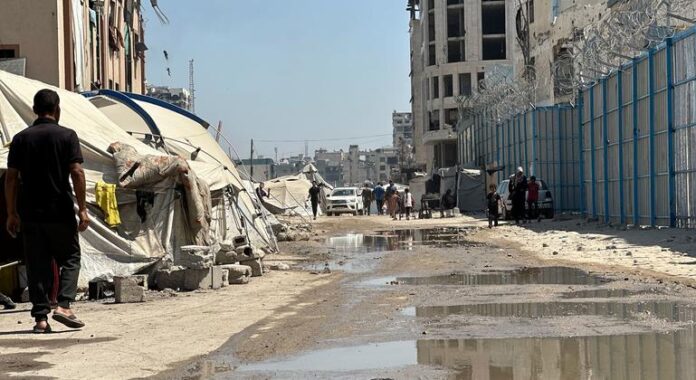
Multiple strikes overnight into Friday were reported in the Jabalya Al Balad and An Nazla neighbourhoods, the UN Office for the Coordination of Humanitarian Affairs (OCHA) said in its latest update.
As a result, around 900 people reportedly fled towards the Sheikh Radwan neighbourhood and western Gaza City.
Safe passage, more aid
The UN and partners again reminded parties to the conflict of their obligation to protect civilians, in line with international law, including humanitarian workers and people who cannot or choose not to move.
“Those fleeing must be allowed to do so safely. They must also be allowed to return if they wish to do so, as the situation allows,” OCHA said.
The agency underscored the need to ensure that people have access to aid and basic services, whether they leave or stay.
Supplies also must be allowed to enter the Gaza Strip through all available crossings and corridors, and humanitarians must have safe, predictable and sustained access to deliver aid at scale.
Hospitals under strain
Meanwhile, as strikes continue to intensify across the enclave, casualties are flooding hospital emergency departments.
Humanitarians warned that the expansion of military operations would further cripple the collapsing healthcare system.
Nearly half of all hospitals and field hospitals are located in Gaza City, accounting for some 40 per cent of bed capacity in the entire enclave. Additionally, many medical facilities in the south are operating several times over their bedspace capacity.
Humanitarians stressed that access to healthcare must be immediately restored to avert more preventable deaths.
Sudan: UN rights office horrified by recent killings in El Fasher
Recent brutal attacks by the paramilitary Rapid Support Forces (RSF) in Sudan have left at least 89 people dead in North Darfur state, the UN human rights office, OHCHR, said on Friday
The RSF have been battling the Sudanese Armed Forces (SAF) for control of the country for more than two years.
OHCHR said RSF attacks on the besieged North Darfur capital El Fasher and the adjoining Abu Shouk camp for displaced people resulted in the killing of at least 89 civilians, though the actual number could be higher.
The attacks took place over a 10-day period ending on 20 August.
Apparent summary executions
At least 32 civilians were killed in attacks between 16 and 20 August, while at least 57 were killed in previous attacks on 11 August.
OHCHR was particularly horrified that 16 of the most recent killings appear to have been summary executions, Spokesman Jeremy Laurence told journalists in Geneva.
“Most of the victims were killed in Abu Shouk camp and belonged to the African Zaghawa tribe, according to information gathered by our Office,” he said.
“In another case in the El Fasher area, a victim was asked which tribe he belonged to. He was killed after responding that he was from the African Berti tribe.”
Meanwhile, the humanitarian situation in El Fasher has reached a critical stage after more than a year of siege, and there is growing risk of famine in the city and other areas of North Darfur.
OHCHR was appalled by two separate attacks on UN humanitarian convoys in North Darfur this month and in June, saying such attacks only worsen the human rights situation for civilians.
Ending impunity for violence critical for Rohingya in Myanmar
The UN human rights office has also called for ending impunity in the violence against the Rohingya people in Myanmar and ensuring their rights to security, citizenship and equality.
It said the Rohingya – a mostly Muslim minority community in predominantly Buddhist Myanmar – continue to suffer, eight years after a deadly crackdown by the military.
More than 700,000 fled to Bangladesh in the wake of the assault which began on 25 August 2017, joining others who had escaped earlier waves of attacks.
Break the cycle
OHCHR said that ending impunity and ensuring the Rohingya’s rights to security, citizenship and equality, are essential for breaking the cycle of violence.
The Rohingya mainly live in Myanmar’s Rakhine state, and the office noted that the human rights and humanitarian situation there have sharply deteriorated since November 2023, further deepening the already life-threatening conditions they face.
OHCHR urged the international community to step up support for the Rohingya by increasing humanitarian funding to secure access to basic needs, essential services, and to ensure accountability.
World News in Brief: Gaza Humanitarian Update, more murders in Sudan, ending impunity in Myanmar

Friday, multiple strikes were reported in the districts of Jabalya Al Balad and Nazla, the United Nations Bureau for the Coordination of Humanitarian Affairs (Ochha) said in his last update.
Consequently, around 900 people would have fled to the Sheikh Radwan district and the west of the city of Gaza.
Safe passage, no more help
The UN and the partners again reminded the parties to the conflict of their obligation to protect civilians, in accordance with international law, including humanitarian workers and people who cannot or choose not to move.
“Fleeing people should be allowed to do so safely. They must also be allowed to return if they wish, depending on the situation, “said OCHA.
The agency highlighted the need to ensure that people have access to assistance and basic services, which they leave or remain.
Supplies must also be allowed to enter the Gaza strip through all the available passages and corridors, and humanitarian workers must have safe, predictable and sustained access to provide large -scale aid.
Pressure hospitals
Meanwhile, while strikes continue to intensify through the enclave, the victims flood the emergency services of the hospital.
Humanitarian workers have warned that the expansion of military operations would still paralyze the collapsing health system.
Almost half of all hospitals and campaign hospitals are located in Gaza City, representing some 40% of the bed capacity throughout the enclave. In addition, many medical installations in the South work several times compared to their bedroom capacity.
Humanitarian workers have stressed that access to health care should be immediately restored to avoid more preventable deaths.
Sudan: Office of the Rights of the United Nations horrified by recent murders in El Fasher
The recent brutal attacks of the paramilitary forces of rapid support (RSF) in Sudan left at least 89 dead in the state of Darfur du Nord, the Office of United Nations Human Rights, Ohchrsaid Friday
The RSF is fighting against the Sudanese Armed Forces (SAF) for control of the country for more than two years.
Ohchr said RSF’s attacks on the Capital of Darfur in the North, El Fasher, and the Adjacent Abu Shouk camp for displaced people have led to the murder of at least 89 civilians, although the actual number could be higher.
The attacks took place over a 10 -day period ending on August 20.
Apparent summary executions
At least 32 civilians were killed during attacks between August 16 and 20, while at least 57 were killed in previous attacks on August 11.
Ohchr was particularly horrified that 16 of the most recent murders seem to have been summary executions, spokesman Jeremy Laurence told journalists in Geneva.
“Most of the victims were killed in the Abu Shouk camp and belonged to the African tribe of Zaghawa, according to information collected by our office,” he said.
“In another case in the region of El Fasher, a victim was invited to which tribe it belonged. He was killed after replying that he was from the African tribe of Berti. ”
Meanwhile, the humanitarian situation in El Fasher has reached a critical stadium after more than a year of siege, and there is an increasing risk of famine in the city and other regions of Darfur du Nord.
The OHCHR was dismayed by two distinct attacks against the United Nations humanitarian convoys in the north of Darfur this month and in June, affirming that such attacks aggravate the human rights situation for civilians.
Put an end to impunity for critical violence for the Rohingyas in Myanmar
The United Nations Human Rights Office also has called to put an end to impunity in violence against rohingyas in Myanmar and ensure their rights to security, citizenship and equality.
He said Rohingyas – a mainly Muslim minority community in Buddhist predominantly myanmar – continue to suffer, eight years after a deadly repression of the army.
More than 700,000 people fled to Bangladesh following the assault that started on August 25, 2017, joining other people who had escaped waves of previous attacks.
Break the cycle
Ohchr said that the end of impunity and the guarantee of the rights of rohingyas to security, citizenship and equality, are essential to break the cycle of violence.
The Rohingyas live mainly in the state of Rakhine of Myanmar, and the office noted that human rights and the humanitarian situation have been strongly deteriorated there since November 2023, more deepening the already fatal conditions which they face.
The OHCHR has urged the international community to intensify support for rohingyas by increasing humanitarian funding in order to guarantee access to basic needs, essential services and responsibility.
Originally published at Almouwatin.com
Kosovo: Statement by the Spokesperson on the certification of political parties for local elections

Kosovo: Statement by the Spokesperson on the certification of political parties for local elections
Dr Congo: rising insecurity in the east hindered diplomatic progress, the Security Council hears

Despite diplomatic progress in recent months, the United States has negotiated a peace agreement between the DRC and Rwanda, and Qatar facilitating a declaration of principles between the Congolese government and the M23 rebels, tensions remain high in eastern DRC-where several armed groups operate.
THE Security advice has also sought to promote peace in the realization region, in particular by its adoption of Resolution 2773 In February 2025, calling for all parties to refrain from violence against civilians. However, the victims continue to increase in the east of the country.
“In northern Kivu, the situation has increased considerably since April,” said Martha Ama Akya PobeeDeputy secretary general for Africa in the departments of political affairs and consolidation of peace and peace operations told ambassadors.
The DRC is currently faced with one of the most acute humanitarian emergencies in the world, with increasing food insecurity and 5.9 million Congolese currently in internal.
Significant escalation
“” Unfortunately, the evolution of the security situation on the ground has not equaled the progress made on the Diplomatic FronT, “said Ms. Pobee.
The recent attacks by M23 armed groups and Congo River Alliance (AFC), as well as the attacks of the Allied Democratic Forces – a militia associated with the Isil terrorist group – have considerably increased civilian victims.
Meanwhile, humanitarian workers continue to risk their lives to provide limited assistance to populations in need.
In the midst of general indifference, sexual violence linked to conflicts persists, as is the forced recruitment of children.
“Critical juncture”
“” We cannot and must not accept extreme sufferings and recurring horrors which are commonplace in eastern DRC“Said Ms. Pobee.
To protect civilians, restore law and order and meet the depths of the humanitarian needs of the population, the parties must cease hostilities.
“At this critical stage for the DRC and the region, it is crucial that this council gives all its weight behind current peace efforts, containing its influence to ensure respect and respect for resolution 2773,” she told the Security Council.
Although the situation on the ground remains disastrous, a real commitment from the parties, as well as the concerted support of the international community, will contribute to laying the foundations for lasting peace, the senior official has stressed.
Originally published at Almouwatin.com
Kosovo: Statement by the Spokesperson on the certification of political parties for local elections

Kosovo: Statement by the Spokesperson on the certification of political parties for local elections Source link
Momentum is based on the treaty of marine biodiversity, while experts meet in New York

Officially entitled the Agreement under the United Nations Convention on the Law of the Sea on the conservation and sustainable use of the marine biological diversity of areas beyond the national jurisdictionit was adopted In June 2023 after years of negotiation, and was opened to the signing until September 20.
With only eight remaining ratifications before it can come into force, the momentum accelerates towards the implementation phase of the Treaty, which could start in 2026.
“Decisive and concerted ” urgent ‘action
By covering marine genetic resources, environmental impact assessments, management tools based on the region and the transfer of marine technology, the treaty is central to protect the ocean.
“” The need for decisive and concerted action has never been so urgent“Said the United Nations Legal Councilor Elinor Hammarskjöld, the delegates declared at the opening of the session.
From participation rules and financing to digital access and institutional accommodation, negotiators face complex compromises.
But the feeling of urgency, and the crowded rooms of the UN headquarters, suggested that the international community is close to the transformation of the text into reality.
Recalling the Ocean Conference of the UN 2025 held in Nice in June, co-organized by France and Costa Rica, Ms. Hammarskjöld said that she had reaffirmed the essential role of multilateralism in the treatment of pressures endangering marine ecosystems.
In addition, the 39 actions of the Treaty by the States of all regions undertaken at the Ocean Conference demonstrated the strong commitment of the international community to keep and use the ocean and its resources permanently.
Now, “with the real probability of the first conference of the parties to the agreement convening in 2026, we are at a critical time,” she said.
This urgency was taken up by the co-chair of the commission, Janine Coye-Felson, who said that “if the momentum is strengthened by the third conference of the United Nations Oceans, held in Nice in June this year, is supported, We can reasonably expect that the agreement can enter into force in the last part of 2025, or at the beginning of 2026 ”.
Aboriginal peoples as a rights holder
During the first debates of the session, the developing states of small islands (SIDS) put pressure for flexibility, in particular virtual participation and guaranteed representation in the COP office.
The representative of the federated states of micronesia, speaking in the name of the developing states of the Pacific, also argued the allocation of a seat to the development states of small islands.
In addition, he called for recognition of “distinct status of indigenous peoples under international law as rights holders, rather than just stakeholders”.
Financing and equity
Development states, represented by groups such as G77 and China, the African group, Caricom and Pacific Sids, have stressed that the financing of participation will not be optional, but an obligation under the treaty, and has called for a voluntary trustee to cover the full expenditure of the delegates of the least developed countries, states without linen – and SIDS – In states are the least developed.
‘Clearing house’
As the entry into force approaches, the delegates turned to operational problems. A proposed mechanism of the compensation house will serve as a central center of the treaty for the exchange of information.
“There may not be any more urgent work before us than this,” said the co-president of the Adam McCarthy commission during one of the meetings.
Given the current rate of ratification, “we may need a form of compensation mechanism in operation at the beginning of 2026,” he said, encouraging the delegates to work so that the group of informal experts is “operational” to start its work by September.
With 139 signatures and 52 ratifications already obtained, the treaty is within the reach of the 60 necessary for entry into force.
The rally will continue at the UN headquarters until August 29.
Originally published at Almouwatin.com
United Nations agencies warn against the increase in the risk of thermal stress for workers around the world
The new joint report, Climate change and thermal stress at workUnderlines the risks of assembly because climate change feeds, more extreme and more frequent.
Stressing that workers in agriculture, construction and fisheries are already suffering from the impacts of dangerous temperatures, the report stresses that vulnerable groups in developing countries – including children, the elderly and low -income communities – are faced with growing dangers.
“” Thermal stress already harms the health and livelihoods of billions of workers, especially in the most vulnerable communitiesSaid Dr. Jeremy Farrar, WHO Deputy Managing Director for Health Promotion, Disease Prevention and Care.
“” This new management offers practical solutions based on evidence to protect livesReduce inequalities and build more resilient workforce in a world of warming, “he added.
Based on five decades of research, the report underlines how the increase in temperatures reaches health and productivity.
Wmo confirmed that 2024 was the hottest year ever recordedto 1.55 degrees Celsius above pre-industrial temperatures, and With diurnal vertices greater than 40 ° C becoming common currency – and in certain regions, even exceeding 50 ° C.
“” Professional thermal stress has become a global societal challengewhich is no longer limited to countries located near Ecuador – as the recent heat wave in Europe points out, “said Ko Barrett, deputy secretary general of the WMO.” The protection of workers against extreme heat is Not just an imperative of health but an economic necessity. “”
Alarming results
The report details how extreme heat reshapes the world of work. He notes that workers’ productivity decreases from 2 to 3% for each degree greater than 20 ° C.
The consequences on health are large -scale, including heat strokes, dehydration, kidney dysfunctions and neurological disorders. Overall, almost half of the world’s population is now experiencing negative effects at high temperatures.
Way to go
Call on urgent professional heat action plans adapted to industries and regions, WHOs and OMM’s advice include several recommendations:
- Develop targeted professional thermal health policies depending on local weather and labor vulnerabilities.
- Prioritize protections for middle and older workers, people with chronic health problems and people with a lower physical form.
- Train health professionals, employers and workers to recognize and treat thermal stress, which is often poorly diagnosed.
- Involve workers, unions and local authorities to shape thermal health strategies.
- Promote affordable, sustainable and scalable solutions, alongside innovation and new technologies.
- Strengthen research and monitoring to ensure that measures remain effective.
Directives are based on the International Labor Organization (Ilo) Results that More than 2.4 billion workers are exposed to excessive heat worldwide, resulting in more than 22.85 million professional injuries each year.
“Critical step”
“This report represents an essential step in our collective response to the growing threat of extreme heat in the world of work,” said Joaquim Pintado Nunes, ILO head of safety and professional health and health.
“Assistant to the ILO’s mandate to promote safe and healthy work environments as a fundamental right, it offers robust advice and based on evidence to help governments, employers and workers to face the growing risks of climate change.”
A call to action
The two United Nations agencies point out that the fight against thermal stress is at the heart of the safeguarding of lives, livelihoods and economies. Advice support the UN Sustainable development objectives (ODD), urging decisive action to protect vulnerable workers, reduce poverty and promote sustainable growth.
Urgent and coordinated action is no longer optional – it is essential, indicates the report.
Originally published at Almouwatin.com
