Friday, May 1, 2026
Home Blog Page 391

ECB appoints Thomas Vlassopoulos as Director General Market Infrastructure and Payments

0
ECB appoints Thomas Vlassopoulos as Director General Market Infrastructure and Payments

Home Media Explainers Research & Publications Statistics Monetary Policy The €uro Payments & Markets Careers Source link

Source link

Global action needed as progress stalls on disability-inclusive development goals

0
Global action needed as progress stalls on disability-inclusive development goals

“The message is stark: persons with disabilities face higher poverty, greater unemployment, deeper food and health insecurity and more limited access to education, jobs, and digital technologies,” said Amina Mohammed.

But action is underway.

The 18th Session of the Conference of States Parties to the Convention on the Rights of Persons with Disabilities (COSP18) will focus on enhancing public awareness of the rights and contributions of persons with disabilities for social development.

Progressive roots

Chair of the Committee on the Rights of Persons with Disabilities, Kim Mi-Yeon, underscored the importance of the Convention on the Rights of Persons with Disabilities, now 20 years old, even amid growing global challenges.

The CRPD is the most progressive human rights treaty of the 21st century…It marked a decisive shift – from medical and charity models to a rights-based approach – and affirms the duty to dismantle structural and gender-based discrimination,” said Mr. Kim.  

Even with the ongoing UN liquidity crisis, he highlighted the momentum across the world for bolstering rights, including the International Forum on Disability Employment in Korea.  

Gaining momentum

The social development agenda aims to continue building momentum for disability rights and social development ahead of two major upcoming events: the Second World Summit for Social Development in November and the Fourth International Conference on Financing for Development later this month, FFD4, taking place in the Spanish city of Sevilla.

This week’s agenda

From Tuesday to Thursday, the conference will feature speeches by UN and civil society leaders, a public debate on the rights and contributions of persons with disabilities and three roundtables.

The roundtables will explore financing for disability-inclusive development, harnessing artificial intelligence for inclusion and advancing the rights of Indigenous persons with disabilities

Government officials, civil society representatives, UN agencies, and experts will share strategies and best practices throughout the event. 

Source link

USCIRF A Beacon of Bipartisanship in the Global Fight for Religious Freedom

0

In today’s deeply polarized political climate, where partisan divides often seem insurmountable, the U.S. Commission on International Religious Freedom (USCIRF) stands out as a rare and vital example of sustained bipartisan cooperation. Established by the International Religious Freedom Act of 1998, USCIRF is an independent, nonpartisan federal commission tasked with monitoring religious freedom violations around the world and advising the U.S. government on how to respond.

Despite representing different political ideologies and appointed by leaders across the executive and legislative branches, the commissioners are united by one core principle: the belief that religious freedom is a universal human right — not just a domestic concern or a partisan issue, but a moral imperative with global consequences.

Religious freedom lies at the intersection of faith, politics, and international diplomacy. It affects everything from refugee crises and humanitarian aid to trade agreements and diplomatic relations. When religious minorities are persecuted, societies destabilize. When individuals are punished for what they believe — or don’t believe — entire regions become breeding grounds for extremism, displacement, and conflict.

That’s where USCIRF comes in.

The commission plays a critical role in shaping U.S. foreign policy by identifying countries where religious freedom is under threat, recommending sanctions or diplomatic actions, and advocating for persecuted communities worldwide. Each year, USCIRF releases a comprehensive Annual Report , highlighting the most urgent cases of religious persecution and naming nations that should be designated as Countries of Particular Concern (CPCs) by the U.S. Department of State.

What makes USCIRF particularly unique is not just its mission — but how it operates. Unlike many government bodies that reflect the ideology of the current administration, USCIRF is structured to ensure ideological balance . Its nine commissioners are appointed by both major political parties across the White House and Congress, ensuring continuity and legitimacy regardless of which party holds power.

This structure allows USCIRF to maintain consistency in its recommendations and credibility across administrations. Whether it’s condemning the repression of Uyghur Muslims in China, calling attention to the persecution of Christians in North Korea, or advocating for Ahmadiyya Muslims in Pakistan, the commission speaks with a unified voice — even when its members come from different backgrounds and beliefs.

In this article, we take a closer look at the current commissioners of USCIRF — their appointments, professional experiences, and some of the statements made in public forums, statements, and official documents. While their perspectives may differ, their commitment to defending religious freedom remains unwavering.

Because in a world where belief can still be dangerous, having a bipartisan body dedicated to protecting the right to believe — or not believe — freely, is more important than ever.

Commissioners at a Glance

Commissioner Party Affiliation Appointed By Term Expires
Stephen Schneck D President Joe Biden May 2026
Meir Soloveichik R Senate Minority Leader Mitch McConnell May 2026
Ariela Dubler D Senate Majority Leader Chuck Schumer May 2026
Mohamed Elsanousi D President Joe Biden May 2026
Maureen Ferguson R House Speaker Mike Johnson May 2026
Vicky Hartzler (Chair) R House Speaker Mike Johnson May 2026
Asif Mahmood (Vice Chair) D House Minority Leader Hakeem Jeffries May 2026

Profiles with Quotes

Dr. Stephen Schneck

Appointed by then President Joe Biden (D)
Term: May 2023–May 2026

A scholar of politics and religion, Dr. Stephen Schneck has long focused on the moral dimensions of public life. He previously served as a commissioner under President Obama and returned under President Biden.

“Religious freedom is not only a core U.S. foreign policy objective but also a fundamental human right that must be protected universally.”

USCIRF 2024 Annual Report – Executive Summary

Rabbi Dr. Meir Soloveichik

Appointed by Senate Minority Leader Mitch McConnell (R-KY)
Term: May 2023–May 2026

A leading voice in Jewish thought, Rabbi Soloveichik is director of the Straus Center for Torah and Western Thought at Yeshiva University and rabbi of Congregation Shearith Israel in New York City.

“When any faith community is silenced, all of us lose something essential to the human spirit.”

Remarks at USCIRF Roundtable on Middle East Persecution, January 30, 2024

Ariela Dubler

Appointed by Senate Majority Leader Chuck Schumer (D-NY)
Term: May 2023–May 2026

An expert in constitutional law, Dubler teaches at the University of Virginia School of Law. Her appointment brings legal analysis to the commission’s work.

Dr. Mohamed Elsanousi

Appointed by then President Joe Biden (D)
Term: May 2023–May 2026

A specialist in interfaith conflict resolution, Elsanousi has worked extensively with international peacebuilding organizations and focuses on communities affected by violence and persecution.

“Peace cannot exist where belief is punished. Religious freedom is the foundation of sustainable peace.”

Keynote Address at Interfaith Peacebuilders Summit, October 19, 2023

Maureen Ferguson

Appointed by House Speaker Mike Johnson (R-LA)
Term: May 2023–May 2026

Ferguson is a senior policy analyst at the Catholic Association and has been active in domestic religious liberty issues.

“Persecution abroad and pressure on faith at home are two sides of the same coin — both demand our vigilance.”

Panel Discussion at Heritage Foundation, November 15, 2023

Vicky Hartzler (Chair)

Appointed by House Speaker Mike Johnson (R-LA)
Term: May 2023–May 2026

Former U.S. Representative Vicky Hartzler (R-MO) brings legislative experience and a strong record on defense and religious liberty to her leadership role.

“As Chair of USCIRF, I will not stop sounding the alarm until persecuted communities know they are not forgotten.”

Press Release, USCIRF, February 28, 2024

Asif Mahmood (Vice Chair)

Appointed by House Minority Leader Hakeem Jeffries (D-NY)
Term: May 2023–May 2026

Mahmood is a corporate attorney and advocate for interfaith engagement. He has worked with Muslim-American communities and promotes inclusion in policymaking.

“Religious freedom means protecting not just what you believe, but who you are allowed to be.”

Speech at Islamic Society of North America Conference, August 2, 2024

Conclusion: Unity Through Principle

Despite differing perspectives and political affiliations, the current members of USCIRF share a common conviction: that religious freedom is a cornerstone of human dignity. Their collective efforts reinforce the idea that this right must be defended across borders, ideologies, and faith traditions.

In a world where repression of belief continues to rise, USCIRF serves not only as a watchdog but also as a reminder that consensus on core values is still possible — even in divided times.

#USCIRF, #ReligiousFreedom, #Bipartisanship, #HumanRights, #InternationalPolicy

Source link

A Guide to Recognizing Fake News, Phishing Emails, Scams, and AI-Generated Content

0
A Guide to Recognizing Fake News, Phishing Emails, Scams, and AI-Generated Content

In an era where information travels faster than ever before — often without verification — distinguishing truth from deception has become a critical skill. From fake news stories designed to manipulate public opinion, to phishing emails disguised as urgent bank alerts, and even deepfake videos that can mimic real people with unsettling accuracy, digital misinformation is evolving rapidly.

This guide will walk you through how to recognize common forms of digital deception — including fake news, fraudulent email requests, international lottery scams, fake inheritance claims, and deepfakes — and help you differentiate between malicious AI-generated content and helpful AI tools used for legitimate purposes.

1. Fake News: Misinformation Disguised as Journalism

Fake news refers to deliberately false or misleading stories presented as legitimate journalism. These stories are often shared on social media and can be designed to provoke outrage, influence elections, or generate ad revenue.

Red Flags to Watch For:

  • Sensational headlines : Stories with dramatic or emotionally charged titles meant to grab attention.
  • Lack of credible sources : No named author, expert quotes, or verifiable references.
  • Unfamiliar or suspicious URLs : Sites like “news-today-worldwide.com” instead of established outlets like BBC or Reuters.
  • No contact information : Legitimate news sites usually have ways to reach their editorial team.
  • Poor grammar and spelling : Many fake news sites originate from non-English speaking countries and may contain awkward phrasing.

What You Can Do:

  • Cross-check the story with reputable news sources.
  • Use fact-checking websites like Snopes, FactCheck.org, or the International Fact-Checking Network (IFCN).
  • Check the website’s “About Us” section for transparency.

2. Phishing Emails: Fraudulent Requests from Banks or Services

Phishing emails impersonate legitimate institutions — such as banks, credit card companies, or online services — in an attempt to steal personal information like passwords, account numbers, or Social Security numbers.

Common Indicators:

  • Urgent tone : Claims like “Your account has been compromised” or “Verify your identity within 24 hours.”
  • Generic greetings : “Dear Customer” instead of your actual name.
  • Suspicious links or attachments : Hover over links to see if they lead to unfamiliar domains.
  • Mismatched sender address : The email might come from “support@your-bank-login.net ” instead of the official domain.
  • Requests for sensitive data : Reputable organizations will never ask for your password or PIN via email.

Protect Yourself By:

  • Logging into your account directly through the official website instead of clicking links.
  • Contacting the company using verified phone numbers or emails.
  • Using two-factor authentication (2FA) to secure your accounts.

3. Lottery or Inheritance Scams: Too Good to Be True Offers

These scams often claim you’ve won a foreign lottery or inherited money from a distant relative abroad. They typically require you to pay fees upfront to claim your prize.

Warning Signs:

  • You never entered the lottery : If you didn’t buy a ticket, you can’t win.
  • Request for advance payment : Scammers ask for transfer fees, taxes, or legal costs.
  • Overseas involvement : The prize or inheritance comes from another country, making it harder to verify.
  • Pressure to act quickly : Urgency is a classic tactic to prevent careful thinking.

What to Do:

  • Ignore unsolicited emails claiming you’ve won something.
  • Report the message to local authorities or agencies like the Federal Trade Commission (FTC).
  • Remember: If you have to pay to receive money, it’s almost certainly a scam.

4. Deepfakes and AI Videos: When Seeing Isn’t Believing

Deepfakes use artificial intelligence to create realistic but fake images, audio, or video of people saying or doing things they never did. These can be used for political manipulation, fraud, or personal attacks.

How to Spot a Deepfake:

  • Unnatural facial movements : Blinking issues, mismatched lip movement, or distorted expressions.
  • Strange lighting or background : AI-generated content may struggle with shadows or complex environments.
  • Audio-video mismatch : The voice doesn’t quite match the speaker’s mouth movements.
  • Out-of-character behavior : Public figures saying or doing things they wouldn’t normally do.

Verification Tools:

  • Look for watermarks or metadata indicating AI generation.
  • Use reverse image search tools (like Google Images or TinEye) to check the origin of photos or videos.
  • Consult deepfake detection tools developed by companies like Intel, Adobe, or Microsoft.

5. AI Content: Not All AI Is Malicious

It’s important not to conflate harmful deepfakes with beneficial AI-generated content. AI is also used to:

  • Create educational videos and simulations.
  • Translate languages in real time.
  • Generate summaries of long articles or reports.
  • Assist journalists and researchers in analyzing large datasets.

Key Differences:

Malicious AI (e.g., deepfakes) Helpful AI (e.g., summarization tools)
Intended to deceive or harm Designed to inform or assist
Often lacks attribution, or has a fake attribution Usually clearly labeled
Used for fraud, harassment, or propaganda Used for efficiency, accessibility, education

When in doubt, look for disclaimers or labels indicating AI involvement. Many platforms now require creators to disclose when content is AI-generated.

Final Tips for Digital Survival

  • Stay skeptical : Don’t believe everything you read, see, or hear online.
  • Question the source : Who made this? Why? What’s their agenda?
  • Use critical thinking : Ask yourself if the information makes sense logically.
  • Keep learning : Media literacy is a lifelong skill that evolves with technology.

As AI becomes more sophisticated, so must our ability to detect and respond to misinformation. By arming ourselves with knowledge and skepticism, we can protect ourselves and others from falling victim to digital deception.

Sources:

  • Snopes.com
  • Federal Trade Commission (FTC)
  • International Fact-Checking Network (IFCN)
  • Cybersecurity experts at CISA and Europol
  • AI ethics guidelines from Stanford HAI and MIT Media Lab

Have you encountered any of these types of scams or fakes? Share your experience in the comments below.

Source link

ECB appoints Thomas Vlassopoulos as Director General Market Infrastructure and Payments

0
ECB appoints Thomas Vlassopoulos as Director General Market Infrastructure and Payments


Home
Media
Explainers
Research & Publications
Statistics
Monetary Policy
The €uro
Payments & Markets
Careers

Source link

Sudan emergency: We need more help to prevent famine, says WFP

0
Sudan emergency: We need more help to prevent famine, says WFP

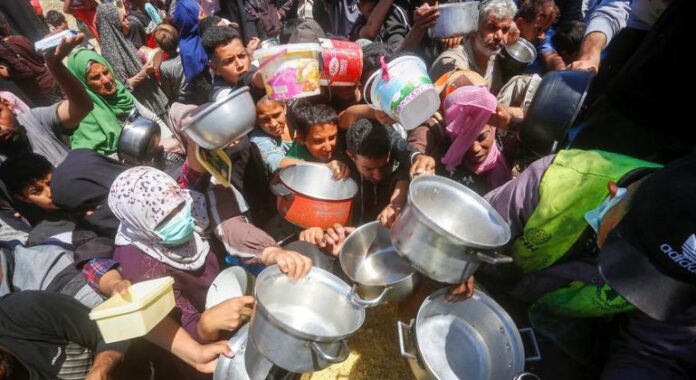
“Over the past six months, WFP scaled up assistance and we are now reaching nearly one million Sudanese in Khartoum with food and nutrition support,” said Laurent Bukera, WFP Country Director in Sudan. “This momentum must continue; several areas in the south are at risk of famine.”

In an update from Port Sudan, Mr. Bukera reported that a mission to Khartoum had found many neighbourhoods abandoned, heavily damaged and akin to a “ghost city”.

Pressure on overstretched resources will only intensify, he insisted.

Fragile frontline communities

And as conflict still rages between the Sudanese Armed Forces and the paramilitary Rapid Support Forces, sparked by a breakdown in transition to civilian rule in 2023, the veteran aid worker also explained that communities on the frontlines were at “breaking point” and unable to support displaced families any longer.

Despite many generous contributions to the UN agency’s work in Sudan, it faces a $500 million shortfall to support emergency food and cash assistance for the coming six months.

The international community must act now by stepping up funding to stop famine in the hardest hit area, and to invest in Sudan’s recovery,” Mr. Bukera insisted.” We must also demand respect for the safety and the protection of the Sudanese people and aid workers.”

No food, water

More than two years of fighting have smashed infrastructure and left communities without basic services, such as clean water.

This – and weeks of heavy rains – have contributed to a deadly cholera outbreak and reports of corpses rotting in the Nile in Omdurman, one of the capital’s three cities.

In an update last week, the UN aid coordination office, OCHA, said that war-related displacement and the spread of cholera have continued to add to needs across Sudan.

“We are deeply concerned and meeting the basic needs, especially food, will be critical and is urgent,” said WFP’s Mr. Bukera. “Urgent action is needed to restore basic services and accelerate recovery through coordinated efforts with local authorities, national NGOs, UN agencies and humanitarian partners.”

This vital work has been prevented by a lack of international support, forcing WFP to reduce the amount and range of relief it can distribute.

“Funding shortfalls are already disrupting some of the assistance we are providing in Khartoum, Blue Nile, Al Jazeera and Sennar states,” the WFP senior official continued. “Our rations and the oil and the pulses in the food basket had to be removed due to lack of resources.”

Rations cuts

In Khartoum, lifesaving nutritional supplements for young children and pregnant and nursing mothers are already “out of reach” because of a lack of resources, he said.

Despite the many challenges, the UN agency now reaches four million people a month across Sudan. This is nearly four times more than at the start of 2024 as access has expanded, including in previously unreachable areas like Khartoum.

Communities are also supported in the longer-term via cash assistance to support local markets and support for bakeries and small businesses planning to reopen.

We have rapidly scaled up our operation to meet increasing needs,” Mr. Bukera said. “We are aiming to reach seven people on a monthly basis, prioritizing those facing famine or other areas at extreme risk”, such as Darfur, Kordofan and Al Jazeera.

Source link

New EuroHPC call to strengthen Europe’s leadership in HPC Applications

0
New EuroHPC call to strengthen Europe’s leadership in HPC Applications

While European HPC user and developer communities are world leaders in the use and development of HPC application across several domains, major advances in HPC hardware, system architecture and complex use cases, including data and AI driven applications, are still underway. To address these emerging challenges and opportunities, the call HORIZON-JU-EUROHPC-2026-COE-LH-01 aims to support the creation of Centres of Excellence, as well as the development of high impact and competitive advanced software tools designed to run efficiently on Europe’s most powerful supercomputers. 

This initiative aims to tackle complex scientific, industrial, and societal challenges in fields such as climate modelling, health research, energy, and AI.  

The call also supports collaboration, training, and innovation across European research and industry. By investing in the development of scalable high-performance computing applications, this call will contribute to Europe’s digital autonomy, boosting European leadership and competitiveness and establishing an effective innovation HPC value chain in Europe. 

The new CoEs and Lighthouse Codes resulting from this call will work in close collaboration with other initiatives such as the AI Factories, the EuroHPC Training Academy, and national HPC competence centres for HPC. 

The call covers three targeted topics: 

Community Centres of Excellence (HORIZON-JU-EUROHPC-2026-COE-LH-01-01) 

By establishing community Centres of Excellence (CoE), this topic aims to advance the use of highly scalable and optimised application codes for exascale and post-exascale supercomputers, with a strong focus on AI integration. Driven by user needs and addressing the evolving needs of scientific, industrial, and societal user communities, the initiative will support impactful applications that drive research and innovation.  

In addition to technical development, the call focuses on training, capacity building, and collaboration to maximise impact and ensure that European user communities are fully enabled to harness the power of HPC and AI. As multidisciplinary and inclusive initiative, Community CoEs will also address the needs of communities in  EU widening countries and countries currently developing and advancing their HPC infrastructure and ecosystem. 

Transversal Centres of Excellence (HORIZON-JU-EUROHPC-2026-COE-LH-01-02) 

This topic aims to establish Transversal Centres of Excellence (CoEs) that will serve as specialised technical hubs supporting HPC application developers across Europe.  

These centres will provide expertise, support services and guidance in key technical areas, promote interoperability, best practices in software development and coordinate knowledge transfer.  

By fostering collaboration and offering targeted training, the initiative will help build the skills needed to enable the development of next generation of HPC applications and ensure long-term impact across scientific and industrial domains. 

Lighthouse Codes for HPC Applications (HORIZON-JU-EUROHPC-2026-COE-LH-01-03) 

Lighthouse Codes will play a crucial role in advancing globally competitive HPC application software and reinforcing Europe’s leadership in HPC applications.  

This topic aims to establish world leading HPC application software  by supporting HPC experts, researchers, industrial developer teams in their efforts to implement and advance HPC Lighthouse Codes with high impact and large user communities.   

Lighthouse Codes will address European strategic priorities in science and industry, and contribute to breakthrough research and innovation in scientific, industrial, and societal applications. Overall, the development of Lighthouse Codes will strengthen Europe’s technological autonomy and innovation capacity in the exascale and AI era. 

More details   

The call is open for submission until 20 January 2026, 17:00 (CET).   

The call is funded by Horizon Europe, the European Union (EU) Funding programme for research and innovation. With a total EU budget contribution of up to EUR 60 million.  

Read more details and get access to relevant documents concerning the call.   

Background 

The Europen High Performance Computing Joint Undertaking (EuroHPC JU) is a legal and funding entity created in 2018 to enable the European Union and EuroHPC participating countries to coordinate their efforts and pool their resources with the objective of making Europe a world leader in supercomputing.       

In order to equip Europe with a world-leading supercomputing infrastructure, the EuroHPC JU has already procured ten supercomputers, located across Europe. Through the EuroHPC Access Calls, European scientists and users from the public sector and industry can benefit from these EuroHPC supercomputers, which rank among the world’s most powerful.      

Currently, the EuroHPC JU is also overseeing the implementation of 13 AI factories across Europe that offer free, customised support to SMEs and startups. These comprehensive open AI ecosystems centred around EuroHPC supercomputing facilities are supporting the growth of a highly competitive and innovative AI ecosystem in Europe.  

The EuroHPC JU is also deploying a European Quantum Computing infrastructure, integrating diverse European quantum computing technologies with supercomputers. As part of this effort, the JU has recently procured six quantum computers, currently being deployed in Poland, Czechia, France, Germany, Italy and Spain, with additional systems coming soon to Luxembourg, and the Netherlands.   

In parallel, the EuroHPC JU is investing in research and innovation projects to develop a full European supercomputing supply chain: from processors and software to applications to be run on these supercomputers and know-how to develop strong European HPC expertise.    


Source link

EU deal struck on detergents to make them less harmful and safer to use

0
EU deal struck on detergents to make them less harmful and safer to use

The Council and European Parliament have struck a deal on detergents that will make them safer to use and cause less harm to the environment. It will improve their biodegradability, enable the reduction of harmful substances and improve information on the label, without extra red tape.

Source link

A giant bankruptcy "dry run" to assess Europe's banking crisis management

0
A giant bankruptcy "dry run" to assess Europe's banking crisis management

The Single Resolution Board (SRB) will simulate the collapse of a major bank in the coming days to test crisis management systems. This exercise, conducted with American and British partners, aims to strengthen authorities’ responsiveness.

Source link

Central Africa at a crossroads amid rising tensions and instability

0
Central Africa at a crossroads amid rising tensions and instability

With violence worsening in both the Lake Chad Basin and the Great Lakes, the Security Council met on Monday to examine the threats confronting the wider region.

Central Africa remains rich in potential, but the challenges are still significant,” said Abdou Abarry, Head of the UN Regional Office for Central Africa (UNOCA).

Some progress

While countries such as Chad and Gabon have made progress in terms of political development, newly elected authorities must capitalise on this momentum to implement key democratic reforms, said Mr Abarry.

In Chad and Gabon, recent elections and reforms have promoted greater participation of women in the democratic process.

Today, women represent 34 per cent of Chad’s National Assembly, while Gabon’s new electoral code mandates that women must account for at least 30 per cent of electoral lists provided to voters.

Political challenges

In recent months, online disinformation and hate speech have been on the rise in Cameroon, said Mr Abarry. UNOCA reported that 65 per cent of political content shared on social media between January and April this year was either false or previously manipulated.

At the same time, Cameroon has seen a surge in intercommunal violence in the southern and central regions of the country. This trend underscores the importance of UNOCA’s work in supporting development strategies aimed at preventing conflict related to electoral processes.

Insecurity hotbeds

Two major centres of insecurity persist, with violence escalating in both the Lake Chad Basin and the Great Lakes region.

Around Lake Chad, groups affiliated with Boko Haram extremists and other armed insurgencies have demonstrated “their resilience and their ability to adapt and respond to the coordinated operations of the defence and security forces” of the region, said Mr Abarry.

Notably, on the night of 24 March, drones carrying explosives killed at least 19 Cameroonian soldiers in southern Nigeria.

Meanwhile, growing tensions between the Democratic Republic of the Congo (DRC) and Rwanda have led to large-scale displacement in eastern DRC, where the humanitarian crisis is further compounded by conflict in neighbouring Sudan.

As budget cuts exacerbate ongoing humanitarian crises in the region, there is growing concern that “the inaction of the international community could lead to a worsening of the humanitarian situation,” the head of UNOCA told ambassadors. 

Source link