Friday, May 1, 2026
Home Blog Page 392

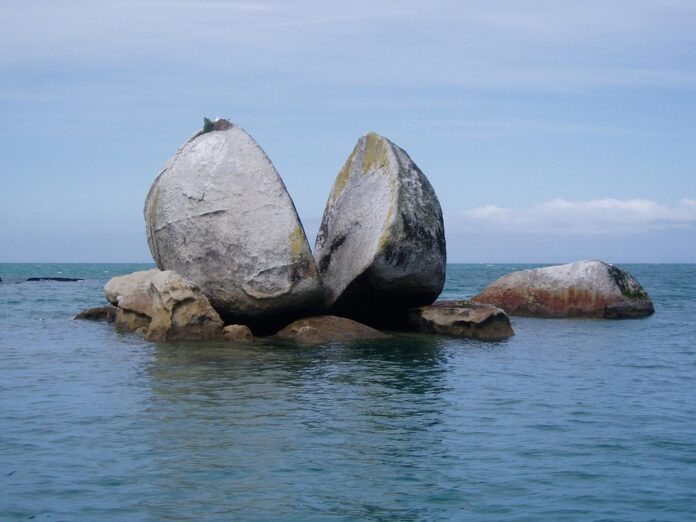
Déclaration du président António Costa lors de l'événement parallèle du Pacte pour l’Océan de la Conférence des Nations unies sur l’Océan de 2025

0
Déclaration du président António Costa lors de l'événement parallèle du Pacte pour l’Océan de la Conférence des Nations unies sur l’Océan de 2025

Le président du Conseil européen, António Costa, s’est exprimé lors de l’événement parallèle du Pacte pour l’Océan, qui a eu lieu pendant la Conférence des Nations unies sur l’Océan de 2025 à Nice (France).

Source link

Déclaration du président António Costa lors de l'événement parallèle du Pacte pour l’Océan de la Conférence des Nations unies sur l’Océan de 2025

0
Déclaration du président António Costa lors de l'événement parallèle du Pacte pour l’Océan de la Conférence des Nations unies sur l’Océan de 2025

Le président du Conseil européen, António Costa, s’est exprimé lors de l’événement parallèle du Pacte pour l’Océan, qui a eu lieu pendant la Conférence des Nations unies sur l’Océan de 2025 à Nice (France). Source link

Source link

Gaza: Search for food puts lives on the line

0
Gaza: Search for food puts lives on the line

Since the end of May, aid distribution in Gaza has been carried out by a mechanism backed by Israel and the United States bypassing UN agencies and their established partners, which has been plagued by deadly incidents and chaos.

On Monday, UN partner the International Committee of the Red Cross (ICRC) reported that 29 casualties arrived at its field hospital in west Rafah that morning, eight of whom had died. 

Almost all had explosive trauma wounds, with two others suffering gunshot wounds. 

Forced to choose

“The UN reiterates that civilians must always be protected,” said Deputy Spokesperson Farhan Haq, speaking from Headquarters in New York.

No person, anywhere, should be forced to choose between risking one’s life and feeding one’s family.”  

Fuelling aid efforts

Meanwhile, fuel stocks in Gaza are dangerously low, putting further strain on critical services and humanitarian operations. 

Mr. Haq said that some 260,000 litres of fuel were looted in northern Gaza over the weekend.

Prior to this, the UN had repeatedly tried to reach these stocks to retrieve them, but the Israeli authorities denied these attempts – with 14 denials since 15 May. 

“Our attempts to reach fuel supplies in Rafah, in the south of Gaza, also continue to be denied,” he added.

“The UN warns that unless a solution is found in the coming days, the entire aid operation could come to a standstill.”

© UNRWA/Louise Wateridge

Palestinians who have taken refuge in a UNRWA school in Deir al-Balah camp in central Gaza are struggling to survive as they lack access to basic humanitarian needs in the central Gaza city of Deir al-Balah.

‘Desperate, starving people’

Mr. Haq also updated on efforts to bring desperately needed humanitarian assistance into the Gaza Strip, where the entire population, more than two million people, faces famine conditions.

On Monday, the UN led a mission to deliver supplies that entered the enclave via the Kerem Shalom border crossing to Gaza City, which was still ongoing. 

Since Israel allowed limited amounts of aid to enter on 19 May, the UN and partners have only been able to collect about 4,600 metric tonnes of wheat flour from Kerem Shalom.

“Most of it was taken by desperate, starving people before the supplies reached their destinations. In some cases, the supplies were looted by armed gangs,” he said.

Resume aid flow now

Mr. Haq emphasized that as the occupying power, Israel bears responsibility when it comes to public order and safety in Gaza. 

“That should include letting in far more essential supplies, through multiple crossings and routes, to meet humanitarian needs and help reduce looting,” he said.

UN partners working on food security estimate that between 8,000 and 10,000 metric tonnes of wheat flour is required to reach all families across Gaza with at least a single bag.

He stressed that “the sustained and unrestricted flow of aid into Gaza must resume as soon as possible.” 

Dangerous routes, driver shortages and delays

He said no missions to collect supplies from Kerem Shalom took place at the weekend as Israel informed that the crossing would remain closed on Friday and Saturday.

Humanitarians also continue to face major impediments that affect their ability to conduct these operations, including unacceptably dangerous routes, a severe shortage of vetted drivers, and delays.

West Bank update

Mr. Haq also touched on the situation in the occupied West Bank.

He said operations by the Israeli forces in the north have continued over the past week, destroying roads and disrupting Palestinians’ access to essential services. 

The UN and partners continue to respond, including by providing water, sanitation and hygiene assistance to tens of thousands of displaced Palestinians.  

Source link

Public development banks launch Clean Oceans Initiative 2.0 after original initiative delivered on its target ahead of time

0
Public development banks launch Clean Oceans Initiative 2.0 after original initiative delivered on its target ahead of time

Unsplash
  • Public development banks launch Clean Oceans Initiative 2.0 at the UN Ocean Conference, setting a new €3 billion financing target for 2026–2030 to tackle ocean plastic pollution.
  • The original Clean Oceans Initiative reached its €4 billion financing target for plastic pollution reduction projects seven months ahead of schedule.
  • COI 2.0 expands the partnership’s focus beyond pollution management to include waste prevention and circular economy solutions and welcomes new regional partner ADB to strengthen efforts in Asia.

Building on a shared commitment to marine sustainability, six public development banks today launched the Clean Oceans Initiative 2.0 (COI 2.0), a renewed and expanded partnership dedicated to drastically reducing plastic pollution in the world’s oceans. At the United Nations Ocean Conference in the city of Nice, Agence Française de Développement (AFD), European Investment Bank (EIB), Kreditanstalt für Wiederaufbau (KfW), Cassa Depositi e Prestiti (CDP), and European Bank for Reconstruction and Development (EBRD) together with the Asian Development Bank (ADB), which joins the initiative as a new member, set a financing target of €3 billion for the years 2026 to 2030.

Launched in 2018 and extended in 2022, the Clean Oceans Initiative is the largest multilateral effort dedicated to funding projects that reduce plastic pollution at sea. In May this year – seven months ahead of schedule – the initiative met its target of €4 billion in long-term financing for public and private sector projects aimed at reducing discharge of plastics, micro-plastics and other litter into the oceans through improved management of solid waste, wastewater and stormwater. Project examples include improved wastewater treatment in Sri Lanka, China, Egypt, and South Africa; solid waste management in Togo and Senegal; and flood protection in Benin, Morocco, and Ecuador.  

According to the United Nations, if current trends continue the amount of plastic waste entering aquatic ecosystems could triple—from around 11 million tonnes in 2021 to 23–37 million tonnes per year by 2040. The new phase of the Clean Oceans Initiative is the international financial community’s response to these challenges. COI 2.0 will maintain its focus on reducing marine litter, while increasing its impact by placing a stronger emphasis on waste prevention and supporting circular economy solutions, including projects that develop alternatives to plastic.

Some of the highest amounts of plastic enter the ocean in Asia, making it essential to join forces with local partners. The Asian Development Bank brings crucial regional expertise to the initiative and will be able to leverage projects in its area of action. Going forward, one of the objectives is to measure the impact of the enhanced initiative using scientifically robust and easy-to-apply indicators, especially in the areas of plastic pollution prevention.

“Delivering on our initial target ahead of schedule demonstrates the power of partnership and collective action,” said EIB Vice-President Ambroise Fayolle. “Through the Clean Oceans Initiative 2.0, we are expanding our collaboration with local partners to deliver innovative solutions where they are needed most. The EIB is committed to supporting projects that make a real and measurable difference, setting new benchmarks for impact as we continue our mission to keep plastics out of the world’s oceans.”

Background information

Oceans are vital to life on Earth, providing food, income, climate regulation, and natural resources for billions of people. They absorb about 30% of global carbon dioxide emissions, helping to buffer climate change.

Plastic pollution threatens marine ecosystems and the livelihoods of millions who depend on healthy oceans. Most ocean plastics originate from mismanaged waste on land, often carried by rivers due to inadequate waste collection and water treatment, especially in rapidly growing cities. Microplastics alone account for an estimated 1.5 million tonnes entering the oceans each year.

The Clean Oceans Initiative 2.0 focuses on projects in coastal areas that address plastic pollution entering the ocean, particularly in Asia, Africa, and Latin America, where inadequate waste and water management in major river systems remains a critical challenge.

EIB 

The European Investment Bank (ElB) is the long-term lending institution of the European Union, owned by its Member States. Built around eight core priorities, we finance investments that contribute to EU policy objectives by bolstering climate action and the environment, digitalisation and technological innovation, security and defence, cohesion, agriculture and bioeconomy, social infrastructure, high-impact investments outside the European Union, and the capital markets union.  

The EIB Group, which also includes the European Investment Fund (EIF), signed nearly €89 billion in new financing for over 900 high-impact projects in 2024, boosting Europe’s competitiveness and security.  

All projects financed by the EIB Group are in line with the Paris Climate Agreement, as pledged in our Climate Bank Roadmap. Almost 60% of the EIB Group’s annual financing supports projects directly contributing to climate change mitigation, adaptation, and a healthier environment.  

High-quality, up-to-date photos of our headquarters for media use are available here.

Source link

EIT and EPO Present Joint Actions Driving European Innovation

0
EIT and EPO Present Joint Actions Driving European Innovation

The European Institute of Innovation and Technology (EIT) and the European Patent Office (EPO) have shared a factsheet summarising the results of their ongoing cooperation on learning and knowledge-sharing initiatives. The 2024 joint work plan has successfully advanced this collaboration, building on the Memorandum of Understanding signed in 2022. 

By equipping inventors with the knowledge and tools they need to bring their ideas to market, the EIT and EPO actively contribute to the objectives set out in the European Union’s Competitiveness Compass. Their joint initiatives offer practical support for startups, SMEs and scale-up strategies, while also improving access to venture capital and enhancing collaboration between universities, research organisations and industry. Together, these efforts reinforce Europe’s competitiveness and help foster a more innovation-driven economy. 

Reflecting on 2024 achievements

In 2024, the EPO’s European Patent Academy delivered a range of seminars, lectures, self-paced courses and learning support materials. The Modular IP Education Framework (MIPEF) was successfully integrated into the EIT Manufacturing Master School, sparking interest from other EIT Knowledge and Innovation Communities (KICs).  

The EPO also presented the work of its Observatory to KIC managers, highlighting recent technology trends, economic studies and key tools such as the Deep Tech Finder. This tool was recently enhanced with fully searchable content and new entries, including spin-outs, universities and investment-ready startups with patent applications at the EPO. These updates were shared at the launch event of the study on Patents and Innovation in European Universities, where the EIT’s Higher Education Institutions (HEI) Initiative was represented by a guest speaker. 

Deepening Strategic Collaboration

The EIT and EPO continue to work together to support entrepreneurs in turning ideas into market-ready solutions. As part of these efforts, coordinators from the EIT Community hubs of the Regional Innovation Scheme and the PATLIB centres have identified countries for potential pilot initiatives in 2025. Further collaboration with the Observatory will include identifying shared areas of interest, featuring KIC experts at EPO events, and exploring the inclusion of EIT deep tech startups in the Deep Tech Finder.  

Expanding Training and Knowledge Resources 

Both organisations will also cooperate on developing and disseminating studies to enrich the EPO’s digital library. Training activities in 2025 will cover patent valorisation and commercialisation, IP strategy, the Unitary Patent and the EPO’s fee reduction schemes for micro-entities.

Read the factsheet

Source link

EUDA welcomes Belgian National Drug Commissioner

0
Déclaration du président António Costa lors de l'événement parallèle du Pacte pour l’Océan de la Conférence des Nations unies sur l’Océan de 2025

This week, the EUDA hosted the Belgian National Drug Commissioner, Ine Van Wymersch, during her two-day visit to Lisbon. Ms Van Wymersch was accompanied by Deputy Commissioner Fabien Gerard and other members of the Belgian National Drug Commission. During the visit, on 3 June, the delegation received an in-depth overview of the agency’s work. EUDA […]

Source link

EUDA welcomes Belgian National Drug Commissioner

0
Déclaration du président António Costa lors de l'événement parallèle du Pacte pour l’Océan de la Conférence des Nations unies sur l’Océan de 2025

This week, the EUDA hosted the Belgian National Drug Commissioner, Ine Van Wymersch, during her two-day visit to Lisbon. Ms Van Wymersch was accompanied by Deputy Commissioner Fabien Gerard and other members of the Belgian National Drug Commission.

During the visit, on 3 June, the delegation received an in-depth overview of the agency’s work. EUDA Executive Director Alexis Goosdeel presented the agency’s new mandate and its current state of implementation. EUDA experts followed, with briefings on key areas of the agency’s activity, including drug markets, crime and precursors, prison-related…

Source link

Gaza: Women and girls struggle to manage their periods amid crisis

0
Gaza: Women and girls struggle to manage their periods amid crisis

Globally, 1.8 billion people menstruate, yet for many, especially in crises zones, it’s far more than an inconvenience.

In war-torn Gaza, around 700,000 women and girls of menstruating age, including thousands experiencing their first period, face this challenge under relentless bombardment and in cramped, unsanitary conditions with little privacy.

A human rights issue

The United Nations’ sexual and reproductive health agency, UNFPAwarns that the lack of access to menstrual products, clean water, and soap makes it nearly impossible for women and girls to manage their periods with dignity.

Since March, Israel’s aid blockade has depleted hygiene supplies in Gaza, including sanitary pads. The authorities temporarily lifted the ban last month and UN agencies were able to bring in limited amounts of items such as flour and medicine.

Since the end of May, aid is now being distributed through a system backed by the United States and Israel, bypassing the UN and other humanitarian agencies, but it falls far short of what is needed.

Nearly 90 per cent of the territory’s water and sanitation infrastructure has been damaged or destroyed, and fuel for water pumping is no longer available.

Women stand in a damaged displacement settlement in Khan Younis, Gaza.

“I sat in silence crying”

Speaking to UNFPA, a young girl recalled getting her period while sheltering in a crowded displacement camp.

“I only had one pad, so I wrapped it in toilet paper to make it last. I couldn’t wash, and the pain was horrible. I sat in silence crying until the end of the day.”

As nine in 10 households face extreme water shortages, the lack of clean water, soap, and privacy has turned menstruation into a source of anxiety, isolation, and shame. “Sometimes I need pads and soap more than I need food,” said Aisha*, a displaced girl.

Desperate measures, dangerous consequences

With less than a quarter of the over 10 million sanitary pads needed each month available, women and girls are forced to improvise. Many use torn clothes, sponges, or old rags, often without proper cleaning.

“I tore my only shirt into pieces so my daughters could use them instead of pads,” shared a father of four displaced from Jabalia.

These makeshift solutions are not only painful and undignified, but they can also cause infections and long-term reproductive health issues. With the health system on the brink of collapse, thousands of women may go untreated.

The psychological burden is equally severe. “Every time my period comes, I wish I weren’t a girl,” said one of the girls.

Stripping away dignity

Speaking from a health care perspective, but also as a woman, a doctor in Gaza described treating women coping with menstruation, pregnancy, and childbirth under horrifying conditions.

“These should be natural experiences, not sources of distress and pain. I see strength in women’s eyes, but I also see deep pain and the stripping away of dignity,” she said.

A woman and child walk through the rubble of Gaza.

A woman and child walk through the rubble of Gaza.

In emergencies, women and girls are among the most vulnerable. According to UN agencies, they face heightened risks due to displacement and the breakdown of normal protection structures and support. They also face increased care-related tasks such as providing food and water.

“Food keeps us alive, but pads, soap, and privacy let us live with dignity,” said Maysa*, a displaced woman in Khan Younis. “When we receive hygiene kits, it feels like someone finally sees us.”

How UNFPA is responding

As a frontline responder, UNFPA is working to ensure menstrual health is integrated across humanitarian efforts in Gaza. Since October 2023, the agency has provided more than 300,000 women and girls with two-month supplies of disposable menstrual pads and distributed postpartum kits to over 12,000 new mothers.

Yet, three months into a total aid blockade, stocks were nearly exhausted. With border crossings closed, hygiene kits are no longer reaching those in need. The recent entry of some aid distributed by the Gaza Humanitarian Foundation included food, flour, medicine and nutrition support according to media reports.

The UN continues to call for urgent support for women and girls caught in some of the world’s most neglected crises.

*Names have been changed for protection.

Source link

eu-LISA Industry Roundtable June 2025 – Registration Now Closed

0
eu-LISA Industry Roundtable June 2025 – Registration Now Closed


Building Better Government Software at Scale – Agile, DevSecOps and Software Factories

The next edition of the Industry Roundtable, titled ‘Building Better Government Software at Scale – Agile, DevSecOps and Software Factories’, will take place on 11-12 June 2025 in Warsaw, Poland, under the patronage of the Polish Presidency of the Council of the EU. The event will be organised in a hybrid format allowing for in-person and online participation. This iteration will focus on the benefits that new technology trends such as Software Factories – built upon the principles of Agile approaches and DevSecOps methodologies – can bring to the EU public sector organisations (both at MS and EU levels). The event will also feature presentations and discussions on new technological solutions that can help to achieve those benefits while addressing some of the pending challenges.

EU institutions are increasingly relying on digital solutions, which are often complex and require significant investment in IT and software development. To meet the fast pace of delivery, public sector authorities are adopting cutting-edge methodologies like Agile, DevSecOps, and Software Factories, as well as technologies such as cloud computing, automation, and AI.

Registrations for the eu-LISA Industry Roundtable are now closed.

Together, Agile, DevSecOps, and Software Factories, combined as well with other innovative IT practices such as cloud computing or AI-based tools, empower public institutions to build secure, efficient, and citizen-focused digital ecosystems while fostering trust and resilience across the Union.

 
About the Industry Roundtable

The eu-LISA Industry Roundtable is a collaborative platform that convenes representatives from the industry, Member States’ authorities, and EU institutions to facilitate an open dialogue on the latest technological advancements and innovations in the migration and home affairs domain. This forum enables eu-LISA stakeholders to share knowledge, exchange best practices, and discuss the potential applications and implications of emerging technologies, such as artificial intelligence, biometrics, and data analytics, in supporting the Agency’s mission to manage EU’s large-scale IT systems for migration, asylum, and border management. By fostering a spirit of cooperation and information-sharing, the eu-LISA Industry Roundtable helps to identify opportunities, address challenges, and shape the future of technology-enabled solutions in the field of migration and home affairs.

Source link

Joint Statement by EU High Representative Kaja Kallas and Chile’s Minister of Foreign Affairs Alberto van Klaveren on the provisional application of the EU-Chile Advanced Framework Agreement

0
Déclaration du président António Costa lors de l'événement parallèle du Pacte pour l’Océan de la Conférence des Nations unies sur l’Océan de 2025

Joint Statement by EU High Representative Kaja Kallas and Chile’s Minister of Foreign Affairs Alberto van Klaveren on the provisional application of the EU-Chile Advanced Framework Agreement

Source link