Sunday, September 27, 2026
Home Blog Page 397

Sudan: UN sounds the alarm as health and food crises worsen across the country

0
Sudan: UN sounds the alarm as health and food crises worsen across the country

As conflict between rival militaries rages on, millions of people keep on being displaced.

While the UN and its partners continue to provide assistance to newly displaced families in North Darfur, “nearly 60 per cent of displaced families still lack adequate shelter support,” said Deputy Spokesman for the Secretary-General, Farhan Haq, at a daily press briefing on Monday.

In Abu Shouk camp in the state capital, El Fasher, displaced families are facing acute shortages of food and medicine, with local sources reporting four hunger-related deaths last week, as food insecurity continues to worsen across the entire country.

In North Darfur state notably, low cereal supply, poor harvests and a prolonged food deficit have severely affected food availability.

Health crisis

Meanwhile, cholera cases continue to rise in Tawila. More than 1,500 suspected and confirmed serious infections have been reported since June, with over 500 people currently receiving treatment.

While local authorities have introduced emergency measures, including market closures and a ban on public gatherings, humanitarian organizations urgently require $120 million to scale up life-saving support in Tawila over the next three months.

“This funding is essential to contain the outbreak and sustain critical services,” according to OCHA.

Meanwhile, in Port Sudan, the main entry point for humanitarian personnel and supplies, a sharp increase in heatstroke cases linked to extreme temperature and prolonged power outages is raising concerns, as one death was recorded over the past two days.

Food crisis

In El Fasher, food prices continue to rise to alarming levels.  The Integrated Food Security Phase Classification (IPC) has  already identified famine conditions in multiple areas of North Darfur and the eastern Nuba Mountains, with more locations at risk.

In May, the average cost of the local food basket in El Fasher was more than six times the national average, as the city recorded the highest prices for nearly all essential items among assessed localities.

An IPC alert earlier this month noted that Sudan’s food security and nutrition situation is set to further deteriorate over the lean season from July to October, notably in areas of active conflict with limited access and experiencing high levels of displacement. 

Source link

Topical developments in bank resolution – keynote speech to the World Bank/FinSAC Annual Conference 2025 by Karen Braun-Munzinger

0
Topical developments in bank resolution – keynote speech to the World Bank/FinSAC Annual Conference 2025 by Karen Braun-Munzinger

Karen Braun-Munzinger speech on ‘Topical developments in bank resolution’ at the World Bank/FinSAC Annual Conference 2025

Source link

Topical developments in bank resolution – keynote speech to the World Bank/FinSAC Annual Conference 2025 by Karen Braun-Munzinger

0
Topical developments in bank resolution – keynote speech to the World Bank/FinSAC Annual Conference 2025 by Karen Braun-Munzinger

Karen Braun-Munzinger speech on ‘Topical developments in bank resolution’ at the World Bank/FinSAC Annual Conference 2025 Source link

Source link

In Gaza, mounting evidence of famine and widespread starvation

0
In Gaza, mounting evidence of famine and widespread starvation

According to the Integrated Food Security Phase Classification (IPC) platform, two out of three famine thresholds have been reached in Gaza: plummeting food consumption and acute malnutrition.

There is mounting evidence that “widespread starvation, malnutrition and disease” are driving a rise in hunger-related deaths, which is the third famine indicator.

“It’s clearly a disaster unfolding in front of our eyes, in front of our television screens,” said Ross Smith, UN World Food Programme (WFP) Director of Emergencies. “This is not a warning, this is a call to action. This is unlike anything we have seen in this century,” he told journalists in Geneva.

No food – for days

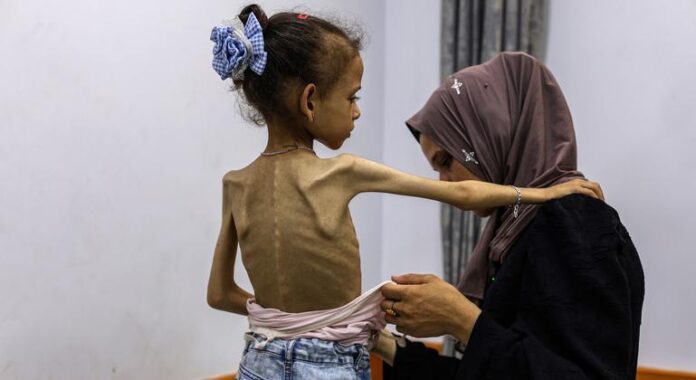
The context to the alert is stark: one in three people is now going without food for days at a time, the IPC said. Hospitals are also overwhelmed and have treated more than 20,000 children for acute malnutrition since April. At least 16 children under five have died from hunger-related causes since mid-July.

The alert follows a May 2025 IPC analysis that projected catastrophic levels of food insecurity for the entire population by September. According to the platform’s experts, at least half a million people are expected to be in IPC Phase 5 – catastrophe – which is marked by starvation, destitution, and death.

The crisis is driven by nearly two years of conflict sparked by Hamas-led terror attacks in Israel in October 2023 that left some 1,250 dead and around 450 people taken hostage Heavy fighting has killed more than 59,500 people according to the enclave’s health authorities and destroyed 70 per cent of Gaza’s infrastructure. Echoing aid agencies’ longstanding concerns for non-combatants, the IPC assessment confirmed that displacement is rampant, with safe areas reduced to less than 12 per cent of the entire territory.

Ceasefire now

Gaza has a population of some 2.1 million people and 90 per cent have been displaced, many of them multiple times over. More than 762,500 displacements have been recorded since the end of the ceasefire on 18 March.

Meanwhile, humanitarian access remains severely restricted, with aid convoys frequently obstructed or looted. On Sunday, Israel announced that it would begin daily humanitarian pauses in Gaza. More than 100 trucks of aid reportedly entered on Sunday, but the UN continues to uphold the need to flood Gaza with food, fuel and medicine.

In line with international calls for an end to the war, the IPC platform also calls for an unconditional and immediate ceasefire, unimpeded humanitarian access and the restoration of essential services. Widespread death is imminent without urgent intervention, the report warns.

The food security experts also appealed for the protection of civilians, humanitarian personnel and critical infrastructure including health, water, sanitation, roads and telecommunications networks.

Key Points

Famine is confirmed if all three core thresholds are breached: plummeting food consumption, acute malnutrition and starvation-related deaths. It is extremely difficult to gather robust data on acute malnutrition and related deaths because health systems are “collapsing”, UN agencies WFP and the UN Children’s Fund explained in a joint alert.

Children at risk: More than 20,000 treated for acute malnutrition; 16 deaths reported.

Infrastructure collapse: 70 per cent of Gaza’s infrastructure destroyed.

Displacement crisis: Safe zones now cover less than 12 per cent of the Strip.

For more details on the IPC and its work tracking hunger and famine conditions follow this link:

https://news.un.org/en/story/2024/03/1147661

Source link

In Gaza, mounting evidence of famine and widespread starvation

0
In Gaza, mounting evidence of famine and widespread starvation

According to the Integrated Food Security Phase Classification (IPC) platform, two out of three famine thresholds for food consumption have been breached across most of Gaza, with acute malnutrition levels in Gaza City confirming aid agencies’ repeated warnings.

“Mounting evidence shows that widespread starvation, malnutrition, and disease are driving a rise in hunger-related deaths,” the IPC assessment maintained.

“It’s clearly a disaster unfolding in front of our eyes, in front of our television screens,” said Ross Smith, UN World Food Programme (WFP) Director of Emergencies. “This is not a warning, this is a call to action. This is unlike anything we have seen in this century,” he told journalists in Geneva.

No food – for days

The context to the alert is stark: one in three people is now going without food for days at a time, the IPC said. Hospitals are also overwhelmed and have treated more than 20,000 children for acute malnutrition since April. At least 16 children under five have died from hunger-related causes since mid-July.

The alert follows a May 2025 IPC analysis that projected catastrophic levels of food insecurity for the entire population by September. According to the platform’s experts, at least half a million people are expected to be in IPC Phase 5 – catastrophe – which is marked by starvation, destitution, and death.

The crisis is driven by nearly two years of conflict sparked by Hamas-led terror attacks in Israel in October 2023 that left some 1,250 dead and around 450 people taken hostage Heavy fighting has killed more than 59,500 people according to the enclave’s health authorities and destroyed 70 per cent of Gaza’s infrastructure. Echoing aid agencies’ longstanding concerns for non-combatants, the IPC assessment confirmed that displacement is rampant, with safe areas reduced to less than 12 per cent of the entire territory.

Ceasefire now

Gaza has a population of some 2.1 million people and 90 per cent have been displaced, many of them multiple times over. More than 762,500 displacements have been recorded since the end of the ceasefire on 18 March.

Meanwhile, humanitarian access remains severely restricted, with aid convoys frequently obstructed or looted. On Sunday, Israel announced that it would begin daily humanitarian pauses in Gaza. More than 100 trucks of aid reportedly entered on Sunday, but the UN continues to uphold the need to flood Gaza with food, fuel and medicine.

In line with international calls for an end to the war, the IPC platform also calls for an unconditional and immediate ceasefire, unimpeded humanitarian access and the restoration of essential services. Widespread death is imminent without urgent intervention, the report warns.

The food security experts also appealed for the protection of civilians, humanitarian personnel and critical infrastructure including health, water, sanitation, roads and telecommunications networks.

Key Points

Famine is confirmed if all three core thresholds are breached: plummeting food consumption, acute malnutrition and starvation-related deaths. It is extremely difficult to gather robust data on acute malnutrition and related deaths because health systems are “collapsing”, UN agencies WFP and the UN Children’s Fund explained in a joint alert.

Children at risk: More than 20,000 treated for acute malnutrition; 16 deaths reported.

Infrastructure collapse: 70 per cent of Gaza’s infrastructure destroyed.

Displacement crisis: Safe zones now cover less than 12 per cent of the Strip.

For more details on the IPC and its work tracking hunger and famine conditions follow this link:

https://news.un.org/en/story/2024/03/1147661


Source link

In Gaza, growing evidence of widespread famine and famine

0
In Gaza, growing evidence of widespread famine and famine

According to the integrated classification platform for the food security phase (IPC), two out of three Famine thresholds for food consumption have been raped in most of GazaWith acute malnutrition levels in the city of Gaza confirming the repeated warnings of the aid agencies.

“The growing evidence shows that famine, malnutrition and generalized diseases lead to an increase in death -related deaths,” said IPC assessment.

“It is clearly a disaster that takes place before our eyes, in front of our television screens”, ” said Ross Smith, UN World Food Program (Wfp) Emergency director. “It is not a warning, it is a call for action. This is different from everything we saw during this century “,” He told journalists in Geneva.

No food – for days

The alert’s context is Stark: one in three people are now without food for days at a time, said the IPC. Hospitals are also exceeded and have treated more than 20,000 children for acute malnutrition since April. At least 16 children under the age of five have died of hunger causes since mid-July.

The alert follows an IPC analysis in May 2025 which projects Catastrophic levels of food insecurity For the entire population by September. According to experts from the platform, at least half a million people should be in phase 5 of the IPC- disaster – which is marked by famine, destitution and death.

The crisis is trained by almost two years of conflict launched by terrorist attacks led by Hamas in Israel in October 2023 which left around 1,250 people dead and around 450 people taken hostage of heavy fighting killed more than 59,500 people according to the health authorities of the enclave and destroys 70% of the Gaza infrastructure. Echoing the long-standing concerns of assistance agencies for non-combatants, the evaluation of the IPC confirmed that the trip was widespread, with secure areas reduced to less than 12% of the whole territory.

Ceasefire now

Gaza has a population of around 2.1 million people and 90% have been moved, many of them repeatedly. More than 762,500 trips have been recorded since the end of the ceasefire on March 18.

Meanwhile, humanitarian access remains severely limited, help convoys are frequently obstructed or caught. On Sunday, Israel announced that it would start daily humanitarian breaks in Gaza. More than 100 aid trucks would have entered Sunday, but the UN continues to maintain the need to flood Gaza with food, fuel and medication.

In accordance with international calls at the end of the war, the IPC platform also provides for an unconditional and immediate ceasefire, without hindrance and the restoration of essential services. Generalized death is imminent without urgent intervention, warns the report.

Food security experts have also called for the protection of civilians, humanitarian staff and critical infrastructure, including health, water, sanitation, roads and telecommunications networks.

Key points

Confirmed famine: IPC thresholds raped for food consumption and malnutrition.

Children at risk: more than 20,000 treatises for acute malnutrition; 16 reported deaths.

Collaboration of infrastructure: 70% of the infrastructure of Gaza destroyed.

Travel crisis: Safe areas now cover less than 12% of the band.

For more details on the IPC and its hunger for monitoring work and the famine conditions follow this link:

https://news.un.org/en/story/2024/03/1147661

Originally published at Almouwatin.com

European Health Insurance Card: keeping you safe while travelling abroad

0
European Health Insurance Card: keeping you safe while travelling abroad


Have you ever injured yourself while surfing in France and needed stitches? Sprained your ankle while hiking the Alps? Needed to see a doctor because of your pre-existing diabetes while on holiday in Greece? Perhaps not, but in case something like this does happen while you’re abroad, the European Health Insurance Card (EHIC) has you covered. 

The EHIC allows you to receive necessary and urgent medical care abroad, including for chronic or existing illnesses, as well as pregnancy and childbirth. It’s not an alternative to travel insurance, and it does not cover any private healthcare costs or planned medical treatments. EHIC is valid in any EU country, Iceland, Liechtenstein, Norway, Switzerland, and the United Kingdom. 

By presenting the card, you can obtain healthcare services directly from a public or contracted provider under the same conditions and at the same cost as people insured in the country you are visiting. Each country’s healthcare system is different, and services that cost nothing at home might not be free in another country. You can claim reimbursement for the costs you incur from the national institution whilst still in the country and get reimbursement directly there or ask for reimbursement from your health insurer when you get home.

More than half of the EU population has the EHIC. Applying for one is easy and free – simply contact your health insurance institution before your trip. You’ll typically receive it by mail within a few days. If you’re going to travel before obtaining the card, you can apply for an EHIC replacement certificate.

Travel with peace of mind, knowing the EHIC is there to support your healthcare needs abroad.

For more information

European Health Insurance Card

How to use the card

Unplanned healthcare

Travelling in Europe 2024

Source link

keeping you safe while travelling abroad

0
Topical developments in bank resolution – keynote speech to the World Bank/FinSAC Annual Conference 2025 by Karen Braun-Munzinger


Have you ever injured yourself while surfing in France and needed stitches? Sprained your ankle while hiking the Alps? Needed to see a doctor because of your pre-existing diabetes while on holiday in Greece? Perhaps not, but in case something like this does happen while you’re abroad, the European Health Insurance Card (EHIC) has you covered. 

The EHIC allows you to receive necessary and urgent medical care abroad, including for chronic or existing illnesses, as well as pregnancy and childbirth. It’s not an alternative to travel insurance, and it does not cover any private healthcare costs or planned medical treatments. EHIC is valid in any EU country, Iceland, Liechtenstein, Norway, Switzerland, and the United Kingdom. 

By presenting the card, you can obtain healthcare services directly from a public or contracted provider under the same conditions and at the same cost as people insured in the country you are visiting. Each country’s healthcare system is different, and services that cost nothing at home might not be free in another country. You can claim reimbursement for the costs you incur from the national institution whilst still in the country and get reimbursement directly there or ask for reimbursement from your health insurer when you get home.

More than half of the EU population has the EHIC. Applying for one is easy and free – simply contact your health insurance institution before your trip. You’ll typically receive it by mail within a few days. If you’re going to travel before obtaining the card, you can apply for an EHIC replacement certificate.

Travel with peace of mind, knowing the EHIC is there to support your healthcare needs abroad.

For more information

European Health Insurance Card

How to use the card

Unplanned healthcare

Travelling in Europe 2024

Source link

Amid starvation in Gaza, Sudan, Guterres slams hunger ‘as a weapon of war’

0
Amid starvation in Gaza, Sudan, Guterres slams hunger ‘as a weapon of war’

The development comes as UN Secretary-General António Guterres cautioned that conflict-driven hunger is spreading “from Gaza to Sudan and beyond”.

“Hunger fuels instability and undermines peace. We must never accept hunger as a weapon of war,” he said in a video message to the UN Food Systems Summit Stocktake in Addis Ababa. 

Meanwhile, citing reports Monday that “more children died today of hunger”, the UN agency for Palestinian refugees, UNRWA, said that it hoped to receive permission to bring in thousands of trucks loaded with food, medicine and hygiene supplies that Israel has blocked from entering Gaza for months.

“They are currently in Jordan and Egypt waiting for the green light,” the UN agency explained, adding that “at least 500/600 trucks” are needed every day to prevent more people from starving. More than 100 people have now starved to death in Gaza, UNRWA said, while local health authority reports indicate more than 40 deaths from malnutrition this month alone.

“Opening all the crossings and flooding Gaza with assistance is the only way to avert further deepening of starvation among the people of Gaza,” the UN agency maintained.

Humanitarian pauses

Its comments follow a major policy shift over the weekend when the Israeli army announced the establishment of a daily humanitarian pause from 10am to 8pm local time, in areas where its troops are not active. Child malnutrition has been on the rise in Gaza, particularly since 2 March when Israel imposed a near-total blockade, UNWRA has said.

According to a map supplied by the Israeli authorities, the humanitarian pause applies to a thin strip of Gaza encompassing Al-Mawasi in the southwest, Deir Al-Balah in the centre and Gaza City in the north. 

On Sunday, a convoy of more than 100 trucks carrying aid supplies reportedly entered the Strip via the Kerem Shalom border crossing in the south.

Aid desperately needed

While welcoming that development, the UN aid coordination office, OCHA, highlighted the staggering scale of needs on the ground in Gaza. 

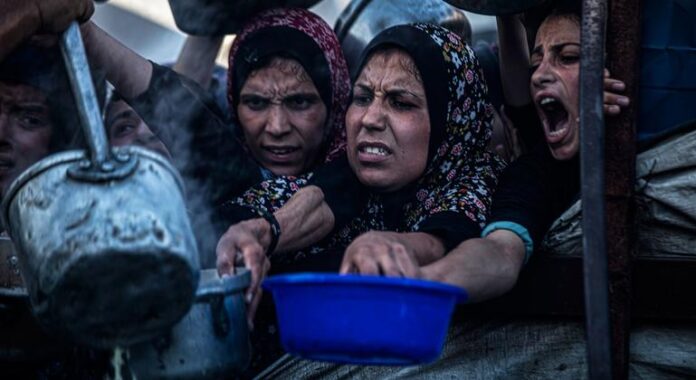
One in three people “hasn’t eaten for days”, insisted Tom Fletcher, UN Emergency Relief Chief and head of OCHA. “People are being shot just trying to get food to feed their families. Children are wasting away. This is what we face on the ground right now.”

In his statement, Mr. Fletcher acknowledged “progress” on the aid front, but stressed that “vast amounts of aid are needed to stave off famine and a catastrophic health crisis”. He said UN agencies and the humanitarian community remain mobilised “to save as many lives as we can”. 

In addition to Israel’s temporary boost for increased aid in Gaza, customs restrictions on food, medicine and fuel from Egypt have reportedly been lifted. Secure routes for UN humanitarian convoys have also been designated.

“We need sustained action and fast, including quicker clearances for convoys going to the crossing and dispatching into Gaza,” Mr. Fletcher said, underscoring the need for “multiple trips per day to the crossings so we and our partners can pick up the cargo, safe routes that avoid crowded areas and no more attacks on people gathering for food”. 

Meeting on two-State solution

Meanwhile in New York, France and Saudi Arabia on Monday launched a new diplomatic initiative to push for a two-State solution between Israel and the Palestinian people. 

The three-day conference begins as President Emmanuel Macron announced that France will formally recognise Palestine in September, the first of the G7 nations to do so.

A UN General Assembly resolution from 1947 established the partition of Palestine – then under British mandate – into two independent States, one Jewish and the other Arab. The State of Israel was declared in 1948.

Follow live coverage of the conference here.

Source link

World News in Brief: Cambodia-Thailand ceasefire, bloody weekend in Ukraine, stop hepatitis by hepatitis

0
World News in Brief: Cambodia-Thailand ceasefire, bloody weekend in Ukraine, stop hepatitis by hepatitis

The agreement was announced on Malaysian Prime Minister Anwar Ibrahim, current president of the Asean of Southeast Asia, was announced at midnight on Malaysian Bloc.

The clashes, which started on July 24, would have moved more than 130,000 people in Thailand and more than 4,000 people in Cambodia, aid partners announced last week.

According to the media, nearly 40 people were killed and around 200 injured, who cited Thai and Cambodian sources

The UN Security advice met in camera Friday afternoon to discuss the crisis, which dates back decades.

‘A positive step’

The secretary general praised the ceasefire “as a positive step towards the end of current hostilities and the relaxation of tensions,” said deputy spokesman Farhan Haq a declaration.

The UN chief has urged the two countries “to fully respect the agreement and create an environment conducive to long -standing problems and the realization of lasting peace.

He recommended Malaysia, the current president of the Anase, as well as the United States and China, for their efforts dedicated to the peaceful resolution of the situation.

According to the media, Prime Minister Ibrahim of Malaysia for talks between the parties of his official residence near the country’s capital, Kuala Lumpur.

The declaration concluded by stressing that the UN is ready to support efforts to promote peace and stability in the region.

Ukraine: 20 dead and 120 injured in weekend attacks

Since Friday, at least 20 people have been killed and 120 others injured in Ukraine while the attacks have continued to devastate the country, the United Nations Office for the Coordination of Humanitarian Affairs (Ochhasaid on Monday.

The most serious attacks occurred in the Sumy region where a civil bus was affected, killing three women over 65 and injuring 19 more. Sumy also experienced power outages following attacks.

These attacks occur in the middle of a three -year summit for civilian victims, with 6,574 killed in the first half of 2025 and 5,000 long -range ammunition launched by Russia only in July.

Damaged civil structures

Residential buildings, stores and schools were affected in the border region this weekend, harmful structures on which civilians count for their livelihoods. A Kharkiv hospital was also struck on Friday, the World Health Organization (WHO) Say.

To support families and people affected by attacks, humanitarian workers have assigned assistance in the form of shelter and psychosocial support equipment. They also helped to repair certain structures.

“Humanitarian workers continue to coordinate with local organizations to support the most vulnerable people in the Sumy region”, the deputy spokesman for the UN Farhan Haq said Journalists at the headquarters of New York.

In Chile, new hepatitis treatments mean that around 98% of patients are completely recovered.

The United Nations health agency calls for urgent action on hepatitis

The World Health Organization (WHO) urges governments and partners to intensify efforts to eliminate viral hepatitis as a threat to public health and reduce liver cancer deaths.

The United Nations agency launched the call on Monday, World Hepatitis Day.

“Every 30 seconds, someone dies from a serious liver disease linked to hepatitis or liver cancer. However, we have the tools to stop hepatitis, “said Managing Director Tedros Adhanom Ghebreyesus.

Viral hepatitis – types A, B, C, D and E – are the main causes of acute liver infections, but only hepatitis B, C and D can cause chronic diseases, which considerably increases the risk of cirrhosis, hepatic insufficiency and liver cancer.

However, most people with hepatitis ignore that they are infected. Types B, C and D affect more than 300 million people worldwide and cause more than 1.3 million dead each year, mainly liver and cancer cirrhosis.

Decompose barriers

World Hepatitis Day is observed each year on July 28. The theme of this year, Let’s do itCalls an urgent action to dismantle the financial, social and systemic barriers which oppose the elimination of hepatitis and the prevention of liver cancer.

Last month, the International Agency for Research on Cancer (Circ) – a specialized branch of HOM – classified hepatitis D as a human carcinogen, as well as types B and C.

Hepatitis D, which only develops in people already infected with hepatitis B, increases the risk of liver cancer two to six times compared to hepatitis B alone.

Who said that the reclassification of the disease “marks a critical step in global efforts to raise awareness, improve screening and extend access to new treatments for hepatitis D.”

Oral treatment can cure hepatitis C in two to three months and effectively remove hepatitis B with life treatment, the agency said.

Although treatment options for hepatitis of continuing to evolve, reducing the incidence of cirrhosis and liver cancer will only occur with significant expansion and deepening of vaccination, test and processing programs.

Originally published at Almouwatin.com