
Sunday, September 27, 2026
Home Blog Page 398

Sudan: The UN rings the alarm while health and food crises aggravate across the country

0
Sudan: The UN rings the alarm while health and food crises aggravate across the country

While the conflict between raging rival soldiers, millions of people continue to be moved.

While the UN and its partners continue to provide assistance to newly displaced families in northern Darfur, “almost 60% of the displaced families still have no support for the appropriate shelter,” said the deputy spokesman of the secretary general, Farhan Haq on Monday during a daily press briefing.

In the Abu Shouk camp in El Fasher, the capital of Darfur du Nord, the displaced families face acute shortages of food and medicine, local sources reporting four deaths linked to hunger last week, while food insecurity continues to worsen throughout the country.

In the state of North Darfur, in particular, a low supply of cereals, bad harvests and prolonged food deficit seriously affected food availability.

Health crisis

Meanwhile, cholera cases continue to increase at Tawila. More than 1,500 serious and confirmed serious infections have been reported since June, more than 500 people currently receiving treatment.

While local authorities have introduced emergency measures, including market closings and the ban on public gatherings, humanitarian organizations urgently require $ 120 million to increase Tawila vital support over the next three months.

“This funding is essential to contain the epidemic and support critical services,” said Ochha.

Meanwhile, at the Sudan port, the main entry point for humanitarian staff and supplies, a strong increase in heat strokes linked to an extreme temperature and prolonged power outages raises concerns, because a death has been recorded in the last two days.

Food crisis

In El Fasher, food prices continue to increase at alarming levels. The integrated classification of the food security phase (IPC) has already identified famine conditions in several areas of the North Darfur and the mountains of Nuba Eastern, with more risky locations.

In May, the average cost of the local food basket in El Fasher was more than six times the national average, because the city recorded the highest prices for almost all essential items among the evaluated localities.

An IPC alert earlier this month noted that the Sudan food security and nutrition situation should deteriorate more during the Alanque season from July to October, especially in active conflict areas with limited access and a high travel test.

Originally published at Almouwatin.com

A slight decrease in global hunger as inequalities are widening, the UN report reveals

0
A slight decrease in global hunger as inequalities are widening, the UN report reveals

The report estimates 8.2% of the world’s population (673 million people) experienced a hunger in 2024down 8.5% in 2023 and 8.7% in 2022.

Latin America and Asia have experienced improvements, the prevalence of undernourishment lowering 1.2% in Asia and 1% in Latin America and the Caribbean between 2022 and 2024.

However, 20% of the African population and 12.7% of people in western Asia face hunger, showing evidence of an unfortunately regular increase.

Of the 512 million people projected who could be chronically undernourished by 2030, almost 60% will be in Africa.

Progress of sustainable development

Together, these figures and the evaluation by the report of nutritional objectives as part of the sustainable development program underline the immense challenge to achieve the global objective of hunger zero.

Among children’s nutrition indicators, the prevalence of growth retardation among those under five decreased by 3.2% from 2012 to 2024, but the proportion of overweight or waste children remains largely unchanged.

Increased anemia in women aged 15 to 49 and adult obesity.

Above all, while global food insecurity has decreased only slightly from 2023 to 2024, 335 million more people were affected in 2024 than in 2019before the COVID 19 Pandemic and 683 million more than in 2015, when the sustainable development program was adopted.

Food inflation of the era cocovated

The report was published by five United Nations agencies: The Food and Agriculture Organization (Fao), the International Fund for Agricultural Development (Ifad), the United Nations Children’s Fund (Unicef), the global food program (Wfp), and the World Health Organization (WHO).

They noted that the estimates of hunger and food security remain above pre-pale levels due to a “perfect storm” of COVVI-19 inflation, war in Ukraine and climatic shocks.

Talk to Overview of the report On July 22, the chief economist of the FAO, Máximo Torero Cullen, underlined the conclusion that tax and monetary policies during the COVID-19 pandemic increased demand and inflation.

Combined with the commercial restrictions of basic foods and products linked to the war in Ukraine and the current climatic shocks, these factors have spectacular food inflation spectacular, which hinders post-pandemic recovery of food security and nutrition.

This perfect storm struck the countries with low and lower income, particularly harshly, which makes food inflation even higher than the world average already high.

Consequently, although the number of people capable of allowing themselves a healthy food has increased in the world from 2019 to 2024 despite the price increase, it decreased in countries with low and lower income, where prices have increased even more strongly.

Financing recommendations and needs

The report recommends a combination of political responses to combat global inflation of food prices. These include targeted budgetary measures to protect the most affected, credible and transparent monetary policies to keep inflation under control and strategic investments in agrifood systems.

The report and agency leaders have also stressed that funding is desperately necessary to meet the world’s challenges.

“Hunger remains at alarming levels, but the funding necessary to lower it,” said Cindy McCain, general manager of WFP.

“This year, financing reductions of up to 40% mean that tens of millions of people will lose the vital rescue buoy that we offer,” she added.

“Although the low reduction in global food insecurity rates is welcome, the inability continues to provide critical aid to people in need will soon eliminate these hard -won earnings, arousing additional instability in the volatile regions of the world.”

Originally published at Almouwatin.com
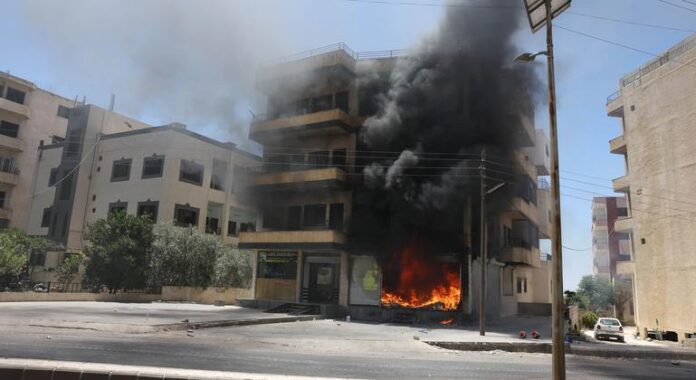
Syria: Fragile ceasefire in Sweida ‘largely holding’ amid volatility

0
Syria: Fragile ceasefire in Sweida ‘largely holding’ amid volatility

Declared on July 19, the ceasefire followed a harrowing wave of sectarian clashes, Israeli airstrikes and grave human rights violations.

UN Special Envoy for Syria Geir Pedersen told ambassadors in the Security Council on Monday that the recent escalation had “rocked” the country’s already precarious transition and highlighted the need for “major course corrections” on security and political fronts.

“Syrians are reeling after appalling violence in Sweida – violence that should not have happened and which also saw unacceptable foreign intervention,” Mr. Pedersen said.

Escalation and fallout

The unrest began on July 12 when mutual kidnappings escalated into armed conflict between Druze groups and Bedouin tribes, drawing in Syrian security forces.

The violence spiralled, with reports of extrajudicial executions, desecration of corpses and looting. Footage circulated widely on social media fanned sectarian tensions and disinformation.

Though fighting has largely subsided, Mr. Pedersen warned the situation “remains tense and volatile.” Civilians suffered the most, with hundreds killed and widespread accounts of abuses by both state and non-state actors.

“I condemn the appalling violations against civilians and combatants in Sweida. I also condemn Israel’s intervention,” he said, referring to airstrikes around Sweida and Damascus that reportedly caused civilian and security force casualties.

A wide view of the Security Council meeting on the situation in Syria. On screen is Geir Pedersen, Special Envoy of the Secretary-General for Syria.

Humanitarian crisis worsens

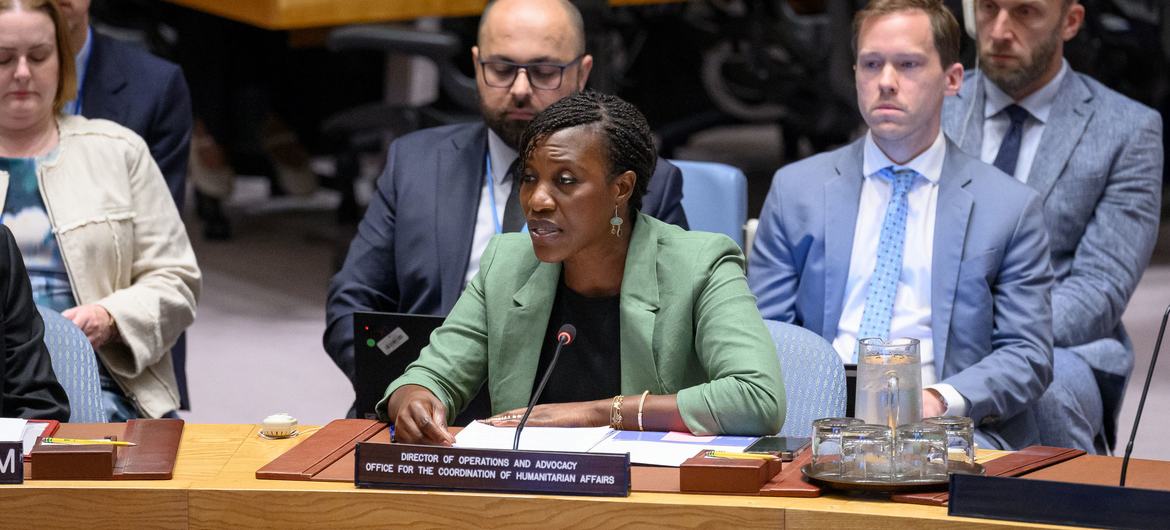
Humanitarian needs are escalating sharply. Edem Wosornu, Director of Operations at the UN Office for the Coordination of Humanitarian Affairs (OCHA), described Sweida as “teetering on the edge of collapse.”

“The recent violence in Sweida has displaced an estimated 175,000 people…a third of the population in the governorate, where two-thirds of people were already in need of assistance,” she told ambassadors.

Hospitals are overwhelmed and face severe shortages of electricity, supplies and personnel. The World Health Organization (WHO) confirmed five attacks on healthcare in Sweida, including the killing of two doctors, obstruction and targeting of ambulances

Vital infrastructure, including water systems are critically damaged, and food, fuel and medicine remain scarce. Aid access remains limited due to insecurity.

While three UN-supported aid convoys reached Sweida with food, fuel and health supplies, Ms. Wosornu stressed the need for “sustained humanitarian access” and protection for aid workers and infrastructure.

Droughts and wildfires deepen suffering

The violence coincided with devastating wildfires in Lattakia that displaced over 1,100 people and destroyed farmland.

The fires were worsened by “the worst drought-like conditions Syria has seen in 36 years,” Ms. Wosornu said, with water reservoirs falling to historic lows.

UN agencies are responding with clean water, health services and food assistance.

Edem Wosornu, Director of the Operations at OCHA, briefs UN Security Council members on the situation Syria.

Edem Wosornu, Director of the Operations at OCHA, briefs UN Security Council members on the situation Syria.

Comprehensive political reforms

Special Envoy Pedersen emphasised that sustainable peace in Syria hinges on inclusive political reform, security sector transformation and transitional justice.

“The state has a clear duty to act professionally and with discipline, even when under attack. It must take control of its forces and ensure visible accountability,” he said.

A new People’s Assembly is expected in September, a key step in the transitional framework. Mr. Pedersen warned that unless the process is inclusive, transparent and representative, it risks deepening public mistrust.

Transition simply cannot fail

“The Syrian political transition simply cannot fail,” he said.

Ms. Wosornu echoed the call for international solidarity, urgent funding and a halt to hostilities. Only 12 per cent of the revised $3.2 billion humanitarian appeal has been met.

“Our assistance is falling far short of meeting the level of needs,” she said, “If Syria is to recover, such violence must stop.”

Broadcast of the Security Council meeting on the situation in Syria.

Source link

Syria: fragile ceasefire in Sweida “largely holding” in the middle of volatility

0
Syria: fragile ceasefire in Sweida “largely holding” in the middle of volatility

Declared on July 19, the ceasefire followed a heartbreaking wave sectarian clashes, Israeli air strikes and serious human rights violations.

UN Special Envoy for Syria Geir Pedersen said Ambassadors in the Security advice Monday that the Recent climbing had “shaken” the already precarious transition of the country and underlined the need for “major courses” on security and political fronts.

“” Syrians are in shock after the appalling violence of Sweida – violence which should not have occurred and which also experienced an unacceptable foreign intervention,“Said Mr. Pedersen.

Climbing and fallout

The disorders began on July 12 when mutual abductions turned into armed conflict between the Druze groups and the Bedouin tribes, attracting the Syrian security forces.

Violence has invaded a spiral, with reports of extrajudicial execution, desecration of corpses and looting. Images have largely circulated on the social media fueled sectarian tensions and disinformation.

Although the fights have been widely appeased, Mr. Pedersen warned that the situation “remains tense and volatile”. Civilians have suffered the most, with hundreds of accounts of violations killed and widespread by state and non -state actors.

“I condemn the appalling violations against civilians and combatants in Sweida. I also condemn Israel’s intervention, “he said, referring to air strikes around Sweida and Damascus who have caused civilian victims and security forces.

A wide view of the meeting of the Security Council on the situation in Syria. On the screen is Geir Pedersen, Special Envoy of the Secretary General for Syria.

The humanitarian crisis is worsening

Humanitarian needs increase sharply. Edem Wosornu, Director of Operations at the United Nations Office for Humanitarian Affairs Coordination (Ochha),, describe Sweida like ” Holding on the edge of collapse.“”

“Recent violence in Sweida has moved around 175,000 people … A third of the governorate population, where two-thirds of people already needed help,” she told ambassadors.

Hospitals are exceeded and face serious shortages of electricity, supplies and staff. The World Health Organization (WHO) confirmed Five attacks against health care In Sweida, including the murder of two doctors, obstruction and targeting of ambulances

Vital infrastructure, including water systems, is seriously damaged and food, fuel and medicines remain rare. AID Access remains limited due to insecurity.

While three convoys of not supported aid reached Sweida with food, fuel and health supplies, Ms. Wosornu stressed the need for “sustained humanitarian access” and the protection of humanitarian workers and infrastructure.

Droughts and forest fires deepen suffering

Violence has coincided with devastating forest fires from Lattakia which have moved more than 1,100 people and destroys agricultural land.

The fires have been aggravated by “the worst drought conditions that Syria has seen in 36 years,” said Wosornu, with water tanks falling on historical stockings.

The United Nations agencies respond with drinking water, health services and food assistance.

Edem Wosornu, OCHA operations director, Briefs of the members of the UN Security Council on the Syria situation.

Complete political reforms

The Pedersen Special Envoy stressed that sustainable peace in Syria depends on inclusive political reform, the transformation of the security sector and transitional justice.

“The state has a clear duty to act professionally and with discipline, even when attacked. He must take control of his forces and ensure visible responsibility, “he said.

A new popular assembly is expected in September, a key step in the transitional framework. Mr. Pedersen warned that the process is not inclusive, transparent and representative, this may deepen the distrust of the public.

The transition simply cannot fail

“” The Syrian political transition simply cannot fail,He said.

Ms. Wosornu echoes the call for international solidarity, urgent funding and a stopping hostilities. Only 12% of 3.2 billion dollars revised were filled.

“Our help is far from meeting needs,” she said, ” If Syria has to recover, such violence must stop.“”

Dissemination of the meeting of the Security Council on the situation in Syria.

Originally published at Almouwatin.com
Not condemning a fatal attack against the faithful in Dr Congo

0
Not condemning a fatal attack against the faithful in Dr Congo

Elements of the ADF, an insurgent group affiliated with the Islamic State from neighboring Uganda, led the attack in the city of Komanda, territory of Irumu, province of Ituri.

At least 49 civilians were killed, including nine children. Several other people were injured and removed, and shops and houses were burned.

Most of the victims were reportedly killed with blade weapons during a night vigil in a church.

The incident comes after ADF’s attacks earlier in the month killed 82 civilians in the provinces of itturi and northern Kivu, which, which, which, which, which, which, which, which, which, which, which Monusco sentenced July 23.

The group has committed serious human rights violations against civilians since its foundation in 1995 and is under the UN sanctions Since June 2014.

“Deep indignation” on attacks

Monusco has expressed “deep outrage in the face of these acts of heinous violence, which constitute serious violations of international humanitarian law and human rights offenses”.

The peacekeeping mission has also exercised condolences to the bereaved families, urged the Congolese authorities to investigate these murders and reiterated the UN Secretary General’s appeal to all foreign armed groups to fix their arms unconditionally and to return to their country of origin.

“These targeted attacks against defenseless civilians, in particular in places of worship, are not only appalling but also in violation of all humanitarian human rights standards,” said Vivian Van de Perre, special deputy representative of the UN Secretary General for Protection and Operations and the Chief of Monusco.

She added that the mission “will continue to work tirelessly alongside the Congolese authorities to protect the population online with its mandate.”

Field response

Monusco supports local authorities in their response by organizing burials and providing medical care to the injured.

The peacekeeping mission also intensifies security efforts in and around the city of Komanda.

The mission is committed to working with the Congolese authorities and communities “to help prevent future attacks, protect civilians, reduce tensions and contribute to the stabilization of areas affected by armed violence”.

Originally published at Almouwatin.com

Guterres: “ rupture point ” reached in the conflict of Israel-Palestine, a necessary urgent action on a solution to two states

0
Guterres: “ rupture point ” reached in the conflict of Israel-Palestine, a necessary urgent action on a solution to two states

Speaking on Monday morning at the high -level conference on the peaceful regulation of the Palestine issue and the implementation of the two -state solution, the UN chief painted a striking image of a conflict that continues to “take lives, destroy future and destabilize the region and our world”.

“We know that the Israeli-Palestinian conflict has endured for generations-defying hopes, challenging diplomacy, challenging countless resolutions, challenging international law,” said Guterres. “But we also know that its persistence is not inevitable. It can be resolved. This requires courageous political will and leadership. And he demands the truth. “

“” The truth is: we are at a breakdown. The two -state solution is further than ever.“”

The secretary general denounced the attacks of Hamas October 7 against Israel and the hostage -taking as acts of terror which he “condemned on several occasions”. At the same time, he said: “Nothing can justify the obliteration of Gaza which took place before the eyes of the world”.

He also spoke out against civilians in civilians, the murder of tens of thousands of people, mass trips, the violence of the colonists and the “creeping annexation” of the occupied West Bank – a decision he called “illegal”.

Stop undermining the two -state solution

“” The unilateral actions that would forever undermine the solution to two states are unacceptable and they must stop,“He said.” These are not isolated events. They are part of a systemic reality which dismantles the constituent elements of peace in the Middle East. »»

The three -day conference is mandated by the general assembly by resolutions ES-10/24 And 79/81is co-organized by France and Saudi Arabia. It includes plenary sessions and thematic round tables on issues such as security arrangements, humanitarian needs, reconstruction and economic viability of a future Palestinian state.

A group photograph of senior officials from the UN and the ministers who attended the high -level international conference.

Go beyond “well-intentioned rhetoric”

In his speech, Mr. Guterres urged Member States not to let the event become “another exercise in well -intentioned rhetoric”.

“He can and must serve as a decisive turning point-the one that catalyzes irreversible progress towards the end of the occupation and the realization of our shared aspiration for a viable solution to two states,” he said.

Reiterating the long -standing position of the UN, the secretary general said that the two -state solution remains the only viable path to peace – Israel and Palestine living side by side in secure and recognized borders, based on the lines before 1967, with Jerusalem as the capital of the two states.

“” It’s the sine qua no [Latin for indispensable or absolutely essential] for peace through the wider Middle East“, He concluded.

More to follow …

Jean-Noël Barrot, Minister of Europe and Foreign Affairs of France; Faisal Bin Farhan Al Saud, Minister of Foreign Affairs of Saudi Arabia; And Mohammad Mustafa, Prime Minister of the State of Palestine, also spoke at the meeting.

The meeting continues with conclusion sessions of the thematic round tables.

A plenary meeting in the general assembly room will take place at 3 p.m. in New York.

You can follow the Live coverage of the conference here.

Originally published at Almouwatin.com

Statement by President von der Leyen on the deal on tariffs and trade with the United States

0
Statement by President von der Leyen on the deal on tariffs and trade with the United States

Statement by President von der Leyen on the deal on tariffs and trade with the United States Source link

Source link

Live coverage: high -level conference on a two -state solution for Israel and Palestine

0
Live coverage: high -level conference on a two -state solution for Israel and Palestine

A world in which a sovereign state of Palestine and Israel coexist peacefully seems to be a distant perspective, in particular in the light of the attacks of October 7, 2023 of Hamas on Israel, and the Israeli bombardment according to Gaza. A high -level opening of the United Nations Conference on July 28 will nevertheless be the last UN attempt to find a way to end the conflict.

Originally published at Almouwatin.com

In the middle of the famine in Gaza, Sudan, Guterres slams the hunger “like a weapon of war”

0
In the middle of the famine in Gaza, Sudan, Guterres slams the hunger “like a weapon of war”

Development comes like the UN Secretary General António Guterres warned that hunger focused on conflicts is spreading “from Gaza to Sudan and beyond”.

“Hunger feeds instability and undermines peace. We must never accept hunger as a weapon of war, “he told a video message to the United Nations Food System Summit In Addis Ababa.

Meanwhile, citing reports on Monday that “more children died today of hunger”, the United Nations Agency for Palestinian refugees, UNRWA,, said That it hoped to receive permission to bring thousands of trucks loaded with food, medicine and hygiene that Israel prevented from Gaza for months.

“They are currently in Jordan and Egypt while waiting for the green light,” said the United Nations agency, adding that at least 500/600 trucks are needed every day to prevent more people from starving. More than 100 people are now hungry to death in Gaza, UNRWA said, while reports from local health authorities indicate more than 40 malnutrition deaths this month only.

“Opening all the passages and flooding of Gaza with aid is the only way to avoid more deepening of famine among the inhabitants of Gaza”, the United Nations Agency kept.

Humanitarian breaks

His comments follow a major change in policy during the weekend when the Israeli army announced the creation of a daily humanitarian break from 10 a.m. to 8 p.m., in the local time, in areas where its troops are not active. Malnutrition of children has increased in Gaza, especially since March 2, when Israel has imposed an almost total blockade, Unwra said.

According to a map provided by the Israeli authorities, the humanitarian break applies to a thin strip of Gaza encompassing Al-Mawasi in the southwest, Deir al-Balah in the center and the city of Gaza in the north.

On Sunday, a convoy of more than 100 trucks with aid supplies would have entered the band via the Kerem Shalom cross -border crossing in the south.

Desperately necessary

While welcoming this development, the United Nations Coordination Office, Ochhahighlighted the amazing scale of needs in the field in Gaza.

One in three people “has not eaten for days,” insisted Tom Fletcher, UN emergency chief and OCHA chief. “People are slaughtered just by trying to get food to feed their families. Children waste. This is what we are faced with on the ground at the moment. ”

In his statementMr. Fletcher recognized “progress” on the aid front, but stressed that “large amounts of aid are necessary to avoid famine and a catastrophic health crisis”. He said that the United Nations agencies and the humanitarian community remain mobilized “to save as many lives as possible”.

In addition to the temporary boost of Israel for increased aid in Gaza, customs restrictions on food, medicines and fuel in Egypt would have been lifted. Secure routes for United Nations humanitarian convoys have also been designated.

“We need a sustained action, and quickly, including faster releases for convoys going to the crossing and sending of Gaza,” said Fletcher, highlighting the need for “several trips per day to level passages so that we and our partners can take the cargo; safe routes that avoid crowded areas; And more attacks against the people we make for food. ”

Meeting on a two -state solution

Meanwhile, in New York, France and Saudi Arabia launched a new diplomatic initiative on Monday to put pressure for a two -state solution between Israel and the Palestinian people.

The three -day conference begins when President Emmanuel Macron announced that France will officially recognize Palestine in September, the first G7 nations to do so.

A resolution of the United Nations General Assembly of 1947 established the partition of Palestine – then under British mandate – in two independent states, one Jew and the other Arab. The state of Israel was declared in 1948.

Originally published at Almouwatin.com

While the ceasefire of Gaza remains elusive, the UN is preparing for a conference around the two-state solution in Israel-Palestine

0
While the ceasefire of Gaza remains elusive, the UN is preparing for a conference around the two-state solution in Israel-Palestine

“It’s not a peace conference,” said Bob Rae, Canada Ambassador to the UN, said UN News Before the event, mandated by the General Assembly, in which his country will play a leading role.

“It is a way of trying to maintain the debate and overcome the points of sticking to the solutions. We hope there will be listening, and we hope there will be learning on the basis of what we hear. »»

Mr. Rae’s prudence reflects the high levels of uncertainty and concern surrounding the two -state solution. None of the two parties to the conflict will participate, and the United States, a solid player in Israel, should not participate.

In an address at Security advice In April, the UN Secretary General António Guterres warned that the process is “at risk of disappearing completely”. The political will to achieve the goal, he said, “feels more distant than ever”.

However, in an exchange with the press on June 5, Mr. Guterres also said: “And for those who doubt the two -state solution, I ask: what is the alternative? Is this a solution to a state in which the Palestinians are expelled, either the Palestinians will be forced to live in their country without rights? ”

He recalled that it was “the duty of the international community to keep the solution to two states alive, then to materialize the conditions to get there”.

The Canadian ambassador said that the event organizers continue to urge Israel and Palestine to engage with the conference, they understand the difficult situation in which they both find themselves. “Many citizens [of Israel] are always detained as hostages by Hamas. They have undergone this huge attack, the worst attack on the Jewish population all over the world since 1940. And now we have to face the outcome of what was the war in Gaza, which is extremely traumatic for the Palestinians and for many members of the Arab community. »»

Make a difference in the field

The conference, held at the council of the supervision of the UN headquarters in New York, was convened following the adoption of a resolution of the General Assembly (Resolution ES-10/22) In 2024. In a conceptual note published before the event, the two nations declared that the international consensus on the two -state solution “still benefits from almost universal support” and that it is “clearly the only way to satisfy legitimate aspirations, in accordance with international law, both Israelis and Palestinians … and to create the conditions of regional peace and stability.”

In a blow to the failure of previous efforts to provoke peace, the declaration declares that “the objective of this international conference would not be to” relaunch “or to” restart “another endless process, but to implement, once and for all, the solution to two states”.

In a preparation meeting For the conference held at the UN in May, Anne-Claire Legendre, counselor in the Middle East and North Africa of French President Emmanuel Macron, said that “the prospects of a Palestinian state must be maintained. Irreversible steps and concrete measures for its implementation are necessary “and call for a loose drying, an immediate influx of human aid and the liberation of the hosts.

His counterpart, Manal Bint Hassan Radwan, head of the Saudi negotiation team, added that efforts to end the fighting and guarantee the release of hostages and prisoners must be “anchored in a credible and irreversible political plan which approaches the deep cause of the conflict and offers a real journey to peace, dignity and mutual security”.

“There must be the basis of a broader political solution. It is not only a question of saying that there will be a ceasefire and which will solve the problem. How to rebuild Gaza? How to change the governance of Gaza? How do we approach the West Bank? How did we deal with a new negotiation that was really successful, which has been really managed to negotiate, on the basis of 1993, since there has been a really successful negotiation, on the basis of 1993, since, there has been a really successful negotiation, on the basis of the 1993, since, there has been a really successful negotiation, on the basis of the 1993, Negotiate, which has been on negotiations, from a Onet Lovered, from a real workforce, this time, we have not had many fundamental contracts.

Originally published at Almouwatin.com