Friday, May 1, 2026
Home Blog Page 399

EIT Community at Warsaw Week: Igniting Innovation across Europe

0

From 11 to 15 May 2025, Warsaw becomes a vibrant hub of innovation as the European Institute of Innovation and Technology (EIT) hosts the EIT Community at Warsaw Week. This dynamic series of events will bring together entrepreneurs, policymakers, investors, and academia, with a strong focus on narrowing the continent’s innovation gap.

A Week of Collaborative Innovation

The EIT Community programmes will feature a rich agenda of networking events, panel discussions, and strategic meetings. Highlights will include:

  • Discover & Delight: Cultural Explorations – an immersive experience powered by EIT Health InnoStars, giving participants a chance to explore Warsaw’s heritage while connecting with local innovators.
  • The Spark Zone: Networking with Innovators – an evening dedicated to informal exchanges between EIT Community members and Polish stakeholders, supported by local cuisine and music.
  • Fuel for Thought: Innovation Breakfast – a morning session focused on site visits, showcasing Poland’s innovation infrastructure and potential for scaling up innovation.
  • EU Innovation Journey 2025 Conference – a key event where the EIT Community will participate in discussions on innovation competitiveness in Central and Eastern Europe, support for startups, and strategies to attract venture capital to the region. Highlights include the launch of the EIT Community Hub and an Investor Dinner co-organised with the European Innovation Council.

Strengthening Regional Innovation

The EIT Community events will underline the EIT’s mission to support high-potential startups in emerging ecosystems and reduce fragmentation across Europe. By connecting local, national, and EU-level efforts, we will work to create smoother, more connected pathways for startups to grow, succeed, and go global.

As part of this deepened collaboration, the EIT will officially open its new EIT Community Hub in Warsaw and further strengthen its engagement with Poland.

Looking Ahead

These few days will contribute to building a more inclusive and balanced innovation landscape across Europe. The connections and ideas sparked during the week will help to drive long-term impact, economic growth, and technological leadership across Central and Eastern Europe.

For more information visit the Polish Presidency website

Source link

AMLA Executive Board Members Appointed

0
AMLA Executive Board Members Appointed

The Authority for Anti-Money Laundering and Countering the Financing of Terrorism (AMLA) warmly welcomes the decision of the Council of the European Union to appoint the first full-time members of its Executive Board. On 22 May 2025, the Council appointed to serve a four-year term beginning on 1 June 2025: Mr. Simonas Krėpšta Ms. Rikke-Louise […]

Source link

Lifting of Israeli blockade ‘the only way to avert mass starvation’ in Gaza: UNRWA chief

0
Lifting of Israeli blockade ‘the only way to avert mass starvation’ in Gaza: UNRWA chief

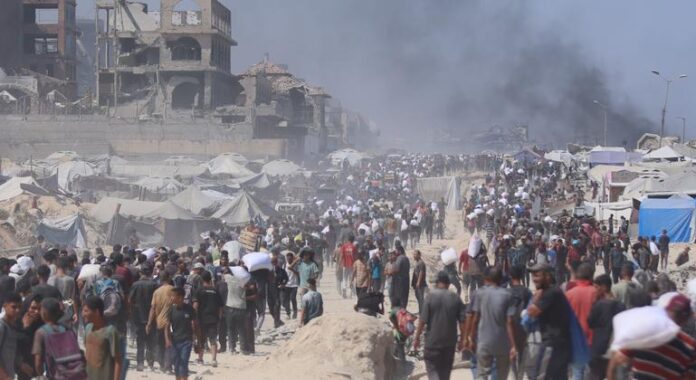
Philippe Lazzarini posted on social media saying that aid distribution “has become a death trap,” citing reports from international medical staff on the ground and local health authorities who reported at least 31 deaths and more than 150 injured as civilians were lining up to receive aid from the Israel and United States-backed Gaza Humanitarian Foundation – which bypasses existing aid agencies.

‘Humiliating system’

“A distribution point by the Israeli-American plan was put far south in Rafah,” Mr. Lazzarini said on X.

This humiliating system has forced thousands of hungry and desperate people to walk for tens of miles to an area that’s all but pulverized due to heavy bombardment by the Israeli army.”

He said aid delivery and distribution “must be at scale and safe. In Gaza, this can be done only through the United Nations including UNRWA.”

The Gaza Humanitarian Foundation – which uses private contractors and involves Israeli Defense Forces (IDF) to secure its sites – has strongly denied that civilians were fired on, accusing Hamas militants of misinformation.

Disputed events

The IDF said on social media that reports of them firing towards residents receiving aid from the foundation were false: “Findings from an initial inquiry indicate that the IDF did not fire at civilians while they were near or within the humanitarian aid distribution site.”

The IDF posted video which it said showed gunmen shooting at civilians collecting aid, adding that “Hamas is doing everything in its power to prevent the successful distribution of food in Gaza.”

Medical staff at Nasser hospital in nearby Khan Younis told media outlets that around 79 people were admitted on Sunday, mostly with gunshot wounds, along with the bodies of some of those killed. Journalists on the scene posted video footage of bodies being carried on carts along with wounded arrivals.

‘Lift the siege’

UNRWA chief Lazzarini called on Israel to lift the three-month old aid blockade and allow safe and unhindered access. “This is the only way to avert mass starvation including among one million children.”

Highlighting the difficulties of clearly establishing facts on the ground due to Israel’s ban on international media from entering the Gaza Strip, the UNRWA chief said that amid competing narratives and “disinformation campaigns in full gear,” the ban on eyewitness reporting must be lifted immediately.

Source link

United Arab Emirates: 4th High-level Political Dialogue held in Abu Dhabi on 27 May

0
United Arab Emirates: 4th High-level Political Dialogue held in Abu Dhabi on 27 May

United Arab Emirates: 4th High-level Political Dialogue held in Abu Dhabi on 27 May

Source link

EU and UAE Deepen Strategic Ties as Fourth High-Level Political Dialogue Concludes in Abu Dhabi

0

ABU DHABI — In a significant step toward strengthening diplomatic and economic cooperation between Europe and the Gulf, the European Union and the United Arab Emirates concluded their Fourth High-Level Political Dialogue on Monday in Abu Dhabi. The talks marked a turning point in bilateral relations, with both sides agreeing to intensify collaboration not only through trade but also on pressing regional and global security issues.

Co-chaired by Deputy Secretary-General of the European External Action Service for Political Affairs Olof Skoog and H.E. Lana Nusseibeh , Assistant Minister for Political Affairs and the Foreign Minister’s Envoy for the EU, the dialogue underscored the growing strategic alignment between the two partners amid shifting global dynamics.

One of the most anticipated outcomes of the meeting was the landmark announcement of the launch of free trade negotiations between the EU and the UAE — a move that promises to deepen economic integration and boost investment flows between the regions. Officials described the decision as a “win-win” for both parties, reflecting shared interests in stability, innovation, and sustainable development.

“The EU-UAE partnership is more than just diplomacy,” said Skoog in a joint press statement. “It’s about building resilience together — economically, politically, and regionally.”

Toward a Strategic Partnership Agreement

Beyond trade, both sides expressed strong support for elevating the relationship through the conclusion of a EU-UAE Strategic Partnership Agreement , which would institutionalize cooperation across a broad spectrum of issues. Such an agreement would allow for greater coordination on foreign policy, defense, energy transition, climate action, and technological innovation.

The dialogue also reaffirmed the importance of multilateral engagement, with both parties emphasizing the need to uphold international law and work together within global institutions such as the United Nations and the G20.

Addressing Regional Challenges

In a wide-ranging discussion on regional affairs, EU and UAE officials exchanged views on several conflict zones and volatile situations:

  • Gaza : Both sides called for an immediate cessation of hostilities, the release of hostages, and urgent humanitarian aid access.
  • Lebanon and Syria : Concerns were raised over the ongoing political instability and the humanitarian toll of protracted crises.
  • Iran and Yemen : Participants emphasized the need for de-escalation and inclusive political solutions to reduce tensions and promote regional security.
  • Red Sea Security : With rising maritime threats, both parties agreed on the importance of safeguarding vital shipping routes and coordinating naval efforts.
  • Sudan : The EU and UAE reiterated their calls for an end to violence and a return to civilian-led governance.
  • Ukraine : The EU welcomed the UAE’s continued diplomatic engagement on the issue, while reaffirming its stance against Russia’s aggression.

Strengthening EU-GCC Cooperation

Looking ahead, the EU and UAE also discussed ways to deepen EU-Gulf Cooperation Council (GCC) ties , particularly in light of the upcoming UAE presidency of the GCC later this year. This follows up on commitments made during the October 2024 EU-GCC Summit in Brussels , where leaders from both regions pledged closer collaboration on energy, trade, and regional security.

The dialogue concluded with a shared commitment to continue fostering trust and cooperation, not only between the EU and UAE, but also in support of broader regional stability and prosperity.

As the world faces unprecedented geopolitical challenges, the deepening EU-UAE partnership may serve as a crucial bridge between East and West — one built not only on shared interests, but on shared values.

United Arab Emirates: 4th High-level Political Dialogue held in Abu Dhabi on 27 May

Source link

Source link

Kazakhstan to get EIB Global support for energy-efficient homes

0
Kazakhstan to get EIB Global support for energy-efficient homes

EIB
  • EIB Global and Kazakhstan Housing Company sign accord to promote energy-efficient homes in country.
  • Agreement comes in wake of first EU-Central Asia summit. 
  • The company will also benefit from technical assistance provided under the joint EIB and GIZ initiative, FELICITY II. 

The European Investment Bank’s development arm (EIB Global) and state-owned Kazakhstan Housing Company JSC are teaming up to increase the number of energy-efficient and sustainable homes in Kazakhstan.

EIB Vice-President Kyriacos Kakouris and Altay Kuzdibayev, chairman of the management board of Kazakhstan Housing Company, signed a memorandum of understanding today in the Kazakh capital Astana for financing to build energy-efficient homes.    

“We will work closely with Kazakhstan Housing Company to explore financing opportunities for housing projects that meet high energy-efficiency standards,” said EIB Vice-President Kakouris. “The agreement reflects a commitment by the European Union and the bank to deepening our strategic partnership with central Asia. Contributing to the sustainable future of the region through initiatives like this one is a high priority for us.”

This new accord is part of an initiative – FELICITY II Cities Advisory Facility – undertaken jointly by the EIB and German development agency Deutsche Gesellschaft für Internationale Zusammenarbeit (GIZ). The initiative is supported by the International Climate Initiative (IKI) of the Federal Ministry for Economic Affairs and Climate Action of Germany to support low-carbon investments in countries in eastern Europe and central Asia.  

“Improving people’s quality of life and developing a modern, comfortable urban environment are the key priorities of Kazakhstan Housing Company. Signing a memorandum with EIB Global is an important step in the implementation of long-term international cooperation initiatives that are in line with both national priorities and global climate challenges. We are confident that this partnership will contribute to the formation of a new standard of housing and the development of sustainable and energy efficient housing projects in Kazakhstan,” said Kazakhstan Housing Company Management Board Chairman Kuzdibayev.

The memorandum of understanding builds on the first EU-Central Asia summit held in April 2025, when government leaders pledged to strengthen ties between the two regions. During the summit, EIB Global announced plans to expand its strategic investments in sustainable development across central Asia.

GIZ, which was represented at today’s signing event in Astana, , in cooperation with the German Energy Agency (dena) will offer technical assistance to Kazakhstan Housing Company under FELICITY II.

Cooperation between the EIB and Kazakhstan Housing Company creates a real opportunity to accelerate the low-carbon transformation of Kazakhstan’s building sector, which accounts for a third of the country’s energy use,” said GIZ Project Director André Fabian. “It will also stimulate the market for energy-efficient construction and foster the uptake of innovative technologies and services.” The signing took place during the Astana International Forum, an annual conference that promotes global dialogue and attracts leaders of governments, international organisations, businesses and academic institutions. At the Forum, EIB Vice-President Kakouris participated in panel discussions on water security, global trade and climate action.

Background information

About EIB Global

The European Investment Bank (ElB) is the long-term lending institution of the European Union, owned by the Member States. It finances investments that pursue EU policy objectives.

EIB Global is the EIB Group’s specialised arm devoted to increasing the impact of international partnerships and development finance, and a key partner of Global Gateway. It aims to support €100 billion of investment by the end of 2027 – around one-third of the overall target of this EU initiative. Within Team Europe, EIB Global fosters strong, focused partnerships alongside fellow development finance institutions and civil society. EIB Global brings the EIB Group closer to people, companies and institutions through its offices across the world.

Photos of EIB headquarters for media use are available here

Source link

Kazakhstan to get EIB Global support for energy-efficient homes

0
Kazakhstan to get EIB Global support for energy-efficient homes


  • EIB Global and Kazakhstan Housing Company sign accord to promote energy-efficient homes in country.
  • Agreement comes in wake of first EU-Central Asia summit. 
  • The company will also benefit from technical assistance provided under the joint EIB and GIZ initiative, FELICITY II. 

The European Investment Bank’s development arm (EIB Global) and state-owned Kazakhstan Housing Company JSC are teaming up to increase the number of energy-efficient and sustainable homes in Kazakhstan.

EIB Vice-President Kyriacos Kakouris and Altay Kuzdibayev, chairman of the management board of Kazakhstan Housing Company, signed a memorandum of understanding today in the Kazakh capital Astana for financing to build energy-efficient homes.    

“We will work closely with Kazakhstan Housing Company to explore financing opportunities for housing projects that meet high energy-efficiency standards,” said EIB Vice-President Kakouris. “The agreement reflects a commitment by the European Union and the bank to deepening our strategic partnership with central Asia. Contributing to the sustainable future of the region through initiatives like this one is a high priority for us.”

This new accord is part of an initiative – FELICITY II Cities Advisory Facility – undertaken jointly by the EIB and German development agency Deutsche Gesellschaft für Internationale Zusammenarbeit (GIZ). The initiative is supported by the International Climate Initiative (IKI) of the Federal Ministry for Economic Affairs and Climate Action of Germany to support low-carbon investments in countries in eastern Europe and central Asia.  

“Improving people’s quality of life and developing a modern, comfortable urban environment are the key priorities of Kazakhstan Housing Company. Signing a memorandum with EIB Global is an important step in the implementation of long-term international cooperation initiatives that are in line with both national priorities and global climate challenges. We are confident that this partnership will contribute to the formation of a new standard of housing and the development of sustainable and energy efficient housing projects in Kazakhstan,” said Kazakhstan Housing Company Management Board Chairman Kuzdibayev.

The memorandum of understanding builds on the first EU-Central Asia summit held in April 2025, when government leaders pledged to strengthen ties between the two regions. During the summit, EIB Global announced plans to expand its strategic investments in sustainable development across central Asia.

GIZ, which was represented at today’s signing event in Astana, , in cooperation with the German Energy Agency (dena) will offer technical assistance to Kazakhstan Housing Company under FELICITY II.

Cooperation between the EIB and Kazakhstan Housing Company creates a real opportunity to accelerate the low-carbon transformation of Kazakhstan’s building sector, which accounts for a third of the country’s energy use,” said GIZ Project Director André Fabian. “It will also stimulate the market for energy-efficient construction and foster the uptake of innovative technologies and services.” The signing took place during the Astana International Forum, an annual conference that promotes global dialogue and attracts leaders of governments, international organisations, businesses and academic institutions. At the Forum, EIB Vice-President Kakouris participated in panel discussions on water security, global trade and climate action.

Background information

About EIB Global

The European Investment Bank (ElB) is the long-term lending institution of the European Union, owned by the Member States. It finances investments that pursue EU policy objectives.

EIB Global is the EIB Group’s specialised arm devoted to increasing the impact of international partnerships and development finance, and a key partner of Global Gateway. It aims to support €100 billion of investment by the end of 2027 – around one-third of the overall target of this EU initiative. Within Team Europe, EIB Global fosters strong, focused partnerships alongside fellow development finance institutions and civil society. EIB Global brings the EIB Group closer to people, companies and institutions through its offices across the world.

Photos of EIB headquarters for media use are available here

Source link

Joint Statement by High Representative/Vice-President Kaja Kallas and Commissioner Marta Kos on Georgia’s Foreign Agents Registration Act

0
United Arab Emirates: 4th High-level Political Dialogue held in Abu Dhabi on 27 May

Joint Statement by High Representative/Vice-President Kaja Kallas and Commissioner Marta Kos on Georgia’s Foreign Agents Registration Act

Source link

Pakistan’s Islamic Council Declares Child Marriage Ban “Un-Islamic” Amid Rising Concerns Over Girls’ Rights

0
Pakistan’s Islamic Council Declares Child Marriage Ban “Un-Islamic” Amid Rising Concerns Over Girls’ Rights

ISLAMABAD — In a move that has sparked intense debate over the intersection of religion and human rights, Pakistan’s Council of Islamic Ideology (CII) has declared a newly passed law criminalizing child marriage in the federal capital as “un-Islamic” has reported Arab News.

The National Assembly unanimously approved the Islamabad Capital Territory Child Marriage Restraint Bill on Friday. The legislation, introduced by Member of the National Assembly (MNA) Sharmila Faruqui, aims to curb widespread underage marriages and protect children—particularly girls—from being thrust into early motherhood and its associated risks.

Once signed into law by the president, the bill will raise the minimum legal age for marriage to 18 for both men and women in Islamabad, replacing a colonial-era law that set the age at 16 for girls and 18 for boys. Under the new provisions, anyone involved in facilitating or coercing child marriages—including family members, clerics, and registrars—could face prison sentences of up to seven years. Additionally, sexual relations involving minors will be considered statutory rape regardless of consent, with adult males found guilty facing up to three years in jail.

However, the Council of Islamic Ideology, a constitutional body tasked with advising the government on whether proposed laws align with Islamic principles, issued a statement following its 243rd session on May 27–28 rejecting key clauses of the bill.

“The bill introduced by Madam Sharmila Faruqui … has been declared un-Islamic,” the CII said in a written statement. It specifically objected to setting a fixed minimum age for marriage and labeling unions under 18 as child abuse and punishable offenses.

The council’s ruling comes amid growing concerns about the prevalence of child marriage in Pakistan. According to a 2018 demographic survey, 29% of girls in the country are married before the age of 18, with 4% wed before turning 15. Boys are also affected, though to a lesser extent—5% marry before 18, according to Girls Not Brides , a global partnership working to end child marriage.

Child rights advocates warn that underage brides often drop out of school, face increased risk of domestic violence, and suffer serious health complications. Early pregnancies are especially dangerous, increasing the likelihood of maternal death, obstetric fistulas, and sexually transmitted infections.

Despite these dangers, cultural norms and economic pressures continue to drive the practice in many communities. Some families see marriage as a way to secure their daughters’ futures or reduce financial burdens, while others cite religious traditions to justify the custom.

Human rights organizations have urged lawmakers not to back down in the face of religious opposition. They argue that protecting children is a moral imperative, and that modern interpretations of Islam must evolve to reflect contemporary understandings of human dignity and development.

The passage of the bill in Islamabad marks a significant step toward addressing the issue at the national level, but its future may now depend on how the federal government responds to the Council of Islamic Ideology’s objections.

As the debate unfolds, the voices of young girls like Shamila and Salma Zameer—monsoon brides photographed in Dadu district’s Khan Muhammad Mallah village in August 2024—serve as a stark reminder of the lives hanging in the balance.

Source link

EU Condemns Georgia’s Foreign Agents Law as Democratic Setback

0
EU Condemns Georgia’s Foreign Agents Law as Democratic Setback

BRUSSELS — The European Union has issued a sharp rebuke of Georgia’s recent adoption of the Foreign Agents Registration Act , calling it a “serious setback for the country’s democracy” and warning that Tbilisi’s European aspirations are now in jeopardy.

In a joint statement released today, EU High Representative for Foreign Affairs and Security Policy/Vice-President of the European Commission Kaja Kallas and Commissioner for Equality Marta Kos condemned the legislation, which mirrors similar repressive laws in Russia and other authoritarian regimes.

“Georgia’s Foreign Agents Registration Act marks a serious setback for the country’s democracy,” the statement read. “Alongside recent laws on broadcasting and grants, it represents another aggressive action by the Georgian authorities to suppress dissent, restrict freedoms, and further shrink the space for activists, civil society, and independent media.”

The law, which requires non-governmental organizations (NGOs) receiving foreign funding to register as “foreign agents,” has drawn widespread criticism from international human rights groups, local activists, and diplomatic missions in Georgia.

The European Council had previously expressed concern over Georgia’s democratic backsliding in its June and October 2024 conclusions , noting that such actions jeopardized the country’s path toward European Union membership. Since then, the EU said, accession talks have effectively been put on hold.

“The accession process has been de facto halted,” the EU reiterated in today’s statement. “The EU reiterates its call on the Georgian authorities to heed their citizens’ clear demands for democracy and a European future.”

The statement also urged the release of all unjustly detained journalists, activists, protesters, and political leaders who have faced increasing pressure under the current administration.

The EU made clear that the responsibility for reversing this democratic decline rests solely with the Georgian government.

“The EU is ready to consider the return of Georgia to the EU accession path if the authorities take credible steps to reverse democratic backsliding,” Kallas and Kos stated.

The joint message underscores the bloc’s deepening frustration with Georgia’s trajectory at a time when many of its citizens continue to express strong support for integration with Europe.

As the EU stands firm on its conditionality, the question remains whether Georgia’s leadership will respond to domestic and international calls for reform—or continue down a path that risks isolating the country both politically and economically.

Joint Statement by High Representative/Vice-President Kaja Kallas and Commissioner Marta Kos on Georgia’s Foreign Agents Registration Act

Source link

Source link