Saturday, May 2, 2026
Home Blog Page 409

Escalating violence drives food crisis across eastern DR Congo, warns WFP

0
Escalating violence drives food crisis across eastern DR Congo, warns WFP

Conflict has plagued the DRC for decades, particularly in the east. Armed clashes escalated sharply this year as M23 rebels wrested control of Goma, the capital of North Kivu, in January, followed by Bukavu in South Kivu a month later.

The security and humanitarian situation further deteriorated with recent outbreaks of anthrax and mpox in April and May, fuelled by overcrowded conditions and poor sanitation.

Deepening food insecurity

WFP’s latest report estimates that 7.9 million people are food insecure in the conflict-affected eastern provinces, with 28 million in need across the country.

Food production in Grand Nord, an important agricultural hub in eastern DRC, has been slashed due to recent conflict and displacement. In addition, the closure of Goma’s airport – critical for aid delivery – continues to disrupt operations.

Despite these challenges, WFP reached 1.1 million people in the east between January and March, providing school meals and take-home rations for 100,000 children, nutrition supplements for 340,000 children and pregnant or breastfeeding women – along with logistics and supply chain assistance.

Regional turbulence

The 140,000 Congolese who have fled to neighbouring countries since January – mainly Burundi, Uganda, Rwanda and Tanzania – have turned a national emergency into a regional crisis.

Refugee camps in these countries, already under strain from refugees from other countries, are struggling to absorb the new arrivals.

WFP warned that the surge in need is outpacing available resources. Budget constraints have forced the agency to make sharp cuts: food rations have been halved in Burundi, while cash support has also been halved in Rwanda.

In Uganda, the number of refugees receiving assistance has dropped from 1.6 million to 630,000. In Tanzania, food rations have been reduced from 82 to 65 per cent.

To sustain its emergency operations, WFP is appealing for $433 million to support its work inside the DRC through October.

Additional funding needs include $16.6 million to provide full food assistance in Burundi through 2025, $12 million to maintain full rations for refugees in Rwanda through 2025, $26 million to sustain operations in Uganda through 2025, and $18 million to provide just 75 per cent of full rations in Tanzania through April 2026.

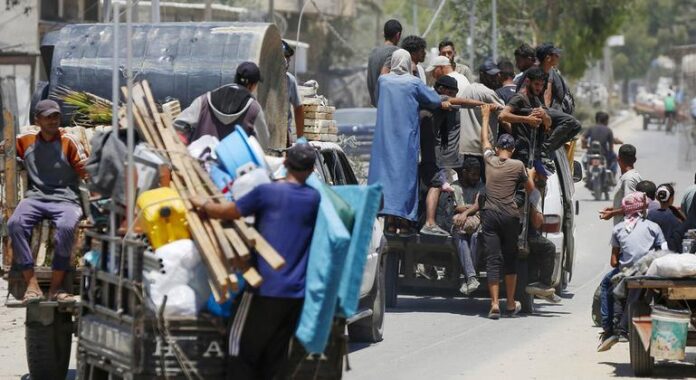
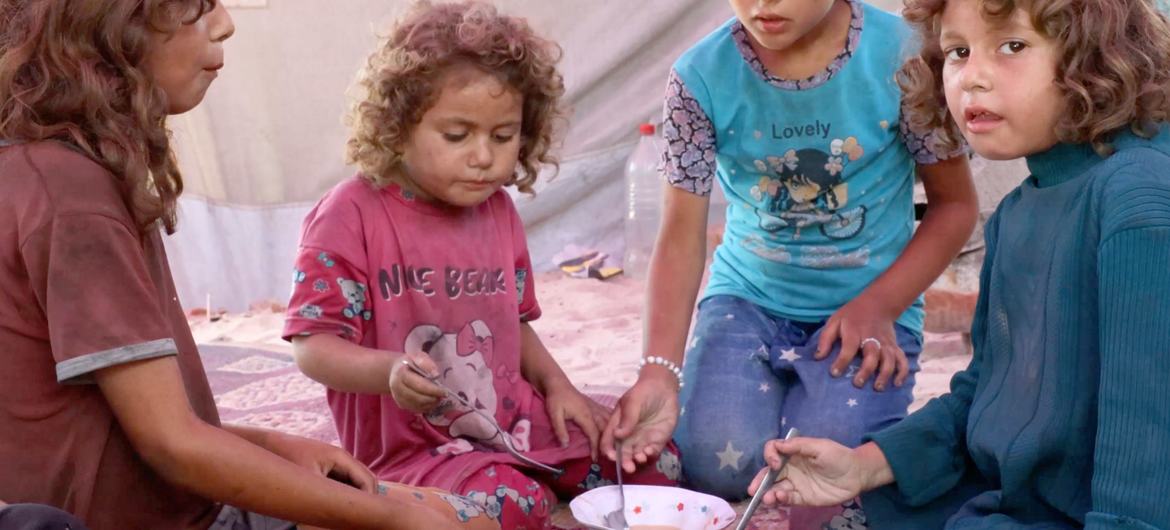
Displaced families in the Bulengo camp on the outskirts of Goma face a dire and uncertain future as M23 authorities instruct them to dismantle their makeshift shelters.

Source link

remarks by High Representative/Vice-President Kaja Kallas at the joint press conference

0
remarks by High Representative/Vice-President Kaja Kallas at the joint press conference

Prime Minister, 

Dear people of North Macedonia,  

thank you for the warm welcome here. It is my first time in North Macedonia. It is good to be in Skopje.  

We just had a meeting on a broad range of topics. The European Union stands firmly with North Macedonia on your path to the European Union. North Macedonia is the first beneficiary in the region of the Growth Plan for the Western Balkans. You were just describing how well your economy is doing, I think we also benefit from that. And [you are] the first country in the region to sign a Security and Defence Partnership with the European Union.  

This partnership boosts joint work on Ukraine, hybrid threats and counterterrorism, and it shows that gradual integration is working in practice – but we both want more, that is very clear.  

North Macedonia belongs to the European Union. You have a strong track record of aligning with European Common Security and Foreign Policy. This is very important to us, especially in these very turbulent times that we see major geopolitical shifts happening in the world.  

Your contribution to the EUFOR Althea in Bosnia Herzegovina is a clear example that you are a reliable partner for the regional security. I commend your strong efforts made by North Macedonia and your government on your reform agenda. 

You know better than anybody that the road to membership is not easy, so my message today is to stay on course and to take the next steps necessary towards the opening of the negotiations. It will also mean that the European Union will give North Macedonia even more support, be it in strengthening the rule of law, fighting corruption, or modernizing North Macedonians public administration.  

We know from experience that the progress can be fast if there is political will. Albania and Montenegro are good examples of this. And North Macedonia faces area-defining choices for its citizens and its future. We believe that the integration of the Western Balkans into the European Union is the best recipe for peace and security, also in the whole region.  

So let us move together forward, and I assure you that European Union stands firmly by your side.  

So once again, dear Prime Minister, thank you for hosting me here today. 

Link to the video: https://audiovisual.ec.europa.eu/en/video/I-272442 

Q&A.  

Q. I have a question to High Representative Kallas. The Macedonian government and Prime Minister yesterday said that they believe the EU will find mechanisms to de-block our euro-integrative process. What are the mechanisms of Brussels for final de-blocking of this process? Another question arising from your speech: how much can a non-integrated Western Balkans be a security threat?  

Thank you for your question. So first, it is clear that we want North Macedonia to really move on this path. We know that there are obstacles on the way, and we were discussing those as well to find really mechanisms to overcome these obstacles. So, of course, the Prime Minister can explain his ideas better, but I think there is definitely room [to] operate. I would not go into details if we move on. Then, of course, we will let also the press know. 

[When it] comes to the non-integration of the Western Balkans, how big of threat it is. I think if we look at the big picture the world, then we clearly see these different big powers shifting; tectonic shifts. It is in our interest – if we look at the map, because the Western Balkans are in Europe – that we are all fully integrated, because the European Union is a peace project. And that also makes it possible to bring the tensions down in the Western Balkan regions. I think it is definitely a security issue as well. Thank you.  

Q. Two weeks ago, you personally from Ukraine, announced that the European Union has a plan B, even plan C for the European integration of Ukraine. Last week, President Costa also shared that the European Union does not have a plan B for North Macedonia. Why? 

This is also for the other cases that you referred. Why are we focusing on plan A and trying to make the plan A work? Because when you are taking already Plan B, then the Plan A is out of the question. Being very critical here, but what I want to say is that we still have hope that the plan A works. We are working for this. And if not, then we will move into the next phase. Yes. 

Link to the video: https://audiovisual.ec.europa.eu/en/video/I-272688 

North Macedonia: remarks by High Representative/Vice-President Kaja Kallas at the joint press conference

Source link

Source link

INTERVIEW: Time’s being wasted on politics of aid while deaths mount in Gaza, warns senior official |

0
INTERVIEW: Time’s being wasted on politics of aid while deaths mount in Gaza, warns senior official |

There’s been so much time wasted talking about the various proposals and the various plans. In the meantime, people are dying and are left without aid,” Olga Cherevko said in an exclusive interview with UN News.

This week, UN agencies were able to bring limited amounts of food, flour and other items into Gaza after Israel lifted a nearly three-month aid blockade. 

Ms. Cherevko said humanitarians were told this was a temporary measure until aid distribution is implemented through the so-called Gaza Humanitarian Foundation, an initiative backed by Israel and the United States.  

The plan sees aid dispersed from four points south of the Netzarim Corridor, which is under Israeli military control, and involves the use of private US contractors. 

She discussed this development, the positive impact of the trickle of aid allowed into Gaza, and the need to scale up efforts.

There is a sense that some people feel like this is the end and that there is no turning back – and that they are just waiting to die,” she said.

This interview has been edited for length and clarity

Olga Cherevko: We’ve been speaking about this and other proposals and plans. Our concerns are that any distribution of aid, any system that exists, needs to be in line with globally established humanitarian principles. And if it isn’t, it’s not something that we can be involved in.

We have concerns about the scalability of this proposed plan, and about various other parts of it. 

The biggest issue is that we have a plan, and we have a system that we are using as we speak, and the system has been tried over various crises across the world. It has been proven to work, it has mechanisms to mitigate theft, to mitigate diversion and it ensures that it reaches people wherever they are. 

So, there’s been so much time wasted talking about the various proposals and the various plans. In the meantime, people are dying and are left without aid. 

The volume of aid is literally a drop in the ocean of what is needed

UN News: The UN definitely will not be taking part in this plan, but did you receive any indications that you will be able to proceed with the work that you’ve been doing over the past couple of days?

Olga Cherevko: For the time being it’s unclear because obviously the resumption of limited volumes of aid entering that the Israeli authorities have approved as of a few days ago, we were obviously assured that we would be using our mechanisms – so the ones that were using now, the ones that are already in place. 

We were informed that this would be an interim measure until this Foundation starts working.  At this point, we really don’t have more details and again, it will have to be seen on the ground how things will develop.

Al-Banna Bakery resumes bread production after more than 40 days of waiting for a flour delivery in Deir al-Balah, central Gaza Strip.

UN News: Were any trucks allowed in today and was more aid distributed? 

Olga Cherevko: There have been batches of trucks coming in since this decision to allow them was approved. We have already been able to get some of the aid to the people in need, including getting flour to bakeries, and a number of bakeries have resumed their operations and fired up their ovens. 

We also had some partners who picked up the bread for direct distribution. A field hospital also received a batch of medical supplies. 

These are obviously very positive steps and positive developments in the right direction, but the volume of this aid is literally a drop in the ocean compared to the extent of needs on the ground. 

UN News: We heard that most, if not all, of the supplies that were allowed in yesterday were nutritional and food aid.  Is this a new development that some medical supplies were allowed in today? How many people can be served with these food items and medical supplies?

Olga Cherevko: The medical supplies were always part of the agreement to be included. But again, this is something that in itself is limiting because at the moment what is being allowed is things like nutrition, flour, some medicines and a few other things. It has to be a full range of things for us to be able to really deliver assistance at scale.

In terms of how many people it will serve, you can compare the kind of volumes that we were having during the ceasefire to what we have now and you will see that it’s woefully insufficient. But we have enough food alone to feed people for several months waiting at the crossings.

UN News: The World Food Programme (WFP) said 15 of its trucks were looted. Can you tell us what’s being done to prevent looting?

Olga Cherevko: Regarding looting and break-ins or whatever to try to divert or take aid – if you look at the numbers of these kinds of incidents before the ceasefire and during the ceasefire you will see a huge change.  

There were barely any such incidents during the weeks of the ceasefire when we were able to bring in these large volumes (of aid). 

When the ceasefire broke down and the crossings were closed for the entry of any cargo, and we got to the point where we were really in a desperate situation and we were running low on everything, that is when they started again. 

UN News: Let’s go back to the Gaza Humanitarian Foundation. As the four distribution points are going to be south of the Netzarim Corridor – reportedly one in Middle Gaza and the others in the south – are you already starting to see movements towards those areas? What are your concerns about displacement?

 People are sleeping in the streets because there’s nowhere for them to go

Olga Cherevko: Our concerns about displacement are what they have always been. Obviously, we would never support any sort of forced displacement, or any type of ethnic cleansing, or anything that would forcibly drive people from the areas where they are.

Before the ceasefire, more than 90 per cent of people were forcibly displaced across Gaza and they were being squeezed into an increasingly smaller piece of land. When the ceasefire happened a lot of them went back. 

They tried to restart their lives and they kind of had a bit of time to process what’s been happening. When the ceasefire broke down again on 18 March, we saw another 610,000 people displaced again.  These types of displacement are getting more and more dangerous and desperate because people are coming with nothing. People are fleeing with just the shirt on their back.

We’re now hearing and seeing people sleeping in the streets because there’s nowhere for them to go. As we’ve said time and time again, there is no safe place in Gaza, and this has been proven time and time again. 

Children of a displaced family in Gaza City gather around a cart carrying their belongings.

Children of a displaced family in Gaza City gather around a cart carrying their belongings.

UN News: You’ve been back and forth to Gaza for quite some time now, and you’ve seen the suffering first-hand. Can you give our audience an idea of what it means in real-life terms when aid is prevented from reaching those in need?

Olga Cherevko:  Something that has always stuck me about the Palestinians in Gaza is their resilience and their strength, and the spirit that they have kept throughout these months of war. 

I knew Gaza well before because I used to work there for several years starting from 2014, and knowing how people have endured so much suffering and despite that they find the strength to go, they find the strength to smile at you and to offer you tea or anything that they might still have. 

Now when I speak to people, the thing that is most devastating is that there is a sense that some people feel like this is the end and that there is no turning back and that they are just waiting to die.

Before this limited aid was allowed to enter, the remaining operating community kitchens would have hundreds of people huddled around them waiting for hours with empty pots.  

Many were told to turn back because there’s no food for them. People were telling me that they weren’t eating for several days at a time. I saw children that are being malnourished, and suffering from malnutrition. 

These kinds of things are very preventable, and preventable deaths are happening all around us because of this intentional crisis imposed on Gaza by closing the crossings. 

And that is the most frustrating thing for me – knowing that we can quickly address these issues if only we were given the opportunity – because we have everything waiting outside of Gaza to come in. 

Source link

Statement by the High Representative on behalf of the EU on the alignment of certain countries with Council Decision concerning restrictive measures against cyber-attacks threatening the Union or its Member States

0
Statement by the High Representative on behalf of the EU on the alignment of certain countries with Council Decision concerning restrictive measures against cyber-attacks threatening the Union or its Member States

Statement by the High Representative on behalf of the EU on the alignment of certain third countries with Council Decision concerning restrictive measures against cyber-attacks threatening the Union or its Member States.

Source link

Council calls for a better use of space data to enhance crisis management

0
Council calls for a better use of space data to enhance crisis management

DISCLAIMER: Information and opinions reproduced in the articles are the ones of those stating them and it is their own responsibility. Publication in The European Times does not automatically means endorsement of the view, but the right to express it.

DISCLAIMER TRANSLATIONS: All articles in this site are published in English. The translated versions are done through an automated process known as neural translations. If in doubt, always refer to the original article. Thank you for understanding.

Source link

Thousands flee homes in Mozambique as conflict and disasters fuel worsening crisis

0
Thousands flee homes in Mozambique as conflict and disasters fuel worsening crisis

The latest displacement brings the total number of people uprooted by violence, cyclones and social unrest in Mozambique to nearly 1.3 million, according to the UN refugee agency, UNHCR.

The situation is particularly dire in Cabo Delgado province, where attacks by non-state armed groups continue to drive displacement, destroy infrastructure and disrupt recovery efforts.

Thousands have lost their homes, many for the second or third time and are seeking safety in already overstretched communities,” Xavier Creach, UNHCR Representative in Mozambique told journalists at a regular news briefing in Geneva on Friday.

A ‘triple crisis’

Mr. Creach warned that the southeast African country is grappling with a “triple crisis” – armed conflict and displacement, recurring extreme weather events, and months of post-electoral unrest.

At the same time, extreme weather events – most recently Cyclone Jude in March – have devastated communities already hosting large numbers of displaced families. Food prices have surged by up to 20 per cent in some areas, compounding the strain on households and deepening the economic fragility in one of the world’s poorest countries.

The risks facing displaced people, particularly women and children, are severe. Protection concerns, including gender-based violence, family separation and limited access to documentation, are rising sharply.

According to UNHCR estimates, nearly 5.2 million people across the country require some form of humanitarian assistance.

Dwindling funds

In the challenging environment, UNHCR’s response is constrained by lack of funding with less than one-third of the $42.7 million funding appeal for the year met so far.

The agency warned that unless urgent support is mobilized, vital programmes will be at risk.

The broader UN humanitarian appeal, addressing other critical sectors such as nutrition and food security, health, water and sanitation, and education also faces severe shortages, having received only about 15 per cent of the required $352 million.

A perfect storm is gathering. If we turn away now, the country will face a much larger humanitarian emergency,” Mr. Creach said.

“The crisis is unfolding now. We have a choice. We can act to prevent, support and protect – or we can sit on our hands.

Source link

Statement by the High Representative on behalf of the EU on the alignment of certain countries with Council Decision concerning restrictive measures against cyber-attacks threatening the Union or its Member States

0
Statement by the High Representative on behalf of the EU on the alignment of certain countries with Council Decision concerning restrictive measures against cyber-attacks threatening the Union or its Member States

Statement by the High Representative on behalf of the EU on the alignment of certain third countries with Council Decision concerning restrictive measures against cyber-attacks threatening the Union or its Member States.

Source link

Media advisory – Agriculture and Fisheries Council of 26 May 2025

0
Council calls for a better use of space data to enhance crisis management

Main agenda items, approximate timing, public sessions and press opportunities. Source link

Source link

North Macedonia: remarks by High Representative/Vice-President Kaja Kallas at the joint press conference

0
Statement by the High Representative on behalf of the EU on the alignment of certain countries with Council Decision concerning restrictive measures against cyber-attacks threatening the Union or its Member States

North Macedonia: remarks by High Representative/Vice-President Kaja Kallas at the joint press conference

Source link

Advancing automated public transport | EIT

0
Advancing automated public transport | EIT

The future of public transport is increasingly leaning towards automation, addressing issues such as driver shortages, road safety, congestion, and carbon emissions.

However, successful deployment requires seamless interaction between automated buses and other road users, such as cars, motorcycles, bicycles, and pedestrians. The Human Machine Interaction for Automated Public Transport Buses (InterAct) project, led by DAM Shuttles in conjunction with partners ADASTEC,  Applied Autonomy, and Vy Buss, seeks to enhance communication between self-driving buses and pedestrians, cyclists, and motorists.

Building on insights from the previously EIT Urban Mobility co-funded project LivingLAPT, which focused on small autonomous shuttles, InterAct pivots towards full-size, full-speed automated electric buses. These vehicles offer higher capacity and are further along in the development towards driving without a safety driver onboard, thus bringing public transport closer to a driverless future.

In InterAct, the project will develop and test external human-machine interfaces (eHMI) that enable safe and intuitive interactions between automated buses and their environment. Pilots in the real-world environments of Stavanger, Norway and Rotterdam, Netherlands, will see the project integrate the eHMI solution into fully automated buses.

The missing puzzle piece? Human-machine communication!

While automation in public transport promises efficiency and sustainability, a significant challenge remains: the clear communication between automated buses and other road users. In conventional settings, bus drivers use eye contact and gestures to signal intent, creating trust and predictability. The absence of a human driver necessitates alternative interaction mechanisms to maintain safety and encourage acceptance of automated driving technology. Safety and trust are key challenges the project will tackle, working to ensure pedestrians and cyclists can reliably interpret the bus’s intentions without human intervention. Additionally, the project will work to enable a seamless transition for users accustomed to traditional bus services.

The human factor of automation

InterAct will develop and deploy eHMI technology, consisting of external text displays on the front, sides, and rear of automated buses. These displays will replace human driver gestures by providing clear messages to pedestrians, cyclists, and motorists. The displays will provide important information, such as confirming the detection of road users or signalling when it is safe for them to proceed. The solution will be developed by ADASTEC, technology experts in the SAE Level-4 automated driving software platform for large-scale vehicles, alongside fleet management specialists Applied Autonomy. Real-life testing in Rotterdam and Stavanger will require technical adaptations to the solution tailored toward the mixed traffic conditions of each city and will focus on assessing how well the eHMI communicates with other road users, its impact on safety, and overall user acceptance.

During 2025, the project aims to have an automated bus operation driving between Rotterdam Meijersplein and the Rotterdam-The Hague Airport with the goal of reaching an average speed of 23 kilometers an hour. The 5 km route will see the automated buses, operated by DAM Shuttles, deal with mixed traffic conditions including roundabouts, pedestrian crossings, intersections with traffic lights and overtaking vehicles.

In Stavanger it is aimed to use the human machine interface between the automated buses operated by Vy Buss, and external road users, such that mixed traffic interactions between the automated system and the other road users happens safely without the use of the safety driver using eye contact or hand gestures.

Both pilots will use ADASTEC’s SAE Level-4 automated driving software platform flowride.ai, integrated into the buses, to enable the vehicles to handle bus stops, intersections, traffic lights, crosswalks, traffic participants as well as allowing for precise localisation. Applied Autonomy’s expertise will play a key role in determining the data that will need to be extracted from the bus to best understand the solution’s performance in the mixed traffic conditions.

Automation for a safer and more sustainable future

Improved safety, economic efficiency, and environmental and social benefits are key forces driving the move toward automated public transport. InterAct aims to demonstrate that clear, machine-generated communication will improve road safety by replacing potentially ambiguous human signals and decreasing accidents caused by human error. By replacing drivers and allowing for remote monitoring of multiple buses, automated buses will help the industry overcome challenges caused by driver shortages and lower operational costs. The InterAct project is a critical step towards the widespread adoption of automated public transport solutions. Check out this video on ADASTEC’s SAE Level-4 automated bus.

More information here

Source link