
Council and Parliament reach a provisional agreement to better address current and emerging challenges in the context of EU cohesion policy’s mid-term review. Source link
The scores killed in the Kordofan region of Sudan while the fight intensifies

In the midst of current communication disturbances in the region, confirming that the exact number of civil death remains difficult, but reports indicate that at least 300 people – including children and pregnant women – were killed during attacks against villages in the locality of Bara, in the state of northern Kordofan, between July 10 and 13.
During the same period, a series of attacks – including an air strike on an school housing inappropriate families – would have killed more than 20 people, in the villages of Al Fula and Abu Zabad in the Western Kordofan State.
Ochha is also alarmed by renewed bombing reports in Al Obeid, the capital of the state of North Kordofan, “deepening fears and insecurity of civilians”, reported the humanitarian coordination agency.
Tragic civilian
With thousands of people who have been killed since the start of the conflict between the former military allies who became rivals over two years ago, the crisis in Sudan continues to make a devastating impact on civilians.
“” These incidents are still another tragic reminder of the relentless assessment that the conflict takes civilians through Sudan“Reported Ocha.
The office points out that civilians and civil infrastructure – including schools, houses, shelters and humanitarian assets – should never be targeted and have called on all parties to the conflict to “fully respect their obligations under international humanitarian law”.
Moving toll
Described as “the greatest and the greatest crisis of displacement for the fastest growth in the world”, by the United Nations Agency for Refugees (Hcr) In February 2025, the trip continued in the middle of the fighting.
People fleeing northern Kordofan, as well as El Fasher in the state of Darfur du Nord, continue to seek a shelter in the rest of Sudan, including the North State, with humanitarian partners on the ground reporting more than 3,000 displaced people arriving in the locality of Dabbah since June.
Although some have received food assistance, the constant influx of newly moved families puts additional pressure on the resources already stretched.
As the rainy season approaches, OCHA has warned that new difficulties are probably, in particular while heavy rain and strong winds have destroyed shelters and food supplies for around 2,700 people displaced in eastern Sudan.
Originally published at Almouwatin.com
The UN asks for de -escalation, the protection of civilians as a conflict kings Syria

Violence broke out on Sunday between the tribal fighters of the Sunni Bedouins and the Druze militias in Sweida, two days after a Druze merchant was removed on the highway to Damascus.
Victims’ figures are not clear according to local reports, but the number of deaths is at least 30 years old and hundreds have been injured.
While violent troubles continued on Monday, temporary government security forces were deployed to restore order, which would have led to clashes with the local armed militia.
The same day, Israeli forces struck tanks under the control of Syrian forces to defend the Druze, which he considers a minority faithful to the house and in the occupied Golan region, according to reports.
Shortly after the forces of the Government of the goalkeeper in Damascus arrived in Sweida on Tuesday, the defense chief of Syria announced a cease-fire.
Tensions have historically been high between minority groups of the city since the Islamist rebels overthrew the regime of former President Bashar al-Assad in December and a new goalkeeper government was installed, which gained international recognition.
Guterres expresses concern
The secretary general’s spokesman Stéphane Dujarric, addressed the situation in Syria on behalf of Secretary General António Guterres At the Tuesday briefing in New York.
“The secretary general is deeply concerned about the continuous violence we have seen in the Druze-Majority region in the governorate of Sweida,” said Dujarric, adding that he is particularly alarmed by information reporting arbitrary violence against civilians.
Guterres condemned “all violence against civilians, in particular acts that may mobilize sectarian tensions” and have urged de -escalation, protection of civilians and a transparent investigation into those responsible for killings and injuries.
Israel has asked to end violations in Syria
“The secretary general is also concerned about Israel’s air strikes on the territory of Syria and calls on Israel to refrain from violations of the independence of Syria, its sovereignty and its territorial integrity,” said Dujarric.
Mr. Guterres urged support for “a credible, orderly and inclusive political transition in Syria in accordance with the key principles of Resolution 2254 of the Security Council. »»
Mr. Dujarric also relayed the reports of UN humanitarian partners in Sweida, noting that medical services are too far away and that the essential markets and services – including water, electricity and education – have been disrupted.
Although the United Nations help operations have been suspended in the affected areas due to blocked roads, the UN makes fun to meet when the conditions allow it.
Investigators have alarmed themselves
Also Tuesday, the UN Human Rights Council mandated Syrian commission of inquiry released one statement expressing the concern of the situation in Sweida and highlighting the urgent need for de -escalation and the protection of human rights.
The declaration cited the reports of local residents of murders, kidnappings, burns of goods, looting and an increase in online and in person speech.
In addition to highlighting concerns about sectarian violence and Israeli air strikes, the Commission underlined the interim government’s responsibility to maintain human rights and guarantee a safe passage and humanitarian aid.
Independent human rights investigators said they started an investigation into alleged human rights violations linked to Sweida murders in recent days.
Originally published at Almouwatin.com
Cohesion policy mid-term review: Council and Parliament strike a deal to better address current and emerging challenges

Council and Parliament reach a provisional agreement to better address current and emerging challenges in the context of EU cohesion policy’s mid-term review.
Entering the empowerment of the sexes: the farmers of Peru face climate change

ÀcoraLocated in the southeast corner of Peru, nearly 3,800 kilometers above sea level, is one of the Peruvian regions which has been the most affected by climate change-agricultural production and biodiversity in danger in addition to the worsening of food insecurity.
“It was not like that before, the climate changed a lot,” said Pascaala Pari, head of the Sumaq Chuyma association in Ácora.
All over the world, farmers like Ms. Pari, who are already faced with a series of intersectional challenges, work tirelessly to guarantee their livelihoods despite an increasingly untenable climate situation.
“” Women in particular support the burden of food insecurity as traditional caregivers that intensifies during climatic crises“Said Bochola Sara Arero, a young girl from the World Food Forum, on an accompaniment event During the current UN High -level political forum on sustainable development on Monday.
Cross objectives
The forum in New York was summoned to discuss the Sustainable development objectivesAdopted in 2015 to promote the global development of current and future generations.
“” [The forum] will be a major way to assess how we do with the critical questions of sustainability and to achieve greater prosperity on a global scaleSaid Bob Rae, President of the Economic and Social Council (Ecosoc), at a press conference for correspondents in New York on Tuesday.
With only 18% of these objectives internationally on the right track to be achieved by 2030, the Secretary General António Guterres called for an urgent action and a supported multilateralism to fill this gap.
Mr. Guterres also said that this forum is a unique opportunity to discuss the intersection between various objectives, including the intersection between gender equality and climate change.
A bipolar climate
Last year in Ácora, facing a climate that oscillated between drought and torrential rains was almost impossible for women who counted on the country.
Cultures would not grow and agrobiodiversity was threatened. In a country where 17.6 million people already experience food insecurity, this double threat has the potential to wreak havoc on means of subsistence.
In response, Ms. Pari and other women in Ácora have formed seed banks. Not only organizations and seed banks preserve indigenous agrobiodiversity, but they also help maintain women’s livelihoods in the region.
“Our cultures were in danger of extinction, but now people are harvesting again and we are changing this,” said Fanny Ninaraqui, chief of Ayruas Carumas Association.
Seeds that are not planted can be exchanged or swapped with other owners of seed banks. More than 125 varieties of native crops have now been preserved in the region.
“I am satisfied with my little seed bank … now I have all kinds of quinoa: black, red, white. This supports me economically because I preserve and sell my products in the local markets, ”said Ms. Pari.
Aymara communities in Ácora work to recover and keep their agrobiodiversity.
Once closed, the doors open for farmers
In addition to climatic challenges, farmers are also faced with a lack of legal rights. More specifically, they often have no titles on their land.
According to the secretary general Sustainable development reportPosted on Monday, 58% of countries with available data lacked sufficient protection for women’s land rights.
“Women’s land rights are fundamental for the voice and the agency of women, the means of subsistence and well-being and resilience as well as for wider development results,” said Seemin Qayum, political advisor at United Nations.
The in -depth report also noted that less than half of women had secure land rights, men being twice as likely to have land acts and other protected property rights. [1]
Experts claim that insufficient legal protections have not only a negative impact on economic results for women, but they have also implemented the needs and votes of women in the development of policies. Consequently, it is essential to institute legal protections which officially recognize women as farmers.
“When you are recognized as a farmer, a world of possibilities, a world of resources – representation and rights opportunities – become available.
Another method implemented is the Warus Rehabiwaru in Thunco: an old agricultural technique with raised channels and beds to manage droughts and floods.
Beyond legal protections
Although legal land rights are essential, they are not enough in themselves to empower rural women.
“Initiatives that aim to modify discriminatory social standards and institutions are also necessary,” said Clara Park, senior official of the food and agricultural organization (Fao).
Women in Ácora recognize that it is not only climate change that has a negative impact on their livelihood – they are also struggling with unequal social standards.
“When you are young and a woman, someone always tries to limit your progress,” said Ninaraqui.
In organizations Ácora, international and civil society, including the United Nations Development Program (Predict), have worked to help women establish their seed banks and make sure these women have the capacity to manage them in the long term.
“I can direct, I can teach what I have learned, now I think I have this capacity,” said Ms. Pari.
Intergenerational knowledge
Women like Ms. Pari and Ms. Ninaraqui are part of the indigenous community Aymara in Ácora. For them, seed banks are a form of innovation that allows them to rely on indigenous knowledge concerning agrobiodiversity.
“We recover the seeds of the time of our grandparents,” said Ms. Pari.
And as they save these seeds, Ms. Pari said they also thought in the future.
“Today, I would say more women to continue, not to be discouraged by what others think and take the initiative like me,” said Ms. Pari.
Originally published at Almouwatin.com
Ukraine: civilians under the fire in record numbers while the attacks are growing

According to the United Nations Human Rights Office, OhchrAt least 139 civilians were killed and 791 injured so far in July alone.
“The devastating physical and psychological impact on civilians of repeated attacks in this conflict and other conflicts cannot be captured by figures alone,” said Ohchr Spokesperson Liz Throssell Tuesday.
Escalation
During the night of July 12, Russian forces would have launched nearly 600 drones without pilot of Shahed and Lure type, as well as 26 missiles, killing two civilians and injuring 41.
Damage has been reported in several regions, notably Chernivtsi, Lviv, Cherkasy, Volyn and Kiroohrad – all active combat areas. Earlier the same week, Russian forces would have launched a record of 728 long -range drones in a single 24 -hour period.
June has scored the deadliest month of civilians for over three years.
“People have to spend hours shelter (…) in the basements, the corridors and the shelters available such as metro stations,” said Throssell. “” In some cases, they cannot manage at all. “”
Pressure health
The United Nations World Health Organization (WHO) Meanwhile, has verified 2,504 attacks on health establishments and staff in Ukraine since the start of the large-scale invasion by the Russian Federation on February 24, 2022.
These strikes struck hospitals, ambulances and the first speakers, including in the so -called “double tap” attacks where the secondary strikes follow the initial impact.
“It means more than two attacks every day … Health care is not a safe place for patients and health workers,” said Dr. Jarno Habicht, WHO Representative in Ukraine.
Access to health care remains particularly limited in front line areas, where staff and supplies are rare.
Only 69% of residents in these regions saw a primary care doctor, compared to 74% nationally. WHO mobile teams operating in 82 locations have led more than 7,500 consultations in 2025 so far.
Psychological toll also carries people. A recent assessment has revealed that seven out of 10 people reported anxiety, depression or serious stress in the past 12 months, while in two said it had been significant in the past two months.
To solve this problem, WHO and national partners have formed more than 125,000 health workers and extended mental health services to more than 220 community resilience centers.
Despite the continuous deliveries of trauma kits and the United Nations medical supplies and humanitarian partners, the response remains underfunded in a critical way. In mid-July, only 35.5% of the $ 129 million required for 2025 were obtained, Leave more than two million people without adequate medical support.
Call for responsibility
In Geneva, Ms. Throssell underlined the UN Human Rights HeadCalls to an immediate end to hostilities and efforts to just and lasting peace.
“The large -scale armed attack on the Russian Federation against Ukraine must be interrupted urgently and work on lasting peace in accordance with international law must intensify,” Volker Türk said in a statement.
The High Commissioner underlined that any sustainable solution must include the responsibility of serious human rights violations, the return of expelled children, the protection of civilians in occupied areas, the human treatment of prisoners of war and the restoration of humanitarian corridors.
Originally published at Almouwatin.com
Russian hybrid threats: EU lists nine individuals and six entities responsible for destabilising actions in the EU and Ukraine

The Council imposed restrictive measures against nine individuals and six entities responsible for Russia’s hybrid activities against the EU and its member states and Ukraine. Source link
Global demand for meat and dairy products to increase, but climatic and nutritional gaps remain

However, persistent nutritional gaps and environmental mounting pressures reveal an upcoming complex route, according to a new study by the United Nations Food and Agriculture (Fao) and the Organization for Economic Cooperation and Development (OECD) – an International Influential Policy Forum.
THE Agricultural prospects 2025-2034Published Tuesday, projects a 6% increase in world consumption per capita of animal source food by 2034 – beef, pork, poultry, fish, dairy products and other animal products.
The trend is more pronounced in countries with lower intermediate income, where consumption should increase by 24%, far exceeding the global average.
“” These projections indicate better nutrition for many people in developing countries »» said Quonggyu, director general of FAO.
Agricultural prospects 2025-2034
Increase in income, better diets – but not for everyone
THE The increase in consumption in average income economies is largely allocated to the increase in available income, to the evolution of food preferences and urbanization. In these countries, the daily contribution per capita of animal foods should reach 364 kilocalories, exceeding the reference index of 300 kcal.
At the same time, Consumption in low -income countries will remain low – reaching only 143 kcal per day, less than half of the amount deemed necessary for healthy food – highlighting striking inequalities in access to nutrient -rich diets and the challenges to make sure everyone is safe.
Mr. Quar has urged greater efforts to ensure that people in the least returned countries also benefit from an improvement in nutrition and food security.
Expanding production but increasing emissions
To meet growing demand, Global production of agriculture and fish should increase by 14% in the next decadeWidely motivated by productivity gains in intermediate income nations.
The production of meat, dairy and egg products should grow by 17%, while total livestock stocks should develop by 7%.
However, these gains have an environmental cost: Direct emissions of greenhouse gases (GHG) of agriculture should increase by six% by 2034, despite improving the intensity of emissions.
As production becomes more effective, emissions generated per unit of production will decrease, but the overall footprint will always increase unless additional measures are taken.
Agricultural prospects 2025-2034
Other key results
- Cereal yields to grow by 0.9% per year, the harvested area extending at only 0.14% per year – half the pace of the last decade
- By 2034, 40% of cereals will go directly to human consumption, to 33% of animal food, and the rest for biofuels and industry
- The demand for biofuels should increase by 0.9% per year, led by Brazil, India and Indonesia
- The flock of beef of sub -Saharan Africa plans to grow by 15%, although productivity remains only a tenth of North America
- India and Southeast Asia will stimulate 39% of global consumption growth by 2034; China’s share fell to 13%, compared to 32%
- High income countries to see a drop in fat per capita and sweeteners due to health trends and policy changes
A win-win: more food, less emissions
The report describes a Scenario in which food improves for everyone, and agricultural emissions are reduced to seven percent below current levels by 2034.
The achievement of this double result would require significant investments to improve productivity, in parallel with a general adoption of existing low -emission technologies such as precision agriculture, the improvement of food for livestock animals and the hierarchy of nutritional production.
Future progress will depend on a mixture of political coordination, technological innovation and targeted investments – especially in countries where the gap between demand and nutritional value is striking.
“” We have the tools to end hunger and stimulate global food security »» said Mathias Cormann, OECD secretary general.
“Well coordinated policies are necessary to keep the global food markets open, while promoting long -term productivity improvements and sustainability in the agriculture sector.”
Central role for world trade
The prospects also reiterates the importance of trade, given that 22% of all the calories consumed will have crossed international borders by 2034.
“” International trade will remain essential to the world food sector“, Underlined the report.
“” Multilateral cooperation and agricultural trade based on rules are essential to facilitate these trade flowsBalance food deficits and surpluses across countries, stabilize prices and improve food security, nutrition and environmental sustainability. »»
Originally published at Almouwatin.com
Gaza: 875 people confirmed dead trying to source food in recent weeks
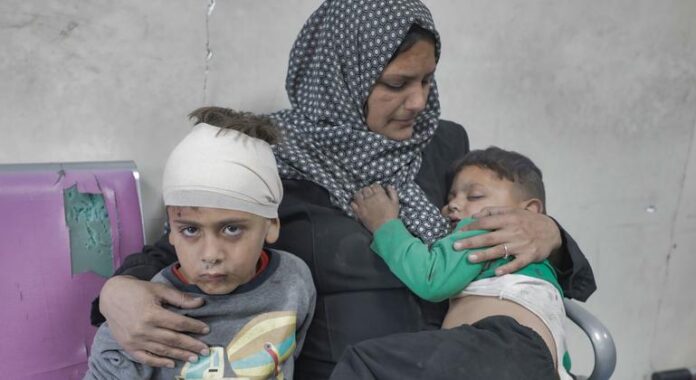
“As of 13 July, we have recorded 875 people killed in Gaza while trying to get food; 674 of them were killed in the vicinity of GHF sites,” said Thameen Al-Kheetan, OHCHR spokesperson, referencing the US-Israeli run private organization which has bypassed regular humanitarian operations.
The remaining 201 victims were killed while seeking food “on the routes of aid convoys or near aid convoys” run by the UN or UN-partners still operating in the war-shattered enclave, Mr. Al-Kheetan told journalists in Geneva.
Killings linked to the controversial US and Israeli-backed aid hubs began shortly after they started operating in southern Gaza on 27 May, bypassing the UN and other established NGOs.
The latest deadly incident happened at around 9am on Monday 14 July, when reports indicated that the Israeli military shelled and fired towards Palestinians seeking food at the GHF site in As Shakoush area, northwestern Rafah.
According to OHCHR, two Palestinians were killed and at least nine others were injured. Some of the casualties were transported to the International Committee of the Red Cross (ICRC) hospital in Rafah. On Saturday medics there received more than 130 patients, the “overwhelming majority” suffering from gunshot wounds and “all responsive individuals” reporting they were attempting to access food distribution sites.
Deadly hunger
The UN agency for Palestinian refugees, UNRWA, expressed deep concerns about the continuing killing of civilians trying to access food, while deadly malnutrition spreads among children.
“Our teams on the ground – UNRWA teams and other United Nations teams – have spoken to survivors of these killings, these starving children included, who were shot at while on their way to pick up very little food,” said Juliette Touma, UNRWA Director of Communications.
Speaking via video from Amman, Ms. Touma insisted that the near-total Israeli blockade of Gaza has led to babies dying of the effects of severe acute malnutrition.
“We’ve been banned from bringing in any humanitarian assistance into Gaza for more than four months now,” she said, before pointing to a “significant increase” in child malnutrition since the Israeli blockade began on 2 March.
Ms. Touma added: “We have 6,000 trucks waiting in places like Egypt, like Jordan; it’s from Jordan to the Gaza Strip it’s a three-hour drive, right?”
In addition to food supplies, these UN trucks contain other vital if basic supplies including bars of soap. “Medicine and food are going to soon expire if we’re not able to get those supplies to people in Gaza who need it most, among them one million children who are half of the population of the Gaza Strip,” Ms. Touma continued.
West Bank: ‘Silent war is surging’
Meanwhile in the occupied West Bank including East Jerusalem, Palestinians continue to be killed in violence allegedly linked to Israeli settlers and security forces, UN agencies said.
According to OHCHR, two-year-old Laila Khatib was shot in the head by Israeli security forces on 25 January while she was inside her house in Ash-Shuhada village, in Jenin.
On 3 July, 61-year-old Walid Badir was shot and killed by Israeli security forces, reportedly while he was cycling back home from prayers, passing through the outskirts of the Nur Shams camp, the UN rights office continued, pointing to intensifying “killings, attacks and harassment of Palestinians in past weeks.
“This includes the demolition of hundreds of homes and forced mass displacement of Palestinians,” OHCHR’s Mr. Al-Kheetan noted, with some 30,000 Palestinians forcibly displaced since the launch of Israel’s operation “Iron Wall” in the north of the occupied West Bank earlier this year.
“We should recall that international law is very clear about this in terms of the obligations of the occupying power,” he said. “Bringing about a permanent demographic change inside the occupied territory may amount to a war crime and is tantamount to ethnic cleansing.”
“We continue to have a silent war that is surging, where heavy restrictions on movement continue, where poverty is increasing as people are cut off from their livelihoods and unemployment soars,” said UNRWA’s Ms. Touma.
With its current focus on the northern occupied West Bank, the Israeli military operation has impacted the refugee camps of Jenin, Tulkarem and Nur Shams.
“It is causing the largest population displacement of the Palestinians in the West Bank since 1967,” Ms. Touma continued.
Sudan: humanitarian needs approved in the midst of increasing hostilities and heavy rain

Almost 27 months have passed since the fighting broke out between the Sudanese armed forces (SAF) and a former ally, the fast paramilitary security forces (RSF), creating an unprecedented humanitarian crisis.
The UN expressed alarm On the climbing of hostilities in El Fasher, the besieged capital of the state of Darfur du Nord.
Serious risk of renewed violence
A large number of RSF fighters would have entered the city on Friday for the first time since the start of the siege over a year ago.
Local sources report that recent ferocious fights, especially in the southwest and east of El Fasher, have led to civilian victims.
“The situation remains very volatile and unpredictable, with a serious risk of renewed violence, as well as new trips and disruption of humanitarian operations – which are already under high tension”, “,” Ochha said.
Insecurity in the state of northern Kordofan
Meanwhile, in the state of North Kordofan, increasing insecurity forced 3,400 people to flee their homes this weekend, according toThe United Nations International Organization for Migration (Iom).
Local reports indicate that at least 18 civilians were killed and that the houses were burned in several villages.
The OCHA reminded of all parties that attacks on civilians and civil infrastructure are prohibited by international humanitarian law and that civilians must be protected at any time.
Rainy season constraints
Meanwhile, heavy rains have been reported in the western and darfur center states, which can affect road conditions in certain places and worsen the challenges that humanitarian workers are already faced with access to people in need.
“While the rainy season continues until October, the risk of floods, access constraints and epidemics of the disease increases – especially during this meager critical season, a time between harvests where food stocks are traditionally low,” warned Ocha.
Families return to the west of Darfur
The agency said that despite the crisis, signs of small -scale yields are visible in the western state of Darfur, where displaced families have returned from Chad to three localities – Sirba, Jebel Moon and Kulbus – to cultivate their farms.
In addition, local authorities report around 40 people who return to Kulbus daily, with 300 arriving in last week.
OCHA has urged all parties to allow safe and unhindered access to all people in need through Sudan and so that donors intensify their support.
Some 30 million people nationally – more than half of the population – need vital assistance and protection this year.
Originally published at Almouwatin.com
