Sunday, September 27, 2026
Home Blog Page 419

Gaza: 875 people confirmed dead trying to source food in recent weeks

0
Gaza: 875 people confirmed dead trying to source food in recent weeks

“As of 13 July, we have recorded 875 people killed in Gaza while trying to get food; 674 of them were killed in the vicinity of GHF sites,” said Thameen Al-Kheetan, OHCHR spokesperson, referencing the US-Israeli run private organization which has bypassed regular humanitarian operations.

The remaining 201 victims were killed while seeking food “on the routes of aid convoys or near aid convoys” run by the UN or UN-partners still operating in the war-shattered enclave, Mr. Al-Kheetan told journalists in Geneva.

Killings linked to the controversial US and Israeli-backed aid hubs began shortly after they started operating in southern Gaza on 27 May, bypassing the UN and other established NGOs.

The latest deadly incident happened at around 9am on Monday 14 July, when reports indicated that the Israeli military shelled and fired towards Palestinians seeking food at the GHF site in As Shakoush area, northwestern Rafah.

According to OHCHR, two Palestinians were killed and at least nine others were injured. Some of the casualties were transported to the International Committee of the Red Cross (ICRC) hospital in Rafah. On Saturday medics there received more than 130 patients, the “overwhelming majority” suffering from gunshot wounds and “all responsive individuals” reporting they were attempting to access food distribution sites.

Deadly hunger

The UN agency for Palestinian refugees, UNRWA, expressed deep concerns about the continuing killing of civilians trying to access food, while deadly malnutrition spreads among children.

“Our teams on the ground – UNRWA teams and other United Nations teams – have spoken to survivors of these killings, these starving children included, who were shot at while on their way to pick up very little food,” said Juliette Touma, UNRWA Director of Communications.

Speaking via video from Amman, Ms. Touma insisted that the near-total Israeli blockade of Gaza has led to babies dying of the effects of severe acute malnutrition.

“We’ve been banned from bringing in any humanitarian assistance into Gaza for more than four months now,” she said, before pointing to a “significant increase” in child malnutrition since the Israeli blockade began on 2 March.

Ms. Touma added: “We have 6,000 trucks waiting in places like Egypt, like Jordan; it’s from Jordan to the Gaza Strip it’s a three-hour drive, right?”

In addition to food supplies, these UN trucks contain other vital if basic supplies including bars of soap. “Medicine and food are going to soon expire if we’re not able to get those supplies to people in Gaza who need it most, among them one million children who are half of the population of the Gaza Strip,” Ms. Touma continued.

West Bank: ‘Silent war is surging’

Meanwhile in the occupied West Bank including East Jerusalem, Palestinians continue to be killed in violence allegedly linked to Israeli settlers and security forces, UN agencies said.

According to OHCHR, two-year-old Laila Khatib was shot in the head by Israeli security forces on 25 January while she was inside her house in Ash-Shuhada village, in Jenin.

On 3 July, 61-year-old Walid Badir was shot and killed by Israeli security forces, reportedly while he was cycling back home from prayers, passing through the outskirts of the Nur Shams camp, the UN rights office continued, pointing to intensifying “killings, attacks and harassment of Palestinians in past weeks.

“This includes the demolition of hundreds of homes and forced mass displacement of Palestinians,” OHCHR’s Mr. Al-Kheetan noted, with some 30,000 Palestinians forcibly displaced since the launch of Israel’s operation “Iron Wall” in the north of the occupied West Bank earlier this year.

“We should recall that international law is very clear about this in terms of the obligations of the occupying power,” he said. “Bringing about a permanent demographic change inside the occupied territory may amount to a war crime and is tantamount to ethnic cleansing.”

“We continue to have a silent war that is surging, where heavy restrictions on movement continue, where poverty is increasing as people are cut off from their livelihoods and unemployment soars,” said UNRWA’s Ms. Touma.

With its current focus on the northern occupied West Bank, the Israeli military operation has impacted the refugee camps of Jenin, Tulkarem and Nur Shams.

“It is causing the largest population displacement of the Palestinians in the West Bank since 1967,” Ms. Touma continued.


Source link

ESAs publish guide on DORA Oversight activities

0
ESAs publish guide on DORA Oversight activities

The European Supervisory Authorities (EBA, EIOPA, ESMA – the ESAs) today published a guide on oversight activities under the Digital Operational Resilience Act (DORA). The aim of this guide is to provide an overview of the processes used by the ESAs through the Joint Examination Teams (JET) to oversee critical Information and communication technology (ICT) third-party service providers (CTPPs).

This guide provides high-level explanations to external stakeholders regarding the CTPP Oversight framework. Furthermore, it provides an overview of the governance structure, the oversight processes, the founding principles and the tools available to the overseers.

However, the guide is not a legally binding document and does not replace the legal requirements laid down in the relevant applicable EU law.

The ESAs invite the public, financial entities and, crucially, third-party providers to use this document to prepare for the oversight implementation.

Go to the Guide

Additional information on the oversight implementation

For more information on the implementation of the DORA Oversight framework, please refer to this presentation.

Source link

Yemen: The Security Council extends the UN mission to the crucial port city in the middle of the Red Sea Conflicts Climbing

0
Yemen: The Security Council extends the UN mission to the crucial port city in the middle of the Red Sea Conflicts Climbing

Adopted unanimously, the resolution extending the United Nations mission to support the Hudaydah agreement (UNMHA) Until January 28, 2026, underlines the essential role of the mission in maintaining fragile stability in the midst of renewed military climbing signs and deepening humanitarian needs.

Resolution – 2786 (2025) – reaffirms the support of the council to Stockholm contract 2018Including the ceasefire in the port city controlled by the Houthi-and the demilitarization of its quays, where the majority of imports of Yemen and vital aid expeditions pass.

The future of the mission

He also reports an increasing debate on the future of the mission, asking the Secretary General to submit an exam by November to improve the coordination and consistency of UN operations, “keeping the challenges in mind” which directly hampered the AMHA capacity to deliver.

“” THE Security advice… Expresses its intention to review the full range of options for UNMHA’s mandate, including the assessment of future viability and sunset of the missionAnd make all the necessary adjustments to gain efficiency and reduce costs or otherwise, as is necessary for UN operations in Hudaydah by field developments, including, in particular a cease-fire of sustainable national struggle, “noted the resolution.

The UNMHA was created in 2019 to support the implementation of the Stockholm agreement between the Government of Yemen and Ansar Allah (as the Houthis are officially known), which sought to prevent major conflicts in the region.

The mission monitors the ceasefire, facilitates the redeployments and supports de-escalation through connection mechanisms between the parties.

Assembly of tensions

While the military situation on the ground remains stable in a tenuous manner, tensions rise on several fronts.

According to a letter From the secretary general to the council of 15 members in June, an increasing number of ceasefire violations-on average more than 100 per day between June 2024 and May 2025-highlight the fragile state of the region.

The forces aligned by the government fortified positions in anticipation of a possible offensive in the city, while the Houthi units have increased infiltration attempts and the mobilization of the public, including military style camps in the areas they control.

The Security Council unanimously adopts resolution 2786 (2025) extending until January 28, 2026, the mandate of the United Nations Mission to support the Hudaydah agreement (UNMHA).

Mortal passage from the Red Sea

By aggravating this, the Houthi attacks against international navigation in the Red Sea have intensified. On July 8, the eternity of the commercial ship was sunk, killing several crew members and leaving the other missing. This followed the sinking of the magic sea ship two days earlier.

In a statement, the UN special envoy, Hans Grundberg, condemned attacks, calling them violations of international maritime law and warnings that they have risked serious environmental and geopolitical benefits.

He called Ansar Allah to stop attacks that may degenerate tensions in and around Yemen.

“” [He urges them] To rely on the cessation of hostilities with the United States in the Red Sea and to provide sustainable guarantees to the region and to the broader international community, ensuring the security of all those who use this critical navigable path, “noted the press release.

Important operational constraints

In Hudaydah himself, UNMHA faces important constraints.

THE June letter By the secretary general details the restrictions by the Houthi authorities of the United Nations patrols at the critical ports of the Red Sea – Hudaydah, Salif and Ras Issa.

Damage caused by repeated air strikes, notably by the United States and Israel in response to Houthi attacks, left partially inoperative key port infrastructure, disturbing fuel, food and medical imports.

With Hudaydah responsible for 70% of commercial imports from Yemen and 80% of humanitarian deliveries, the issues are high.

© Unicef / Mahmoud Alfilastini

A child receives vaccination against polio in Yemen.

Polio vaccination reader

Meanwhile, a new series of polio vaccinations is underway in areas controlled by the Southern Yemen Government, in the midst of increasing concerns concerning the continuous propagation of the virus.

From July 12 to 14, health workers were deployed in 12 governorsaimed at braking the trigger of type 2 poliovirus varying.

The campaign, led by the Ministry of Yemen of Public Health with the support of the UN Children’s Fund (Unicef) and the World Health Organization (WHO), came as 282 cases have been reported since 2021, environmental surveillance confirming continuous transmission.

“” The campaign is essential to interrupt transmission and protect each child from the debilitating effects of polio“Said Ferima Coulibaly-Zerbo, acting who represented Yemen.

Peter Hawkins of Unicef echoes the emergency, warning of the “Imminent threat” for non -vaccinated children If the immunization differences persist.

“But, thanks to vaccination, we can ensure the safety of our children,” he said.

Originally published at Almouwatin.com

Minimising the risks children and young people face online

0
Minimising the risks children and young people face online

Children and young people face many risks online. To minimise these, the Commission has presented guidelines to ensure high levels of privacy, safety and security on online platforms. It has also put forward a prototype of an age-verification app that prioritises protecting people’s privacy.

Source link

Minimising the risks children and young people face online

0
Minimising the risks children and young people face online

Children and young people face many risks online. To minimise these, the Commission has presented guidelines to ensure high levels of privacy, safety and security on online platforms. It has also put forward a prototype of an age-verification app that prioritises protecting people’s privacy. Source link

Source link

Prior Information Notice to organise and implement training activities on the Official Controls Regulation under the Better Training for Safer Food initiative

0
Prior Information Notice to organise and implement training activities on the Official Controls Regulation under the Better Training for Safer Food initiative

HaDEA has published a Prior Information Notice (PIN) for a call for tenders to be funded under the Better Training for Safer Food initiative (BTSF) of the European Union.

Interested parties are invited to consult the EU Funding and Tenders Portal possible publication of the contract notice and tender documents.

PIN for HADEA/2025/OP/0036 – Harmonising the implementation of EU legal requirements in the fields of the Official Controls Regulation, border controls, and the use of Trade Control and Expert System (TRACES) through the ‘Better Training for Safer Food’ Initiative

The subject of this call for tenders is the organisation and implementation of training activities on the Official Controls Regulation – Regulation (EU) 2017/625 (OCR) including border controls at border control posts (BCPs) and use of TRACES. 

Estimated budget: €3 900 000

Background

The EU Single Market Programme brings together the Union actions in the fields of competitiveness of enterprises, especially SMEs, consumer protection, customers and end-users in financial services, policymaking in financial services and in the plant, animal, food and feed areas.

The BTSF Initiative is a training initiative of the European Commission, which has the objective to improve the knowledge and implementation of EU rules covering food safety and plant and animal health.

Source link

ESAs publish guide on DORA Oversight activities

0
Minimising the risks children and young people face online

The European Supervisory Authorities (EBA, EIOPA, ESMA – the ESAs) today published a guide on oversight activities under the Digital Operational Resilience Act (DORA). The aim of this guide is to provide an overview of the processes used by the ESAs through the Joint Examination Teams (JET) to oversee critical Information and communication technology (ICT) […]

Source link

EU-Southern Neighbourhood Ministerial: press remarks by High Representative Kaja Kallas upon arrival

0
EU-Southern Neighbourhood Ministerial: press remarks by High Representative Kaja Kallas upon arrival

EU-Southern Neighbourhood Ministerial: press remarks by High Representative Kaja Kallas upon arrival

Source link

Sudan: Humanitarian needs deepen amid rising hostilities and heavy rains

0
Sudan: Humanitarian needs deepen amid rising hostilities and heavy rains

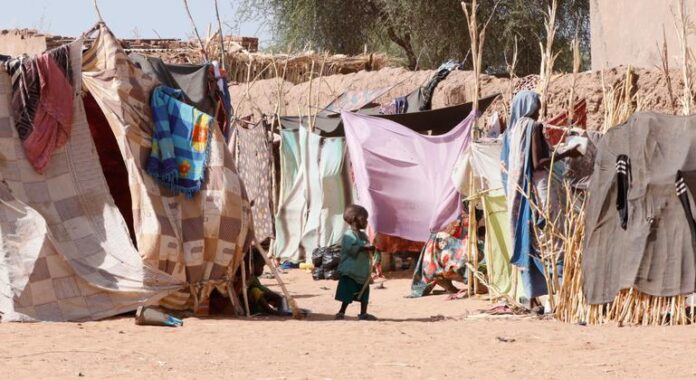
Nearly 27 months have passed since fighting broke out between the Sudanese Armed Forces (SAF) and a former ally, the paramilitary Rapid Security Forces (RSF), creating an unprecedented humanitarian crisis.

The UN voiced grave alarm over escalating hostilities in El Fasher, the besieged capital of North Darfur state. 

Serious risk of renewed violence

Large numbers of RSF fighters reportedly entered the city on Friday for the first time since the siege began over a year ago.

Local sources report that recent fierce fighting, particularly in the southwest and east of El Fasher, has led to civilian casualties.

“The situation remains highly volatile and unpredictable, with a serious risk of renewed violence, as well as further displacement and disruption of humanitarian operations – which are already under severe strain,” OCHA said.

Insecurity in North Kordofan state

Meanwhile, in North Kordofan State, growing insecurity forced 3,400 people to flee their homes over the weekend, according to the UN International Organization for Migration (IOM). 

Local reports indicate that at least 18 civilians were killed, and homes were burned in several villages.

OCHA reminded all parties that attacks on civilians and civilian infrastructure are prohibited under international humanitarian law, and that civilians must be protected at all times.

Rainy season constraints

Meanwhile, heavy rains have been reported in West and Central Darfur states, which may affect road conditions in some locations and worsen the challenges humanitarians are already facing in accessing people in need.

“With the rainy season continuing through October, the risk of floods, access constraints and disease outbreaks is growing – especially during this critical lean season, a time between harvests when food stocks traditionally run low,” OCHA warned.

Families return to West Darfur

The agency said that despite the crisis, signs of small-scale returns are visible in West Darfur state, where displaced families have been returning from Chad to three localities – Sirba, Jebel Moon and Kulbus – to cultivate their farms. 

Furthermore, local authorities report about 40 people returning daily to Kulbus, with 300 arriving over the past week.

OCHA urged all parties to enable safe and unimpeded access to all people in need across Sudan, and for donors to step up their support.

Some 30 million people nationwide – more than half the population – need vital aid and protection this year. 

Source link

World News in Brief: Inter-ethnic violence in Syria, Indigenous Peoples’ rights, global information security

0
World News in Brief: Inter-ethnic violence in Syria, Indigenous Peoples’ rights, global information security

The violence erupted two days after a Druze merchant was abducted on the highway to Damascus.

The incident marks the latest episode of sectarian bloodshed in Syria, where fears among minority groups have surged since Islamist rebels toppled former dictator Bashar al-Assad in December and installed a new caretaker Government, which is gaining increasing international recognition.

Those targeted include the Druze sect, an offshoot of Shia Islam.  

UN voices ‘deep concern’

On Monday, UN Deputy Special Envoy for Syria, Najat Rochdi, expressed “deep concern” over these reports and urged authorities and stakeholders to “take immediate steps to protect civilians, restore calm and prevent incitement.”

She also underscored the need for inclusion, trust-building and meaningful dialogue to advance a credible and inclusive political transition in Syria.

UN human rights chief says ‘wisdom’ of Indigenous Peoples needed in climate change, digital policy upgrades

The UN human rights chief spoke at a high-level political forum on the rights of Indigenous Peoples on Monday.

Underscoring how crucial such forums are to advancing the rights of Indigenous Peoples, Volker Türk highlighted developments in Colombia, Finland and Guatemala that have given them more self-determination.

But despite these advances, violations against Indigenous Peoples’ rights continue.

Many still lack formal land recognition, while mining activity, deforestation and large-scale agricultural development often cause environmental destruction.

Indigenous Peoples also experience immense discrimination and face the brunt of climate chaos, Mr. Türk stressed.

Toll on activists

Furthermore, data from the human rights office reveals that 26 per cent of rights activists killed in 2023 and 2024 were Indigenous, largely in the Americas.

Additionally, states are using AI in ways that harm Indigenous Peoples through surveillance, data exploitation and exclusion from decision-making. Türk thus called for human rights-based approaches that uphold Indigenous data sovereignty and self-determination.

The High Commissioner also called for future policies on climate, digital technologies and other areas to “reflect the wisdom and experience of Indigenous Peoples.”

“This is not only essential to respect and fulfil the human rights of Indigenous Peoples,” he concluded. “There is growing recognition that the ideas and approaches of Indigenous Peoples hold important lessons for all of us.”

Guterres welcomes step forward in securing digital technology worldwide

The UN chief Antonio Guterres on Monday, welcomed the adoption by consensus of the UN Open Ended Working Group on Information and Communication Technologies.

It was established in 2020 with a five-year mandate to promote regular institutional dialogue and initiatives focused on keeping digital technologies safe and secure.  

The Secretary-General welcomed the Final Report of 10 July, which summed up the past five years of negotiations, said a statement issued by his Spokesperson.  

It reflects shared views on current and emerging threats, responsible government policies, international law, norms and efforts such as confidence-building and capacity development.  

Call for cooperation

It also establishes a permanent mechanism to continue discussions about responsible State behaviour in the use of information and communications technologies, which the Secretary General particularly appreciated.  

“The Secretary-General now calls upon all States to work together through the Global Mechanism to tackle digital risks and ensure these technologies are leveraged for good,” the statement said.  

The Secretary General congratulated the group on its accomplishments, saying the consensus adoption “demonstrates that even in the most challenging international security environment, collective action is still possible.” 

Source link