Wednesday, May 6, 2026
Home Blog Page 505

Statement by the High Representative Kaja Kallas on the formation of a new government in Lebanon

0
Statement by the High Representative Kaja Kallas on the formation of a new government in Lebanon

Statement by the High Representative Kaja Kallas on the formation of a new government in Lebanon

Source link

Palestinians’ rights matter, says UNRWA chief

0
Palestinians’ rights matter, says UNRWA chief

In a social media post on Friday, Commissioner-General Philippe Lazzarini said that “people in Gaza have undergone systematic dehumanization” since the war there began.

He emphasized that “Palestinians do matter, including those in Gaza. Their rights, lives and futures matter,” noting that “human rights cannot be applied selectively.”

His comments come in the wake of United States President Donald Trump’s proposal made earlier this week that the US should seize control of Gaza and permanently displace the entire Palestinian population – a move which the UN Secretary-General said would be an act of “ethnic cleansing.”

Two-State solution

In his statement, Mr. Lazzarini quoted UN chief António Guterres who has stressed that “peace requires ending the occupation, and the establishment of an independent Palestinian State, with Gaza as an integral part; a viable and sovereign Palestinian State side-by-side with Israel”. 

The UNRWA chief said his agency’s teams “are committed to continue providing critical assistance to Palestine refugees who need us most until empowered Palestinian institutions become a lasting and viable alternative.”

UNRWA continues to face huge challenges in carrying out its work.  Last month, two Israeli laws came into effect which ban UNRWA operations within its borders and forbid Israeli authorities from having any contact with the agency.

UNRWA was ordered to vacate its premises in East Jerusalem in the occupied West Bank, and visas for international staff were not renewed.  

Teams are still providing aid to communities in the West Bank, including East Jerusalem, as well as in Gaza, where a ceasefire continues to hold following 15 months of war.

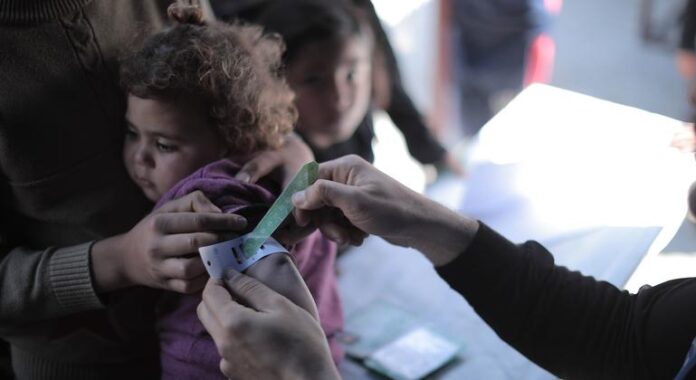
UN Relief Chief Tom Fletcher talks to a child at an UNRWA shelter in Gaza.

‘Relief chief’ meets displaced families

In other developments, UN Humanitarian Coordinator Tom Fletcher continued his week-long visit to Israel and the Occupied Palestinian Territory.

On Friday he visited an UNRWA-run shelter in the city of Deir Al-Balah in Gaza before heading to Jerusalem via the Kerem Shalom border crossing.

Mr. Fletcher met with displaced families who spoke of the hardships they have endured over the past 16 months. He also heard from staff managing the shelter about the ongoing response and challenges they face in providing critical support. 

The UNRWA site is one of the many schools in Gaza that were turned into shelters. The UN relief chief met children who are missing out on their education, stressing the need to re-open schools in Gaza as soon as possible.    

In Jerusalem, Mr. Fletcher met heads of UN aid agencies and other humanitarians, where he discussed how to sustain aid flows to Gaza and support West Bank operations.

Medical evacuations and food assistance

UN agencies continue to provide updates on their work in the Gaza Strip.

The World Health Organization (WHO) said on social media that its team has supported the medical evacuation of 178 patients this month, including 115 children, to Egypt. However, between 12,000 and 14,000 more still need to be evacuated.

For its part, the World Food Programme (WFP) has sent more than 15,000 tonnes of food into Gaza since the start of the ceasefire, reaching more than 525,000 people with food parcels, hot meals and cash.

UN child rights agency UNICEF added that since the ceasefire took effect, it has reached more than 10,000 infants across Gaza with ready to use complementary foods.   

A family sits outside a makeshift shelter in Gaza.

A family sits outside a makeshift shelter in Gaza.

Insufficient shelter 

This week, UN partners have been assessing the impact of a winter storm on shelters in different locations in the enclave. Partners in the north are also preparing to distribute 1,500 tents to returnees in the Gaza and North Gaza governorates.

Humanitarians note even though shelter support is scaling up, nearly one million displaced people are living in substandard tents or makeshift dwellings – some families resorting to sewing old rice sacks together for basic cover.

West Bank crackdown continues

The UN humanitarian affairs office, OCHA, also updated on the situation in the West Bank.

Ongoing operations by Israeli forces in Jenin, Tulkarm and Tubas continue to displace Palestinians, severely restricting their access to essential services and causing widespread destruction.

Humanitarians estimate that 82 per cent of displaced families in the northern West Bank are currently living in rented accommodations.   

Significant increase in child fatalities in the West Bank

Meanwhile, nearly half of all Palestinian child fatalities in the West Bank over the past two decades occurred within the last two years, UN aid coordination office OCHA said in a humanitarian update published on Thursday.

Since January 2023, 224 children (218 boys and six girls) have been killed by Israeli forces or settlers, representing nearly half of the 468 child fatalities the agency has documented since the beginning of 2005.

They include 11 children killed since January of this year, all by Israeli forces, including six killed in airstrikes, and 10 killed in the northern governorates of the West Bank. 

“This is generally consistent with trends observed over the past two years,” OCHA said.

Concern over use of force

The agency noted that in 2023 and 2024, 64 per cent of Palestinian child fatalities in the West Bank were in the northern governorates. Most, 82 per cent, were shot by live ammunition, and 18 per cent were killed by airstrikes. 

Furthermore, more than 2,500 Palestinian children were injured during the same period, 28 per cent of them by live ammunition. 

So far this year, 89 Palestinian children were reported injured by Israeli forces or settlers, 48 per cent by live ammunition. 

“The significant number of children killed and injured with live ammunition fired by Israeli forces or in airstrikes raises concerns over unnecessary and excessive uses of force against children by Israeli forces during operations in the West Bank,” said OCHA.

Source link

Georgia: statement by the High Representative/Vice-President and the Commissioner for Enlargement on the situation in Georgia

0
Statement by the High Representative Kaja Kallas on the formation of a new government in Lebanon

Georgia: statement by the High Representative/Vice-President and the Commissioner for Enlargement on the situation in Georgia

Source link

First Person: Bodies of children in Haiti have turned into ‘battlegrounds’

0
First Person: Bodies of children in Haiti have turned into ‘battlegrounds’

The agency’s spokesperson James Elder has just visited Port-au-Prince, the capital of the embattled Caribbean nation and has been speaking about what he experienced there.

Staggering abuse and neglect

“There has been a staggering 1,000 per cent rise in sexual violence against children in Haiti, which has turned their bodies into battlegrounds. The 10-fold rise, recorded from 2023 to last year, comes as armed groups inflict unimaginable horrors on children.

Almost equally staggering is how little coverage this gruesome statistic has received. And so, if numbers have lost meaning, perhaps the children living this horror will count.

Gangs control the majority of the Haitian capital, Port-au-Prince.

Roseline* is 16. Late last year, she left her friend’s house to go to the shop and was abducted by armed men.

She was placed in a van with other young girls and taken to a warehouse. There she was extensively beaten. She was then drugged and over the course of what she believes to be a month, she was relentlessly raped.

When the armed group realised Roseline had no one to pay her kidnapping ransom, she was released. She is currently in a UNICEF-supported safe house with more than a dozen other girls, all receiving care.

Astounding insecurity

Armed groups now control 85 per cent of Port-au-Prince. Let me repeat that. 85 per cent of the capital of Haiti is under the control of armed groups, an astounding case of insecurity in a capital city.

Last year alone, child recruitment into armed groups surged by 70 per cent. Right now, up to half of all armed group members are children, some as young as eight years old.

Many are taken by force. Others are manipulated or driven by extreme poverty. It’s a lethal cycle. Children are recruited into the groups that fuel their own suffering.

And in Haiti, the suffering is immense – 1.2 million children live under the constant threat of armed violence.

Collapse of essential services

Essential services have collapsed. Hospitals are overwhelmed. More than half of Haiti’s health facilities lack the equipment and medication to treat children in emergencies.

A woman collects relief items distributed by UNICEF.

© UNICEF/Maxime Le Lijour

A woman collects relief items distributed by UNICEF.

Playgrounds, schools and homes have turned into battlegrounds, forcing many families to flee. More than 500,000 children have been displaced. An estimated three million will require urgent humanitarian assistance this year.

And education? More than 300,000 children have seen their education disrupted due to recurrent population displacement and school closures.

And as noted, sexual violence is rampant. The abhorrence of an attack on a child is obvious. A 10-fold increase is ruinous. The pain of course does not stop with the survivor – it ripples through families, shatters communities and scars society as a whole.

Engaging communities through young reporters

And yet, Haitians refuse to give up in the face of crisis.

Take one example: UNICEF’s 135,000 “U-reporters” in the country. These young people embody the commitment of everyday Haitians, bringing their energy and dedication to help those who need it most.

A U-reporter gives a presentation on proper hygiene practices and cholera prevention.

A U-reporter gives a presentation on proper hygiene practices and cholera prevention.

U-Report is a digital platform created by UNICEF to engage communities, especially youth, in social issues.

And in Haiti, in one month in 2024 alone, U-reporter efforts led to the identification and referral of cases of malnutrition, under-vaccination and essential support for pregnant women in displaced sites and host communities.

Underfunded programmes

Haiti’s progress starts with its children. With incredible partners, UNICEF has created 32 mobile safe spaces to prevent and respond to gender-based violence, deployed more than 380 health professionals across 105 institutions, distributed cash to almost 30,000 families and treated more than 80,000 children for moderate and severe wasting.

Programmes that meet children’s needs can disrupt cycles of violence and reduce the risk of them becoming perpetrators or victims.

Despite this, UNICEF Haiti’s 2024 emergency funding appeal of $221.4 million was 72 per cent underfunded.

This starkly contrasts with the urgent need for education, protection and development opportunities to prevent children from being drawn into violence. Without these efforts, violence will continue to consume future generations.”

Source link

DR Congo crisis: Thousands flee clashes in South Kivu

0
DR Congo crisis: Thousands flee clashes in South Kivu

Escalating fighting between M23 rebels and Congolese troops has caused thousands of people to flee, with many heading towards the provincial capital, Bukavu – where UN humanitarian agencies in the east are now located following the fall of Goma.

Local aid partners report that a bombing on Thursday resulted in three civilians being injured and power infrastructure damaged in the town of Nyabibwe, located some 60 kilometres north of Bukavu.

This happened a day after three workers with a non-governmental organization (NGO) were killed in North Kivu province under circumstances that remain unclear. 

Humanitarians at risk

“This incident is a reminder of the unacceptable risks facing aid workers,” said OCHA, adding that the NGO has had to suspend food and agriculture assistance in the area, affecting 36,000 people.

Elsewhere in North Kivu, OCHA and humanitarian partners continue to assess conditions in and around Goma, where hundreds of thousands of people are still on the move.

 An assessment this week estimates that nearly 33,000 people have returned to villages in Nyiragongo Territory, immediately northeast of the city.

Health facilities destroyed

Meanwhile, the World Health Organization (WHO) said that health facilities in North Kivu have been heavily impacted by recent violence.  Many are destroyed while some others struggle to restart operations.

Cancer, diabetes, hypertension, mental health and other routine services are also affected as medicines have run out, and health workers are either absent or overburdened.

WHO warned that the threat of infectious diseases has multiplied in a region where cholera, malaria, measles, meningitis, mpox and tuberculosis are among the major concerns.

Water supply in Goma was disrupted and has been partially restored in some areas, leading people to rely on water from the lake and heightening the risk of cholera. Nearly 600 suspected cases of the disease, and 14 deaths, were reported in North Kivu between 1 and 27 January.

In response to the crisis, WHO has deployed emergency medical supplies, hygiene and water treatment supplies, and tents to increase hospital capacity by 1,000 beds.  However supplies are being depleted rapidly, and more resources are urgently needed.

On Friday, leaders from East and Southern Africa met in Tanzania for a summit on the crisis in the eastern DRC, which was also the focus of a Special Session of the UN Human Rights Council in Geneva.

The situation will again be discussed at a Summit-level meeting of the African Union Peace and Security Council in Ethiopia next week, which UN Secretary-General António Guterres will attend.

Source link

Sudan: Civilian death toll triples in one week amid escalating hostilities

0
Sudan: Civilian death toll triples in one week amid escalating hostilities

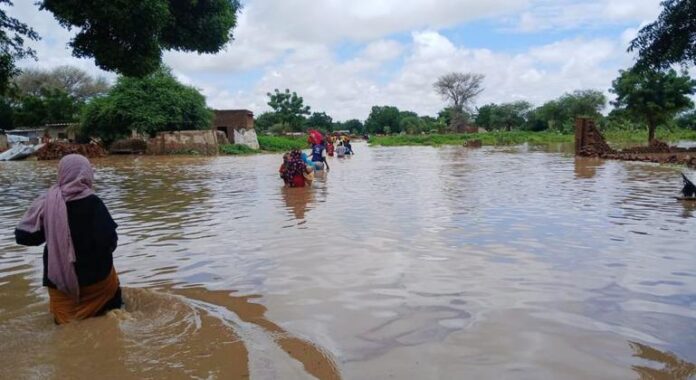
This figure represents a threefold increase from the previous week, when at least 89 civilians lost their lives amid the ongoing hostilities.The crisis is compounded by intensifying violence in South Kordofan and Blue Nile states, where a humanitarian catastrophe looms, according to the UN Humanitarian Coordinator for Sudan, Clementine Nkweta-Salami.

Escalation of violence

This week, the conflict has intensified as artillery shelling, airstrikes and aerial drone attacks continue to devastate populated areas, including Khartoum, North and South Darfur as well as North and South Kordofan.

South Kordofan’s capital, Kadugli, has seen at least 80 civilian casualties with reports of women and children being used as human shields.

Meanwhile, the threat of further violence in Blue Nile is growing, with reports of mass mobilisation for conflict.

“The sharp increase in civilian deaths underscores the dire risks civilians face amid the continued failure by the parties to the conflict and their allies to protect civilians,” OHCHR spokesperson Seif Magango said in a statement.

Humanitarians under threat

Beyond the rising death toll, humanitarian volunteers are also under threat.

Local partners report that some aid workers have been erroneously accused of collaborating with the Rapid Support Forces (RSF), making them targets of intimidation and violence.

One individual has already received a death threat and since the conflict erupted in April 2023, at least 57 members of a local volunteer network have been killed.

The situation is further worsened by critical shortages of medical supplies and growing food insecurity, particularly in South Kordofan, where malnutrition rates are spiking.

Urgent call for protection

OHCHR has urged all parties involved in the conflict to end indiscriminate attacks and targeted violence against civilians.

“The Sudanese Armed Forces and the Rapid Support Forces – and their allied movements and militias – must respect their international law obligations and take concrete steps to protect civilians from harm, including humanitarian workers and human rights defenders,” Mr. Magango emphasised.

Source link

Weekly schedule of President António Costa

0
Statement by the High Representative Kaja Kallas on the formation of a new government in Lebanon

Weekly schedule of President António Costa, 10–16 February 2025

Source link

International Criminal Court condemns US sanctions move

0
International Criminal Court condemns US sanctions move

The court was established by the Rome Statute, negotiated within the UN – but it is a fully independent court set up to try the gravest crimes, including crimes against humanity. Read our explainer here.

Thursday’s executive order said the US government would “impose tangible and significant consequences” on ICC officials who work on investigations that threaten national security of the US and allies – including Israel.

Arrest warrants

The directive follows the decision by ICC judges to issue arrest warrants in November for Israeli Prime Minister Benjamin Netanyahu and former defence minister Yoav Gallant, which accuses them of alleged war crimes in relation to the conduct of the war with Hamas on Gaza.

The ICC also issued a warrant for a former Hamas commander, Mohammed Deif.

Neither the US nor Israel recognise the ICC’s jurisdiction; there are 125 states parties to the Rome Statute, which came into effect in 2002.

The US executive order says that the ICC actions against Israel and preliminary investigations against the US “set a dangerous precedent, directly endangering current and former” personnel.

The order details possible sanctions including the blocking of property and assets of ICC officials and barring them and their families from entering the US.

A bid to impose sanctions on the ICC by the US Congress in January prior to the change in administration, failed to garner enough support in the Senate.

ICC ‘stands firmly by its personnel’

“The ICC condemns the issuance by the US of an Executive Order seeking to impose sanctions on its officials and harm its independent and impartial judicial work,” said the court in a press release.

“The Court stands firmly by its personnel and pledges to continue providing justice and hope to millions of innocent victims of atrocities across the world, in all Situations before it.”

The court also called on all parties to the ICC together with civil society and other nations to “stand united for justice and fundamental human rights.”

Source link

Gaza: 10,000 aid trucks reached enclave since ceasefire began

0
Gaza: 10,000 aid trucks reached enclave since ceasefire began

Announcing the development, the UN’s top aid official, Tom Fletcher, said that the trucks contained lifesaving food, medicine, and tents – all desperately needed by Gazans after more than 15 months of constant Israeli bombardment.

The UN emergency relief chief’s comments came as he prepared to join an aid convoy crossing into northern Gaza.

In recent days, he has held “practical discussions” with the Israeli authorities in Tel Aviv and Jerusalem “to keep lifesaving UN aid moving into Gaza at scale”. This includes COGAT – the Israeli body responsible for approving requests to deliver aid into Gaza and the West Bank – and the Israel Foreign Ministry.

Clearing rubble to live

According to the UN aid coordination office, OCHA, more than half a million people have returned to north Gaza since the ceasefire began. Needs for food, water, sanitation, healthcare and tents are enormous, with some returning to former homes with shovels to clear the rubble, according to the UN Children’s Fund, UNICEF.

In an update, the UN World Health Organization (WHO), said that it had received 63 trucks of medical supplies from aid partners to replenish its three warehouses in Gaza.

In addition, more than 100 sick and injured patients have also been evacuated to Egypt for urgent medical treatment since the temporary ceasefire came into effect, while OCHA noted that primary and secondary health services are being provided throughout the Strip.

Five ambulances entered Gaza to strengthen emergency response capacity on Tuesday, OCHA said in an update.

Food production boosted

The UN aid coordination agency noted that across Gaza, 22 bakeries supported by the World Food Programme (WFP) are now operational.

The WFP has also provided nutrient supplements to more than 80,000 children and pregnant or breastfeeding women across Gaza, since the ceasefire took effect and UNICEF has continued distributing nutrition support for infants.

Humanitarian partners have screened more than 30,000 children under the age of five for malnutrition since the ceasefire took effect. Of those screened, 1,150 cases of acute malnutrition have been identified, including 230 cases of severe acute malnutrition,” OCHA said.

In addition, the UN Food and Agriculture Organization (FAO) distributed nearly 100 metric tons of animal feed to support herders in Deir al Balah and Khan Younis, benefiting hundreds of people working in the agricultural sector.

To sustain learning activities across the Strip, education partners have established three new temporary learning spaces yesterday in Gaza, Rafah and Khan Younis governorates, to 200 school-aged children.

Ceasefire push 

The aid build-up came as the Secretary-General on Wednesday pushed for a permanent ceasefire in Gaza and the release of all remaining hostages in the enclave, while strongly rejecting the suggestion that Gazans should be resettled outside their homeland.

“In the search for solutions, we must not make the problem worse. It is vital to stay true to the bedrock of international law. It is essential to avoid any form of ethnic cleansing,” Guterres told  the UN Committee on the Exercise of the Inalienable Rights of the Palestinian People, which met to set out its programme of work for the year. “We must reaffirm the two-State solution,” he said.

Underlining the Secretary-General’s comments, the UN High Commissioner for human rights, Volker Türk, said that “any deportation or forced transfer of persons without legal basis is strictly forbidden”.

Source link

DR Congo: Rights chief warns crisis could worsen, without international action

0
DR Congo: Rights chief warns crisis could worsen, without international action

Since 26 January, nearly 3,000 people have been killed and 2,880 injured in attacks by the M23 and their allies “with heavy weapons used in populated areas, and intense fighting against the armed forces of the DRC and their allies”, the High Commissioner said, as UN Member States weighed setting up a fact-finding mission to investigate extreme rights violations still being committed in the DRC provinces of North Kivu and South Kivu.

Hostilities have continued unabated in this mineral-rich region that has been unstable for decades amid a proliferation of armed groups, forcing hundreds of thousands to flee their homes. Fighting escalated in late January when majority-Tutsi M23 fighters seized control of parts of North Kivu, including areas near Goma, and advanced towards South Kivu and the eastern DRC’s second city of Bukavu.

A draft resolution circulated before the Special Session – the 37th since the Council was created in 2006 – also condemned Rwanda’s military support of the M23 armed group and called for both Rwanda and M23 to halt their advance and to allow lifesaving humanitarian access immediately.

Hospitals targeted

Addressing the emergency session, Mr. Türk noted that two hospitals in Goma had been bombed on 27 January, killing and injuring multiple patients, including women and children.

In a mass prison break at Muzenze Prison in Goma on the same day, at least 165 female inmates were reportedly raped and most were later killed in a fire under suspicious circumstances, he said, citing the authorities.

“I am horrified by the spread of sexual violence, which has been an appalling feature of this conflict for a long time. This is likely to worsen in the current circumstances,” the UN rights chief continued, adding that UN staff were now verifying multiple allegations of rape, gang rape and sexual slavery in eastern DRC’s conflict zones.

MONUSCO role

Echoing those concerns, Bintou Keita, Special Representative of the Secretary-General in the DRC and chief of UN peacekeeping mission (MONUSCO) told the Council that dead bodies still lie in the streets of Goma, which M23 fighters now control. The situation is “catastrophic”, she continued.

While I am speaking, youth are being subjected to forced recruitments and human rights defenders, civil society actors and journalists have also become a major population at risk. MONUSCO continues to receive requests for individual protection from them as well as from judicial authorities under threat and at risk of reprisals from M23 in areas under its control.”

She issued a stark warning on the health risks linked to ongoing fighting, “especially the resurgence of cholera and the high risk of mpox, the sudden interruption of children’s schooling, and the rise of conflict-related sexual violence and gender-based violence”.

According to latest reports, medical personnel face electricity cuts and lack fuel for their generators for basic services, including morgues, Ms. Keita continued. “I again call on international community to advocate for humanitarian assistance to reach Goma immediately.”

Countries respond

In response to the ongoing crisis, DRC’s Minister of Communications and Media, Patrick Muyaya Katembwe, spoke out against the continued logistical, military and financial support of countries including Rwanda “to armed groups operating on our territory”.

The minister maintained that Rwanda’s support for the M23 had fuelled the violence in eastern DRC “for more than 30 years, exacerbating the war for reasons linked to the exploitation of the strategic mining resources of the Democratic Republic of Congo”.

Dismissing that claim, Ambassador James Ngango of Rwanda to the UN in Geneva, insisted that a large-scale attack against Rwanda was “imminent”.

He accused the “Kinshasa-backed coalition” of stockpiling a large number of weapons and military equipment near Rwanda’s border, mostly in or around Goma airport.

“These weapons include rockets, kamikaze drones, heavy artillery guns capable of shooting precisely within the Rwandan territory. The weapons were not turned at the theatre of operations against the M23, rather they were pointed directly at Rwanda,” he said.

‘We are all implicated’

Highlighting the need for international efforts to end the long-running conflict, Mr. Türk called for greater understanding of the political and economic background.

The population in the eastern DRC is suffering terribly, while many of the products we consume or use, such as mobile phones, are created using minerals from the east of the country. We are all implicated.”

In response to the ongoing emergency, the Human Rights Council’s 47 Members  adopted a resolution establishing a fact-finding mission into abuses – staffed by the UN human rights office, OHCHR – to start work as quickly as possible. A commission of inquiry will take over the fact-finding mission’s work once its commissioners are appointed, OHCHR said at the outcome of the Special Session.

Source link