Wednesday, May 6, 2026
Home Blog Page 506

Empowering women in science: How the EU is driving change for gender equality in R&I

0
Empowering women in science: How the EU is driving change for gender equality in R&I

Every scientific discovery, breakthrough, and innovation we celebrate has been shaped by brilliant minds. However, the minds with more opportunities to shine have predominantly been male. While women constitute 48% of doctoral graduates in the EU, they represent only one third of the total number of researchers in Europe. According to the UN, female researchers also tend to have shorter, less well-paid careers. 

Though progress has been made, women remain underrepresented in many fields, in senior academic and decision-making positions. These disparities are driven by challenges such as unconscious bias, a lack of mentorship, and limited access to resources – barriers that continue to hinder the full participation of women in research and innovation. 

The International Day of Women and Girls in Science on 11 February is both a celebration and a call to action to inspire young girls and women around the world, to ignite their curiosity and creativity – and to reflect on how best to support their scientific aspirations.  

The European Commission is committed to upholding gender equality – one of the core values of the EU.  Read how the Commission is supporting equality with some key actions in research and innovation. 

Gender equality plans 

Gender equality is a priority of the European Research Area (ERA), with actions focused on driving institutional change in research careers at all levels. In 2022, this commitment was strengthened further, with all higher education establishments, research organisations, and public bodies from Member States and Associated Countries applying for Horizon Europe funding now required to implement a Gender Equality Plan (GEP)

These plans must address several areas, including work-life balance, gender balance in leadership and decision-making, gender equality in recruitment and career progression, integration of an inclusive gender dimension into research that acknowledges intersectionality, and measures against gender-based violence. 

Learn out more about Horizon Europe guidance on GEPs and frequently asked questions.  

Gender equality champions 

The EU Award for Gender Equality Champions celebrates and recognises the outstanding results achieved by some change-driving academic and research organisations in the implementation of GEPs. The prize is shaping a community of changemakers who inspire others to adopt gender equality policies and drive meaningful, transformative institutional change.  

To date, two award ceremonies have been held, honouring seven champions from Ireland, Spain, Sweden, and France. This year’s ceremony will take place in March 2025.  

One of the previous winners is Universitat Rovira I Virgili in Spain where now the majority of research groups in the university are led by women as principal investigators. The university has also run a campaign to prevent sexual harassment and gender-based discrimination among their teaching staff. 

Another notable champion is South East Technological University in Ireland. This institution has made impressive strides in achieving gender balance, particularly within its executive management team and across its teaching staff. From assistant lecturers to senior lecturers, the university has worked diligently to ensure that both women and men are equally represented. 

Discover how you can apply to become one of the next EU gender equality champions. 

EU-funded projects strengthen the gender equality balance in STEM  

Strengthening women’s participation in Science, Technology, Engineering and Mathematics (STEM) is not only a matter of equal opportunities and social justice, but also crucial to meet pressing societal challenges, such as the green and digital transitions. According to the “She figures 2021” report, women remain underrepresented among doctoral graduates in most narrow STEM fields.

To tackle this imbalance, the EU is funding research and innovation projects aimed at increasing young girls’ participation in STEM activities, improving the recruitment, retention and promotion of women in science across the EU and beyond. 

The Horizon Europe project STREAM IT tackles barriers for underrepresented groups in STEM, focusing on young girls, creating inclusive educational tools. The project aims to provide widely applicable solutions for various stakeholders, including workshop series for supporting girls to orient towards STEM, hands-on activities at science centres and museums, mentoring programme, and establishing collaborative networks on national and international level.  

To further boost interest and female participation in STE(A)M (where “A” stands for creative thinking and applied arts), while deconstructing gender stereotypes, three EU-funded projects – Road-STEAMer, The SEER and SENSE – are collaborating to develop and deliver a roadmap for science education in Horizon Europe, in synergy with the EU’s Erasmus programme. 

Find out more about STREAM IT, Road-STEAMer, The SEER and SENSE.

Meet some of the inspiring women behind European R&I 

EU actions to eliminate gender inequalities in research and innovation have already yielded significant results, as seen in the stories of several remarkable women in science.  

One such example is Dr. Anne L’Huillier, the 2023 Nobel Prize Laureate in Physics, who works on the interaction between short and intense laser fields and atoms. She credits the MSCA programme’s early support for kickstarting her career.  

Prof Rana Sanyal, the winner of the 2024 European Prize for Women Innovators and a leading expert in biotechnology, is another prime illustration of the vital role EU funding plays in supporting women researchers. 

Alba García-Fernández and Erika Pineda Ramirez are other two EU-funded women researchers dedicated to developing more effective treatments for cancer patients. In honour of the International Day of Women and Girls in Science, they offer inspiring advice for the next generation of female researchers. 

“The contribution of women in science is invaluable. We have so much talent and ideas to offer. As Marie Skłodowska-Curie once said: ‘I was taught that the way of progress was neither swift nor easy.’ So, my advice is: believe in yourself and go after what truly excites you. Stay curious, keep learning!” – Alba García-Fernández, MSCA fellow.  

Erika Pineda Ramirez emphasises that while the work environment can sometimes make things harder, women researchers should keep trying and never give up because science needs more of their contributions. 

Read more 

Gender in EU research and innovation – European Commission 

European Researchers’ Night celebrating science across Europe in 2024 and 2025 – Marie Skłodowska-Curie Actions 

Source link

ESMA consults on CCP Authorisations, Extensions and Validations

0
ESMA consults on CCP Authorisations, Extensions and Validations

The European Securities and Markets Authority (ESMA), the EU’s securities markets regulator, has today launched two public consultations following the review of the European Market Infrastructure Regulation (EMIR 3).

ESMA is encouraging stakeholders to share their views on:  

  1. the conditions for extensions of authorisation and the list of required documents and information for applications by central counterparties (CCPs) for initial authorisations and extensions, and
  2. the conditions for validations of changes to CCP’s models and parameters and the list of required documents and information for applications for validations of such changes.  

EMIR 3 introduces several measures to make EU clearing services and EU CCPs more efficient and competitive, notably by streamlining and shortening supervisory procedures for initial authorisations, extensions of authorisation and validations of changes to models and parameters. 

Next steps

The deadline for responses to the consultation paper is 7 April 2025. 

Based on the responses received, ESMA will prepare the final report and intends to submit the final draft technical standards to the European Commission by 25 December 2025.


Further information:

Sarah Edwards

Senior Communications Officer
press@esma.europa.eu

Cristina Bonillo

Senior Communications Officer
press@esma.europa.eu

Source link

Sudan: Top aid official warns against escalating violence in two states

0
Sudan: Top aid official warns against escalating violence in two states

Clementine Nkweta-Salami said the latest outbreak of hostilities in South Kordofan’s capital, Kadugli, has reportedly claimed at least 80 civilian lives and left scores more injured.

She condemned the reported use of women and children as human shields there, along with the obstruction of humanitarian aid and the detention of civilians including children.

Humanitarian needs also remain critical in Blue Nile, where the threat of violence and reports of mass mobilization for conflict again risks further violence.

Deeper crises looms

The worsening insecurity threatens to plunge both states into an even deeper crisis, according to the top aid official.

She said that for too long, civilians have been unable to access life-saving assistance and basic services due to a severe lack of medical supplies, limited humanitarian access and the ongoing conflict.

“This is a critical moment, as the consequences of food insecurity are already being felt in parts of South Kordofan, where families are surviving on dangerously limited food supplies, and malnutrition rates are rising sharply,” she stressed.

More will suffer

Ms. Nkweta-Salami warned that if the fighting continues, more people will be left without access to vital aid, human suffering will deepen, and more lives will be lost.

The Sudanese army and military rivals the Rapid Support Forces (RSF) have been locked in deadly fighting for control of Africa’s third largest country since April 2023.

Ms. Nkweta-Salami called for all parties to the conflict to de-escalate tensions, protect civilians and civilian infrastructure, and allow humanitarians safe and unrestricted access to those in need. 

Source link

ESMA’s conference “Shaping the future of EU capital markets” results

0
ESMA’s conference “Shaping the future of EU capital markets” results

The European Securities and Markets Authority (ESMA), the EU’s securities markets regulator and supervisor, welcomed 300 participants in person (and around 1000 more connected online) to its key conference in Paris. During a successful day we heard keynote speeches from Maria Luís Albuquerque, Commissioner for Financial Services and the Savings and Investments Union, Jacques de Larosière, author of the Larosière report, and Verena Ross, Chair of ESMA.

The conference brought together a diverse group of participants, including policymakers, journalists, regulators, and industry professionals, enriching the discussions and contributing to a comprehensive exploration of key topics.

During the event, the three panels and a fireside discussion focused on: 

  • concrete ideas to make the Savings and Investments Union (SIU) a reality, 
  • addressing the funding gap, and 
  • fostering a culture of retail investment.

These discussions aimed to empower EU citizens and companies to invest in the EU capital markets. 

The event marks ESMA’s commitment to enhancing priority areas over the coming years and generate a collective vision that can help towards the success of the SIU for both EU citizens and businesses.

The keynote speeches and more information about the conference can be found here.

Source link

‘She had a syringe, razor blade, and bandages’: Surviving genital mutilation

0
‘She had a syringe, razor blade, and bandages’: Surviving genital mutilation

Zeinaba Mahr Aouad, a 24-year-old woman from Djibouti, remembers the day when, as a ten-year-old, an unexpected visitor came to her house: “She had a syringe, a razor blade and bandages.”

The woman was there to carry out a brutal, unnecessary and – since 1995 in the Horn of Africa country – illegal operation known as female genital mutilation, which involves sewing up a girl’s vagina and cutting out her clitoris.

Even as Zeinaba’s traumatic experience has clouded her memories of that day, she still remembers the sensation of intense pain once the effects of the anaesthetic had worn off.

Difficult to walk

“I had trouble walking and when I urinated, it burned,” she said.

Her mother told her it was nothing to worry about and spoke of the degrading procedure in terms of the importance of tradition.

Like many victims of FGM, Zeinaba came from a vulnerable and poor background, living in a single room with her mother and two sisters in a rundown neighbourhood of Djibouti City.

“There was just a TV, suitcases where we stored our clothes and mattresses on which we slept,” she remembered.

Her mother sold flatbread to passersby, while Zeinaba played with a skipping rope with friends. “We also just played in the dirt.”

230 million mutilations

© Neuvième-UNFPA Djibouti

Zeinaba Mahr Aouad, 24, a resident of Djibouti, survied female genital mutilation when she was 10. Now a volunteer for the “Elle & Elles” network, with the support of UNFPA, she canvasses her neighborhood and others to convince residents to end the practice.

Some 230 million women and girls worldwide have undergone mutilations according to data released by the UN’s sexual and reproductive health agency, UNFPA, and it is on the increase as ever younger children, sometimes below five years old, go under the knife.

“A baby doesn’t talk,” explained Dr. Wisal Ahmed, an FGM specialist at UNFPA.

It’s often thought of as a one-time procedure, but in reality, it involves a lifetime of painful procedures that continue into adulthood.

“The woman is cut again to have sex, then sewn back together, then reopened for childbirth and closed again to narrow the orifice once more,” said Dr. Ahmed.

Tackling harmful traditions

UNFPA and its international partners have worked to put a definitive end to FGM and although these efforts have contributed to a steady decline in the rates at which the procedure is performed over the past 30 years, the global increase in population means the number of women affected is actually growing.

UNFPA continues to work with communities that still engage in the practice about the short and long-term effects.

The agency’s work has been supported across the world over a number of years by the US Government, which has recognized FGM as a human rights violation. 

It is not a problem which affects just developing countries. According to US State Department figures, in the US itself, approximately 513,000 women and girls have undergone or are at risk of FGM.

Support from men

In Djibouti, in 2023, the US provided around $44 million in foreign assistance.

UNFPA confirmed that FGM programmes supported by the United States have not yet been impacted by the current stop work orders, adding that “US support to UNFPA over the last four years resulted in an estimated 80,000 girls avoiding female genital mutilation.”

UNFPA supports awareness raising campaigns about FGM in Africa, including in Somalia (pictured).

© UNFPA/ROAS/Aisha Zubair

UNFPA supports awareness raising campaigns about FGM in Africa, including in Somalia (pictured).

Local networks

Zeinaba Mahr Aouad now works as a volunteer for a local network launched by UNFPA in 2021, which numbers over 60 women and provides support to local women’s health and rights activists.

She also visits underprivileged areas of Djibouti to raise awareness among young people and future parents, both women and men, of the harmful effects of FGM.

“Because it’s not just the woman who participates in these practices: without the agreement of the man by her side, it couldn’t be done”, she said.

Source link

What the UN is doing in DR Congo

0
What the UN is doing in DR Congo

Despite security challenges, UN agencies and peacekeepers have pledged to stay and deliver amid rising deaths and injuries alongside an alarming spread of highly contagious mpox and other endemic diseases as the rainy season intensifies.

Here’s what you need to know about how the UN, its peacekeepers and humanitarian agencies are helping on the ground in this central African country of 105 million people, many currently facing urgent multipronged crises.

Humanitarian assistance

Operating in DRC since 1960, when the country declared its independence from Belgium’s colonial rule and became a UN Member State, UN field agencies have served those in need, from education and lifesaving vaccines to food and shelter for people displaced by the current spiralling violence. The country has been caught in cycles of violence over the decades with an uptick of violence in the early 2000s and the emergence of the M23 armed group.

Even though recent deadly clashes led to the deaths of peacekeepers and the temporary relocation of non-essential UN staff from North Kivu in the eastern region last week, the UN emergency relief agency, OCHA, reports that teams are currently on the ground, where they say needs are growing.

Just a few details for context:

Food to shelter

In a deteriorating environment, food insecurity is on the rise as other health, shelter and living conditions worsen. For example:

  • Currently, 2.7 million people face severe food insecurity in the eastern towns of Ituri and North and South Kivu, OCHA reported. As such, the agency is currently working with such partners as the UN food agency (WFP), UN Development Programme (UNDP) and the World Health Organization (WHO) to deliver lifesaving aid, from groceries to medical supplies and services.
  • The UN refugee agency, UNCHR, is providing protection and assistance to those forced to flee.
  • The UN human rights agency, OHCHR, is connecting those in need with UN partners.
  • Meanwhile, the UN migration organization, IOM, is supporting displaced and host communities in and around Goma by providing emergency shelter, water, sanitation and hygiene services and camp coordination and management services. It is also monitoring population movements through its displacement tracking matrix, which informs humanitarian agencies of critical information for effective response efforts.

    A three-week-old girl suffering from mpox in the emergency room at Kavumu Hospital in South Kivu, Democratic Republic of the Congo. (file)

Public health ‘nightmare’

  • The UN health agency reported that repeated mass displacement has created a public health “nightmare” with ideal conditions for the spread of many endemic diseases, from cholera to mpox, in camps and communities around North and South Kivu. WHO teams remain in place to deliver much-needed healthcare services as hospitals are overwhelmed by growing numbers of patients injured by the ongoing violence. Thousands of doses of mpox vaccines are stockpiled and ready to be administered.
  • The UN Children’s Fund (UNICEF) is responding to urgent needs, including deliveries of emergency medical kits to hospitals in Goma to treat more than 50,000 people affected by the violence.
  • A breakdown in healthcare infrastructure has also led maternal mortality rates to soar, with three women dying every hour from pregnancy or childbirth complications, and recurrent kidnappings, rape and exploitation continue to be wielded as weapons of war against women and girls, according to the UN sexual and reproductive health agency, UNFPA.
  • While the agency suspended staff travel to camps for displaced people due to the security crisis, UNFPA continues to provide lifesaving support, from mobile clinics to rapidly adapting to respond to the needs of the newly displaced. However, due to swiftly growing needs, these and other UN agencies are calling for urgent support to fund emergency operations.

To support the DRC Humanitarian Fund, click here.


Peacekeeping operations

The UN peacekeeping mission, known by its French acronym MONUSCO, was mandated by the Security Council in 2010 to assist the Congolese Government in protecting civilians and humanitarians as well as help with its peace and stabilisation efforts.  Peacekeeping operations are often located in conflict areas but their responsibilities and those of the humanitarian agencies are distinct, although complementary, in terms of protecting and meeting the needs of civilians.

Read our explainer on UN peacekeeping history in DRC, dating back to 1960, here.

While the 11,500 UN Blue Helmets were meant to disengage by 2025, the Security Council renewed the mandate at the request of the government in late December.

Weeks later, MONUSCO chief Bintou Keita told the Security Council in an emergency meeting held on Sunday, 26 January that “we are trapped.”

Over the last week, M23 combatants have killed almost 20 peacekeepers serving with the UN and the South African Development Community (SADC) mission in the country, both mandated to provide combat support for the Congolese armed forces.

UN peacekeepers patrol in Goma past discarded military uniforms.

UN peacekeepers patrol in Goma past discarded military uniforms.

Working closely with Congolese authorities

In line with its civilian protection mandate, the UN mission has enhanced its support to the Congolese armed forces, FARDC, and is actively participating in combat along with the SADC security mission in the country, the UN mission chief explained to the Council.

Since then, the MONUSCO chief has held discussions with top officials, including the prime minister and the leaders of the army and police. A joint government-MONUSCO group has also been established to coordinate on various issues, including in the security, human rights, humanitarian and communications spheres as well as the legal status of the territories under the control of the M23.

Learn more about MONUSCO here.

Residents of Bunia, DRC, protesting the capture by the M23 rebel group of Goma in 2012. (file)

Residents of Bunia, DRC, protesting the capture by the M23 rebel group of Goma in 2012. (file)

Addressing the roots of the crises

The clashes in the east date back to the 1994 genocide against the Tutsis in neighbouring Rwanda. The sporadic fighting has been deadly and vicious, as shown in the Congolese military court’s landmark case against armed group leader Sheka, which was instrumental in recognising rape as a war crime.

Watch our award-winning documentary on bringing a war criminal to justice here.

The crisis remains partly rooted in the rare mineral deposits dotting the border areas of DRC and Rwanda. DRC’s vast deposits of precious metals, gems and rare minerals include gold and diamonds along with key components used in making mobile phones and other electronic devices.

Coltan, tin, tantalum, tungsten and others are known as conflict minerals, which are mined and sold by armed groups to finance their militias.

Find more details on this sinister trend in the December report of the Security Council’s group of experts on DRC here.

Source link

Syria: Assad’s armed forces must face accountability, says rights probe

0
Syria: Assad’s armed forces must face accountability, says rights probe

The Independent International Commission of Inquiry on Syria’s latest report follows the lightning operation led by mainly Hayat-Tahrir al-Sham fighters that toppled President Bashar al-Assad last December, ending the 13-year war that decimated the country and destabilised the entire region.

The violence is believed to have killed hundreds of thousands of Syrians and uprooted 15 million, the report’s authors said.

They noted that various armed groups – including former government troops and opposition fighters – carried out widescale damage to and pillaged Syrian property, particularly in areas that changed hands repeatedly during the fighting.

The Assad regime’s security forces targeted those perceived as political opponents, including demonstrators, activists, deserters and defectors, their families and communities, the report’s authors continued.

Persistent and repeated crimes

Vast areas of land where refugees and internally displaced people had relocated to were also pillaged and ransacked to the point of rendering entire neighbourhoods uninhabitable.

Forces stole household items, furniture and valuables, which they would sometimes sell at markets including some created specifically for this purpose.

They also dismantled roofs, doors, windows, iron rods, electrical wires and plumbing fixtures.

‘Systematic pillage’

“Systematic pillage was coordinated by members of the former Syrian army, such as the Fourth Division, and affiliated security forces and militias, who concluded business agreements with private contractors or merchants interested in acquiring looted items, including raw materials,” the Commissioners explained.

The wrongdoings could “amount to war crimes” if “carried out for private or personal gain”, they added.

Near-total impunity

To date, accountability for these crimes has not happened and the overwhelming majority of perpetrators have escaped any accountability. “The impunity for the war crime of pillage has been near total in Syria” except for a few convictions in areas held by the Turkey-backed Syrian National Army (SNA).

The only known convictions that relate to pillage or property offenses concern female former members of ISIL [or Da’esh, the terrorist group]”, the report said, adding that none of the forces perpetrating pillage on a massive scale had been prosecuted.

Accountability and reform

Among their recommendations, the Commissioners urged renewed efforts to protect housing, land and property rights as paramount to the country’s efforts to rebuild after a decade of crippling conflict.

If the violations remain unaddressed, grievances and social tensions will be exacerbated, fuelling cycles of violence and displacement, the commission warned.

The investigators write that following the fall of the regime, on 8 December, the “devastating patterns” of pillage “must not be repeated”.

The report urges all military commanders and newly empowered leaders to prevent and punish any instances where property is stolen that was left behind by those newly displaced.

Independent experts

The Commissioners representing the top rights panel are appointed and mandated by the Geneva-based Human Rights Council. They are not UN staff, do not draw a salary, and serve in their individual capacity, independent of the UN Secretariat.

Source link

Gaza: More than a million receive food aid since the start of the ceasefire

0
Gaza: More than a million receive food aid since the start of the ceasefire

The temporary agreement to stop the fighting and release hostages brought an end to some 15 months of conflict and destruction in the Strip, following the brutal Hamas-led attacks on southern Israel of 7 October 2023.

The truce came into force on 19 January and OCHA said the surge in the daily entry of supplies into Gaza since then, along with improved access conditions, have allowed humanitarians to meaningfully expand the delivery of lifesaving assistance and services across the enclave.

Moreover, coordination with the Israeli authorities for humanitarian aid missions is mostly no longer required, except when entering buffer zones. 

Food and healthcare delivery expands

“As a result, humanitarian partners are adjusting their response in accordance with population movements, including by expanding their operational presence and services in areas that were previously hard or impossible to access, such as Rafah, Gaza and North Gaza governorates,” OCHA said.

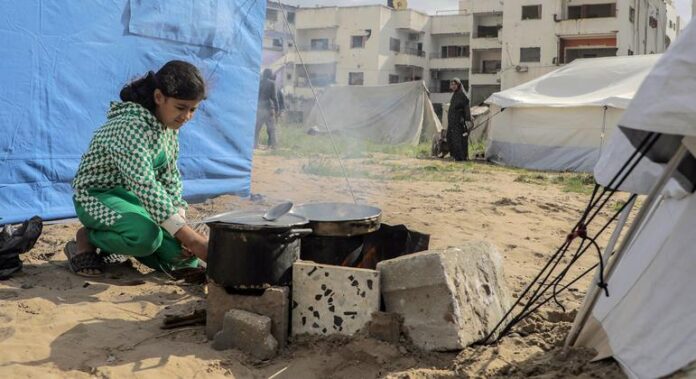
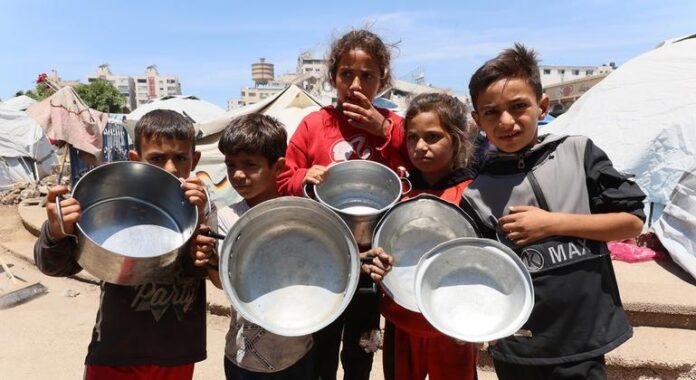
Needs remain dire in Gaza, where the war has left over two million people fully dependent on food assistance, homeless, and without any income.

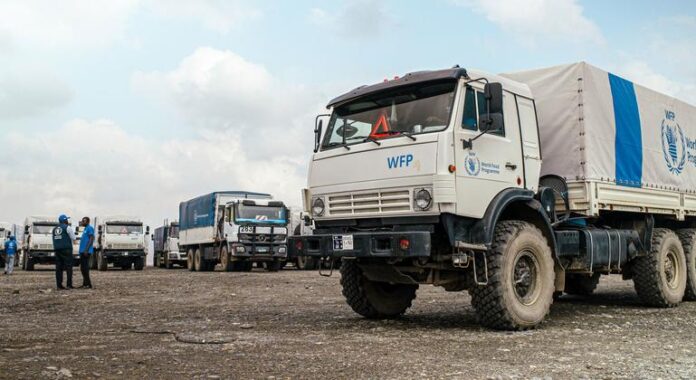
Over the past two weeks, the World Food Programme (WFP) delivered more than 10 million metric tonnes of food to the Strip, reaching roughly a million people through food parcel distributions to households. 

This is in addition to expanding bread deliveries at bakeries and community kitchens and re-opening a community kitchen in North Gaza on 24 January.  

WFP also delivered fuel that enabled the five bakeries in Gaza governorate that it supports to increase production capacity by 40 per cent to meet the growing demand.

Furthermore, 25 emergency medical teams are operating as of Tuesday, with 22 in the centre and south, two in Gaza City, and one in North Gaza. 

Palestinian families travel back to their homes in the north of the Gaza Strip.

On the move

OCHA noted that since 27 January, population movements have continued across the Strip but have largely slowed down.

Over 565,092 people have crossed from the south to the north, while more than 45,678 have been heading southwards due to the lack of services and the widespread destruction of homes and communities in the north.

It is estimated that more than half a million people have returned to Gaza and North Gaza governorates, and the need for food, water, tents and shelter materials remains critical.

Shelter concerns

“Despite the entry of a large volume of supplies since the ceasefire took effect, priority was given to food during the first two weeks, significantly limiting the entry of shelter assistance,” OCHA said, citing partners working in the sector.

Meanwhile, the Palestine Red Crescent Society (PRCS) reported bringing at least 3,000 tents into northern Gaza on Monday, and an additional 7,000 tents are expected to arrive in the coming days.

Highlighting other developments, OCHA said this past Sunday saw the start of medical evacuations through Rafah crossings into Egypt. Between 1 and 3 February, 105 patients, including 100 children, and 176 companions were evacuated

Hostage releases continue

The update also included details on hostage releases. Hamas and other groups killed around 1,200 people in the 7 October attacks on Israel. They also seized some 250 others, both Israelis and foreigners, who were taken to Gaza.

OCHA said estimates indicate that 79 people currently remain captive, including hostages who have been declared dead and whose bodies are being withheld in Gaza.

Over the past week, the International Committee of the Red Cross (ICRC) facilitated the third and fourth release operations since the ceasefire took hold.

On 30 January, three Israeli and five Thai hostages were transferred from Gaza to Israeli authorities, and 110 Palestinian detainees were released from Israeli detention centres. Among the Palestinian detainees were 30 children as well as 20 prisoners from the West Bank who were released to the Gaza Strip. 

The following day, three Israeli hostages were transferred out of Gaza to Israel, and 183 Palestinian detainees were released from Israeli detention centres. The Palestinians freed included 111 people who were detained from the Gaza Strip after 7 October and seven detainees who were released to Egypt. 

Overall, the ICRC has facilitated the return of 18 hostages and 583 Palestinian detainees since the ceasefire began

Source link

Alternative fuels: €422 million of EU funding to boost zero-emission mobility

0
Alternative fuels: €422 million of EU funding to boost zero-emission mobility

The EU is allocating nearly €422 million to 39 projects that will deploy alternative fuels supply infrastructure along the trans-European transport network (TEN-T), contributing to decarbonisation. These projects have been selected under the first cut-off deadline of the 2024-2025 Alternative Fuels Infrastructure Facility (AFIF) of the Connecting Europe Facility (CEF), the EU funding programme supporting European transport infrastructure.

With this selection, the AFIF will support approximately 2,500 electric recharging points for light-duty vehicles and 2,400 for heavy-duty vehicles along the European TEN-T road network, 35 hydrogen refuelling stations for cars, trucks and buses, the electrification of ground handling services in 8 airports, the greening of 9 ports and 2 ammonia and methanol bunkering facilities. 

Next steps

Following EU Member States’ approval of the selected projects on 4 February 2025, the European Commission will adopt the award decision in the coming months, after which the results will become definitive. The European Climate, Infrastructure and Environment Executive Agency (CINEA) has started the preparation of the grant agreements with the beneficiaries of successful projects.

Background

The second phase of the AFIF (2024-2025) was launched on 29 February 2024 with a total budget of €1 billion: €780 million under the general envelope and €220 million under the cohesion envelope. Its goal is to support objectives set out in the Regulation for the deployment of alternative fuels infrastructure (AFIR) regarding publicly accessible electric recharging pools and hydrogen refuelling stations across the EU’s main transport corridors and hubs, as well as the objectives set in the ReFuelEU aviation and the FuelEU maritime regulations. 

The call for proposals covers the roll-out of alternative fuels supply infrastructure for road, maritime, inland waterway and air transport. It supports recharging stations, hydrogen refuelling stations, electricity supply and ammonia and methanol bunkering facilities.

The call remains open for applications and the next cut-off deadline is 11 June 2025.

For more information

Source link

Waterborne Days 2025: Scaling up sustainable and competitive solutions for waterborne transport

0
Waterborne Days 2025: Scaling up sustainable and competitive solutions for waterborne transport

Bringing together more than 300 industry experts, researchers, and policymakers, Waterborne Days provided an excellent forum to discuss the main trends and pressing challenges facing the sector. 

Addressing the opening session, Magda Kopczyńska, Director-General of the European Commission’s Department for Transport and Mobility (DG MOVE), highlighted the importance of coordinating efforts between industry, governments and other stakeholders: “Balancing economic growth and sustainability requires a holistic approach, but also creates tremendous economic opportunities for Europe’s innovative waterborne industrial sector.” 

Rosalinde van der Vlies, Director of the Clean Planet Directorate in the Commission’s Department for Research and Innovation (DG RTD), also pointed to strengthening collaboration: “We need to develop a ‘Team Europe’ approach so we all contribute to driving the twin green and digital transition and push the boundaries of technology forward.”

Awarding excellence 

During the event, several CINEA-managed projects – funded under the EU’s Horizon programme for research and innovation – contributed first-hand insights into their innovations that are shaping the industry’s path forward.  Three of these projects also picked up coveted Waterborne Awards in the categories of environmental impact (ENGIMMONIA), innovation (sHYpS) and economic viability (Mari4YARD). 

The overall outstanding innovation award also went to ENGIMMONIA – well-deserved recognition for the efforts undertaken to advance the waterborne sector towards a greener and competitive future!

From innovative ideas to large-scale action

In the keynote speech on day two, CINEA’s Marcel Rommerts, Head of Unit for Horizon Transport, underscored not only the vast opportunities offered by the EU funding programmes for the waterborne sector, but also the importance of exploiting their synergies: 

In CINEA, we are uniquely positioned to help you leverage the complementarities between programmes. We stand ready to help you navigate the funding opportunities with the goal of bringing great green innovations to market,” said Marcel Rommerts.

CINEA manages a large portfolio of 350 EU projects related to waterborne transport, under several programmes. With an overall EU contribution of close to €5.9 billion[1], this covers the entire pipeline from devising, developing and demonstrating green waterborne solutions (Horizon Europe / EMFAF), to scaling up and deployment through CEF (infrastructure solutions), Innovation Fund (net-zero industrial solutions), and LIFE (environmental solutions). 

The projects cover a range of areas from alternative fuels storage and propulsion solutions such as methanol, ammonia and hydrogen, to electrification solutions, ship emissions control, and wind-based technologies. 

Mr Rommerts highlighted examples of collaborative research projects that had ‘scaled up’ from innovative ideas to large-scale action. Aspiring Wingsails was first supported by the EMFAF programme, building and installing the first full-scale prototype of a new sail[2] on board a fishing vessel. The wind-assisted propulsion technology is now being deployed in five large cargo vessels under the Innovation Fund-supported SUSTAINSEA project. This initiative will help reduce emissions by up to 91% while lowering dependence on fossil fuels.

[Read more on scaling up impact in this news article by DG RTD: From collaborative R&I to scaled impact in waterborne: building on EU Research Excellence]

Wind technologies along with ammonia were the themes of two workshops organised and moderated by CINEA during the event. Eight EU-backed Horizon research project presented their main innovations, challenges and results so far, showcasing the potential of these various solutions for market prospects.

[Read more on CHEK and FASTWATER in our feature stories] 

Reinforced commitment

Overall, the stimulating discussions and productive exchanges between the projects, policymakers, researchers and industry demonstrated the value of collaboration for tackling the challenges facing the sector. The event provided an excellent forum for assessing progress, priorities and gaps, while also underpinning the commitment of the sector to the green and digital transformation 

MORE


[1] Of this, €3.7 billion is dedicated to infrastructure under the Connecting Europe Facility with €1 billion supported by the Innovation Fund.

[2] Bound4Blue that owns the technology also received €10.3M in support from the EIC of both grant and equity.

Source link