European Commission Speech Vilnius, 09 Feb 2025 Today is indeed a historic day, for the Baltic region, and for the European Union.
When we think about the history of European unity, a number of defining momen…
Baltic Energy Independence Day: Keynote speech by Commissioner Jørgensen at High level discussion on Security of the infrastructure and challenges in the region
Statement by President von der Leyen at the joint press conference at the Synchronisation Baltic Connectors Opening event
European Commission Statement Vilnius, 09 Feb 2025 Dear President Nausėda, dear Gitanas,
Thank you for hosting us here in Vilnius.
Dear Presidents, what a pleasure to be here with you. Today, history is made. We…
Daily News 07 / 02 / 2025
European Commission Daily news Brussels, 07 Feb 2025 Commission invites comments on draft amendments to State aid rules with respect to access to justice in environmental matters
The European Commission has launch…
President von der Leyen and College of Commissioners travel to Gdańsk on the occasion of the Polish Presidency of the Council
European Commission News Brussels, 07 Feb 2025
Yesterday and today, the members of the European Commission, led by President von der Leyen, travelled to Gdańsk, in Poland, to mark the Polish presidency of t…
From the Ashes of the Palisades and Eaton Fires, Treasured Mementos Restore Hope
KINGNEWSWIRE // In the wake of the devastating Palisades and Eaton fires, communities across Los Angeles, California, are grappling with immense loss. But amidst the rubble, small yet powerful moments of recovery are offering survivors a glimmer of hope.
“The streets of Pacific Palisades, Altadena, and Malibu are like a wave of destruction I’ve never experienced before,” says James, a Scientology Volunteer Minister. “There are so many heartbroken people, people in despair, people in need of help.”
James is among the many Volunteer Ministers who sprang into action as soon as the fires erupted. Alongside their partners, the renowned Los Topos search and rescue organization, these dedicated volunteers have been working tirelessly to help families salvage prized personal possessions from the charred remains of their homes.
Finding Meaning in the Ashes
Entire neighborhoods once bustling with life now resemble war zones, reduced to smoldering remnants of what once was. Yet, for many survivors, the recovery of a single treasured item—a wedding ring, a childhood memento, a box of family photographs—represents an invaluable source of comfort and closure.
Among the recovered treasures was a wedding ring that belonged to a 90-year-old grandmother who had safely evacuated but passed away shortly after. For her family, this heirloom became a cherished symbol of continuity and resilience. Another mother expressed her gratitude after volunteers unearthed a piece of pottery her son had crafted when he was just 13 years old. And for one young woman, a collection of hand-crafted figurines offered a tangible link to her past amid the heartbreak of losing her home.
An Unwavering Commitment to Support
Since the fires began, the Volunteer Ministers have been stationed at the Church of Scientology of Los Angeles, organizing the distribution of food, water, and essential supplies to evacuation centers, churches, and affected households. Their efforts go beyond immediate relief, focusing also on emotional and psychological support to help families rebuild their lives.
The Volunteer Ministers program, founded more than three decades ago by L. Ron Hubbard, operates under the belief that individuals can bring about meaningful change in their communities. From 9/11 to the Southeast Asian tsunami and the 2010 Haiti earthquake, the group has played an active role in global relief efforts, consistently demonstrating their motto: “Something can be done about it.”
Volunteer Ministers have responded to disasters worldwide, including in Europe. In Spain, they provided critical relief following flooding in Valencia. In Italy, they assisted communities devastated by earthquakes, offering both material aid and emotional support. In the Czech Republic, they played a crucial role in helping residents recover from destructive flooding. These efforts echo the work being done in Los Angeles, showcasing a global commitment to humanitarian aid and disaster relief.
Rebuilding and Moving Forward
With the fires claiming at least 29 lives—12 from the Palisades Fire and 17 from the Eaton Fire—and consuming over 40,000 acres of homes, businesses, and cultural landmarks, the road to recovery will be long and arduous. According to ABC News, both fires have been fully contained after burning for 24 days. The Guardian further reports that over 16,000 structures have been destroyed, and insured losses are estimated between $28 billion and $75 billion. Vox warns that total economic damage could reach $275 billion, potentially making this the most costly natural disaster in U.S. history.
However, the resilience of Los Angeles communities, bolstered by the dedication of humanitarian organizations like the Volunteer Ministers, offers a beacon of hope.
As the city begins to heal, these volunteers remain steadfast in their mission to support those in need, proving that even in the face of devastation, the human spirit endures. Those interesting in helping are finding more information or assistance when visiting the Volunteer Ministers Los Angeles Fires Resource Center at the Church of Scientology Los Angeles.
Interview with Reuters
Interview with Piero Cipollone, conducted by Balazs Koranyi and Francesco Canepa
6 February 2025
The ECB has said that the direction of travel for monetary policy is clear, but the timing and extent of moves is not. What does this guidance mean to you?
We are moving towards the target. The direction of inflation is clear, despite some small bumps. All incoming information points to a convergence with the target in 2025 and this is what our models are also telling us.
Our models include market expectations for the interest rate path, so this convergence with the inflation target is coherent with a declining interest rate path.
Everything is of course contingent on the information at the time of the forecasts, and we will have a new forecast round in March. Before then, we’ll get another inflation print, we’ll have more details on the composition of inflation, and all these feed into the model, as do market expectations for interest rates.
Does that mean implicitly that you are comfortable with market expectations for further rate cuts as they are embedded in the projections?
That was conditional on the information we had in December. I am comfortable as long as that path takes us to the target in the medium term in a sustainable way.
What does the data since that December meeting tell you?
Overall, I think the direction is the same. I don’t see huge changes in our view, except trade tensions. The overall understanding of where we are going is there, the fundamentals haven’t changed, so I do not expect a big change in direction.
One thing that might happen is a trade war with the United States. How would that affect your thinking?
It depends on details such as whether we retaliate, precisely what these tariffs are going to be levied on, and how China is affected.
If tariffs are imposed on us, the most immediate impact will be on growth.
The price of goods will be higher in the United States. Who is going to absorb the cost? It could be that European companies, in order to defend their market share, might be willing to sacrifice a bit of their margin in order to stay in the market. We have seen this many times and European firms have a great ability to adjust. Part of this sacrifice might be recovered through the exchange rate. So, in the end, the overall impact may not be that big.
What concerns me more is if President Trump engages in a full trade war with China. This is a more serious threat because China has 35% of the world’s manufacturing capacity. Trade barriers will force China to sell its goods elsewhere and the competition from China could be a serious threat to us. These goods showing up in Europe could have both a deflationary and a contractionary impact because they would crowd out local products.
The uncertainty is exceptionally high, everything is in motion. And we can’t assess where it’s all going until things fall in place.
It’s true we have a goods surplus with the United States. But if you add in services and look at the overall current account, then the balance is close to zero.
Looking at the very short term, can you support a rate cut in March, as some of your colleagues are already saying?
I don’t want to seem elusive, but the uncertainty is so high that anything can happen. We all agree there is still room for adjusting rates downwards. But we need to be extremely careful. It’s important to stress this idea of a meeting-by-meeting, data-dependent approach. I want to enter the meeting with an open mind, see the staff assessment and process incoming data.
But we also all agree that we are still in a restrictive territory.
Suppose tariffs on China stay, that’s a huge demand shock. On the other hand, we have energy prices moving upwards. It could be a transitory phenomenon, but what if this is more entrenched?
How far are we from the neutral rate and why has the neutral gone up?
When you have an estimate range that is 50 or 75 basis points, then it’s a conceptual tool and doesn’t have much bearing on policy, given the high uncertainty. Take estimates that it is between 1.75% and 2.25%. Those are two completely different monetary policies, if you are close to target. It’s such a wide range that one number could imply that you are undershooting and another that you are overshooting. So “neutral” is a very powerful analytical concept but not terribly useful for setting monetary policy, given this embedded uncertainty.
It’s possible this rate went up but it’s also possible it stayed unchanged given how wide the band is.
You say you are clearly restrictive now. Would that still apply after the next cut? When does the debate start on when restrictive ends?
We are almost on target. The closer you get to target, the less you’ll need to stay restrictive.
It’s also true we have been overly optimistic on growth and had to cut our growth forecasts three times since June. So, it is possible that the recovery is not as strong as expected and thus the inflationary pressure coming from demand is weaker. This could prompt us to reassess our concept of restrictiveness.
Could this mean that you need to become accommodative to avoid an undershoot?
I assess the risk around inflation to be balanced and I don’t have evidence of a possible undershoot. Long-term inflation expectations are also very well anchored.
The latest information, especially the rise in the cost of energy, makes me think that we should be prudent. It might be a transitory phenomenon, but prices have risen substantially. Consumer expectations have also gone up a little as they are very reactive to short-term developments.
I’m not saying that risks are moving towards being on the upside, but we have no evidence of undershooting either.
Do the growth revisions suggest fundamental changes in how the economy functions?
Growth has been disappointing, especially because of investments. Consumption may have been less buoyant than we thought, but it remains broadly on the path that we are expecting. The fundamentals for rising consumption are there. Real incomes are increasing, employment is high, inflation is declining and consumer confidence is holding steady.
The real problem is investments, and that is only partially linked to monetary policy. The culprit is uncertainty. Investments have been weak since the summer given the overall uncertainty and the direction of trade policy after the US election.
My sense is that people are holding out before making important investment decisions. There is of course a cost component related to interest rates. But you see that people are investing just to replace old capital stock.
What can the ECB do about it?
We have to take care of the cost component and avoid being unduly restrictive. Our goal should be to have the economy growing close to potential and to contribute to reducing uncertainty as much as possible.
Could another targeted longer-term refinancing operation help investments?
It doesn’t seem to me that the lack of available funding is the issue. We have seen some tightening of credit conditions but that’s not the key factor here.
Last week we were talking about a 25% tariff, today not anymore, and tomorrow we don’t know. All companies are trying to understand where it’s all going so that they can make investment decisions.
How does this uncertainty affect the labour market?
There could be some softening of the labour market but overall we have been positively surprised. We went through a huge disinflation process with a very strong labour market.
Labour hoarding has two dimensions. One is the cost. Overall, the cost is still relatively low because, by some measures, real wages are still below the pre-pandemic level. The second reason is that firms are afraid of losing skilled labour and this is still the case.
The labour market is softening, however. The problem is manufacturing essentially. But even there we see some light at the end of the tunnel. There seem to be some initial signs of recovery in the Purchasing Managers’ Index and the Economic Sentiment Indicator. I was surprised to see that confidence in the construction sector and manufacturing activity have bottomed out, and we see some possible signs of recovery. Services are holding up overall. If there is some softening in terms of demand for labour, possibly there will be a pick-up in productivity which will reduce the unit labour cost overall. We obviously need to monitor it because, with all this uncertainty, we could see a deterioration. But I am not overly concerned about the labour market.
Adding up what you said about these modest signs of recovery in manufacturing, does that mean you still believe in the soft-landing narrative and you don’t see a recession?
We might not be booming but I am not expecting a recession at all. I think consumption will slowly go up because the fundamentals are there, labour income is growing, the cost of borrowing is declining, inflation is declining, and consumer confidence is basically holding up, so it’s possible that the savings rate will decline from a historic high. So, overall, I think consumption will keep going – and that is a big chunk of the economy. Investment should recover too, as soon as all this uncertainty dissipates. First, one cannot hold back forever: imagine you have a bunch of cumulated investment decisions to make. Even if a small percentage of them go through, it will be a positive and you will see that in investment. Second, less restrictive financial conditions are slowly being transmitted to the cost of financing. And third, in 2025-26 we should see an acceleration in the spending of Next Generation EU funds in Europe.
Moving to the digital euro. Could you give us an update?
We have started the procurement process and we will be selecting suppliers in June, but the contracts are such that they will only be triggered if the Governing Council decides to issue the digital euro. We have been working on the rulebook and we will be able to finalise it shortly after we have firm EU legislation in place. For example, whether people can have access to one or more wallets will have an influence on the rulebook, so if we don’t have a final legislation, we cannot finalise the rulebook. But it will not take long once the legislation is approved because we have done as much work as possible in the absence of a firm legislation. So the procurement is done and the rulebook is almost done. We are also working with the market to leverage the innovation potential of the digital euro. We think there is huge potential in conditional payments to increase the quality and the menu of the offering on payments.
So that is a payment that only happens if a certain condition is fulfilled, right?
Today there is only one type of conditional payment and it is based on time: pay this amount to this person on this date. We think we can do better than that. To make sure that this intuition is right, at the end of October, we issued a call for innovation partnerships. We were surprised to receive 100 offers. People want to experiment with new ideas. We will be doing that for the next six months and we will then prepare a report.
Would conditional payments require a blockchain? How else would the condition be verified?
No, it’s not a matter of blockchain. If you have a way to register the transaction on the ledger through a sort of token, that is a possibility. But technicians tell me you can make a transaction conditional even on a traditional ledger. We are working on that, but the information that I can give you is that we can do better than what we are doing today on conditional payment, regardless of the underlying technology. The technology has a bearing on many dimensions, for example latency and privacy.
Could you give me an example of a conditional payment that could be settled in digital euro?
For example, if the train is late, today you have to ask to be reimbursed. You could have a solution in which you only pay if the condition is automatically verified.
To conclude with where we are in the preparation phase, let me add that since the digital euro is a product, we have to market it. So, we are engaging with focus groups and using surveys to understand how to best finalise the product in order to meet people’s expectations. We are on schedule, so we should be ready to take a decision on moving to the next project phase by November 2025. I don’t know whether at that time the Governing Council will already be able to take a decision to eventually issue a digital euro because that depends on whether we have a legislation at that point. We have been clear that we would not take any decision about the issuance of a digital euro before the legislative act has been adopted.
We had expected legislation on the digital euro some time ago. What’s holding up the process? Are you sensing a lack of political will?
I wouldn’t say there’s a lack of political will. I think people want to understand the whole process. The European Commission issued legislation in June 2023, then the European Parliament started to work on that, but mentally they were not there because there was an EU election coming up. Everything stopped. They are starting to work on this now so, to be fair to them, they didn’t have much time. By contrast, in the Council of the European Union’s working party, work is progressing. As far as I know, they have gone through all of the legislative proposal and they are now focusing on the issues that still need to be worked out. When both the Council and the Parliament have agreed internally, they will sit down with the Commission and try to finalise the legislation. So, we hope they will be able to reach an agreement internally before the summer. But again, political processes are complex and there are many things on the table. Obviously the sooner the better, but we fully understand their needs. My sense is that there is an increased sense of urgency because of the position that has been taken by the new US Administration. The fact that the US President went in so strong on this idea of promoting worldwide US dollar-denominated stablecoins obviously is a signal. The political world is becoming more alert to this. And it’s possible that we will see an acceleration in the process.
Stablecoins are similar to money market funds that people use if they don’t want to go via the banking system, whereas the digital euro, with its holding limit, will purely be a means of payment. Why do you think a digital euro would be a good response to stablecoins?
You’re right, for as long as stablecoins are not used as a means of payment. My sense is that they will be. This is worrisome because if people in Europe start to use stablecoins to pay, given that most of them are American and dollar-based, they will be transferring their deposits from Europe to the United States. It may start with peer-to-peer, cross-border transactions. Then an American tourist may be able to use stablecoins instead of using a credit card, for example. So stablecoins can enter the payment space, for example, if they can compete with card schemes by reducing the price for the merchant. We have seen that important payment providers have already issued stablecoins, like PayPal, for example.
Turning now to bitcoin, we know that the ECB has got repo lines and swap lines with other central banks. Would the ECB maintain those with a central bank that has bitcoins among its reserves?
It’s an interesting question. Fortunately we don’t have to think about that right now because no major central bank is thinking about that.
One is hypothesising.
We would need to do a risk management assessment of that. Let’s see if any central bank enters this space because I don’t fully see the rationale for it. We will assess it at that point in time, if it happens. I am trying to be rational and think about why I should invest in bitcoin or another crypto-asset. The only rationale is if one thinks that the price will always go up. It doesn’t have any underlying value, there is no asset backing it, there is no earning model.
On that, it’s a bit like gold.
The structures of the two markets are completely different: the transparency of the market, the concentration. So, I would be careful about making the analogy. I don’t know how deep the market for gold is, but there are central banks in that market, and not just because of a legacy system. We should not stop at a superficial analogy between gold and bitcoin.
Why do central banks invest in gold, other than legacy?
It’s in part due to legacy, but gold has intrinsic, commercial and industrial value. Bitcoin does not have any of that.
We’ve seen gold and bitcoin make all-time highs at the same time. Or should we say that fiat currencies are making all-time lows?
Fiat currencies allow you, among other things, to pay. Good luck trying to pay in bitcoin or gold. Central bank money is the safest asset you can imagine and it’s relatively stable in terms of what you can buy with it.
UNRWA delivers bulk of aid in Gaza as destruction mounts in West Bank
UNRWA’s communications director Juliette Touma described catastrophic scenes at the camp, where some 100 buildings had been “destroyed or heavily damaged” by the detonations at the weekend.
The camp’s residents had “endured the impossible”, she said, after nearly two months of “unceasing and escalating violence” linked to the Israeli military operation.
“The detonation on Sunday was when children were supposed to go back to school,” Ms. Touma explained, adding that the 13 UNRWA schools in the camp and its surrounding areas remain closed, depriving 5,000 children of education.
Israeli ban
UNRWA faces unprecedented challenges to continue carrying out its work following the Israeli parliament’s adoption in October last year of two laws banning its operations in Israeli territory and prohibiting Israeli authorities from having any contact with the agency. The Knesset laws entered into force last Thursday.
Still, Ms. Touma said that to this day, the Government of Israel has “not communicated to UNRWA how they intend to implement” the laws.
The agency’s teams are “staying and delivering” in the remaining parts of the West Bank, Ms. Touma said, with basic services, including primary healthcare and education ongoing.
“Schools and clinics remain open, including in occupied East Jerusalem, providing services to refugees,” the UNRWA spokesperson said. “We are seeing attendance at UNRWA schools at over 80 to 85 per cent.”
Ms. Touma also reported a “steady increase” in the number of patients visiting the UNRWA health centres in the West Bank, with one clinic in East Jerusalem recording more than 400 patients a day.
Turning to the Gaza Strip, where humanitarian needs are sky-high, Ms. Touma said that the “biggest priority” for UNRWA teams there is distributing supplies from 4,200 aid trucks that have entered the enclave since the start of the ceasefire on 19 January.
This is the target number that was set as part of the initial phase of the ceasefire and represents a welcome boost for the people of Gaza whose needs remain enormous – particularly among the hundreds of thousands of people who have returned to the shattered north.
More trucks are expected to arrive later this week, Ms. Touma said, adding that “hundreds of trucks” are waiting to enter Gaza from Egypt and Jordan.
Truce opportunity
The first phase of the temporary truce between Israel and Hamas followed more than 15 months of war which in which some 46,000 Palestinians were killed, according to the Gaza health authorities. The conflict was sparked by the 7 October 2023 Hamas-led attacks on Israel, in which some 1,200 people were killed and 250 were taken hostage.
Ms. Touma stressed that UNRWA has brought in 60 per cent of all supplies that came into Gaza since the ceasefire began and that the “vast majority” of the aid is distributed by the agency which has more than 5,000 staff there. A fifth of them are health workers, Ms. Touma added, underscoring UNRWA’s major role as a primary healthcare provider in the enclave, offering an average of 17,000 daily consultations.
Following the Knesset ban, UN chief António Guterres and the heads of many UN agencies insisted that UNRWA is irreplaceable in the Occupied Palestinian Territory.
Besides obstacles stemming from the new Israeli legislation, the agency’s operations are also constantly in jeopardy because of its “very bad” financial health, Ms. Touma said. The United States, notably, had stopped funding UNRWA as of January 2024.
The UNRWA spokesperson said that the agency was able to pay salaries to its workers last month but had limited visibility over its financial situation, calling the funding crisis “endemic”.
US funding pause leaves millions ‘in jeopardy’, insist UN humanitarians
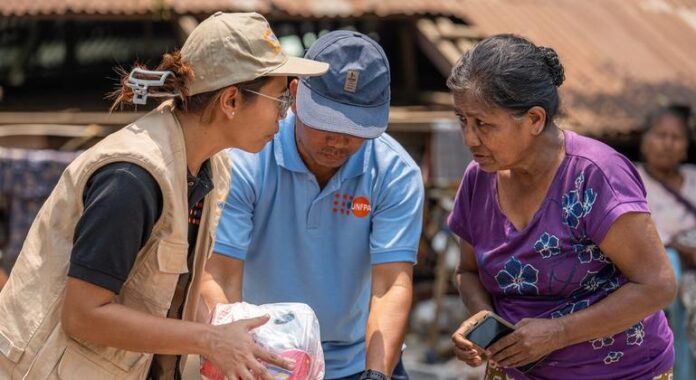
The development follows the pause announced to billions of dollars of funding on 24 January by the US administration affecting “nearly all US foreign aid programmes, pending a 90-day review”, said Pio Smith from the UN’s sexual reproductive health agency, UNFPA, briefing journalists in Geneva.
‘Unwavering commitment’ to serve people in need
In a letter to all UN personnel released on Tuesday morning in New York, UN Secretary-General António Guterres said he had responded to the executive order from US President Donald Trump with a call to “ensure the delivery of critical development and humanitarian activities”.
Mr. Guterres said the organization will remain actively engaged in assessing and mitigating the impact of the order.
“Now, more than ever, the work of the United Nations is crucial…Together, we will ensure that our organization continues to serve people in need around the world with unwavering commitment.”
Deadly consequences
Mr. Smith said that in response to the executive order, UNFPA “has suspended services funded by US grants that provide a lifeline for women and girls in crises, including in South Asia”.
The UNFPA Regional Director for Asia and the Pacific warned that between 2025 and 2028 in Afghanistan, the absence of US support will likely result in 1,200 additional maternal deaths and 109,000 additional unintended pregnancies.
Mr. Smith said the agency was seeking “more clarity” from the administration “as to why our programmes are being impacted, particularly those which we would hope would be exempt” on humanitarian grounds.
Meanwhile, the UN aid coordination agency OCHA, said that there have been no “layoffs or closing down access” in response to the executive orders.
Spokesperson Jens Laerke added that the agency’s country offices were “in close contact” with local US embassies to better understand how the situation will unfold.
He explained that the US Government funded around 47 per cent of the global humanitarian appeal across the world last year; “that gives you an indication of how much it matters when we are in the situation we are in right now, with the messaging we’re getting from the Government”.
The move follows the announcement that the new US administration has placed the country’s principal overseas development agency, USAID, under the authority of the Secretary of State.
Staff from the agency have been locked out of their offices, while the head of the newly-formed Department of Government Efficiency has accused USAID of criminal activity and a lack of accountability.
“Public name-calling won’t save any lives,” said OCHA’s Mr. Laerke, while Alessandra Vellucci, head of the UN Information Service at UN Geneva, highlighted the UN Secretary-General’s appeal for a relationship of trust with the Trump administration.
“We are looking at continuing this work together [and listening]…if there are criticisms, constructive criticism and points that we need to review,” she told reporters, underscoring the “decades-long relationship of mutual support” between the UN and the US.
USAID and UNICEF sign a partnership in 2024 to improve water and sanitation services across Iraq.
Retreat from Human Rights Council
At the same scheduled press encounter, a spokesperson for the UN Human Rights Council responded to news reports that President Trump plans to issue an executive order withdrawing the US from the 47-member world body.
The US was a member of the Council from 1 January 2022 to 31 December 2024, meaning that since 1 January this year it has been an “observer State…like any of the 193 UN Member States that are not Council Members” explained spokesperson Pascal Sim:
“Any Observer State of the Council cannot technically withdraw from an intergovernmental body that is no longer part of.”
Preventable problems
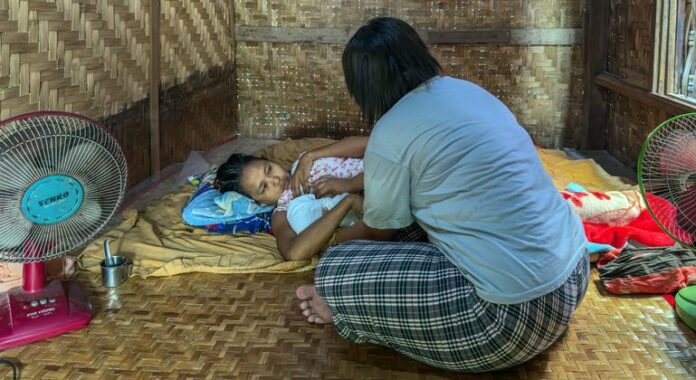
Amid uncertainty about future US funding, UNFPA’s Mr. Smith underscored the immediate impact on at-risk individuals in the world’s poorest settings: “Women give birth alone in unsanitary conditions; the risk of obstetric fistula is heightened, newborns die from preventable causes; survivors of gender-based violence have nowhere to turn for medical or psychological support,” he said.
“We hope that the US Government will retain its position as a global leader in development and continue to work with UNFPA to alleviate the suffering of women and their families as a result of catastrophes they did not cause.”
Afghanistan emergency
UNFPA works across the world including in Afghanistan, where more than nine million people are expected to lose access to health and protection services because of the US funding crisis, it said.
This will impact nearly 600 mobile health teams, family health houses and counselling centres, whose work will be suspended, Mr. Smith explained.
“Every two hours, a mother dies from preventable pregnancy complications, making Afghanistan one of the deadliest countries in the world for women to give birth. Without UNFPA’s support, even more lives will be lost at a time when the rights of Afghan women and girls are already being torn to pieces.”
Pakistan, Bangladesh fall-out
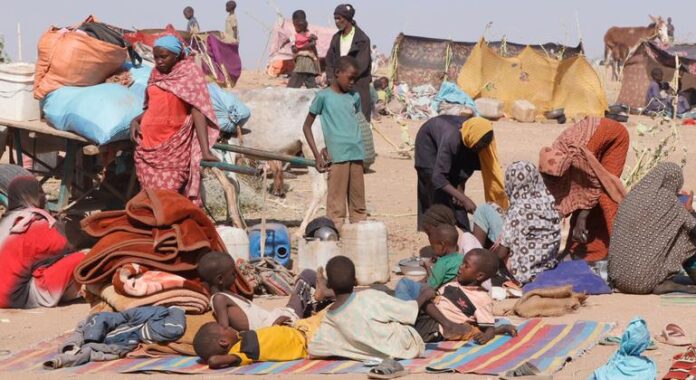
In Pakistan, the UN agency warns that the US announcement will affect 1.7 million people, including 1.2 million Afghan refugees, who will be cut off from lifesaving sexual and reproductive health services, with the closure of over 60 health facilities.
In Bangladesh, nearly 600,000 people, including Rohingya refugees, face losing access to critical maternal and reproductive health services.
“This is not about statistics. This is about real lives. These are literally the world’s most vulnerable people,” Mr. Smith insisted.
In Bangladesh’s Cox’s Bazar refugee camp complex –where more than one million Rohingya refugees remain trapped in dire conditions – nearly half of all births now take place in health facilities, with UNFPA’s support.
“This progress is now at risk,” Mr. Smith continued, noting that the agency requires more than $308 million dollars this year to sustain essential services in Afghanistan, Bangladesh and Pakistan.
Tackling challenges with e-commerce imports
In 2024, around 4.6 billion low-value consignments (worth €150 or less) entered the EU market – 12 million parcels daily and twice as many as the year before. Many of these products were non-compliant with EU laws, raising concerns over harmful products entering the EU, unfair competition for compliant EU sellers, and the environmental impact of mass shipping.
The Commission has proposed the following actions in its toolbox for safe and sustainable e-commerce:
- Customs reform: urging swift adoption of the Customs Union Reform and proposing to remove the duty exemption for low-value parcels, to allow rapid implementation of new rules to level the playing field
- Reinforcing measures for imported goods: launching coordinated controls between customs and market surveillance authorities and coordinated actions on product safety
- Protecting consumers on online marketplaces: enforcing the Digital Services Act, Digital Markets Act, General Product Safety Regulation, and Consumer Protection Cooperation Regulation
- Using digital tools: supervising e-commerce landscape through the Digital Product Passport and new AI tools
- Enhancing environmental measures: adopting an action plan on Ecodesign for Sustainable Products Regulation and supporting amendments to the Waste Framework Directive
- Raising awareness: informing consumers and traders about their rights and risks
- Boosting international cooperation and trade: training non-EU partners on EU product safety and tackling dumping and subsidisation
The Commission calls on EU countries, co-legislators and stakeholders to work together and implement these measures. Within a year, the Commission will evaluate the effectiveness of these actions and may propose further measures if necessary.
Around 70% of Europeans regularly shop online, including on non-EU e-commerce platforms. While e-commerce brings many benefits for consumers, businesses and the EU economy, it also presents certain challenges. The new initiative aims to balance consumer protection, fair competition, and sustainability, while fostering a safe and high-quality e-commerce market in the EU.
For more information
Press release: Commission announces actions for safe and sustainable e-commerce imports
Communication on a comprehensive EU toolbox for safe and sustainable e-commerce
Factsheet on the Communication
Questions and Answers on the Communication
Safety Gate: the EU rapid alert system for dangerous non-food products
EIOPA informs policyholders about the liquidation of FWU Life Insurance Luxembourg
The European Insurance and Occupational Pensions Authority informs policyholders that on 31 January 2025 the District Court of Luxembourg decided on the liquidation and dissolution of FWU Life Insurance Luxembourg (FWU Luxembourg) (see here).
Ever since FWU AG (FWU Luxembourg’s parent company) entered into insolvency proceedings, EIOPA has on several occasions provided relevant information to policyholders on developments related to this case (see here and here).
Following the failure of FWU Luxembourg’s recovery plan and the request of the insurer’s national supervisor (Commissariat aux Assurances, or CAA) to the District Court of Luxembourg to dissolve and liquidate FWU Luxembourg (see here), the company has suspended the collection of policyholder premiums from 23 January 2025 (see here).
As communicated by the CAA (see here), FWU AG has recently cut off all IT access to FWU Luxembourg as well as to its French, German, Italian and Spanish branches. As a result, FWU Luxembourg’s customers are, for the time being, unable to contact the company. The company is working on a solution, and more information will be made available shortly.
On 5 February 2025, the liquidator published initial information on the liquidation process (see here). Policyholders are recommended to monitor the websites of the CAA (here) and the liquidator of FWU Luxembourg (here) for further updates on the liquidation itself, the payout process and other relevant aspects.
To read the CAA’s Q&A on the liquidation process, go here.
What can consumers do?
The liquidation process has started. Further guidance to policyholders will be provided by the liquidator and the CAA in due course. Consumers are advised to check their websites regularly.
In addition to this communication, policyholders are invited to consult the information available on the website the Luxembourgish supervisory authority and the national supervisory authority of their country of residence.