Monday, September 28, 2026
Home Blog Page 511

Port Sudan: No let-up in drone attacks as UN chief urges peace

0
Port Sudan: No let-up in drone attacks as UN chief urges peace

The UN chief warned that any further escalation of the conflict could result in massive civilian casualties and worsen the already catastrophic humanitarian situation across the country.

“The expansion of the conflict into an area that has served as a place of refuge for a large number of displaced people is alarming,” he said in a statement issued by his Spokesperson’s office.

Mr. Guterres’s appeal follows days of drone strikes on key infrastructure in Port Sudan that have opened a new front in the fighting between forces of the military government and heavily armed paramilitaries.

The city is a main entry point for relief supplies, hosting airports and direct access to the Red Sea. It is also a shelter for hundreds of thousands of displaced people and the seat of government after generals lost control of the capital Khartoum to the Rapid Support Forces (RSF).

Aid flights suspended

In response to the drone attacks, flights of the UN Humanitarian Air Service (UNHAS) to and from Port Sudan have been suspended since 4 May.

The UN World Food Programme (WFP) which manages the airline said that operations will resume as soon as conditions allow. For the moment, amid reported gun and weapons fire overnight, the insecurity has impacted the movement of aid workers into Sudan and across the country.

A country in flux

Drone strikes have also been reported elsewhere in Sudan, including the states of Kassala and River Nile. In Kassala, strikes near the airport displaced about 2,900 people and led to the temporary suspension or relocation of some aid activities, according to the UN aid coordination office, OCHA.

As of Wednesday evening, River Nile State was still without power following a drone strike on the transformer station in Atbara on 25 April. The outage has contributed to growing fuel and bread shortages and long queues at petrol stations and bakeries.

The situation remains dire across Sudan, the UN chief continued, citing intense attacks on critical infrastructure since January that have hampered people’s access to essential services and left them without food, clean water, healthcare and electricity.

“All parties to the conflict must comply with their obligations under international humanitarian law,” Mr. Guterres insisted. “They must not direct attacks against civilians and civilian objects; must take all feasible precautions to avoid, and in any event to minimize, incidental civilian casualties; and must allow and facilitate rapid and unimpeded passage of humanitarian relief for civilians in need.”

Sudan’s war stems from the breakdown in the transition to civilian rule following the overthrow in April 2019 of Omar al-Bashir, who had been president for 30 years.

Mr. Guterres decried a “lack of political will” by the warring parties to engage in constructive dialogue as they pursued their military goals.

“Dialogue is the only way to achieve the peace that the people of Sudan demand,” the Secretary-General insisted.

A hunger catastrophe

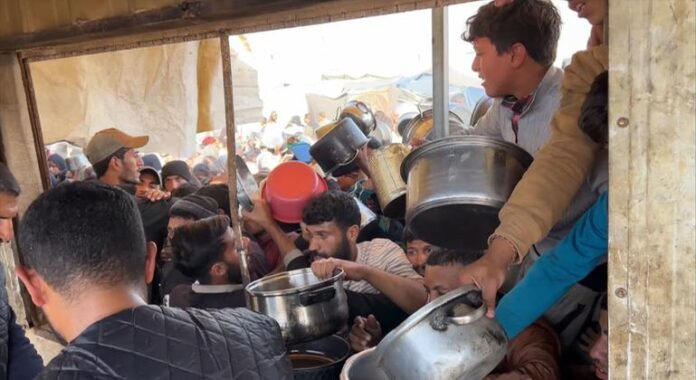
The turmoil caused by relentless heavy fighting across Sudan has reportedly killed more than 18,800 civilians and injured tens of thousands more. UN aid agencies say that the country’s people are in the grip of the largest hunger catastrophe on the planet.

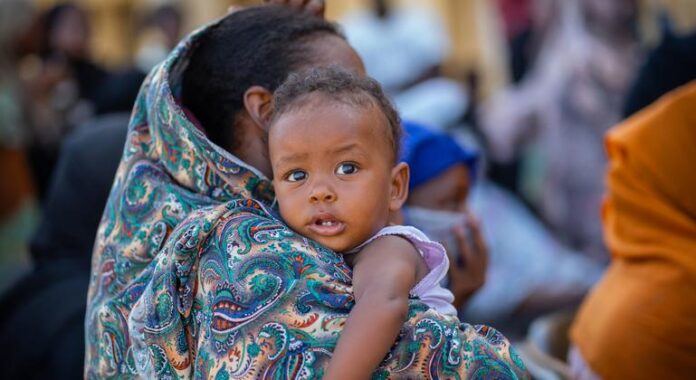
Today, more than half of Sudan’s population – 30.4 million people – need humanitarian assistance, including more than 15 million children. They lack access to food, water, shelter, electricity, education and healthcare, aid veterans have warned repeatedly.

“Across Sudan, 25 million people face acute hunger,” WFP spokesperson Leni Kinzli told UN News. “And people are displaced across the country, nearly 13 million people forced from their homes. We are seeing waves of displacement in North Darfur, where around 450,000 people have fled horrific levels of violence.”

Reaching those in need

Despite the dangers, UN agencies and partners are doing everything they can to reach the most vulnerable uprooted by intensifying attacks on government-controlled El Fasher town and Zamzam displacement camp.

“We’ve distributed assistance food assistance and emergency food packages to 335,000 people who recently fled that violence in and around El Fasher,” Ms. Kinzli explained. “We are also ramping up assistance in Khartoum, aiming to support one million people across the coming month.”

Distributions are ongoing in Jabalia, in the South of Khartoum, which is one of the risk of famine areas, as well as the central Khartoum neighbourhood of Burri, “where we finally reached the centre of the city…just last week”, the WFP officer noted.

To reach 21 million people in desperate need this year the UN needs $4.2 billion which is only seven per cent funded.

And over the next six months, WFP requires around $700 million to ramp up assistance and expand assistance to seven million people per month. 

Source link

UN rights body rules Guatemala failed displaced Mayan Peoples

0
UN rights body rules Guatemala failed displaced Mayan Peoples

The landmark decision, announced on Thursday, also considered the harm caused to succeeding generations.

“Forced displacement is permanent in nature until the victims benefit from a safe and dignified return to their place of habitual residence or are voluntarily resettled elsewhere,” said Committee member Hélène Tigroudja.

Conflict, displacement and violations

The Committee found that the 269 members of the K’iche’, Ixil and Kaqchikel Mayan Indigenous Peoples were violently uprooted from their traditional lands and forced to seek refuge in the capital, Guatemala City, in violation of the International Covenant on Civil and Political Rights (ICCPR).

They were forcibly displaced during “scorched earth” operations amid internal armed conflict in the 1980s.

Mayan leaders approached the Committee in 2021, claiming their rights under the UN treaty were violated.

Although they had reached a settlement with the Government and agreed on several reparation measures under the 2011 National Compensation Programme – which foresaw, in particular, the resettlement and construction of alternative housing – it was never implemented.

‘Stripped of cultural identity’

The UN Committee’s decision noted that while in the capital city, Mayans were also forced to conceal and ultimately change their identities, representing another violation.

“The uprooting of the victims from their natural environment and lands had a deep, devastating, and lasting impact as they were irremediably stripped of their cultural identity,” Ms. Tigroudja said. 

“They had to abandon their cultural practices, stop wearing their traditional clothing and stop speaking their language, which also constitutes an irreparable loss for their children and grandchildren,” she added.

Transgenerational trauma

In a new approach, the Committee considered that the State violated not only the rights of those who were forcibly displaced but also the rights of third-generation children born in displacement, thus transmitting the trauma of being uprooted. 

“Indigenous Peoples’ rights are, by definition, intergenerational.  Transmission is a key condition for the continuity of Indigenous Peoples’ existence and cultures,” Ms. Tigroudja said.

The Committee also highlighted that the forced displacement and accompanying violence resulted in the victims having to leave behind the buried bodies of their relatives. 

Burial rites disrupted

Moreover, they were unable to perform funeral rituals for family members who died or were executed or forcibly disappeared during the conflict, in violation of their right not to be subjected to torture and inhumane treatment. 

“In Mayan culture, not performing funeral rites is considered a moral transgression which can lead to spiritually caused illnesses that can manifest as physical diseases and can affect the entire lineage,” Ms. Tigroudja explained. 

“These are not only performative ceremonies and rituals but an integral part of the physical, moral and spiritual integrity of members of the communities as well as of the communities as a whole,” she added.

Action by authorities

The Committee requested Guatemala to search for and hand over the remains of the disappeared family members so that funeral rituals can be carried out in accordance with cultural requirements. 

The Government is also urged to undertake other measures, including providing victims, their children and grandchildren with the necessary medical, psychological and/or psychiatric treatment; and publicly acknowledging responsibility.

About the Committee

The Human Rights Committee comprises 18 independent experts who monitor implementation of the International Covenant on Civil and Political Rights (ICCPR).

More than 170 States are party to the UN treaty. Committee members are elected by States parties and serve in their personal capacity. They are not UN staff and do not receive payment for their work. 

Source link

Pope Leo XIV, Cardinal Robert Prevost Becomes Second American Pope, Signaling a Middle Path for the Catholic Church

0
Pope Leo XIV, Cardinal Robert Prevost Becomes Second American Pope, Signaling a Middle Path for the Catholic Church

In a historic decision, Cardinal Robert Francis Prevost of Chicago has been elected pope, becoming the first US American (2nd American after Pope Francis) to lead the Roman Catholic Church. The announcement, reported by Newsweek on Thursday, marks a pivotal moment for a global Church facing deep internal divides and an uncertain post-Francis era.

A Historic Election Amid Internal Tensions

The 69-year-old cardinal, who spent much of his clerical career in Peru and speaks fluent Spanish and Italian, emerged as a leading candidate during the secretive conclave following the death of Pope Francis. His election reflects both a break from tradition and a carefully calibrated choice by the College of Cardinals during a period of theological and institutional reflection.

According to Newsweek, Prevost’s selection comes as cardinals wrestle with whether to continue the more inclusive, pastoral approach championed by Pope Francis or return to a stricter, doctrine-centered leadership style. Prevost appears to stand somewhere in between but still close enough to Francisco.

“He represents the dignified middle of the road,” said Rev. Michele Falcone of the Order of St. Augustine, speaking to The New York Times on May 2. That middle-ground stance may have been a key factor in his rise to the papacy.

Who Is Pope Leone XIV?

Ordained in 1982, Prevost’s path to the papacy was shaped by decades of service outside the United States. He earned a doctorate in canon law in Rome at the Pontifical College of St. Thomas Aquinas and spent over 20 years in Peru, where he served as Bishop of Chiclayo from 2015 to 2023. He eventually became a naturalized Peruvian citizen.

In 2023, Pope Francis appointed him to lead the Dicastery for Bishops, a powerful Vatican body that oversees episcopal appointments worldwide, as reported by the Associated Press. The role placed him at the heart of the Church’s global leadership apparatus and expanded his influence among Vatican insiders.

But Prevost’s vision of leadership remains grounded in humility. In a 2024 interview with Vatican News, he remarked: “The bishop is not supposed to be a little prince sitting in his kingdom,” but should instead “be close to the people he serves, to walk with them, to suffer with them,” according to The New York Times.

A Pope Bridging Worlds

Born in the south suburbs of Chicago and raised in the parish of St. Mary of the Assumption near Dolton, Illinois, Prevost’s American upbringing contrasts with his extensive international experience. That dual identity — Midwestern roots and deep immersion in Latin America — has made him a figure capable of bridging diverse cultures within the global Church.

“It was pretty apparent back then that was going to be his route,” John Doughney, a former classmate from St. Mary’s, told the Chicago Sun-Times. “Some of us had considered it. It was kind of a fantasy for most young men. For him, I think it was a true calling.”

Daniel Rober, a professor and chair of Catholic studies at Sacred Heart University, told Newsweek that Prevost may have been seen as a more practical and less politically entrenched alternative to other leading candidates, such as Cardinal Pietro Parolin. Rober noted that Prevost’s administrative strengths, paired with his outsider status from the Vatican bureaucracy, might have appealed to cardinals seeking both competence and reform.

Navigating a Global Crossroads

Prevost’s election occurs at a time of theological and geopolitical complexity. The Catholic Church is confronting pressing issues, from declining attendance in the West to political unrest in the Global South, and from internal debates on LGBTQ+ inclusion to questions about clerical accountability.

Observers say Cardinal Robert could signal continuity with Francis’ social justice orientation while adopting a more centrist doctrinal tone. His election may also reshape the Church’s global political optics, highlighting the growing influence of the Americas in Catholic life and leadership.

While reactions from other global religious leaders and political figures are still emerging, the consensus from early commentary is clear: this is a historic and symbolic break with centuries of Eurocentric papal succession.

Looking Ahead

With his papacy only just beginning, questions remain about how Pope Leo XIV will balance competing factions within the Church and address mounting global challenges. Yet in his long service record, modest public profile, and dedication to pastoral care, the new pope appears poised to continue — and possibly recalibrate — the legacy of his predecessor.

His journey from suburban Illinois to the throne of St. Peter marks not only a personal milestone but a potentially transformative chapter for the Catholic Church itself.

Source link

UNRWA condemns ‘storming’ of schools in East Jerusalem

0
UNRWA condemns ‘storming’ of schools in East Jerusalem

According to the agency, heavily armed personnel entered the schools in Shu’fat refugee camp on Thursday while classes were in session, forcing more than 550 Palestinian girls and boys – some as young as six – out of their classrooms.

One UNRWA staff member was detained, and all of the agency-run schools in East Jerusalem were subsequently evacuated as a precaution.

‘Assault on children’

“This is an assault on children. An assault on education,” UNRWA Commissioner-General Philippe Lazzarini said in a statement.

“Storming schools and forcing them shut is a blatant disregard of international law.”

He added that by enforcing the closure orders issued against UNRWA schools in April, Israeli authorities are denying Palestinian children their basic right to learn.

“These schools are inviolable premises of the United Nations. UNRWA schools must continue to be open to safeguard an entire generation of children,” Mr. Lazzarini said.

Immediate risk

Roland Friedrich, Director for UNRWA Affairs in the West Bank, warned the Palestine refugee children are at an “immediate risk” of losing their access to education.

“Israel’s actions today are a grave violation of its obligations as a UN Member State under international law,” he said in a social media post.

He called on the international community to uphold UNRWA’s mandate and humanitarian space in the West Bank.

Gaza: Water, sanitation crisis deepens

Meanwhile, the humanitarian crisis in Gaza continues unabated, with more than three-quarters of households reporting reduced access to water, ten weeks into Israel’s aid blockade.

A survey conducted by humanitarians in April found that 90 per cent of families faced critical water shortages, often having to choose between basic hygiene and cooking. They also reported an increase in reliance on private vendors for drinking water – with public infrastructure in ruins.

Fuel shortages and limited access to repair equipment, have further complicated the situation. The southern Gaza desalination plant remains offline due to a severed power line, while key water pipes damaged earlier this year have yet to be repaired.

Overflowing waste and rodent infestation

The UN aid coordination office, OCHA, also reported widespread sanitation issues, including a lack of functioning latrines, soap shortages and sewage overflows in hard-hit areas like Jabalia and Nazla.

Overcrowded shelters are facing rodent and insect infestations, further raising fears of disease outbreaks amid strained medical services, OCHA said, warning of a looming public health disaster if the crisis continues unchecked.

Source link

Culture unites European citizens, survey shows

0
Culture unites European citizens, survey shows

DISCLAIMER: Information and opinions reproduced in the articles are the ones of those stating them and it is their own responsibility. Publication in The European Times does not automatically means endorsement of the view, but the right to express it.

DISCLAIMER TRANSLATIONS: All articles in this site are published in English. The translated versions are done through an automated process known as neural translations. If in doubt, always refer to the original article. Thank you for understanding.

Source link

Culture unites European citizens, survey shows

0
Culture unites European citizens, survey shows

Culture creates a sense of community and integration. According to a new survey, EU citizens (87%) strongly support cultural exchange and (88%) artistic freedom. They also call for fair working conditions for artists and a stronger EU role to protect heritage and respond to the impact of AI.

Source link

MSCA opens €404.3 million call for Postdoctoral Fellowships

0
MSCA opens €404.3 million call for Postdoctoral Fellowships

The 2025 call for the Marie Sklodowska-Curie Actions (MSCA) Postdoctoral Fellowships is open as of 8 May 2025.

The grants aim to improve the creative and innovative potential of researchers holding a PhD, with a budget of €404.3 million. They will help researchers acquire new skills, develop their careers, and gain international, interdisciplinary, and inter-sectoral experience by working in another country.

These prestigious fellowships are also a stepping stone in researchers’ careers. They allow them to strengthen research cooperation with leading scientific teams and figures worldwide.

The call will close on 10 September 2025 and is expected to fund nearly 1650 projects.

Research in all fields

The call is open to applications in any scientific field, including Euratom research.

Fellowships include

  • European Postdoctoral Fellowships, open to researchers of any nationality to carry out a personalised project in the European Union (EU) or countries associated to Horizon Europe for up to 24 months
  • Global Postdoctoral Fellowships, open to EU and Horizon Europe associated countries nationals or long-term residents wishing to work with organisations in third countries for a period of 12 to 24 months, before returning to Europe for 12 months

The scheme encourages researchers to gain experience beyond academia by giving them the opportunity to request an additional six months at the end of their fellowship to undertake a placement in a non-academic organisation in Europe.

Conditions for researchers and organisations

MSCA Postdoctoral Fellowships are open to postdoctoral researchers from all over the world, of any nationality and at any career stage, with a maximum of 8 years of research experience after their PhD.

Some exceptions and specific conditions apply, for instance for Global Postdoctoral Fellowships.

Researchers must develop an application with their prospective supervisor and apply together with their future host organisation, which can be

  • a university
  • a research institution or facility
  • a company, small or medium-sized enterprise
  • a government, public institution, or body
  • a museum, hospital, or NGO
  • any other organisation

based in an EU Member State or Horizon Europe associated country.

As of January 2025, Switzerland benefits from transitional arrangements in place for countries in the process of associating to Horizon Europe. Swiss entities can therefore apply and be evaluated under this year’s call under the same conditions as other countries associated to Horizon Europe. Successful proposals will however no longer be treated as established in an associated country if the association agreement does not apply by the time of the signature of the grant agreement. Morocco and Egypt also benefit from transitional arrangements at the call opening.

Researchers applying to Global Fellowships will need to seek the commitment of an organisation based in a third country, as they will carry out their research there for a period of between 12 and 24 months.

The call is open to researchers wishing to reintegrate in Europe, to those who are displaced by conflict, as well as to researchers with high potential who are seeking to restart their careers.

ERA Fellowships

Researchers applying for a standard European Fellowship with a host organisation in a “widening country” (i.e. a country with lower participation rates in Horizon Europe) can opt in to be considered for the ERA Fellowships call.

Around 45 ERA Fellowships will be awarded to excellent applicants who were not selected under the MSCA Postdoctoral Fellowships call due to budget constraints. 

Check out the list of eligible host countries for ERA Fellowships

Source link

EU consults public and prepares WTO dispute against the US over tariffs

0
Culture unites European citizens, survey shows

The Commission has launched a public consultation on a list of US industrial and agricultural imports, which could become subject to EU countermeasures, if EU-US negotiations on US tariffs fail. The EU will also launch a WTO dispute against the US over its universal reciprocal tariffs.

Source link

Cardinals to Resume Voting This Afternoon

0
Cardinals to Resume Voting This Afternoon

Vatican City – May 8, 2025 — The second day of the papal conclave has ended its morning session without consensus, as black smoke once again billowed from the chimney of the Sistine Chapel at 11:51 a.m., signaling that the 133 cardinal electors have failed to choose a new pope.

This was the result of two morning ballots conducted in a more streamlined manner compared to the inaugural vote on Wednesday afternoon. The cardinals have now withdrawn to the Santa Marta residence for lunch and are scheduled to return to the Sistine Chapel at 4:00 p.m. for two additional rounds of voting.

According to the established Vatican protocol, should a candidate secure the required two-thirds majority—89 votes—during the first afternoon ballot, white smoke could rise as early as 5:30 p.m. If no agreement is reached, a second vote will follow, with a final smoke signal expected around 7:00 p.m.

Pietro Parolin, the current Secretary of State, remains the leading contender according to media speculation and internal discussions, though his position could weaken if the conclave continues without resolution. Other names circulating as potential successors include French Cardinal Jean-Marc Aveline, American Cardinal Robert Prevost, and Italians Matteo Zuppi and Gianbattista Pizzaballa.

Despite the lack of a decision, the event continues to draw massive public attention. Over 11,000 people gathered in and around St. Peter’s Square to witness the morning fumata, according to Rome’s police department, with a significant security presence deployed in the surrounding streets. Even larger crowds are expected this evening as the world waits to see whether white smoke will finally rise over the Vatican.

The College of Cardinals continues its deliberations in secrecy, with the eyes of millions fixed on a single chimney that, at any moment, may herald the beginning of a new papacy.

Source link

Speech by President António Costa at the European University Institute event on peace and security in Europe

0
Speech by President António Costa at the European University Institute event on peace and security in Europe

European Council President António Costa participated in a special event at the European University Institute in Fiesole, Italy. In his keynote address on peace and security in Europe, he reaffirmed the European Union’s identity as a peace project, calling for stronger defense, strategic autonomy, and investment in competitiveness to confront today’s geopolitical challenges. He emphasized that peace must be actively defended and linked to economic strength, unity, and global partnerships.

Source link