Wednesday, May 6, 2026
Home Blog Page 512

Aid efforts in Gaza escalate, as risk from deadly unexploded ordnance grows

0
Aid efforts in Gaza escalate, as risk from deadly unexploded ordnance grows

“Hope returns to Gaza, but it’s fragile,” said Corinne Fleischer, World Food Programme (WFP) Regional Director for the Middle East and North Africa. “With open crossings and sustained efforts, Gaza’s recovery can take root,” she emphasised.

The WFP has doubled its aid deliveries, bringing in 22,000 metric tons of food in the past six days – more than the entire supply that entered Gaza in November.

Scaling up essential services

UN Spokesperson Stéphane Dujarric highlighted further relief efforts, noting that six fuel tankers were delivered to northern Gaza on Wednesday.

Aid workers stationed along the Salah ad Din and Al Rashid roads continue to assist people making their way back north to shattered homes, providing food, water, and hygiene kits, with the UN Children’s fund (UNICEF) distributing identification bracelets for children to help families stay connected.

To support vulnerable groups, the World Health Organization (WHO) has supplied fuel, tents and equipment to establish trauma stabilization points along Al Rashid Road in collaboration with the Palestine Red Crescent Society.

Meanwhile, efforts to provide emergency nutrition continue, with high-energy biscuits distributed to 19,000 people south of Wadi Gaza and 10,000 in the north.

Shelter assistance is also being scaled up, with humanitarian partners distributing tents to families – many of whom are returning to homes that have been completely destroyed.

Water remains a critical concern and aid workers are ramping up water trucking operations. In Rafah alone, 300 cubic meters of potable water – enough for 50,000 people – is being distributed daily.

Danger underfoot

Despite the increasing humanitarian response, returning residents face significant risks from UXO contamination.

The UN Mine Action Service (UNMAS) has warned that between 5 to 10 percent of weapons fired into Gaza have failed to detonate, leaving behind deadly hazards.

Since October 2023, at least 92 people have been killed or injured by explosive ordnance. Informal reports suggest 24 victims since the ceasefire began, according to Luke Irving, Chief of the UN Mine Action Programme (UNMAS) in the occupied Palestinian territories, briefing the press on Wednesday from the enclave.

“Humanitarian convoys are finding items more and more, as we reach new areas which we previously could not get to, including large aircraft bombs, mortars, anti-tank weapons, rockets and rifle grenades,” he explained.

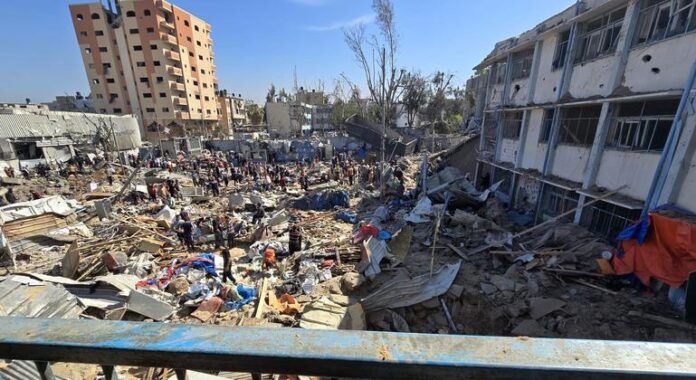
An area of Rafah in the southern Gaza Strip lies in ruins.

Rubble removal

To mitigate risks, UNMAS and its partners are conducting awareness sessions, distributing safety leaflets and escorting humanitarian convoys along high-risk routes.

A newly established UN-led Gaza Debris Management Framework aims to ensure the safe removal of rubble, but progress is being hindered by UXO contamination, exposure to hazardous materials and complex property disputes.

Several UN agencies are collaborating to address both the environmental and housing concerns associated with these issues.

Deteriorating situation in West Bank

Meanwhile, in the occupied West Bank, violence and military operations continue to escalate.

The UN Office for the Coordination of Humanitarian Affairs (OCHA) has reported a drastic deterioration in the humanitarian situation, particularly in the governorates of Jenin and Tulkarm.

“We’ve repeatedly expressed our concern over the use of lethal, war-like tactics in law enforcement operations,” Mr. Dujarric said.

Israeli military operations in these areas have led to significant destruction of civilian infrastructure.

In Tulkarm, access to water and electricity has been disrupted and initial estimates suggest that nearly 1,000 people have been displaced in recent days.

Sustained humanitarian access

With humanitarian efforts scaling up, UN agencies are calling for unhindered access to deliver aid safely and ensure the protection of both civilians and humanitarian workers.

Mr. Dujarric reiterated the urgent need for safe passage for humanitarian workers, the protection of civilians and the acceleration of reconstruction efforts to support those returning home. 

Source link

New “superglue” brings hope to cancer patients

0
New “superglue” brings hope to cancer patients

We all know someone touched by cancer. And although science is all about facts and evidence, it can also be about our personal stories and emotions.  

Erika Pineda Ramírez lost her dad to cancer. Alba García-Fernández lost her grandmother and aunt, also to cancer. They are now doing research with the goal of finding more effective treatments for cancer patients.   

In 2024, Alba and Erika started working on NanoGlue, a new approach to help the immune system fight cancer more effectively. Their project is funded by the Marie Skłodowska-Curie Actions (MSCA), through the ARISTOS Postdoctoral Program in Biomedicine and Health Sciences and it is developed at CIBER-BBN, Centro de Investigación Principe Felipe, and Universitat Politècnica de València. 

To mark World Cancer Day, they joined our European Research Executive Agency colleague and breast cancer survivor, Sofia Pereira Sá, for a conversation on the cancer cells’ ability to hide from the immune system, the heavy side effects of treatments and the hope NanoGlue can bring to millions of patients. 

More effective treatments with less heavy side effects 

Sofia Pereira Sá: Let’s first talk about your MSCA-funded project. What is NanoGlue and what can its results and findings mean for patients like me? 

Alba García-Fernández: Our ultimate goal is to provide more effective treatments with less side effects to improve patients’ quality of life. We do this by designing new nanoparticles and then activate the immune system of the patients to attack the tumour.  

This kind of immunotherapy would be more effective and would help avoid and limit undesirable side effects, that we see with current treatments.  

Erika Pineda Ramirez: We also want to study the interaction between the cancer cells and the immune cells in a metabolic level. We would then be able to propose novel and more efficient therapies.  

Recent reports in Spanish news outlets have referred to the NanoGlue innovative treatment as a “superglue” for triple negative breast cancer, a notoriously aggressive form of the disease. 

Sofia: Can the project’s approach have broader applications, benefiting patients with other types of cancer?  

Erika: First, I want to explain why we called it a “superglue”; it is because our nanoparticles will enhance the immune system’s ability to detect and respond to cancer, helping the body to attack the cancer and kill it.  

Alba: The nanoparticles are a versatile platform, and we can select and modify them depending on our needs. We chose to test it with triple negative breast cancer because it represents a major health challenge. It’s a good starting point for validating our nanoparticles.  

Sofia: How are you combining different scientific areas and how can that be crucial to achieve better scientific results? 

Erika: We work with experts in nanotechnology, biotechnology, biology, metabolomics, and oncology. Having all these people with different expertise helps us see the problems from different angles and find better solutions. 

The future of cancer research – a patient’s perspective 

Erika: What was the biggest challenge for you as a patient?  

Sofia: The side effects played a big role when it came to my physical and mental wellbeing. Especially because all these side effects prevented me from being the mum I wanted to be for my one and half-year-old son. I couldn’t play with him, I couldn’t bathe him, I couldn’t take him to school. This was the hardest part of the whole treatment. It was heartbreaking.  

My diagnosis was made in summer 2023 and after 20 rounds of chemotherapy I still feel some side effects, such as the so called “chemo brain”. I’d love to see therapies advance in a way that gives patients a better quality of life. 

Erika: Besides reducing side effects, what do you think researchers should be aware of doing cancer research?  

Sofia: Being only 34 years old and seeing the chemotherapy medication going into my bloodstream and knowing that I was somehow “poisoning” myself to get treated was a very traumatic experience. Thankfully, you and other cancer researchers are already tackling that by trying to find more targeted therapies.  

A second thing I think is important is fertility. More and more young women are being diagnosed with hormonal breast cancer exactly when they are planning to have children. I wish researchers could find a way to preserve breast cancer patients’ possibilities of still becoming mothers. 

The future of cancer research – a scientist’s perspective 

Sofia: What do you think cancer researchers will be focusing on in the next years?  

Alba: My immediate thought is personalised medicines for both treatment and diagnosis. 

Erika: I totally agree with Alba – personalised medicine is the future but also having more multidisciplinary because we need expertise from different areas. 

Sofia: What is your experience with EU funding, and how do you think it will be relevant for your work on NanoGlue? 

Alba: I have had previous experience with EU funding, as I was part of a project funded by the EIC Pathfinder programme for cancer therapy. It is thanks to EU funding that us researchers can work on innovative ideas like this and explore different paths. I believe NanoGlue is a next level initiative for our future.  

Erika: EU funding helps us take ideas and turn them into actions. I wanted to do cancer research for years, but in Mexico, my home country, I didn’t have much support to do it. The MSCA funding gave me this great opportunity of working in this field with top researchers, and to use equipment I didn’t have the opportunity to use before. For me, it was a dream come true. 

Discover more

Check out what the European Commission is doing to improving the lives of more than 3 million people by 2030 through cancer prevention and cure – EU Mission: Cancer. For more MSCA news and funding opportunities, visit out our dedicated page.

Curious to find out more about Alba and Erika’s research? You can check out ARISTOS’s website and follow them on social media:

Alba García-Fernández: LinkedIn

Erika Pineda Ramírez: LinkedIn, X

ARISTOS Program: LinkedIn, X

Source link

Syria: Hostilities and aid challenges persist across devastated country

0
Syria: Hostilities and aid challenges persist across devastated country

In an update, the UN aid coordination office, OCHA, said more than 25,000 people have been newly uprooted from the northeastern city of Manbij where shelling and airstrikes have been reported.

OCHA noted that hostilities have been intensifying over the past week, particularly in eastern Aleppo and around the Tishreen Dam.

The dam is a key target for different groups of Syrian fighters vying for control of northern Syria. These include the Turkish-backed Syrian National Army (SNA) and the mainly Kurdish Syrian Democratic Forces (SDF) fighting alongside the PKK/YPG – the Kurdish Workers’ Party or People’s Protection Units. 

Hundreds of thousands fleeing

As a result of the escalating violence, the number of newly displaced people has increased to 652,000 as of 27 January, OCHA said.

The deadly incidents reported in Syria’s northeast include shelling that struck a town in the Manbij countryside on 25 January, injuring an unverified number of children.

On Saturday, clashes affected a displacement camp in Jarablus north of Manbij, injuring seven including two children and destroying five shelters. 

On the same day, a car bomb detonated in front of a hospital and school in Manbij city, reportedly killing one civilian and injuring seven others.

In the past week, OCHA, has also reported clashes in coastal areas  with “increased criminal activities, including looting and vandalism, constraining the movements of civilians during night hours”.

The UN agency also noted continuing Israeli incursions into Quneitra in southern Syria, near the Golan Heights buffer zone that the Israeli military moved into – forces said temporarily – following the ouster of President Assad.

Massive aid needs

More widely across Syria’s governorates, the UN agency warned that a “lack of public services and liquidity constraints” have severely affected communities and the humanitarian response. In Homs and Hama, for instance, electricity is available for only 45 to 60 minutes every eight hours.

In northwest Syria, 102 health facilities have already run out of funds since the start of 2025. The UN and its humanitarian partners are appealing for $1.2 billion to help the most vulnerable 6.7 million people in Syria until March.

The developments came ahead of a UN Security Council meeting later on Thursday behind closed doors on Syria – and the reported declaration that head of Hayat Tahrir Al Sham and the caretaker authority in Damascus, Ahmed al-Sharaa, has been declared transitional president.

 It was also reported that the new caretaker authority has decided to suspend the Syrian constitution.

Source link

ESMA publishes data for quarterly bond liquidity assessment

0
ESMA publishes data for quarterly bond liquidity assessment

As indicated previously quarterly publication of systematic internalisers (SI) have been (see ESMA’s news item).

Bonds quarterly liquidity assessment 

ESMA has published the latest quarterly liquidity assessment for bonds available for trading on EU trading venues. For this period, there are currently 1,342 liquid bonds subject to MiFID II transparency requirements. 

ESMA’s liquidity assessment for bonds is based on a quarterly assessment of quantitative liquidity criteria, which includes the daily average trading activity (trades and notional amount) and the percentage of days traded per quarter. ESMA updates the bond market liquidity assessments quarterly. However, additional data and corrections submitted to ESMA may result in further updates within each quarter, published in ESMA’s Financial Instruments Transparency System (FITRS), which shall be applicable the day following publication.   

The full list of assessed bonds is now available through FITRS in the XML files with publication date from 31 January 2024 (see here) and through the Register web interface (see here).  

ESMA also publishes two completeness indicators related to bond liquidity data. 

The transparency requirements for bonds deemed liquid today will apply from 17 February 2025 to 18 May 2025. The application dates reflect the provisions of the RTS 2 (see ESMA news item for more details). 


Further information:

Cristina Bonillo

Senior Communications Officer
press@esma.europa.eu

Source link

UNRWA ‘continues to deliver’ as Israeli ban comes into effect

0
UNRWA ‘continues to deliver’ as Israeli ban comes into effect

UNRWA continues to deliver assistance and services to the communities we serve,” the agency said in a post on the social media platform X.

“Our clinics across the occupied West Bank including East Jerusalem are open while the humanitarian operation in Gaza continues.”

No official word

Last October, the Israeli parliament, known as the Knesset, passed two laws that called for ending UNRWA’s operations in its territory and prohibiting Israeli authorities from having any contact with the agency.

Israel ordered UNRWA to vacate all premises in occupied East Jerusalem and cease operations in them by 30 January of this year.

In a separate post on X, UNRWA said it had not received any official communication on how the bills will be implemented.

Fears of impact

Speaking to The Guardian, UNRWA Communications Director Juliette Touma said its headquarters in East Jerusalem “is still there” and the flag is still flying.

“We don’t have plans to close our operations,” she said. “But we are in the dark.”

Since 1950, UNRWA has been assisting Palestine refugees in Jordan, Lebanon, Syria, Gaza and the West Bank, including East Jerusalem.

The ban threatens life-saving aid, education and healthcare for millions in the OPT, and the UN has repeatedly warned of the consequences.

Palestinians in Gaza are also worried, including Iman Hillis, who is currently staying in an UNRWA school with her family.

“We will have nothing to eat or drink, and this will affect us greatly,” she told UN News on Wednesday. “All the people will be destroyed and will not have food, water or flour.”

Source link

Dreams of returning home dashed by reality in Gaza City

0
Dreams of returning home dashed by reality in Gaza City

Tess Ingram, Communications Manager for UNICEF Middle East and North Africa, is in the northern city where she witnessed people moving through the streets on donkeys, in cars, or by bicycle.

There’s a lot of people with shovels trying to remove rubble, and of course you can see people setting up makeshift shelters or tents on what I’m guessing used to be their homes,” she told UN News

Hope and heartache

Ms. Ingram believes that many people were filled with hope and joy as they were finally able to come back to the place they had hoped to return to for more than 15 months.

“But now, as I speak to people, I think that joy is being replaced somewhat by a sense of heaviness as they discover the reality of what has happened here in Gaza City,” she said.

“They were hoping to return to a home that is not there, or to a loved one who has been killed, and I think that that heaviness is really sinking in for people.”

Living conditions also remain very difficult. Ms. Ingram visited a school-turned-shelter which is housing returnees along with people who had been living there throughout the war.  

She met a mother and her five children who desperately need winter clothes and food, but mostly a place to stay because the home where they had hoped to return is gone.

This story is not uncommon. “It is not one person. It is not 100. There are probably thousands of people who are in a similar situation,” she said.

Danger on the way

Ms. Ingram noted that families are making long, treacherous journeys to get back to Gaza City.

On Wednesday she travelled from Al Mawasi, located in the central Gaza Strip, which took 13 hours. However, some families took as long as 36 hours to make the trip.

“And of course the journey itself over those 36 hours is incredibly dangerous,” she said.

We’ve heard reports of people being killed by unexploded remnants of war on the way, because these very dangerous unexploded ordnance are buried underneath the rubble.”

Support for returnees

UNICEF is supporting returning families with the basics that they need to survive.  The agency is bringing in nutrition supplies, medical supplies, fuel to run bakeries and hospitals, and water pumps so that people have access to clean water.

On Wednesday, UNICEF and other UN agencies brought in 16 trucks of fuel that will be provided to water wells, hospitals and bakeries to get essential services back up and running again.

They are also providing services for mental health and psychosocial support for children to help them deal with the trauma they have experienced over the past 15 months. Nutritional screening and immunization services are forthcoming. 

Keeping families together

Hundreds of children have also reportedly been separated from their families while making the journey to the north, and UNICEF is responding to the situation. 

Staff have been providing children under the age of four with identification bracelets that have their names, their families’ names and phone numbers, on them.

“So, if in the worst case they did get lost in the wash of people there would be some hope of reconnecting them soon with their loved ones,” Ms. Ingram said.

Displaced Palestinians walk along a street in Rafah, in the southern Gaza Strip.

People on the move

Humanitarians report that more displaced families are returning to northern Gaza as the ceasefire continues to hold. 

More than 462,000 people have crossed from the south since the opening of the Salah ad Din and Al Rashid roads on Monday.

The UN and partners are providing water, high-energy biscuits and medical care along the two routes, while the World Food Programme (WFP) plans to set up more distribution points in the north this week.   

Displaced Palestinians are also moving from north to south, though in smaller numbers, with about 1,400 people making the journey as of Thursday. 

Restoring critical services

Across Gaza, extensive efforts are underway to restore critical services, including civilian infrastructure, which the UN and partners are supporting.

WFP has delivered more than 10,000 metric tonnes of food to the enclave since the ceasefire took effect.

On Thursday, 750 trucks entered Gaza, according to information obtained by the UN on the ground through interactions with the Israeli authorities and the guarantors for the ceasefire deal.

The previous day, UNICEF distributed 135 cubic metres of water to communities in Jabalya, Beit Lahiya and Beit Hanoun, located in North Gaza governorate.  These areas had been besieged for over three months.  

Furthermore, 35,000 litres of fuel were delivered to northern Gaza to sustain the operations of water, sanitation and hygiene facilities, while water trucking in Rafah is being scaled up.

Humanitarian partners are also coordinating with the Gaza Electricity Distribution Company to repair the damaged power line that feeds the South Gaza desalination plant, which is currently running on fuel.

West Bank violence continues

Meanwhile, in the West Bank, Israeli military operations in northern areas have expanded beyond Jenin and Tulkarm to the nearby governorate of Tubas

Ten people reportedly were killed on Wednesday when an Israeli air strike hit a group of Palestinians in Tammun, a village in Tubas governorate. 

This brings the death toll from the ongoing Israeli operation in the northern West Bank to 30, including two children.   

Overall, more than 3,200 families have been displaced from Jenin refugee camp in the context of Palestinian Authority and Israeli operations since December, according to local authorities. 

Humanitarian partners continue to deliver aid, including food parcels, kitchen kits, baby supplies, hygiene items, medicines, and other essential supplies.  

Source link

DR Congo: Hospitals overwhelmed, food running out: Goma faces ‘devastation’

0
DR Congo: Hospitals overwhelmed, food running out: Goma faces ‘devastation’

The World Food Programme (WFP) warned on Thursday that food supplies are running dangerously low, as water and electricity outages exacerbate the crisis.

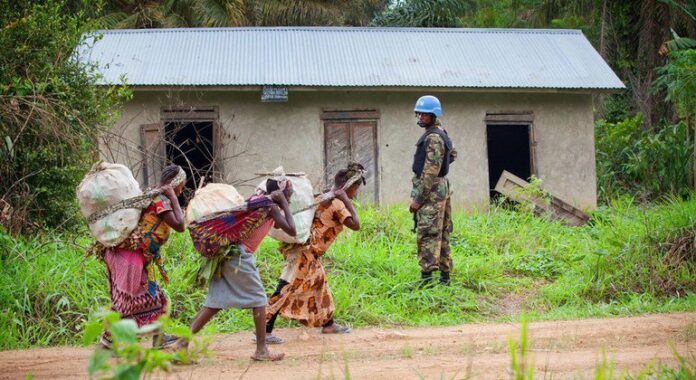
The seizure and closure of Goma’s airport by Rwanda-backed M23 rebels has further interfered with aid delivery, while the blocking of roads and lake transport restrictions have left thousands stranded.

The rebel group has taken control of most of Goma since entering the city on Monday in the biggest escalation of a decades-long conflict springing from the Rwandan genocide against the Tutsis, and a continuing struggle for control of rich mineral resources in the region among a plethora of armed groups.

Fleeing by boat

Families attempting to flee the violence across Lake Kivu are resorting to unsafe makeshift boats, putting their lives at risk.

At the same time, the UN aid coordination office, OCHA, reports that humanitarian workers have been unable to leave their shelters in Goma for over 24 hours due to the insecurity, severely affecting emergency response efforts.

Tom Fletcher, the emergency relief chief, has allocated $17 million from the UN’s Central Emergency Relief Fund (CERF) to support lifesaving assistance – yet access to those in need remains uncertain.   

Hospitals overwhelmed

Medical facilities in Goma – and second city Bukavu to the south – are overwhelmed, with over 2,000 injuries reported since the beginning of January, including many from gunshot wounds. Hospitals lack adequate medical supplies, fuel and staff to manage the growing influx of patients.

The World Health Organization (WHO), International Committee of the Red Cross (ICRC), and Médecins Sans Frontières (MSF) are urgently working to bolster healthcare services, but with supply chains disrupted and facilities at capacity, response efforts are severely strained.

Additionally, health authorities warn of an increasing risk of disease outbreaks, including cholera, measles and mpox, due to mass displacement, unsafe water sources and inadequate sanitation.

Escalating insecurity in North Kivu

In the village of Kiziba, on the outskirts of Goma, civilians are reporting armed men in military uniforms carrying out widespread looting, extortion and sexual violence, according to Radio Okapi, the station run by UN peacekeeping mission in DRC, MONUSCO.

Meanwhile, Stéphane Dujarric, the Secretary-General Spokesperson reported that other armed groups in the east, including Zaïre and the CODECO militias, have increased attacks against the population in Djugu territory in the past month, robbing civilians.

At least six people have been killed since last weekend and as a result, many have stopped using roads in the area, which also prevents them from going to their fields or to markets.

Reports indicate that some roads have reopened, but mass displacement continues, with at least 700,000 people now internally displaced within North Kivu and South Kivu.

Military uniforms and personal possessions litter the streets of Goma in the eastern DR Congo following an attack by a rebel armed group.

Peacekeepers’ response

Peacekeepers with (MONUSCO) have launched the second phase of an operation called Horizon of Peace in Djugu territory, aiming to contain an escalation of violence by armed groups, according to Mr. Dujarric.

MONUSCO peacekeepers have stepped up patrols on several roads in the territory to support the free movement of people and goods.

Calls for international action 

Bruno Lemarquis, the UN’s Humanitarian Coordinator for DR Congo, has issued a strong plea for immediate international support. “I call on the international community to step up its support in the face of a worsening humanitarian crisis,” he stated.

Emergency food agency WFP has reiterated its readiness to resume food distributions as soon as security conditions permit, but without immediate access, thousands remain at risk of starvation and disease.

UN peacekeepers return to base after patrolling the streets of Goma.

UN peacekeepers return to base after patrolling the streets of Goma.

Source link

World News in Brief: Deadly virus outbreak in Uganda, $500 million human rights appeal, Thailand’s lèse-majesté laws in spotlight

0
World News in Brief: Deadly virus outbreak in Uganda, 0 million human rights appeal, Thailand’s lèse-majesté laws in spotlight

Health authorities in Kampala confirmed that one patient has died – a nurse who had sought treatment at various other medical facilities after developing fever-like symptoms.

In response to the outbreak of the often deadly and infectious haemorrhagic fever which is transmitted through contact with bodily fluids and tissue, WHO is mobilising efforts to support national health authorities in swiftly containing and ending the outbreak.

Senior public health experts and staff from WHO’s country office are being deployed to support key outbreak response measures.

Additionally, WHO has allocated $1 million from its Contingency Fund for Emergencies to accelerate early action. Medical supplies, including personal protective equipment, are being readied for delivery from WHO’s Emergency Response Hub in Nairobi.

Race to develop a vaccine

Although there are no licensed vaccines for Sudan virus disease, WHO is coordinating with developers to deploy candidate vaccines once all necessary approvals are obtained.

Regarding the deceased man, no other health workers or patients have shown symptoms, said WHO.

A total of 45 contacts, including health workers and family members are under close monitoring. The identification of the case in a densely populated urban area necessitates a rapid and intense response, the agency stressed.

Dr Matshidiso Moeti, WHO Regional Director for Africa, welcomed the prompt outbreak declaration saying the agency was supporting the Government and partners “to scale up measures to quickly identify cases, isolate and provide care, curb the spread of the virus, and protect the population.

“Uganda’s robust expertise in responding to public health emergencies will be crucial in ending this outbreak effectively.”

There have been eight previous outbreaks of Sudan Ebola Virus Disease, with five in Uganda and three in Sudan. Uganda last reported an outbreak in 2022.

UN rights chief launches $500 million global appeal

The UN human rights chief on Thursday launched a $500 million funding appeal for 2025 to address a multitude of crises threatening to reverse decades of progress.

The appeal aims to support critical human rights efforts, including rights mainstreaming, advisory services and technical cooperation, alongside field offices of the UN human rights office, OHCHR.

It will also boost special trust funds, such as those supporting victims of torture, Indigenous Peoples, or those impacted by slavery.

Launching the appeal in Geneva, UN rights chief Volker Türk, reiterated the importance of these efforts: “During conflicts and in peacetime; in developing countries and advanced economies; from historic grievances to emerging risks – my Office is holding the line for humanity.

Low cost, high impact

“Human rights are a low-cost, high-impact investment to mobilize people for peace, security, and sustainable development; and to build social cohesion based on the contributions of every individual,” he added.

The appeal is in addition to the OHCHR’s regular budget of $238.5 million as part of UN’s overall budget that was approved in late December 2024. That amount is not sufficient to cover all of its mandated work and the requests for assistance it receives.

Mr. Türk underscored the need to ensure OHCHR has sufficient resources to carry out its vital work.

“I am very concerned that if we do not reach our funding targets in 2025, people who should otherwise be free, may remain in prison,” he said.

“Women and girls may lose out on opportunities, ignored by the world. Violations and abuses may go undocumented, leading to a lack of accountability and increased impunity. And human rights defenders may lose the little protection they have,” he warned.

Independent rights experts urge Thailand to end lèse-majesté prosecutions

A group of independent UN human rights experts condemned Thailand’s continued use of lèse-majesté laws to imprison activists and human rights defenders, calling for the repeal or significant revision of the country’s criminal code.

In a news release on Thursday, the experts – who are mandated and appointed by the Geneva-based Human Rights Council – warned that Article 112 of Thailand’s Criminal Code, which punishes criticism of the monarchy with up to 15 years in prison, violates international human rights standards.

Free speech rules

“Under international law, individuals have the right to criticise public officials, including a King, and to advocate peacefully for the reform of any public institution, including the monarchy,” the experts said.

They described the law as “harsh and vague”, highlighting that it grants excessive discretion to authorities and courts, leading to widespread misuse.

Since 2020, more than 270 people have been prosecuted under Article 112, many receiving lengthy consecutive sentences.

“Lèse-majesté laws have no place in a democratic country,” the experts said, warning that their use stifles political expression and silences activists, journalists, and opposition members.

They urged the Thai Government to amend the country’s criminal code to align with international human rights laws and called for an immediate moratorium on prosecutions and imprisonments under lèse-majesté laws.

Source link

EU invests €1.2 billion in cross-border energy infrastructure

0
EU invests €1.2 billion in cross-border energy infrastructure

To help achieve the EU’s goals of integrating energy markets and decarbonising the energy system, the EU is allocating more than €1 billion in grants to 41 cross-border energy infrastructure projects. The projects will help develop hydrogen and offshore electricity grids in the EU.

Source link

EU next generation defence technologies get €1 billion in funding

0
EU invests €1.2 billion in cross-border energy infrastructure

More than €1 billion has been allocated by the European Defence Fund for the development of critical defence technologies and capabilities. Around €100 million each is set aside for critical fields such as ground combat, space, air and naval combat, energy resilience and environmental transition.

Source link