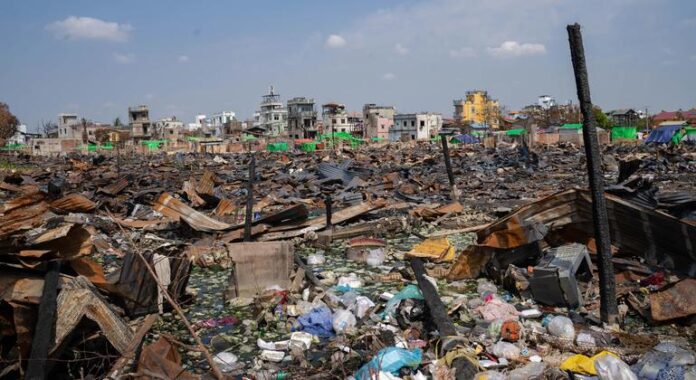
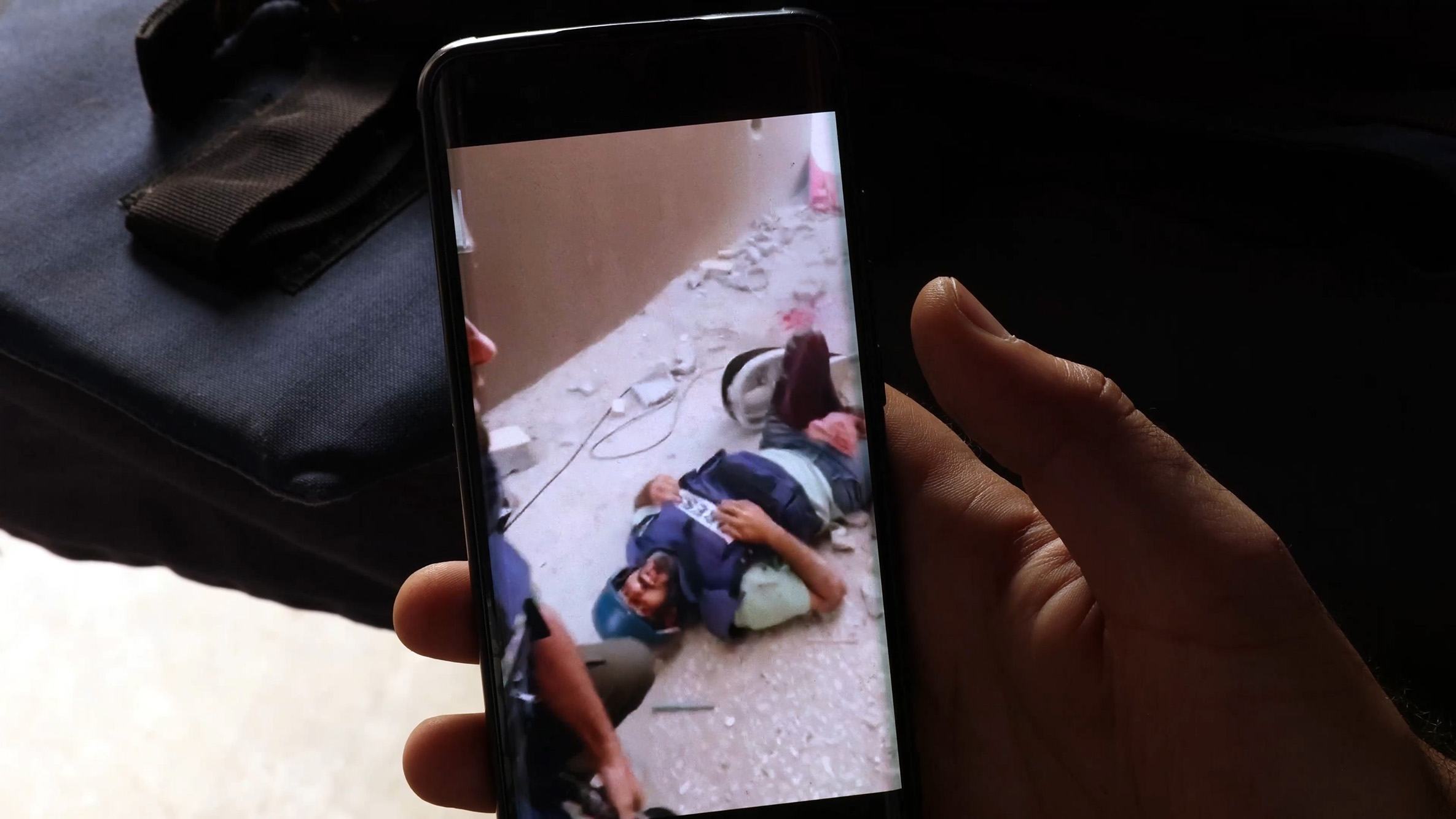
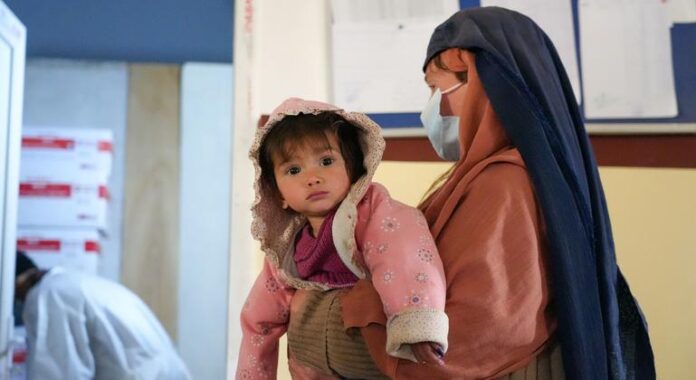
The EU issued a statement expressing deep concern about the continued escalation of the conflict in eastern Democratic Republic of the Congo (DRC), aggravated by the renewed offensive of the M23 supported by the Rwandan Armed Forces.
Aid surging into Gaza ‘at scale’ but massive needs remain: OCHA, WHO
On day three of the ceasefire which entered into force on Sunday 19 January, the UN aid coordination office, OCHA, welcomed the “surge” in lifesaving humanitarian assistance into the enclave, after 15 months of devastating Israeli bombardment.
Aid trucks began entering Gaza “a few minutes after the deal entered into force on Sunday,” said OCHA spokesperson Jens Laerke. “Up to now – these two first days of entry – there [have] been no reports of looting or attacks against aid workers.”
Hundreds of trucks
More than 900 aid trucks entered the Gaza Strip on Monday, as the truce held between Israel and Palestinian militants Hamas, according to the Israel authorities and the ceasefire’s guarantors, the US, Qatar and Egypt.
While the conflict raged, prompted by Hamas-led terror attacks on Israel on 7 October 2023, the aid lifeline to Gaza dwindled to as little as 50 trucks per day.
“At long last, aid at scale is entering,” said Mr. Laerke. “At long last, more hostages were released and can be reunited with their families and at long last, women and minors were freed from detention. It’s a tremendous hope, fragile but vital; this deal must hold.”
Addressing physical and mental scars
Immediate priorities for Gazans include “getting food in, opening bakeries, getting healthcare, restocking hospitals, repairing water networks, repairing shelter, family reunification,” the OCHA spokesperson told journalists in Geneva. “A lot of the things that we have done throughout, but nowhere near at the scale needed. And that is what we hope and work towards to be able to do now.”
UN humanitarians have long maintained that the entire population of Gaza – more than two million people – depends on such essentials. They include children, who account for about half of the Strip’s population, “with many surviving on just one meal a day”, OCHA said in an update.
“We have to – and we will – maximize delivery through this opening. Hunger is widespread, people are homeless; disease, injuries are rampant. Children are separated and there’s a cloud of deep psychological trauma hanging over Gaza that needs to be dealt with.”
Health emergency continues
Urgent health needs must also be addressed across Gaza where one in two hospitals are not functional, others are only partially functional and the majority of health facilities have sustained damage, according to the UN World Health Organization (WHO).
“The idea is as quickly as possible to try to provide health facilities to people of Gaza, focusing on emergency care, maternal and child health and other areas,” said WHO spokesperson Tarik Jasarevic.
He added: “We should not forget other areas and that’s 12,000 patients still need to be evacuated outside Gaza. We need to make sure that those people can go and receive medical care they need.
“We’ve been talking to 25,000 people [who] have sustained life changing injuries. These people need rehabilitation services that are not available right now.”
The head of communications for the UN agency that serves Palestine refugees, UNRWA told UN News in an interview on Tuesday they are committed to staying and delivering in Gaza. Listen below.
UN rights office raises alarm over escalating violence in occupied West Bank
OHCHR spokesperson Thameen Al-Kheetan added that the Israeli military operation in and around the Jenin refugee camp had involved “disproportionate” use of force, including airstrikes and shootings that reportedly targeted unarmed residents.
“The deadly Israeli operations in recent days raise serious concerns about unnecessary or disproportionate use of force, including methods and means developed for war fighting, in violation of international human rights law, norms and standards applicable to law enforcement operations.”
OHCHR verified that at least 12 Palestinians – most reportedly unarmed – have been killed since Tuesday and a further 40 injured. Those injured include a doctor and two nurses, according to the Palestinian Red Crescent.
Obligation to protect civilians
Mr. Al-Kheetan reiterated that Israel, as the occupying power, has a responsibility under international law to protect civilians living under occupation.
He stressed the need for investigations into alleged unlawful killings, warning that a lack of accountability risks perpetuating violence.
“All killings in a law enforcement context must be thoroughly and independently investigated and those responsible for unlawful killings must be held to account,” he said.
“By persistently failing, over the years, to hold accountable members of its security forces responsible for unlawful killings, Israel is not only violating its obligations under international law, but risks encouraging the recurrence of such killings,” he warned.
Impact on communities
The ongoing violence has displaced over 3,000 families in Jenin, and essential services such as water and electricity have been severely disrupted for weeks.
The Israeli military has closed off major entrances to Palestinian cities, including Hebron, restricting movement, and paralyzing daily life. Thirteen new iron gates have reportedly been installed at other towns’ entrances across the West Bank.
Briefing the Security Council on Thursday, UN Emergency Relief Coordinator Tom Fletcher also warned of record-high levels of casualties, displacement and access restrictions, since October 2023.
Settler violence and settlement expansion
Beyond military operations, there has been an uptick in settler attacks on Palestinian villages and the stoning of vehicles, in which several Palestinians have been injured.
Houses and vehicles have been set on fire, according to the OHCHR spokesperson.
He also voiced concern over some Israeli officials’ repeated comments about plans for further settlement expansion – in breach of international law.
“We call for an immediate end to the violence in the West Bank. We also call on all parties, including third States with influence, to do everything in their power to ensure peace is achieved in the region,” Mr. Al-Kheetan stated.
He reiterated High Commissioner Volker Türk’s call for Israel to halt settlement expansion and evacuate all settlements as required by international law.
“We call on all parties, including third States with influence, to do everything in their power to ensure peace is achieved in the region,” Mr. Al-Kheetan urged.
Relief efforts continue in Gaza
Meanwhile, in Gaza, the UN alongside humanitarian partners continues to support communities in need across the Gaza Strip.
On Thursday, 339 trucks carrying vital aid entered the enclave, according to aid coordination office, OCHA, with assistance focused on food, water and hygiene supplies.
Since the ceasefire took effect six days ago, more than 200,000 food parcels have been distributed to 130 sites, with aid reaching families in areas like Jabalya, in North Gaza governorate, that had been besieged for months.
The UN Children’s Fund (UNICEF) has also provided water trucking and hygiene kits to 5,000 people in Jabalya.
Gaza humanitarian update from Roos Bollen, UNICEF Communication Specialist, in Al Mawasi:
Returns to North Gaza
Humanitarian partners further reported that hundreds of displaced residents sheltering in Gaza City have begun returning to North Gaza governorate, while others in Deir al Balah and Khan Younis remain in makeshift displacement sites, with plans to move north.
A rapid assessment conducted by the UN and partners at 13 sites in central and southern Gaza found that while displaced families had received some assistance – including food, water, and sanitation services – they still face critical shortages of drinking water, hygiene kits, blankets and clothing.
Starting next week, humanitarian partners expect significant population movements between southern and northern Gaza and are preparing to address the urgent needs of displaced families try to return to mostly shattered homes.
OCHA emphasised that while aid efforts are expanding, more resources are urgently needed.
Situation in southern Lebanon
In the wider Middle East region, the United Nations urged Israel and Lebanon to fulfil their commitments to the cessation of hostilities’ agreement of last November, amid reports that Israeli troops will remain in Lebanon past Sunday.
“[We urge both parties to] avoid further action that could raise tensions and further delay the return of residents on both sides to their towns and villages,” UN Deputy Spokesperson Farhan Haq told journalists at the regular press briefing in New York.
As per the agreement, Israel is required to withdraw from southern Lebanon once Hezbollah has withdrawn its armed presence there, within 60 days.
“We continue to call for the full implementation of Security Council resolution 1701 [which ended the 2006 war between Israel and Hezbollah] as a comprehensive path towards longer term peace, security, and stability on both sides of the Blue Line,” Mr. Haq said.
He added that the UN, including the UN Special Coordinator for Lebanon and the UN Interim Force in Lebanon (UNIFIL), remains “absolutely committed” to supporting the parties to uphold the cessation of hostilities and their obligations under resolution 1701.
Forward look: 27 January – 9 February 2025
Overview of the main subjects to be discussed at meetings of the Council of the EU over the next two weeks and upcoming media events.
World News in Brief: Hostilities in northeast Syria, response plan in Mali, Uyghur deportations in Thailand
Between 16 and 18 January, at least three civilians were killed and 14 injured in shelling and other attacks impacting Manbij, Ain al-Arab and other villages near the Tishreen Dam in the eastern Aleppo region.
UN partners also reported that shops in the main market were damaged when an improvised bomb detonated inside a car in Manbij.
These incidents have forced people from their homes and obstructed aid access, OCHA reported after sending a mission to the city on Monday.
The mission visited the Manbij National Hospital and met with local officials, the Syrian Arab Red Crescent and local non-governmental organizations to identify and address the issues at stake, according to Farhan Haq, the Deputy Spokesperson for the UN Secretary-General.
OCHA and the UN Children’s Fund (UNICEF) also completed a monitoring mission on Monday to the Ain Al Bayda water station in eastern Aleppo.
Deadly remains
UN partners have recorded 69 explosive ordnance incidents over the first two weeks of January due to contamination, in which 45 people were killed and 60 others wounded.
“Since 26 November, a total of 134 new areas with explosive remnants of war have been identified by partners across five governorates – Idlib, Aleppo, Hama, Deir-ez-Zor and Latakia,” said Mr. Haq.
As people continue to move and return to their communities, UN partners are calling for increased and flexible funding for mine action, including risk education and emergency clearance.
Meanwhile, with water and sanitation services suspended in many displacement camps due to funding gaps affecting more than 635,000 people, OCHA asked for increased funding to ensure the continuation of its services.
$770 million response plan launched in Mali
On Tuesday, the UN in collaboration with Mali’s transitional authorities, launched a $770 million humanitarian needs and response plan in the capital Bamako to support millions of people across the country this year.
Two girls at the Barigondaga displacement site in Mali.
The plan aims to address the urgent needs of 4.7 million people affected by conflict, displacement, health emergencies and climate shocks, according to the Deputy Spokesperson.
Mostly women and children
Nearly 80 per cent of the people to be reached with aid are women and children who are in need of food, water, healthcare and protection support.
Last year, UN partners mobilised nearly 40 per cent of what was required – just over $270 million – enabling lifesaving assistance and protection to reach 1.8 million people.
The Acting UN Humanitarian Coordinator on the ground, Khassim Diagne, said it is urgent that the entire humanitarian community and donors renew their commitment to addressing essential needs in the region.
UN rights experts urge Thailand to halt Uyghur deportations
Independent UN human rights experts have called on Thailand to immediately stop the deportation of 48 Uyghurs to China, citing serious concerns over potential torture and inhumane treatment.
“The treatment of the Uyghur minority in China is well-documented,” the Human Rights Council-appointed experts stated. “We are concerned they are at risk of suffering irreparable harm.”
The experts emphasised the international prohibition on refoulement, which forbids returning individuals to countries where they face real risks of torture or cruel treatment. They urged Thailand to provide urgent medical care to the mostly Muslim Uyghurs being held.
The 48 individuals are part of a larger group of around 350 Uyghurs detained in Thailand since 2014 after crossing the border irregularly. They have reportedly been held incommunicado for over a decade, without access to legal representation, family members or UN officials.
No return
“It is our view that these persons should not be returned to China,” the experts said. “They must be provided with access to asylum procedures and humanitarian assistance, including medical and psycho-social support.”
The experts highlighted that 23 of the 48 Uyghurs held suffer from severe health conditions, including diabetes, kidney dysfunction and paralysis. “It is essential they receive appropriate medical care,” the experts added.
Thai authorities were reminded of their obligation to treat all detainees humanely and with dignity, ensuring access to legal representation, medical assistance and the ability to communicate with lawyers and family members.
The plea underscores the urgent need for Thailand to uphold international human rights standards and protect the Uyghur detainees from potential harm.
Special Rapporteurs and other experts are not UN staff, receive no salary for their work and are fully independent of any government or organization.
Lebanon: Food insecurity deepens following conflict, new report reveals
Developed by the Food and Agriculture Organization (FAO), the World Food Programme (WFP) and the Ministry of Agriculture, the report reveals that the impact of hostilities on agriculture and the economy will likely slow recovery.
Some 1.65 million people are now facing crisis or emergency levels of hunger, with 400,000 additional people classified as acutely food insecure compared to early 2024.
Among them, over 200,000 are in emergency conditions, a figure that has doubled since the conflict’s escalation late last year between Israeli forces and Hezbollah militants.
A fragile ceasefire agreement signed in late November has largely held, enabling the withdrawal of Israeli troops and militants from the south, while Lebanese Government forces redeploy to guarantee the peace alongside UN peacekeepers.
“Lebanon’s worsening food security is no surprise,” said Matthew Hollingworth, WFP Representative in Lebanon. “66 days of war, preceded by months of conflict, have shattered lives and livelihoods,” he emphasised.
Refugee populations
The burden of food insecurity weighs heavily on Lebanon’s refugee populations.
Approximately 40 per cent of Syrian and Palestinian refugees in the country are facing crisis-level hunger.
“While some can return home after the ceasefire, others face the harsh reality of having no home left to return to,” said Mr. Hollingworth, stressing the urgency of rebuilding food systems and livelihoods.
Economy devastated
The Lebanese economy has shrunk by 34 per cent since 2019, with key sectors such as agriculture, tourism and trade badly affected.
The destruction of agricultural land and assets during the fighting, including the burning of 12,000 hectares of farmland, has caused losses exceeding $1 billion in the sector alone.
“The escalation of hostilities has severely impacted farmers’ livelihoods, as well as agricultural assets and infrastructure, leading to heightened food insecurity and threatening the sustainability of farming activities,” said Veronica Quattrola, FAO Representative in Lebanon.
Inflation and the removal of wheat subsidies have further strained household budgets, pushing food prices beyond reach for many vulnerable families.
Major food price increases have left families adopting coping mechanisms such as skipping meals or consuming less nutritious food.
Most vulnerable at risk
Malnutrition continues to pose a significant risk, particularly to children and women.
A recent survey revealed that three in four children under five are eating diets with very little diversity, leaving them vulnerable to stunted growth and a low weight for their age.
Syrian refugee children are disproportionately affected, with stunting rates significantly higher than the national average.
Humanitarian assistance
In response to the crisis, WFP provided food assistance to 750,000 people in 2024 and plans to support 2.5 million people in 2025, including nearly 900,000 Syrian refugees.
However, funding shortfalls and logistical challenges have hindered efforts to deliver aid to conflict-affected regions.
Meanwhile, “FAO is steadfast in its commitment to helping farmers resume production and supporting communities in rebuilding and enhancing their resilience,” said Ms. Quattrola.
The Lebanese Ministry of Agriculture, led by Abbas Al-Hajj Hassan, emphasised the need for international support to rebuild the country’s agricultural sector and compensate affected farmers.
“Sustained cooperation is key to achieving sustainable development for Lebanon’s agricultural sector,” Dr. Hassan stated, calling for stronger partnerships.
Looking ahead
While a ceasefire was announced in November 2024, recovery remains uncertain.
The report projects that food insecurity is expected to persist over the next three months, with no short-term return to pre-crisis conditions.
“At this critical moment, our mission is clear: to support the Government and the people in rebuilding their lives and food systems” said Mr. Hollingworth.
We celebrate the International Day of Education
On this International Day of Education, we celebrate teachers who help empower young people to thrive in a rapidly changing world. This year’s theme, “AI and education: Preserving human agency in a world of automation”, marks the importance of education in navigating new technological developments.
Q&A session – Teacher Academies call 2025: Presentations are now available!
On 16 January 2025, the European Education and Culture Executive Agency (EACEA) organised an online Q&A session to inform participants about the The Teacher Academies 2025 call for proposals under Erasmus+ Key Action 2.
The presentations of the Q&A session are now available on the event page.
World News in Brief: Gaza aid surge, El Fasher update, aid to Somalia, justice in Belarus
Aid coordination office OCHA said the UN and our partners are dispatching supplies to designated emergency shelters and distribution centres across the Strip.
“We are distributing food parcels and flour and working to re-open bakeries,” said UN Deputy Spokesperson Farhan Haq.
More than 50,000 food parcels
On Monday and Tuesday, colleagues from the UN Palestine refugee agency, UNRWA, distributed 118 trucks of more than 53,000 food parcels to communities in Khan Younis and to its shelters in Deir Al-Balah.
Reproductive health agency UNFPA said 20 trucks carrying critical supplies, including for safe births, emergency obstetric care, postpartum kits, contraceptives and winter items, were offloaded in Deir Al-Balah on Tuesday.
Twenty more trucks carrying UNFPA assistance are entering northern Gaza on Wednesday.
The UN Office for Project Services (UNOPS) is distributing fuel to ensure critical services such as healthcare and water pumping and desalination can run on back-up generators in the absence of electricity.
The UN and its partners are also supporting infrastructure repairs, including to water wells and desalination plants.
“Our humanitarian partners are carrying out rapid assessments in newly accessible areas to identify people’s most urgent needs, including water, hygiene, sanitation and healthcare,” Mr. Haq added.
They are also stepping up disease surveillance efforts, setting up trauma stabilisation points for emergency care and mobilising specialised health teams.
Sudan: Civilians in peril ahead of ‘likely imminent attack’ by RSF militia
The UN rights office, OHCHR, expressed deep concern on Wednesday over a likely offensive against the Darfuri city of El Fasher, in Sudan, which has been besieged for months by the so-called Rapid Support Forces (RSF) which are battling government troops for control of the country.
OHCHR spokesperson Seif Magango said the RSF had issued a statement on Monday with an ultimatum to the national army and affiliates to leave the city by Wednesday afternoon. Government forces were defiant in face of the order.
“We renew our call on both parties to de-escalate tensions around the city and to take urgent steps to ensure its civilian population is protected, consistent with their obligations under international law,” said Mr. Magango.
“The people of El Fasher have suffered so much already from many months of senseless violence and brutal violations and abuses, particularly in the course of the prolonged siege of their city. This must stop.”
Drone attacks
Aid coordination office OCHA also voiced deep concern on Wednesday over a series of reported drone attacks on civilians and critical civilian infrastructure in the northern, eastern and central areas of Sudan.
An attack Wednesday reportedly targeted the um Dabakir power station around Kosti, south of the capital, Khartoum. This follows another reported strike on a power station in Northern state earlier this week.
OCHA said that major cuts to water and power risk depriving people of access to critical health services and safe water supplies.
Parties to the fighting, under international law, have a clear obligation not to attack objects indispensable to the survival of the civilian population.
Somalia: Aid partners seek $1.42 billion to help 4.6 million people
A joint appeal was launched on Wednesday for $1.4 billion by the UN, aid partners and the country’s authorities to help millions who need lifesaving humanitarian support and protection.
“Recurrent shocks, food insecurity and malnutrition remain widespread across Somalia,” warned George Conway, the top UN aid official there.
In a statement in support of the aid appeal to help 4.6 million people of the nearly six million in need, Mr. Conway said that this year’s humanitarian needs and response plan will provide lifesaving assistance, particularly to vulnerable groups such as women, children and the elderly.
The UN official explained that the situation in Somalia improved slightly in 2024 compared to previous years when “widespread conflict, devastating droughts and flooding” were the norm.
The improvements last year were the result of investments in early warning systems, community preparedness and improved cooperation between humanitarians and the authorities, Mr. Conway explained.
UN rights experts alarmed by Belarus trials in absentia
A group of independent UN human rights experts on Wednesday raised the alarm over Belarus’s increasing use of in absentia trials, which lack basic fair trial guarantees.
These trials can lead to severe penalties, including lengthy prison sentences, property confiscation and even the death penalty.
“We have received numerous reports of individuals prosecuted in absentia in Belarus who learn of their prosecution by chance, are unaware of the charges and grounds for their conviction and are completely deprived of a legal defence,” the Human Rights Council-appointed experts stated.
They highlighted that some individuals have unsuccessfully tried to participate remotely or obtain copies of the verdicts.
Belarusian legislation on in absentia trials disregards fair trial guarantees provided by the International Covenant on Civil and Political Rights, which Belarus has ratified. The experts urged the authorities to honour their international obligations.
Civil society reports indicate a dramatic rise in such trials against Belarusians abroad, with 110 cases in 2024 compared to 18 in 2023.
Punishment for dissent
Since the disputed 2020 presidential elections, many Belarusians have fled due to government repression.
“Nevertheless, the Belarusian authorities continue to target these individuals, even in exile,” the experts noted, referencing a 2023 decree that restricts access to identity and travel documents for Belarusians abroad.
Over 100 people, including political opposition members, civil society activists and human rights defenders, have been convicted in absentia since 2022.
Those prosecuted are not notified of proceedings, cannot choose their defence lawyers and cannot participate remotely. Judgements are not public and only brief verdict information is accessible online.
“Convictions in absentia inevitably lead to violations of various human rights,” the experts warned, citing rights to fair trials, freedom of expression and adequate living standards. Sentences include long prison terms, heavy fines and potentially the death penalty.
Special Rapporteurs and other independent rights experts are not UN staff, receive no salary and are independent of any government or organization.
Global education must integrate AI, centred on humanity
His message highlighted the dual nature of technological advances such as Artificial Intelligence (AI), which offer immense potential – but also pose considerable risks.
“Education is an essential building block for every person to reach their full potential, and for societies and economies to grow and flourish”, Mr. Guterres said.
AI promise and risks
The UN chief stressed that AI and other tech innovations can significantly aid students and teachers by providing wider access to information and advanced learning tools.
“But the tremendous rewards are matched by some daunting risks. As AI-driven systems become more powerful, human intention and machine-driven impacts can easily misalign”, he added.
This year, the UN education and culture agency, UNESCO, is dedicating the Day to the opportunities and challenges of AI.
Director-General Audrey Azoulay called for more investment in training both teachers and students so it can be used responsibly.
“AI offers major opportunities, provided that its deployment in schools is guided by clear ethical principles. To reach its full potential, this technology must complement the human and social dimensions of learning, rather than replace them.”, Mr. Azoulay said.
Human rights at the heart of AI
Stressing that this year’s day reminds us that unlocking the AI’s potential “depends on keeping human agency – and human rights – at the heart of this rapidly evolving technology”, the UN Secretary-General called for guarantees that all users have the right tools and knowledge to “use this technology smartly, safely and ethically”.
UNESCO’s Competency Frameworks to support learners and teachers as they incorporate AI into their learning, and the recently adopted Global Digital Compact, are expected to help ensure humanity retains control over the development and governance of AI.
Concluding his message, Mr. Guterres called for a commitment to “keeping humanity at the centre of education systems, everywhere”.
Divisions over AI
As AI becomes more integrated into education, countries remain divided on its use. According to UNESCO’s latest data, in high-income nations, over two-thirds of secondary school students are already leveraging generative AI tools to support their schoolwork.
However, a significant challenge remains with education professionals still lacking clear guidelines.
A UNESCO survey conducted in May 2023, covering 450 educational institutions, revealed that only 10 per cent of schools and universities have an official framework for AI use.
Simultaneously, an increasing number of countries are imposing restrictions on new technologies in the classroom. New data from UNESCO indicates that nearly 40 per cent of nations now have laws or policies banning mobile phones in schools, a notable rise from 24 per cent in July 2023.
For more insights, listen to the UN Special Rapporteur on the Right to Education, Farida Shaheed, who recently discussed the role of AI in schools and the challenges it brings in an interview with UN News.
Access to education
The International Day reminds us that access to high-quality education is a human right that not only greatly benefits individuals but also uplifts entire communities.
Millions of children, however, remain out of school due to a variety of factors including gender, location, social background or conflict.
Despite decades of educational progress and international commitments, according to UNESCO’s latest data, 250 million children and youth remain out of school worldwide.
Safe and inclusive
In a recent study, UNESCO reported that almost one in three learners has been physically attacked at least once during the school year and one in ten experiences cyberbullying.
With too many children across the world experiencing violence in and around schools, the impacts can be devastating – affecting the well-being, education outcomes and quality of life of students.
Watch youngsters here explain what they need to make schools safer.