Wednesday, May 6, 2026
Home Blog Page 528

UNRWA chief renews call for probe into attacks on humanitarians in Gaza

0
UNRWA chief renews call for probe into attacks on humanitarians in Gaza

Commissioner-General Philippe Lazzarini made the appeal in a statement posted on the social media platform X, formerly Twitter.

He noted that 15 months after the war began in Gaza, “horrors continue unabated under the world’s watch”.

258 UNRWA staff killed

Citing latest information from his teams, Mr. Lazzarini said that 258 UNRWA staff have been killed during this time.

Nearly 650 incidents against UNRWA buildings and facilities were recorded, and at least 745 people were killed in its shelters while seeking UN protection.  More than 2,200 others were injured.

Meanwhile, over two thirds of UNRWA buildings are now damaged or destroyed, the vast majority of which were used as schools before the war.

“We continue to receive reports that Hamas and other Palestinian armed groups have used our facilities. On several occasions, we were also able to verify the occupation of our facilities by the Israeli Armed Forces,” he said.

Staff detained

Mr. Lazzarini added that at least 20 UNRWA staff currently are in Israeli detention centres, and “those previously released have described systematic mistreatment, humiliation and torture.”

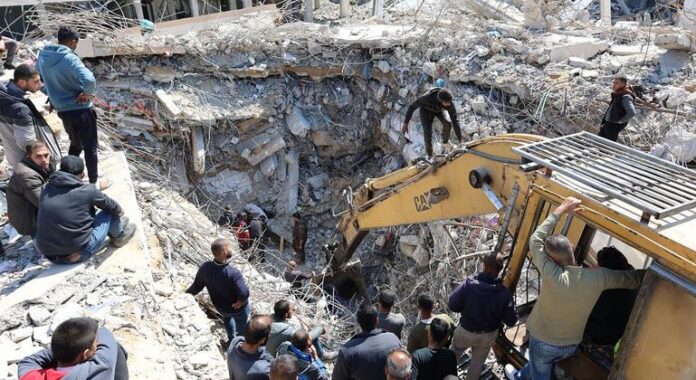
He also highlighted the situation in northern Gaza, noting that “there has been a significant increase in attacks on our staff, buildings and operations” since Israel stepped up its military operations there nearly three months ago.

UNRWA schools in Gaza are providing accommodation for displaced families.

Not a target

“I reiterate my call for independent investigations into the systematic disregard for the protection of humanitarian workers, premises and operations,” he said. 

“This cannot become the new standard and impunity cannot become the new norm.”

He stressed that “the rules of war are clear”, namely that humanitarians and civilian infrastructure – including hospitals and UN buildings – are not a target, hostage taking is prohibited, and that civilians must be assisted and protected at all times.

Mr. Lazzarini concluded the statement by saying it is time to release all detained humanitarian staff and all hostages, facilitate humanitarian access to reach people in need wherever they are, and lift the siege on Gaza to bring in much needed humanitarian supplies, including for winter.

Rainfall worsens plight of displaced families

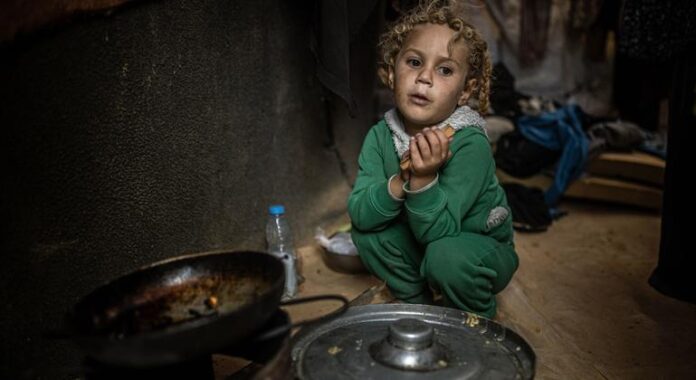
Meanwhile, the UN Office for the Coordination of Humanitarian Affairs (OCHA) reported that heavy rainfall on Monday worsened the situation of displaced families along Gaza’s shoreline, particularly in Khan Younis, with dozens of tents reportedly flooded or otherwise damaged. 

Partners working in water and sanitation highlight that in order to support the Coastal Municipalities Water Utilities, there is an urgent need for 27 desludging trucks. Only seven trucks are currently available across the Gaza Strip.

OCHA said that Kamal Adwan Hospital in North Gaza is non-functioning while Al Awda Hospital is partially functioning. 

Furthermore, despite a limited provision of UN supplies this past Sunday, the Indonesian Hospital also remains non-functional, lacking water, electricity, hygiene supplies, and adequate medical staff, with essential equipment destroyed. 

Aid entry challenges

OCHA said the process to bring in critical items to Gaza remains challenging due to insecurity, active fighting and breakdown in public order and safety. 

Of particular concern is the insufficient amount of fuel needed for essential services, with aid partners reporting that there is a stock of less than 25,000 litres, which is less than one day of requirements in Gaza.

The UN agency is engaging with the Israeli authorities to prioritize entry of fuel through available routes and avoid losing it to organized looters.

Bakeries and emergency flour distribution

Humanitarian partners also report that the four bakeries in Gaza supported by the UN World Food Programme (WFP) continue to operate at full capacity.

The bakeries received fuel earlier this week, which will allow them to continue operating for six days. 

Emergency flour distribution also continues in the south of Gaza. As of last Friday, more than 6,000 metric tonnes of flour have been distributed, reaching around 1.2 million people, covering 70 per cent of the population in the region.

“Predictable distribution of basic commodities such as flour is essential for the survival of people and would push prices down,” OCHA said.

Violence in the West Bank

Turning to the West Bank, OCHA noted that 2024 has seen the highest number of settler-related incidents, including East Jerusalem, since the office began keeping records almost two decades ago. 

Roughly 1,400 such incidents – including physical assaults, arson attacks, raids on Palestinian communities and the destruction of fruit trees – have resulted in Palestinian casualties, damage to property, or both, which is equivalent to nearly four incidents per day. 

“Of the 4,700 people internally displaced across the West Bank this past year, about 560, or 12 per cent, have cited settler violence and access restrictions as the main reasons that forced them out of their homes or communities,” the agency said.

This year has also marked the second highest number of Palestinian fatalities in the West Bank since OCHA’s records began, following 2023, which was the highest.

More than 480 Palestinians, including 91 children, have been killed across the West Bank, including East Jerusalem, mainly by Israeli forces. 

Source link

Aid trucks deliver food to northwest Syria

0
Aid trucks deliver food to northwest Syria

UN aid coordination office, OCHA, reported that the cross-border operation from Türkiye into the northwest is running without impediments.

On Tuesday, 21 trucks carrying 500 metric tonnes of food – enough for 175,000 people – from the UN World Food Programme (WFP) crossed into Idlib through the Bab Al-Hawa border crossing.   

Cholera campaign in the northeast

In northeast Syria, cholera vaccination is ongoing in Al-Hol camp in Al-Hasakeh, with the support of the World Health Organization (WHO) and the UN Children’s Fund (UNICEF).

The development is part of a 10-day campaign that began on Saturday.  

Meanwhile, in the south, the UN refugee agency, UNHCR, in collaboration with the Syrian Arab Red Crescent, is working to provide essential non-food items to displaced families in need.

Child protection services

OCHA said that in Aleppo, child protection services have resumed, with 26 fixed centres and 12 mobile teams active in urban and rural areas.

Furthermore, over the past two weeks, WHO delivered 2.5 tonnes of emergency kits, IV fluids and medical supplies to Aleppo University Hospital and Al Razi Hospital.

The UN Development Programme (UNDP) also delivered 6,000 litres of fuel to Zahi Azraq Hospital.

Supply shortages, financial issues

OCHA warned, however, that supply shortages, financial liquidity issues and insecurity across the country remain key constraints for humanitarian response.

“Partners have warned that nutrition supplies for pregnant and lactating women are running out across the country and many referred cases were not treated,” the agency said.

Moreover, seven primary health centres in Hama had their insulin supplies stolen, while 18 primary health centres in Homs were unable to provide vaccination services due to damage, looting and staff shortages.  

Vendors and field partners further report limitations on the amount of cash that can be withdrawn, thus affecting their ability to operate.

OCHA said some vendors are experiencing low stock levels due to curfews, incidents of violence, robbery and other security-related issues.

Returning home

In other developments, the UN refugee agency, UNHCR, reported that over 58,000 people have returned to Syria from neighbouring countries such as Lebanon, Jordan and Türkiye in the past three weeks.

Since the beginning of the year, an estimated 419,200 Syrian refugees have come back to their homeland.

Of this number, the majority, 25 per cent, returned to Ar-Raqqa, followed by Aleppo and Dar’a.


Source link

Vienna Philharmonic’s New Year’s Concert Welcomes 2025 with Riccardo Muti at the Helm

0

Vienna’s world-renowned New Year’s Concert, performed by the Vienna Philharmonic Orchestra, rang in 2025 with maestro Riccardo Muti conducting the 85th edition of this cherished musical tradition. Held in the illustrious Golden Hall of the Musikverein, the concert celebrated the bicentennial of Johann Strauss II, the “King of the Waltz,” with a program brimming with his timeless compositions. This year also marked a historic moment: the inclusion of a piece by a female composer, Constanze Geiger.

A Milestone for Women in Music

For the first time in the concert’s storied history, a piece by a female composer graced the program. Geiger’s “Ferdinandus Waltz”, written when she was just 12 years old, was selected not for its novelty but for its exceptional artistic value. Maestro Muti, an 83-year-old veteran of the podium, emphasized the quality and personality of the piece, describing its vivace introduction as a bold declaration: “Here I am.” Geiger, a composer, pianist, and actress, was closely associated with the Strauss family, with her waltz originally conducted by Johann Strauss I.

A Tribute to the Strauss Dynasty

This year’s concert was a tribute to Johann Strauss II, whose music encapsulates the spirit of Vienna. The orchestra performed eight of his pieces, including the perennial favorite, “The Blue Danube Waltz”, which was part of the encore alongside Johann Strauss I’s rousing “Radetzky March.” Muti noted that the Strauss family’s music captures both melancholy and joy—a delicate balance reflecting the essence of Vienna itself.

Broadcast Across Europe

The concert was widely broadcast across Europe, ensuring millions could welcome the New Year with this cultural celebration. Key channels that aired the concert include:

Streaming platforms such as medici.tv also extended the concert’s reach.

For more information on how to watch the concert, you can consult guides like El País or Huffington Post.

Ballet and Beyond

As in previous years, the televised concert featured performances by the Vienna State Opera Ballet. This year’s choreography, led by British artist Cathy Marston, brought fresh energy to the stage. Additionally, viewers enjoyed a unique intermission film, “2025 – A Strauss Odyssey,” which humorously depicted Thomas Strauss, a fictional descendant of Johann Strauss II, exploring his ancestor’s legacy from a spaceship.

A Message of Harmony and Hope

Riccardo Muti used the occasion to send a poignant message of “peace and beauty” to the world. “The world needs harmony, beauty, and peace,” he stated, likening the music to a ship carrying love and serenity across the symbolic waves of the Blue Danube.

Celebrating 200 Years of the King of Waltz

The bicentennial of Johann Strauss II has sparked a series of commemorative events across Austria. Known for his universal appeal and global fame even in his own time, Strauss’s works remain the heart and soul of Vienna’s New Year’s celebrations.

The New Year’s Concert not only serves as a reminder of Vienna’s rich musical heritage but also as a beacon of unity and hope for the year ahead. Under the masterful baton of Riccardo Muti, the 2025 edition reaffirmed its place as a cultural highlight, bringing joy to audiences across the globe.

‘RC blog: ‘It will take years to help people deal with the invisible consequences of war”

0
‘RC blog: ‘It will take years to help people deal with the invisible consequences of war”

“I am continually inspired by the strength and courage of the Ukrainian people. As I have travelled to Kharkiv, Kherson, Mykolaiv, Sumy, Zaporizhzhia, and most recently to Kramatorsk and Lyman, I have seen for myself how the disruption of essential services such as electricity, water and heating affects people.

I have spoken to people whose loved ones were killed and whose homes were destroyed during attacks. I have met people in transit sites who had to leave their lives behind carrying whatever of their belongings they could salvage in one small bag. Every day, they show extraordinary determination – not only getting up and continuing their lives but also helping others.

The Ukrainian government and local authorities are doing an impressive job of responding immediately to the attacks so people willing to return could do it as fast as possible. One of the governors told me that after an attack that caused damage to 13 buildings they, with partners, extraordinarily managed to seal all the windows and reconnect water, electricity, and heating for people to return home within four days.

People are receiving psychological aid after missile attacks damaged homes across Ukraine.

‘Widespread trauma and psychological distress’

My sense is that this prolonged war has led to widespread trauma and psychological distress. The need for mental health support is evident, and it will take years to help people deal with the invisible consequences of war.

On the other hand, I see that people start rebuilding as soon as possible, whether it’s businesses, homes or lives. The future starts as soon as sirens stop. I’ve seen people returning to rebuilt houses or entering new ones with tears of relief. People don’t want to leave; they want to stay in their communities. And, of course, every person I’ve spoken with wants the war to end, though many underline that this cannot come at the cost of not regaining and retaining their territorial integrity.

And I want to reiterate the Secretary-General’s message on the need for justice and peace in Ukraine in line with the UN Charter, international law and General Assembly resolutions.

The United Nations in Ukraine is ready to continue providing lifesaving assistance. In parallel we will continue to pursue medium- to long-term solutions that help impacted individuals and communities rebuild and reduce reliance on external aid. I can only hope that our determination to support Ukrainians for as long as they need us, gives some hope for a more dignified future.

© UNDP Ukraine/Kseniia Nevenche – A sign in Ukraine warns of landmines.

Rebuilding the country

Needless to say, the destruction of essential services poses major challenges to the country’s economy and development.  Education and healthcare systems are under immense pressure, compounded by the growing mental health challenges as people face isolation, freezing homes, and the stress of the ongoing war.

The Russian Federation’s systematic and deliberate targeting of Ukraine’s energy infrastructure constitutes a grave violation of international humanitarian law, inflicting foreseeable and widespread harm on civilians.

The UN Development Programme (UNDP) estimates that over 60 per cent of power generation facilities have been damaged since 2022. Now that winter has set in, it is urgent that the escalating energy crisis is addressed and that we work together to support the people of Ukraine during this critical time. Of course, restoring energy access is critical to ensuring that essential services function and that no one is left behind.

UN agencies are helping communities to remove debris and demine, repair homes, schools, and hospitals, build new social infrastructure, provide basic services and mental health and psycho-social care, and support livelihoods and employment – all of which are priority issues for the Government. The question is how to scale up the efforts, as the needs are high.

Ten million Ukrainian people have been displaced. Of these, 3.5 million people are being hosted in communities across the country. Many of them lost their livelihoods; they need homes and work and they need schools and kindergartens to take children to and hospitals.

UNICEF has initiated the distribution of winter clothing to families in the eastern regions of Ukraine.

© UNICEF/Oleksandr Osipov – UNICEF has initiated the distribution of winter clothing to families in the eastern regions of Ukraine.

Planning for the future of Ukraine

Humanitarian organizations have set up mechanisms for emergency response to evolving and escalating needs across the country. We have demonstrated flexibility and impact time and time again and will continue to do so.

While humanitarian assistance must continue at a sufficient scale to support the most vulnerable, recovery efforts must be pursued and scaled up to offer medium-term and more sustainable solutions for the most affected communities and populations. These require important and steady financial resources over the medium and long term allocated efficiently and transparently, and, of course, planning.

In my meetings with leaders across the regions, I have been impressed by their focus on planning for the future. They are preparing for long-term solutions while remaining flexible in addressing pressing everyday issues imposed by the ongoing war.

At the UN, we are considering various scenarios to tackle the uncertainty of the future. Of course, we must support further contingency planning and help ensure that humanitarian response continues. At the same time critical priorities like demining as a pre-condition for economic recovery, housing solutions for displaced people or addressing veterans’ needs, demand planning and a high level of coordination among UN agencies, the Ukrainian government, donors, and INGOs (International Non-Governmental Organizations).

As I saw in a trip to Izium in the Kharkiv region, agriculture, which is vital for sustaining local communities, faces compounded risks due to widespread explosive remnants of war.

Farmers plant their fields to support their families, fearing they will drive over a mine or unexploded ordnances. It is very compelling to see the government, NGOs and the UN – in this case FAO and WFP – working together to combine humanitarian mine clearance of agricultural land and help farmers regain their agricultural livelihood.

Another example is equipping water wells in Mykolaiv Region with solar energy driven pumps that decrease dependency on the grid and are a precursor for green recovery.  And I have seen classrooms built in underground metro stations to keep education going and balance the challenges of online education.  All these are wonderful examples that we need to scale up with whatever resources are available.”

Source link

Polish presidency of the Council of the European Union

0
Polish presidency of the Council of the European Union

Source link

As Midnight Strikes: Europe’s Diverse New Year’s Celebration and Traditions

0
New Year's celebrations

Europe’s Diverse New Year’s Celebration. Across Europe, New Year’s Eve is celebrated with a dazzling variety of customs, each deeply rooted in the culture and history of its country. From Spain’s grape-eating race to Austria’s midnight waltz, these traditions showcase the unique ways Europeans welcome a fresh start while bidding farewell to the old year.

Spain: The Race for Grapes

In Spain, New Year’s Eve is a race against time, with a culinary twist. As the clock strikes midnight, Spaniards strive to eat 12 grapes—one for each chime of the clock. This century-old tradition is said to bring good fortune for every month of the coming year. The practice originated in the late 19th century when a surplus of grapes inspired winemakers to promote the fruit as a symbol of luck. Today, the custom is a spirited—and sometimes hilarious—race to keep up with the clock’s chimes.

Hungary: Lentils for Prosperity

For Hungarians, the new year begins with a focus on wealth and abundance, symbolized by lentils. On January 1st, families gather to enjoy lentil soup or stew, believing that the round shape of the legumes resembles coins and promises financial prosperity. This hearty dish is often accompanied by lively conversation about the hopes and dreams for the year ahead, making it a communal and meaningful way to start anew.

Italy: Luck in Red

In Italy, New Year’s Eve is steeped in sartorial superstition. Italians wear red underwear as a talisman for good luck, love, and success in the coming year. This tradition dates back to ancient Rome, where red was associated with fertility and health. Today, red underwear has become a festive staple, often exchanged as gifts during the holiday season. It’s a playful and colorful way to welcome good fortune.

Portugal: Good Fortune in Blue

Across the border in Portugal, the lucky color of the evening is blue. Portuguese revelers believe that wearing blue underwear on New Year’s Eve invites serenity, harmony, and protection from harm. Additionally, the Portuguese celebrate with a noisy ritual at midnight, banging pots and pans with spoons to drive away evil spirits. This lively tradition ensures a fresh and positive start to the new year.

Denmark: Smashing Plates for Popularity

In Denmark, New Year’s Eve celebrations are as loud as they are symbolic. Throughout the year, Danes save old plates, only to smash them against the doors of friends and family at midnight. The more broken crockery on your doorstep, the more popular you are considered. This unique custom is not just a test of one’s popularity but also a boisterous way to express goodwill and affection.

Germany: Fortune-Telling with Wax

Germany’s New Year’s Eve traditions focus on glimpsing the future. An age-old custom, now adapted for safety, involves melting wax (previously lead) and pouring it into cold water. The shapes formed are then interpreted as predictions for the coming year—hearts for love, boats for travel, and so on. This tradition offers a reflective moment amidst the festivities, inviting participants to ponder what lies ahead.

Czech Republic: Apples as Omens

In the Czech Republic, New Year’s fortunes are told with apples. By slicing an apple in half, celebrants examine the shape of the core. If the seeds form a star, it’s a sign of good luck and prosperity; a cross shape, however, is seen as a bad omen. This simple yet meaningful tradition connects Czechs to the natural world and its symbols of fortune.

Scotland: The First Foot of Luck

In Scotland, New Year’s Eve is synonymous with Hogmanay, a festival rich in tradition. One of its most cherished customs is “first-footing,” where the first person to enter a home after midnight is believed to bring good fortune. This visitor often carries symbolic gifts such as coal (for warmth), shortbread (for sustenance), or whiskey (for cheer). This tradition reflects Scotland’s spirit of hospitality and community.

Austria: Waltzing into the New Year

Elegance and grace define Austria’s New Year’s Eve celebrations. In Vienna, couples take to the streets and ballrooms to waltz into the new year. The sound of Johann Strauss’s “Blue Danube” fills the air as Austrians mark the midnight hour with music and movement. This tradition, steeped in cultural pride, embodies the nation’s appreciation for classical music and dance.

A Celebration of Diversity

These traditions highlight Europe’s rich cultural tapestry, where each country welcomes the new year in its own distinctive way. Whether it’s smashing plates in Denmark, eating grapes in Spain, or waltzing in Austria, these customs offer a window into the values and histories of their people.

While the traditions may vary, the sentiment is universal: a shared hope for luck, joy, and prosperity in the year to come. As midnight strikes, Europeans come together in celebration, proving that the best way to greet the future is with a blend of optimism, creativity, and time-honored traditions.

Citations:
[1] https://visitukraine.today/blog/3140/how-europe-celebrates-the-new-year-the-most-interesting-traditions-from-different-countries
[2] https://xpat.gr/european-new-years-eve-traditions-for-good-luck/
[3] https://aroundtheworldstories.com/2017/12/bringing-europe-new-years-eve/
[4] https://www.euronews.com/my-europe/2024/12/30/how-does-europe-ring-in-the-new-year-euronews-staff-tell-us-how-their-countries-celebrate
[5] https://www.outlooktraveller.com/destinations/international/unique-new-years-eve-traditions-across-the-world
[6] https://www.glamour.com/story/new-years-eve-day-traditions
[7] https://n26.com/en-eu/blog/new-year-traditions-in-europe
[8] https://europeisnotdead.com/european-new-year-traditions/
[9] https://www.c-and-a.com/eu/en/shop/new-years-eve

Syrians now have ‘historic opportunity’ to build a peaceful future, says Guterres

0
Syrians now have ‘historic opportunity’ to build a peaceful future, says Guterres

As reports continued to emerge from the Syrian capital, Damascus, where opposition forces declared victory overnight on State television, the UN chief said in a statement: The future of Syria is a matter for the Syrians to determine.

There is much work to be done to ensure an orderly political transition to renewed institutions, Mr. Guterres, and noted that his Special Envoy, Geir Pedersen, will be working with all Syrians to this end.

Mr. Pedersen, who has been attending a high-level meeting of Arab States in Doha this weekend, has called for “urgent political talks” in Geneva to secure a peaceful future for Syria.

There was widespread backing for his appeal, he said on Saturday, from Iran, Russia and Türkiye along with the United States, France, Great Britain, Germany and the European Union.

Renewed call to avoid violence

In the meantime, the Secretary-General renewed his call for calm and avoiding violence at this sensitive time, while protecting the rights of all Syrians, without distinction. He also noted that the inviolability of diplomatic and consular premises and personnel must be respected in all cases in accordance with international law.

“We will need the support of the international community to ensure that any political transition is inclusive and comprehensive and that it meets the legitimate aspirations of the people of Syria, in all their diversity,” Mr. Guterres said and underscored that: “Syria’s sovereignty, unity, independence and territorial integrity must be restored.” 

The UN, he said, will honor the memory of those who have borne the brunt of the 14-year conflict.

We remain committed to helping Syrians build a country where reconciliation, justice, freedom, and prosperity are shared realities for all. This is the path to sustainable peace in Syria,” concluded the Secretary-General.

UN will support all those in need

The dramatic development in the Syrian capital follows a lightning advance by armed opposition forces, Hayat Tahrir al-Sham (HTS), on 27 November from their stronghold in the country’s northwest into Government-controlled areas, reportedly supported by rebel groups joining from the south.

We will respond wherever, whenever, however we can to support people in need, including reception centres – food, water, fuel, tents, blankets,” said Tom Fletcher, Emergency Relief Coordinator and head of the UN aid coordination office, OCHA.

The hostilities have uprooted more than 370,000 people inside Syria, according to OCHA, “with many seeking refuge in the northeast and others trapped in front-line areas, unable to escape”, the UN’s top aid official in Syria, Adam Abdelmoula, said on Saturday. 

Civilian casualties, including women and children, continue to rise, underscoring the urgent need for coordinated humanitarian action,” he added.

After sweeping into Syria’s second city, Aleppo, Hama, Homs and now Damascus have fallen in quick succession, despite suggestions that the Security Council-designated terrorist group lacked the means to sustain their stunning gains.

On Sunday, Mr. Pedersen highlighted the “14 years of relentless suffering and unspeakable loss” that Syrians had suffered, as their country was torn apart in a conflict that began as a peaceful protest against the Government, only to draw in regional and international forces which have stymied the efforts of the Security Council to end the fighting.

“This dark chapter has left deep scars, but today we look forward with cautious hope to the opening of a new one – one of peace, reconciliation, dignity, and inclusion for all Syrians,” he said in a statement.

Transfer of power  

The UN negotiator also issued an appeal for the new rulers in Damascus to ensure a stable transfer of power and to maintain the country’s institutions.

This was the “clear desire” of millions of Syrians, Mr. Pedersen insisted, so that they can ultimately see their “legitimate aspirations” fulfilled “and restore a unified Syria, with its sovereignty, independence and territorial integrity, in a way that can receive the support and engagement of the entire international community”.

In the immediate aftermath of HTS’s reported victory and declaration to the millions of Syrians displaced by the conflict that “a free Syria awaits you”, news reports indicated that opposition forces met little resistance in taking Damascus, while President Bashar Al-Assad was believed to have flown out of the capital to an unknown destination.

Years of fighting between Government troops reinforced foreign State-backed fighters against opposition forces including ISIL extremists – now essentially pushed out of Syria – have devastated Syria, despite repeated calls for peace via several rounds of UN-led negotiations in Geneva.

Insisting that Sunday’s developments marked “a watershed moment in Syria’s history”, UN Special Envoy Mr. Pedersen stressed the need to “prioritize dialogue, unity and respect for international humanitarian law and human rights” as the Syrians “rebuild their society”.

Arab States, Russia urge end to fighting

On the sidelines of his official visit to the Doha Forum, Mr. Pedersen also spoke to the representatives of Turkey, Iran and Russia – the so-called Astana Group – who had gathered to discuss the opposition forces’ rapid gains in Syria.

In a joint statement issued ahead of the fall of Damascus by the Astana members and the Foreign Ministers of Qatar, Saudi Arabia, Jordan Egypt and Iraq, they urged an end to the fighting and expressed their support for UN-led efforts to reach a political solution to the Syrian crisis, based on Security Council resolution 2254.

As events in Syria continued to unfold, the UN’s top aid official, Tom Fletcher, stressed the need to uphold international humanitarian law “to protect civilians, including aid workers”.

That appeal followed reports of a deadly airstrike at Syria’s Ad Dabousiyah border crossing with Lebanon on 27 November in which a Syrian Arab Red Crescent (SARC) volunteer was killed, along with multiple civilians. The incident led to the suspension of all UN humanitarian convoys into Syria.

Although “essential” humanitarian operations have been maintained inside Syria, the UN has begun to relocate “non-critical staff” from the country as a precautionary step, the UN’s top aid official in the country has said.

“This is not an evacuation and our dedication to supporting the people of Syria remains unwavering,” and stressed that “rumours suggesting that the United Nations is evacuating all staff from Syria are false,” insisted Adam Abdelmoula.

Words must match deeds on human rights

Meanwhile, in the wake of reports that a coalition of forces has seized the Syrian capital and freed prisoners from Sednaya and other detention facilities, the UN human rights probe on the situation called today “a historic new beginning for the Syrian people who have suffered unspeakable violence and atrocities over the past 14 years.’

It is time to finally put Syrians’ own aspirations first and place the country on a path toward a stable, prosperous and just future that guarantees the human rights and dignity its people have so long been denied,” said the UN Commission of Inquiry on Syria said in a statement.

For decades, Sednaya and other infamous detention facilities have been synonymous with fear, loss, suffering and cruelty. The cells where detainees were ill-treated are now open, as are the interrogation chambers where they were tortured using cruel methods that the Commission has documented for years.

The Commission called on all parties in Syria to facilitate access for independent humanitarian and human rights actors, including the Commission, to the country, including detention facilities. It stresses the importance of ensuring that all evidence is protected.

Both opposition and Government leadership have made initial statements indicating their commitment to maintaining good conduct and protecting civilians, which is encouraging. Their deeds must now match their words, stated the Commission. 

Source link

Syria crisis: Nothing must stop peaceful transition, says UN Special Envoy

0
Syria crisis: Nothing must stop peaceful transition, says UN Special Envoy

“Syria is now at a crossroads with great opportunities for us, but also with grave risks. And we need really to look at both,” said Geir Pedersen, UN Special Envoy for Syria. “We know that, of course, HTS is now the dominant group in control of Damascus, but it’s important also to remember that they are not the only armed group in Damascus.”

Amid images of jubilant scenes on the streets of the capital following the end of the Assad regime, Mr. Pedersen cautioned that the transfer of power had been accompanied by reports of robberies and the “invasion of public buildings or private homes. But this seems to have stopped and that is a good thing,” he told journalists in Geneva.

Peace chances dashed

Beyond Damascus, the situation remains less certain, a legacy of Syria’s 13-year war that has drawn in regional and international actors, stymying UN-led efforts towards peace.

The conflict in the northeast is not over; there has been clashes between the Syrian National Army, the opposition groups and the [Syrian Democratic Forces]. We are calling obviously for calm also in this area,” the UN Special Envoy said.

Turning to numerous reports of Israeli troop movements into the Occupied Golan Heights and bombardments of targets inside Syria, Mr. Pedersen insisted: “This needs to stop.”

He added: “I am not in contact with the Israelis, but of course, the United Nations in New York, they are. And, you know, the peacekeepers in the Golan Heights, are in daily contact with the Israelis. And of course, the message from New York is just the same – that what we are seeing is a violation of the disengagement agreement in 1974.”

High-stakes diplomacy

The veteran negotiator, a Norwegian national, also provided insight about how the transition of power is playing out inside Syria, via a key diplomatic exchange during his closed-door briefing to the Security Council at UN Headquarters in New York late Monday evening.

“When I briefed the Security Council yesterday, I received a message from the Syrian ambassador to the United Nations in New York. And he was then addressing me on behalf of the authorities in Damascus. So that is still functioning.”

Much is still unclear about HTS and its motivations, Mr. Pedersen stressed, noting that [Abu Mohammad al] “Jolani himself mentioned this in an interview with US news network CNN that they are discussing the possibility of dismantling HTS. So, again, let me emphasize that we are still in what we called a very fluid period and things have not settled. There is a real opportunity for change, but this opportunity needs to be grasped by the Syrians themselves and supported by the UN and the international community.”

A key potential sticking point to conducting international dialogue with HTS – which led the opposition forces’ advance into Damascus via Aleppo, Hama and Homs – is that it is still regarded as a terrorist group by the Security Council. The forum’s core resolution on Syria – number 2254 – adopted unanimously in December 2015, explicitly calls on Member States “to prevent and suppress terrorist acts committed specifically by” HTS’s predecessor, the Al-Nusra Front.

Terror listing

This terror listing may be about to change, Mr. Pedersen suggested. “You have to look at the facts and to see what has happened during the last nine years. It is nine years since that resolution was adopted and the reality is so far is that the HTS and also the other armed groups have been sending good messages to the Syrian people; they have been sending messages of unity, of inclusiveness and frankly speaking, also we are also seeing in Aleppo and in Hama, we have also seen, you know, reassuring things on the ground.”

As many Syrians exiled by the war now prepare to return home, the UN Special Envoy stressed the collective wish of the foreign ministers he met in Doha at the weekend – from Turkey, Russia, Iran and many Arab States – for Damascus’s new rulers to act on their initial promising declarations in favour of a peaceful transition of power. And for the international community to ensure that this can happen.

He added: “When I was leaving Doha, there was a Syrian family that came towards me, they were, living in Sweden and they said, ‘Mr. Pedersen, you know, we are so hopeful, we know there are many challenges. We left Hama 10 years ago, we really want to go back. We hope it will be possible.’ And I think that is really something that many, many Syrians are hoping for to this day.”

Source link

Syria: Children’s rights at the heart of the issues after the fall of the Assad regime

0
Syria: Children's rights at the heart of the issues after the fall of the Assad regime

The fall of Bashar al-Assad’s regime on 8 December 2024 after fourteen years of civil war marks a major turning point for Syria. However, it also highlights the serious violations of children’s rights during the conflict. In the light of this particularly worrying information, based on data from international reports and first-hand accounts, I have submitted a dossier to the United Nations to draw attention to these injustices and make concrete recommendations.

Systemic violations of children’s rights

Since 2011, Syrian children have been exposed to extreme violence. Nearly 6.8 million them were dependent on humanitarian aid in 2023. Some have been recruited by armed groups or exploited in logistical support roles. The data also reveals arbitrary detentions and cases of torture in centres such as Saydnaya prison, where children have been used as tools to put pressure on their families. According to a report by the Association des Détenus et Disparus de Saydnaya (ADMSP, 2022), conditions of detention include deprivation of food, physical and psychological abuse, and degrading treatment.

Civilian infrastructures targeted

Schools and hospitals, which are supposed to offer refuge, have been prime targets in the conflict. The Syrian Observatory for Human Rights (OSDH) reports that more than 500 schools were attacked between 2011 and 2023, depriving thousands children of their right to education. A survey by the United Nations Commission of Inquiry (2022) indicates that 70% of medical infrastructures in conflict zones were out of order, depriving wounded or sick children of vital access to care.

Precarious living conditions for displaced persons

The massive displacement caused by the war has driven millions of children into overcrowded camps. In Al-Hol camp, children have died for lack of medical care. According to the OSDH, more than 60 child deaths were recorded there in 2022, as a direct result of preventable diseases and limited access to essential resources. These children, who are often marginalised and stigmatised, face persistent psychological distress.

A call for international mobilisation

The dossier submitted to the United Nations calls for greater documentation of violations of children’s rights. Among other things, it stresses the need to lift restrictions humanitarian access in conflict zones, enabling organisations to provide , education and psychosocial support to these children.

At the same time, the report highlights the importance of setting up appropriate rehabilitation programmes. These initiatives must include psychological support, specialised medical care and access to appropriate education to help children overcome the trauma they have suffered. It also calls for the perpetrators of these violations to be brought before competent courts, whether national or international, to ensure justice.

Finally, the report stresses the need for greater support from the international community. This involves not only additional funding but also greater logistical coordination to meet the urgent needs of Syrian children.

A political transition at a crossroads

As Syria embarks on an uncertain political transition, the international community must seize this opportunity to guarantee a future that respects human rights. “This issue is an urgent call to action: Syrian children, the first victims of the conflict, must be at the heart of reconstruction efforts”,

By supporting these initiatives, the United Nations and its partners can turn a period of crisis into an opportunity to build a peaceful and inclusive future for Syria and its future generations.

Statistics about the harsh repression of Jehovah’s Witnesses in Russia in 2024

0
Jehovah’s Witness Rinat Kiramov speaks in court from behind bars (Credit: jw-russia.org)

From the point of view of the Russian judicial system, Jehovah’s Witnesses are more dangerous than any other religious group. Over 140 prisoners and record sentences of over 8 years.

As of December 16, 2024, since the beginning of the year, Russian security forces have conducted at least 96 searches in the homes of Jehovah’s Witnesses — 17 in Crimea being the highest number. The total number of raids since the ban in 2017 reached 2157.

During 2024, 41 persons were made defendants in new criminal cases, of which 19 went through various types of detention, 15 of them are still behind bars. Last year, criminal cases were initiated against 100 believers.

Sentences were handed down to 116 believers. 43 of them (37%) were sentenced to imprisonment (It is noteworthy that this year nine people were sent to forced labor as a punishment). Terms of more than five years were given to 24 people (or almost 56% of those sentenced to imprisonment).

Since 2017, 842 people have already been prosecuted; 450 of them have spent at least 1 day in custody. Currently, 147 prisoners of conscience are behind bars, either already convicted or awaiting sentencing. Of the 27 prisoners released from colonies, 8 were released this year. Although they have served their main sentence, most continue to experience numerous difficulties due to additional restrictions imposed by the court, which can last up to eight years or sometimes even more.

“The cumulative numbers and severity of custodial sentences are increasing. To put it simply, during this year they imprisoned less, but more severely,” Yaroslav Sivulskiy, a representative of the European Association of Jehovah’s Witnesses, commented on the statistics.

In 2024, the court handed down record-breaking sentences against three Jehovah’s Witnesses. Khabarovsk residents Nikolay Polevodov, Vitaliy Zhuk and Stanislav Kim received eight years and six months, eight years and four months, eight years and two months in a penal colony, respectively

After about three months the court of appeal changed the punishment from imprisonment to a suspended sentence for shorter terms. Therefore, the longest term in 2024 was given to Alexander Chagan from Tolyatti — eight years in a penal colony. All in all, six believers have received such a harsh sentence since 2017.

Over the seven years of mass persecution of Jehovah’s Witnesses, the number of people sentenced has reached 543, and 186 believers have been imprisoned. Almost 61% of them (113 people) received terms of more than five years.

In 13 regions of Russia, the average term of imprisonment is 6 years or more. This is especially true with the southern territories — the Astrakhan, Rostov, Volgograd Regions, Crimea, and Sevastopol.

For comparison: according to the official statistics of the Judicial Department at the Supreme Court of Russia for 2023, of the 1297 people convicted for intentional infliction of grievous bodily harm, only 0.85% (11 people) were sentenced to terms of five to eight years. Most were sentenced to terms of two to three years.

It seems that from the point of view of the Russian judicial system, Jehovah’s Witnesses are more dangerous than those who beat people to the point of disability.

This is confirmed by a recent report of the US Commission on International Religious Freedom (USCIRF) titled “Religious Freedom Challenges for Jehovah’s Witnesses”:

Sentences for Jehovah’s Witnesses continue to increase in severity. In June 2024, a court in Khabarovsk sentenced Nikolai Polevodov to eight years and six months, Vitaliy Zhuk to eight years and four months, and Stanislav Kim to eight years and two months in prison, surpassing the record length of eight years’ imprisonment for a Jehovah’s Witness.

Other punishments for Jehovah’s Witnesses include fines and compulsory labor. In March 2024, a Teykovo court fined four Jehovah’s Witnesses a collective 3,450,000 rubles ($37,048) for their religious activities. And in January 2024, a court in Tolyatti sentenced Sona Olopova to two years of forced labor for having a religious gathering.”

At the same time, hundreds of trials against Jehovah’s Witnesses accused of extremism have not confirmed a single fact of extremist activity on the part of the believers.

International Support

In the summer 2024, the European Court of Human Rights ruled in favor of 16 Jehovah’s Witnesses who were subjected to illegal searches, arrests, and convictions for their religion in Russia. Although Russia withdrew from the European Convention on Human Rights back in 2022, the Russian Federation is still obliged to pay compensation assigned to believers.

On October 24, 2023, the UN Human Rights Committee issued two opinions in favor of Jehovah’s Witnesses regarding the rulings to liquidate the local religious organizations (LROs) in Abinsk and Elista. In Russia, these rulings became precedent for the beginning of religious persecution, and a former member of the Abinsk LRO, the elderly Aleksandr Ivshin, is serving time for his faith in a penal colony.

The UN Human Rights Committee emphasizes that there are no calls for violence or other information inciting hatred in the literature of Jehovah’s Witnesses. In both cases, Russia violated the right of Jehovah’s Witnesses to “freedom of thought, conscience and religion” and “the right to freedom of assembly” (Articles 18.1 and 22.1 of the European Convention on Human Rights).

The Committee ordered Russia to reconsider the decisions on the ban and ordered it to “take all necessary steps to avoid similar violations in the future.” During 2024, hearings were held in Russia on this issue, but the Committee’s orders were never carried out. Moreover, after the publication of the Opinion of the Human Rights Committee on the liquidation of a religious organization in Abinsk, local security forces initiated a criminal case against Valeriy Baylo, 66 at that time, — for participating in the activity of the Abinsk LRO. The court sentenced the believer to two and a half years in a penal colony. Now he is in custody and is awaiting the decision of the court of appeal.

Noteworthy is that very few media outlets in Europe echo such religious repression and that groups hostile to Jehovah’s Witnesses pretending to defend human rights turn a blind eye to that persecution by Putin’s regime.