Wednesday, May 6, 2026
Home Blog Page 529

Aid pledges provide vital lifeline in humanitarian emergencies

0
Aid pledges provide vital lifeline in humanitarian emergencies

Contributions to the Fund save lives, UN Secretary-General António Guterres said in a video message to the event. 

He urged Member States to “dig deeper”, calling for new donors to step forward, to meet the $1 billion annual target to support allocations over the coming year. 

Assisting people worldwide 

CERF was established in 2005 by the UN General Assembly and is one of the chief means to provide fast and flexible humanitarian funding in situations such as conflicts or climate-related disasters, while also investing in anticipatory action.

Since then, over $9 billion has been deployed to assist people in over 100 countries and territories such as Lebanon, where CERF partner the UN refugee agency, UNHCR, is helping to provide decent shelter and protection to families displaced by the recent hostilities.

Aya Farhat, a young girl from the town of Braachit, is among the beneficiaries. Her family was displaced, and she was forced to move between seven schools. They initially stayed in a small, cluttered room and falling asleep was a challenge.

“Now we have found a better room where we can stay, and I am very happy,” Aya said in a video played during the opening ceremony. “Thankfully, I am with my family, and no one has been separated or lost.” 

‘A UN success story’ 

CERF is a “UN success story”, the Secretary-General said in his message, praising the Fund’s unique, effective and vital role. 

It is a first responder in crisis – rooted in rapid analysis, rapid decision and rapid implementation, and is centred around putting people first – and kick-starting relief as soon as possible,” he said. 

He noted that since inception, more than 60 recipient countries have themselves become donors.

“But we need more support to build on CERF’s record of results,” he said.

As humanitarian needs soar, contributions are failing to keep pace. The need for a fully funded CERF – at $1 billion – has never been greater.”

Critical to humanitarian response 

The newly appointed UN Humanitarian Coordinator, Tom Fletcher, echoed this appeal. 

He said humanitarians are seeking $47 billion in 2025 to help 190 million people across 72 countries, and CERF is “absolutely vital” to these efforts.

Mr. Fletcher recently travelled to war-ravaged Sudan and to neighbouring Chad, where nearly more than half a million have fled to escape the fighting.

“I met people whose lives have been ripped apart by conflict. I witnessed the extraordinary generosity of host communities. I saw humanitarians working with courage, with ingenuity and with expertise. And I saw in the midst of that response, how CERF provides a critical boost to the humanitarian response,” he said. 

Since taking office, he has learned that “CERF is so much more than the funding it provides; it is also about how it acts” and offered three reasons why. 

Fast, flexible, innovative 

Mr. Fletcher said CERF is fast.  For example, funding was released within hours of the launch of a flash appeal for Lebanon following the surge in hostilities in September. 

CERF also provides a lifeline for people in neglected crises, injecting $200 million this year into underfunded humanitarian responses in 17 countries, he continued.  Much of the funding was used to support local responders and to strengthen interventions for the most vulnerable people. 

“In places like the DRC (Democratic Republic of the Congo), CERF delivered essential support to survivors of gender-based violence,” he said.  “And CERF’s allocations to underfunded emergencies help shine a light on neglected crises and inform wider donor decision-making.” 

Finally, Mr. Fletcher said CERF drives innovation, maximizing the impact of every dollar given by donors. Thanks to their support for the new Climate Action Account, CERF allocated $10 million in nine countries. 

“That not only saved lives, it also helped communities build resilience against future climate shocks, including projects to build flood-resistant vegetable gardens and install solar-powered water pumps,” he added. 

Furthermore, CERF also expanded support for anticipatory action to more than $100 million. This meant the Fund was able to deploy $3.4 million to Nepal within six minutes of flood warnings issued in September, enabling people to prepare and thus saving countless lives. 

“As the ‘SG’ has just said, CERF is a UN success story, but more importantly, it’s a success story for the humanitarian movement,” he told Member States.  

“But imagine…imagine what more we could do together if it was fully funded.” 

$349 million in pledges

At the conference, 44 donors pledged $349 million for CERF for 2025, with others expecting to make contributions in the coming months, the UN humanitarian affairs office, OCHA, reported later on Tuesday.

“Donor announcements at last year’s event topped $419 million. The roughly 17 per cent decrease is yet another indication of how grim the funding outlook in 2025 will be,” the agency said in a press release.

Source link

Exploring Brussels On A Sunday – Hidden Gems And Local Favorites

0
Exploring Brussels On A Sunday – Hidden Gems And Local Favorites

Discovering Brussels: The Charm of a Sunday

While most cities bustle with energy and activity, there’s a different vibe to Brussels on a Sunday. It’s a day when you can truly immerse yourself in the local culture, as the streets, parks, and cafes transform into inviting spaces for relaxation and enjoyment. You’ll find that many locals take their time, whether they are enjoying a leisurely brunch or taking strolls through the enchanting neighborhoods. The city seems to slow down just a bit, giving you the perfect opportunity to discover its hidden gems and local favorites without feeling rushed.

The Weekend Vibe

Any visit to Brussels on a Sunday is filled with a unique charm that sets it apart from the rest of the week. You’ll notice families out enjoying picnics in the Parc du Cinquantenaire or friends gathered in vibrant squares, sharing laughter and stories over coffee. The smell of freshly baked pastries wafts through the air, tempting you to stop at a local patisserie to indulge in a delicious treat. The relaxed pace allows you to feel as though you’re part of the city’s rhythm, soaking in the peaceful atmosphere.

Why Explore on a Sunday?

Charm lies in the simplicity of a Sunday in Brussels. With many shops and attractions closed, you may think there isn’t as much to do, but this is where the true essence of the city emerges. You can wander through the cobbled streets of the Marolles, discover antique markets, or appreciate the street art that brightens the walls of this historic neighborhood. Sundays in Brussels are perfect for leisurely explorations, as you won’t have to compete with the hustle and bustle of tourists.

Explore the diverse local culture as you hop between charming cafes and small boutique shops. Engaging with locals during this quieter time can lead to delightful conversations and unique experiences that you might miss during the busier days. Whether you’re relaxing in a park or stumbling upon an intimate art exhibit, you’ll find that Sundays provide a wonderful backdrop for discovering the heartbeat of Brussels.

Hidden Gems of Brussels

Assuming you want to explore the lesser-known corners of Brussels, you’re in for a treat. The city is not just about the popular attractions; it is brimming with hidden gems that can make your Sunday wander unforgettable. From serene parks to secret eateries, and off-the-beaten-path art galleries, this vibrant city holds many surprises waiting to be discovered.

The Enchanting Parc du Cinquantenaire

By venturing into the enchanting Parc du Cinquantenaire, you’ll find a stunning oasis right in the heart of Brussels. This vast park is home to beautiful gardens, historical monuments, and a series of impressive museums. Take your time to stroll along the paths lined with trees, enjoying the serene atmosphere that seems worlds away from the hustle and bustle of the city. The iconic triumphal arch and the surrounding fountains make for perfect photo opportunities, adding a touch of charm to your Sunday outing.

By the time you reach the center of the park, you might discover a quiet spot to relax and simply soak in the beauty around you. It’s an ideal place to unwind with a picnic or people-watch, glancing at families and friends enjoying their Sundays under the warm sun. These moments spent in the Parc du Cinquantenaire will leave you refreshed and rejuvenated, giving you a deeper appreciation for Brussels’ hidden local treasures.

Secret Eateries You Must Try

Between the famous restaurants and chains, there are delightful secret eateries scattered throughout Brussels that are worth seeking out. These hidden culinary gems are often family-owned and have their own unique flair—offering creative menus bursting with flavor. One of the best ways to discover these spots is to wander through the lesser-known neighborhoods, where you can stumble upon cozy bistros and charming cafes serving delectable dishes that truly capture the essence of local cuisine.

Another fantastic option to enhance your gastronomic adventure is exploring the food markets that pop up across the city on Sundays. These vibrant markets showcase fresh produce, artisanal products, and homemade specialties, giving you a taste of Brussels that you won’t find in typical tourist hotspots. It’s the perfect chance to chat with locals, learn about their favorite recipes, and savor the atmosphere that makes Brussels a foodie paradise.

Off-the-Beaten-Path Art Galleries

Galleries can often transport you into another world, and the off-the-beaten-path art galleries in Brussels are no exception. These hidden spots offer a diverse range of artworks from both established and emerging artists, often in unique and intimate settings. As you wander the streets, keep an eye out for smaller exhibition spaces that showcase contemporary work, making each visit a fresh experience that breathes creativity and inspiration.

It’s a wonderful idea to set aside some time for these art adventures, allowing you to soak in the local culture and possibly engage with the artists themselves. You never know—you might find a piece that resonates deeply with you, making your visit to Brussels even more memorable. So grab your camera and your curiosity, and find yourself exploring these artistic gems that many visitors overlook!

Local Favorites: A Taste of Brussels

Once again, Brussels invites you to indulge in its rich culinary scene, where you can experience hidden gems and the beloved local favorites that define the city’s gastronomic landscape. If you’re curious about exploring local attractions while you’re here, check out the Best Brussels Hidden Gem Attractions! As you wander through the charming streets, keep an eye out for shops and stalls that showcase these mouthwatering delights.

Iconic Brussels Waffles

Among the delights of Brussels, the waffles stand out as a must-try treat. These delectable confections come in two varieties: the light and crispy Brussels waffle and the denser, sweeter Liège waffle. Both serve as the perfect canvas for your favorite toppings, whether you’re a fan of fresh strawberries, whipped cream, or a drizzle of rich chocolate sauce. Finding a nearby café or food stall that offers these scrumptious waffles will feel like uncovering a hidden gem, and indulging is a lovely way to take a break from your strolling adventures.

As you savor your first bite, you’ll quickly understand why locals cherish this iconic dessert. Every bite is a harmony of flavors and textures that encapsulates the essence of Belgian pastry-making. So, don’t hesitate to treat yourself to this delightful experience!

Sampling Traditional Frites

Sampling traditional frites while in Brussels is a culinary experience you simply can’t miss. These crispy, golden fries are served in a paper cone and often paired with an extensive selection of sauces. From the classic mayo to unexpected delights like satay or Andalouse, you’ll find your taste buds dancing with every bite. Be on the lookout for a friterie—a local fry shop—where you can enjoy this beloved comfort food in a casual, friendly atmosphere.

The secret to authentic Belgian frites lies in the double-frying technique, resulting in a perfectly crunchy exterior while remaining soft and fluffy on the inside. Paired with beer or enjoyed solo, these frites are a hearty addition to your culinary exploration of Brussels, showcasing the city’s keen attention to delightful street food.

Exploring Local Breweries

Before you conclude your Sunday adventure in Brussels, take some time to explore the local breweries that play a significant role in Belgian culture. You can begin on a beer-tasting tour to sample a range of unique and flavorful brews that reflect the city’s brewing heritage. From Trappist ales to sour lambics, each beer tells a story and offers a glimpse into the craftsmanship of Belgian brewers.

Traditional breweries often welcome visitors for tours, sharing insights into the brewing process while guiding you through tastings. This hands-on experience not only quenches your thirst but also connects you to the vibrant history of Brussels’ beer culture. It’s the perfect way to unwind after a day of exploring the city’s hidden gems!

Sunday Markets: A Shopper’s Paradise

After a leisurely breakfast, immersing yourself in the vibrant atmosphere of Brussels on a Sunday truly comes alive at its various markets. Sundays are a time for locals to gather, share stories, and purchase fresh produce, artisan goods, and unique finds. The markets are brimming with local flavors, making them a must-visit for anyone looking to experience the heart of the city. Whether you’re an avid shopper or just looking to enjoy the lively spirit of the community, there’s something for everyone.

The Flagey Market Experience

For a classic Brussels market experience, make your way to Flagey Square, where the Flagey Market unfolds each Sunday morning. Here, you’ll find a delightful mix of organic vegetables, freshly baked bread, and artisanal cheeses. As you stroll through the stalls, the air is filled with the tantalizing scents of Belgian waffles and sizzling street food, inviting you to sample local delights. It’s an incredible place to not just buy your groceries for the week, but also to absorb the local culture and mingle with the friendly vendors.

For those with a penchant for the arts, don’t be surprised to come across live music and small performances that brighten your shopping experience. Sitting at a nearby café with a traditional hot chocolate in hand while soaking it all in is the perfect way to end your morning at Flagey Market. Plus, the market’s prime location means you’re just a stone’s throw from other local attractions, making it easy to extend your Sunday adventure.

Vintage Treasures at Marolles Market

Beside Flagey, the Marolles Market offers a completely different vibe. Known for its eclectic mix of antiques and vintage items, this market pulls together a crowd of treasure hunters eager to sift through piles of unique collectibles. From retro furniture to vintage clothing, you can easily lose track of time while exploring the countless stalls filled with history and personality. Here, every corner hides a story waiting to be discovered.

Paradise for those who appreciate nostalgia, Marolles Market is packed with charming little shops and stands that showcase everything from timeless records to one-of-a-kind home décor. The market is synonymous with Brussels’ creative spirit, and there’s no feeling quite like finding that perfect vintage gem that speaks to you. It’s a great way to bring home a piece of Brussels history while supporting local vendors.

Local Crafts and Artisans

On Sundays, the vibrant energy of Brussels extends into the world of local crafts and artisans, where creativity flows through every stall and vendor. Markets throughout the city are your chance to meet talented local artisans selling handmade jewelry, pottery, and textiles. Each piece carries a story, and you may very well find the perfect gift or a unique addition to your own collection during your exploration.

Market culture in Brussels celebrates craftsmanship and ingenuity. By purchasing directly from the artists, you not only get to take home something special but also contribute to the local economy and community. Engaging with these artisans can offer insight into their creative processes, making your experience that much richer. So, enjoy the thrill of discovering one-of-a-kind pieces that capture the very essence of Brussels, and take pride in supporting the talented individuals who bring the market to life.

Relaxing Spots to Unwind

For those looking to take a break from the hustle and bustle of Brussels, the city offers a variety of relaxing spots where you can unwind and recharge. Sundays present the perfect opportunity to explore these hidden gems that are favored by locals, allowing you to experience the more tranquil side of this vibrant city.

Charming Cafés with a View

Along the cobblestone streets of Brussels, you’ll discover charming cafés that not only serve amazing coffee and pastries but also provide stunning views of the surrounding architecture. Picture yourself sipping a velvety hot chocolate while gazing out at the iconic Grand Place or catching up with friends over a leisurely brunch with a breathtaking vista of the Parc du Cinquantenaire. These cafés are more than just coffee stops; they’re perfect spots to appreciate the beauty of the city while enjoying a peaceful moment.

You’ll want to try Palais des Thés near the Parc Royal or Le Pain Quotidien under the serene shade of trees lining the square. These spots invite you to linger a bit longer, making it easy to lose track of time as you bask in the ambiance of Brussels’ lively yet relaxed Sunday culture.

Scenic Parks for a Lazy Afternoon

Among the many tranquil areas in Brussels, public parks stand out as perfect places for a lazy Sunday afternoon. The expansive green spaces invite you to lay back on the grass, read a book, or even indulge in a delightful picnic with friends. Parc du Cinquantenaire boasts beautiful gardens and fountains, while Bois de la Cambre offers a picturesque lake surrounded by walking paths that wind through rich foliage.

Scenic parks not only provide respite from the city’s bustle but also allow you to connect with nature. You might even stumble upon locals practicing yoga or families enjoying time together, creating a warm and inviting atmosphere that enhances your Sunday experience.

Riverside Walks Along the Canal

Canal walks provide a delightful escape that combines relaxation with a little adventure. Strolling along the Brussels Canal gives you a unique perspective of the city, with its charming houseboats and waterfront bars. You can take your time exploring the vibrant street art that adorns the canal’s walls, or simply enjoy the gentle sound of water as you walk. This peaceful route is perfect for a leisurely afternoon and allows you to soak in the beauty of the many bridges, lush greenery, and unique structures that line the waterfront.

Plus, as you walk along the canal, you’re likely to encounter pop-up markets and local artisans showcasing their crafts on Sundays. These vibrant atmospheres make it easy to engage with the local community while enjoying the scenic beauty that surrounds you. It’s the perfect way to unwind and get to know Brussels a little better!

Cultural Treasures to Discover

To really appreciate the heart of Brussels, you need to dive deeper into its cultural treasures that flourish even on a quiet Sunday. Beyond the popular tourist attractions, you will find hidden gems that tell stories of the city’s rich history and vibrant spirit. So, grab your camera and let’s explore some of these remarkable spots that often get overshadowed by the usual sights.

Uncovering the Royal Palace

Discover the Royal Palace of Brussels, a stunning architectural marvel that serves as the official palace of the King and Queen of Belgium. Even though it is not the actual residence of the royal family, the palace reflects the grandeur and elegance of Belgian history. As you wander through its elaborately decorated rooms during the summer months when parts of the palace are open to the public, you will find captivating artworks and historical artifacts, making it a splendid place to spend your Sunday.

Strolling through the palace grounds, you can’t help but admire the beautiful gardens that surround this magnificent structure. Take a moment to enjoy the tranquil atmosphere as you look upon the well-manicured lawns, fountains, and vibrant flower beds. Paired with a little bit of exploration, this visit allows you to get lost in the splendor of Belgian royalty, even if just for a day.

Exploring the Comic Strip Route

One of the most delightful ways to experience Brussels’ unique charm is by exploring the Comic Strip Route. This special trail features vibrant comic murals adorning the walls of various buildings throughout the city. You’ll quickly notice that Brussels is the birthplace of numerous beloved comic characters, including The Smurfs and Tintin. As you stroll through this comic-laden path, these artistic displays will surely ignite your imagination and provide a fun backdrop for some memorable photos.

To follow the Comic Strip Route, you can easily grab a map from one of the local tourist offices. The route will lead you through neighborhoods filled with creative storytelling and artistry. Along the way, stop by some comic-themed shops or cafes, where you can pick up unique souvenirs or simply take a moment to enjoy a tasty treat while soaking in the vibrant atmosphere.

Hidden Architecture: Brugmann Mansion

At the heart of Ixelles lies the Brugmann Mansion, an architectural gem that reflects a mix of styles and an intriguing history. This beautiful mansion, built in the early 20th century, showcases the grandeur of the Art Nouveau movement that dominated the Belgian architecture scene. As you approach the mansion, you’ll notice its intricate details and colorful stained glass windows that invite you to step back in time and appreciate its elegance.

This hidden beauty is not only a remarkable sight but also sometimes hosts cultural events, art exhibitions, and community gatherings. Make sure to check the schedule, as visiting Brugmann Mansion can offer you a chance to immerse yourself in local culture while admiring its stunning attributes in an intimate setting.

Engaging Activities for Everyone

Now that you’ve arrived in Brussels on a Sunday, you’re in for a treat as the city buzzes with life and creativity. The local atmosphere invites both relaxation and exploration, presenting you with a myriad of engaging activities to choose from. Whether you’re an art lover, history buff, or simply looking for a fun day out, there’s something for everyone to enjoy. Let’s look into some of the top activities that will make your Sunday in Brussels memorable.

Live Music and Performances

Above all, one of the best ways to soak up the vibrant culture of Brussels is through its live music and performances. Sundays often feature spontaneous street concerts, cozy jazz sessions in cafes, and even larger events in public squares. You might stumble upon a folk band performing traditional Belgian music or a contemporary group showcasing their latest hits. It’s the perfect backdrop for an afternoon stroll or a relaxing evening dinner.

Above the sounds of laughter and melodies, local theaters also host matinees, giving you a chance to witness the artistic talent that flourishes in the city. You can check out what’s on at venues like the Théâtre Royal de la Monnaie or smaller, community theaters for an authentic experience. You’ll likely leave with a memory that lingers long after your visit!

Guided Walking Tours

Above the bustling streets, there lies a rich tapestry of history just waiting to be uncovered. When you initiate on a guided walking tour, you’ll discover the hidden stories behind Brussels’ iconic landmarks and lesser-known corners. Whether you’re navigating through the cobblestone alleys of the historic heart or exploring the Art Nouveau architecture, a knowledgeable guide will bring the city’s past to life with fascinating tales and insights.

With a range of themes available—from culinary tours that sample mouth-watering Belgian chocolates and waffles, to history-focused paths that probe into the city’s unique role in European politics—you can easily tailor your experience to fit your interests. Many tours also share tips on local favorites, ensuring you don’t miss out on those gems that only the locals know about.

Family-Friendly Sunday Adventures

Live music and art aren’t just for adults; Sundays in Brussels also mean fun-filled family-friendly adventures! From exploratory museums to parks with playgrounds, there’s something entertaining for all ages. You can visit the Royal Greenwich Observatory or the Belgian Comic Strip Center, immersing your kids in fun-filled learning experiences. Alternatively, the nearby Parc du Cinquantenaire provides ample space for kids to run around and enjoy a picnic.

In addition, many attractions offer special Sunday activities tailored for families, such as storytelling sessions, workshops, or scavenger hunts. You can make a day of discovering the city’s treasures while creating lasting memories together. So pack your day with laughter and exploration, as there’s no shortage of excitement awaiting you in Brussels!

Warren Upton, the Oldest Pearl Harbor Survivor, Dies at 105: A Life Marked by Resilience and Loss

0

Warren Upton, the oldest known survivor of the attack on Pearl Harbor and the last living crew member of the USS Utah, passed away at the age of 105. Upton, who endured the horrors of December 7, 1941, and lived to bear witness to the sacrifices of his generation, succumbed to pneumonia on Wednesday in a hospital in Los Gatos, California, according to Kathleen Farley, president of the California chapter of Sons and Daughters of Pearl Harbor Survivors.

The passing of Upton marks a solemn moment in history. Of the estimated 87,000 military personnel stationed on Oahu during the attack that propelled the United States into World War II, only 15 survivors remain.

A Day of Infamy: The Attack That Changed Everything

The USS Utah, a battleship moored in Pearl Harbor, was among the first vessels struck during the Japanese surprise attack. Upton, then a 22-year-old sailor, was preparing to shave when he felt the ship shudder violently under the impact of a torpedo.

“At first, none of us knew what had hit the ship,” Upton recalled in a 2020 interview. A second torpedo struck soon after, causing the battleship to list and capsize. As chaos engulfed the harbor, Upton swam to Ford Island under a hail of enemy fire. He sought refuge in a trench for 30 harrowing minutes before being rescued by a truck that carried him to safety.

Despite the trauma of that day, Upton rarely dwelled on the attack itself. What haunted him more, he said, was the steady loss of his shipmates and fellow survivors over the decades. By 2020, only three crew members of the Utah were still alive, including Upton.

A Legacy of Courage and Reflection

The attack on Pearl Harbor remains one of the most pivotal moments in American history. That morning, Japanese forces launched an aerial assault that destroyed or damaged nearly 20 U.S. naval vessels and over 300 aircraft. More than 2,400 Americans lost their lives, and another 1,000 were wounded. For many, including Upton, it marked the beginning of a lifetime defined by resilience.

Despite the devastation, Upton lived a long and remarkable life, carrying the memories of his shipmates and the lessons of Pearl Harbor with him. His story served as a reminder of the courage and sacrifice of the Greatest Generation.

J. Michael Wenger, a military historian, estimates that of the thousands who bore witness to the “day of infamy,” only 15 survivors now remain. Their voices grow quieter, but their stories endure.

Honoring a US Hero

As the commander of the Pearl Harbor Veterans Association bid farewell to Upton during a recent ceremony, the weight of history was palpable. His handshake with Upton symbolized a bridge between the past and present, a gesture of gratitude for a life lived with courage and dignity.

The death of Warren Upton underscores the urgency of preserving the stories of those who witnessed and survived Pearl Harbor. For as their numbers dwindle, so too does the firsthand connection to a chapter of history that shaped the modern world.

Upton’s legacy will live on in the memories of his family, the reverence of historians, and the gratitude of a nation. He was a survivor, a storyteller, and above all, a testament to the enduring human spirit.

EU common charger rules: Power all your devices with a single charger

0
EU common charger rules: Power all your devices with a single charger


Are you tired of rummaging through your drawer to find the right charger for your phone? The EU has got you covered! Because the EU has standardised charging ports for mobile phones and other portable electronic devices, all new devices sold in the EU must now support USB-C charging. This will reduce the number of chargers you need to buy, help minimise electronic waste and simplify your everyday life.  

Here are some benefits of the common charger: 

  • Increasing consumer convenience: You can charge your mobile phone and other similar electronic devices with one USB-C charger, regardless of the device brand.
  • Reducing e-waste: Discarded and unused chargers account for about 11 000 tonnes of e-waste annually. The new rules encourage reusing chargers, which helps to reduce the environmental footprint.
  • Saving money: You can now buy new electronic devices without a charger. This will help consumers save approximately €250 million a year on unnecessary charger purchases.
  • Harmonising fast charging technology: New rules help to ensure that charging speed is the same when using any compatible charger for a device. 

The EU’s Common Charger Directive was approved by the Council of the EU in October 2022. Manufacturers were given a transition period to adjust their designs and ensure compliance. From 28 December 2024, the rules apply to mobile phones, tablets, digital cameras, headphones, headsets, videogame consoles, portable speakers, e-readers, keyboards, mice, portable navigation systems and earbuds sold in the EU. From 28 April 2026, they will also apply to laptops.  

For more information  

The EU common charger 

Press release: Political agreement on a common charger in the EU 

Factsheet: EU common charger 

Source link

German President Dissolves Parliament, Sets Stage for High-Stakes February Election

0

Berlin, December 27, 2024 – German President Frank-Walter Steinmeier has officially dissolved the Bundestag, paving the way for early elections on February 23 that could signal a dramatic political shift in Europe’s largest economy. This move follows the collapse of Chancellor Olaf Scholz’s coalition government in November, sparking intense political maneuvering and an unusually heated campaign.

“Especially in difficult times like these, stability requires a government capable of acting and reliable majorities in parliament,” Steinmeier said in his formal announcement.

The decision comes after months of political instability, culminating in a failed confidence vote for Scholz earlier this month. Germany’s constitution ensures that such transitions are orderly, aiming to avoid the chaos that plagued the Weimar Republic in the lead-up to World War II. Scholz’s request to dissolve parliament and Steinmeier’s subsequent approval marks the final procedural step in this well-defined process.

Conservatives Lead in the Polls

Recent polling shows the conservative Christian Democratic Union (CDU) and its leader Friedrich Merz commanding a strong lead with 31% of voter support. The far-right Alternative for Germany (AfD) is in second place at 19%, while Scholz’s Social Democratic Party (SPD) trails in third with 17%.

Merz, who has positioned the CDU further to the right on key issues like migration and energy, is poised to lead what could be Germany’s most rightward-leaning government in decades. However, analysts suggest that coalition negotiations with at least one center-left party will likely temper the extent of this shift.

Heated Campaign and Key Issues

The upcoming election is expected to focus heavily on Germany’s struggling economy, migration, and the ongoing war in Ukraine. Public dissatisfaction with the country’s economic performance is growing, as Germany faces its second consecutive year of economic contraction and a wave of layoffs in key industries.

The election campaign, which has already begun in earnest, is proving to be more contentious than usual. Merz has launched a series of sharp critiques against Scholz and the SPD, while Scholz has responded in kind, dismissing Merz as “Little Fritz” in a jab that highlights the campaign’s increasingly personal tone.

Magdeburg Christmas Market Attack Intensifies Debate

A deadly attack on a Christmas market in Magdeburg has further inflamed the political climate. Five people were killed and many more injured in an incident that has since dominated campaign discussions. The alleged attacker, a Saudi Arabian refugee with reported sympathies for far-right ideologies and the AfD, has sparked outrage and renewed debate over immigration and security policies.

The AfD has capitalized on the tragedy to amplify its anti-immigration platform. “We want something to finally change in our country, so we can finally live in safety again,” declared Alice Weidel, the party’s chancellor candidate, at a rally in Magdeburg.

Germany’s Political Future at a Crossroads

As the election date approaches, Germany faces a critical juncture. The potential for a strong conservative government, tempered or not by coalition agreements, could redefine the country’s policies on immigration, energy, and its role in the European Union. Meanwhile, the growing popularity of the far-right AfD reflects a deeper sense of discontent among German voters, adding another layer of uncertainty to the country’s political future.

The coming weeks will be marked by a condensed and fiercely contested campaign as parties vie for the chance to shape the direction of Germany during a time of economic and geopolitical uncertainty. All eyes will be on February 23 to see whether the country’s political landscape takes its sharpest turn to the right in decades or if voters opt for a more centrist path forward.

Ukraine: EIB provides €55 million to reconstruct social infrastructure

0
Ukraine hospital being renovated
Photo credit: EIB / UNDP
  • The funding will enable Ukrainian communities to continue implementing 151 sub-projects in 2025 and beyond, focusing on schools, kindergartens, hospitals, social housing, heating and water systems and other social infrastructure.
  • Backed by an EU guarantee, the funding is earmarked for the EIB’s Ukraine Recovery Programme.
  • In 2024, several sub-projects were completed, including a sewer pressure collector in Zhmerynka, Vinnytsia Oblast, that was finalised on 25 December and will provide over 33 000 residents with reliable wastewater management and improved sanitation.

The European Investment Bank (EIB) has provided €55 million in EU guarantee-backed funds under the Ukraine Recovery Programme to reconstruct hospitals, social housing, educational facilities, heating, water and waste systems, and other critical social infrastructure in 2025 and beyond. The funding can be used for any of the 151 sub-projects allocated under the programme across Vinnytsia, Dnipropetrovsk, Zhytomyr, Kyiv, Kirovohrad, Mykolaiv, Odesa, Poltava, Sumy, Kharkiv, Cherkasy and Chernihiv oblasts. This contribution is part of the EIB’s Ukraine Solidarity Urgent Response package developed in close partnership with the European Commission, highlighting the European Union’s unwavering support for Ukraine’s recovery.

In 2024, several sub-projects were successfully completed under the programme, including a water supply facility in Bucha, Kyiv Oblast, two schools in Vinnytsia Oblast, a paediatric infectious disease department in Zhytomyr Oblast, and now a sewer pressure collector in Zhmerynka, Vinnytsia Oblast. The sewer collector was completed on 25 December at a cost of €526 000. It involved rebuilding a 2.64 km sewer pipeline with durable pipes and advanced sensors. This upgrade will ensure reliable wastewater transport for the next 50 years, benefiting over 33 000 residents – including 4 000 displaced people – by enhancing sanitation, public health and environmental protection.

The Ukraine Recovery Programme is a €340 million EIB framework loan supported by an EU technical assistance grant and aiming to help communities rebuild vital social infrastructure. It is being implemented by the Ministry for Development of Communities and Territories of Ukraine in cooperation with the Ministry of Finance, with local authorities managing recovery sub-projects and UNDP Ukraine providing technical assistance to support quick implementation.

EIB Vice-President Teresa Czerwińska, who is responsible for the Bank’s operations in Ukraine, said: “Together with our EU partners, the European Investment Bank remains steadfast in its commitment to Ukraine’s recovery and rebuilding. This €55 million disbursement under the Ukraine Recovery Programme will help communities restore critical infrastructure, renewing schools, hospitals, heating, housing, water and waste facilities, and other essential services for all. Despite the challenges of war, Ukraine continues to rebuild, and we are glad to support this effort.”

European Commissioner for Economy and Productivity, Implementation and Simplification Valdis Dombrovskis said: “The EU’s steadfast commitment to supporting Ukraine and its people in the face of Russia’s illegal and brutal war comes on every level: political, financial, military and humanitarian. It includes the reconstruction of small-scale community infrastructure as well. That is why we fully support this new €55 million Ukraine Recovery Programme disbursement for hospitals, schools, housing, heating and water systems, as well the opening of a small wastewater treatment plant in Vinnytsia Oblast. We look forward to continuing to work closely with Ukraine, the EIB and all other partners to support Ukraine further in meeting its needs.”

Deputy Prime Minister for Restoration of Ukraine — Minister for Development of Communities and Territories of Ukraine Oleksii Kuleba said: “The EU’s support is critical to our efforts to rebuild key infrastructure across the country. This funding from the European Investment Bank will help us restore schools, hospitals and essential utilities, significantly improving the quality of life of millions of Ukrainians. Together, we are laying the foundation for a resilient Ukraine, where communities can rebuild and move forward despite the challenges of war.”

Ukraine’s Minister of Finance Sergii Marchenko said: “Rebuilding our cities and strengthening our economy are critical for Ukraine’s recovery. We appreciate the European Investment Bank’s funding of recovery programmes, which restore vital infrastructure and improve the well-being of our people. The EU’s steadfast support is essential as we work to rebuild and ensure a better future for our communities despite the challenges we face.”

UNDP Resident Representative in Ukraine Jaco Cilliers said: “At UNDP, we’re dedicated to empowering communities by leveraging our technical expertise and strategic partnership with the EIB to foster transparent and sustainable recovery. With the successful completion of several sub-projects under the Ukraine Recovery Programme, we’re working alongside Ukrainian municipalities and the government to rebuild resilient infrastructure that truly meets the needs of the people. Together, we’re striving to ensure a brighter, more inclusive future for all Ukrainians.”

Background information

The European Investment Bank (ElB) is the long-term lending institution of the European Union, owned by its Member States. It finances investments that contribute to EU policy objectives. EIB Global is the EIB Group’s specialised arm devoted to increasing the impact of international partnerships and development finance, and a key partner of the Global Gateway. We aim to support €100 billion of investment by the end of 2027, around one-third of the overall target of this EU initiative. With Team Europe, EIB Global fosters strong, focused partnerships, alongside fellow development finance institutions and civil society. EIB Global brings the Group closer to people, companies and institutions through our offices around the world.

 EIB recovery programme in Ukraine

The upgrade of the sewer pressure collector in Zhmerynka, Vinnytsia Oblast, was carried out under the Ukraine Recovery Programme, one of the European Investment Bank’s (EIB) multi-sectoral recovery framework loans. Overall, the EIB is investing in three recovery programmes totalling €640 million, complemented by up to €15 million in EU grants. These programmes empower Ukrainian communities to restore social infrastructure and improve living conditions for their people and the internally displaced persons they host. The Ministry for Development of Communities and Territories of Ukraine, jointly with the Ministry of Finance, coordinates and oversees the implementation of the programmes, while local authorities and self-governments are responsible for fully managing recovery sub-projects. The United Nations Development Programme (UNDP) in Ukraine provides technical assistance to Ukrainian communities in implementing recovery sub-projects on the ground along with independent monitoring to ensure transparency and accountability.

Supreme Court of Cassation of the Republic of Bulgaria upon the appeal of the “Bulgarian Orthodox Old-style Church”

0

DECISION № 214

Sofia, 16.12.2024

IN THE NAME OF THE PEOPLE

SUPREME COURT OF CASSATION of the Republic of Bulgaria, Commercial Chamber, Second Department, in a court session on the twenty-first of November two thousand and twenty-four, composed of:

CHAIRMAN: BOYAN BALEVSKI

MEMBERS: ANNA BAEVA

ANNA NAENOVA

under the secretary Ivona Moikina, having heard the report of Judge Anna Baeva, case number 563 on the inventory for 2022.3. and in order to pronounce, took into account the following:

The proceedings are under Art. 290 of the Civil Procedure Code.

It was established upon a cassation appeal of the “Bulgarian Orthodox Old-style Church”, represented by F. D. S., through attorney N. D. by the Supreme Administrative Court, against decision No. 2 of 07.02.2023 on appeal No. 5/2022 of the Sofia Court of Appeal, which confirmed decision No. 65 of 01.11.2022 on appeal No. 25/22 on the inventory of the Sofia City Court, TO, which refused to enter the same religious institution, established at a constituent assembly on 13.06.2022, in the public register under Art. 18 of the Law on Religions at the court.

The cassation applicant maintains that the appealed decision is unlawful and unfounded. It challenges the appellate court’s conclusion that a condition for the registration of the religious institution is recognition by the local Eastern Orthodox Church under canon law, by presenting considerations for its contradiction both with the specific instructions of the ECHR on the present case, but also with the repeated interpretation of the ECHR of the positive obligations of the Bulgarian state to guarantee regional pluralism – that the state, represented by the court, should remain neutral and impartial in exercising its regulatory powers and in its relations with different religions, denominations and groups within them, by ensuring that the disputing groups within them are equal and respected. It maintains that recognition by a local church as a condition for registration is not provided for in the law, but was invented by the appellate court, and deprives all citizens of the Republic of Bulgaria who do not wish to be under the jurisdiction of the Bulgarian Orthodox Church – Bulgarian Orthodox Church for one or another religious reason of the right to self-determination as Eastern Orthodox, thus violating their right to free choice of religion and self-government. It finds that Article 37, paragraph 2 of the Constitution and Article 7, paragraphs 1 and 2 of the Civil Code exhaustively list the grounds on which the right to religion may be restricted, and they cannot be interpreted broadly. It points out that the “Bulgarian Orthodox Old-Style Church” has never been a structural division of the BOC – BP and could not have been separated as such, but emerged as an independent religious community at the will of individual individuals, Orthodox Christians, who have no formal commitments to the structures, nor claims to the property of the BOC – BP. Therefore, it requests that the appealed decision be annulled and that the requested entry be granted.

By Resolution No. 2279 of 16.08.2024. under Case No. 563/2023. of the Supreme Court of Cassation, the TC has admitted a cassation appeal of the appeal decision on the issue of what are the prerequisites for registration of an Eastern Orthodox denomination in Bulgaria and whether a condition for such registration is the recognition of the community as a religious institution by other local Orthodox churches. Cassation review is allowed on the basis of Art. 280, para. 1, item 2 of the Civil Procedure Code to verify whether the resolution of the issue given by the appellate court corresponds to decision No. 5 of 11.07.1992 under case number No. 11/1992 of the Constitutional Court of the Republic of Bulgaria.

The Supreme Court of Cassation, Chamber of Commerce, Second Department, having assessed the data in the case in view of the stated grounds of cassation and in accordance with its powers under Art. 290, para. 2 of the Civil Procedure Code, adopts the following:

The Court of Appeal, in order to confirm the decision of the registry court appealed before it, by which the entry of the religious institution “Bulgarian Orthodox Old-style Church” in the register under Art. 18 of the Law on Religions, has set forth considerations based on the general constitutional regulation contained in Articles 13 and 37 of the Constitution of the Republic of Bulgaria on freedom of religion and on the inviolability of this principle, as well as on the limits of the exercise of this right, outlined by the prohibition on the use of religious communities and institutions and religious beliefs for political purposes (Article 13, paragraph 4 of the Constitution), as well as against national security, public order, public health and morality or against the rights and freedoms of other citizens.

He also analyzed the special legislative framework contained in the Law on Religious Denominations, comparing the legal definitions contained in §1, items 1, 2 and 3 of the PZR of the law, respectively, of the general concept of religion as a set of religious beliefs and principles, the religious community and its religious institution, as well as the concepts of religious community and religious institution, in connection with Art. 5 and Art. 6 of the law. Based on this, he concluded that every individual is free to profess and practice any religious belief, regardless of whether it is registered or recognized by the state, as long as it does not violate the restrictions under Art. 13, para. 4 and Art. 37, para. 2 of the CRB. He pointed out that under the same conditions, a religious belief may also be professed and practiced by a group of individuals, without the need for this religious community to register as a religious institution, and that the registration by which it acquires the status of a legal entity is conditioned by compliance with the minimum requirements established in the Law on Religious Denominations, including regarding its name (in view of the prohibition under Article 15, Paragraph 2, that it repeats that of an already registered one), as well as regarding the compliance of the content of the statute adopted at the constituent assembly with the requirements of Article 17 of the law. He found the appellant’s complaint that an expert opinion of the Directorate of Religious Denominations of the Council of Ministers and the opinion of the Bulgarian Orthodox Church-Bulgarian Orthodox Church attached to it were accepted as evidence in the registration proceedings to be unfounded, on the grounds that the norm of Article 16 of the Law on Religious Denominations expressly provides for the possibility for the court to request such an opinion in connection with the registration of religious communities. It accepted that the law did not prohibit the existence of more than one exponent of the Eastern Orthodox faith, and that the court of first instance had not denied this possibility, but had indicated the necessary facts establishing recognition by other local Orthodox churches under canon law, evidence of which the applicant had not presented. Next, the appellate court set out considerations in connection with compliance with the requirements of Article 17 of the Law on Denominations with regard to the statute of the religious institution submitted to the registration court, holding that it did not constitute valid evidence in the case, since it was not signed and not certified, and that it did not contain data on when and by whom it was adopted. In connection with the requisites of the content of the statute prescribed by the same provision, he indicated that it lacks an indication of the seat of the religious institution applied for registration and a specific and clear statement of the liturgical practice, with which he further justified the final result – confirmation of the decision of the registration court, which refused registration.

On the relevant legal issue:

Interpretation of Art. 13, paras. 1 and 2 and Art. 37 of the Constitution in connection with the relationships between religious communities and institutions, on the one hand, and the state, on the other, in the implementation of the constitutionally proclaimed right to religion was made by decision No. 5 of 11.07.1992 under case number No. 11/1992 of the Constitutional Court of the Republic of Bulgaria. Based on the analysis of the aforementioned texts, the Constitutional Court has accepted that the right to religion, as well as the rights of thought and belief, is an absolutely fundamental personal right, directly related to the intimate spiritual peace of the human person, and therefore represents a value of the highest order, which determines not only the possible powers in its exercise, but also outlines the overall legal regime governing this sphere.

He pointed out that the right to religion encompasses the following more important powers: the right to freely choose one’s religion and the possibility of freely exercising one’s religion through the press, speech, through the creation of religious communities and associations, their activities within the community and outside it as manifestations of society. He explained that the religious community includes all persons who profess a common religious belief, and religious institutions are the elements of the organizational form and structure through which the relevant community carries out its activities within the community and outside it – in society. He pointed out that the right to religion is an absolutely personal, inviolable fundamental human right, which, however, is not limitless from the point of view of its actual exercise, but he emphasized that the limits for this are strictly and comprehensively established in the Constitution and it is inadmissible to expand them either by law or by interpretation. The role of the state in relation to the right to religious belief and the communities and institutions through which it is exercised is explained by way of interpretation, stating that the state is obliged to ensure conditions for the free and unhindered exercise of the personal right to religious belief of every Bulgarian citizen in every respect. It is accepted that the state, through its bodies and institutions, cannot interfere and administer the internal organizational life of religious communities and institutions, and the rights of the state to interfere in the activities of religious communities and institutions are limited to taking the necessary measures only and exclusively in cases where the hypotheses of Art. 13, para. 4 and Art. 37, para. 2 of the Constitution are present, and such an assessment is also made in the event of registration of church communities or institutions.

For these reasons, the Constitutional Court has accepted that the right to religion cannot be restricted in any way except in the cases of Art. 13, para. 4 and Art. 37, para. 2 of the Constitution, namely when religious communities and institutions are used for political purposes or when freedom of conscience and religion is directed against national security, public order, public health and morality or against the rights and freedoms of other citizens. It has accepted that the specified restrictive grounds are exhaustively listed and cannot be expanded or supplemented by law or by interpretation, and only the specific mechanisms for their implementation can be determined by law. It has accepted that religious communities and institutions are separated from the state and state interference and state administration of the internal organizational life of religious communities and institutions, as well as their public manifestation, is inadmissible, except in the cases already mentioned in Art. 13, para. 4 and Art. 37, para. 2 of the Constitution.

The interpretation given by the Constitutional Court requires a conclusion that in view of the principle of the secular state, when ruling on a request for registration of a religious institution, the court referred to cannot take into account canon law, but should assess the existence of the prerequisites provided for in the current positive law (the Constitution of the Republic of Bulgaria and the Law on Religions). The present panel, taking into account the reasons for the appeal decision, finds that with regard to the relevant legal issue on which cassation control is allowed, the permission given by the appeal court is in contradiction with the interpretation of the provisions of Art. 13 and Art. 37 of the Constitution adopted in Decision No. 5 of 11.07.1992 under Case No. 11/1992 of the Constitutional Court. Contrary to the Constitutional Court’s acceptance that the restrictive grounds specified in Art. 13, para. 4 and Art. 37, para. 2 of the Constitution are exhaustively listed and cannot be expanded or supplemented by law or by interpretation, the Court of Appeal, sharing the opinion of the court of first instance, took into account the presence of evidence establishing recognition of the religious community by other local Orthodox churches under canon law as a prerequisite for granting the requested entry.

On the merits of the cassation appeal:

The minutes of the founding assembly of the “Bulgarian Orthodox Old-Style Church” of 13.06.2022 presented in the case establish that on the specified date the four founders present made a decision to establish a religious denomination with the specified name and with headquarters in [settlement], Buxton district, [street] for the adoption of its statutes, as well as for the election of its governing bodies. The presented statutes meet the requirements of Art. 17 of the Denominations Act, including, contrary to the conclusion of the appellate court, containing the name and headquarters of the religious denomination – “Bulgarian Orthodox Old-Style Church” with headquarters in [settlement] /Art. 1/, as well as a statement of religious belief /Art. 2/ and liturgical practice /Art. 8/ of the statutes. In connection with the assessment of compliance with the requirement of Art. 17, item 2 of the Religious Act, it should be noted that the statute does not need to contain a detailed statement of the text of the services themselves and the calendar of holidays, and in this case the reference made in Art. 8 to the “Jerusalem liturgical statute and the patristic eortology (church calendar) in its authentic form for both the movable holidays related to the Orthodox Paschalia and the Menaion cycle of the immovable holidays”, and indicating the places of the services, is sufficient.

A notification letter from the “Information Service” was also submitted regarding the uniqueness of the name “Bulgarian Orthodox Old-Style Church”.

The present panel, taking into account the evidence presented, finds that the requirements provided for in the Law on Religions for registering the religious institution with the name “Bulgarian Orthodox Old-Style Church” are met. In this case, the restrictions on the right to religion under Art. 13, para. 4 and Art. 37, para. 2 of the Constitution and Art. 7, para. 1 and para. 2 of the Religious Freedom Act, related to public/national security, public order, health, morality or the rights and freedoms of other persons and to the use of religious communities and institutions for political purposes, and upon assessment of proportionality – if they are necessary in a democratic society (Art. 9 in conjunction with Art. 11 of the CPRHR), which are exhaustively regulated in the current positive law, are not present. The statute adopted by the founders meets the content requirements provided for in Art. 17 of the Religious Freedom Act. The condition of Art. 15, para. 2 of the Religious Freedom Act that the name of the religious community should not repeat the name of an already registered religious institution is also met. The word “old-style” included in the name sufficiently distinguishes the newly established religious institution, and also expresses the differences of the religious community with regard to religious holidays, the observance of which, according to Art. 6, para. 1, item 9 of the Religious Act, is included in the right to religion.

There is also no obstacle to the requested registration arising from Art. 13, para. 3 of the Constitution and Art. 10, paras. 1 and para. 2 of the Religious Act, which provide that the traditional religion in the Republic of Bulgaria is Eastern Orthodoxy and its exponent is the “Bulgarian Orthodox Church – Bulgarian Patriarchate”, which is a legal entity by virtue of the law. As adopted in decision No. 12 of 15.07.2003. under case number No. 3/2003. of the Constitutional Court, the recognition of the status of a legal entity of the “Bulgarian Orthodox Church – Bulgarian Patriarchate” does not violate the right of persons to freely associate – both that of Eastern Orthodox Christians and of non-Orthodox Christians and those who profess another faith, with only a difference being provided for in terms of the condition and procedure for acquiring legal personality, without affecting either the freedom of choice of religion or the right to exercise it in community.

The conclusion of the appellate court that the absence of evidence establishing recognition of the religious community by other local Orthodox churches under canon law constitutes grounds for refusing to register it is also incorrect. This conclusion contradicts the decision No. 5 of 11.07.1992 under case number No. 11/1992. of the Constitutional Court interpretation that outside the cases of Art. 13, para. 4 and Art. 37, para. 2 of the Constitution, which are exhaustively listed and cannot be expanded or supplemented by law or by interpretation, the state cannot restrict the right to religion and cannot interfere in the internal organizational life of religious communities and institutions, as well as in their public manifestation. At the same time, in the reasons for decision No. 12 of 15.07.2003. under case No. 3/2003. of the Constitutional Court it is stated that the provision of Art. 10, para. 1 of the Constitution reflects the traditional character of the Eastern Orthodox religion proclaimed in Art. 13, para. 3 of the Constitution and generally known historical facts related to the main features of the “Bulgarian Orthodox Church”, with which it identifies itself. The reasons for the decision lead to the conclusion that from the aforementioned provisions, confirming the status of the “Bulgarian Orthodox Church – Bulgarian Patriarchate”, it cannot be deduced that its recognition by the BOC is a condition for the registration of another Eastern Orthodox religious institution – BP and the other local Eastern Orthodox churches.

This conclusion is also supported by the provision of Art. 10, Para. 3 of the Law on Religious Affairs, according to which Para. 1 and Para. 2 cannot be grounds for granting privileges or any advantages by law.

The conclusion that the prerequisites for registration of the religious institution are present also corresponds to Art. 9 and Art. 11 of the Convention on the Rights of the Child, as well as to the decision of 20.04.2021 of the ECHR in the case “Bulgarian Orthodox Old-Style Church and Others v. Bulgaria” (application 56751/2013), issued on the occasion of a previous refusal to register the same religious institution, which found a violation of Art. 9 in conjunction with Art. 11 of the Convention on the Rights of the Child. This decision accepted that it concerns a small Orthodox community of “old-style” believers, who are not part of the “Bulgarian Orthodox Church – Bulgarian Patriarchate” due to doctrinal differences – regarding the calendar applicable to the services of fixed holidays (non-adoption of the new Julian calendar), without having a formal connection with the structure, nor claims to the property of this church. It was explicitly emphasized that the state, represented by the court, must remain neutral and impartial in exercising its regulatory powers and in its relations with different religions, which would be achieved through registration. This decision and the interpretation given therein of the provisions of the Code of Civil Procedure should be taken into account in the present proceedings, initiated on a new application for registration of the religious institution, insofar as the procedure regulated in Art. 303, para. 1, item 7 of the Civil Procedure Code is inapplicable with respect to the decision issued in the previous registration proceedings.

The decision of the ECHR is not in contradiction with the constitutional traditions existing in the country, the accepted values ​​and needs of society. There are no objective circumstances on the basis of which it can be assumed that the registration of the cassationist would affect the rights of the “Bulgarian Orthodox Church – Bulgarian Patriarchate” and its members. It is indisputable that this religious institution, having existed for centuries, has participated in the strengthening of the Bulgarian national spirit and statehood, that it currently unites the majority of Orthodox Christians in the country, that it is united, authoritative and enjoys the exceptional respect of the institutions and society. At the same time, the requested registration is for a small religious community that has existed for 30 years and has no claims to the internal organization and property of the “Bulgarian Orthodox Church – Bulgarian Patriarchate”.

For the reasons stated, the present panel finds that the appealed appellate decision is incorrect and should be annulled, and a decision should be issued allowing the requested registration.

Thus motivated, the Supreme Court of Cassation, Commercial Chamber, on the basis of Art. 293, para. 1 in connection with para. 2 of the Civil Procedure Code

DECIDES:

CANCELS decision No. 2 of 07.02.2023 on appeal No. 5/2022 of the Sofia Court of Appeal, which confirmed decision No. 65 of 01.11.2022 on appeal No. 25/22 on the inventory of the Sofia City Court, TO, which refused entry in the public register under Art. 18 of the Law on Religious Denominations at the Court of a religious institution with the name “Bulgarian Orthodox Old-Style Church”, established at a founding council on 13.06.2022, instead of which DECIDES:

ENTRIES in the register of religious denominations at the Sofia City Court a religious institution with the name “Bulgarian Orthodox Old-Style Church”;

Headquarters and management address: [settlement], [neighborhood], [street];

Governing bodies: Primate; Synod of Bishops; Church Council; Church Court;

Primate: His Holiness Metropolitan F. D. S. with Personal Identification Number [PIN]

Synod of Bishops: His Holiness Metropolitan F. D. S. with Personal Identification Number [PIN], Bishop of Sozopol S. (B. Ch. O.) with Personal Identification Number [PIN], temporary member – Archbishop of Moldova and Chisinau G. (V. K.), citizen of Ukraine, with passport FE427792, issued on 26.04.2016 by the Ministry of Internal Affairs of Ukraine;

Church Council: Bishop of Sozopol S. (B. Ch. O.) with Personal Identification Number [PIN], Priest K. H. D. with Personal Identification Number [PIN], Priest I. K. M. with Personal Identification Number [PIN], S. T. T. with Personal Identification Number [PIN], I. N. G. with Personal Identification Number [PIN] – secretary.

The religious institution is represented by T. Metropolitan F. D. S. with Personal Identification Number [PIN] – head.

The decision is final and subject to registration.

CHAIRMAN: MEMBERS:

All-female flight lands in Iranian holy city for first time

0

In recent years, some women have become pilots in Iran’s aviation industry, although it is still rare.

An Iranian airline has carried out a rare all-female flight, landing for the first time in the holy city of Mashhad in the northeast of the country, state media reported on December 22, 2024.

The Aseman Airlines flight, piloted by Shahrzad Shams – one of Iran’s first female pilots – was carrying 110 passengers.

The plane, dubbed “Iran Banoo” (Iranian Lady), landed at Hasheminejad International Airport in Mashhad, Iran’s second-largest city, home to the revered Imam Reza shrine, one of the holiest sites in Shiite Islam.

“For the first time, an all-female flight with female passengers and crew has landed in Mashhad,” the official IRNA news agency said, without specifying where the flight took off.

According to the state-run IRNA news agency, the trip to Mashhad coincides with the anniversary of the birth of Fatima al-Zahra, the daughter of the Prophet Muhammad.

In recent years, some women have become pilots in Iran’s aviation industry, although this is still rare.

In October 2019, pilot Neshat Jahandari and co-pilot Furuz Firuzi became the first women to fly a passenger flight in the history of the Islamic Republic.

Illustrative Photo by Kamran  Gholami: https://www.pexels.com/photo/milad-tower-in-iran-3799047/

World News in Brief: Arrivals surge in South Sudan, the rise of digital media, Haiti crisis update

0
World News in Brief: Arrivals surge in South Sudan, the rise of digital media, Haiti crisis update

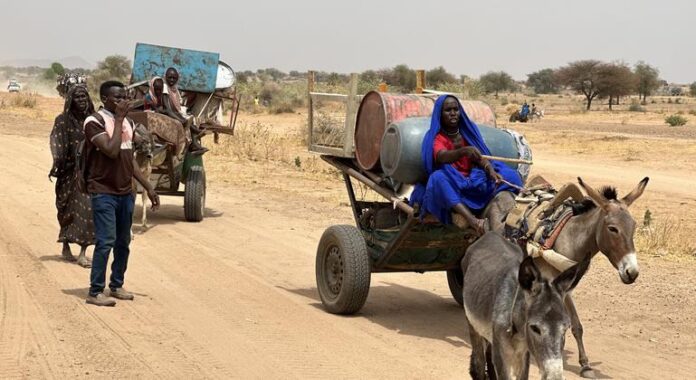
More than 20,000 crossed into South Sudan last week alone, with the number of daily arrivals tripling, compared to previous weeks.

This includes South Sudanese refugees who have been leaving camps in Sudan’s White Nile State where fighting between Government and opposition militia is continuing.

“The majority of those displaced are women and children,” UNHCR said, as it underscored the impact of the conflict on vulnerable populations.

‘Extremely worrying’

UNHCR spokesperson Olga Sarrado said some were leaving due to the direct impact of continuing violence but others were fearful “of how the situation can evolve in the next few days. Our teams are on the ground – UNHCR and partners – but of course, the situation is extremely worrying in terms of humanitarian assistance.”

The UN agency reported people arriving at the main border crossing at Joda, but also at informal crossing points which are extremely difficult to access.

All the new arrivals need life-saving humanitarian support, with water and healthcare the most urgent needs, especially given the ongoing cholera outbreak, UNHCR said.

Paper and wood see 12 per cent fall in demand because of digital media

Global trade in wood and paper products has dropped steeply due to the rise of digital media, the UN Food and Agriculture Organization (FAO), has reported.

After hitting record production levels in 2021 and 2022, the paper trade continued to trail off last year, FAO said.

Taken together, worldwide wood and paper products trade registered a significant drop of 12 per cent in 2023, with exports decreasing by $64 billion, to $482 billion in total.

Papercuts

According to The FAO’s Global forest products facts and figures 2023 report, production of paper and paperboard contracted by three per cent, as printed media has been increasingly replaced by digital products. Only wood-based panels recording a marginal growth in production, the UN agency said.

Zhimin Wu, Director of FAO’s Forestry Division, said that in addition to growing digitalization, other factors have contributed to the contraction of global paper and wood trade, such as global supply chain disruption, slowing consumer demand and trade restrictions.

Haiti: Gang violence displaces 4,500 people

Armed gangs are continuing to terrorize Haiti’s capital, forcing thousands more civilians to abandon their homes that has now displaced more than 700,000 people, the UN reported today.

“The activities of armed gangs in the capital Port-au-Prince continue to disrupt people’s lives, especially the most vulnerable,” UN Spokesperson, Stéphane Dujarric told reporters at the Noon Briefing in New York.

“The International Organization for Migration (IOM) reports that between 6 and 8 December, more than 4,500 people have become newly displaced due to ongoing insecurity,” Mr. Dujarric said.

Hot meal distribution

Despite security challenges, humanitarian operations continue. “During the first week of December, the World Food Programme (WFP) distributed more than 100,000 hot meals to 24,000 people across four displacement sites in the capital,” Mr. Dujarric noted.

IOM has delivered water to approximately 14,000 displaced people across six sites, while also providing medical care and mental health support to more than 12,000 people forced from their homes.

In a breakthrough for maternal healthcare in one of Port-au-Prince’s most dangerous districts, “the Isaie Jeanty maternity ward, which is located in Cité Soleil, was able to reopen after being closed for nine months due to insecurity,” Mr. Dujarric said.

The UN Population Fund (UNFPA) is now supplying the facility with essential medicines and equipment, restoring vital services for expectant mothers in the crisis-hit community.

Source link

Bulgarian Orthodox Old Style Church registered in Bulgaria

0

The Supreme Court of Cassation has allowed the entry of the Bulgarian Orthodox Old Style Church (BOOC) into the register of religious denominations at the Sofia City Court, overturning the decision of the Sofia City Court, later confirmed by the appellate magistrates.

Thus, the Bulgarian Orthodox Church is no longer the only one that can be called “Orthodox” by law in Bulgaria.

According to the supreme judges, there are no objective circumstances on the basis of which it can be assumed that the registration of the BOOC would affect the rights of the “Bulgarian Orthodox Church – Bulgarian Patriarchate” and its members.

“It is undeniable that this religious institution, having existed for centuries, has participated in strengthening the Bulgarian national spirit and statehood, that it currently unites the majority of Orthodox Christians in the country, that it is united, authoritative and enjoys the exceptional respect of the institutions and society. At the same time, the requested registration is for a small religious community that has existed for 30 years and has no claims to the internal organization and property of the “Bulgarian Orthodox Church – Bulgarian Patriarchate”,” the supreme magistrates wrote in their decision.

The Primate of the now legal Bulgarian Orthodox Old Style Church is the Triaditza Metropolitan Photius, and the Synod includes the Bishop of Sozopol Seraphim and the Archbishop of Chisinau and Moldova Georgi, who is a temporary member.

The Old Style Church has 18 churches in the country, and its cathedral church “Assumption of the Most Holy Theotokos” is located in the capital’s “Bukston” district. Theirs is also the nunnery in the “Knyazhevo” district, where 60 nuns serve.

In fact, the separation of the priests of the old-style church from the Bulgarian Orthodox Church took place in December 1968, when the Synod of the Bulgarian Patriarchate published a “Message to the clergy and all the children of the Bulgarian Orthodox Church”, in which it announced the upcoming reform of the church calendar – the adoption of the so-called new Julian calendar. In it, the fixed holidays (Christmas, Epiphany, Annunciation, Assumption of the Virgin Mary, etc.) coincide with the Gregorian calendar, and for the movable (Lord’s) – Resurrection of Christ and those related to it, the Julian calendar is used.

However, the change was rejected by the then archimandrites Seraphim (Aleksiev), Sergiy (Yazadzhiev), Panteleimon (Staritsky), hieromonk Seraphim (Dmitrievsky), abbess Seraphim (Liven) and the entire sisterhood of the monastery “Protection of the Most Holy Theotokos” in the “Knyazhevo” district. They stated in a letter to the Bulgarian Patriarch Kirill that they could not accept the reform in conscience, as it contradicted the liturgical Statute, the liturgical and canonical tradition of the Orthodox Church.

Since 1989, attempts have been made to formalize the Old Style Church, but without success.

Photo: Metropolitan Photius of Triaditza, Primate // Bulgarian Orthodox Old Style Church