Sunday, March 22, 2026
Home Blog Page 53

Server error!

0


Server error!

The server encountered an internal error and was
unable to complete your request. Either the server is
overloaded or there was an error in a CGI script.

If you think this is a server error, please contact
the webmaster.

Error 500

europeantimes.news
Apache

Source link

Mycelium-based blocks could be the future of construction

0


When mushrooms make the news, it’s often for grim reasons – a mysterious poisoning, toxic species in the

Source link

Five ways microplastics may harm your brain

0

Microplastics could be fuelling neurodegenerative diseases like Alzheimer’s and Parkinson’s, with a new study highlighting five ways microplastics Source link

Source link

Five ways microplastics may harm your brain

0


Microplastics could be fuelling neurodegenerative diseases like Alzheimer’s and Parkinson’s, with a new study highlighting five ways microplastics

Source link

Gaza humanitarian crisis ‘far from being over,’ UN aid coordination office warns

0
Gaza humanitarian crisis ‘far from being over,’ UN aid coordination office warns

“The humanitarian situation and crisis in Gaza is far from being over,” Olga Cherevko from the UN aid coordination office OCHA said on Friday in an update to journalists in Jerusalem.

“For the Palestinians in Gaza, their lives continue to be defined by displacement, trauma, uncertainty, and deprivation.”

This has been further compounded by “severe recurrent storms that not only destroy people’s meagre belongings, but they’re also deadly – whether through crumbling buildings or by taking the lives of children who are highly susceptible to the cold”.

Repairing roads, clearing rubble

Since the ceasefire between Israel and Hamas, humanitarians have brought in over 165,000 metric tonnes of assistance into Gaza. They also repaired roads, rehabilitated hospitals, cleared rubble, and re-opened aid distribution points.  

“We celebrated our gains and showed once again that when we’re enabled to do so, we deliver,” Ms. Cherevko said, adding that “the results speak for themselves.”

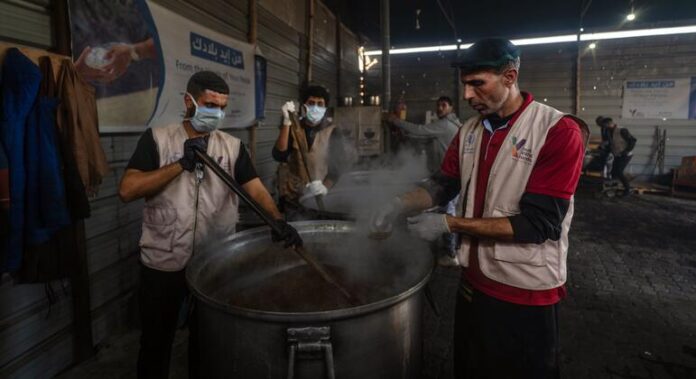
During the first two months of the truce alone, over 1.3 million people received food packages, and over 1.5 million hot meals were prepared and delivered to people in need across Gaza, thus improving food security.

Progress remains fragile

When torrential floods hit Gaza, putting thousands of families at risk, humanitarians worked with municipalities to find safer options. They also distributed tents, tarpaulins, mattresses and warm clothes.

“But while this progress is clear, it remains fragile and could be reversed overnight,” she said. “Because airstrikes, shelling, and armed clashes continue with civilian casualties being reported daily. Most of Gaza lies in ruins and the needs far outpace our efforts to meet them.”

Ms. Cherevko said that “due to various impediments and restrictions placed on organizations operating in Gaza and specific types of supplies that could enter, we could basically only apply Band-Aids to a wound that can only be closed with proper care.”

The harsh winter storms have also reversed gains made on the humanitarian front “because no amount of tents or tarpaulins can replace repairing people’s homes”.

Additionally, despite humanitarians re-opening or establishing dozens of health service points, less than 40 per cent of healthcare facilities in Gaza are operational, while educational supplies critical for children who have not gone to school for two consecutive years continue to be barred from entry.

She also pointed to delays at border crossings, limited humanitarian corridors, delays, and other impediments, as well as restrictions on the operations of UN entities and international NGOs which “are putting lives at risk.”

A ceasefire ‘is not a recovery plan’

Ms. Cherevko stressed that “emergency response and its transition to early recovery cannot wait for political solutions. And a ceasefire in itself is not a recovery plan.”

What humanitarians working in Gaza need “remains very simple,” she said, calling for parties to the conflict to respect the ceasefire, ensure civilians are protected and that humanitarian access remains predictable, sustained and unimpeded.

Furthermore, restrictions on both aid agencies and critical supplies must be lifted, early recovery must be funded and enabled, and donor support must continue.

“The choices that are made today, both by the parties to the conflict and the donors will shape whether the pause to this fighting will translate to a path to stability or becomes just another quiet before the next storm,” she said.
 

Source link

Newly discovered star opens ‘laboratory’ for solving cosmic dust mystery

0

Seventy light-years from Earth, a star called Kappa Tucanae A harbors one of astronomy’s most perplexing mysteries: dust so Source link

Source link

Newly discovered star opens ‘laboratory’ for solving cosmic dust mystery

0


Seventy light-years from Earth, a star called Kappa Tucanae A harbors one of astronomy’s most perplexing mysteries: dust so

Source link

Ukraine: Families in ‘survival mode’ amid Russian strikes and deadly cold

0
Ukraine: Families in ‘survival mode’ amid Russian strikes and deadly cold

“Families have actually reverted to stuffing even soft toys to their windows to block some of the freezing cold,” said Munir Mammadzade, UNICEF Country Representative in Ukraine.

The alert follows another night of reported attacks against power infrastructure in Zaporizhzhia oblast in the south and Kharkiv oblast in the east which have left many residential areas without electricity and heating.

The deadly threat of cold caused by attacks on energy networks is becoming a “national-scale emergency…on top of the war”, Mr. Mammadzade told journalists in Geneva during a scheduled briefing.

Pointing to temperatures of -15°C (5°F) in Kyiv on Friday, the UNICEF official warned that next week could be even colder, while millions of families across the country live without heating, electricity and water supplies

“Children and families are in constant survival mode because of that,” he said.

Aid shift

While the humanitarian focus until now has been on frontline areas, the constant Russian strikes on urban infrastructure including residential areas have highlighted a far more complicated set of needs among people living in apartment blocks. 

These include Kyiv resident Svitlana “who is doing what she can to care for her three-year-old daughter, Adina”, on the 10th floor of her building. “She told us that she had no heating or electricity for more than three days, and that was in the first week of disruption – we’re already on the second or almost third week – and many families continue to go without,” Mr. Mammadzade said.

Echoing those concerns from Kyiv, Jaime Wah from the International Federation of Red Cross and Red Crescent Societies (IFRC) noted that although power has been restored “in a matter of days” following previous attacks on Kharkiv and Odesa, the situation appeared more difficult in the capital, where she rubbed her hands to keep warm while talking via video to journalists in Geneva. “In Kyiv, we’re facing a situation for sustained outages and also higher populations affected because of it,” she said.

Nearly four years since the full-scale Russian invasion of Ukraine, “children’s lives are still consumed by thoughts of survival and not childhood”, UNICEF’s Mr. Mammadzade warned, noting an 11 per cent increase in verified child casualties during 2025, compared to the previous year.

The agency helps vulnerable people in Ukrainian cities by supporting large communal tents where they can get warm and find games and toys to play with. 

Families seek warmth and support inside a mobile tent during a winter power outage in Kyiv, Ukraine.

“Svitlana can’t bathe Arina or prepare hot food, so she wraps her child in multiple layers and navigates 10 floors of the dark stairwell to reach a tent set up outside by Ukraine’s State Emergency Services,” explained Mr. Mammadzade. “There, they can warm up, get hot food, charge devices and speak with a psychologist – or simply sit in the warmth.”  

The UN Children’s Fund warns that children are especially vulnerable to the physical and mental impact of living in the dark and coping with freezing temperatures which it says can intensify fear and stress “and can lead to, or exacerbate respiratory and other health conditions”.  

“The youngest are the most vulnerable,” Mr. Mammadzade explained. “Newborns and infants lose body heat rapidly and are at heightened risk of hypothermia and respiratory illness, conditions that can quickly become life-threatening without adequate warmth and medical care.” 

Source link

Aid cuts push millions in West and Central Africa deeper into hunger

0
Aid cuts push millions in West and Central Africa deeper into hunger

The UN World Food Programme (WFP) issued the warning on Friday, citing latest analysis from the food security framework Cadre Harmonisé, the regional equivalent of the Integrated Food Security Phase Classification (IPC) that uses a one to five scale – with five spelling catastrophe/famine – to inform response. 

It projects that 13 million children are also expected to suffer from malnutrition this year while over three million people will face emergency levels of food insecurity – more than double the 1.5 million in 2020.

Communities cannot cope 

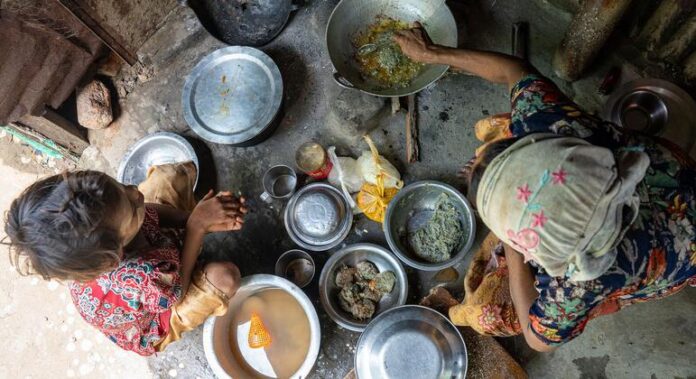
Nigeria, Chad, Cameroon, and Niger account for 77 per cent of the food insecurity figures, including 15,000 people in Nigeria’s Borno state at risk of catastrophic hunger for the first time in nearly a decade. 

Although a combination of conflict, displacement, and economic turmoil has been driving hunger in West and Central Africa, the slashes to humanitarian funding are now pushing communities beyond their ability to cope. 

 “The reduced funding we saw in 2025 has deepened hunger and malnutrition across the region,” said Sarah Longford, WFP Deputy Regional Director. 

“As needs outpace funding, so too does the risk of young people falling into desperation.” 

Rations reduced, hunger soars 

WFP urgently requires more than $453 million over the next six months to continue its humanitarian assistance across the region, where the impacts of the aid budget cuts are evident. 

In Mali, when families received reduced food rations, areas experienced a nearly 65 per cent surge in acute hunger (IPC 3+) since 2023, compared with a 34 per cent decrease in communities that received full rations.  

Continued insecurity has disrupted critical supply lines to major cities – including for food – and 1.5 million of the country’s most vulnerable people are on track to face crisis levels of hunger.  

Malnutrition levels deteriorate 

In Nigeria, funding shortfalls last year forced WFP to scale down nutrition programmes, affecting more than 300,000 children.  Since then, malnutrition levels in several northern states have deteriorated from “serious” to “critical.” 

The UN agency will only be able to reach 72,000 people in Nigeria in February, down from the 1.3 million assisted during the 2025 lean season.  

Meanwhile, more than half a million vulnerable people in Cameroon are at risk of being cut off from assistance in the coming weeks.  

‘Paradigm shift’ needed 

WFP underscored the importance of having adequate funding for its operations, which have helped to improve food security in the region.   

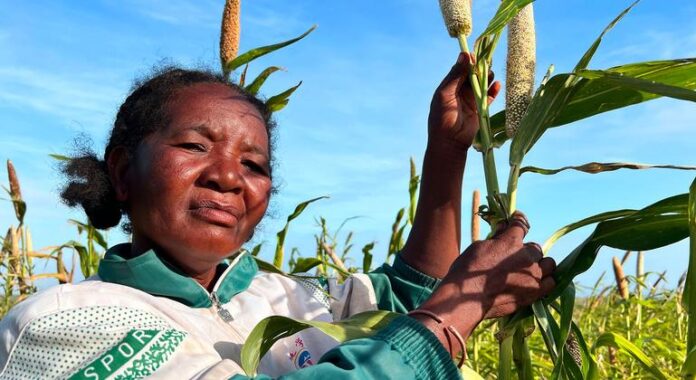
For example, teams have worked with local communities in five countries to rehabilitate 300,000 hectares of farmland to support more than four million people in over 3,400 villages. 

WFP programmes have also supported infrastructure development, school meals, nutrition, capacity building and seasonal aid to help families manage extreme weather and security risks, stabilise local economies and reduce dependency on aid. 

To break the cycle of hunger for future generations, we need a paradigm shift in 2026,” Ms. Longford said. 

She urged governments and their partners to step up investment in preparedness, anticipatory action, and resilience-building to empower local communities. 

Source link

World News in Brief: Gaza education update, the General Assembly at 80, Venezuela’s humanitarian needs

0
World News in Brief: Gaza education update, the General Assembly at 80, Venezuela’s humanitarian needs

Ten additional temporary learning sites in Gaza Governorate have been renovated so far this month, and more than 440 spaces are operational overall, serving roughly 270,000 pupils supported by more than 6,300 teachers.  

The UN and partners continue to push for the lifting of restrictions on education supplies, including stationery, so that more children can get back to learning.  

Humanitarians also continue to assist people affected by the recent deadly winter storms that hit the Gaza Strip. More than 200 tents were distributed to families this week, alongside thousands of tarpaulins, blankets, warm clothes, cooking and serving utensils, as well as solar lights.  

Across Gaza, more than one million people still require shelter assistance and durable shelter solutions, including repairs to damaged homes.   

© United Nations/Shaun Ottway

Guterres in London for 80th anniversary of first UN General Assembly meeting 

UN Secretary-General António Guterres arrived in London on Friday where he will participate in a special event to mark the 80th anniversary of the first meeting of the General Assembly, held in the UK capital in 1946.  

The Secretary-General had discussions with Prime Minister Sir Keir Starmer and thanked him for the UK’s continued support for multilateralism and its active role in the UN.  

The two leaders discussed the war in Ukraine, Sudan, the Middle East and UN reform, among other topics.  

The Secretary-General also met the Mayor of London, Sadiq Khan, and their talks focused on the role of cities in dealing with climate change.  

On Saturday, the Secretary-General will deliver the keynote address at the United Nations Association of the United Kingdom (UNA-UK) conference, which will take place at Methodist Central Hall in London where the first General Assembly meeting was held.   

UN Deputy Spokesman Farhan Haq previewed his remarks – entitled ‘UNGA at 80: From 1946 to Our Future’ – during the regular media briefing at Headquarters in New York. 

“The Secretary-General is expected to say that as we wish to make the world fairer, it is critical that the international system reflects today’s reality, including the drive to update the Security Council and to reform the unjust and unfair international financial architecture,” Mr. Haq told journalists.  

“He will say that at a time when the values of multilateralism are being chipped away, the world needs civil society movements everywhere that are fearless and persistent and that make it impossible for leaders to look away.”  

Venezuela: One in four people needs humanitarian assistance 

Humanitarians continue to deliver aid across Venezuela, including food, school meals, healthcare and psychosocial support, UN aid coordination office OCHA said in an update on Friday. 

Years of turmoil have left many families without reliable support, and one in four people requires humanitarian assistance. 

The UN and partners continue to coordinate with authorities, monitor needs nationwide and inform people about humanitarian services available to them.  

OCHA urged donors to keep supporting aid efforts in the country, noting that the 2026 humanitarian response plan for Venezuela calls for just over $600 million.  

In 2025, the response plan was only 17 per cent funded – among the lowest globally. 

Source link