Wednesday, September 30, 2026
Home Blog Page 548

Accountability for missing persons is ‘crucial’: UN human rights chief

0
Accountability for missing persons is ‘crucial’: UN human rights chief

That’s one of the alarming updates shared by Volker Türk during a General Assembly briefing on Wednesday, the first informal meeting dedicated to the issue of the thousands who go missing after being targeted each year.

The High Commissioner for Human Rights urged Member States to do more to address the “unprecedented” rise in disappearances, largely driven by armed conflict and growing disregard for international humanitarian law.

“Persistent impunity for violations of international humanitarian law fuels more abuses,” he told delegates, calling the scale of the crisis “enormous”.

While the meeting focused on missing persons in armed conflict, disappearances today are also linked to State repression, counter-terrorism measures, migration and the targeting of dissidents and human rights defenders.

“It is precisely in circumstances of conflict, instability, and repression that people are

likely to go missing,” Mr. Türk stressed. “Accountability for those violations is crucial.”

Echoing this sentiment, the President of the General Assembly, Philémon Yang, insisted: “We have a moral responsibility to determine and find every missing person.”

‘Tip of a very large iceberg’

The Working Group on Enforced and Involuntary Disappearances has handled more than 62,000 cases across 115 countries in the past 45 years. “Sadly, this is just the tip of a very large iceberg,” said Mr. Türk.

Mr. Yang expressed that these figures demand “that we take decisive steps to lessen the hardship and distress.”

The High Commissioner pointed to recent momentum in addressing the issue, including this year’s UN-organized First World Congress on Enforced Disappearances, where governments, civil society and victims’ groups gathered in a show of global solidarity.

A call for stronger frameworks

Mr. Türk outlined three key areas for action, beginning with the need to strengthen and implement international human rights frameworks.

He urged States to ratify and implement the International Convention for the Protection of All Persons from Enforced Disappearance, adopted in 2006 and described as the “key global agreement” on the issue. Only 77 countries have ratified it so far.

The Convention guarantees the right to know the truth about the fate and whereabouts of disappeared persons and the progress of investigations – “exactly what family members need and demand,” said Mr. Türk.

“We must pursue justice and other forms of accountability,” continued Mr. Türk, pointing to widespread impunity as a major obstacle to reparations for victims.

“For families, accountability begins with knowing the truth about the fate of their loved ones, regardless of how they went missing,” he said.

He called on States to thoroughly investigate cases, bring perpetrators to justice and build up forensic, judicial and law enforcement institutions to ensure proper identification.

Centre the victims

Mr. Türk said placing victims at the heart of the response is crucial. He emphasised the critical role of families, especially women, who often lead the search for loved ones in precarious and dangerous circumstances.

“In some cases, the law prevents them from obtaining the documents needed to exercise their rights to health, to education, or to property,” Mr. Türk noted, which leaves them stigmatised and at risk of falling into poverty.

Family members are often ignored, disbelieved, or intimidated into silence. “They must feel able – and safe – to speak out for their missing relatives, at home and abroad,” Mr. Türk insisted.

Momentum for change

International efforts can make a real difference, the High Commissioner said, referencing the recent creation of the Independent Institution on Missing Persons in the Syrian Arab Republic, established to clarify the fate of missing persons in the country and support survivors and their families.

In February, the institution’s head visited Damascus and met dozens of families – some of whom were being asked about their missing loved ones for the first time ever.

‘Our common humanity demands it’

Concluding his remarks, Mr. Türk reaffirmed the commitment of his Office to support victims and help States meet their obligations.

OHCHR continues to promote the ratification and implementation of the Convention, follow up on individual cases and connect victims with UN human rights mechanisms.

“We all have a role to play,” he said. “We must commit, together, to doing more for truth and justice, in solidarity with victims everywhere. Our common humanity demands it.”

Source link

MSCA awards €608.6 million for doctoral programmes

0
MSCA awards €608.6 million for doctoral programmes

The European Commission has announced the results of the 2024 Marie Skłodowska-Curie Actions (MSCA) Doctoral Networks call.

The Commission will fund a total of 149 excellent doctoral programmes with €608.6 million to train over 1800 doctoral candidates in and outside academia.

€536.9 million will be awarded to 133 standard Doctoral programmes, to train PhD candidates and develop their skills.

Funding includes also €26 million for 8 Industrial Doctoral programmes to train PhD candidates and develop their skills outside academia, including in industry and business. Doctoral candidates will also benefit from joint industry-academia supervision.

An additional €33 million will be allocated to 8 Joint Doctoral programmes, which promote joint selection, training and supervision leading to joint or multiple doctoral degrees.

The European Research Executive Agency (REA) received 1,417 applications for this call. This means a success rate of 10.6 %.

Close collaboration beyond academia

These doctoral programmes are implemented by international partnerships, involving 9335 organisations in 130 countries in the EU, Horizon Europe associated countries and beyond. 4725 of these are private for-profit entities.

Selected projects are coordinated by organisations in 18 countries.

Source link

36 000 free EU travel passes for 18-year-olds

0
36 000 free EU travel passes for 18-year-olds

It’s time for a new DiscoverEU round! Nearly 36 000 free passes are available to 18-year-olds to travel across Europe by train for up to 30 days, from July 2025 to September 2026. Applicants must be born between July 2006 and June 2007 and live an Erasmus+ country. Apply by 16 April.

Source link

EU launches humanitarian air bridge after Myanmar earthquake

0
36 000 free EU travel passes for 18-year-olds

Following the 7.7 magnitude earthquake that struck Myanmar and the broader region, the EU is channelling further assistance to strengthen relief efforts. This includes sending 80 tonnes of tents, child protection kits, health and water and sanitation kits to Mandalay for distribution by EU partners.

Source link

Gaza aid worker killings: One humanitarian still missing in mass grave

0
Gaza aid worker killings: One humanitarian still missing in mass grave

“This is a huge blow to us…These people were shot,” said Jens Laerke, spokesperson for the UN aid coordination office, OCHA.

UN human rights chief Volker Türk issued a statement on Monday condemning the Israeli military’s attack, calling for an independent, prompt and thorough investigation into the apparently systematic killings. 

“Normally we are not at a loss for words, and we are spokespeople, but sometimes we have difficulty finding them. This is one of those cases,” he told journalists in Geneva, referring to video footage taken near Tal-As-Sultan by an OCHA rescue party showing a crushed UN vehicle, ambulances and a fire truck that had been flattened and buried in the sand by the Israeli military.

Rafah mission

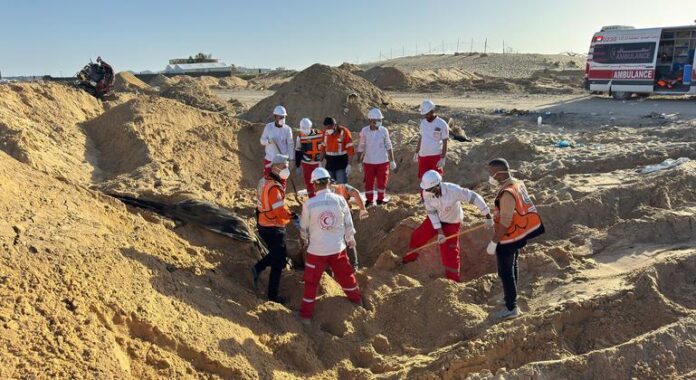
The clearly identified humanitarian workers from the Palestine Red Crescent Society, Palestinian Civil Defence and the UN Palestine refugee agency, UNRWA, had been despatched to collect injured people on 23 March in the Rafah area.

They came under fire from Israeli forces who were advancing in the area, OCHA’s top official in the Palestinian Occupied Territory said, in a detailed post on X.

Jonathan Whittall explained that on the day of the attack, five ambulances, a fire truck – and a UN vehicle which arrived following the initial assault – were all hit by Israeli fire, after which contact was lost with teams.

One survivor said Israeli forces had killed both of the crew in his ambulance, Mr. Whittall said. “For days, OCHA coordinated to reach the site but our access was only granted five days later…After hours of digging, we recovered one body – a civil defence worker beneath his fire truck.”

Bodies buried in the sand

The week-long rescue operation ended on Sunday 30 March with the recovery of the bodies of 15 humanitarian colleagues: eight from the Palestine Red Crescent Society (PRCS), six from the Palestinian Civil Defence (PCD) and the UNRWA worker.

The body of one more PRCS worker is still missing at the site, according to the International Federation of Red Cross and Red Crescent Societies (IFRC), which on Monday repeated its calls for information from the Israeli military.

Available information indicated that the first team had been killed by Israeli forces on 23 March; the other emergency and aid crews were struck one after another over several hours as they searched for their missing colleagues, OCHA said.

High Commissioner for Human Rights Türk said in his statement that the discovery of the bodies buried next to their “clearly destroyed” vehicles was “deeply disturbing”.

“This raises significant questions with regard to the conduct of the Israeli army during and in the aftermath of the incident,” he added.

The fate and whereabouts of the missing PRCS worker must be clarified, he stressed.

On Monday, UN relief chief Tom Fletcher demanded “answers and justice” from the Israeli military.

408 aid workers killed

According to UNRWA, 408 aid workers including more than 280 UNRWA staff have been killed in Gaza since the war began on 7 October 2023.

Additional video footage released by OCHA taken from within a UN vehicle near the site of last Sunday’s incident also showed two people walking and then running to escape sniper fire.

According to OCHA, a woman was shot in the back of the head and a young man trying to retrieve her was also shot. The OCHA team managed to recover her body in the UN vehicle.

Despite a demand for “answers and justice” from Israel by the UN’s emergency relief chief Tom Fletcher, no information has yet been provided, his office said.

“We keep engaging with the Israeli authorities daily on this and on other burning matters including, importantly, the critical need to reopen crossings for supplies,” said Mr. Laerke. “Because while this is a huge blow to us on all levels, the crisis itself, just moves on and gets worse every day.”

Atrocity crimes warning

The development comes days after the UN agency warned that acts of war in Gaza “bear the hallmarks of atrocity crimes”, with hundreds of children and other civilians killed in Israeli airstrikes in intensely populated areas and hospital patients “killed in their beds, ambulances shot at and first responders killed”.

James Elder, spokesperson for the UN Children’s Fund, UNICEF, condemned “unprecedented breaches” of international humanitarian law (IHL) in Gaza linked to the resumption of Israeli bombardment and ground operations inside the shattered enclave.

Every day since the ceasefire between Hamas and Israel broke down on 18 March with heavy Israeli strikes, “100 children have been killed and maimed every single day since that moment”, Mr. Elder insisted.

Will-power alone will not help anyone survive “when we see breach after breach of IHL, breach after breach of restricting aid,” the UNICEF spokesperson continued, four weeks since the Israeli authorities shut Gaza’s borders to all commercial and humanitarian aid.

Echoing those concerns, IFRC’s Mr. Della Longa reported that hospitals “are literally overwhelmed” and running out of medicine and medical equipment.

The IFRC spokesperson also warned that a lack of fuel or damage have put “more than half” of ambulance teams of the Palestine Red Crescent out of action.

Source link

Commission presents a European internal security strategy

0
Commission presents a European internal security strategy


The Commission has presented ProtectEU, a new European internal security strategy to support EU countries in guaranteeing security for its citizens. It sets out a workplan with a stronger legal framework, better information sharing and closer cooperation. 

To address increasing security and hybrid threats like terrorism, organised crime, cybercrime, and attacks on critical infrastructure, Europe needs to review its approach to internal security. The strategy aims to adopt a whole-of-society approach that includes citizens, businesses, researchers, and civil society who can contribute to better safety for all. 

Key objectives and actions: 

  • a new European internal security governance 
  • anticipating security threats through new ways of sharing intelligence 
  • more effective tools for law enforcement and stronger justice and home affairs agencies 
  • building resilience against hybrid threats 
  • fighting serious and organised crime 
  • combatting terrorism and violent extremism 
  • the EU as a strong global player on security  

The actions are backed by evidence from the EU Serious and Organised Crime Threat Assessment (EU-SOCTA). The strategy complements the preparedness union strategy and the European defence white paper. Together with the forthcoming European Democracy Shield, they form a comprehensive framework for a safe, secure, and resilient EU. 

For more information 

Press release 

Factsheet 

Questions and answers 

Security and defence 

The European internal security strategy 

Internal Security 

Source link

INTERVIEW: Urgent aid needed as survivors of Myanmar quake struggle amid long-running crisis |

0
INTERVIEW: Urgent aid needed as survivors of Myanmar quake struggle amid long-running crisis |

The UN World Food Programme (WFP) swiftly launched relief operations, but ongoing conflict and funding shortfalls pose serious challenges.

Speaking from Mandalay, near the quake’s epicentre, Michael Dunford, WFP Country Director, described the destruction as overwhelming.

“As you drive through the streets, you can see very quickly just the impact of this terrible, terrible earthquake…you hear awful stories that really speak to the need for the international community to respond and respond quickly.”

With food, shelter, and medical aid in critically short supply, WFP and other agencies are calling for immediate funding to sustain relief efforts.

“Without funding, we cannot do what we need to do…we cannot meet the needs of the people of Myanmar.” Mr. Dunford warned.

In an interview with UN News, he detailes the immense challenges facing survivors and aid workers, the impact of ongoing conflict and why urgent global action is needed to prevent further tragedy.

Read the full interview below. The text has been edited for brevity and clarity.

Michael Dunford, WFP Country Director in Myanmar, speaks to the media in Nay Pyi Taw, with the destroyed Ottara Thiri Hospital in the background.

UN News: You are right now in Mandalay, which is near the epicentre of Friday’s destructive earthquake. Can you describe what you are seeing right now and hearing from the people there?

Michael Dunford: What I am seeing is devastation. I was actually in Nay Pyi Taw on Friday when the earthquake struck. It was a terrifying experience. We ended up under a table, desperately hoping that the roof was not going to cave in on us. Immediately after, we cleared the building. We started to think about how we were going to respond to the needs of the people of Myanmar.

WFP started our first distributions in Nay Pyi Taw, the capital, two days ago, within 48 hours of the earthquake itself. And today I have driven from Nay Pyi Taw first to Sagaing city, which was the actual epicentre, and now I am in Mandalay, which is probably the second largest city and the city that has had the greatest impact from the quake itself.

As you drive through the streets, you see very quickly the impact of this terrible earthquake…you hear awful stories that speak to the need for the international community to respond and respond quickly

UN News: You drove through Sagaing today as you said. How did you see the situation there?

Mr. Dunford: Look, as you drive through the streets, you can see very quickly just the impact of this terrible, terrible earthquake. Buildings are down, infrastructure is disrupted, and you arrive at the feeding sites and you meet the beneficiaries, you meet the people who have been impacted and you hear their stories, and it is devastating.

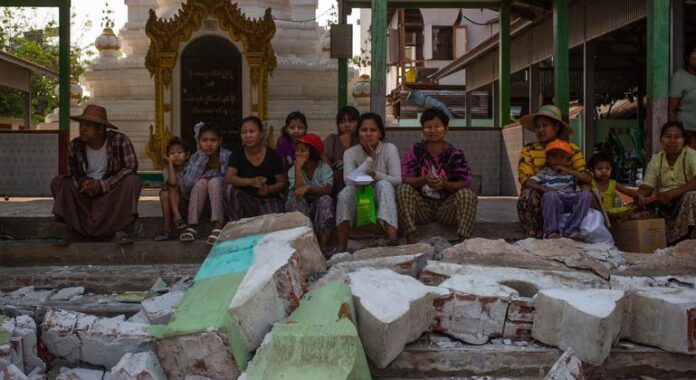
Today, WFP was feeding the survivors of a mosque that crashed – collapsed – many people lost loved ones, and WFP was providing basic support to those who had lost their breadwinners. Awful stories to hear and it really speak to the need for the international community to respond and respond quickly and for the donors to respond generously.

UN News: There have been several aftershocks since Friday. Have they caused additional damage or hampered your efforts?

Mr. Dunford: I was actually at a distribution point this afternoon, probably around 5 o’clock, and there was a tremor. And immediately people scrambled for safety and got down onto the ground. Fortunately, it was not so severe, but you can sense that everyone is on edge.

We understand that there were two hotels that collapsed in Mandalay last night. A couple of days after the initial earthquake, people went back into hotels, and with these additional tremors, fatalities are still occurring.  

Many people are still sleeping out in the open on the streets or in the parks because they are too scared to go back into their homes. And of course, this is hampering our efforts to reach them and to provide the type of support that they need.

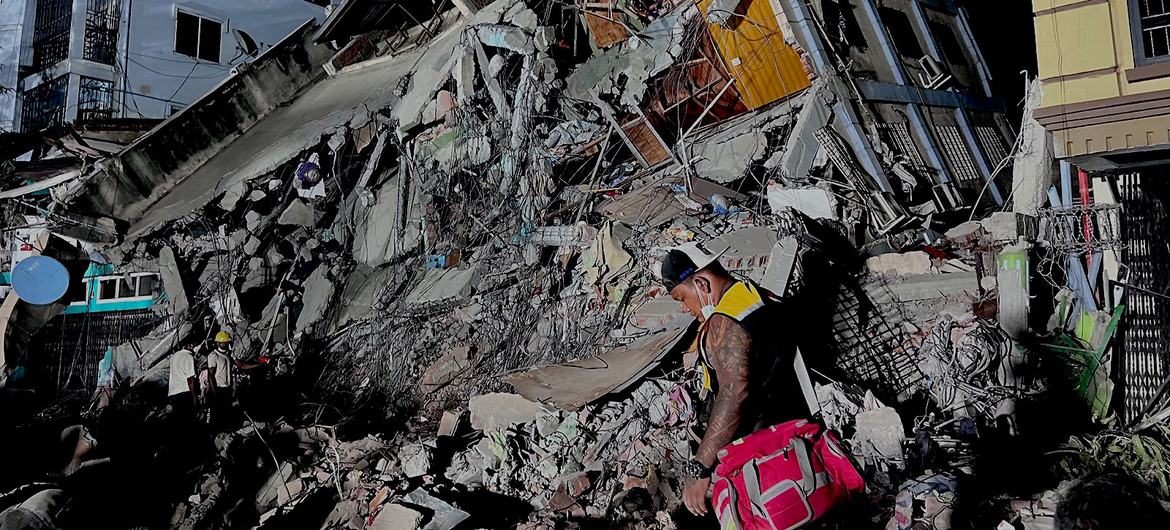
A building destroyed by the earthquake in Mandalay, Myanmar's second largest city.

A building destroyed by the earthquake in Mandalay, Myanmar’s second largest city.

UN News: For your immediate response, what are the key priorities?

Mr. Dunford: From a WFP perspective, of course, it is food and nutrition. We are also gearing up the interagency logistics cluster, and we are looking to see whether we also need to activate the emergency telecoms cluster. In addition, there is a desperate need for health, WASH (water and sanitation) and of course shelter.

UN News: What about other actors engaged in the response? Are there other international agencies on the ground, local partners?

Mr. Dunford: Sure, we are now sharing common offices with the likes of UNICEF (UN Children’s Fund), UNHCR (Office of the UN High Commissioner for Refugees), WHO (the World Health Organization) and OCHA (Office for the Coordination of Humanitarian Affairs).

We are working with national and local NGOs because they know the context, they know the environment and they know – most importantly – the people we are supporting

Many non-governmental organizations (NGOs) are also mobilizing, particularly national and local NGOs, so we are working with them because of course they know the context, they know the environment and they know – most importantly – the people we are supporting.

It is really a holistic effort to respond. It is a difficult situation. You have to remember that even before this crisis, Myanmar was a country already in crisis. At the beginning of the year, we estimated that over 19 million people needed humanitarian assistance, over 15 million were acutely hungry, and another 3.5 million were internally displaced.

UN News: Talking about the conflict. How is the conflict affecting aid delivery, particularly in remote areas or areas contested between the different armed groups?

Mr. Dunford: First and foremost, the conflict has made this country very, very vulnerable. As I mentioned, the humanitarian needs are considerable. And it continues to make our work very difficult.  

There have been approaches to the authorities requesting, first and foremost, an end to the conflict, at a minimum a ceasefire during this period when we all need to be able to respond. We are requesting unhindered humanitarian access. We need to be able to reach affected populations, conduct assessments, and launch our response quickly.

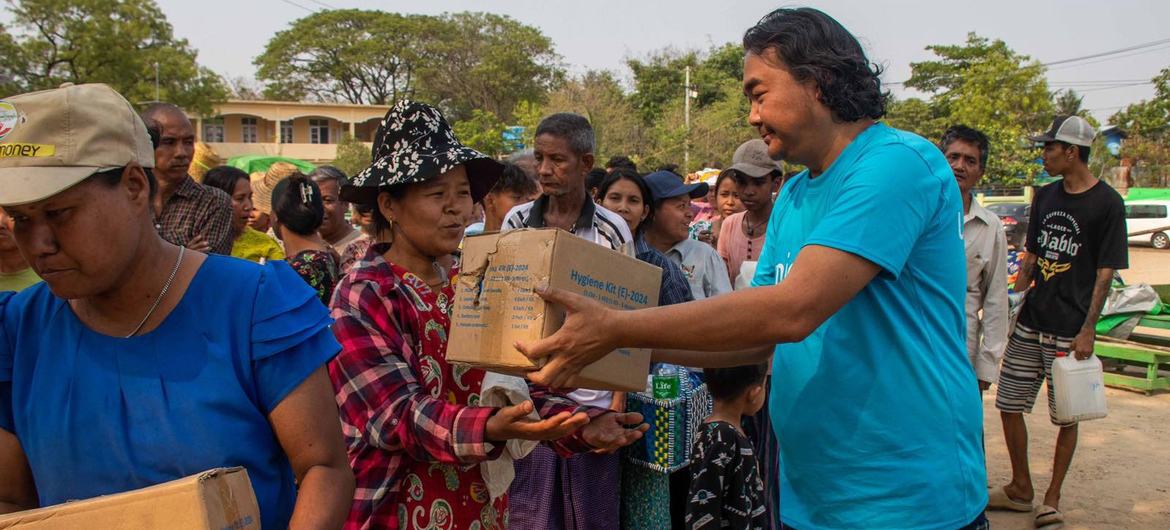
A UNICEF staff member distributes WASH supplies to affected families in Sagaing, the epicentre of the deadly earthquake.

A UNICEF staff member distributes WASH supplies to affected families in Sagaing, the epicentre of the deadly earthquake.

UN News: Even before this disaster, WFP and other agencies were already struggling with funding issues. Now, with the US and other donors scaling back, how much of an impact do you foresee on relief efforts, and what does this mean for long-term response?

Mr. Dunford: Well, without funding, we cannot do what we need to do. And without funding we cannot meet the needs of the people of Myanmar.  

In fact, the meeting that I was holding at the time of the earthquake on Friday was looking at our funding situation, how we would be forced to scale back our operations and even what the implications for our staffing would be.

Without funding, we cannot do what we need to do…we cannot meet the needs of the people of Myanmar

UN News: We spoke about the affected communities and your response. What about the UN staff, especially the national staff in Myanmar? Have they been impacted by this?

Mr. Dunford: Thankfully, from WFP’s perspective, no one has been seriously injured and to my knowledge, no direct family members have been either. That is a huge relief. Just over dinner, I was saying how devastating it would have been if we had lost someone from our team.

But many people in Myanmar have not been so fortunate. There are thousands who are grieving lost family members. The current estimated death toll is close to 3,000, but some fear it could rise to 10,000.  

And behind every one of those numbers, there is a story. Behind every story, there are family members left behind. This is a terrible tragedy – on top of the tragedy that Myanmar has endured for the past four years.

Listen to the full interview here:

Source link

Press release – EP TODAY

0
Press release – EP TODAY

Wednesday, 2 April Source : © European Union, 2025 – EP

Source link

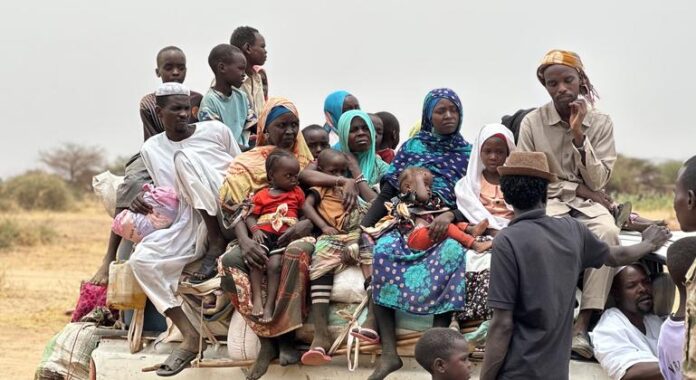
Sudan on brink of famine as fighting ravages Darfur, UN warns

0
Sudan on brink of famine as fighting ravages Darfur, UN warns

Spokesperson Stéphane Dujarric warned that “the humanitarian and security situation in Sudan remains dire and is worsening.”

He highlighted intense fighting around El Fasher, noting, “we are gravely alarmed by reports of intensified hostilities… including attacks in the past two days that resulted in civilian casualties.”   

The plight of displaced persons is particularly acute. “Yesterday, reported shelling in the Abu Shouk displacement camp… killed and injured civilians,” Mr. Dujarric confirmed.

Famine taking hold

This camp is among the critical hotspots where famine is taking hold, alongside Zamzam and Al Salam, and areas in the Western Nuba Mountains, affecting approximately 640,000 people.

The UN Office for the Coordination of Humanitarian Affairs (OCHA) is making an urgent call for action to prevent widespread famine, especially as the lean and rainy season approaches. “It is critical that aid organisations have the safe and unimpeded access to people in need,” OCHA emphasised.

Currently, around 25 million Sudanese face acute food insecurity, a number expected to peak between June and September. Beyond immediate food aid, agricultural assistance is vital to boost local production.   

The UN Food and Agriculture Organisation (FAO) requires over $82 million to support 7.5 million farmers with seeds and essential resources before the planting season in June.

‘Time is running out’

“With the rainy season starting soon, and flooding along key routes likely to compound access challenges, time is running out,” Mr. Dujarric warned.

The conflict has devastated agricultural livelihoods, a lifeline for two-thirds of Sudan’s population. “The ongoing conflict in Sudan has shattered agricultural livelihoods… disrupted market access and left millions of farming families unable to plant or harvest,” he explained.

Destruction of infrastructure and forced displacement have worsened the crisis.   

Economic decline and trade restrictions have driven up food prices sharply, limiting access to basic necessities, the UN Spokesperson added.

“OCHA stresses that timely support to Sudan’s farmers is essential – not only to avert famine…but also to restore livelihoods and build resilience.”   

He underscored the UN’s position that civilians and civilian infrastructure must never be a target. “All parties must uphold their obligations… and take the utmost care to spare civilians.”

Source link

Human Rights: Speech by High representative/Vice-President Kaja Kallas at the EP plenary on the 2024 Annual report on Human Rights and Democracy in the world

0
Press release – EP TODAY

Human Rights: Speech by High representative/Vice-President Kaja Kallas at the EP plenary on the 2024 Annual report on Human Rights and Democracy in the world

Source link