
Statement by the High Representative on behalf of the European Union on the alignment of certain third countries with Council implementing Decision (CFSP) 2025/510 of 17 March 2025 implementing Decision 2010/788/CFSP concerning restrictive measures in view of the situation in the Democratic Republic of the Congo.
Istanbul’s mayor behind bars: the arrest that sent Turkey into the streets
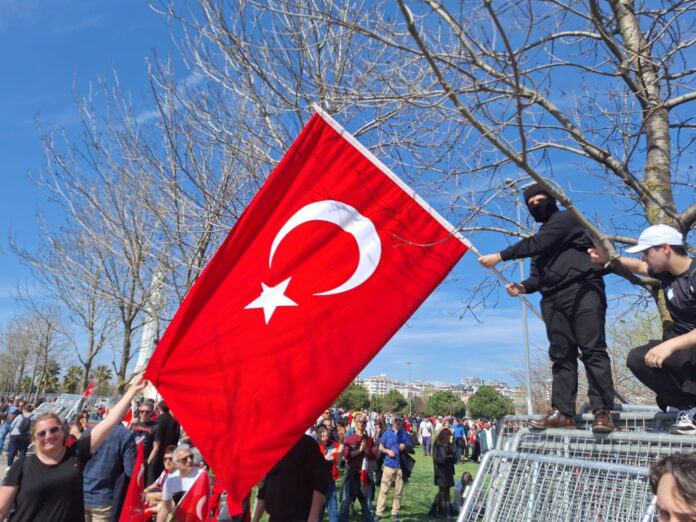
ISTANBUL — Before dawn on Wednesday, Turkish police detained Ekrem İmamoğlu, the mayor of Istanbul and the man most polls described as the only politician in the country capable of beating President Recep Tayyip Erdoğan. By the weekend he was in Marmara Prison, formally arrested on corruption charges — the terrorism file notably set aside — and Turkey’s largest protests in more than a decade were underway.
The choreography was hard to miss. İmamoğlu’s university diploma was annulled the day before his detention — a technicality that would have barred his presidential candidacy. His party, the opposition CHP, had scheduled its primary for Sunday; more than 15 million people voted for him anyway, in a primary held while its candidate sat in a cell. Prosecutors accuse him of corruption, bribery, extortion, money laundering and aiding terrorism. He denies everything, and much of the country plainly believes the case is about 2028, not about evidence.
The state’s answer to the crowds was administrative before it was forceful: demonstrations banned in Istanbul, Ankara and İzmir, roads sealed, social media throttled. Then it was forceful too. Protesters outside Istanbul’s city hall were met with pepper spray and rubber bullets; more than a hundred people were detained alongside the mayor, and hundreds more in the days that followed. The lira slid to record lows as investors read the arrest for what it was.
For Europe, this is not a distant affair. Turkey is a member of the Council of Europe and technically still an EU candidate, and the reaction from both institutions was unusually blunt. The Council of Europe, the European Parliament and Human Rights Watch condemned the detention as an attack on the will of the electorate. Strasbourg’s machinery is slow, but Turkey already holds one of the largest inventories of unimplemented judgments at the European Court of Human Rights.
İmamoğlu has been here before, in a way: he won Istanbul in 2019, watched the result annulled, and won again by a landslide in the re-run. Jail is a different instrument than a cancelled election. The question hanging over Turkey now is whether jailing a rival works better than cancelling his victory did. The early evidence — a million people in the streets and 15 million ballots — suggests the government has not thought that through.
President Costa to travel to Paris, Strasbourg, and Samarkand (31 March – 4 April)

The President of the European Council, António Costa will be in France to attend the SOS Ocean! conference in Paris on 31 March, before going to Strasbourg for the plenary session of the European Parliament on 1 April. The President will then travel to Samarkand to represent the EU at the first ever EU-Central Asia summit on 4 April.
UN teams ramp up response to deadly quake in Myanmar and Thailand
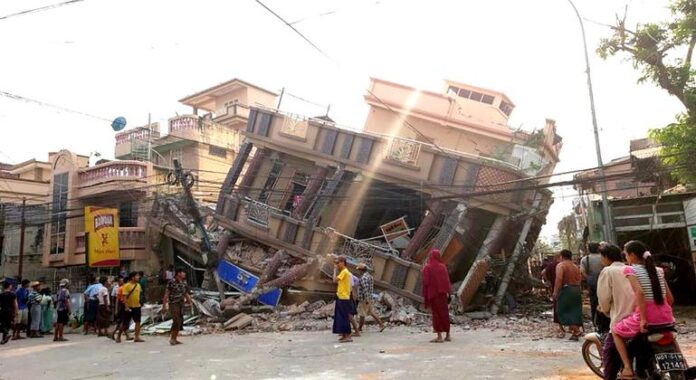
The Emergency Relief Coordinator tweeted that UN teams are being “supported by expertise across our global network”.
News reports quoting sources in the Burmese city of Mandalay, close to the epicentre of the quake, indicate that hundreds have died. In neighbouring Thailand more than 80 construction workers are missing, according to the Thai deputy prime minister, with a search and rescue operation underway.
UN chief António Guterres sent condolences to all those in the region impacted and underlined that the UN system is mobilising as fast as possible in support.
Mr. Fletcher, who heads aid coordination office, OCHA, made an intial allocation from the Central Emergency Response Fund of $5 million to support life-saving assistance.
‘Significant damage’
The UN Resident Coordinator’s Office in Myanmar told UN News in a statement that reports indicate “significant damage” has occurred in Mandalay state, as well as Nay Pyi Taw, Bago, Magway, Sagaing, Shan “and possibly other areas”.
” Our thoughts are with everyone impacted by this event…We are gathering information about the people impacted, infrastructure damage, and immediate humanitarian needs to guide a response and will share more updates as information becomes available.”
Sheela Matthew of the UN World Food Programme (WFP) said the quake had hit Myanmar “at the worst possible time. With one in four in the country already facing acute food insecurity, Myanmar just can’t afford another disaster.”
She said WFP has stocks of ready-to-eat food available in warehouses “and we are ready to respond as needed.”
Speaking from Myanmar’s largest city of Yangon, Marie Manrique, Programme Coordinator for the Myanmar country team of the International Federation of Red Cross and Red Crescent Societies (IFRC), told journalists at the UN in Geneva that the quake had also been felt in China, Thailand, and India.
She said that beyond damage to buildings and infrastructure, there was concern over potential dam bursts. Electricity and communications have been cut off in parts of the country.
She said the Myanmar Red Cross Society had launched an emergency operation to help people in need and assess the situation.
Myanmar has been in the grip of an increasingly brutal civil war since a military coup more than four years ago. Around 20 million people – a third of the population are expected to need humanitarian assistance this year. Around 15 million are projected to face acute food insecurity during 2025.
Fighting between junta forces and opposition armed groups has displaced more than 3.5 million people within the country.
People gather in front of collapsed buildings in the Mandalay region of central Myanmar, following the 7.7 magnitude earthquake.
Aid operation underway
Speaking for the World Health Organization (WHO) in Geneva, Dr. Margaret Harris said relief efforts were underway in coordination with country offices in Myanmar and Thailand.
She said the agency had activated its logistics hub in Dubai to primarily provide trauma supplies and a health needs assessment is underway.
Babar Baloch, for the UN refugee agency, UNHCR, said that the central and northwest parts of Myanmar had the highest number of internally displaced people (IDPs) due to the conflict.
Some 1.6 million IDPs out of the total 3.5 million live in these areas and the catastrophe will only exacerbate hardships, he told journalists.
More to come on this developing story…
Gaza: Acts of war bear hallmarks of atrocity crimes, warn UN humanitarians
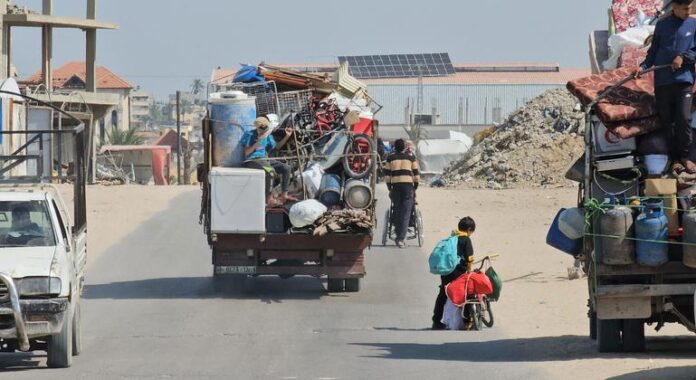
According to local health authorities in Gaza, 830 people were killed between 18-23 March, including 174 women and 322 children. A further 1,787 were injured.
“The acts of war that we see bear the hallmarks of atrocity crimes,” said Jens Laerke, spokesperson for the UN aid coordination office, OCHA. “Hundreds of children and other civilians have been killed in health and Israeli airstrikes. Intensely populated areas hospitals are once again battlegrounds; patients killed in their beds, ambulances shot at, and first responders killed.”
It has been 10 days since Gazans woke up to renewed Israel bombing, abruptly ending the two-month ceasefire.
“It has been 10 days of witnessing – because the UN remains on the ground in Gaza – a callous disregard for human life and dignity,” Mr. Laerke maintained.
No to evacuations
Maryse Guimond, UN Women Representative for the Occupied Palestinian Territory, relayed testimonies of Palestinians in Gaza who say they will not heed new evacuation orders issued by the Israeli military, on the grounds that “there are no safe places anyway”.
Speaking from Amman, she added: “It is a situation of pure survival and survival of their families because, as they say, there is simply nowhere to go…”
“As a woman recently said to us from Deir al Balah, ‘My mother says death is the same whether in Gaza City, or in Deir al Balah; we just want to return to Gaza.’”
Echoing those concerns, Dr. Margaret Harris, spokesperson for the UN World Health Organization (WHO) said that the situation “is as bad as it ever was”. A new ceasefire is needed immediately for the sake of all Gazans, she insisted.
“We knew it was bad before the ceasefire, when we were constantly begging to be allowed to do our job just to help the ordinary people. No, they can’t keep going.”
Healthcare in the enclave is also suffering from the aid blockade, with supplies dwindling dangerously low since the cut-off began on 2 March.
“The key supplies now for safe labour and delivery…will be running out soon,” said Dr Rik Peeperkorn, WHO representative in the OPT.
A dozen ambulances have also been put out of action through lack of fuel, the veteran humanitarian medic said, speaking from Jerusalem.
Collective punishment warning
Sparked by Hamas-led terror attacks in Israel, the war in Gaza has devastated the enclave and prompted widespread international condemnation over its impact on civilians, who should be spared from violence in times of war.
“Nothing can justify the collective punishment of the Palestinian people,” OCHA’s Mr. Laerke insisted.
“International law is clear, it prohibits indiscriminate attacks, obstruction of life saving aid, destruction of infrastructure indispensable for civilian survival and hostage-taking.
“The International Court of Justice’s provisional measures on the application of the Genocide Convention remain in place; yet the alerts that we issue in report after report reveal an utter lack of respect for the most basic principles of humanity.”
Tens of millions risk starvation as funding cuts deepen crises in DR Congo: WHO, WFP
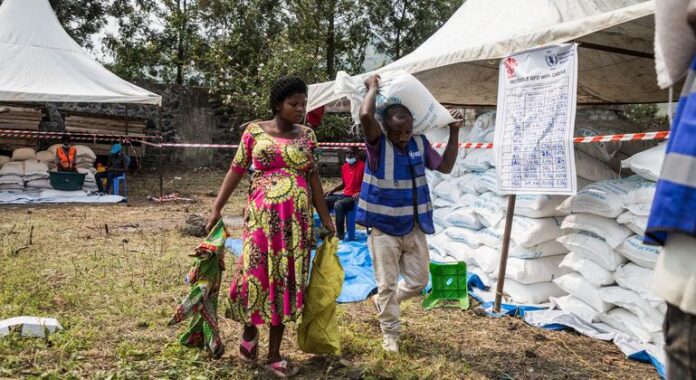
The United Nations agency has received only $1.57 billion of the $21.1 billion required to sustain its operations this year, with donations slashed by 40 per cent after cuts from major donors like the United States.
“WFP is prioritizing countries with the greatest needs and stretching food rations at the frontlines. While we are doing everything possible to reduce operational costs, make no mistake, we are facing a funding cliff with life-threatening consequences,” said Rania Dagash-Kamara, WFP Assistant Executive Director for Partnerships and Innovation.
“Emergency feeding programmes not only save lives and alleviate human suffering – they bring greatly needed stability to fragile communities, which can spiral downwards when faced with extreme hunger.”
The drastic reductions are threatening the organization’s global programs in 28 regions, including Gaza, Sudan, Syria, and the Democratic Republic of Congo (DRC).
Bracing for the rainy season
With the rainy season looming in fighting-stricken South Sudan, two-thirds of its estimated 12.7 million people facing acute food insecurity could go even hungrier.
WFP delivers food and nutrition aid to 2.3 million people in the east African country who have escaped war, extreme climate events, and economic downturn. More than one million people have fled to the impoverished nation from neighboring Sudan.
Outbreaks surging
Meanwhile, shortages in medical supplies are likely to worsen the crisis in conflict-torn eastern DRC, with the public health system on the brink of collapse and spikes in viral outbreaks, the World Health Organization (WHO) warned on Friday.
After recent clashes in Walikale, in the western part of the city of Goma, nearly 700 people are seeking treatment in a hospital, but funding cuts, disease outbreaks and blocked aid are hampering their access to healthcare.
“There is no possibility for access – no partner, nobody can really join that place,” said Dr. Thierno Baldé, WHO Incident Manager for Eastern DRC.
Some 2,000 people have already died, Dr. Baldé stressed, adding that the crisis is also affecting neighboring countries such as Burundi, Rwanda, Uganda and Tanzania.
One in 10 infected people is currently dying of cholera in a major outbreak near the Congolese border with Burundi, he said.
The region is seeing a surge in outbreaks of infectious diseases, including cholera and mpox, and the dire humanitarian situation is driving spikes in mortality rates, Dr. Baldé reported.
A drop in the ocean
Emergency medical teams are “doing the best they can”, mobilizing local people for additional support in providing care. The World Health Organization was recently able to ship 20 tons of medical supplies on roads all the way from Uganda over Kenya and Tanzania into Goma, providing some relief, but as Mr. Baldé highlighted, all of this was just a “drop in the ocean” in the country where 50 million people are affected by the crisis.
Vaccines out of stock
Funding cuts in humanitarian aid directly threaten half of the 4 million people living in North Kivu. “Vaccines for routine immunization are almost out of stock in Goma,” Mr. Baldé warned.
In the imminent danger of vaccines running out, Ms. Margaret Harris, spokesperson for the World Health Organization added, that this concerns the whole world.
“Infectious diseases don’t care about borders; they don’t care about elections and governments. If you don’t vaccinate everywhere, you’re going to be affected everywhere,” she said.
Amidst the US Government announcing to suspend financing the Alliance for Vaccine (GAVI), a driving force in providing children vaccinations in poor countries, a out that an estimated 154 million lives have been saved over the past 50 years thanks to global immunization drives. “It’s madness not to invest in vaccination,” she concluded.
Refugees at risk
Providing further proof of the health threats caused by funding cuts, Allen Maina, Public Health Chief of the UN Refugee agency (UNHCR) stated, that nearly 13 million displaced people, including six million children are “at risk of not being able to access lifesaving health and nutrition care.”
Echoing that infectious diseases such as cholera, hepatitis, malaria are more likely to break out, Mr. Maina stressed that the problem doesn’t only stem from“overwhelmed hospitals and health systems”, but also in disrupted water supply systems, sanitation facilities and waste management.
“This situation is devastating, but it’s coming on top of longstanding shortfalls in humanitarian assistance,” Mr. Maina reminded, highlighting that in Ethiopia’s Gambela region, operations in four out of seven refugee sites have recently been closed due to the funding cuts.
“99 severely malnourished children had to be discharged immediately because programmes had to close”, he said, maintaining that for 980 acutely malnourished children, there were only two staff members available.
“We’re talking about people here. We talk about men and women. We talk about children, worried whether their parents will live to see another day, Mr. Maina stressed.
EIB to provide $110 million to finance energy efficiency and renewable energy investments
- $110 million loan to Banco del Estado de Chile to finance energy efficiency and renewable energy investments for small and medium businesses and industries among others, including the value chain companies for critical raw materials in the country.
Today the European Investment Bank (EIB) and Banco del Estado de Chile signed in Santiago de Chile a $110 million loan to finance energy efficiency and renewable energy investments for small and medium businesses and industries among others, including the value chain companies for critical raw materials in the country. The operation is in line with the EU Global Gateway Investment Agenda in Chile and fosters partnerships to develop sustainable local value chains in the critical raw materials segment.
The loan was signed by Daniel Hojman, President of Banco del Estado de Chile, and by Thouraya Triki, EIB Director of the International Partners Department, in the presence of the European Commissioner for International Partnership Jozef Sikela.
The project, 100% climate action, supports Chile’s transition to a decarbonised, environmentally friendly, and inclusive economy, reinforcing the country’s efforts to enhance renewable energy and energy efficiency measures. Mining companies or companies providing services to the critical raw materials sector, and implementing energy efficiency and renewable energy sub-projects, can also be targeted as final beneficiaries, thus supporting the decarbonisation of the critical raw materials supply chain, which is needed to ensure a clean energy transition in the country.
“This $110 million financing agreement between the European Investment Bank and Banco del Estado de Chile is a relevant contribution towards a cleaner and more efficient energy future. We are investing in renewable energy and energy efficiency, especially for small and medium businesses, thereby strengthening the decarbonisation of the Chilean economy. This initiative reflects our shared commitment to climate action. Through the Global Gateway Investment Agenda, Chile and the European Union are strengthening our collaboration, ensuring that economic growth and environmental protection go hand in hand,” said Jozef Sikela, European Commissioner for International Partnership.
“This agreement between BancoEstado and the European Investment Bank strengthens the cooperation between our two financial institutions, with the aim of accelerating the adoption of green energy. This complements our previous partnership, which sought to improve the financial access conditions for housing with enhanced energy efficiency standards. Sustainability is an integral part of our identity as a public bank, and green financing is one of our strategic pillars, in line with supporting Chile’s transition towards an economy committed to climate action and environmental conservation,” said Daniel Hojman, President of Banco del Estado de Chile.
“The $110 million EIB financing in energy efficiency and renewable energy generation supports Chile’s green transition and the EU’s Global Gateway Investment Agenda in Chile while strengthening energy security in the years ahead. This operation contributes significantly to decarbonise the energy supply in the country and unlocks energy efficiency potential in small and medium businesses and industry, including in the critical raw materials sector. This cooperation with Banco del Estado de Chile builds on the EIB’s global climate engagement and our support for climate action in Chile over the last three decades,” said Ioannis Tsakiris, Vice-President of the European Investment Bank.
The operation is part of the European Union’s Global Gateway Investment Agenda (GGIA) supporting projects that improve global and regional connectivity in the digital, climate, transport, health, energy and education sectors. The Global Gateway is the European Union’s contribution to narrowing the global investment gap worldwide. Between 2021 and 2027, the European Union expects to mobilise up to €300 billion of investments for sustainable and high-quality projects, taking into account the needs of partner countries and ensuring lasting benefits for local communities.
Background information
About EIB Global
The European Investment Bank (ElB) is the long-term lending institution of the European Union, owned by the Member States. It finances investments that pursue EU policy objectives.
EIB Global is the EIB Group’s specialised arm devoted to increasing the impact of international partnerships and development finance, and a key partner of Global Gateway. It aims to support €100 billion of investment by the end of 2027 – around one-third of the overall target of this EU initiative. Within Team Europe, EIB Global fosters strong, focused partnerships alongside fellow development finance institutions and civil society. EIB Global brings the EIB Group closer to people, companies and institutions through its offices across the world. Photos of EIB headquarters for media use are available here.
High-quality, up-to-date photos of our headquarters for media use are available here.
About EIB Global in Chile
The EIB is the largest multilateral public bank in the world. In 2024 it financed around €8.4 billion in investments outside the European Union via EIB Global, the arm of the EIB created in 2022 for activities beyond Europe. Since the EIB started working in Chile in 1994, it has provided over €942 million to finance investments on favourable conditions — in terms of both maturity and interest rates — with the aim of improving Chileans’ quality of life.
About EIB Global in Latin America
EIB Global has been providing economic support for projects in Latin America since 2022, facilitating long-term investment with favourable conditions and offering the technical support needed to ensure that these projects deliver positive social, economic and environmental results. Since the EIB began operating in Latin America in 1993, it has provided total financing of around €14.9 billion to support more than 170 projects in 15 countries in the region.
About the Global Gateway Investment Agenda
EIB Global is a key partner in the implementation of the European Union’s Global Gateway Investment Agenda (GGIA), supporting sound projects that improve global and regional connectivity in the digital, climate, transport, health, energy and education sectors. Investing in connectivity is at the very heart of what EIB Global does, building on the Bank’s 65 years of experience in this domain. Alongside our partners, fellow EU institutions and Member States, we aim to support investment of €100 billion (around one-third of the overall budget of the initiative) by the end of 2027, including in Chile and Latin America.
Despite renewed conflict in eastern DR Congo, protection for civilians is paramount: Keita
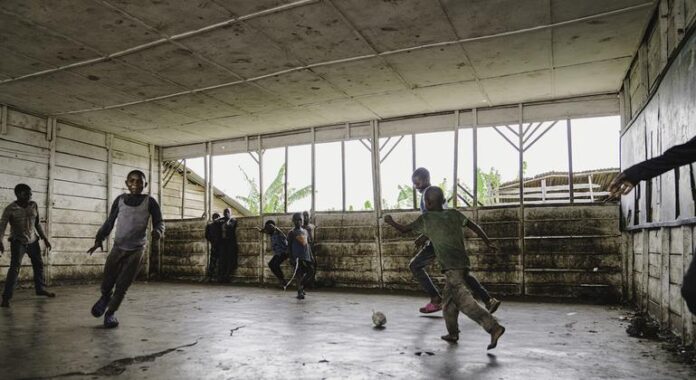
That’s according to the head of MONUSCO, Bintou Keita, speaking exclusively to UN News ahead of briefing members of the UN Security Council in New York on Thursday.
Mediation efforts
The meeting between Congolese President Felix Tshisekedi and Rwandan President Paul Kagame last week in Qatar – where they called for a ceasefire – presents “a positive image” since the two men had not met physically for a very long time, she said.
The head of MONUSCO added that the UN mission has invested in mediation efforts led by Angola, providing “physical knowledge of the terrain”, underscoring that it stands ready to support “the observation of a real ceasefire” in the east of the country.
MONUSCO peacekeepers, who withdrew from South Kivu province in June 2024, are still deployed in North Kivu and Ituri.
‘Disengagement’ shelved
Prior to the escalation of the conflict in January, MONUSCO and the Congolese Government were continuing discussions on a “gradual and responsible disengagement” from the UN peace mission and were expected to outline how this disengagement would be carried out in North Kivu and Ituri in the Security Council this week, based on lessons learned from the disengagement from South Kivu.
But with the M23 offensive, “the urgency was to manage the crisis,” explained Ms. Keita, which has, in effect, shelved discussions on disengagement.
“The Council will receive a letter from the Secretary-General who will admit that it has not been possible in the context of current developments to be able to go further in refining the disengagement methodology,” Ms. Keita told us.
Protection of civilians on base
The escalation of the conflict in eastern DRC has not prevented peacekeepers from continuing to fulfil their mandate to protect civilians, despite the difficult environment in areas under M23 control in North Kivu.
Although its ability to conduct patrols is limited, MONUSCO welcomes thousands of people who have sought refuge in its bases, offering them physical protection.
“There are three ways to protect civilians. There are political commitments, there is physical security – physical protection through physical presence – and then there are the conditions for people to feel good,” the UN envoy said.
In its bases in Goma, MONUSCO offers protection to people who have come to take refuge there. “Are they soldiers or are they civilians? From the moment they are in our bases, they are all considered non-combatants because they are unarmed and therefore they are civilians,” she said.
“Our role in protecting civilians is to respond to requests for individual protection. In the context of the areas under the control of the M23, we have a strong demand from individuals, groups, who want to come to our bases to be protected.”
“At the moment, the protection of civilians is not about patrolling the environment, it is about being able to welcome those who are looking for refuge in MONUSCO bases,” she adds.
Humanitarian aid: inventing other models
Regarding the impact of the freeze on US funding for humanitarian aid in the DRC, the UN envoy believes that it may be time to invent other models of humanitarian response, suggesting priority should be given to NGOs and local associations.
She recalled that 70 per cent of humanitarian aid funding in the DRC was dependent on funding through the now gutted United States overseas development agency, USAID.
“Maybe it’s time to ask the question: how do we operate in an environment where resources are rather declining and maybe invent other models of humanitarian response?“
“And in this context, I think that national non-governmental organizations, local associations, should be privileged because they, whatever the security situation, remain on the ground, continue to be able to have access to the populations.”
The scourge of sexual violence
Referring to the upsurge in conflict-related sexual violence, she deplores the fact that regular calls to combat this scourge ave not been heeded.
“What should be done differently? In my opinion…it’s medium and long term. In the immediate future, it is to provide a holistic response to those who are the survivors of sexual violence, to provide both a response on a traumatic level, on a psychological level – medical care – but also legal support,” she said.
She notes that the Congolese Government is inclined towards reparations, but she wonders if the response is quick enough for the victims and commensurate with “the magnitude of the violence.”
Recruitment by armed groups
Asked about the alarming reports of recruitment of children into the ranks of the M23, she deplored the fact that despite all the advocacy work, armed groups continue to recruit children to swell their ranks.
“To try to change the situation”, it will be necessary to work with communities to raise awareness of this issue, she said, because these armed groups “come from communities, have families”.
Myanmar quake: More than 1,600 reported killed, as UN aid operation supports rescue efforts
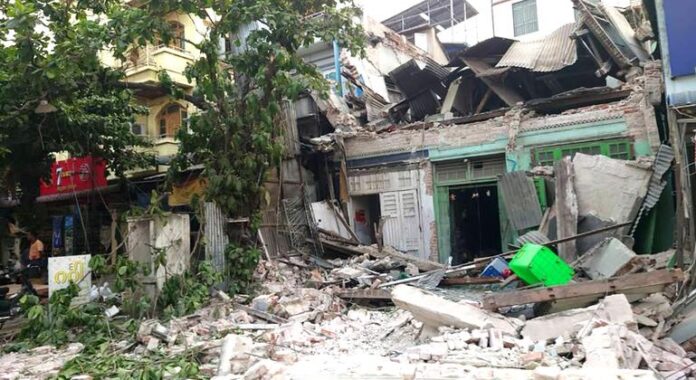
The earthquakes of 7.7 and 6.4 magnitude struck Myanmar in the centre of the country northwest of Sagaing. The UN aid coordination office, OCHA, reported on Saturday that hospitals in the area are overwhelmed with extensive damage to health infrastructure.
The areas affected are Bago, Magway, Mandalay, Nay Pyi Taw, Northeastern Shan and Sagaing.
Internet communications are down in the main city of Mandalay, with land and air routes heavily disrupted.
Health partners are preparing to deploy mobile surgical and medical teams, as well as field hospitals to the affected areas, to deliver life and limb-saving medical interventions to earthquake victims.
News reports indicate that hundreds of people are trapped under rubble in multiple collapsed buildings, including at least 50 construction workers in the Thai capital Bangkok who are so far unaccounted for.
More than 90 people are reportedly trapped in the rubble of one apartment block in Mandalay.
Around 1,690 houses, 670 monasteries, 60 schools and three bridges are reported to be damaged, with concerns for the structural integrity of large-scale dams.
Myanmar has been mired in a brutal civil war since a severe military crackdown on pro-democracy demonstrators by military authorities, who overthrew the government in a military coup in February 2021.
The military has requested the international community to provide emergency assistance amid the widespread destruction and loss of life. Meanwhile, opposition forces are reporting that some airstrikes have continued following the quake, including one in the Sagaing region.
UN aid response ramps up
The World Health Organization (WHO is looking to move Emergency Medical Teams (EMT) into Myanmar amid reports of insufficient medical supplies, including trauma kits to treat injured people, blood bags for transfusion, anaesthetics, assisted devices, other essential medicines, and tents for health workers.
Marcoluigi Corsi, UN Resident and Humanitarian Coordinator for Myanmar, issued a statement on Saturday expressing his unwavering solidarity with the Burmese people “during this tragic time.”
“The UN and its partners are urgently mobilizing to support emergency response efforts and stand ready to assist all affected communities wherever they are,” he said.
Myanmar had already been “reeling from an alarming humanitarian crisis, largely driven by persistent conflict and recurrent disasters. At this critical time, the people of Myanmar urgently need the steadfast support of the international community,” he added.
Pre-positioned aid
In an interview with UN News from Myanmar’s largest city, Yangon, Mr. Corsi said that around 20 million people have been impacted by the quake.
He stressed that the UN and partner agencies have a “significant presence” in the disaster-affected areas around Mandalay and the capital Naypyidaw, and crucially, the immediate aid effort can draw stockpiles already in place.
“I would say that although the logistical challenges for the first few days continue, at least we will be able to deliver and assist.”
The country is grappling with multiple crises, he stressed, with 19.9 million people in need of assistance even before the earthquake. Only five per cent of the 2025 humanitarian response plan has been funded.
He reminded that the Burmese had endured major flooding around seven months ago, and a devastating cyclone in 2023, so “we see that the resilience of the people and the resilience of the communities, continue to be eroded.”
He said that “at this critical time you know the people of Myanmar needs the support of the entire international community – now more than ever.”
Children face ‘even greater hardship’
Trevor Clark, the UN Children’s Fund UNICEF’s regional chief of emergency operations, warned that the devastating quake “has left children facing even greater hardship in an already dire crisis.
“Homes and critical infrastructure are damaged, and urgent aid is needed. UNICEF is delivering lifesaving supplies but requires immediate support to scale up its response.
He said UNICEF was sending lifesaving supplies including tents, tarpaulins, hygiene kits, recreational kits and health supplies: “We are ready to bring in even more, but we need the support of our partners.”
Some $5 million has already been released by the head of OCHA from the Central Emergency Relief Fund and on Saturday UN procurement agency, UNOPS, announced that thanks to donors it was releasing $10 million to aid partners in the emergency response.
Click here to donate to the UN emergency appeal for Myanmar
The 7.7 magnitude earthquake has caused widespread destruction of property in central Myanmar.
