Wednesday, September 30, 2026
Home Blog Page 554

47 projects get go ahead to increase access to raw materials in the EU

0
47 projects get go ahead to increase access to raw materials in the EU

The EU has given the green light to 47 projects that will help ensure European extraction, processing and recycling of strategic raw materials meet 10%, 40% and 25% of EU’s demand by 2030. The projects are based in 13 EU countries and will increase and diversify access to raw materials in the EU.

Source link

EU engages further with young people through online debate, survey and youth report

0
47 projects get go ahead to increase access to raw materials in the EU

The EU has launched a new online debate where young people from all over Europe can discuss major themes, building on the recent Youth Policy Dialogues. A new survey and a fresh EU Youth Report also showcase young people’s views about the EU and how they contribute to EU policy-making.

Source link

Road safety: deal for modern EU driving licence rules | News

0
Road safety: deal for modern EU driving licence rules | News

The agreement on an update of EU driving licence directive reached on early Tuesday morning is intended to improve road safety in Europe, with almost 20,000 lives lost on EU roads annually.

Training on phone usage and driving in dangerous conditions

MEPs managed to insert new requirements so that drivers are better prepared for real driving situations and develop sufficient risk awareness of pedestrians, children, cyclists and other vulnerable road users. To qualify for a licence, a driver will have to learn about safe phone usage while driving, blind spot risks, driver-assistance systems, the safe opening of doors, and driving in snow and slippery conditions.

Mobile driving licence

A digital driving licence, available on a smartphone with EU-wide digital wallet technology, will become the main format in the EU, under the new rules. Member states will have five years and six month following the entry into force of the new rules to implement this. However, MEPs made sure drivers will continue to have the right to request a physical driver’s licence.

Two-year probation for new drivers, alcohol limit

For the first time, EU rules will set a probationary period of at least two years for new drivers. Novice drivers will be subject to stricter rules and sanctions for driving under the influence of alcohol and driving while not using safety belts or child-restraint systems. MEPs secured an encouragement in the text for EU countries to pursue a zero tolerance policy on alcohol and drugs, that would ban consumption for all drivers.

Lowering the eligibility age for professional licences, introduction of accompanying drivers

To mitigate a shortage of professional drivers, the minimum age whereby a driver can obtain a truck licence will be lowered from 21 to 18, and for a bus driving licence from 24 to 21, provided the applicant holds a certificate of professional competence. EU countries may allow 17-years-old to drive a truck or van on their territory only, if accompanied by an experienced driver. This system of accompanied drivers will apply more widely across the EU for car drivers.

Validity and health checks

Negotiators agreed that driving licences should be valid for 15 years for motorcycles and cars. EU countries may reduce this period to 10 years if the licence can be used as a national ID, while truck and bus licences will have to be renewed every five years. EU countries can shorten the validity of driving licences of older drivers (65 years and older).

Before they are issued with first licence, a driver should pass a medical check, including of their eyesight and cardiovascular condition. However, for car drivers or motorcycle riders EU countries may opt to substitute the medical check by self-assessment forms or, in case of driving licence renewal, other alternative measures. At the initiative of MEPs, national authorities will be encouraged to enhance the public awareness of minimum standards of physical and mental fitness for driving.

Quote

EP rapporteur Jutta Paulus (Greens, DE) said: “The new driving license directive makes people’s lives easier – more digital, more flexible, and with less bureaucracy. At the same time, we are sending a clear signal for greater road safety in line with Vision Zero: fewer accidents, fewer injuries, and fewer fatalities on our roads.

Additionally, we introduce uniform standards across Europe and make it easier for young people to enter the driving profession. On top, we strengthen our volunteer civil protection services and tackle the shortage of skilled workers in the transport sector. Finally, we ensure that no one’s right to drive is restricted due to long processing times.”

Next steps

The preliminary deal still needs to be approved by Council and Parliament. EU countries will have four years to transpose new provisions into national law and prepare for its implementation.

Background

Revised EU driving licence rules are part of a road safety package presented by the Commission in March 2023, which aims to improve safety for all road users and to move as close as possible to zero fatalities in EU road transport by 2050 (“Vision Zero“). The same package also contains driving disqualification rules on which Parliament and Council negotiators are working to find an agreement.

Source link

Public Health Emergency Management (PHEM) seminar on Priority Areas for Multisectoral Interventions (PAMIs) for cholera control in Ethiopia

0
Public Health Emergency Management (PHEM) seminar on Priority Areas for Multisectoral Interventions (PAMIs) for cholera control in Ethiopia

This activity was organized by Africa CDC, ECDC and WHO AFRO with the aim to share knowledge and capacity building on the Identification of Priority Areas for Multisectoral Interventions (PAMIs) for cholera control. Identification of PAMIs is a crucial step for the development and maximization of impacts of national control and elimination plans for cholera. The aim of the workshop was to increase the pool of experts on PAMIs who can be utilized as Trainers of Trainers to cascade training at Member State-level, strengthen collaboration and contribute to efforts to eliminate cholera by 2030.  

The workshop was prepared and facilitated by Dr Fred Kapaya, cholera expert from WHO AFRO. ECDC and Africa CDC presented the epidemiological situation of cholera. Member State representatives learnt about the PAMIs process, its organization, modalities and the data needed. They exercised using practical tools for PAMIs, creating an opportunity for its adoption in their own country. In addition, they shared informal experiences from cholera outbreak management and information on how to handle such events.

Source link

Council and Parliament strike provisional agreement on new rules for driving licences

0
Council and Parliament strike provisional agreement on new rules for driving licences

Council and EP reach a provisional agreement on an update of the Driving Licence Directive, introducing an EU-wide digital driving licence by end 2030.

Source link

Guterres to reduce UN aid ‘footprint’ inside Gaza following ceasefire collapse

0
Guterres to reduce UN aid ‘footprint’ inside Gaza following ceasefire collapse

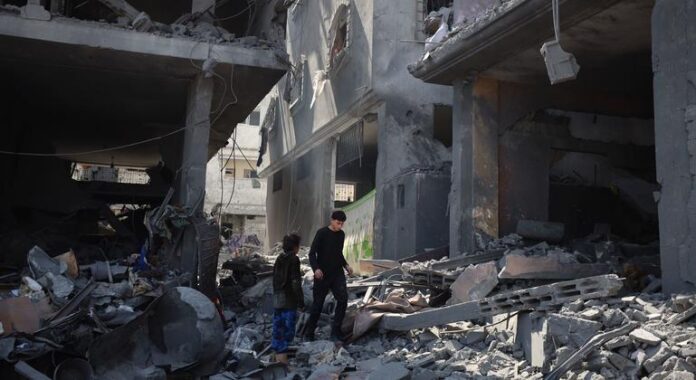
“In the past week, Israel carried out devastating strikes on Gaza, claiming the lives of hundreds of civilians, including United Nations personnel, with no humanitarian aid being allowed to enter the Strip since early March,” said a statement released by his Spokesperson.

“As a result, the Secretary-General has taken the difficult decision to reduce the Organization’s footprint in Gaza, even as humanitarian needs soar and our concern over the protection of civilians intensifies.”

The UN stressed that it remained fully committed to providing lifesaving aid. Around a third of the approximately 100 international staff working in Gaza will be temporarily relocated.

After cutting off all humanitarian aid into Gaza for three weeks – the longest suspension since 7 October 2023 – Israeli officials have indicated that they intend to continue their military campaign across Gaza and annex territory to pressure Hamas.

Strike on UN compound from ‘Israeli tank’

The UN Spokesperson said that based on currently available information, “the strikes hitting a UN compound in Deir Al Balah on 19 March were caused by an Israeli tank.”.

In the aftermath of Wednesday’s strike, Israel said it had not been behind the blast.

“The strikes claimed the life of a UN colleague from Bulgaria and left six others – from France, Moldova, North Macedonia, Palestine and the United Kingdom – with severe injuries, some of them life-altering,” Monday’s statement continued.

The location of the compound was well known to all the parties to the conflict.

“I reiterate that all parties to the conflict are bound by international law to protect the absolute inviolability of UN premises,” the statement from Spokesperson Stéphane Dujarric continued.

“Without this, our colleagues face intolerable risks as they work to save the lives of civilians.”

The Secretary-General is demanding a full, thorough and independent investigation into Wednesday’s deadly strike, protection of all civilian life in the renewed fighting between Israeli forces and Hamas and the resumption of aid deliveries.

Furthermore, all hostages “must be released immediately and unconditionally”.

‘Relentless bombardment’ again

One week since Israeli bombing started again in Gaza, UN humanitarians have described deadly attacks hitting health workers, ambulances and hospitals.

Senior UN humanitarian in the Occupied Palestinian Territory, Jonathan Whittall, said that hundreds of children and adults have been killed since the ceasefire broke down between Hamas and Israel.

The UN agency for Palestine refugees, UNRWA, also said on Monday that 124,000 people in the enclave have been forced to flee what it called “relentless bombardment”.

“Families carry what little they have with no shelter, no safety, and nowhere left to go; the Israeli authorities have cut off all aid,” UNRWA said in an online statement – warning that food is scarce and prices are soaring as the Israeli blockade continues.

Relief chief Tom Fletcher tweeted that he was continuing to receive horrific reports from Gaza of more health workers, ambulances and hospitals attacked as they try to save survivors. Mr. Fletcher said we all must demand that hospitals and medics must not be targeted.

In southern Gaza on Sunday, several casualties were reported after the surgical department of Nasser Medical Complex was hit and caught fire, Mr. Dujarric told journalists in New York at the daily briefing.

In Rafah, ambulances were reportedly hit in Tal Al Sultan, resulting in several casualties. The Palestine Red Crescent Society said four of its ambulances were targeted, as well as 10 team members carrying out humanitarian work.

“Communication with the team has been completely lost for 30 hours, and at this point, their fate remains unknown,” the UN Spokesperson continued.

Call for additional emergency teams

As hostilities continue across Gaza, aid coordination office, OCHA, and partners called for the entry of additional emergency medical teams into Gaza to help health workers already on the ground who are “exhausted and, of course, overwhelmed.”

Israeli authorities on Sunday issued a new evacuation order in Rafah, covering around two per cent of the Strip and affecting five neighbourhoods.

“With this latest directive, the overall area designated for evacuation over the past week covers an estimated 14 per cent of the Gaza Strip – along  with vast ‘no go’ zones along the borders and the Netzarim corridor,” Mr. Dujarric said.

Source link

Israel: remarks by High Representative/Vice-President Kaja Kallas at the joint press conference with Minister for Foreign Affairs Gideon Sa’ar

0
Council and Parliament strike provisional agreement on new rules for driving licences

Israel: remarks by High Representative/Vice-President Kaja Kallas at the joint press conference with Minister for Foreign Affairs Gideon Sa’ar

Source link

‘Racism requires ignorance’: How art and culture can help end racial discrimination

0
‘Racism requires ignorance’: How art and culture can help end racial discrimination

“Ignorance allows for racism, but racism requires ignorance. It requires that we don’t know the facts,” says Sarah Lewis, Associate Professor of African and African American Studies at Harvard University and founder of the Vision & Justice programme there, which connects research, art, and culture to promote equity and justice.

Ms. Lewis was at the UN Headquarters for an event marking last week’s International Day for the Elimination of Racial Discrimination.

In an interview with UN News’s Ana Carmo, she discussed the crucial intersection of art, culture, and global action to tackle racial discrimination in the face of ongoing challenges.

The interview has been edited for length and clarity.

UN News: How can art contribute to both raising awareness of racial discrimination, and inspiring action towards its elimination?

Sarah Lewis: I grew up not far from the United Nations, just ten blocks away. As a young girl, I became interested in the narratives that define who counts and who belongs. Narratives that condition our behaviour, narratives that allow for the implementation of laws and norms.

And what I’ve come to study is the work of narratives over the course of centuries through the force of culture. We’re here to celebrate much of the policy work that’s been done through different states, but none of that work is binding and will last without the messages that are sent throughout the built environment, sent through the force of images, sent through the power of monuments.

One of the thinkers in the United States who first focused on that idea was formerly enslaved abolitionist leader Frederick Douglass, and his speech Pictures in Progress, delivered in 1861 at the start of the American Civil War, offers a blueprint for how we must think about the function of culture for justice.

He was not fixated on the work of any one artist. He was focused on the perceptual changes that happen in each of us, when we are confronted with an image that makes clear the injustices we didn’t know were happening, and forces action.

UN News: This year also marks the 60th anniversary of the International Convention on the Elimination of All Forms of Racial Discrimination. How do you think societies can really engage with these historical struggles for racial justice, particularly in the context where racial discrimination is still deeply entrenched?

Sarah Lewis: We are speaking at a moment in which we’ve altered norms around what we teach, what is in our curriculum in states around the world. We are in a moment in which there’s a sense that one can teach slavery, for example, as beneficial, for the skills that [it] offered the enslaved.

When you ask what nations can do, we must focus on the role of education. Ignorance allows for racism, but racism requires ignorance. It requires that we don’t know the facts. When you come to see how slavery, for example, was, abolished but transformed into various forms of systemic and sustained inequity, you realize that you must act.

Without the work of education, we can’t cohere, safeguard and implement the norms and new policies and treaties that we advocate for here today.

In the past, a hopeful future for South Africa was hindered by apartheid, but overcoming racial injustice paved the way for a society based on equality and shared rights for all.

UN News: You speak about the power of education and this idea that we need to change the narratives. How can we as societies ensure that the narratives and bias really change?

Sarah Lewis: If education is important, the related question is, how do we best educate? And we don’t only educate through the work of colleges and universities and curriculums of all kinds, we educate through the narrative messaging in the world all around us.

What can we do on a personal, daily level, leader or not, is to ask ourselves the questions: what are we seeing and why are we seeing it? What narratives are being conveyed in the society that define who counts and who belongs? And what can we do about it if it needs to be changed?

We all have this individual, precise role to play in securing a more just world in which we know we all can create.

UN News: When you were an undergraduate at Harvard, you mentioned that you noticed exactly that, that something was missing and that you had questions about what was not being taught to you. How important is to include the visual representation topic in schools, especially in the United States?

Sarah Lewis: Silence and erasure cannot stand in states who work to secure justice around the world. I’m fortunate to have gone to extraordinary schools but I found though that much was being left out of what I was being taught, not through any design or any individual culprit, any one professor or another, but through a culture that had defined and decided which narratives mattered more than others.

I really learned about this through the arts, right through understanding and thinking through what mainstream society tells us we should be focusing on in terms of the images and artists that matter.

I wrote a book ten years ago on – effectively – failure, on our failure to address these narratives that are being left out. And in many ways, you can see, the idea of justice as society’s reckoning with failure.

Justice requires humility on the part of all of us to acknowledge how wrong we have been. And it’s that humility that the educator has, that the student has and it’s the posture that we all need to adopt as citizens to acknowledge what we need to put back into the narratives of education today.

UN News: You speak in your book about the role of the ‘almost failure’ as a near win in our own lives. How can we all see the somewhat progress being made, to achieve the elimination of racial discrimination in societies, and not feel defeated by the failures?

Sarah Lewis: How many movements for social justice began when we admitted failure? When we admitted that we were wrong? I would argue they all have been born of that realisation. We cannot be defeated. There are examples of men and women who exemplify how we do it.

I’ll tell you a quick story about one. His name was Charles Black Jr, and we’re here today, in part because of his work in the United States. In the 1930s, he went to a dance party and found himself so fixated by the power of this trumpet player.

It was Louis Armstrong, and he had never heard of him, but he knew in that moment that because of the genius coming out of this black man, that racial segregation in America, must be wrong – that he was wrong.

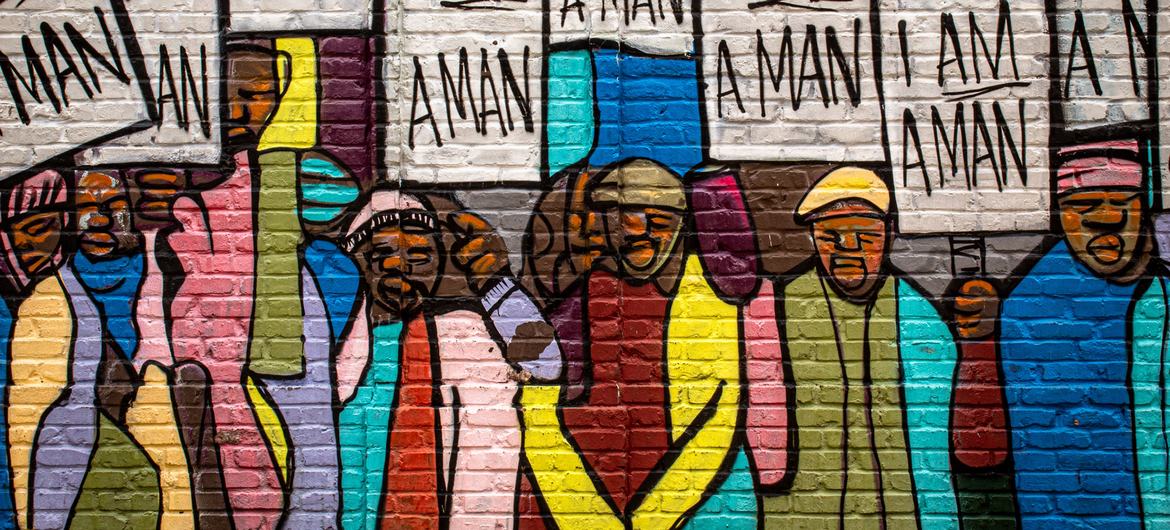
A mural of the I Am a Man protest that took place in Memphis, Tennessee, during the Civil Rights Movement in the USA.

© Unsplash/Joshua J. Cotten

A mural of the I Am a Man protest that took place in Memphis, Tennessee, during the Civil Rights Movement in the USA.

It was then that he began walking towards justice, he became one of the lawyers for the ‘Brown v Board of Education’ case that helped outlaw segregation in the United States, and went on to teach every year at Columbia and Yale University, and would hold this ‘Armstrong listening night’ to honor the man who showed him that he was wrong, that society was wrong, and that there was something he could do about it.

We must find ways to allow ourselves to not let that feeling of failure defeat us, but to continue. There are countless examples I could offer in that vein, but the story of Charles Black Jr. is one that demonstrates the catalytic force of that recognition of that internal dynamic that is the smaller, more private encounter and experience that often leads to the public forms of justice that we celebrate today. 

Listen to the full interview on SoundCloud:

Source link

Council adopts financial benchmarks regulation to ease burden on SMEs

0
Council and Parliament strike provisional agreement on new rules for driving licences

Council adopts a regulation on financial benchmarks to ease the burden on SMEs.

Source link

Fourth EU-India Maritime Security Dialogue held in New Delhi

0
Council and Parliament strike provisional agreement on new rules for driving licences

Fourth EU-India Maritime Security Dialogue held in New Delhi

Source link