Wednesday, September 30, 2026
Home Blog Page 568

Joint ECDC-WHO Regional Office for Europe Mpox Surveillance Bulletin

0
Joint ECDC-WHO Regional Office for Europe Mpox Surveillance Bulletin


In the last three months, 715 cases have been reported from
24 countries and areas. Over the past 4 weeks, 246
cases of mpox have been identified from 20 countries and
areas.

Since 7 March 2022, a total of 28 872 cases of mpox (formerly named
monkeypox) have been identified through IHR mechanisms, official public
sources and The European Surveillance System (TESSy) up to 14 January
2025, 14:00, from 47 countries and areas throughout the WHO European
Region. Case-based data were reported for 28 632
cases from 42 countries and areas to ECDC and the WHO Regional Office
for Europe through TESSy, up to 14 January 2025, 10:00. Of the 28 632
cases reported in TESSy, 28 446 were laboratory confirmed.


The majority of cases were male
(98%; n = 28 551) with the
most affected age group being 31–40 years-old
(39%; n = 28 588). Of the
12 872 male cases with known sexual behaviour, 97% were reported as men
who have sex with men. Among cases with known HIV status, 37%
(n = 12 149) were HIV-positive.
The majority of cases presented with a rash
(91%; n = 10 203). Systemic symptoms
such as fever, fatigue, muscle pain, chills, or headache were present in
53% of cases (n = 10 203).
There were 941 cases hospitalised (7%), of which
303 cases required clinical care. Nine cases were admitted to ICU, and 9
cases were reported to have died.

Since August 2024, 16 cases of clade 1b have been detected in
5 countries. All these cases either travelled themselves or are close
contacts of travelers from countries with known local transmission of
clade Ib.

An overview of the global situation can be found here: https://worldhealthorg.shinyapps.io/mpx_global/.

Acknowledgments

We gratefully acknowledge the Nextstrain team, the authors,
originating and submitting laboratories of the genetic sequences and
metadata (NCBI
Genbank
) for sharing their work.


Source link

‘Anora’ takes five Oscars: Sean Baker’s strip-club Cinderella story wins Best Picture

0
Actress Mikey Madison

LOS ANGELES — The little film about a Brooklyn sex worker ran the table on Sunday night. “Anora”, Sean Baker’s screwball tragedy about a dancer who impulsively marries the son of a Russian oligarch, won five Academy Awards, including Best Picture, Best Director and Best Actress for its 25-year-old star Mikey Madison.

Made for six million dollars — a rounding error by Oscar standards — “Anora” is among the cheapest Best Picture winners in the modern era. Baker, who also won for editing and for the screenplay, used his four trips to the stage to plead for the survival of cinemas, asking filmmakers to keep making films for the big screen.

Madison’s win over the favourite, Demi Moore of “The Substance”, was the night’s biggest surprise; Adrien Brody took his second Best Actor award, for “The Brutalist”, more than two decades after his first. The ceremony, hosted by Conan O’Brien, was the first since the January wildfires that devastated Los Angeles, and it paused to honour the city’s firefighters.

The result completes a clean sweep: “Anora” won the Palme d’Or at Cannes last May and never relinquished its front-runner status through the season, despite its explicit subject matter — for years considered disqualifying at the Academy.

Hollywood, in other words, has changed its taste. A decade ago, the Academy was criticised for rewarding safe, respectable cinema. On Sunday it gave its top prize to an independent film about sex work, made without a studio, by a director who shoots on the streets. The margins of the industry have become its centre.


Media-Society.com is a press network association based in Spain, founded in 2020. More at www.media-society.com.

Remarks by President António Costa following the Leaders’ summit on Ukraine

0
Remarks by President António Costa following the Leaders’ summit on Ukraine

European Council President António Costa travelled to London for the Leaders’ summit on Ukraine hosted by UK Prime Minister Keir Starmer. He delivered his remarks at the end of the meeting.

Source link

Israel/Palestine: Statement by the Spokesperson on the ceasefire in Gaza

0
Remarks by President António Costa following the Leaders’ summit on Ukraine

Israel/Palestine: Statement by the Spokesperson on the ceasefire in Gaza

Source link

Coast Guard Evolution: AI and Unmanned Systems Enhancing SAR Operations

0
Remarks by President António Costa following the Leaders’ summit on Ukraine

AI is transforming Search and Rescue (SAR) operations at sea to improve detection, decision-making and resource allocation. However, it also raises issues. The AI-related opportunities and concerns were discussed at a workshop held on 25–26 February 2025 in Italy.

Source link

First EUDA work programme 2025–2027 published today

0
Remarks by President António Costa following the Leaders’ summit on Ukraine

Today, the European Union Drugs Agency (EUDA) has published its first three-year work programme (Single programming document 2025–2027), outlining strategic objectives and initiatives to strengthen the EU’s preparedness on drugs.

Europe is facing new and serious drug challenges, and our mission is to boost the EU’s readiness to tackle them. The programme draws on the four strategic functions which guide our services: Anticipate, Alert, Respond and Learn.

Anticipate

Building on three decades of drug monitoring, the agency will enhance its situational analysis through new initiatives,…

Source link

Haiti: Massive surge in child armed group recruitment, warns UNICEF

0
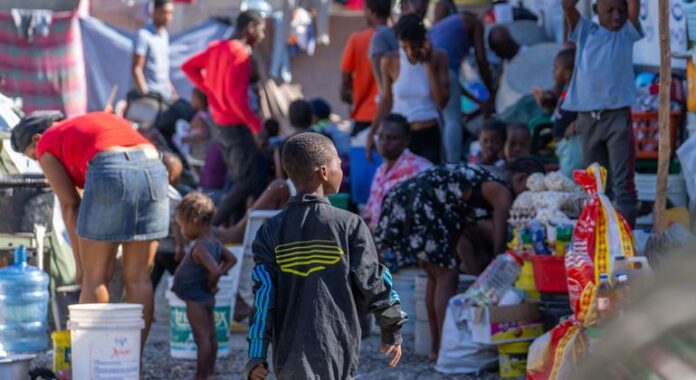
Haiti: Massive surge in child armed group recruitment, warns UNICEF

UNICEF’s representative in Haiti, Geetanjali Narayan, told journalists that just last month, armed groups destroyed 47 schools in Haiti’s capital Port-au-Prince, adding to the 284 schools destroyed in 2024.

“The relentless attacks on education are accelerating, leaving hundreds of thousands of children without a place to learn,” she said.

Speaking in Geneva, Ms. Narayan described reports of “yet another attack” on Thursday. “Videos capture piercing screams of children lying on the floor, motionless with fear,” she said, calling the scene a “chilling reminder that these attacks do damage far beyond the classroom walls”.

“A child out of school is a child at risk,” she warned.

UNICEF previously reported a 1,000 per cent increase in sexual violence involving children between 2023 and 2024 in the country. Children also comprise half of the record one million-plus displaced to date by the violence in Haiti.

Eight-year-old recruits

After sharing the latest displacement data, Ulrika Richardson, the UN’s top aid official in Haiti, insisted on Thursday that youngsters continue to bear the brunt of the crisis.

UNICEF’s Ms. Narayan stressed that last year, child recruitment into armed groups “surged by 70 per cent”.

“Right now, we estimate that up to half of all armed group members are children, some as young as eight years old,” she said.

The UNICEF representative described the different roles played by children within armed groups, depending on their age and gender. Eight to 10-year-olds are “used as messengers or informants” while younger girls are tasked with domestic chores.

“As they get older, the children are playing more and more active roles in terms of participating in acts of violence,” Ms. Narayan said.

Asked about the impact of being recruited into a gang at an early age, she spoke of “indescribable” damage.

“At that age, the child’s brain is still forming. They haven’t developed their understanding of the world. And so, to be to be part of an armed group where you are surrounded by violence at all times and where you yourself may be forced to commit acts of violence, has a profound effect on the child,” she said.

Ms. Narayan stressed that UNICEF is “working actively” to support the release, demobilization and reintegration of child armed group members.

Saving young lives

This includes a “handover protocol” signed in 2024 between the United Nations, including UNICEF, and the Government of Haiti, based on the following questions: “What do you do when you encounter a child coming out of the armed groups? What are the steps? Who is involved? What are the procedures that need to be in place to ensure that this child is treated first and foremost as a child and not as a criminal?”

The initiative has proved successful, with more than 100 children demobilized and reintegrated last year and plans to continue the work in 2025, Ms. Narayan said.

The UNICEF official highlighted the fact that Haiti’s children’s chances of a better future are restricted by the armed violence surrounding them and the lack of funding for stop-gap measures that would allow youngsters to continue their education “despite the crisis”.

Funding freeze impacts

Such measures include establishing temporary learning spaces in displacement sites, rehabilitating schools and providing children with the necessary school supplies. The UN agency needs $38 million for these “critical interventions” but funding is at just five per cent.

Peace and stability are desperately needed in Haiti “but so are funds”, Ms. Narayan insisted. “More than half a million children are not getting the education support that they need and that UNICEF and our partners can provide, not only due to armed groups, but due to a lack of donor support.”

Cuts in humanitarian assistance from the United States have already had a “devastating impact” on children in Haiti, Ms. Narayan said, with some of UNICEF’s services reduced.

In 2024, the humanitarian community launched a $600 million plan for Haiti, receiving just over 40 per cent of the funding. Around 60 per cent came from the United States alone.

US grants terminated

UNICEF spokesperson James Elder added that on a global scale, following the US humanitarian aid freeze, the agency “received termination notices” for grants, affecting humanitarian and development programming.

“We continue to assess the impact of those termination notices on our programmes for children. But we already know that the initial pause has impacted programming for millions of children in roughly half the countries that we work,” he said.

For decades, UNICEF staff have witnessed how “those most at risk”, have found ways “to adapt, to rebuild, to push forward, despite unimaginable hardships”, Mr. Elder said.

“But even the strongest can’t do it alone…Without urgent action, without funding, more children are going to suffer malnutrition, fewer will have access to education, and preventable illnesses will claim more lives.”

Source link

Statement by the Spokesperson on the situation in the West Bank

0
Remarks by President António Costa following the Leaders’ summit on Ukraine

Statement by the Spokesperson on the situation in the West Bank

Source link

US aid cuts will make world ‘less healthy, less safe and less prosperous’: Guterres

0
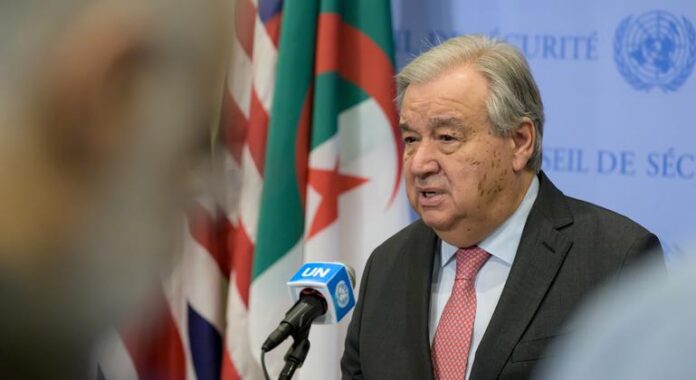
US aid cuts will make world ‘less healthy, less safe and less prosperous’: Guterres

“These cuts impact a wide range of critical programmes,” he told reporters at the UN Headquarters in New York, highlighting the potential disruption to lifesaving humanitarian work, development projects, counterterrorism efforts and initiatives to combat drug trafficking.

He expressed the UN’s gratitude “for the leading role” the US has played over decades providing overseas aid, highlighting that thanks to US taxpayers’ dollars and other donors, over 100 million people each year receive humanitarian support through UN programmes.

However, the cuts come at a time when global crises are intensifying, leaving millions at risk of hunger, disease and displacement, he said.

“The consequences will be especially devastating for vulnerable people around the world,” Mr. Guterres said.

Millions at risk

In Afghanistan, more than nine million people could lose access to health and protection services, as hundreds of mobile health teams and other critical programmes face suspension. 

In northeast Syria, where 2.5 million people require humanitarian assistance, the absence of US funding will have a major impact.

The cuts have been felt already in Ukraine, where cash-based aid that supported one million people in 2024 has been suspended. In South Sudan, funding has run out for programmes assisting refugees fleeing conflict in neighbouring Sudan, creating overcrowded and unsanitary conditions at border areas.

Beyond direct humanitarian relief, the cuts will also severely affect global health and security efforts.

The UN Office on Drugs and Crime (UNODC) will be forced to halt many counter-narcotics operations, including those targeting the fentanyl crisis and dramatically scale back its activities against human trafficking.

“And funding for many programmes combatting HIV/AIDS, tuberculosis, malaria and cholera have stopped,” Mr. Guterres said.

A vital partnership

Mr. Guterres emphasized that US support has long been central to global humanitarian efforts.

“The generosity and compassion of the American people have not only saved lives, built peace and improved the state of the world. They have contributed to the stability and prosperity that Americans depend on,” he added.

Think again

The Secretary-General urged the US Government to reconsider the funding cuts, warning that reducing America’s humanitarian role would have far-reaching consequences, not only for those in need but also for global stability.

“Going through with these cuts will make the world less healthy, less safe, and less prosperous,” he said, stating that UN agencies stand ready to provide the necessary information and justification for its projects.

“We look forward to working with the United States in this regard,” he added.

Mr. Guterres said the UN would continue to do everything possible to provide lifesaving assistance and diversify funding sources.

“Our absolute priority remains clear. We will do everything we can to provide life-saving aid to those in urgent need,” he said.

“We remain committed to making the global humanitarian effort as efficient, accountable and innovative as possible while continuing to save lives.”

Full audio of Secretary-General Guterres remarks to the press.

Source link

Weekly schedule of President António Costa

0
Remarks by President António Costa following the Leaders’ summit on Ukraine

Weekly schedule of President António Costa, 3–9 March 2025

Source link