Memory shapes behavior throughout the animal kingdom. This is true even for ants, which not only do not forget their enemies, but are also capable of holding a grudge against them, writes Study Finds. Scientists from the University of Freiburg conducted a study in which they noticed that ants are able to form long-term memories of hostile encounters. The insects can even become angry at members of colonies that have previously attacked them.
The study
The study was conducted on black garden ants, which are common in Europe. They live in colonies and often interact with neighboring groups. According to scientists, each anthill has its own unique chemical signature, or odor, that allows the ants to distinguish friend from foe. When confronted with rivals, the insects can open their jaws threateningly, bite or even spray acid to kill competitors.
The Tests
In a series of tests, the scientists exposed individual ants to encounters with insects from other colonies. These encounters lasted just one minute each day for five days. The researchers noticed that the ants were more aggressive toward individuals from colonies they had previously fought with, and less hostile toward insects they had never encountered. The scientists are confident that the ants are capable of forming special memories for their enemies.
The Findings
The more often the same insects meet, the more they fight, the researchers emphasize. In addition, the ants are more likely to attack individuals that live in colonies within their foraging range. “We often have the idea that insects function like programmed robots. “Our study provides new evidence that, on the contrary, ants also learn from their experiences and can harbor malice,” said researcher Dr. Volker Nehring from the Evolutionary Biology and Animal Ecology Group at the University of Freiburg.
Illustrative Photo by Syed Rajeeb: https://www.pexels.com/photo/black-ants-928276/
A 5-month-old gorilla was rescued from the cargo hold of a plane and is now recovering at a zoo in Istanbul as wildlife officials consider returning it to its natural habitat. The gorilla was found last month in a crate on a Turkish Airlines flight from Nigeria to Thailand, CBS News reported in January. After a public competition, he was named Zeytin, which means olive, and is recovering.
Zeytin Gains Weight
Weeks after being found at the airport, Zeytin has gained weight and is showing signs of recovery from his traumatic journey.
“When he first came, he was very shy, he would stay where we left him,” said veterinarian Gulfem Esmen. “Now he doesn’t have that shyness. He doesn’t even care much about us. He plays games by himself.”
Of course, what we want and desire is for the baby gorilla … to continue his life in his homeland,” Fahrettin Oulu, Istanbul’s regional director for nature conservation and national parks, said on Sunday.
“The important thing is that an absolutely safe environment is created wherever he goes,” he added.
Illegal trade appears to pass through Istanbul
As Istanbul becomes a major air hub between continents, customs officials are increasingly catching illegally traded animals. In October, 17 young Nile crocodiles and 10 monitor lizards were found in the luggage of an Egyptian passenger at the city’s Sabiha Gokcen Airport.
Illustrative Photo by Andrea Acanfora: https://www.pexels.com/photo/close-up-photo-of-an-infant-gorilla-7268737/
The Romanian Orthodox Church encourages Christians to donate their organs when it is necessary to save the life of another person. This is clear from a text recently published on the official website of the Romanian Patriarchate.
A living person can donate a part of the liver, bone marrow or a kidney to a terminally ill person. The Church encourages this donation when it is an act of love for the sick person, is not a “subject of transactions”, is carried out voluntarily and with the full mental clarity of the donor, with a clearly expressed written consent. The Church blesses people who can possibly make such sacrifices, but also understands those who cannot do so, respecting the freedom of decision of each person.
Until now, the Church had been involved in the public debate on the use of organs of a deceased person for transplantation. According to the Church’s position, organ donation is an act of self-giving for one’s neighbor and can be encouraged, but excluding the possibility of abuse. “Although it is claimed that donation is an expression of love, it in no way creates a moral obligation to donate; the act of donation is a complete and unquestionable manifestation of free will. Only the donor’s conscious consent reveals his love and spirit of sacrifice, trust and interest in his neighbor.” Consent may be given by relatives, but only after “the law has provided clear rules regarding consent in order to avoid doubts about the sale of organs by relatives.”
Furthermore, in order to prevent abuses, such as are possible when it comes to life-saving and expensive operations, the church’s position states: “Death as the effective cessation of life implies: 1) cardiac arrest; 2) lack of spontaneous breathing; 3) brain death. These three conditions must be fulfilled simultaneously and completely in order to avoid regrettable errors.” And further: “Death as the separation of the soul from the body remains a mystery. No one will be able to say with certainty that this separation coincides with brain death; can coincide with, precede or follow brain death. Being created in the image of God, man is valuable to the extent that his original image is reflected in him. As long as he fulfills the commandment of love and remains in God, who is love, he is a member of the Church of Christ. From this point of view, donating an organ, tissue and even a drop of blood out of love for his neighbor means the self-giving and sacrifice of the whole person in the same mystical Body of Christ, which excludes the view of the human body as a mere means of physically healing someone or as a storehouse for spare organs”.
The Church cannot agree with the transplantation of embryonic tissues, which carries a risk of affecting the health of the fetus, nor with the use of the organs of acephalic or hydrocephalic newborns for transplantation. In the same way, we cannot agree with the tendency for some to become organ donors on condition that they are euthanized.
It also calls for the rejection of “any transactions with human organs and any exploitation of critical situations and vulnerabilities of potential donors (those deprived of mental or physical freedom and other vulnerable social groups)”.
Regarding doctors involved in the transplantation process, it says: “The gift of knowledge and discovery comes from God; man has the responsibility to use this knowledge not against his neighbor and the world, but to maintain the dignified presence of the person in creation and to realize the meaning of existence. In this context, the doctor must be aware that he is an instrument and collaborator of God in eliminating the manifestation of evil in the world as suffering.”
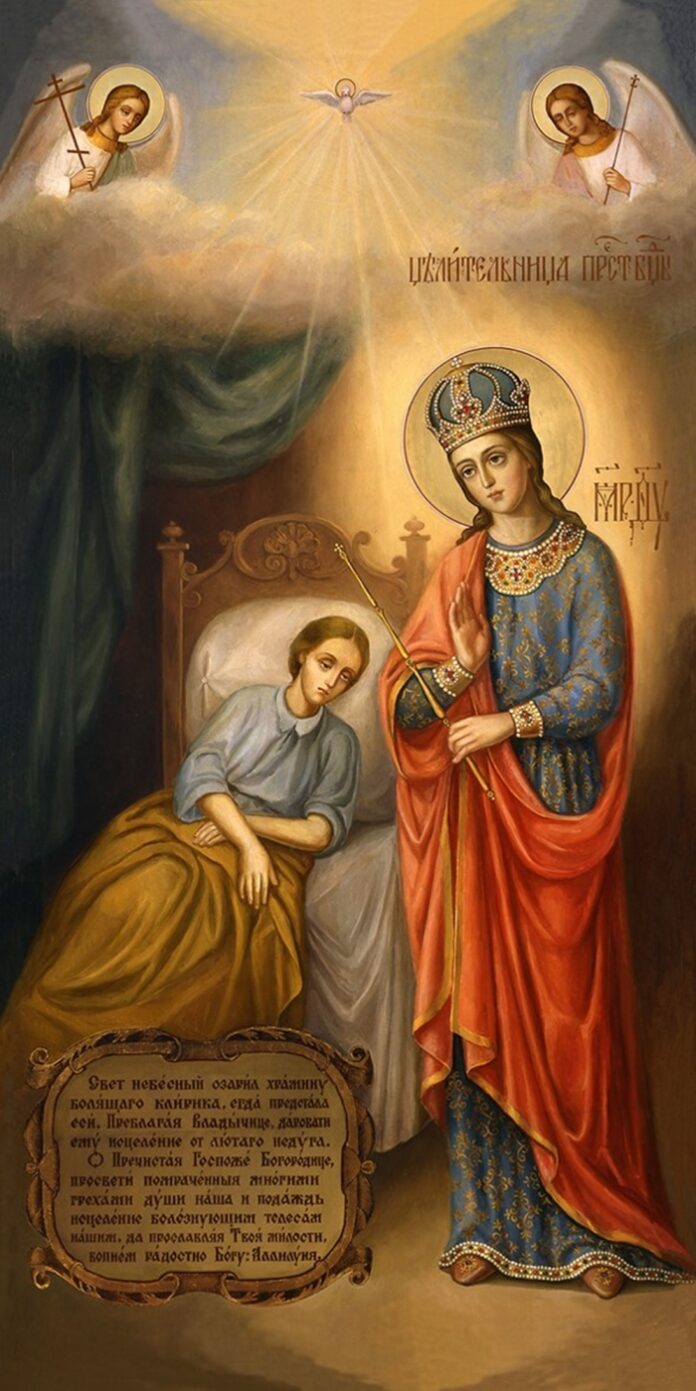
Illustrative photo: Orthodox icon of Virgin Mary The Healer
A biblical site frequented by Israelite kings according to the Hebrew Bible has been identified in Jordan, researchers say. The Iron Age site, known as Mahanaim, was part of the Kingdom of Israel (also called the Northern Kingdom). The team also believes they have identified the remains of a building at Mahanaim that was used by elite figures, possibly even Israelite kings.
Today, the site that may be Mahanaim is called Tal ad-Dahab al-Gharbi, archaeologists Israel Finkelstein of Tel Aviv University and Talai Ornan of the Hebrew University of Jerusalem write in an article published in the journal Tel Aviv. The researchers base their claim on archaeological remains found at the site and an analysis of biblical passages that mention Mahanaim.
Mahanaim
The name “Mahanaim” means “two camps” in Hebrew, and biblical passages suggest that it was located next to another place called Penuel, the researchers write. Today, a smaller archaeological site known as Tal ad-Dahab esh-Sharqi, which may be Penuel, is located near Tal ad-Dahab al-Gharbi, which in turn may be Mahanaim, they explain in the article. Biblical passages suggest that Penuel had a temple, and at Tal ad-Dahab esh-Sharqi the remains of a rectangular platform, which may be a temple, have been found.
The Tal ad-Dahab al-Gharbi site was excavated by a German archaeological team between 2005 and 2011. During that time, the German team found the remains of stone blocks with various engraved images, including people playing the lyre; a lion, possibly from a hunting scene; a date palm tree; and a man carrying a goat to what appears to be a banquet, possibly “intended as food for a feast,” according to the new study.
Finkelstein and Ornan say the blocks are likely the remains of a building used by dignitaries. The researchers also note that the style of the engravings is similar to that of eighth-century BCE wall paintings at a site known as Kuntilet Ajrud in the northeastern Sinai Desert of Egypt.
Previous work at Kuntilet Ajrud has shown that the site was controlled by the Kingdom of Israel in the eighth century BCE, suggesting that the blocks found at Tal adh-Dahab al-Gharbi also date to the eighth century BCE and were the work of craftsmen associated with the Kingdom of Israel.
The researchers add that Mahanaim and Penuel were built by Jeroboam II, a king of Israel who ruled in the eighth century B.C.
Visited by Israelite kings?
This building may have been used by Israelite kings. Finkelstein notes that stories in the Hebrew Bible mention that an Israelite king named Ishbaal was crowned at Mahanaim and that King David fled to Mahanaim when he was at war with Absalom, one of his sons. While these biblical stories suggest that some of Israelite kings may have visited the building at Mahanaim, ultimately “there’s no way to know,” Finkelstein told Live Science.
Bartosz Adamczewski, a professor of theology at the Cardinal Stefan Wyszynski University in Warsaw, who was not involved in the study, believes that the proximity of Tal ad-Dahab al-Gharbi to Tal ad-Dahab esh-Sharqi helps explain how the name “Mahanaim” – two camps – came about.
Illustrative Photo by Brett Jordan: https://www.pexels.com/photo/writing-typography-blur-bokeh-11506026/
On Earth, you can look up at night and see the moon shining brightly from hundreds of thousands of kilometers away. But if someone were to find themselves on Venus, that wouldn’t be the case. Not every planet has a moon—so why do some planets have several moons while others have none? First, a moon is called a natural satellite. Astronomers call objects in space that orbit larger bodies moons. Since the moon is not man-made, it is a natural satellite.
There are currently two main theories as to why some planets have moons. Moons are either gravitationally captured, if they are within what is called the radius of the planet’s Hill sphere, or they formed along with the solar system.
The Hill Sphere
Objects exert a gravitational pull on other nearby objects. The larger the object, the greater the pull.
This gravitational force is what keeps us all grounded to Earth, instead of floating away.
The solar system is dominated by the Sun’s massive gravitational force, which keeps all the planets in orbit. The Sun is the most massive object in our solar system, which means it has the greatest gravitational influence on objects like planets.
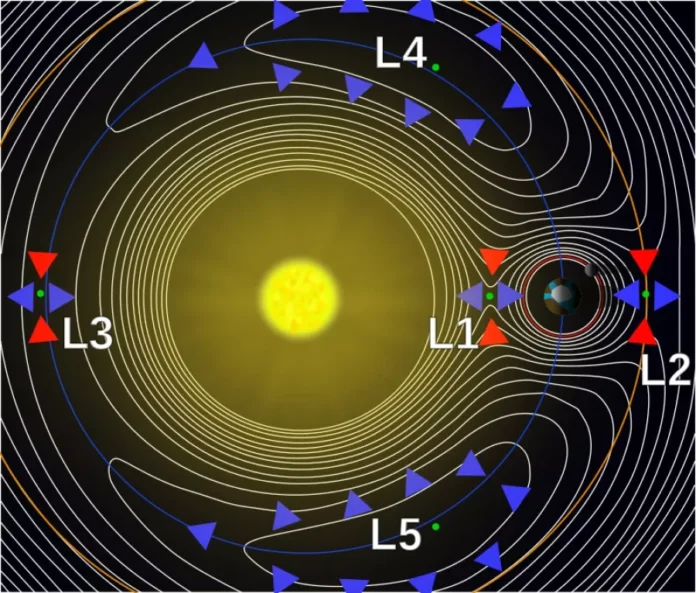
In order for a satellite to orbit a planet, it must be close enough for the planet to exert enough force to keep it in orbit. The minimum distance for a planet to keep a satellite in orbit is called the Hill sphere radius.
The Hill sphere radius is based on the mass of both the larger and smaller objects. The Moon orbiting the Earth is a good example of how the Hill sphere radius works. The Earth orbits the Sun, but the Moon is close enough to the Earth that the Earth’s gravitational pull can capture it. The Moon orbits the Earth, not the Sun, because it is within the radius of Earth’s Hill sphere.
Smaller planets like Mercury have small Hill sphere radii because they cannot exert much gravitational pull. Any potential moons would likely be pulled by the Sun instead.
Many scientists are still looking into whether these planets may have had small moons in the past. During the formation of the Solar System, they may have had moons that were knocked off by collisions with other space objects.
Mars has two moons, Phobos and Deimos. Scientists are still debating whether they are asteroids that passed close to Mars’ Hill sphere radius and were captured by the planet, or whether they formed at the same time as the Solar System. More evidence supports the former theory because Mars is close to the Asteroid Belt.
Jupiter, Saturn, Uranus, and Neptune have larger Hill sphere radii because they are much larger than Earth, Mars, Mercury, and Venus and are farther from the Sun. Their gravitational attraction can capture and hold more natural satellites in orbit. For example, Jupiter has 95 moons, while Saturn has 146.
Moons that formed with their system
Another theory suggests that some moons formed at the same time as their star system.
Photo: The contours depict the effective gravitational potentials of a two-body system (in the figure, the Sun and Earth) and the centrifugal forces in a rotating frame of reference. Hill spheres are regions bounded by circles around the Sun and Earth. In celestial mechanics, Lagrangian points (also libration points; L-points) are equilibrium points for objects of low mass under the gravitational influence of two massive orbiting bodies. NASA / Xander89 / CC BY 3.0
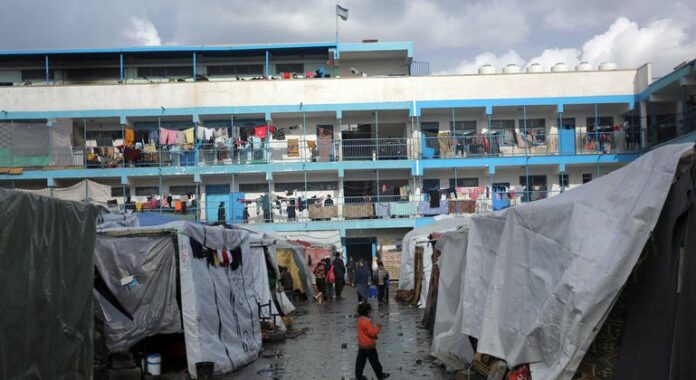
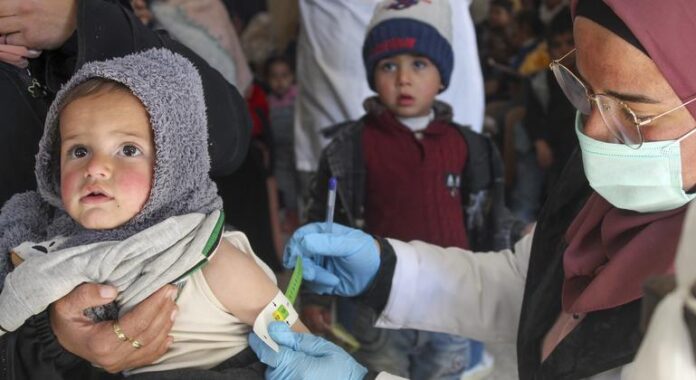
Personnel from the UN Office for the Coordination of Humanitarian Affairs (OCHA) and the UN Mine Action Service (UNMAS) conducted the assessment earlier this week in the Yaffa and Al Somud makeshift sites, home to more than 190 families.
Several people there were reportedly injured by an airstrike on Friday and the team witnessed dozens of tents destroyed at both sites, with many others damaged.
Essential infrastructure, including water, sewage and solar power systems were affected, and three learning spaces were damaged.
Protect civilians at all times
Humanitarian partners provided assistance to affected families, including emergency shelter materials, non-food items as well as food aid, while another partner has mobilized to provide water and sanitation services.
“As hostilities continue across Gaza, we stress again that civilians must be protected at all times, and that essential needs for their survival must be met,” said Mr. Dujarric, speaking during his daily media briefing from New York.
Humanitarian efforts at ‘breaking point’
The development comes as UN Humanitarian Coordinator Tom Fletcher warns that aid efforts in Gaza, which are already struggling, face mounting obstacles.
“The reality is that despite our determination to deliver food, water, and medicine to survivors, our efforts to save lives are at breaking point,” he said in a statement issued on Monday.
He noted that there is no meaningful civil order in the Gaza Strip, and that Israeli forces are unable or unwilling to ensure the safety of humanitarian convoys.
Mr. Fletcher reiterated his call on UN Member States to insist that all civilians, and all humanitarian operations, are protected.
Independent rights expert Reem Alsalem hailed the landmark 9 January decision by the Kentucky court declaring the US Department of Education’s regulations implementing the Title IX legislation as unlawful. The ruling extends nationwide.
Title IX is a 1972 law to combat sex discrimination in education programmes or activities that receive federal funding.
Last April, the Department of Education announced revisions that expand protection to include transgender and non-binary students, among others, on the basis of gender identity and sexual orientation.
‘A pivotal moment”
In the judgement, the court found that the regulations, which redefined the scope of sex discrimination under Title IX to include gender identity, exceeded its statutory authority and violated constitutional protections, Ms. Alsalem noted.
“This is a pivotal moment in safeguarding the rights of women and girls to non-discrimination based on their sex and reasserting the obligations of the United States to protect this fundamental human right,” she said.
She further noted that the ruling clarified that “when Title IX is viewed in its entirety, it is abundantly clear that discrimination on the basis of sex means discrimination on the basis of being male and female.”
Safeguarding girls’ right to education
Ms. Alsalem said that Title IX has historically been the cornerstone for advancing gender equality in the US education system.
She wrote to the Government last December, raising concerns about the human rights implications of the Department of Education’s then-proposed changes.
“By preserving the original intent of Title IX, the Court has restored factual clarity and common sense to the design of policies that affect women and girls, reasserting their rights to access education under conditions of dignity, equality, and safety,” she said.
She urged the US Government to take careful note of the decision and reaffirm its commitment to protecting the rights of women and girls.
Special Rapporteurs are appointed by the UN Human Rights Council to monitor and report on specific country situations or thematic issues.
These experts are not UN staff and are independent of any government or organization. They serve in their individual capacity and do not receive payment for their work.
“I arrived, I have to say, with a heavy heart, given the compounded traumas over decades in both countries, but I see signs of new beginnings,” said Volker Türk – speaking in the Lebanese capital, Beirut.
On Wednesday, he was in Damascus for his first ever visit to Syria where he called for “urgent reconsideration” of sanctions following a constructive meeting with the head of the transitional authorities.
Hopes run high
Despite the immense challenges, he noted a sense of hope for Lebanon’s future. He highlighted the importance of the ongoing ceasefire between Lebanon and Israel, which continues to hold.
“The critically important ceasefire between Lebanon and Israel continues broadly to hold, albeit with worrying reports of continued demolitions by Israeli forces in towns and villages in southern Lebanon,” he remarked.
The recent election of a new President and Prime Minister in Lebanon has ended a two-year political stalemate, opening the door for much-needed reforms.
Time for reform and renewal
“With the election of this new leadership, there is momentum for political stability, economic recovery, and long-overdue implementation of critical reforms to address the multiple socio-economic crises and gaping inequalities facing Lebanon,” the High Commissioner emphasized.
Lebanon’s active civil society has underscored the need for full respect for freedom of expression and association, combating discrimination, improving participation and representation of women, guaranteeing full gender equality, recognizing and including people with disabilities, and ensuring human rights protections for the most marginalized and at risk.
“Respect for human rights requires specific and continuing investment in the rule of law,” he noted.
“I repeat that those responsible for that tragedy must be held to account and offer the support of my office in this regard,” he stated.
Lebanon is currently experiencing one of the worst economic declines in modern history, with severe currency devaluation and triple-digit inflation affecting basic necessities.
According to the World Bank, 44 percent of the population lives below the poverty line, with 2.5 million people in need of food assistance. “There is a need for a renewal of the social contract that rebuilds the social fabric, that restores confidence in the institutions of the State,” the High Commissioner urged.
The recent months of fighting between Israeli forces and Hezbollah militants in the shadow of the Gaza war, have resulted in significant loss of life and displacement. More than 4,000 lives were reportedly lost, including over 1,100 women and children, and over 200 healthcare workers and journalists.
The ceasefire, which began in late November 2024, remains fragile but is holding despite violations.
“My office stands ready to strengthen our human rights work and to accompany the country as it moves forward,” the High Commissioner concluded, emphasizing the need for a durable peace and the safe return of civilians.
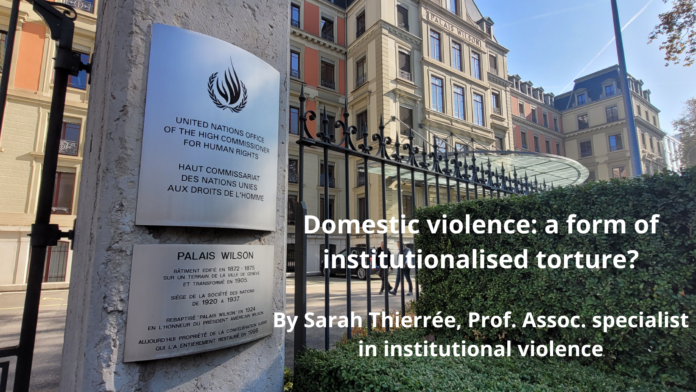
Domestic violence: a form of institutionalised torture?
By Sarah Thierrée,
The socio-judicial treatment of domestic violence in France is a cause for concern. At a time when our country, the self-proclaimed defender of human rights, is struggling to protect children and their protective parents from domestic violence, it is crucial to highlight the serious malfunctioning of our institutions. These practices, which I describe in a file submitted to the UN Committee against Torture as a form of institutionalised torture, expose the victims to a double penalty: that of the violence suffered and that of the procedures that condemn them to injustice and create new traumas.
Alarming figures, a hidden reality
In 2023, the internal security services recorded 271,000 victims of domestic violence, 85% of whom were women. Many of these victims are protective mothers whose voices and those of their children are systematically discredited. Pseudo-scientific concepts such as “parental alienation syndrome” and others, still taught recently in magistrates’ schools, continue to bias judicial decisions. These institutionalised biases expose children to their aggressors under the guise of preserving a so-called “family bond”.
When the system becomes the executioner
The French judicial system is marked by an alarming level of institutional inertia when it comes to domestic violence. For example, nearly 76% of complaints of sexual violence against minors are dismissed, often without a thorough investigation. Protective mothers who seek to denounce abuse (sexual, physical, psychological) are subjected to reversals of accusations, arbitrary placements of their children, and regularly even accusations of manipulation or mental instability.
These practices, although insidious, meet several criteria defined by the United Nations Convention against Torture: severe suffering, perpetrated or condoned by a public authority, and inflicted intentionally or through systemic negligence. For more than 30 years, the UN has been calling France to account for these serious shortcomings. Yet our country remains deaf to repeated criticism, refusing to introduce the reforms needed to put an end to these institutional abuses.
Urgent reforms needed
In the dossier submitted to the Committee Against Torture, I stress the need for a thorough overhaul of socio-judicial practices in France to protect victims of domestic violence. For example, it is imperative to put an end to the use of pseudo-scientific concepts, such as parental alienation , which continue to have an influence on the treatment of victims of domestic violence.
judicial decisions, despite their lack of scientific basis. Judges and child welfare professionals need to be investigated and given an institutional diagnosis, and this is what we are asking the UN Committee against Torture to do.
In addition, standardised assessment protocols must be put in place to ensure a clear distinction parental conflicts acts of violence, thus avoiding inappropriate decisions that expose victims to further trauma. Institutional transparency must become a priority, particularly with regard to the dismissal of complaints, so that victims can understand and challenge decisions that affect them. These reforms aim to restore a balance between protecting the rights of the accused and those of victims, by placing the safety and dignity of children and their protective parents at the heart of judicial priorities.
Another crucial measure is the judicialisation of the socio-judicial players themselves. Abusive practices, biased reports and decisions that actively contribute to the revictimisation of mothers and children must be examined from the point of view of criminal responsibility. These actors, who by their choices tolerate or perpetuate acts that can be described as institutional torture, must be held accountable before the law. This approach is not only a question of justice for the victims, but also a necessary condition for restoring confidence in a deeply dysfunctional system.
An appeal to the international community
The Committee against Torture has the opportunity investigate these issues during France’s the 82nd session of the Committee review of these practices at , and to reiterate its commitment to respect fundamental rights. It is only facing up to this reality and reforming our institutions that we will be able to protect children, support protective mothers and restore confidence in our socio-judicial system. In just a few days, more than a hundred professionals directly involved in this issue have lent their support to the case.