With more than 300 million people estimated to need humanitarian assistance in 2025, the EU has announced a €1.9 billion humanitarian budget for 2025. The aid will broadly go to the Middle East, Ukraine, Africa, Latin America, the Caribbean, and Asia and the Pacific.
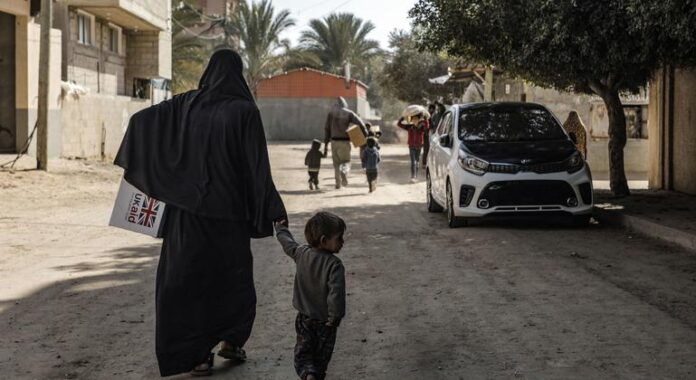
The EU has announced a new €120 million aid package for Gaza as part of its long-standing commitment to support Palestinians in need. The aid package will include food, healthcare, sanitation, and shelter assistance. EU humanitarian aid to Gaza now totals over €450 million since 2023.
In his briefing, UN Special Envoy for Syria Geir Pedersen underscored the delicate nature of the transitional phase, describing it as a moment of “great opportunities and real dangers.”
He urged careful navigation to ensure that decisions taken now lead to long-term stability.
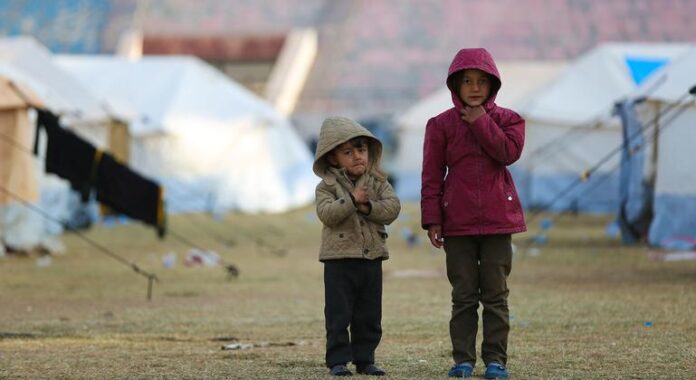
The humanitarian situation remains critical, with nearly 15 million Syrians requiring health services,13 million facing acute food insecurity, and over 620,000 displaced amid winter conditions.
“We must seize the opportunity of this moment,” stressed UN Emergency Relief Coordinator Tom Fletcher, as he outlined urgent priorities for rebuilding Syria.
Mounting humanitarian needs
Mr. Fletcher highlighted three main priorities for humanitarian teams on the ground.
First, restoring the country’s services, shattered by 14 years of conflict, is essential amid widespread food insecurity, crippled health services and as the Tishreen Dam’s damage has restricted water and electricity for over 400,000 people.
Second, he outlined the importance of protecting displaced people as thousands are unable to return to their homes due to lack of infrastructure, services and the threat of unexploded ordnance.
Finally, Mr. Fletcher highlighted the resilience of Syrian women and girls, sharing stories of hope and determination and calling for their inclusion in rebuilding efforts.
Despite progress, the UN relief chief warned that much more is needed, including a comprehensive needs assessment and increased funding for humanitarian operations.
Persistent security challenges
Although law and order have improved in some regions, violence remains a significant concern. Mr. Pedersen reported incidents of unrest in the coastal regions, Homs and Hama.
Armed groups, including the ISIL terrorist network – and over 60 groups with conflicting agendas – also pose ongoing threats to Syria’s territorial integrity.
Key areas outside caretaker control, such as those held by the Syrian Democratic Forces (SDF) and People’s Protection Units (YPG), remain volatile.
Despite a US-brokered ceasefire near Manbij, clashes with Syrian National Army forces persist and Turkey has signalled potential military escalation.
Additionally, Israeli airstrikes and violations of the 1974 Disengagement Agreement over the Golan have further raised concerns about sovereignty.
Sanctions and economic recovery
Laying out the transitional authorities’ case for the first time in New York, Syrian Ambassador Koussay Aldahhak called for the immediate lifting of sanctions put against the past regime, arguing that they obstruct humanitarian and reconstruction efforts.
Ambassador Koussay Aldahhak of Syria addresses the Security Council meeting on the situation in the country.
He urged the UN and Council Members to “respect the will of the Syrian people and its national choices.”
Mr. Pedersen acknowledged the need for economic support, stating that “a smooth end to sanctions, appropriate action on designations too, and major funding” are required for feasible reconstruction.
US Ambassador Dorothy Shea countered that sanctions would not hinder humanitarian assistance and reiterated her country’s support for a “Syrian-led and Syrian-owned political
process.”
A path forward
Mr. Pedersen outlined priorities for a credible and inclusive transition, emphasising the need for broad representation in national dialogue, constitutional reforms, and free and fair elections.
Mr. Fletcher concluded by stressing the importance of a peaceful political transition to reduce humanitarian needs.
Stable peace will aid relief efforts
“We need the peaceful political transition that will help us to reduce humanitarian needs,” he said, urging coordinated global efforts to support Syria during this critical phase.
Mr. Aldahhak explained that the country is currently preparing for a national dialogue conference to establish a transitional government to oversee national processes including the drafting of the constitution and the holding of elections.
He also outlined the de facto authorities’ vision for Syria’s future, as a “positive contributor to the promotion of international peace and security” and expressed their will “to build friendly relations based on mutual respect.”
As Syria rebuilds, the United Nations remains committed to facilitating dialogue, delivering humanitarian aid, and ensuring that the country’s future is guided by its people and supported by a united global effort.
Speaking from Damascus after meeting the leader of the caretaker authorities, Ahmad Al-Sharaa, Mr. Türk said that he had been “assured…of the importance of respect for human rights for all Syrians and all different components of Syrian society”.
Syria’s de facto leader – who spearheaded the lightning overthrow of Bashar Al Assad on 8 December at the head of opposition fighters Hayat Tahrir Al Sham (HTS) – also underscored “the pursuit of healing, trust building and social cohesion, and the reform of institutions”, the High Commissioner said.
Staggering needs
“But the challenges are immense,” he continued, pointing to the “hundreds of thousands of lives” lost, the fact that much of the country lies in ruins”.
Today, nine in 10 Syrians are “mired in poverty, the health system is on its knees and many schools are closed,” Mr. Türk said. “Millions are still displaced both inside and outside the country. The rights to food, health, education and housing are fundamental human rights, and there must be prompt, collective and concerted efforts to guarantee them.”
Calling for “an urgent reconsideration” of ongoing sanctions on Syria “with a view to lifting them”, the UN rights chief said that considering their impact on the lives of the Syrian people was key.
Sednaya horrors
Mr. Türk – whose visit to Syria is a first for any UN High Commissioner for Human Rights – said that he had heard harrowing testimony from numerous victims of torture.
They included some jailed at the notorious Sednaya prison outside Damascus, where his Office documented violations “for years”.
The UN rights chief described prisoners telling him that “early in the morning, as they heard the guards at their door, trembling in fear, they retreated to the rear of the cell, fearing they would be hauled out again to be tortured, or even executed.”
Thousands died in prisons throughout Syria, the High Commissioner explained, as he went on to condemn the “apocalyptic wasteland” of the bombed-out residential neighbourhood of Jobar, in Damascus, which he visited.
Mass killing, destruction
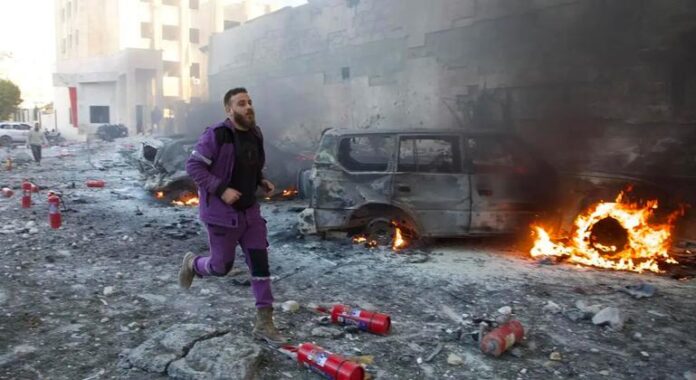
“Not a single building in the area was spared bombardment in wave after wave of attacks,” Mr. Türk said, adding that it was “inconceivable that such mass killings and destruction” had happened.
It “says a lot about the extreme brutality of the tactics used by the former regime”, whose acts “constitute some of the most serious crimes under international humanitarian law.”
‘Real threats’ to Syria remain
Away from the immediate destruction and grief of war, the High Commissioner highlighted that the people of Syria “need every ounce of help they can get to rebuild a country that works for all Syrians”.
The UN human rights office, OHCHR – which has had a dedicated Syria monitoring team since 2013 – “will continue to support inclusive, nationally owned and driven processes”, Mr. Türk said.
He warned of “very real threats” to Syria’s territorial integrity and independence. The country’s sovereignty “must be fully respected and rigorously upheld. The ongoing conflicts and hostilities must end,” the High Commissioner insisted, adding: “This is really a seminal moment for Syria after decades of repression.
“My most fervent hope is for all Syrians to be able to thrive together, regardless of gender, religion or ethnicity and to build a common future.”
The Commission has presented an EU Action Plan to strengthen the cybersecurity of hospitals and healthcare providers. This initiative is a key priority within the first 100 days of the new mandate, aiming to create a safer and more secure environment for patients.
In 2023 alone, EU countries reported 309 significant cybersecurity incidents targeting the healthcare sector – more than any other critical sector. As healthcare providers increasingly use digital health records, the risk of data-related threats continues to rise. Many systems can be affected, including electronic health records, hospital workflow systems, and medical devices. Such threats can compromise patient care and even put lives at risk.
To address these challenges, the EU is working to strengthen the healthcare sector and make it more resilient against cyber threats.The new Action Plan builds on existing legislation, such as the EU-wide legislation on cybersecurity, and extends its scope to include general practices. It focuses on prevention, detection,impactmitigation and deterrence of cyber threats. The Plan also aims to establish a pan-European Cybersecurity Support Centre to provide more tailored guidance to hospitals and healthcare providers. By the end of the year, it will be further refined through a collaborative approach and will be rolled out progressively over the next 2 years.
Digitalisation of the healthcare sector enables better services to patients through innovations, along with many other benefits. The EU remains committed to fostering a healthcare environment where technology empowers patients, enhances care, and supports healthcare professionals.
Leading calls for the international community to “move from words to action” to help the country’s most vulnerable returnees urgently, the UN refugee agency, UNHCR, said that many families have little shelter and few economic prospects.
“In recent weeks, there has been talk in high-level international circles of the need for ‘early recovery’ and ‘rebuilding,’” said Gonzalo Vargas Llosa, UNHCR Representative in Syria, a day after a Security Council meeting charting the way ahead for a peaceful future for all Syrians. “But until we move from words to action, for many returnees…their new life in Syria will unfortunately mean sleeping surrounded by plastic sheeting.”
After 14 years of war – that ended on 8 December after a lightning military takeover in Damascus by forces including Hayat Tahrir Al-Sham (HTS) – and as international aid teams return to the country, the sheer scale of the destruction across Syria’s towns and cities has become increasingly clear.
In addition to the refugee returnees, nearly 500,000 internally displaced people uprooted by the war made their way back to northwest Syria by the end of last year, according to the UN aid coordination office, OCHA.
Before the fall of the Assad regime, it estimated that 7.4 million people had been internally displaced inside Syria, with 2.3 million residing in camps and a total of 16.7 million people relying on humanitarian assistance.
Following the Security Council discussions, the foreign ministers of Italy, France, Germany, the United Kingdom and the United States, in addition to the European Union’s High Representative for Foreign Affairs and Security Policy, Kaja Kallas, prepared to meet in Rome on Thursday to discuss the situation in Syria.
Winter shelter priority
Echoing the UNHCR alert, the UN migration agency, IOM, pointed to massive winterization needs across Syria for people uprooted or returning to the country, in a call for $73.2 million to assist more than 1.1 million people over the next six months. This represents a substantial increase from the previous $30 million appeal issued in December 2024.
“This effort aims to provide immediate assistance to the most at-risk and vulnerable communities, including displaced and returning groups, across Syria,” IOM said in a statement. “The funds will be used to provide essential relief items and cash, shelter and protection assistance, water, sanitation, hygiene, and health services, as well as early recovery support to people on the move.”
Since December 2024, IOM’s operations inside Syria have reached more than 80,000 people with winter relief items, 170,000 with emergency water and sanitation (WASH) services, and 15,000 with multipurpose cash assistance.
Challenge to restore basic services
In an update later on Thursday, OCHA noted that restoring water and electricity supply, among other basic services, remains challenging across Syria due to insecurity and infrastructure damage.
The agency said the Tishreen Dam in Aleppo is still non-operational since it was damaged in conflict a month ago, and clashes continue in the area, cutting off regular water and electricity access for more than 410,000 people in the cities of Menbij and Kobani.
Ongoing hostilities in parts of Aleppo governorate are reportedly causing civilian casualties, as well as damage to infrastructure and disruptions to aid operations.
The UN and partners continue to support the health response in Syria – including the delivery of medicine, trauma kits and vaccines – but needs remain immense.
Humanitarians report that cases of influenza-like illness are on the rise throughout the country. They also warn that recently released detainees are facing heightened risks of pneumonia, tuberculosis and malnutrition due to pre-existing poor health conditions.
OCHA said many health and nutrition facilities in northwest Syria remain closed, with many having been severely damaged due to shelling in recent months, while others have run out of funding.
Meanwhile, medical mobile units in the northeast are facing staffing shortages due to the lack of health workers, and pharmaceuticals and medical supplies are urgently needed.
“The charges against Ms. Pakhshan Azizi do not meet the threshold of ‘most serious crimes’ required by international law for the death penalty,” the Human Rights Council-appointed experts stated. “Her death sentence constitutes a serious violation of international human rights law.”
Solitary confinement
Ms. Azizi was arrested in Tehran on 4 August 2023, by Iranian intelligence services and held in solitary confinement in the notorious Evin Prison for five months.
On 23 July 2024, the Tehran Revolutionary Court sentenced her to death for “armed rebellion against the state” and “membership of opposition groups,” along with a four-year prison term for alleged membership of in the Kurdistan Free Life Party (PJAK).
The Supreme Court upheld the death sentence last week.
“Ms. Azizi’s arrest and sentencing appear to be solely related to her legitimate work as a social worker, including her support for refugees in Iraq and Syria,” the independent experts noted.
Reports indicate that Ms. Azizi was subjected to severe psychological and physical torture in solitary confinement to extract a confession. She was also denied access to family visits and legal representation of her choice.
Family members detained
Several members of Azizi’s family were temporarily detained and have faced national security charges, presumably to pressure her to confess, the experts noted.
“The use of torture to extract confessions and the denial of fair trial rights render the death sentence against Ms. Azizi arbitrary in nature,” the experts said.
The experts highlighted that the number of executions in Iran surpassed 900 in 2024, with an increase in the number of women put to death.
They have called for Iran to stop executions that violate international law and fundamental human rights.
End targeting of Kurdish women activists
“We are deeply concerned by the specific targeting of Kurdish women activists with politically motivated charges,” they said.
“Ms. Azizi’s prosecution reflects the heightened persecution that minority women activists face in Iran and the continued intention to punish and silence them by creating a climate of fear.”
The experts urged Iranian authorities to revoke Ms. Azizi’s death sentence, investigate allegations of torture and denial of fair trial rights, and end the harassment and targeting of women activists in Iran.
Special Rapporteurs and Working Groups who report on and monitor allegations of rights abuses are not UN staff and are independent of any government or organization. They serve in their individual capacity and receive no salary.
Tragically in the last month alone, eight newborns have died of hypothermia and 74 children have already died amid the brutal conditions of winter in 2025.
“We enter this New Year carrying the same horrors as the last – there’s been no progress and no solace. Children are now freezing to death,” Louise Wateridge from the UN agency for Palestinian refugees, UNRWA, told UN News.
Meanwhile, hostilities continue with relentless operations by the Israel Defense Forces (IDF) causing mass casualties and widespread destruction.
Simultaneously, rocket fire by Palestinian armed groups towards Israel also continues, endangering civilians in the country.
“The Secretary-General again strongly condemns the widespread killing of – and injury to – civilians in this conflict,” said his Spokesperson Stéphane Dujarric in a briefing on Thursday.
Hunger crisis grinds on
UN humanitarian partners have reported that the hunger crisis across the Gaza Strip continues to worsen, amid critical supply shortages, severe access restrictions and violent armed looting.
In Central and Southern Gaza, the Office for the Coordination of Humanitarian Affairs (OCHA) disclosed that as of Sunday, UN humanitarian partners had exhausted all supplies in their warehouses.
This comes at a time when Israeli authorities continue to deny most requests to bring food assistance from the Erez West crossing to areas south of Wadi Gaza.
About 120,000 metric tonnes of food assistance, which is enough to provide rations for the entire population for more than three months, remains stranded outside of the Strip.
UN partners have warned that if additional supplies are not received, the distribution of food parcels to hungry families will remain extremely limited.
“More than 50 community kitchens providing over 200,000 meals a day to people in central and southern Gaza would also be at risk of shutting down in the coming days,” reported Mr. Dujarric.
Impossible choices
According to the World Food Programme (WFP), as of Monday, only five of 20 bakeries supported by the agency are still operational across the Gaza Strip – all of them within Gaza governorate.
In order to be able to stay up and running, these bakeries rely on continued fuel deliveries by partners from southern Gaza.
However, humanitarian partners have now warned that the lack of fuel to power generators is crippling Gaza’s health system, putting the lives of patients at risk and leaving aid workers with impossible choices to make.
North Gaza update
The conditions are particularly alarming in besieged North Gaza where the movement of humanitarian personnel is heavily restricted.
Ongoing attacks and hostilities in the area have severely disrupted healthcare services for survivors who remain there.
Access to Al Awda Hospital in Jabalya – the only hospital in North Gaza still partially functioning – is extremely limited.
OCHA reports that Israeli authorities continue to deny UN-led efforts, including the most recent attempt on Wednesday to reach the region.
Across the Strip, the Israeli authorities facilitated only five missions out of 15, with four impeded, three denied and another three canceled due to security or logistical challenges.
“In Gaza, parents and children remain missing beneath rubble, separated or detained – their fates unanswered. Hope is silenced, and the brutal war rages on,” said Ms. Wateridge.
The path forward
Despite ongoing difficulties, the UN and its partners are working towards reaching people throughout the region with critical support.
Across Gaza, between 22 December and 8 January, some 560,000 people received primary and secondary healthcare services.
The Secretary-General called on all parties to respect international humanitarian law. “Civilians must be protected and respected at all times and their essential needs must be met,” said Mr. Dujarric on his behalf.
“There must be an immediate ceasefire and the immediate and unconditional release of all hostages being held in Gaza,” he firmly concluded.
For many workers, defending human rights is not just a job, but a calling. As he noted, many “work out of a deep sense of service to others, and a desire to make a meaningful impact.”
From conflict zones to post-war societies, they provide crucial support to detainees and victims of torture, deliver emergency relief, document violations and expose the root causes of conflict.
“Human rights defenders are key to conflict resolution. They are the messengers of dignity, justice and peace,” said Mr. Türk.
However, despite their invaluable work, human rights defenders face “unacceptably high” threats, with some attacks amounting to war crimes.
Mounting risks
For journalists and humanitarian workers, being killed, kidnapped, harassed or detained has become an increasingly likely reality.
Women are particularly vulnerable, often targeted by sexual violence, online threats and risks to their family.
Mr. Türk stressed the importance of ensuring defenders’ safety, arguing that it is both a legal imperative and a vital step toward achieving justice and peace.
A global pushback
Mr. Türk cited the criminalisation of dissent, the forceful suppression of peaceful protests and restrictions on non-governmental organisations as alarming developments.
These events often force human rights defenders to operate in exile, exposing them to new forms of persecution and repression, including online surveillance.
“The full impact of digital technologies on the work and safety of human rights defenders is not yet known,” he warned, underlining the urgency of addressing these modern threats.
Concrete action needed
Mr. Türk urged governments to take decisive action, including establishing well-resourced national protection systems and supporting civil society networks that provide cross-border protection. He also noted the importance of reacting swiftly to emerging threats.
“The risks of this work must not be shouldered by the defenders alone,” he said, emphasising the need to support NGOs at risk and to push back against the labelling of defenders as terrorists, foreign agents or traitors.
“We must do everything we can to make sure [defenders] can operate safely wherever they are,” he concluded.
DISCLAIMER: Information and opinions reproduced in the articles are the ones of those stating them and it is their own responsibility. Publication in The European Times does not automatically means endorsement of the view, but the right to express it.
DISCLAIMER TRANSLATIONS: All articles in this site are published in English. The translated versions are done through an automated process known as neural translations. If in doubt, always refer to the original article. Thank you for understanding.
Henry Rodgers teaches English language at “La Sapienza” University, Rome and has published extensively on the discrimination issue.
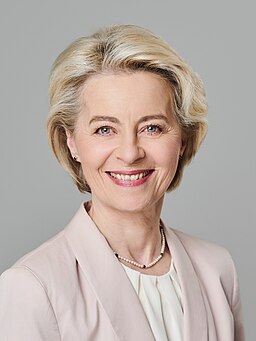
The Asso. Cel. L open letter of 14 January 2025 to President of the European Commission, Ursula von der Leyen, is the most recent of many representations to help end the decades-long discrimination against foreign-language lecturers (Lettori) in Italian universities. It is a discrimination which persists in defiance of 4 clear-cut sentences of the Court of Justice of the European Union (CJEU), the first of which was handed down in1989.
My own active involvement in Lettori affairs dates back to 1996 and to my lobbying of Irish politicians to ask the Commission to open infringement proceedings against Italy for non-implementation of the Allué case law of the CJEU. Pilar Allué, a Spanish national, had won the first of her two victories before the Court in 1989. A misreading of that ruling by Italy caused her to have recourse to the Court again. In 1993 the Court ruled in her favour for the second time. Essentially the breach of the Treaty for which the Commission prosecuted Italy in a subsequent infringement case(C-212/99), and a follow-on enforcement case(C-119/04), and for which the Commission will again prosecute Italy in a case pending before the Court(C-519/23), equates to non-implementation of the 1993 Allué verdict.
As part of my lobbying of Irish politicians, I had been in contact from Rome with the Joint Committee on European Affairs of Dáil Éireann, the Irish parliament. Back in November 1996, I received an invitation from the Clerk of the Committee to come to Dublin and testify.
The Clerk accommodated me in an anteroom, where I awaited my turn to testify. In the anteroom I could follow the proceedings of the Committee on close-circuit television. At that moment I had a strong attack of stage fright. Among the Committee members in the chamber that day were some very prominent figures in Irish politics. I reflected that I had been watching these figures on television all my life and that in a few minutes time I would have to leave the anteroom and speak before them.
Fortunately, the panic passed. I must have done reasonably well, as the Committee unanimously resolved to write to the Commissioner for Social Affairs, calling on him to open infringement proceedings against Italy on the grounds of the discriminatory treatment of the Lettori, about which I had testified.
One story of my subsequent dealings with the Joint Committee is revealing of Italy’s reluctance to debate the Lettori question in the public domain. Then Chairman of the Committee, Bernard Durkin TD, was known as a very fair-minded, plain-speaking politician. He gruffly informed me that the Committee had heard my side, the Lettori side, of the story. Now he planned to hear the Italian side.
To this end he issued an invitation to the Italian Ambassador to Ireland to testify. I was to be invited also, with a right to respond to the Ambassador’s testimony. I looked forward to the occasion, but it never materialized. The Ambassador excused himself from appearing before the Joint Committee on the grounds that he had little knowledge of EU law.
Neither, at that point, had I much knowledge of EU law, and I was feeling the handicap. In Hodges Figgis, a bookshop immortalized in James Joyce’s Ulysses, there were many textbooks on EU law on the shelves. With no education in law to speak of, I was ill-equipped to evaluate their respective merits.
What warmed me to EU Law: Text, Cases, and Materials, by Prof. Paul Craig and Prof. Grainne De Burca, was Prof. De Burca’s dedication of the textbook: “Do mo mháthair agus i gcuimhne m’athar”. This is Gaelic, my grandmother’s first language. It was purely on the basis of my love for the language that I purchased the book.
I set myself to the study of EU law: Text, Cases, and Materials. I had no tests, no examinations to measure my progress. So, it was very gratifying when the co-authors, my teachers, cited an article I had written for the Irish Law Society Gazette on discrimination against Lettori in the infringement chapter of the textbook. The editor, with an evident liking for alliteration, had entitled the piece Lettori of the Law.
Lettori of the Law is an attempt at a legal history of the Lettori cases from 1989 to February 2022, the date of publication of the piece. The Court first found for Allué on 30 May 1989 in her reference for a preliminary ruling case against her employer, Università Degli Studi di Venezia. Her victory should have ended the discrimination against Lettori. Instead, it serves a marker, a starting point from which to measure the persistence and duration of the discrimination against our category. Year-by-year, with a sort of gallows humour, some of us gather to commemorate 30 May 1989, Pilar Allué Day, and the accretion of the discrimination against us.
As Lettori of the Law can be consulted online, there is no need to go into all of its detail here. Allué has long retired from her teaching post at Università Degli Studi di Venezia. She retired without ever receiving the compensation for discrimination to which her landmark victories before the CJEU should have entitled her. Her cases continue to feature in textbooks of EU law and, of course, in the Commission infringement cases against Italy for non-implementation of her jurisprudence.
One particular case in the Allué line of litigation to which I draw attention in my letter to President von der Leyen is the ruling in the Commission’s enforcement case against Italy: Case C-119/04. Of all the cases in the line of litigation, this case, tried before a Grand Chamber of 13 judges, was the one that attracted the most public attention. It is easy to understand why. The Commission had asked for the imposition of daily fines of €309, 750 on Italy for its discriminatory treatment of the Lettori. By the deadline specified in the reasoned opinion, Italy had not complied with the ruling in earlier infringement case, C-219/02.
Italy enacted a last-minute law under which provision was made for the payment of settlements to Lettori for the discriminatory treatment they had suffered. The Court’s acceptance of its conformity to EU law was somewhat lukewarm. In the wording used in the official English translation of the sentence, the judges observe that the law “cannot … be regarded as having provided an incorrect legal framework”. The language of the case was of course Italian. As one legal wit caustically put it: “in infringement cases the member states enjoy the privilege of being prosecuted in their own languages.”
As the last-minute Italian law was ruled to be compliant with EU law, just one outstanding question remained to be addressed. This was the question of whether the settlements provided for in the last-minute law had, in fact, been correctly made. This issue is taken up in paragraphs 43 and 45 of the 2006 ruling.
As I wrote in my letter to President von der Leyen, “over 18 years later, paragraphs 43 and 45 of that ruling still rankle with the Lettori and make for difficult reading.” Italy maintained that the correct settlements had been made. In paragraphs 43 and 45 of their ruling, the 13 judges of the Grand Chamber pointedly noted that the Commission depositions did not contain any information from the Lettori to contest this and hence declined to impose the requested daily fines.
These paragraphs highlight the grave injustice to complainants which can result from the confidentiality requirement of infringement proceeding. Had the Commission checked with the Lettori, we could easily have refuted Italy’s claim that the correct settlements had been made. But the confidentiality requirement precluded the Commission from revealing Italy’s evidence to us. I underline the moral in my letter to President von der Leyen: “Tragically, the rules of procedure in infringement cases prevailed over the justice the same proceedings are supposed to deliver.”
That the Commission went on to open further infringement proceedings against Italy is proof that it accepts that the correct settlements due to the Lettori under EU law had never been made. But this could easily have been proven in Case C-119/04 had the Commission consulted on the point with the Lettori and included their counterevidence in the depositions. Had the daily fines been imposed in 2006, the discrimination would have very soon ended.
Since the ruling in Case C-119/04, Italy has introduced 4 pieces of legislation to purportedly end the discrimination against Lettori. They are lengthy, of byzantine complexity, often inconsistent. The most troubling of them, the one with the most worrying implications for European citizenry, is the Gelmini Law of 2010, a retrospective law introduced to “authentically” interpret the Italian depositions in Case C-119/04 and in the process quash the scope for rulings favourable to Lettori. which the local Italian courts had been handing down in the immediate wake of that CJEU ruling. I deal with the Gelmini Law in great detail in my letter to President von der Leyen.
One of the most popular posts on the web site of Asso.CEL.L, an association I co-founded, is Harry Houdini and the Italian Lettori. The post is most probably popular because of the fact that Italy to date has shown an almost Houdini-like ability to escape the supposedly binding case law of the CJEU. This discourages. But there is a positive side to the analogy also.
E.L. Doctorow, in his novel Ragtime describes Harry Houdini as the last of the great mother lovers in history. So, it surprised people who knew him that Houdini did not mourn when his beloved mother died. There was a reason. With his supreme confidence in his own great gifts, his ability to escape any physical or spatial restriction, Houdini thought he could cross the line that divides this world from the next and get to his mother.
Along the way Houdini, like the Lettori, became a campaigner. And a very successful one too! He testified before the United States Congress and was influential in getting legislation passed curtailing the activities of fortune tellers, spiritualists, holders of seances etc. He had in vain enlisted their help in his attempt to get to his mother. Then he discovered they were frauds and wanted to expose them as such.
These then are some of the stories with which we try to hearten ourselves and find spirit to continue. As I mention in the conclusion of my letter, President von der Leyen is the Ultimate Guardian of the Treaties. We hope that in this role she will intervene to ensure that justice is finally done in the Lettori case.