Wednesday, September 30, 2026
Home Blog Page 606

UN Commission notes renewed sense of optimism in Syria during first-ever visit

0
UN Commission notes renewed sense of optimism in Syria during first-ever visit

Commissioner Hanny Megally led the team, which met with officials, including in the Ministries of Justice and Foreign Affairs.

Discussions covered justice for victims and families, the protection of mass graves and evidence, and continued engagement with the Commission, which was established by the UN Human Rights Council in August 2011.

Willingness to engage

Mr. Megally welcomed the willingness of the new authorities to continue engaging with the Commission on future visits.

This marks a significant shift as the former government had denied the Commission access since the start of its mandate.

“We commend the new authorities for improving the protection of mass graves and evidence in detention centres, and encourage them to pursue these efforts further, also by utilizing relevant Syrian civil society organizations and international actors,” he said.

Accountability for abuses

The Commission visited Damascus and surrounding areas, including detention centres that have been a focus of its investigations, as well as mass grave sites.

“Standing in tiny, windowless cells, still filled with stench and marked by unimaginable suffering, was a stark reminder of the harrowing accounts we have documented over nearly 14 years of investigations,” said Mr. Megally.

“These abuses must never be repeated again and those responsible must be held accountable.”

Renewed sense of optimism

In meetings with Syrians, including those returning after years of exile, Mr. Megally noted a renewed sense of optimism and eagerness to participate in a new Syria built on respecting human rights.

The Commission was informed that barriers to civil society engagement, such as the registration of organizations, have eased and it looks forward to the expansion of civic space, which is much needed.

Moreover, discussions with civil society and humanitarian organisations underscored the urgent need for international support to ensure a successful transition. 

In this regard, Mr. Megally emphasized the importance of facilitating efforts toward rebuilding, including the suspension of sectoral sanctions imposed on the former authorities.

Relief and hope

“There is a clear sense of relief among Syrians. After decades of oppressive rule, fear has been lifted, and a new sense of freedom is palpable,” he said, noting that people spoke about holding their heads high for the first time in decades. 

“As someone who investigated massacres in Syria in the 1980’s, I deeply understand how long Syrians have waited for this moment,” he continued.

“Though the time ahead is filled with challenges, we are hopeful that Syrians will come together to build the country to which they have always aspired.”

About the Commission

The Independent International Commission of Inquiry on the Syrian Arab Republic was established to investigate all alleged violations of international human rights law in the country since March 2011, when conflict erupted following a brutal crackdown on pro-democracy protests.

It consists of three Commissioners who are not UN staff and do not receive payment for their work. 

Source link

US: Rights experts urge Senate to reject bill sanctioning the International Criminal Court

0
US: Rights experts urge Senate to reject bill sanctioning the International Criminal Court

The ICC issued arrest warrants in November for Israeli Prime Minister Benjamin Netanyahu and former defence minister Yoav Gallant for alleged war crimes and crimes against humanity in Gaza.

Go here to read our analysis of the decision and the likely next steps, and here for our ICC explainer. 

Asked by reporters at the regular noon briefing if the UN chief had a view on the Congressional bill, Spokesperson Stéphane Dujarric said that although he would not comment on individual laws, “we do have a principled position…And that is, while it is independent from the Secretariat, the Secretary-General has great respect for the Court and for the work of the International Criminal Court, which is in itself a very important pillar of international justice.”

The experts – Margaret Satterthwaite, Special Rapporteur on the independence of judges and lawyers; Francesca Albanese, Special Rapporteur on the situation of human rights in the Occupied Palestinian Territory, and George Katrougalos, Independent Expert on the promotion of a democratic and equitable international order – outlined their concerns in a statement.

A ‘shocking’ move

They are dismayed by the passage of an Act in the US House of Representatives on Thursday which sanctions the ICC for its decision. The Court also issued an arrest warrant for a former Hamas commander alongside the others.

“It is shocking to see a country that considers itself a champion of the rule of law trying to stymie the actions of an independent and impartial tribunal set up by the international community, to thwart accountability,” the experts said.

“Threats against the ICC promote a culture of impunity. They make a mockery of the decades-long quest to place law above force and atrocity,” they warned.

The experts have written to the US authorities about their concerns.

​ICC promotes accountability 

The ICC was established under a 1998 treaty known as the Rome Statute. The US is not a party to the statute, along with dozens of other nations, but 125 countries are members of the Court.

It has the mandate to investigate and prosecute individuals for the grave international crimes of genocide, war crimes, and crimes against humanity. It is based in the Hague, in the Netherlands.

The experts recalled that the ICC is the legacy of the Nuremberg trials which brought Nazi leaders to account ​and the commitment ​to never allow ​heinous ​crimes, such as those committed during the Second World War, to go ​​unpunished. 

“The tireless work of brave legal professionals at the ICC is the main driver for accountability. The work of its prosecutors becomes the foundation upon which our efforts to uphold the integrity of the system of international law is resting,” they said.

ICC Prosecutor Karim Khan visits the landfill site in Tarhunah, Libya, where over 250 have been identified across a number of mass graves. (file)

Respect for legal professionals

They called upon all State Parties to the ICC, and all UN Member States in General, to observe and respect international standards as it relates to legal professionals working towards accountability for the most grave international crimes.

“International standards provide that lawyers and justice personnel should be able to perform all of their professional functions without intimidation, hindrance, harassment or improper interference; and should not suffer, or be threatened with, prosecution or administrative, economic or other sanctions ​​for any action taken in accordance with recognised professional duties, standards and ethics,” they explained.

‘A blind spot for justice’

They said the bill, titled the ‘Illegitimate Court Counteraction Act’, would take effect 60 days after enactment.

It would sanction any individual working to investigate, arrest, detain or prosecute American citizens or an official from an allied US country, including Israel. Any US funds designated for the ICC would also be rescinded, and any future money for the Court would be prohibited. 

The experts said imposing sanctions on justice personnel for fulfilling their professional responsibilities is “a blatant violation of human rights” that strikes at the core of judicial independence and the rule of law.

“The passage of a bill that creates a blind spot for justice regarding certain countries not only legalises double standards and impunity but irreparably undermines the spirit of universality that the international justice system is built upon,” they said. 

“Such actions erode public trust in the impartiality and integrity of justice and set a dangerous precedent, politicising judicial functions and weakening the global commitment to accountability and fairness,” they added. 

Uphold judicial independence

They warned that if carried out, the sanctions would appear to amount to offences against the administration of justice under Article 70 of the Rome Statute, which punishes efforts to impede or intimidate an official of the Court or to retaliate against them on account of their official duties.  

“We urge US lawmakers to uphold the rule of law and the independence of judges and lawyers, and we call on States to respect the Court’s independence as a judicial institution and protect the independence and impartiality of those who work within the Court,” they said.

About UN experts

Special Rapporteurs and Independent Experts receive their mandates from the UN Human Rights Council, which is based in Geneva.

They work on a voluntary basis, are not UN staff and do not receive a salary for their work.

The experts are independent of any government or organisation and serve in their individual capacity. 

Source link

Syria: UN health agency launches $56.4 million appeal to meet critical needs

0
Syria: UN health agency launches $56.4 million appeal to meet critical needs

In addition, the developments since late November, culminating with the overthrow of the Assad regime added new dimensions to the crisis, including population displacements as well as return of Syrian refugees from neighbouring countries.

Since November 2024, over 882,000 Syrians have been displaced amid surging violence, further straining the country’s fragile healthcare system. Attacks on health facilities also escalated, with 37 incidents reported in the past month, according to WHO.  

Over half of Syria’s hospitals are now non-functional, and 141 health facilities in northern Aleppo and Idlib face imminent closure due to funding shortages.

Healthcare under unprecedented strain

“The health infrastructure in Syria is severely strained, more than ever,” said Christina Bethke, acting WHO Representative for the country.

“Our teams are currently providing care through mobile clinics, restoring immunization services and integrating mental health support into health facilities, especially for those affected by trauma. This appeal is about safeguarding health and dignity while offering Syrians hope for a safer future.”

Fully funded, WHO’s six-month strategy aims to further strengthen trauma care, deploy ambulances, restore maternal and child health services, enhance disease surveillance, and enable timely patient referrals.

The agency also aims to bolster health system coordination through its hub in Gaziantep, Türkiye, which coordinates assistance to about five million Syrians, including those in hard-to-reach areas.

UNHCR highlights refugee challenges

Meanwhile, the Office of the UN High Commissioner for Refugees (UNHCR) reported significant challenges for displaced populations and returning refugees, particularly for vulnerable groups such as persons with disabilities, women and children.

Those returning from neighbouring countries face severe hardships, with destroyed homes forcing them to live in tents, with extended family members or pay exorbitant rental fees.

Unexploded ordnance (UXO) particularly in agricultural land or homes near former frontline areas pose significant risks. Returnees also cited the need for legal assistance, psychosocial support and school rehabilitation.

In response, UNHCR partners in Aleppo, Hassakeh, Ar-Raqqa and rural Tartous have resumed protection activities, including programmes to keep children engaged, livelihood grants, relief distribution, prevention of sexual violence, and awareness sessions on UXOs and other harmful objects.

Source link

It’s not censorship to stop hateful online content, insists UN rights chief

0
It’s not censorship to stop hateful online content, insists UN rights chief

“Allowing hate speech and harmful content online has real world consequences. Regulating this content is not censorship,” Volker Türk wrote on X.

In a longer LinkedIn post on the same theme, Mr. Türk maintained that labelling efforts to create safe online spaces as “censorship…ignore[s] the fact that unregulated space means some people are silenced – in particular those whose voices are often marginalized. At the same time, allowing hatred online limits free expression and may result in real world harms.”

Meta chief Mark Zuckerberg announced last Tuesday that the company would cease its fact-checking programme in the United States, stating that fact-checkers ran the risk of appearing politically biased, with self-regulation resulting in too much censorship. He called for a return to freer speech on Meta’s platforms, adding that user’s trust had been eroded.

The International Fact-Checking Network (IFCN) has reportedly rejected Mr. Zuckerberg’s “false” argument and warned it could cause harm.

Digital potential

Mr. Türk highlighted that social media platforms have a tremendous ability to shape society positively by connecting people. But they can also fuel conflict, incite hate and threaten people’s safety.

“At its best, social media is a place where people with divergent views can exchange, if not always agree,” he said.

The UN human rights chief noted that he would continue to call for “accountability and governance in the digital space, in line with human rights. This safeguards public discourse, builds trust, and protects the dignity of all.”

When asked about the impact of Meta’s recent decisions on the social media policy of the United Nations, a UN spokesperson in Geneva emphasized that the global organization continually monitors and evaluates the online space.

“It remains crucial for us to be present with fact-based information,” said Michele Zaccheo, Chief of TV, Radio and Webcast. He added that the UN remained committed to providing evidence-based information on social media platforms.

The World Health Organization (WHO) also reaffirmed its commitment to providing quality, science-based health information, maintaining a presence across various online platforms.

In response to the growing crisis fueled by digital misinformation, the UN Department of Global Communications (DCG) has been actively working to combat false narratives.

This includes developing a code of conduct for information integrity, known as the UN Global Principles for Information Integrity.

Source link

New EU rules ensure innovative health technologies for all patients

0
New EU rules ensure innovative health technologies for all patients

On 12 January, new rules will come into force that will ensure that innovative and effective health technologies are available to patients across the EU. Under the new rules, national authorities can make more timely and informed decisions on the pricing and reimbursement of health technologies.

Source link

Strasbourg says what Athens denied: Greece’s pushbacks were policy

0
Strasbourg says what Athens denied: Greece’s pushbacks were policy
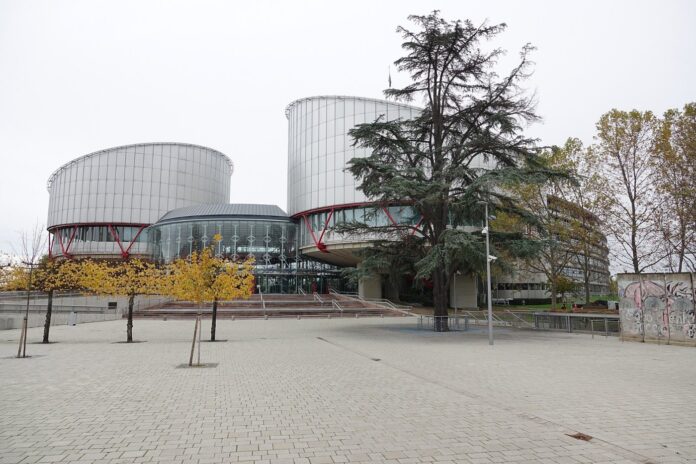
The European Court of Human Rights in Strasbourg. Photo: Wikimedia Commons (CC BY-SA) Wikimedia Commons (CC BY-SA)

STRASBOURG — For years, Greece answered every account of people being forced back over its borders the same way: it does not happen. On Tuesday, the European Court of Human Rights answered back. In A.R.E. v. Greece, the Court found that a Turkish woman who fled to Greece in 2019 was detained without legal basis, stripped of her phone, shoes and money, and put back across the Evros river into the country she had escaped — without anyone ever examining her asylum claim.

The judges found violations of Article 3 of the European Convention, which prohibits inhuman or degrading treatment, of Article 5 on liberty, and of Article 13 on the right to an effective remedy. Greece was ordered to pay €20,000 in damages. But the sentence that will outlast the money is this one: the Court accepted, on the strength of a large and concordant body of reports, that Greek authorities were running a systematic practice of pushbacks at the country’s land and sea borders with Turkey.

The woman at the centre of the case had reasons any asylum authority should have heard. She had spent 28 months in a Turkish prison over alleged links to the movement Ankara blames for the 2016 coup attempt, and was appealing a sentence of six years and three months when she crossed the Evros. Greece argued she had never been on its territory at all. The Court examined the evidence and concluded her account was established beyond reasonable doubt.

The same day brought a colder lesson. In a parallel case, G.R.J. v. Greece, the judges agreed the systematic practice existed but declared the application inadmissible: the applicant, an unaccompanied Afghan minor who said Greek officers had taken him from a camp on Samos and left him adrift on a raft in the Aegean, could not provide the prima facie proof the Court required. One ruling opened a door; the other showed how narrow it is. Victims of secret state action rarely leave with their phones and their files in order — which is, of course, the point of doing it in secret.

Both cases came from a bundle of 32 proceedings filed between December 2020 and August 2021, so Tuesday’s judgments read less like an ending than like a first page. The Greek Council for Refugees, which represented A.R.E., called the verdict a landmark and a vindication for thousands of people who have reported being pushed back at the Greek-Turkish border. Athens has consistently denied the practice and did so again before the Court.

What changes now is harder to say. A judgment cannot patrol the Evros at night. But a government that has spent years saying ‘there is no such practice’ must now reckon with a court record that says there is — unanimously, and in print.

Indian Ocean tsunami anniversary: A call to safeguard future generations

0
Indian Ocean tsunami anniversary: A call to safeguard future generations

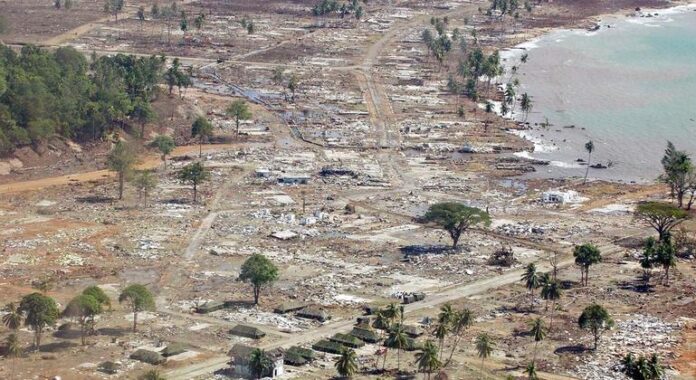
On Boxing Day – 26 December 2004, a 9.1-magnitude earthquake struck off the coast of Indonesia, unleashing a massive tsunami that swept across the Indian Ocean.

Waves as high as 51 meters (167 feet) inundated communities in Aceh, Indonesia, with flooding extending up to five kilometres (three miles) inland.

The devastation spread across Thailand, Sri Lanka, Maldives and India, with tsunami waves travelling at speeds of 800 kilometres per hour (500 miles per hour). The impacts extended to Somalia and Tanzania, and waves reached as far afield as Mexico, Chile and even the Arctic.

In addition to the lives lost, more than 1.7 million people were displaced, and the economic toll reached an estimated $10 billion. Children bore a particularly heavy toll, with thousands killed or orphaned.

A wake-up call for humanity

Philémon Yang, President of the UN General Assembly, described the tsunami as “the first global disaster of the 21st century and one of the most devastating in recent history.”

He urged nations to reaffirm their resolve to protect future generations and integrate disaster preparedness and resilience into sustainable development strategies.

Kamal Kishore, UN Special Representative for Disaster Risk Reduction, called the tsunami a “wake-up call for humanity”.

“It really showed us how such low-frequency, high-impact hazards, can have impacts that will ripple across the entire global system and across multiple geographies,” he said.

Progress through global collaboration

The tragedy also catalysed unprecedented global collaboration.

“Following the Indian Ocean tsunami in 2004, it was evident that transboundary problems require solutions that reach across borders,” emphasised Armida Salsiah Alisjahbana, the Executive Secretary of the UN Economic and Social Commission for Asia and the Pacific (ESCAP).

In the two decades since the tragedy, working together the international community has made significant strides in disaster preparedness.

In 2005, nations convened under the Intergovernmental Oceanographic Commission of UNESCO (IOC-UNESCO) to establish the Indian Ocean Tsunami Warning and Mitigation System (IOTWMS). Today, 27 national tsunami warning centers can issue alerts within minutes of seismic events.

Compared to just 25 per cent in 2004, over 75 per cent of coastal communities in high-risk areas now have access to tsunami early warning information, according to the UN Economic and Social Commission for Asia and the Pacific (ESCAP).

Furthermore, UN initiatives like the Tsunami Ready Programme and the Tsunami Project continue to empower local leaders and communities with life-saving knowledge and resources. Similarly, the Multi-Donor Trust Fund for Tsunami, Disaster and Climate Preparedness is developing vital early warning systems for all.

ESCAP Video | Trust Fund for Tsunami, Disaster and Climate Preparedness

Climate change amplifying risks

However, challenges have also grown more complex.

Climate change is amplifying the frequency and severity of water-related disasters, often cascading with and compounding geophysical events like earthquakes and volcanoes.

ESCAP estimates that 68 million people in 43 Asian and Pacific countries, along with $2.3 trillion in infrastructure along coasts, remain at significant risk. In the Indian Ocean basin alone, over 2,600 educational facilities, 1,200 ports, and 140 power plants are vulnerable.

We must do more

Mr. Kishore underscored the need for sustained awareness and preparation.

“We have to continue to keep the awareness of Tsunami risk high,” he said.

“It is crucial that we do not forget the 2004 Indian Ocean tsunami, and continue to do everything we can to protect ourselves, our children and our future generations from the impact of future tsunamis.”

Indian Ocean tsunami: Survivors recall the fateful day

Source link

Ukraine: Zaporizhzhia attack marks highest civilian casualties in nearly two years

0
Ukraine: Zaporizhzhia attack marks highest civilian casualties in nearly two years

Thirteen civilians were killed, and 110 injured, when two aerial bombs struck an industrial facility in the southern city.

This marks the largest number of casualties HRMMU has recorded since a residential building in Dnipro city was struck on 14 January 2023, and the deadliest since a supermarket in Kostiantynivka, Donetsk region, was hit on 9 August 2024. 

Killed leaving work

Monitors visited the site of the Zaporizhzhia attack, documenting the damage and interviewing victims and witnesses. They observed damage to the industrial facility and to buildings, vehicles and the road outside. 

The attack took place in the afternoon when many workers at the facility were leaving at the end of their shift. Many of the victims, both workers at the plant and passersby, were killed or injured in the street or on public transportation.

A rising threat

The HRMMU is underscoring the danger posed to civilians from the use of aerial bombs in populated areas in Ukraine.

Mission chief Danielle Bell said aerial glide bombs have become one of the greatest threats to people in cities along the frontline. 

“They are also one of the main reasons why the number of killed and injured in 2024 increased by 30 per cent compared with 2023,” she added.

Spike in deaths

Latest HRMMU verified data, published on Thursday, reveals that at least 2,064 civilians were killed and 9,089 injured in 2024.

The numbers are up from 2023, when 1,971 people were killed and 6,626 injured – a rise in large part due to Russia’s increased use of aerial glide bombs.

Aerial bombs accounted for 360 of those killed and 1,861 of the injured last year, representing a threefold increase in fatalities and sixfold increase in injuries compared to 2023.

Aerial bomb modifications

The HRMMU explained that the increase in the number of civilian casualties from aerial bombs in 2024 is the result of modifications that allow these weapons to glide instead of falling, thus extending their range to include cities further from the frontline such as Kharkiv, Sumy and Zaporizhzhia.

The Mission documented civilian casualties from such glide bombs for the first time in Kharkiv city in early 2024, in Sumy city and region that August, and in Zaporizhzhia city the following month.

Furthermore, since 22 September, aerial glide bombs have killed at least 35 civilians and injured 308 in Zaporizhzhia city, accounting for 78 per cent of casualties there. 

Other significant attacks with aerial glide bombs in the city include one on 6 December 2024, when 10 civilians were killed and 27 injured, including three children, and on 7 November 2024 when nine civilians were killed and 42 injured.

Foreseeable consequences

The HRMMU recalled that under international humanitarian law, an attacking party must take all feasible precautions to minimize civilian harm, and Wednesday’s attack has raised serious concerns in this regard.

“It was entirely foreseeable that using such weapons in a city during the day would result in significant civilian casualties,” said Ms. Bell. “It is hard to see how this attack could be in compliance with the obligation to minimize civilian harm.” 

Source link

Record-high support for the EU’s common agricultural policy

0
New EU rules ensure innovative health technologies for all patients

A new survey has found that support for the EU’s common agricultural policy has reached an all-time high. 81% of respondents believe the policy secures a stable supply of food at all times and more than 70% agree that it helps the EU provide safe, healthy and sustainable food of high quality.

Source link

Unprecedented Firestorm Devastates Los Angeles: Five Dead, 2,000 Structures Destroyed

0

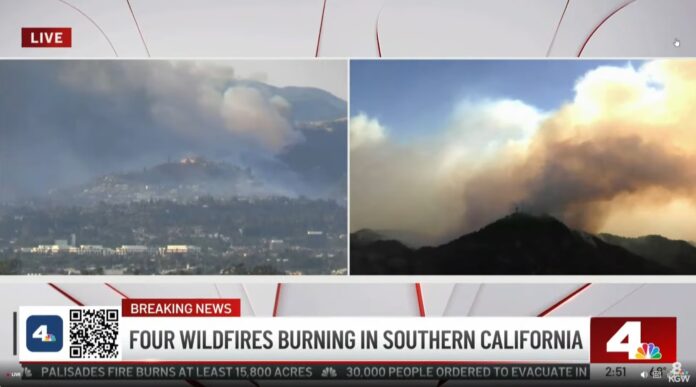
The Los Angeles area is reeling from one of the most catastrophic firestorms in recent memory, leaving five people dead, over 2,000 structures damaged or destroyed, and countless lives forever changed. The Eaton, Palisades, and Sunset fires have unleashed devastation across Los Angeles County, prompting mass evacuations, straining emergency resources, and leaving a charred landscape in their wake. With red flag warnings still in effect and the fires 0% contained, officials warn that the crisis is far from over.

Lives Lost Amid the Flames

Five bodies were discovered in three separate structures in Altadena, where the Eaton fire erupted with ferocious intensity on Tuesday night. The victims had little time to escape as the fire consumed their homes, pushed by wind gusts of up to 99 mph. The Los Angeles County Fire Department has called in K-9 units trained in human-remains detection to ensure no other lives were lost in the blaze.

“It’s a tragic loss,” said L.A. County Fire Chief Anthony Marrone. “We are doing everything we can to help those affected, but the scale of this disaster is overwhelming.”

An Unprecedented Inferno

In total, more than 15,800 acres have burned in the Pacific Palisades alone, where multimillion-dollar homes along Pacific Coast Highway were reduced to ash. Another 10,600 acres have burned in the Eaton fire near Altadena and Pasadena. Meanwhile, the Sunset fire in the Hollywood Hills ignited Wednesday evening, forcing evacuations in the Runyon Canyon area.

“What we saw here in the last 24 hours is unprecedented,” said LAPD Chief Jim McDonnell. “I’ve never seen anything like this.”

Strained Resources, Desperate Measures

Firefighting efforts have been hampered by extreme winds, bone-dry brush, and an overburdened emergency response system. L.A. County firefighters, along with reinforcements from across California, Arizona, and Oregon, are battling multiple blazes with limited resources. In some areas, firefighters were forced to make agonizing decisions, bypassing some homes to save others as residents watched in despair.

In Pacific Palisades, firefighters encountered dry hydrants due to the overwhelming demand on the water system. Meanwhile, gusts nearing 100 mph pushed flames into the Santa Monica Mountains, creating a nearly impossible situation for ground crews.

“We don’t have enough fire personnel in L.A. County between all the departments to handle this,” admitted Marrone. “It’s stretching our capacity to the absolute limit.”

A Community Under Siege

Evacuation orders and warnings have displaced 130,000 residents across Los Angeles County. In Altadena, homeowners were left to defend their properties with garden hoses as fire engines sped past to more urgent hotspots. In Pacific Palisades, the flames engulfed entire stretches of Pacific Coast Highway, leaving residents unsure if they would have homes to return to.

Bill Stange, a longtime Palisades resident, fled his home with just a few belongings. By morning, reports suggested his entire hillside neighborhood was gone. His home, rebuilt after a 1993 fire, had been in his family for decades.

“I don’t think the fire department is ready for a thing like this,” Stange said. “It’s too big.”

Federal and State Assistance

President Biden and California Governor Gavin Newsom have pledged every available resource to combat the fires. National Guard units and Navy helicopters equipped with water buckets are en route to assist the overwhelmed crews. During a briefing, Biden described the situation as “astounding” and promised unwavering federal support.

“We’re prepared to do anything and everything for as long as it takes to contain these fires,” Biden said.

The Role of Weather and Climate

The firestorm has been fueled by an unprecedented combination of extreme weather and environmental conditions. With Los Angeles receiving just 0.16 inches of rain since October, vegetation has been transformed into tinder. Paired with the fierce Santa Ana winds, the result is what meteorologists have called a “catastrophic situation.”

“These winds surpass the 2011 windstorm in magnitude, coverage, and destruction,” said Ariel Cohen, meteorologist for the National Weather Service in Oxnard. “This is a once-in-a-generation kind of windstorm, accompanied by a complete apocalyptic scene.”

A Call for Vigilance

With the fires spreading unpredictably, officials warn that no area is truly safe. LAPD Chief McDonnell urged residents to remain alert and ready to evacuate at a moment’s notice.

“These are unprecedented conditions,” McDonnell said. “None of us know where the next fire will ignite.”

The Human Toll

Amid the destruction, countless stories of loss and resilience are emerging. In Pacific Palisades, a veterinarian took in 39 pets displaced by the fire, highlighting the profound impact on both humans and animals. For families like the Stanges, rebuilding will be an uphill battle, complicated by rising construction costs and dwindling resources.

“This community is strong, but we’ve never faced anything like this,” said one Malibu resident. “We’ll need every bit of help we can get.”

The Road Ahead

As firefighters battle the flames, attention is turning to the long-term implications of this disaster. The strain on emergency services, the frequency of red flag warnings, and the impact of climate change on fire behavior are pressing concerns. For now, the focus remains on saving lives and protecting what little remains.

“We are absolutely not out of danger yet,” said Los Angeles Fire Chief Kristin Crowley. “But we will fight this with everything we have.”


This tragic firestorm serves as a sobering reminder of the power of nature and the resilience of those who face it. As Los Angeles begins the arduous journey toward recovery, the scars left by this unprecedented disaster will remain etched in the region’s history.