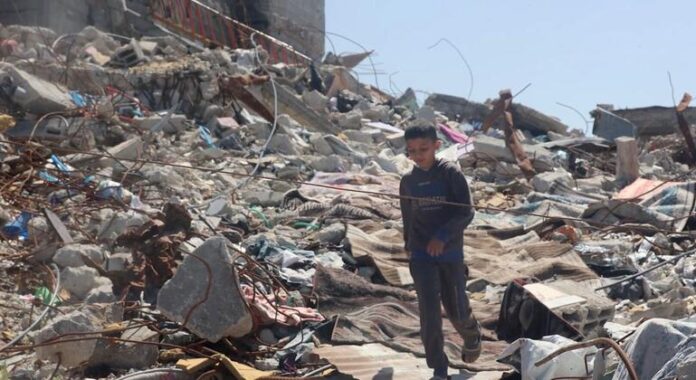
Over the past two centuries, global conflicts have reshaped borders, ideologies, and power structures. Wars like the two World Wars and the Cold War were among the most dangerous confrontations in human history, yet they also led to unprecedented international cooperation and technological progress. These events altered the course of nations and established the foundations of today’s geopolitical order.
The Great War and the Shattering of Old Empires
World War I tore through the heart of Europe, dismantling empires that had dominated for centuries. The Austro-Hungarian, Ottoman, Russian, and German empires collapsed under the weight of total war, leaving behind fractured states and unstable new borders. Nationalist movements surged in the vacuum, reshaping the political map with lasting consequences.
Industrialized warfare introduced unprecedented destruction, with millions dead and entire societies transformed. The war marked the end of 19th-century certainties, replacing monarchies with fragile republics and fueling ideological extremism. This upheaval laid the foundation for future global tensions.
The Blood-Soaked Fields of Flanders
Endless trench lines scarred the landscape of Flanders, where soldiers endured relentless artillery barrages and poison gas. Life in the mud-choked ditches was defined by cold, disease, and sudden death. The horrific conditions eroded morale and exposed the futility of frontal assaults.
Battles like Passchendaele and Ypres became symbols of senseless slaughter. Troops advanced across no man’s land only to be mowed down by machine guns. These engagements yielded minimal territorial gains at unspeakable human cost, leaving deep psychological scars on a generation.
The Versailles Mandate and Its Consequences
Victorious powers imposed the Treaty of Versailles with the aim of securing lasting peace. Germany faced crushing reparations, territorial losses, and military restrictions. The humiliating terms bred deep resentment among the German population, undermining democratic stability.
Mandates redistributed former Ottoman lands to European powers under League of Nations authority. These arrangements ignored local aspirations, planting seeds for future conflicts. The arbitrary borders and colonial continuities fueled long-term unrest across the Middle East.
Under the Versailles framework, self-determination was selectively applied, often serving imperial interests over local realities. Germany’s exclusion from decision-making bred a narrative of betrayal, exploited later by extremist movements. The mandate system, while framed as transitional, entrenched foreign control, delaying sovereignty for nations like Syria and Iraq. These decisions did not bring stability-instead, they sowed the ideological and territorial disputes that would ignite future wars.
The Second World War and the Global Conflagration
Conflict engulfed every corner of the globe between 1939 and 1945, reshaping borders, ideologies, and human destiny. The war pitted totalitarian regimes against democratic powers in a struggle that reached from European battlefields to Pacific islands. Over 70 million people perished, making it the deadliest conflict in history. Entire cities were reduced to rubble, and societies were forced to confront the depths of human cruelty.
Victory came at a staggering cost, but it laid the foundation for a new international order. The defeat of Nazi Germany and Imperial Japan halted aggressive expansion and genocide. Survivors emerged from concentration camps and bombed cities with stories that would shape global memory. The war’s end signaled not just peace, but a demand for accountability and a reimagining of global cooperation.
The Fight for Human Civilization
Democracy stood on the brink as fascist forces sought to dominate Europe and Asia. Resistance movements, soldiers, and civilians alike fought not just for territory, but for the survival of basic human rights. The defeat of authoritarian regimes preserved the possibility of self-governance and individual freedom. This moral dimension elevated the war beyond a military contest into a defining moment for modern values.
Libraries burned, art was looted, and intellectuals were targeted, revealing an assault on culture itself. Yet, courage persisted in underground schools, coded radio broadcasts, and acts of quiet defiance. The war became a test of whether civilization could endure deliberate attempts to erase truth and dignity.
The Shadow of the Mushroom Cloud
Bombs unlike any before fell on Hiroshima and Nagasaki in August 1945. The instantaneous destruction of entire cities by nuclear fission changed warfare forever. Tens of thousands died in seconds, with many more succumbing later to radiation. The world entered an age where a single weapon could threaten human extinction.
Scientific achievement had delivered unprecedented power, but with it came profound ethical consequences. The United States emerged as the sole nuclear power-at least temporarily-altering geopolitical dynamics. Arms races soon followed, turning superpower rivalry into a balance of terror.
Long after the smoke cleared, radiation lingered in soil, bodies, and memory. Survivors, known as hibakusha, faced stigma and illness for decades. The bombings sparked global debates on the morality of nuclear weapons, leading to arms control efforts and anti-nuclear movements. These events marked the beginning of a fragile peace held together by the threat of mutual annihilation.
The Long Twilight of the Bipolar Standoff
Decades of ideological rivalry shaped global alliances, economies, and military doctrines. The Cold War never erupted into direct superpower combat, yet its shadow stretched across continents, fueling proxy wars and political upheavals. Nations aligned under the banner of capitalism or communism, often at the cost of internal sovereignty.
Peace remained fragile, sustained more by mutual fear than cooperation. The threat of nuclear annihilation loomed over every diplomatic move, making restraint a necessity rather than a choice. This era redefined diplomacy, defense, and the very meaning of security in the modern age.
The Descent of the Iron Curtain
Europe fractured along invisible but unyielding lines. Winston Churchill’s 1946 warning of an “iron curtain” descending from Stettin to Trieste soon became geopolitical reality. Eastern nations fell under Soviet influence, their governments reshaped by Moscow’s directives.
Isolation deepened as travel, information, and cultural exchange were suppressed. Barbed wire and state surveillance became symbols of control, while dissent was met with swift repression. The division turned Central Europe into a silent battleground of ideologies.
The Brinkmanship of the Nuclear Age
Crisis after crisis tested the limits of deterrence. The 1962 Cuban Missile Crisis brought the world within hours of nuclear war, as American and Soviet forces stood at peak alert. Decisions made in smoke-filled rooms carried the weight of global survival.
Stockpiles of warheads grew to over 70,000 by the mid-1980s, enough to destroy civilization many times over. Diplomacy operated under the constant shadow of mutually assured destruction.
Arms control emerged not from trust, but from exhaustion. Treaties like SALT and later START reflected a grudging recognition that unchecked escalation threatened all. Close calls-such as false alarms and misinterpreted radar signals-revealed how fragile the balance truly was. Command and control systems, though advanced, remained vulnerable to human and technical error, underscoring the peril of relying on nuclear threats to maintain peace.
The Winds of Change and Decolonization
Imperial powers, weakened by war and economic strain, could no longer suppress rising demands for self-rule. Colonized nations across Asia and Africa mobilized, driven by nationalist movements that rejected foreign domination. Independence was no longer a distant dream but an urgent political reality.
The Retreat of Imperial Sovereignty
Britain, France, and the Netherlands faced mounting pressure to relinquish control. Violent uprisings and diplomatic resistance made colonial administration unsustainable. The Suez Crisis of 1956 starkly revealed the limits of European power, marking a turning point in global influence.
The Emergence of the Post-Colonial State
Newly independent countries faced the challenge of building institutions from colonial ruins. Leaders like Nkrumah and Nehru sought unity and development, though ethnic divisions and Cold War interference often undermined stability. Sovereignty brought promise, but also profound uncertainty.
Establishing governance in post-colonial states required redefining national identity amid fragmented societies. Artificial borders drawn by colonizers fueled internal conflict, while economies dependent on single exports struggled to adapt. Despite these hurdles, many nations forged resilient democracies and regional alliances, reshaping the geopolitical order through collective agency and reform. The legacy of this transformation remains central to global politics today.
The Middle Eastern Cauldron and Resource Rivalry
Control over energy reserves has long shaped global power dynamics, and the Middle East sits at the epicenter of this struggle. Oil wealth transformed once-remote desert kingdoms into geopolitical linchpins, drawing superpowers into complex alliances and covert interventions. Conflicts in the region often mask deeper contests between external powers seeking influence over supply routes and production policies.
Decades of intervention have destabilized governments and fueled sectarian divides. The fragility of state institutions created openings for non-state actors to rise, altering the nature of warfare and diplomacy. What began as regional disputes evolved into protracted crises with global ripple effects.
The Strategic Importance of the Levant
Positioned at the crossroads of Asia, Africa, and Europe, the Levant has always been a prize for empires. Its ports, trade routes, and proximity to energy corridors make it indispensable for military and economic strategy. Control here grants outsized influence over Mediterranean access and regional stability.
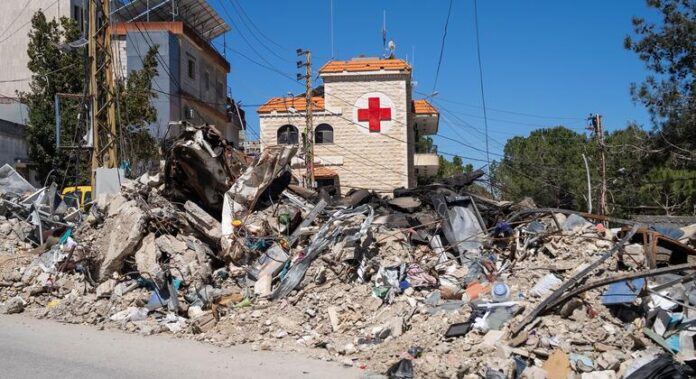
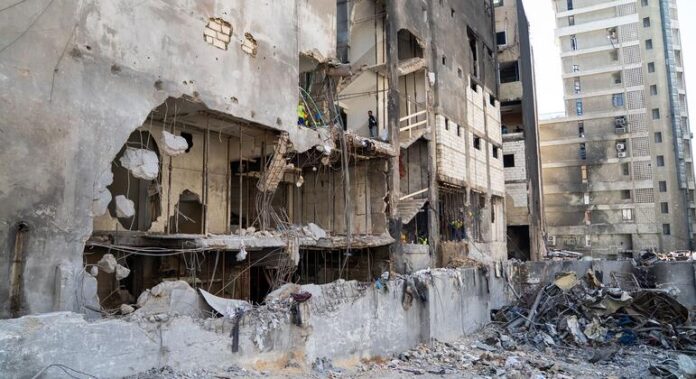
Modern conflicts have turned cities like Beirut and Damascus into battlegrounds for proxy wars. Foreign powers back local factions not for ideological alignment but for strategic positioning. The region’s geography ensures that instability here reverberates far beyond its borders.
The Rise of the Non-State Adversary
State militaries once dominated warfare, but the late 20th century saw armed groups operate beyond government control. Hezbollah, Hamas, and ISIS demonstrated how non-state actors could challenge national armies and dictate regional agendas. These groups leveraged ideology, guerrilla tactics, and transnational funding to sustain prolonged conflict.
Without fixed borders or formal diplomacy, they proved difficult to negotiate with or defeat. Some gained territorial control, establishing proto-states and controlling resources. Their emergence redefined security doctrines worldwide.
Non-state adversaries thrive in power vacuums created by war and poor governance. They recruit through localized grievances while receiving support from external sponsors seeking plausible deniability. ISIS at its peak held territory across Iraq and Syria, operating oil fields, taxation systems, and propaganda networks rivaling those of nations. This blurred the line between insurgency and statehood, forcing global militaries to adapt to decentralized, ideologically driven enemies that do not fight conventional wars.
The Electronic Battlefield and Future Perils
Modern warfare has shifted beyond trenches and tanks into the invisible domain of digital networks. States now deploy malware, conduct cyber espionage, and disrupt critical infrastructure without firing a single bullet. The rise of the electronic battlefield redefines conflict, where a single line of code can cripple power grids or financial systems. For deeper insights into how these battles shape our era, explore 21st Century Conflicts | Military History Books.
The Silent War of Information
Disinformation spreads faster than truth in today’s connected world. State-backed actors manipulate social media to influence elections, erode trust, and destabilize societies. These campaigns operate in silence, often unnoticed until damage is done. Perception becomes more powerful than firepower.
Algorithms amplify division, turning personal data into weapons. A single fabricated video can trigger violence or collapse markets. Unlike traditional warfare, there are no clear frontlines-only an endless stream of manipulated narratives shaping global realities from the shadows.
The Fragility of Our Interconnected Age
Global systems rely on fragile digital interdependence. A cyberattack on one nation’s infrastructure can cascade into worldwide disruptions-affecting supply chains, healthcare, and communications. This vulnerability exposes how deeply modern life depends on secure networks.
Even non-state actors now wield tools once reserved for superpowers. The barrier to launching a crippling digital assault has drastically lowered, increasing the risk of chaos from unexpected sources.
Interconnectivity offers efficiency but at a steep cost: a single breach can unravel stability across continents. As digital dependencies grow, so does the danger of systemic collapse from targeted cyber operations. The peace of the 21st century may hinge not on armies, but on the resilience of code.
To wrap up
Upon reflecting on the global conflicts that defined the modern world, it becomes clear that wars such as the two World Wars, the Cold War, and various decolonization struggles reshaped political boundaries, ideologies, and international alliances. These events altered the balance of power and set the foundation for today’s geopolitical structures. The consequences of these conflicts continue to influence diplomatic relations, economic systems, and regional stability across continents.
Individuals, nations, and movements responded to oppression, ideology, and competition in ways that redefined sovereignty and human rights. The scars of war led to new institutions like the United Nations and shifts in global leadership. History shows that conflict, while destructive, has repeatedly acted as a catalyst for transformation on a worldwide scale.