Monday, March 23, 2026
Home Blog Page 70

Nighttime strikes cause death, destruction and power outages in Ukraine

0

Several civilians were killed and nearly 30 injured, including children, according to local authorities. Houses in seven regions, as well as in the capital kyiv, were damaged.

The United Nations Children’s Fund (UNICEF) noted “tragic reports” of one child killed and three children injured in kyiv, Vyshhorod and Zhytomyr.

“Children face another difficult and terrifying winter: young people’s lives are threatened. Heating, electricity and water are interrupted”, UNICEF tweeted, calling for an end to the attacks.

Critical infrastructure affected

Drone strikes damaged more than 120 residential buildings in the Odessa region, OCHA said. Key infrastructure in energy, ports and transport, notably in the port city of Reni, near the border with Romania, was also affected.

The strikes have left more than 10,000 customers without power, while critical facilities are operating on backup power.

Further north, the strikes damaged energy facilities in Novhorod-Siverskyi, a town in the Chernihiv region, and Shostka, in the Sumy region.

Parts of Shostka, already badly hit by previous attacks, found themselves once again without electricity or heating.

Power outages during winter

Ukraine’s Energy Ministry also reported large-scale power outages in Khmelnytskyi, Rivne and Ternopil regions, with disruptions recorded in six additional regions.

“With the onset of the cold season, it is the most vulnerable who need support the most. This violence must stop. Civilians must be protected,” OCHA said separately in a tweet.

Nearly four years have passed since Russia launched its full-scale invasion of Ukraine.

Humanitarian support for thousands of people

Over the past 11 months, the UN and its humanitarian partners have provided emergency assistance to more than 430,000 people across the country following the strikes.

This support includes essential medical supplies, health services and cash assistance – primarily in frontline areas. At the same time, needs are increasing in previously less affected areas as attacks increase.

OCHA reported that an inter-agency convoy delivered eight tonnes of humanitarian aid to the community of Novoraiske in the Kherson region on Tuesday.

Items provided included medical and hygiene supplies, charging stations, children’s clothing and mattresses.

Novoraiske is home to some 1,900 people, including more than 200 children. Several places do not have access to water, gas or electricity due to continued hostilities, OCHA said.

Originally published at Almouwatin.com

ESMA publishes latest Spotlight on Markets newsletter featuring updates on market integration and transparency

0
text
Photo by Markus Spiske on Unsplash

The European Securities and Markets Authority (ESMA), the EU’s financial markets regulator and supervisor, has today published the latest edition of its Spotlight on Markets newsletter.

This edition opens with ESMA welcoming the European Commission’s ambitious proposal on market integration, underlining the importance of deeper, more integrated and efficient EU capital markets and the role of robust governance and market infrastructure in supporting these objectives.

Another highlight is the announcement of the selected applicant for the equity consolidated tape provider (CTP), a significant milestone towards a more transparent and integrated equity markets landscape in the EU. The newsletter also features ESMA’s final report on Regulatory Technical Standards (RTS) for non-equity transparency, as well as references to the five-year review of tiering and recognition, the report on cross-border investment activity of firms, and a TRV risk article on the application of the fund names guidelines.

ESMA will also launch a Common Supervisory Action focusing on MiFID II conflicts of interest requirements, reinforcing supervisory convergence and sound governance practices across Member States.

In parallel, the European Supervisory Authorities (ESAs) have designated critical ICT third-party providers under the Digital Operational Resilience Act (DORA). This represents an important step in strengthening governance and oversight of critical service providers in the EU financial system.

The newsletter also highlights ESMA’s findings on UCITS distribution costs, contributing to ongoing work on transparency and investor protection.

Other key topics:

For updates, follow us on LinkedIn and X.

Source link

Security Council remains divided on Iran’s nuclear program, sanctions remain in force

0

“Despite the intensification of diplomatic efforts during the second half of 2025, there has been no agreement on the path forward regarding Iran’s nuclear program,” concluded the head of UN diplomacy, Rosemary DiCarlo.

Ms. DiCarlo – the UN Under-Secretary-General for Political Affairs and Peacebuilding – reminded the Council that the best option for the international community is a negotiated settlement that would ensure a peaceful Iranian nuclear program and provide sanctions relief.

At the heart of the divide between Security Council Members disagree over the legitimacy of holding meetings related to the 2015 Iran nuclear deal, officially the Joint Comprehensive Plan of Action (JCPOA), an agreement to limit Iran’s nuclear program in exchange for sanctions relief.

Iran signed the agreement alongside the five permanent members of the Council – China, France, Russia, the United Kingdom, the United States – as well as Germany and the European Union (EU).

First post-snapback meeting

Tuesday’s meeting was the first to take place since France, Germany and the United Kingdom triggered the so-called “snapback mechanism” (reimposition of sanctions against Iran), citing “significant non-fulfillment” of their commitments under the plan.

UN Security Council meeting on non-proliferation (December 23, 2025)

The United States, the United Kingdom, France and other members of the Security Council have argued that the resolution that led to the nuclear deal remains in force and that the Council should therefore continue to meet to discuss the issue of nuclear nonproliferation.

“Iran’s failure to comply with its international obligations related to its nuclear program constitutes a serious threat to international peace and security,” said Jay Dharmadhikari, France’s deputy permanent representative to the UN. He added that, if increased to military enrichment levels, the Iranian stockpile “would be sufficient to produce 10 nuclear explosive devices.”

Iran: “No mandate” for discussions on non-proliferation at the Security Council

Russia’s delegate, Permanent Representative Vassily Nebenzia, took aim at the Slovenian presidency of the Council, regretting that it had not “found the courage to impartially respect your obligation not to act at the request of those who insisted on holding a Security Council meeting on a non-existent agenda item.”

“The JCPOA committee no longer exists,” he added. “Therefore, the EU is no longer the coordinator and therefore should not be allowed to inform the UN Security Council.”

Speaking on behalf of Iran, Ambassador Amir-Saeid Iravani insisted that Resolution 2231 (2015) expired on October 18, 2025 and therefore “ceased to have any legal effect or operational mandate.” It concluded that there was “no mandate for the Secretary-General to submit a report and no mandate for the Council to discuss it.”

Today, he said, the Council is witnessing a “calculated distortion” of the resolution and a “deliberate spread of disinformation” about Iran’s nuclear program.

European Union representative, deputy head of delegation Hedda Samson, speaking as an observer, took a different view. “The return of sanctions and nuclear restrictions should not mean the end of diplomacy, quite the contrary,” she stressed, calling on Iran to provide the International Atomic Energy Agency (IAEA) withIAEA) with up-to-date and verifiable declarations on the quantity and location of nuclear materials and related activities.

Originally published at Almouwatin.com

World news in brief: Aid restrictions in Gaza, humanitarian needs in Syria, lawyer reprisals in Burundi

0
a woman sitting at a table with a tray of food
Photo by Renaud Confavreux on Unsplash

However, the humanitarian response has been unable to meet needs due to continued restrictions imposed by Israeli authorities, the UN aid coordination office said. OCHA said Tuesday.

This includes restrictions on the entry of supplies, such as new materials needed for the maintenance and repair of sewer systems.

Meanwhile, efforts are underway to improve water purification capacity at the Al Bassa desalination plant in Deir Al-Balah by transferring specialized equipment to the facility, according to humanitarian partners, while the installation of the Al Manshia desalination plant in Gaza City has begun.

Violence and displacement in the West Bank

OCHA also provided an update on the situation in the West Bank, where ongoing operations by Israeli forces and settler violence continue to put Palestinians at risk and increase humanitarian needs.

Six Palestinians – including four children – have been killed in the past two weeks, five of them by Israeli forces and one by an Israeli settler. Three Israelis were injured by Palestinians during the same period.

At the same time, OCHA also expressed deep concern over the ongoing population displacements across the West Bank, with more than 100 Palestinians uprooted due to demolitions.

This includes 50 people – including 21 children – displaced Monday in a single Israeli demolition of a four-story building in the Silwan neighborhood due to lack of Israeli-issued building permits, which are almost impossible for Palestinians to obtain.

In Aleppo, Syria, mothers wait for their children to be tested for malnutrition.

Millions of people in Syria need humanitarian aid

Humanitarian needs remain severe across Syria, with 16.5 million people – almost two-thirds of the population – still in need of assistance, according to OCHA.

The country continues its political transition after the overthrow of the Assad regime last December.

Contamination from explosive ordnance remains a major threat, OCHA said. Last month, 21 people were killed and more than 60 injured, half of them children.

In addition, some 2.5 million children are still out of school and 40 percent of schools are not functioning.

Since January, the UN and its partners have provided humanitarian assistance to more than three million people every month.

OCHA and its partners continue to coordinate with authorities and monitor developments in the city of Aleppo, where a ceasefire agreement was reached Monday evening following recent hostilities.

The fighting was linked to tensions linked to the integration of the Syrian Democratic Forces (SDF), mainly Kurds, into the armed forces.

The fighting led to the bombing of several neighborhoods, causing further displacement. Two civilians were killed and several others injured, according to health authorities

Burundi: Lawyers penalized for cooperating with the UN, according to a committee

A committee appointed by the UN Human Rights Council warned that Burundi had acted in violation of the Convention against Torture.

THE United Nations Committee Against Torture (CAR) announced his decision Tuesday after reviewing the case of four lawyers who were sanctioned for collaborating with the Committee in 2016 during its assessment of the country’s compliance with the Convention.

They had contributed to a joint civil society report submitted to the Committee, and three of them traveled to Geneva for the review process.

The lawyers said they participated in peaceful protests in 2015 to oppose then-President Pierre Nkurunziza’s decision to seek a third term, which they considered unconstitutional.

The protests were violently repressed by authorities, with security forces targeting demonstrators and political dissidents. The lawyers publicly condemned the violent crackdown and, amid the crackdown, fled Burundi and went into exile out of fear for their safety.

In violation of international law

The Committee said the State party had refused to participate in the second half of a planned two-day session to object to the Committee’s use of information submitted by civil society. The same day, the Attorney General at the Court of Appeal in Bujumbura, the capital of Burundi, officially requested the lawyers’ disbarment.

The experts considered that Burundi’s actions constituted a violation of the Convention against Torture, and in particular Article 13 which states that complainants are protected against intimidation.

“The Committee reiterated that all States have an obligation to refrain from intimidation or retaliation against individuals who seek to cooperate with the Committee,” said Member Todd Buchwald.

Ten experts sit on the Committee, which receives its mandate from the Human Rights Council.

They are not UN staff and are not paid for their work.

Originally published at Almouwatin.com

Myanmar elections marked by fear as UN warns civilians are being coerced on all sides

0

Volker Türk, United Nations High Commissioner for Human Rights warned that the military-controlled vote takes place against a backdrop of intensifying violence, intimidation and arbitrary arrests, leaving no space for free or meaningful participation.

These elections are clearly taking place in an environment of violence and repression,“, Mr. Türk said in a statement.There are no conditions for the exercise of the rights to freedom of expression, association or peaceful assembly.»

The first phase of voting, scheduled for December 28, is organized by Myanmar’s military authorities, more than four years after their takeover in a 2021 coupdissolved the main political parties and imprisoned thousands of opponents. Key figures, including former State Counselor Aung San Suu Kyi, remain imprisoned.

The crisis has since degenerated into widespread armed conflict, mass displacement and economic collapse, further aggravated by devastating earthquakes in March 2025 which has worsened humanitarian suffering in large parts of the country.

Criminalized dissent

According to at the UN human rights office, OHCHRdozens of people have recently been arrested under a new “election protection law” for expressing dissent. Some received extremely harsh sentences, including three young people from Hlaingthaya township in Yangon who were jailed for between 42 and 49 years for hanging anti-election posters.

Prominent cultural figures have also been targeted. Director Mike Tee, actor Kyaw Win Htut and comedian Ohn Daing were each sentenced to seven years in prison for “undermining public trust” after criticizing a pro-election propaganda film.

For displaced communities, the pressure is even more acute. The Office of the United Nations High Commissioner for Human Rights received reports from displaced people in some areas, including the Mandalay region, who said they had been warned that their homes would be seized – or that airstrikes would continue – if they did not return to vote.

Forcing displaced people to undertake dangerous and involuntary returns is a violation of human rights,“, said Mr. Türk.

Threats from armed groups

At the same time, armed groups opposed to the army have made their own threats.

In mid-November, nine female teachers traveling for electoral training in the Mon region were reportedly kidnapped and released with warnings not to participate. In Yangon, the self-proclaimed “Yangon Army” bombed local government offices involved in election preparations, injuring election workers and vowing to continue attacking election organizers.

The UN also raised concerns about the introduction of electronic-only voting combined with extensive surveillance, including artificial intelligence and biometric tracking, warning that such measures could further erode trust in the process and enable repression.

Myanmar elections marked by fear as UN warns civilians are being coerced on all sides

© ONUCHA/Siegfried Modola

A camp for displaced people in Kayah State, eastern Myanmar. (archive photo)

Pressing for peace

Speaking separately at UN headquarters, spokesperson Stéphane Dujarric said UN Special Envoy Julie Bishop recently completed her third visit to Myanmar, where she met again with General Min Aung Hlaing.

Mr. Dujarric said Ms. Bishop continues to highlight the urgent need to end the violence to enable humanitarian response and recoveryand to keep Myanmar on the global agenda while working towards an inclusive and peaceful Myanmar-led solution.

Ms. Bishop also informed the Security Council during a closed-door meeting Monday about the situation.

Fears of greater instability

U.N. officials have repeatedly warned that the vote risks further instability rather than restoring democracy.

In October, the Secretary-General warned that elections organized under current conditions risk “further exclusion and instability”.

Originally published at Almouwatin.com
DR Congo: Displaced people in South Kivu are on the verge of “total despair”, according to the WFP

0

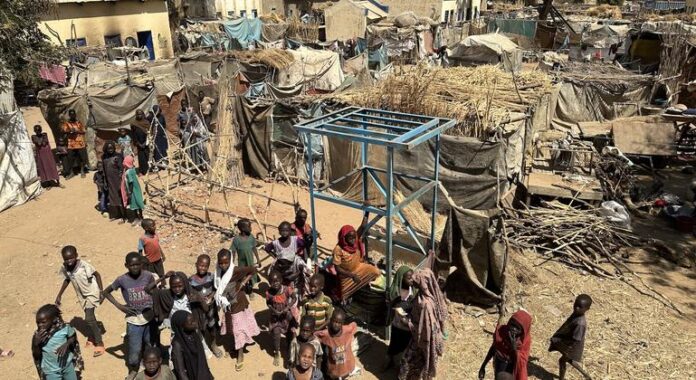
This is according to the United Nations World Food Program (PAM), which announcement On Tuesday, it stepped up efforts to provide aid to more than 210,000 people displaced by violence after a new offensive by the armed group M23 restarted hostilities earlier this month.

“This food crisis risks worsening without urgent action,” said Cynthia Jones, WFP director for the DRC.

She added that even families who sheltered those who were forced to flee are already living in emergency levels of food insecurity, “sharing their last food with displaced neighbors, pushing them all closer to total despair.”

Deprived of water and medicine

Since violence broke out in South Kivu, health facilities have been looted, medicines are unavailable and schools remain closed. Affected communities are deprived of clean water, medical care and livelihoods. Education has been severely disrupted, with more than 391,000 children out of school, according to the WFP.

As a result, many have also fled to neighboring countries in search of food and shelter. The teams support 71,000 new arrivals from the DRC in Burundi and 1,000 in Rwanda, with hot meals.

Underfunding threatens aid

WFP is trying to reach the most vulnerable displaced families and host communities in South Kivu with a survival package of cereals, legumes, vegetable oil, iodized salt and specialized nutrition to prevent malnutrition in young children and pregnant or lactating women.

Although food is already prepositioned in the conflict zone, the agency says it is urgently seeking $67 million to continue aid for three months to those forced to flee the DRC and $350 million to maintain operations of all programs in the country.

“Without urgent support and additional funding, we cannot respond to a crisis that is on the brink of a food catastrophe,” Ms Jones said.

Originally published at Almouwatin.com

Vienna Volunteers Bring “Truth About Drugs” Education to Youth Before Dealers Do

0

KINGNEWSWIRE // PRESS RELEASE // “Sag NEIN zu Drogen – Österreich” expands street-level prevention outreach in Austria’s capital, combining community events, school interest and online learning resources with a fact-based approach.

VIENNA, Austria — In Vienna’s public squares, parks and cultural gathering points, volunteers with the Vienna-based association Sag NEIN zu Drogen – Österreich have been strengthening a simple prevention idea: reach young people early, with clear information, before dealers and misinformation do.

The initiative focuses on youth, parents, educators, artists and sports communities—groups that often see the first signs of risk, but do not always have practical tools at hand. Volunteers describe their outreach as conversation-driven and non-confrontational, built around short exchanges that help people understand what commonly abused substances are, how they affect the body and mind, and why early experimentation can become difficult to reverse.

Gabriele Toker, president of the chapter in Vienna, has spoken publicly about why the effort matters at family level: drug education, she argues, is most effective when it equips parents and teachers with usable facts rather than fear or moral lectures. That emphasis has helped the group connect with educators exploring prevention resources that can be adapted to classrooms and youth settings.

Vienna’s cultural calendar provides recurring opportunities for that kind of contact. At major public events such as the Donauinselfest, volunteers have used interactive activities—music, movement, and family-friendly engagement—to create a welcoming setting for brief conversations about real-world pressures and the realities behind common myths. Organisers say this approach is intended to meet young people where they are, without dramatization, and to encourage responsible choices through understanding rather than instruction.

The timing of prevention has gained renewed relevance as drug markets evolve and as health authorities continue to highlight the scale of use. In June 2025, the UN Office on Drugs and Crime’s World Drug Report 2025 estimated that 316 million people used drugs in 2023, noting that instability and organised trafficking continue to compound social, economic and security costs. In the European context, the EU Drugs Agency’s 2025 assessment of cannabis again describes cannabis as Europe’s most widely consumed illicit drug, while warning that markets and products are changing rapidly.

Austria’s own youth data underscores why many prevention programmes prioritise early engagement. The national ESPAD Austria 2024 report found that 18% of surveyed students had tried cannabis at least once, 14% had used it in the last 12 months and 7% in the last 30 days. For the Vienna volunteers of Drug Free World, those figures reinforce a practical point: prevention conversations do not start “too early” in the teenage years, because the first offers and first risks can appear sooner than adults expect.

In their day-to-day outreach, volunteers report meeting a wide range of people—students in health-related fields, parents seeking clarity about substances discussed online, and teachers looking for age-appropriate materials that allow guided discussion without stigma. The group also points to the role of local role models. Collaborations with artists and sports communities, they say, help amplify a message that healthy performance and creativity do not depend on drugs—an argument that can resonate strongly with adolescents navigating identity, peer acceptance and pressure to experiment.

Feedback the foundation has received from community members in other countries illustrates the tone it aims to maintain. A shop owner in Belgium, commenting on the materials, noted: “This leaflet is effective because it is informative and fact-based and doesn’t give moral lectures.” A breakdance dancer in France similarly reflected: “We all have our creativity naturally and we don’t need drugs to feel good… I get my ‘high’ with dance and music, not drugs.” Such reactions, organisers say, reflect the value of prevention tools that respect the audience and rely on factual explanation.

The Vienna initiative uses materials associated with the global “Truth About Drugs” campaign distributed by the Foundation for a Drug-Free World, which describes itself as a nonprofit drug education programme sponsored by the Church of Scientology and Scientologists. The content is available in multiple formats, including printed booklets and structured classroom resources. The foundation also offers an online learning pathway through its Truth About Drugs e-courses, designed to let individuals work through information at their own pace using videos and lesson modules.

In parallel, the Church of Scientology describes its support for drug education through the Truth About Drugs campaign as a secular prevention initiative intended to help communities reduce harm through education. The programme’s origins are linked, in Church materials, to the emphasis placed by Scientology founder L. Ron Hubbard on addressing social problems with practical solutions and on countering drug abuse through awareness and prevention.

Ivan Arjona, Church of Scientology representative to the EU, OSCE, Council of Europe and the United Nations, said:

“Drug prevention in Europe works best when it treats young people with respect—by providing verified information early, in plain language, and in settings that feel safe to ask questions. When parents, teachers and community volunteers cooperate on that basis, they strengthen public health while also reinforcing the civic responsibility and human dignity that European societies depend on.”

Organisers in Vienna stress that the goal is not a single event but steady continuity: being present in public life often enough that drug education becomes normal, accessible and practical. For them, success is measured in small but concrete outcomes—students who take information home, teachers who feel better equipped to address difficult questions, and parents who leave a conversation with clearer facts and less uncertainty.

About the Church of Scientology in Europe
The Church of Scientology, its missions, groups and members are present throughout the European continent and support a range of community programmes focused on education, prevention and social betterment. Recognition of Scientology as a charitable and bona fide religion continues to grow in various jurisdictions, alongside engagement in initiatives intended to contribute to community well-being and informed civic participation.

Source link

Weekend attacks in Ukraine bring more casualties, damage infrastructure

0
Weekend attacks in Ukraine bring more casualties, damage infrastructure

Between Friday and early morning Monday, Ukrainian authorities said that over a dozen civilians were killed and more than 70 others injured, including two children. Basic service disruptions were reported in over 270 towns and villages.  

The attacks come amid harsh winter conditions in Ukraine and increasing humanitarian needs as attacks last week also disrupted services and led to several fatalities.  

Near-daily attacks 

The region of Odesa is particularly hit and is experiencing near-daily attacks, according to OCHA. On Friday an overnight attack targeting port infrastructure killed eight civilians and injured 27 others. Repeated strikes also knocked out power, affecting tens of thousands of people. 

In addition, Dnipro, Kharkiv and Mykolaiv saw their energy infrastructure hit, with hundreds of thousands of people affected. A health facility and a school were also damaged in the attacks. Donetsk, Kherson and Zaporizhzhia also suffered casualties. 

Ukrainian authorities told OCHA that a warehouse storing humanitarian aid was damaged in the Mykolaiv region. 

Aid appeal half funded  

In the Sumy region, some 40 people were evacuated to safer areas over the last three days, OCHA said. Meanwhile, in the Donetsk region, nearly 330 civilians, including 50 children, were evacuated.  

All in all, since June, nearly 150,000 people have been evacuated from front-line areas, including more than 16,500 children and over 5,000 people with limited mobility.  

Humanitarian workers have managed to reach more than 700,000 people near the front line with aid this year. However, funding gaps persist, leaving more than one million people without safe water and limiting access to protection and gender-based violence services. 

This year’s $2.6 billion appeal for Ukraine is only half funded, at nearly $1.4 billion. 

Source link

LIVE: Security Council meets on Somalia and Iran

0

Senior UN political and humanitarian officials are due to brief the Security Council this afternoon as members meet to discuss the rapidly deteriorating situation in Sudan, where intensifying fighting – including in the Kordofan region – has led to civilian damage and mass displacement. The region has seen sharp escalation, including a deadly drone attack on a U.N. peacekeeping base that killed six Bangladeshi peacekeepers. The meeting was requested by Sudan and transitional Prime Minister Kamil Eltayeb Idris is expected to attend. Follow live below and UN News app users can Click here.

Originally published at Almouwatin.com

Stronger toy safety rules enter into force

0
boy sitting on white cloth surrounded by toys
Photo by Yuri Li on Unsplash

The new Toy Safety Regulation will enter into force on 1 January 2026, following its adoption by the European Parliament and the Council. It strengthens children’s protection from harmful chemicals in toys and improves enforcement of EU toy safety rules.

Under the regulation, substances will be banned from toys as soon as they are identified as hazardous, including chemicals that disrupt hormones, harm the lungs, cause skin allergies, or damage specific organs. The ban also covers per- and polyfluoroalkyl substances (PFAS) and bisphenols. The new rules also strengthen the existing ban on substances that can cause cancer, genetic damage or harm reproduction (carcinogenic, mutagenic or reprotoxic substances).

Enforcement will be enhanced through digital tools. All toys placed on the EU market will be required to have a digital product passport containing safety and compliance information, accessible to consumers online via a QR code or other data carrier. For toys sold online and imported into the EU, customs authorities will be able to check the product passport.

The new rules will apply from 1 August 2030.

Source link