May 1st, a day off for everyone. This is what we learn at school and what we measure in the streets that day. Certainly, this year there was a discussion, bordering on controversy, on the economic necessity, or not, of broadening the possibility of exemption to allow more trades to work that day.
This article is reserved for subscribers
Would you like to read more? Subscribe without obligation to our digital offer
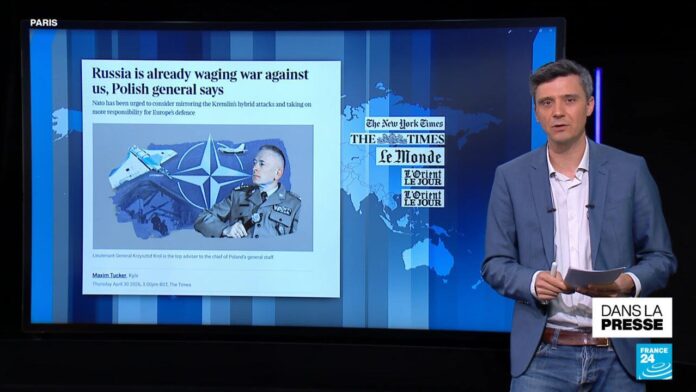
On the front page of the press this Friday, May 1, 2026: a Prime Minister in difficulty, hybrid wars and a history of familiarity.
The +: Receive the France 24 Press Review every morning on your iPhone or any other mobile. And also always on your PC by becoming a fan on Facebook…
Anger does not subside in the United Kingdom after the anti-Semitic knife attack in a Jewish neighborhood of London. The Guardian looks at Prime Minister Keir Starmer’s reaction with a trip in support of the targeted Jewish community.
The Daily Telegraph gives us another, more critical view of this visit and shows us photos of hostile demonstrators. According to them, Labor is responsible for this attack. The Daily Mail wonders, for its part, why the suspect was able to move freely, when he had already been arrested in 2008 for stabbing a police officer.
For the New York Times, these anti-Semitic attacks in the United Kingdom, France or the Netherlands could be a form of “hybrid war”. The often young authors are recruited against a promise of money on social networks by an Islamic group, Hayi. According to the daily, Iran could be behind the latter. The goal: to establish fear in Western societies.
Ukraine, laboratory of the Russian defense industry
Hybrid warfare is also a method used by Russia in Poland, writes The Times. Sabotage of the railway network, drone flights, hacker attacks on energy networks… Russia is on the offensive, worries a Polish general. He calls on NATO to take urgent measures.
Le Monde explains to us that Ukraine has become a laboratory for the defense industry. kyiv now produces millions of drones per year. 4 million and 2025 and 7 planned for this year. An expertise that Ukraine skillfully exports in return for support in other areas. Today, drones, Le Monde tells us, are responsible for 80% of deaths and injuries on both camps. Drones are also used, L’Orient-le-Jour tells us, by Hezbollah against the Israeli army in southern Lebanon.
Finally, Le Temps offers us on May 1st, a short history of familiarity in business. More and more people use informal terms in the Swiss professional environment, indicates the daily, as in Latin or Anglo-Saxon countries. So behind the amusing side of this article, there is a real question: does using informal terms in the professional environment improve working conditions?… Not really, time tells us, it doesn’t change anything.
Find the Press Review every morning on France 24 (Monday to Friday, at 7:20 a.m. and 9:20 a.m. Paris time). Also follow the Revue des Hebdos every weekend in multicast.
This May 1, 2026, M6 is broadcasting a new episode of Beijing Express, season 22. An edition filmed in Southeast Asia, between Nepal, China – in the Yunnan region – and Thailand, where ten pairs have been competing since March 5, 2026.
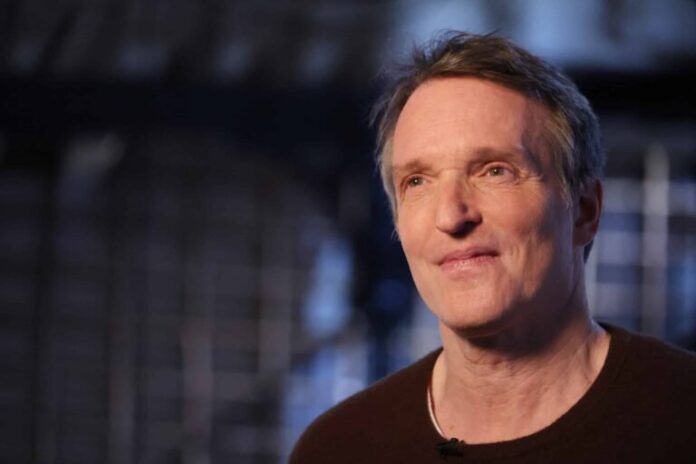
At the heart of this extraordinary adventure, a figure has remained unchanged for two decades: Stéphane Rotenberg, whose energy seems to defy time despite a daily life full of pressure, risks and unforeseen events.
For more than twenty years, Stéphane Rotenberg has embodied the soul of Beijing Express. With his calm tone and his sense of storytelling, he accompanies the candidates through sometimes hostile territories.
Rare longevity in an extreme program
However, behind this image of mastery lies a much more trying reality. The host continues filming at a sustained pace, between travel, extreme weather conditions and logistical constraints. “It’s our stress,” he admits, evoking in particular the dangers linked to the road and hitchhiking, at the heart of the concept of the show.
Over the seasons, he has been able to build extraordinary physical and mental resistance. But this endurance is not without consequences. Between accumulated fatigue and constant pressure, he has already come close to the limits. “I didn’t realize that I had had a sleepless day and a half,” he confides about an illness that occurred at home, a direct result of overwork. An alert which testifies to the intensity of an often idealized profession.
Filming under permanent tension
Season 22 is a new illustration of this. During their visit to Nepal, the team found themselves immersed in the middle of a revolution. Demonstrations, shootings, burning buildings: the scene was transformed into a crisis zone. “The city was on fire,” says the host. Faced with this situation, the production had to interrupt filming for several days, confined to a hotel. “We hid and we were confined,” he summarizes, describing a heavy and uncertain atmosphere.
Despite these extreme conditions, Stéphane Rotenberg keeps his cool. He even continues to shoot sequences at the heart of events, guided by his professional instinct. “When things go south, you never know how things might turn out,” he admits. This ability to remain operational in unpredictable contexts undoubtedly explains his longevity at the head of the program.
But these experiences leave traces. The host constantly evolves between adrenaline and caution, aware of the risks but committed to telling the adventure as close as possible to reality.
Accidents, scares and hard blows: the price of adventure
Because behind the success of Beijing Express lies a succession of misadventures which could have put an end to his career. In 2012, Stéphane Rotenberg was the victim of a violent sidecar accident, hit by a car. Result: several injuries, around ten stitches and persistent pain. “It could have been the end of the banquet,” he admits lucidly.
Another notable episode: an arrest in 2010 during filming in India. Suspected of espionage, he was held for several days by the authorities. “I risked ten years in prison,” he remembers. A situation as absurd as it is distressing, which illustrates the unforeseen events that the team can face.
Added to this are filming accidents, difficult health conditions and even external events, such as the pandemic or political tensions. Without forgetting this vagal discomfort that occurred after excess work, where he confides having been resuscitated: “I was resuscitated only once in my life”.
Despite these challenges, Stéphane Rotenberg continues to move forward, faithful to his role as conductor of the adventure. A consistency that commands respect, as it is based on extraordinary resilience. Behind the image of an animator who does not age, in reality emerges the portrait of a man who has learned to deal with risks, without ever giving up his passion.
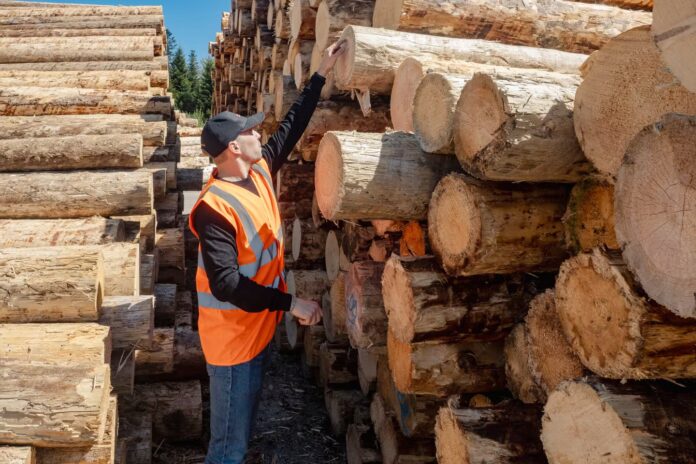
It’s all a matter of geometry: cutting squares and rectangles out of wooden cylinders, to get out as many trays, beams and rafters as possible. Seated in the armchair of his cabin which overlooks the long hall of the Chauvin sawmill, located in Mignovillard, a small town in the Jura at an altitude of 800 metres, Stéphane (he did not wish to give his name), one eye on the logs of softwood passing under his feet, the other on the control screens, solves the exercise, controller in hand, guided by a laser.
To this art of handling shapes is added that of distinguishing colors. Only by sight, this time. White, no problem. Black, the operator, fifteen years of experience, stops the band saw carriage – “There, the log on which we have already removed a plate, on the right, in the middle, there are three black notches. That’s a big worm,” we dismiss. The wood is unsuitable for construction. “Nothing kills the worm, it continues to eat,” explains Stéphane. As for blue, “there, on the edge”, the teams at this family sawmill – a story spanning five generations – have learned to consider it since the bark beetle began to ravage the spruce forests. The tiny insect, which the tree usually drowns in a bath of resin, enjoys episodes of drought amplified by global warming. High temperatures favor its proliferation. In Burgundy and Franche-Comté, since 2018, tens of thousands of hectares have been affected. The landscapes of eastern Europe are profoundly changed. The Alps are starting to be affected.
On the sawing line of the Chauvin sawmill, in Mignovillard (Jura), April 23, 2026. RAPHAEL HELLE/SIGNATURES FOR “THE WORLD”A scanner detects wood defects, at the Chauvin sawmill, in Mignovillard (Jura), April 23, 2026. RAPHAEL HELLE/SIGNATURES FOR “THE WORLD”
The blue traces come from a fungus which develops after the passage of the beetle. It is precisely these colored sections, and not the immaculate ones imported from Scandinavia, that Paul Jarquin, founder of REI Habitat (of which Axa holds 49% of the capital), specialist in wooden construction, intends to use massively in an operation in Lyon, in the heart of the Confluence district.
You have 72.43% of this article left to read. The rest is reserved for subscribers.
In addition to weapons, the offensive carried out by the rebels against the junta in Mali is also found in the words. The jihadists of the Support Group for Islam and Muslims (GSIM) encouraged, Thursday, April 30, a union to overthrow the military in power.
“We call on all sincere patriots, without distinction of any kind, to stand up and unite our forces in a common front” including “political parties, the national armed forces, religious authorities, traditional leaders and all components of Malian society,” the group declares in French on its Az-Zallaqa platform. “It is imperative to put an end” to the junta, for “a peaceful and inclusive transition” for a “new Mali” of which “one of the essential priorities [sera] the establishment of Sharia”, Islamic law, he adds
The GSIM statement was published five days after the coordinated and unprecedented attacks that this jihadist organization, allied with Al-Qaeda, carried out with rebels from the Azawad Liberation Front (FLA) – a predominantly Tuareg rebellion – against strategic positions of the military, in power since 2020, in several cities, including the capital, Bamako, and its neighbor and stronghold of the junta, Kati, as well as Kidal, Gao, both in the north of the country, and Sévaré, in the center.
Read also |Article reserved for our subscribers In Mali, jihadists want to suffocate Bamako
Read later
National tribute to the minister killed during the attacks
The statement also comes on the same day that GSIM began imposing a road blockade in Bamako, after announcing it on Tuesday. Air traffic to neighboring countries remains maintained.
This blockade is in place in the capital where, in the morning, a national tribute was paid to the Minister of Defense Sadio Camara, in the presence of the head of the Malian junta, Assimi Goïta, and in front of thousands of people, before his burial in Kati in the afternoon. General Camara was killed on Saturday in Kati by a “vehicle bomb driven by a suicide bomber” that targeted his residence, according to the Malian government.
Read also |Article reserved for our subscribers In Mali, jihadists shake up the junta by carrying out an unprecedented attack
Read later
The tribute paid to him, at the military engineering battalion located in the center of Bamako, took place under very high security, noted Agence France-Presse (AFP). With closed faces, thousands of people, parents, relatives, friends, official figures from Mali and officials from neighboring countries participated in the ceremony. Posters bearing the image of Sadio Camara, 47, were put up all over the brigade compound.
Mr. Camara was a key figure in the junta and considered the architect of the rapprochement in recent years with Russia. The funeral took place in the presence of the defense ministers of Niger and Burkina Faso, also led by juntas, and which form, with Mali, the Alliance of Sahel States (AES).
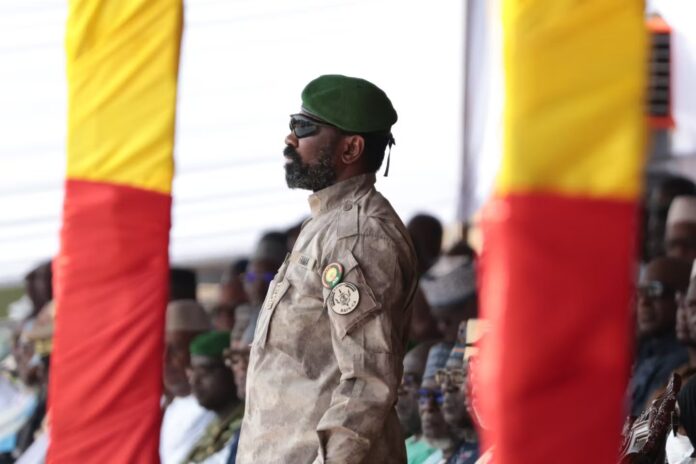
General Assimi Goïta, head of the Malian junta, during the funeral of former defense minister Sadio Camara, in Bamako, April 30, 2026. BOUBACARY BOCOUM / AP
In combat gear and wearing dark glasses, Assimi Goïta paid tribute to General Camara by bowing in front of his coffin, covered with the green-yellow-red flag of Mali and on which his military cap was placed.
“He helped define Mali’s defense priorities. It represented unwavering loyalty to the general interest. Despite the weight of responsibilities, he never deviated from his missions,” testified the Prime Minister, Abdoulaye Maïga, referring to Mr. Camara. “You have fallen as a martyr. You left as a hero,” he said. The testimonies were followed by a military parade in tribute to General Camara who was posthumously elevated to the rank of army general.
Russia rejects call to withdraw from country
His death is a hard blow for the junta, more weakened than ever, which finds itself in a very difficult situation, while the strategic town of Kidal, in the north of the country, is now under the control of armed groups who seem to continue to advance in the North.
Stay informed
Follow us on WhatsApp
Receive the essential African news on WhatsApp with the “Monde Afrique” channel
Join
Newsletter
“The World Africa”
Every Saturday, find a week of news and debates, from the editorial staff of “Monde Afrique”
Register
This death, the large-scale attacks and the loss of Kidal also cast doubt on the junta’s abilities to face threats from armed groups and undermine its rhetoric, which until now affirmed that its strategy of rupture, its new partnerships with foreigners and its increased military effort had made it possible to reverse the trend against Islamist fighters.
Mali faces a critical security situation and is prey to uncertainty and excitement after the coordinated and simultaneous attacks by these armed groups across its territory, which left at least 23 civilian and military dead, according to a hospital source.
Read also |Article reserved for our subscribers Mali: France’s embarrassment in the face of the crisis
Read later
On Tuesday, Mr. Goïta affirmed that the situation was now “under control”, while recognizing a moment of “extreme seriousness”. “The situation is far from being under control,” retorted FLA spokesperson Mohamed Elmaouloud Ramadane on Wednesday in an interview with AFP, affirming that the military regime “will fall, sooner or later.”
Moscow, for its part, affirmed on Thursday that its forces would remain in Mali, thus rejecting the rebels’ call for a Russian withdrawal from the country.
Read also |Article reserved for our subscribers Mali: Russia, failing ally of a junta threatened by the jihadist offensive
According to the Constitution, only Congress has the power to “declare” war. A law passed in 1973, however, allows the president to trigger a limited military intervention to respond to an emergency situation created by an attack against the United States.
The same text requires that the president, if he commits American troops for more than sixty days, obtain authorization from the legislative branch, different from a declaration of war.
The conflict with Iran began on February 28, but official notification from the White House to Congress regarding the start of hostilities did not come until two days later.
Friday therefore represents the sixty-day deadline to obtain authorization from parliamentarians to continue the conflict, otherwise Donald Trump would be obliged to withdraw American forces.
But his government argues the opposite. “We are in a ceasefire right now, which means – from our perspective – that the sixty-day clock is suspended,” Defense Minister Pete Hegseth said during a Senate hearing on Thursday.
An argument rejected by the Democratic opposition. For Senate Minority Leader Chuck Schumer, “Pete Hegseth cannot simply pause the countdown when American troops are still exposed to danger.”
Despite the ceasefire, the American Navy is still blockading the Strait of Hormuz. “For sixty days, Republicans have been twiddling their thumbs,” accused Chuck Schumer. “Well I say to my colleagues: time is up,” he added, calling on Republican senators to start speaking out against the war in Iran.
Since the outbreak of the conflict, Democrats have tried several times to pass a text providing for limiting Donald Trump’s military powers against Iran, in vain.
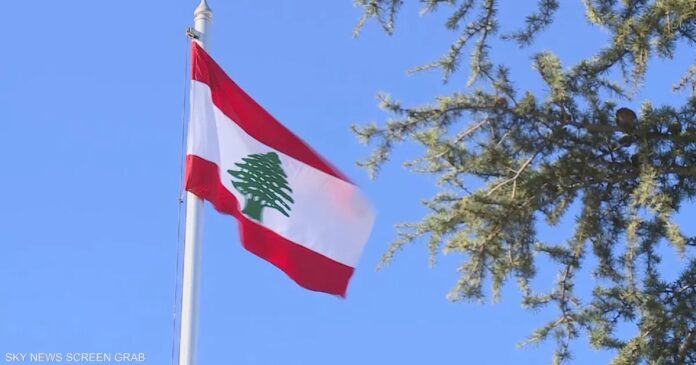
وجاء في الرسالة، التي نشرتها السفارة الأميركية في بيروت ليل الخميس، أن « لبنان يقف اليوم على مفترق طرق »، معتبرة أن « أمام شعبه فرصة تاريخية لاستعادة وطنه ورسم مستقبله كدولة واستقلال حقيقيين”.
وتابعت السفارة: “الحوار المباشر بين لبنان وإسرائيل، وهما دولتان متجاورتان ما كان ينبغي لهما أن تكونا في حالة حرب، يمكن أن يشكل بداية نهضة وطنية”.
وأضافت: “The water is in the water من الرئيس (الأميركي دونالد) ترامب، للبنان المساحة والفرصة لعرض جميع المفاوضات، مع إيلاء حكومة الولايات المتحدة الاهتمام الكامل لها”.
وقالت الرسالة إن « اجتماعا مباشرا بين الرئيس عون ورئيس الوزراء نتنياهو، من الرئيس ترامب، سيتيح للبنان فرصة الحصول على ضمانات water supply الحدود والدعم الإنساني سلطة الدولة اللبنانية الكاملة على كل شبر من أراضيها، بضمانة من الولايات المتحدة”.
وتابعت: « هذه هي لحظة لبنان ليقرر مصيره، وهو مصير يخص جميع أبنائه، والولايات المتحدة على أتم الاستعداد للوقوف إلى جانب لبنان وهو يغتنم هذه الفرصة بثقة وحكمة. لقد ولى زمن التردد”.
ودخل اتفاق لوقف إطلاق النار في لبنان حيز التنفيذ منذ 17 days Remove the water from the water.
إلا أن الجيش الإسرائيلي يواصل تنفيذ هجمات في جنوب لبنان، حيث 20 minutes of cooking time.
وأفاد مراسل “سكاي نيوز عربية” ، أن 62 بلدة جنوبي لبنان تعرضت لقصف إسرائيلي بالطيران الحربي والمسيّرات والقذائف المدفعية، الخميس، الذي يعد أعنف يوم منذ وقف إطلاق النار.
في المقابل، يشن حزب الله اللبناني هجمات على القوات الإسرائيلية، بصواريخ وطائرات مسيّرة.
وبموجب نص اتفاق وقف النار الذي نشرته وزارة الخارجية الأميركية، وقالت إن الحكومتين اللبنانية والإسرائيلية وافقتا عليه، تحتفظ إسرائيل بـ »حرية اتخاذ كافة التدابير الضرورية للدفاع عن نفسها في أي وقت بمواجهة الهجمات المخطط لها والوشيكة والمتواصلة”.
The Roca Team, already defeated in the first match, suffered another heavy defeat in the second, Thursday, in the Euroleague quarter-finals.
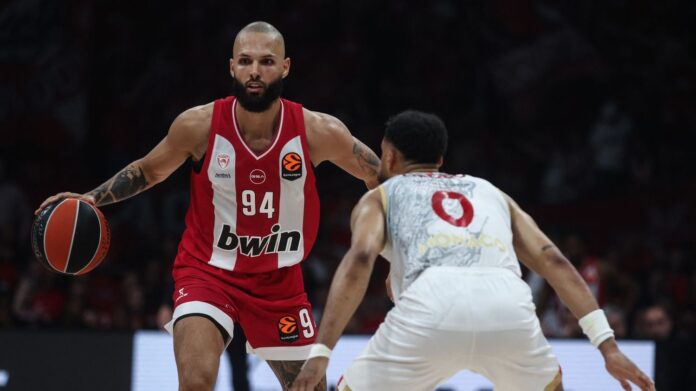
The semi-finals are moving away. AS Monaco Basket was slapped by Olympiakos in Piraeus (94-64), Thursday April 30, for its second match of the Euroleague quarter-finals. With this defeat, the Roca Team finds itself on the verge of elimination before the third match.
The finalists of the last edition, already severely beaten 91-70 in the first match in Greece, completely lost track in the second quarter of the match, and will have no other choice but to win at home on Tuesday if they want to stay alive in their best-of-five series.
A return to Athens at the end of May, for a second Final Four in a row, now seems almost impossible for the men of the Principality, who completely gave up before the break against the best team of the regular season, led by the Bulgarian Sasha Vezenkov.
Thursday, Alpha Diallo’s teammates (10 points) held out for the first ten minutes, before a catastrophic second quarter: 31-8 in 10 minutes, a defense at bay and solutions found with formidable ease for the Greek club, like Evan Fournier, excellent (16 points, five rebounds, seven assists) and very lonely when attempting his three-point shots.
Under the eyes of Novak Djokovic and Giannis Antetokounmpo, sitting side by side to enjoy the spectacle, the Greeks played in front of ineffective Monegasques. The exclusion of Mike James, who did not really weigh (seven points), for two technical fouls concluded this end of the first period to forget.
Returning from the locker room, the locals took a break for a few minutes when the Monegasques did better offensively. But Sasha Vezenkov was still there to maintain a gap largely favorable to the three-time winners of the event, who finished with a final quarter victory 22-11. Tuesday, for match 3 (7:45 p.m.), Monaco will be at home but will have to find great resources to worry Olympiakos.
Most air quality monitoring stations in Europe achieve current EU legal standards for key air pollutants. However, the levels of key pollutants — like particulate matter, benzo(a)pyrene and especially ground-level ozone — remain a significant problem, according to the latest air quality assessments published today by the European Environment Agency (EEA).
Latest data collected and analysed for 2024 and 2025 shows EU standards were mostly met in most regions across Europe for fine particulate matter (PM2.5) and for nitrogen dioxide (NO2). However, in up to 20% of monitoring stations, air pollution is still above current EU air quality standards, especially for smaller particulate matter with a diameter of 10 microns (µm) or less (PM10), ground level ozone (O3) and benzo(a)pyrene (BaP).
The EEA Air Quality status report 2026 presents the latest official reported data on levels of key air pollutants in Europe. It compares these concentrations against current and 2030 EU air quality standards and the World Health Organisation (WHO) health-based air quality guideline levels.
The new air quality standards applicable from 2030 will require Member States to maintain and increase measures to address air pollution. Across the majority of Europe air pollution levels also remain above the stricter WHO guideline levels set to protect human health.
Figure 1. Percentage of monitoring stations in 2024 achieving air quality EU standards/guideline levels
Please select a resource that has a preview image available.
Action on ground-level ozone needed
Ozone is of particular concern, according to a separate EEA briefing — ‘Addressing ground-level ozone pollution in Europe’. It says that ground-level ozone levels have not decreased significantly, despite overall reductions in emissions of key ozone precursors pollutants.
This complex pollutant is formed in the lower atmosphere when sunlight triggers photochemical reactions between ozone forming pollutants, like nitrogen oxides (NOₓ) and volatile organic compounds (VOCs). As a result, reducing ozone levels is more challenging than reducing other major air pollutants.
The briefing warns that climate change is expected to worsen ozone pollution in Europe because of increased frequency and intensity of heat-related meteorological conditions that enhance ozone formation.
Ground-level ozone is a strong oxidant and can damage both human health and the environment with latest data showing that 63,000 deaths can be attributed to it in the EU as well as causing billions of euros of damage due to crop losses. It also plays an important role as a driver of climate change, as it is a greenhouse gas (GHG).
The briefing stresses further action by Member States is needed under the EU’s revised Ambient Air Quality Directive to address ozone pollution. However, action at national and local level alone may not be sufficient. Ozone and its precursors can travel long distances, meaning that effective mitigation also depends on stronger European and international cooperation to tackle transboundary air pollution.
A better understanding of the role of the different key ozone forming pollutants that make up ground-level ozone would help to better identify the best way to reduce ozone levels.
To support more effective air quality planning, new analytical tools can help cities and countries better understand what drives ozone pollution. A newinteractive dashboardintegrated into theEEA city viewer allows users to explore sector‑by‑sector contributions to ozone during the peak season, based on 2024 data. In parallel,EU-27 country factsheets offer a clear picture of ozone levels, trends and future projections in each Member State.
Risk to health and the economy
Air pollution remains Europe’ s greatest environmental health risk. It reduces quality of life, causes diseases and leads to preventable deaths.
Further reductions are still needed to meet current EU standards but also new EU standards set for 2030 under the EU’s revised Ambient Air Quality Directive. For some pollutants the distance to the 2030 standards is significant. This is especially the case for particulate matter (PM); in 2024 30% or more of the reported monitoring stations recorded particulate matter concentrations above the revised standards, the EEA analysis says.
Also importantly, for most pollutants, air pollutant concentrations remain well above the levels established by the WHO air quality guideline levels, with more than 9 out of 10 Europeans exposed to air pollution concentrations above those particulate matter (PM2.5) and ground-level ozone (O3) levels, especially in cities.
Reducing air pollution reduces impacts on health and associated economic costs such as healthcare, reduced productivity and absenteeism caused by pollution-related illnesses.
To achieve the targets, from 2026 onwards Member States will be required to implement air quality roadmaps for pollutants where the concentration is above the level specified in the revised 2030 standards.
The revised EU Ambient Air Quality Directive significantly tightens air quality standards, aligning them more closely with WHO recommendations.
Background
The EEA report is the first in the EEA’s ‘Air quality in Europe 2026’ package. Later this year, the EEA will publish the data on the impacts of air pollution on human health. This includes estimates of premature deaths and ill health that can be attributed to poor air quality.
The EEA analysis covers 39 countries, including the 27 EU Member States, the five other EEA member countries (Iceland, Lichtenstein, Norway, Switzerland and Türkiye), six EEA cooperating countries (Albania, Bosnia and Herzegovina, Kosovo under the UNSCR 1244/99, Montenegro, North Macedonia and Serbia), plus voluntary reporting from Andorra.