Sunday, March 29, 2026
Home Blog Page 889

Deal reached on new rules for adequate minimum wages in the EU

0
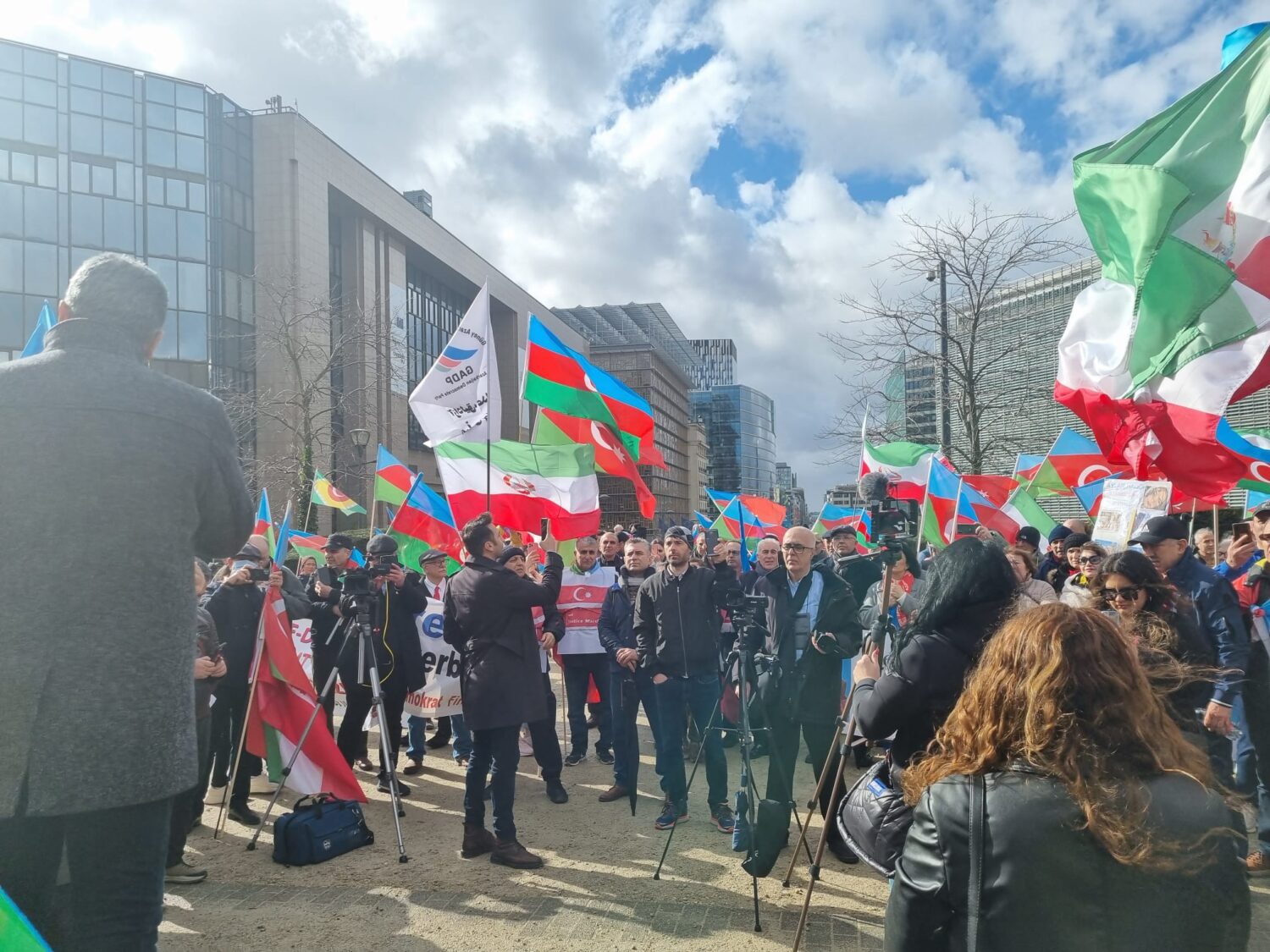
European Parliament to discuss the resumption of hostilities in Nagorno Karabakh TheEuropeanTimes INFO

The agreed legislation aims to ensure that minimum wages in all EU countries guarantee decent living standards for workers.

With a deal struck on Monday night, Parliament and Council negotiators agreed on EU rules to set adequate minimum wages, as provided by national law and/or collective agreements. The new legislation will apply to all EU workers who have an employment contract or employment relationship. The EU countries in which the minimum wage is protected exclusively via collective agreements will not be obliged to introduce it nor to make these agreements universally applicable.

Adequate wages

According to the agreement, member states will have to assess whether their existing statutory minimum wages (i.e. the lowest wage permitted by law) are adequate to ensure a decent standard of living, taking into account their own socio-economic conditions, purchasing power or the long-term national productivity levels and developments.

For the adequacy assessment, EU countries may establish a basket of goods and services at real prices. Member states may also apply indicative reference values commonly used internationally, such as 60% of the gross median wage and 50% of the gross average wage.

Deductions from or variations to the minimum wage will have to be non-discriminatory, proportionate and have a legitimate objective, such as the recovery of overstated amounts paid or deductions ordered by a judicial or administrative authority.

Collective bargaining

EU negotiators agreed that EU countries will have to strengthen sectoral and cross-industry collective bargaining as an essential factor for protecting workers by providing them with a minimum wage. Member states in which less than 80% of the workforce is protected by a collective agreement will have to create an action plan to progressively increase this coverage. To design the best strategy for this purpose, they should involve social partners and inform the Commission of the adopted measures and make the plan public.

Monitoring and right to redress

The agreed text introduces the obligation for EU countries to set up an enforcement system, including reliable monitoring, controls and field inspections, to ensure compliance and address abusive sub-contracting, bogus self-employment, non-recorded overtime or increased work intensity.

National authorities will have to ensure the right to redress for workers whose rights have been infringed. Authorities must also take the necessary measures to protect workers and trade union representatives.

Next steps

The provisional political agreement reached by the EP negotiating team will now have to be approved first by the Employment and Social Affairs Committee, followed by a plenary vote. The Council also has to approve the deal.

Quotes

After the deal was struck, co-rapporteur Dennis Radtke (EPP, DE) said: “With the agreement on minimum wages, we are writing socio-political history in Europe. For the first time, EU legislation will contribute directly to ensuring that workers are getting fairer, better pay checks”.

Co-rapporteur Agnes Jongerius (S&D, NL) added : With this European law, we reduce wage inequalities, and push for higher wages for Europe’s lowest paid workers. They should be able to buy new clothes, join a sports team, or go on a well-deserved holiday. In short, they should have a decent standard of living”.

Dragos PÎSLARU, (Renew, RO), Chair of the Employment and Social Affairs Committee concluded: “The directive opens new opportunities for European citizens to avoid in-work poverty and gain access to social dialogue. It creates transparent and appropriate procedures as well as common enforcement measures at EU level while also balancing national particularities”.

Background

In the EU, 21 out of 27 countries have a statutory minimum wage, while in the other six (Austria, Cyprus, Denmark, Finland, Italy and Sweden) wage levels are determined through collective bargaining. Expressed in euro, monthly minimum wages vary widely across the EU, ranging from €332 in Bulgaria to €2 202 in Luxembourg (2021 data from Eurostat).

Deal common charging port: reducing hassle for consumers and curbing e-waste

0
Deal on common charger: reducing hassle for consumers and curbing e-waste | News | European Parliament

By autumn 2024, USB Type-C will become the common charging port for all mobile phones, tablets and cameras in the EU, Parliament and Council negotiators agreed today.

The provisional agreement on the amended Radio Equipment Directive, establishes a single charging solution for certain electronic devices. This law is a part of a broader EU effort to make products in the EU more sustainable, to reduce electronic waste, and make consumers’ lives easier.

Under the new rules, consumers will no longer need a different charging device and cable every time they purchase a new device, and can use one single charger for all of their small and medium-sized portable electronic devices. Mobile phones, tablets, e-readers, earbuds, digital cameras, headphones and headsets, handheld videogame consoles and portable speakers that are rechargeable via a wired cable will have to be equipped with a USB Type-C port, regardless of their manufacturer. Laptops will also have to be adapted to the requirements by 40 months after the entry into force.

The charging speed is also harmonised for devices that support fast charging, allowing users to charge their devices at the same speed with any compatible charger.

Better information and choice for consumers

Consumers will be provided with clear information on the charging characteristics of new devices, making it easier for them to see whether their existing chargers are compatible. Buyers will also be able to choose whether they want to purchase new electronic equipment with or without a charging device.

These new obligations will lead to more re-use of chargers and will help consumers save up to 250 million euro a year on unnecessary charger purchases. Disposed of and unused chargers are estimated to represent about 11,000 tonnes of e-waste annually.

Encouraging technological innovation

As wireless charging technology becomes more prevalent, the European Commission will be empowered to develop so-called delegated acts, on the interoperability of charging solutions.

Quote

Parliament’s rapporteur Alex Agius Saliba (S&D, MT) said: “Today we have made the common charger a reality in Europe! European consumers were frustrated long with multiple chargers piling up with every new device. Now they will be able to use a single charger for all their portable electronics. We are proud that laptops, e-readers, earbuds, keyboards, computer mice, and portable navigation devices are also included in addition to smartphones, tablets, digital cameras, headphones and headsets, handheld videogame consoles and portable speakers. We have also added provisions on wireless charging being the next evolution in the charging technology and improved information and labelling for consumers”.

Press conference

On Tuesday, 7 June, from 12.30 CEST, Parliament’s rapporteur Alex Agius Saliba (S&D, MT) and Commissioner for the Internal Market Thierry Breton will give a joint press conference in the European Parliament’s press conference room in Strasbourg.

More details on how to follow are available in this media advisory.

Watch the recording of the press conference here.

Next steps

After the summer recess, Parliament and Council will have to formally approve the agreement before it is published in the EU Official Journal. It will enter into force 20 days after publication and its provisions will start to apply after 24 months. The new rules would not apply to products placed on the market before the date of application.

Background

In the past decade, Parliament has been continuously calling on the Commission to table a proposal on a common charger solution. The legislative proposal was tabled on 23 September 2021.

By autumn 2024, USB Type-C will become the common charging port for all mobile phones, tablets and cameras in the EU, Parliament and Council negotiators agreed today.

The provisional agreement on the amended Radio Equipment Directive, establishes a single charging solution for certain electronic devices. This law is a part of a broader EU effort to make products in the EU more sustainable, to reduce electronic waste, and make consumers’ lives easier.

Under the new rules, consumers will no longer need a different charging device and cable every time they purchase a new device, and can use one single charger for all of their small and medium-sized portable electronic devices. Mobile phones, tablets, e-readers, earbuds, digital cameras, headphones and headsets, handheld videogame consoles and portable speakers that are rechargeable via a wired cable will have to be equipped with a USB Type-C port, regardless of their manufacturer. Laptops will also have to be adapted to the requirements by 40 months after the entry into force.

The charging speed is also harmonised for devices that support fast charging, allowing users to charge their devices at the same speed with any compatible charger.

Better information and choice for consumers

Consumers will be provided with clear information on the charging characteristics of new devices, making it easier for them to see whether their existing chargers are compatible. Buyers will also be able to choose whether they want to purchase new electronic equipment with or without a charging device.

These new obligations will lead to more re-use of chargers and will help consumers save up to 250 million euro a year on unnecessary charger purchases. Disposed of and unused chargers are estimated to represent about 11,000 tonnes of e-waste annually.

Encouraging technological innovation

As wireless charging technology becomes more prevalent, the European Commission will be empowered to develop so-called delegated acts, on the interoperability of charging solutions.

Quote

Parliament’s rapporteur Alex Agius Saliba (S&D, MT) said: “Today we have made the common charger a reality in Europe! European consumers were frustrated long with multiple chargers piling up with every new device. Now they will be able to use a single charger for all their portable electronics. We are proud that laptops, e-readers, earbuds, keyboards, computer mice, and portable navigation devices are also included in addition to smartphones, tablets, digital cameras, headphones and headsets, handheld videogame consoles and portable speakers. We have also added provisions on wireless charging being the next evolution in the charging technology and improved information and labelling for consumers”.

Press conference

On Tuesday, 7 June, from 12.30 CEST, Parliament’s rapporteur Alex Agius Saliba (S&D, MT) and Commissioner for the Internal Market Thierry Breton will give a joint press conference in the European Parliament’s press conference room in Strasbourg.

More details on how to follow are available in this media advisory.

Watch the recording of the press conference here.

Next steps

After the summer recess, Parliament and Council will have to formally approve the agreement before it is published in the EU Official Journal. It will enter into force 20 days after publication and its provisions will start to apply after 24 months. The new rules would not apply to products placed on the market before the date of application.

Background

In the past decade, Parliament has been continuously calling on the Commission to table a proposal on a common charger solution. The legislative proposal was tabled on 23 September 2021.

Turkey: persistently further from EU values and standards

0
Turkey: persistently further from EU values and standards

Without clear and significant progress on reforms to EU Values and Standards, Parliament cannot envisage resuming accession negotiations with Turkey, warned MEPs on Tuesday.

In a report adopted on Tuesday by 448 votes in favour, 67 against and 107 abstentions, MEPs warn that in spite of Turkey’s repeated statements that it aims to become an EU member, over the past two years the country has consistently gone back on its commitments in relation to the accession process.

Parliament welcomes the recent slight improvement in overall EU-Turkey relations, in particular, the high-level dialogues. This enhanced cooperation has unfortunately coexisted alongside regular conflicts, as relations with neighbouring EU member states remain challenging, stress MEPs.

The report points to the continued deterioration of the human rights situation in Turkey. MEPs regret the sustained legal and administrative pressure on civil society and human rights defenders, lawyers and journalists. They call on the Commission to provide sufficient funding for pro-democracy efforts in Turkey.

Importance of close EU-Turkey cooperation in foreign and security policy

Welcoming Turkey’s willingness to act as a mediator in the Russian war against Ukraine, MEPs stress the vital importance of good EU-Turkey cooperation in foreign and security policy in the current challenging times and thank the country for its firm alignment with NATO and the EU.

The report commends Turkey’s efforts in continuing to host the largest refugee population in the world, and notes the sustained provision of EU funding for this purpose, which MEPs commit to maintain in the future. They also support the Commission’s proposal to start negotiations to update a mutually beneficial Customs Union, but warn that Parliament would only support a final agreement if necessary democratic conditions on human rights and fundamental freedoms, respect of international law and good neighbourly relations are met.

To sum-up, Parliament cannot at this stage justify modifying its position concerning the formal suspension of the accession negotiations with Turkey, which have effectively been at a standstill since 2018, MEPs say. By openly defying the binding rulings of the European Court of Human Rights in relation to the case of Osman Kavala and others, the current Turkish Government has deliberately demolished any aspirations of reopening the EU accession process at this time, they add.

Turkish objections to Sweden and Finland’s NATO applications

MEPs call on the Turkish government to handle Finland and Sweden’s NATO membership applications in good faith, to engage constructively in efforts to solve possible outstanding issues and to refrain from exerting any undue pressure in this process. In the current serious circumstances, it is important that all NATO allies act with foresight and swiftly ratify the accession protocols of the two countries, they stress.

Quote

“In the current challenging times, values and principles, which are at the core of any EU accession process, cannot come second to any geopolitical contingency. That is why the Parliament – and I hope all EU institutions – will not remain silent when faced with the current authoritarian spiral in the country. Instead of regaining trust – a much-needed asset in EU-Turkey relations – we are now losing it; the irresponsible veto in NATO and the rising tensions with EU member states are worrying signs for the future, marked by a pre-electoral situation in the country. If there is no change, I can hardly see the accession process surviving another five years”, said rapporteur Nacho Sánchez Amor (S&D, Spain).

Country programme for Pakistan 2022-2025: launch of the third phase

0
© UNODC

The United Nations Office on Drugs and Crime  launches third phase of Country Programme for Pakistan 2022-2025

Islamabad (Pakistan), 7 June 2022 – “Given the complexity and international nature of illicit drug trafficking, no country can win this war alone,” said Mr. Sabino Sikandar. He could have been referring to any country, but Sikandar works in Pakistan’s Ministry of Narcotics Control and was speaking at the launch of the third phase of the United Nations Office on Drugs and Crime (UNODC)’s work programme in the country. This event, held last Friday in Islamabad, also celebrated the successes of its second phase.

Under the previous phase (2016-2021), achievements included: training more than 40,000 law enforcement personnel; developing, enacting, and approving bills and acts, and creating digital platforms such as a prison management information system rolled out in 65 prisons of Sindh and Punjab.

Speaking to the impacts of the latter, Imtiaz Abbas from Punjab’s Inspectorate-General of Prisons said: “The primary goal of prison automation was to make life easier for the public, prisoners, and prison staff. It has reduced staff workload and increased transparency. It has streamlined prison production, medical, interview, factory, housing, finance, inventory, store, and management functions since its introduction.”

Building on these results, UNODC Pakistan designed the third phase with more than 60 stakeholders from the government, United Nations, private sector, and civil society. The new programme seeks to build strong, accountable criminal justice systems in-country, to address threats from illicit drug trafficking, transnational organized crime, corruption and economic crime, and terrorism.

“The new UNODC Country Programme for 2022-2025 will support Pakistan in tackling these challenges through integrated, scalable, and sustainable responses to all forms of crime, with an emphasis on gender-responsive programming, for achieving the rule of law and promoting human rights,” stated UNODC Executive Director Ms. Ghada Waly at the launch via video message.

UNODC’s Representative Dr Jeremy Milsom emphasized that the new programme would focus on innovation and partnerships, aiming to integrate all thematic areas at national, regional, and global levels. “I look forward to forging new partnerships to support Pakistan become a role model in successfully fighting drugs and crime,” he said.

The Goodwill Ambassador for UNODC Pakistan Shehzad Roy also attended the launch. He commended UNODC’s work, “especially under its peace and security mandate linking to Sustainable Development Goal 16, which it is well-known for prioritizing. All the work UNODC is doing contributes to making Pakistan a more secure place,” he added, before thanking the Government of Pakistan and all donors for providing the support that makes it possible to affect change. 

Further information

The Country Programme for Pakistan 2022-2025 will work in synergy and close coordination with other UNODC regional vehicles, such as the Regional Programme for Afghanistan and Neighbouring Countries, the Strategy Stability Grid, along with numerous global programmes.

Condolences on the passing of Metropolitan Gennadios of Sassima

0
Condolences on the passing of Metropolitan Gennadios of Sassima

CEC General Secretary Dr Jørgen Skov Sørensen has expressed deep sorrow on the passing of Metropolitan Gennadios of Sassima. “Several of us have memories of His Eminence’s time on the Central Committee of the Conference of European Churches, as well as the planning Committee of the Third European Ecumenical Assembly in 2007, and his leadership for the Churches in Dialogue Commission,” said Sørensen in his condolence letter to the Ecumenical Patriarchate.

“We will remember His Eminence’s commitment to ecumenical dialogue, Christian unity and Orthodox witness in the diverse ecclesial landscape in Europe and beyond,” he added.

Metropolitan Gennadios of Sassima passed away last week. He served as a member of the CEC Central Committee from 2003 to 2013. A professor of Orthodox theology and canon law in various universities, he served in many ecumenical positions.

Photo: Peter Williams/WCC

Council of Europe considering international human rights in mental health

0
Council of Europe in Strasbourg
Council of Europe in Strasbourg, France. (Photo credit: THIX Photo)

Following strong and persistent criticism of a possible new legal instrument related to use of coercive measures in psychiatry, the decision-making body of the Council of Europe decided it needed further information on the use of voluntary measures to be able to finalize its stand on the drafted text. The request for additional deliverables from subordinate bodies within the Council of Europe is adding two and a half years to the process before the final review is to be done.

The main point of criticism of the drafted possible new legal instrument (which technically is an additional protocol to a Council of Europe convention known as the Oviedo Convention) refer to the paradigm shift in viewpoint away from former times authoritative, non-inclusive and paternalistic viewpoints towards a broad view of human diversity and human dignity. The shift in viewpoint took strength with the 2006 adoption of the International Human Rights treaty: the UN Convention on the Rights of Persons with Disabilities. The Conventions main message is that persons with disabilities are entitled to the full spectrum of human rights and fundamental freedoms without discrimination.

The drafted possible new legal instrument of the Council of Europe is stated to have an intend of protecting victims of coercive measures in psychiatry which are known to be degrading and potentially amount to torture. The approach is through regulating the use of and preventing as much as possible such harmful practices. The critics which include the United Nations Human Rights mechanism, the Council of Europe’s own Commissioner on Human Rights and numerous other experts, groups and bodies point out that allowing such practices under regulation is in opposition to the requirements of modern human rights, that simply ban them.

“After many years advocating for a change in the way the Council of Europe address mental healthcare and the rights of persons with disabilities, the decision to freeze the adoption of the draft additional protocol to the Oviedo Convention comes as a big relief for the disability and human rights community,” John Patrick Clarke, Vice President of the European Disability Forum told The European Times. The European Disability Forum is an umbrella organization of persons with disabilities defending the interest of more than 100 million persons with disabilities in Europe.

Joint statement v2 Council of Europe considering international human rights in mental health
Joint statement.

The words of John Patrick Clarke was further backed by a joint statement of multiple organisations stating: “We, organisations of persons with disabilities, non-governmental organisations, international and human rights bodies, including national human rights institutions and equality bodies, welcome the decisions taken by the Committee of Ministers decisions taken by the Committee of Ministers of the Council of Europe that suspends the adoption of the draft additional protocol to the Oviedo Convention, provides new instructions to the Steering Committee for Human Rights in the fields of Biomedicine and Health (CDBIO) and foresees the participation of organisations of persons with disabilities and other relevant stakeholders in the further discussions to come.”

The joint statement however also makes it clear that while this is a step in the right direction, more is to be done. The recent decisions “do not meet our full expectations,” the statement noted, but “they could provide the basis for greater efforts to align Council of Europe standards concerning persons with disabilities to ensure no contradiction with the United Nations Convention on the Rights of Persons with Disabilities (UN CRPD).”

The work within the Committee of Ministers level on the additional protocol has been controversial since it was started more than a decade ago. Most recently the United Nations High Commissioner for Human Rights in a February 2022 report, recommended States and all other relevant stakeholders, including health professionals in view of the UN CRPD:

All States parties to the Convention should undertake a review of their obligations before adopting legislation or instruments that may contradict their obligations to uphold the rights of persons with disabilities, as called for in the Convention. In particular, States are urged to re-examine from this perspective the draft additional protocol to the Oviedo Convention currently under consideration by the Council of Europe and to consider opposing its adoption and requesting its withdrawal.

The joint statement by disability and human rights groups released today further note in regards to the decisions of the Council of Europe’s Committee of Ministers adopted on 11th of May that:

“Although these decisions do not constitute an outright withdrawal of the draft Additional Protocol, they give clear instructions to halt the current process and to work further towards respecting autonomy and the consensual nature of mental healthcare. We further welcome the fact that the Committee of Ministers recognises the importance of involving civil society organisations in the CDBIO meetings related to mental healthcare.”

In concluding, John Patrick Clarke, Vice President of the European Disability Forum, told The European Times, “We need to be vigilant and make sure that States not only commit to, but in practice reform their mental healthcare systems to respect the human rights of all.”

Committee prepares for worship life at CEC upcoming assembly

0
Committee prepares for worship life at CEC upcoming assembly

Worship will be a significant element at the 2023 CEC General Assembly. A moment of prayer, reflection and fellowship for the European churches. To prepare for worship services at the assembly, members of the CEC Assembly Worship Committee met in Tallinn.

The General Assembly of CEC will be held from 14 – 20 June 2023 in Tallinn, Estonia, exploring the theme “Under God’s blessing – shaping the future”.

At their meeting, the CEC Assembly Worship Committee developed creative proposals and ideas for worship experience for the assembly as well as for Tallinn’s local churches.

“Worship life at ecumenical assemblies is the cornerstone of shared fellowship,” said CEC General Secretary Dr Jørgen Skov Sørensen. “I have no doubt the committee will lay the foundation for a spiritually rich and visually magnificent worship life at the CEC Assembly. I thank them for their commitment.”

The committee members are Rev. Sabine Udodesku of the Evangelical Church in Germany, Irene Grassi of the Evangelical Methodist Church in Italy, Fr Mattias Madis Palli of the Estonian Apostolic Orthodox Church, Sigrid Põld of the Estonian Evangelical Lutheran Church, Stefan Zeljkovic of the Serbian Orthodox Church and Samuel Williams of the Church of England.

Learn more about 2023 CEC General Assembly

WEA Secretary General discusses current global crises with UN Head

0
WEA Secretary General discusses current global crises with UN Head

The World Evangelical Alliance (WEA) Secretary-General Bishop Dr Thomas Schirrmacher led a delegation of WEA leaders in a recent meeting with United Nations (UN) Secretary-General Mr. António Guterres at the UN headquarters in New York. They discussed some of the ongoing and newly emerging crises in the world, including the war in Ukraine and the ensuing refugee crisis, issues surrounding freedom of religion and belief as well as the environment.

BQ0725 1200 WEA Secretary General discusses current global crises with UN Head

WEA Secretary General Bishop Dr Thomas Schirrmacher (left) with UN Secretary-General Mr. António Guterres at the UN headquarters in New York © WEA/Martin Warnecke

Guterres thanked the WEA for its long-term engagement in a wide area of topics and fields and shared that he had gotten to know the WEA more during his tenure as UN High Commissioner for Refugees. As a person of faith himself, he urged the WEA to increase its engagement and encourage other like-minded faith actors to join the collaborative efforts at the grassroots.

Schirrmacher applauded the UN for elevating the cooperation with faith-based organizations in various branches and entities. He highlighted the UN Environment Program (UNEP) as the first branch that did not subsume religions under “non-state actors” but included them as important partners in identifying and implementing global solutions.

“The hundreds of millions of Christians belonging to the many national Evangelical Alliances around the world are not always “easy-going” actors when it comes to collaboration with others, as they are highly critical of issues such as corruption, racism, economic inequalities, or the suppression of freedom of religion or belief,” Schirrmacher noted. But he also emphasized that “they are not critical simply for the sake of criticizing. Instead, they seek to cooperate and engage meaningfully for a peaceful, just, and livable world, which is in accordance with the will of Jesus Christ.”

He added that they are aware that global issues require engagement through global bodies and that the UN has opened many doors for faith-based organizations to participate and contribute.

The meeting was the first in-person encounter between the two Secretaries-General since Schirrmacher’s appointment just over a year ago. The delegation also included Mr. John Girgis, Permanent Representative to the UN in New York, Matthias Boehning, Director of WEA’s Sustainability Center at the UN in Bonn, and Rev. Dr Rebecca Goropevsek, Coordinator of WEA’s Children Network.

The WEA has held special consultative status with the UN’s Economic and Social Council (ECOSOC) since 1997 and has continuously increased its engagement with various UN bodies, opening offices in New York, Geneva and Bonn. Earlier this year, the WEA opened an additional office at the Church Center opposite of the UN headquarters and added Richard Kirenga from Rwanda as a staff who helps coordinate events and meetings in New York.

In his conversation with Mr Guterres, Schirrmacher also promised to further level up WEA’s work with the UN, with the appointment of a Permanent Representative to the UN in Nairobi planned as a next step.

Source

Big scandal at the UN: The Russian representative left the meeting

0

EU President Charles Michel accuses Russia of causing global food crisis with invasion of Ukraine

Russia’s Permanent Representative to the UN Vasily Nebenzia has left a meeting of the World Security Council for Ukraine over a statement by European Council President Charles Michel, who accused Russia of causing a global food crisis with its invasion of the neighboring country, Reuters reported.

Russian soldiers are committing war crimes and crimes against humanity, Michel said, citing specific reports of sexual assault – the main topic of the meeting. “This is a tactic of torture, terror and repression,” he said.

Earlier, Nebenzya flatly denied all allegations of sexual violence against the Russian military.

When the President of the European Council began speaking, the Russian Permanent Representative to the UN left the meeting, visibly irritated.

“I can’t stay (because of) the lies that Charles Michel came here to spread,” Nebenzia told Reuters.

Addressing the Russian diplomat directly, the President of the European Council said at the meeting: “You can leave the hall, maybe it is easier not to listen to the truth.”

Russia’s invasion of Ukraine on February 24 sparked a global food crisis, with prices for grain, oil, fertilizers and fuels rising sharply. The two countries account for a third of global wheat exports, with Russia exporting fertilizers and Ukraine corn and sunflower oil, Reuters reported.

“Mr. Ambassador of the Russian Federation, let’s be honest, the Kremlin is using food supplies as an invisible missile against developing countries,” said Charles Michel. He stressed that “only Russia is responsible for this food crisis.”

UN Secretary-General Antonio Guterres is trying to mediate a “package deal” to resume food exports from Ukraine and exports of food and fertilizers from Russia. Russian Foreign Minister Sergei Lavrov will visit Turkey tomorrow to discuss unblocking Ukraine’s wheat exports, Reuters reported.

Breaking news! Macedonian singer detained for arson in Bitola

1

He has been arrested for arson at the front door of the Ivan Mihailov Cultural Center in Bitola. This was announced by the Minister of Interior Oliver Spasovski on his Facebook account.

According to BGNES, the detainee is Lambe Alabakovski, a famous pop singer from northern Macedonia. He recently returned with his family from the United States to his homeland, saying he prefers to live here.

Earlier it was announced that he will perform at the mega-concert “Memory” on Saturday as a special guest.

Lambe Alabakovski became popular after winning the Star Trek TV competition in 2004. He is very popular in his country, and his songs are among the favorites of Macedonians and top the music charts.

“I am pleased to announce a quick and effective resolution of the case from three days ago (June 4, 2022) with the criminal event – a fire in the center” Ivan Mihailov “in Bitola, in which we have a detainee who confessed to the crime. We worked around the clock to find the perpetrator, all the evidence was taken into account, and after the official conversations in the past days, last night, by court order, a search was conducted of two used by L.A. (34 years old) locations in Bitola, where items related to the crime were found and seized, after which the person was detained. Once again, we have shown that the only power that every rule of law has is the power to eradicate crime. And in this segment there are no “sorry”, no protected persons – all are equal before the law and everyone who has made a mistake – must be held accountable! “, Wrote in his profile Minister Spasovski.

The description of the arsonist from Bitola was given by the Bulgarian Minister Teodora Genchovska, who immediately after the event went from Skopje to Bitola, where she was informed about the perpetrator in the police department.

“In the footage of one of the cameras, I saw a man arriving calmly by bicycle, taking out a tube of flammable liquid and calmly pouring the liquid in front of the building door. The fire that broke out was large, and I suspect that the person has suffered some injuries from this fire and may seek medical attention. The man is wearing a mask, “Genchovska said, adding that she personally believes that this” act was committed in cold blood, intentionally and maliciously. “

The burning of the front door of the Ivan Mihailov Club provoked sharp reactions from Bulgarian politicians, who described the incident as a barbaric act and provocation.

After the official opening of the Cultural Center two months ago in RS Macedonia, a massive anti-Bulgarian campaign was launched, attended by government officials as well as a representative of state institutions in Skopje.