SLS Artemis 1 ready on the launch pad at NASA’s Kennedy Space Center in Florida, USA, for the first launch attempt on August 29. The launch was later scrubbed due to an issue with engine bleed. Credit: ESA – S. Corvaja
The launch director waived off today’s Artemis I launch attempt at approximately 11:17 a.m. EDT (8:17 a.m. PDT).
Engineering teams encountered a liquid hydrogen leak while loading the propellant into the core stage of the Space Launch System rocket. Multiple troubleshooting efforts to address the area of the leak by reseating a seal in the quick disconnect cavity where liquid hydrogen is fed into the rocket did not fix the issue.
World food prices have fallen for a fifth consecutive month but are still nearly eight per cent higher than a year ago, the UN Food and Agriculture Organization (FAO) reported on Friday.
Its latest Food Price Index shows that the prices of five commodities – cereals, vegetable oil, dairy, meat and sugar – were lower in August than in July.
The Index tracks the monthly international prices of these breadbasket staples. It averaged 138.0 points last month, down nearly two per cent from July, though 7.9 per cent above the value a year before.
Ukraine exports a factor
FAOsaid the decline in cereal prices reflected improved production prospects in North America and Russia, and the resumption of exports from Black Sea ports in Ukraine.
A landmark agreement to unblock Ukraine grain exports amid the ongoing war was signed in July by the country, Russia, Türkiye and the UN.
Rice prices on average held steady during August, while quotations for coarse grains, such as maize, increased marginally.
Vegetable oil prices decreased by 3.3 per cent, which is slightly below the August 2021 level. FAO attributed this to increased availability of palm oil from Indonesia, due to lower export taxes, and the resumption of sunflower oil shipments from Ukraine.
High price for cheese
Although dairy prices saw a two per cent drop, they remained 23.5 per cent higher than in August 2021. The price of cheese increased for the tenth consecutive month, though milk prices “eased” following expectations of increased supplies from New Zealand, even amid projections of lower production in Western Europe and the US.
The price of meat declined by 1.5 per cent but remained just over eight per cent higher than the value last August.
International quotations for poultry fell amid elevated export availabilities, and bovine meat prices declined due to weak domestic demand in some top exporting countries, while pig meat quotations rose.
Sugar prices also hit their lowest level since July 2021, largely due to high export caps in India and lower ethanol prices in Brazil.
Outlook for cereals and wheat
FAO has also issued its global cereal production forecast for this year, which projects a decline of nearly 40 million tonnes, or 1.4 per cent from the previous year.
The bulk of this decline mainly concerns coarse grains, with maize yields in Europe expected to drop 16 per cent below their five-year average level due to the exceptional hot and dry weather conditions affecting the continent.
By contrast, FAO expects there will be a “negligible drop” in worldwide wheat production resulting from expected record harvests in Russia and conducive weather conditions in North America.
Global rice production is also expected to decline by 2.1 percent from the all-time high reached in 2021.
“There is water everywhere… dams, roads, houses, infrastructure; everything destroyed.”
Cardinal Joseph Coutts speaks of his Pakistan, brought to its knees after two months of raging floods that have so far caused about 1,130 deaths. More than 380 of the victims, according to the latest figures, are children.
A natural catastrophe
Speaking to Vatican News while in Rome for the Pope’s meeting with the world’s cardinals on the Reform of the Curia, Cardinal Coutts reflected on the natural disaster that has befallen his country, where monsoon rains and floods have affected 33 million Pakistanis and damaged more than a million homes. “They are the ones in the villages,” says Coutts with a bitter smile: “As always, it is the poor who pay the price.
“We have not had so much rain as this in the past 30 years,” Coutts says, going on to say that “Pakistan is a big country, about 1500-1600 km in length” and that “in the north, there are very high mountains, K2 is the second highest mountain in the world.”
The rain has reached those mountains, he explains, and the water has flooded all the way down to the sea, flowing over some 1,700 kilometers with incredible force and causing “unprecedented destruction.”
Government, army and Caritas on the front lines
Cardinal Coutts recalls the floods of August 2010, which inundated almost a fifth of the entire nation. “France, Italy, Germany, everyone has helped,” he says, “But the situation now is much worse.”
Poor people, he adds, always bear the brunt of the disaster: “They have houses with weak structures, and the mud and the water destroy everything and are very dangerous.”
Cardinal Coutts describes Pope Francis’ words during the Angelus last Sunday as a consolation:
“I want to assure the people of Pakistan affected by floods of disastrous proportions of my closeness. I pray for the many victims, the injured and the displaced, and that international solidarity may be ready and generous.”
“The Holy Father is informed of everything,” the Cardinal says, “at the meeting in the New Synod Hall, we greeted each other and I said, ‘Pakistan!’ And he said: ‘Ah, Pakistan. How are you doing now?’ When I go back, I will tell everyone that the Pope is close to us.”
In Lisbon, Parliament President Roberta Metsola spoke of the importance of Europe rising to meet today’s global challenges. “The world needs Europe at its best. We need that hope.”
“Europe is a choice – a choice countries made because they understood that our best chance is if we are together. We chose Europe.” This was the message of the President of the European Parliament Roberta Metsola as she addressed the Estoril Conferences 2022 in Lisbon.
Speaking a few days before the State of the Union, President Metsola emphasised that decisions must be taken, and quickly. “Europe has the power to transform, but we have to find the political bravery to take that leap forward and to change the world. We can and we should. Because if we do not write the future, it will be written by those with a very different narrative and have a very different ending.”
On the illegal invasion of sovereign Ukraine, she said: “I am proud of Europe’s response. We have stood with Ukraine, we have given military aid, political and diplomatic support, we have welcomed millions fleeing, we have provided funding on an unprecedented scale. The most significant political move was to grant Ukraine EU candidate status, because Ukraine needs hope. Ukraine is fighting for Europe and we will not turn away.”
Regarding actions to address inflation, she said: “People are worried about their bills, about getting to the end of the month, about the world they’ll leave for their children. Europe must rise to meet that challenge. Whether it is tackling cost of living, electricity prices, climate change, defence, food security. The only way forward is if we are united. There are decisions that we can take now to limit the impact: capping of bills, fixing our pricing systems, or de-coupling the price of electricity from gas – to offset the immediate pressure while we implement long-term strategies. If ever there was a moment for ‘more Europe’, it is here and it is now.”
“Europe will only survive if we fight for it. If we stop taking it for granted. If we understand and explain its benefits. If we push back against those determined to undermine it. If we are able to reform and to reinvent our project”, she underlined.
Following the conclusions of the Conference on the Future of Europe, the next step should be a Convention. ”It is about ensuring that we continue the conversation to leave Europe fit for the next generation. We cannot risk falling behind because our bureaucracy is too cumbersome to challenge, or allow narrow interests to take precedence. The last major reform took place a generation ago. We know that what once worked for EU15 is at its limits for EU27, and will not be able to work for EU32 or EU36. It is time.”
Despite the many changes and hard truths the world is facing, Metsola concluded, “I am optimistic. I am convinced that because of Europe the world ahead will be better than the one we leave behind. I am full of hope. Hope in the future, hope in the next generation. I am confident in the possibilities of our time and when I look at young people across Europe I know the future is bright”.
President Metsola’s speech in full is available here.
Foreign investment screening and export controls play a critical role in safeguarding European security and public order. This is the result of two reports adopted yesterday by the European Commission: the report on the screening of Foreign Direct Investments (FDI), and the report on the Export Controls Regulation.
In 2021, the Commission analysed more than 400 foreign direct investments into the Union to ensure that no such investment threatens EU countries’ security or public order. All but two EU Member States now have screening mechanisms in place or are in the process of establishing them. Meanwhile, under the EU Export Control regime, Member States reviewed during the same year about 40,000 requests for exports of goods with potential military use to non-EU countries worth EUR 38.4 billion, blocking those exports in just over 550 cases.
Executive Vice-President and Commissioner for Trade, Valdis Dombrovskis, said: “At a time of mounting security challenges, in particular Russia’s unprovoked war of aggression in Ukraine, it is crucial to have our strategic trade and investment controls instruments up and running. In cooperation with our international partners, the EU deployed export controls to sanction Russia for its devastating war in Ukraine. The EU remains open to foreign investments, but this openness is not unconditional. It must be balanced. We must continue enhancing our capability to ensure this balance.”
FDI Screening
This is the second annual report on FDI screening, and the first one to cover an entire calendar year, as the EU FDI Screening Regulation entered into full application in October 2020. Since the creation of the cooperation mechanism, the Commission has screened over 740 FDI transactions.
The second annual report shows that the use of the mechanism has expanded in 2021. Its key findings highlight that:
The vast majority of FDI poses no problem from a security/public order perspective and is approved swiftly (both at Member State level and under the Regulation).
The Commission completed the assessment of FDI transactions notified by Member States very quickly: 86% were assessed in just 15 calendar days
The EU mechanism does not hold back the EU’s openness to FDI. With less than 3% of transactions resulting in a Commission opinion, the focus remains on security and public order
The report is giving the EU a much better picture of investment patterns. It shows that the top five countries for the ultimate investor notified in 2021 were the US, the UK, China, the Cayman Islands and Canada. Russian FDI accounted for less than 1.5% of the cases and Belarus for 0.2%
FDI covers a wide range of sectors, but most cases notified concerned manufacturing (44%) – covering a diverse set of industries including defence, aerospace, energy, health and semiconductor equipment, and Information and Communications Technologies (32%).
Overall, the FDI regulation has worked quickly and efficiently, providing a range of useful information and preventing investments posing security risks, all while not restricting the flow of foreign investment.
Export Controls
This is the second report on export controls under the upgraded Export Controls Regulation that entered into force on 9 September 2021, covering the year 2020.
The report covers dual-use exports i.e., items that may be used for civilian and military purposes. It shows that total authorised exports of such items amounted to about €31 billion in 2020.
The new set of EU rules have strengthened export controls by introducing a novel ‘human security’ dimension, simplifying procedures and making the export control system more agile and transparent. Expert work is being developed under the Regulation on cyber-surveillance and emerging technologies, with a particular focus on enforcement and implementation of controls by Member States. The new rules also allow the EU to work more closely with partner countries to enhance global security and promote a level playing field.
Overall, the Export Controls Regulation has made the export control framework more efficient, flexible and forward-looking, while also facilitating international security cooperation.
“You can’t wait until life isn’t hard anymore before you decide to be happy…” it is with this statement that Nightbirde gave a striking hit of truth to an audience that is simply expecting to have a joyful time watching American Got’s Talent.
You can watch and enjoy the video below the article.
In 2021, Jane Marczewski, aka Nightbirde, wowed the world with her story and song “It’s OK” on America’s Got Talent, earning Simon Cowell’s coveted golden buzzer. Her performance gave hope to millions around the world and inspired thousands of cancer patients to keep fighting.
She was at the time suffering from cancer, but she did not stop saying “It’s ok”, the name of her song, even if she “left us” or “went home”, as described on the website of the Nightbirde Foundation “to be with her Lord and Savior Jesus Christ on February 19, 2022, after a four-year battle with cancer. She most recently resided in San Clemente CA with her brother Andrew”.
The dedicated site explains that she was born December 29, 1990, in Zanesville OH to Mitchell and Sharon Marczewski.
She was a 2009 graduate of Licking County Christian Academy and a 2013 graduate of Liberty University in Lynchburg VA with a marketing degree.
Many remember her as the winner of Simon Cowell’s Golden Buzzer on America’s Got Talent in 2021 with the hit song “It’s OK” which charted No. 1 on iTunes and charted on Billboard. Her other top songs include New Year’s Eve, Girl in a Bubble and Brave.
“Before she became Nightbirde, she dedicated her high school years volunteering with the youth ministry at Cornerstone Church in Licking County OH. She also spent many nights and weekends leading worship at Christian events throughout Ohio. It was during this time when she cultivated her love for music and ministry,” explains the site.
During college she continued her love for music by becoming a prolific songwriter and performer. When she was not writing or singing, she shared Jesus with the unparented youngsters in her neighborhood while providing them snacks after school.
“Those who knew her enjoyed her larger-than-life personality and sense of humor. She had a witty joke for every occasion—even if the joke was on her” continues the website.
The Nightbirde Foundation exists to bring hope and healing to young women with breast cancer.
Thousands of young women are diagnosed with breast cancer every year with limited treatment options; Jane was one of them.
In 2021, Jane Marczewski, aka Nightbirde, wowed the world with her story and song “It’s OK” on America’s Got Talent, earning Simon Cowell’s coveted golden buzzer. Her performance gave hope to millions around the world and inspired thousands of cancer patients to keep fighting.
As reported in the website of the foundation, in 2020, the doctors gave Jane 6 months to live. Faced with limited options in Nashville, TN, Jane moved to California to begin integrative treatments that extended her life by over two years. Travelling to California and getting the treatment she needed wasn’t possible without the generous support of thousands of men and women worldwide. We seek to continue that generosity by helping other “Janes” get the treatment they need.
In 2021, Jane and Mitch, her older brother, were sitting in California dreaming about what do with the generous gifts that thousands of people around the world had donated to her for her treatments. They decided the money should be given to other women in need. It was then that the idea for the Nightbirde Foundation was born.
Jane went home to be with the Lord in 2022, but her memory and legacy lives on in the Nightbirde Foundation. The Nightbirde Foundation helps bring hope and healing to young women with breast cancer. The generosity of others extended Jane’s life much longer than expected and enabled her to inspire millions with her message of hope and healing.
From The European Times, we invite you to partner with this mission with any amount by the button below.
Representatives of Poland’s ruling party, Law and Justice (PIS), said they would demand about €1.3 trillion in war reparations from Germany on Thursday, the 83rd anniversary of Germany’s attack on Poland.
(Article by Bartosz Sieniawski first published in Euractiv. published under Article 3c of Terms and Conditions)
PiS representatives, including its president Jarosław Kaczyński and Prime Minister Mateusz Morawiecki, convened a press conference on Thursday.
Its main element was the publication of a report prepared by a special parliamentary expert committee on the estimated value of the losses suffered by Poland as a result of the Second World War.
Adding up the loss of human capital, the amount of damage to buildings and infrastructure, and reparations for Nazi Germany’s crimes, the politicians put the total losses Poland suffered during the German occupation at PLN 6.2 trillion (€1.3 trillion).
“Such matters (like reparations) must be fought for, sometimes for many years. We do not promise that there will be quick success. We are only saying that it is a Polish duty, to close a certain lack, a certain gap in our activity as a sovereign state that we are finally reporting something that should have been reported long ago,” Jaroslaw Kaczynski said.
“I do not think that our future government, made up of democratic groupings, will return to the issue of war reparations from Germany,” said liberal Civic Platform (PO) MP Grzegorz Schetyna.
“Of course, the war has not been settled and we should talk about it with Germany, but what PiS is doing today is a denial of dialogue; it is exploiting the pain of the victims and tarnishing the memory,” centrist Poland 2050 leader Szymon Holownia assessed. “The anti-German campaign unleashed by the Law and Justice party is disgraceful,” he added.
On 24 August 1953, Poland, then an Eastern Bloc country, renounced war reparations from the German side. At the time, it was considered that the land taken over by Poland from the Germans was sufficient to compensate for six years of brutal occupation.
The situation was addressed by a spokesman for the German Foreign Ministry, who briefly stated that “the issue of reparations to Poland is over”.
Russo-Turkish War 1877–1878 was the apogee of the Eastern Crisis of the 1870s. The aspiration of the Balkan peoples to free themselves from Turkish domination was closely intertwined with the desire of each of the great powers to change the situation on the Balkan Peninsula in their favor and prevent the strengthened enemy from entering. The Russian Empire was no exception, striving for a victorious war and the creation of formally independent (but de facto dependent) states on the shores of the Black Sea to ensure control over the Bosphorus and Dardanelles straits, which opened the way to the Mediterranean Sea. As a result, there was a war of 1877-1878. – one of the most militarily successful wars of Russia in the 19th century. One of the main components of Russia’s victory in this war was military intelligence.
The purpose of this article is to investigate the intelligence activity of the corps of officers of the Russian General Staff (hereinafter – GS) in the period from 1856, i.e. with the end of the Eastern or Crimean War, until the completion of the Berlin Congress in the summer of 1878.
It is necessary to note that the Soviet and Russian military intelligence of this topic is both extensive and small. The main emphasis in the majority of works on this topic is on participation in the reconnaissance of the Bulgarian population, moreover, the vast majority of researchers do not distinguish between army officers and GSH officers [1]. The fact is that there are not so many works dedicated directly to officers of the General Staff, and they appeared mainly in the post-Soviet era. Therefore, there are plenty of works on the history of Russia’s foreign policy of the period under consideration and on the roles of individual personalities in it. At the same time, to be honest, GSH officers (with the exception of N.P. Ignatiev and P.D. Parensova) have a small (if any) place in them. Most often, authors do not mention at all the affiliation of this or that officer to the General Staff, thereby making a gross mistake. You can read more about the history of GS and its functions in the Russian Empire in our dissertation [2]. Here, it is necessary to note that in the considered period, the GS as a separate body existed only for a short period of time (1863-1865), after which it was merged with the inspectorate department at the Main Headquarters. After that, the GSH meant a corps of specially trained officers and the service they carried out.
So, among the scientific literature that touches on this topic, the first volume “Essay on the history of Russian foreign intelligence” [3] is of interest. It has a scientific and popular character. This is not so much a history of intelligence as a story about individual persons engaged in this intelligence. In particular, this is an essay about the activities on the eve of the Russian-Turkish war of 1877-1878. in Romania and Turkey, the officer GSH P.D. Parensova.
The two-volume work by M. Alekseeva is currently the most comprehensive study on the history of Russian military intelligence [4]. However, despite the large amount of processed material, the author mainly paid attention to the exploration of the European and Far Eastern directions. At the same time, the history of military intelligence in the Balkans in the 19th century is presented fragmentarily, and conclusions about the work of intelligence in the early 20th century are often transferred to the second half of the 19th century, although this is not entirely correct, since differences existed.
When writing this article, the author used published official documents, letters and memoirs of officers of the General Staff of the Russian Army – participants in the 1877-1878 war, as well as documents of the Russian State Military Historical Archive.
Thus, this topic has not found proper reflection in historical literature. However, it is sufficiently well provided with sources that allow the researcher to consider it comprehensively.
First of all, it should be noted that in the period under review, the officers of the GS were officers who graduated from the Nikolaev Academy of GS and were assigned to GS. Then reforms in the mid-1860s. The General Staff was only one of the departments of the General Staff (the central body of military management and planning), whose tasks included the command of the General Staff officers’ service. The latter were used in armies on staff positions, as well as as military representatives of Russia abroad.
At first, foreign intelligence in the Balkan territories of the Ottoman Empire was carried out spontaneously. The Ministry of War and the Ministry of Foreign Affairs had their own, often independent sources of information, sometimes interacting, but more often competing with each other. Intelligence was mainly carried out by officers from the Ministry of War. It should be noted that according to the Treaty of Paris in 1856, Russia lost the right to have naval forces on the Black Sea, military arsenals and fortresses on its coast. Neutralization of the Black Sea undermined the positions of empires in the Balkans and the Middle East for a long time, as it lost the right to patronize the Danube states and Serbia [5]. Therefore, simultaneously with diplomatic efforts to reverse the neutralization of the Black Sea, Russia launched an active reconnaissance activity in the Balkans and in Turkey in the event of a possible war. A special role here was assigned to officers of the General Staff, who had to organize a systematic collection of information. Intelligence was carried out in various forms: scientific trips (with the assistance of the Russian Geographical Society), secret sending of spies. GSH officers infiltrated Bulgarian lands under the guise of dervishes, merchants, and monks. Acting legally or illegally, with the help of the Bulgarian population, they collected the necessary information, including for the creation of a military operational map of Turkey [6].
The most prominent person, who largely determined the foreign policy of the Russian Empire in this area, was Major General (since 1865 – Lieutenant General) GSH N.P. Ignatiev. In July 1864 he was appointed ambassador to Constantinople. In my opinion, H.P. Ignatiev represented the “action party” in the Russian government. In the Balkans, the main task of diplomacy is H.P. Ignatiev saw in the restoration of Russia’s positions in this region that it was necessary to get rid of the narrowly understood principle of protecting Orthodoxy and move to support the national liberation aspirations of the Balkan peoples. He considered the solution of the strait problem, the establishment of control over them, to be an important part of Russia’s foreign policy in the Balkans. H.P. Ignatiev believed that the creation of independent Slavic states in the place of European Christian provinces of the Ottoman Empire in the Balkans was necessary to put pressure on Turkey [7]. Energy and enterprise of the new Russian ambassador contributed to the fact that he soon took a prominent place in the diplomatic corps of the Turkish capital, winning the sympathy of a number of ministers and Sultan Abdul-Aziza himself.
U.S. Kartsov wrote: “On all the events of that time (1864-1876 – the years of H.P. Ignatieva’s tenure as ambassador – O.G.) his bright and powerful personality was imprinted… In every place H.P. Ignatiev would have been an outstanding figure, – in Constantinople, where every person counts, he soon acquired a predominant importance. He was called le vice-Sultan; yes, he was really theirs: Turkish ministers were afraid of him and were in his hands” [8].
With the help of Constantinople Christians H.P. Ignatiev created a wide network of agencies that provided him with information about the state of the Ottoman Empire and its provinces. He also took on the responsibility of managing the activities of the Russian officers assigned to survey routes and gather information in various parts of the Ottoman Empire. For this purpose H.P. Ignatiev entered into direct contacts with the Caucasian military leadership on matters related to the study of the theater of the future war [9]. In 1866-1867 with the Caucasus, with his participation, some GSH officers were sent, led by captain A.S. Green [10]. One of the main tasks was the compilation of a map of European Turkey, which was started in the Caucasian Military District at the end of 1868 [11]. The general editing of its compilation was entrusted to Major-General Fosha, with the assistance of Major-General GSH N.N. Obruchev, Colonel Shevelev and Lieutenant Colonel Stubendorf. Materials from 1828-1832 were used to create the map, as well as a survey conducted by officers of the General Staff in 1860-1872. [12].
In 1867, in the context of the preparation of the indicated map, Russia proposed to Turkey a joint project to measure the meridian arcs from Izmail south to the island of Candia. G.I. Bobrikov wrote in his memoirs: “In 1867, a party of surveyor officers was sent to the Balkan Peninsula to familiarize themselves with the conditions of the areas in the two extended meridian arcs to the island of Candia. The main scientific thought belonged to Struve – the chief astronomer of the Pulkovo Observatory; resourceful use of it – to our post in Constantinople, the adjutant-general H.P. Ignatiev” [13]. The main goal of the work was to create a map of European Turkey, since the map of the late 1820s. was incomplete and outdated. The Turkish government has given consent to the works. In August 1867, the Russian General Staff equipped an expedition under the general leadership of Captain GSH Kortazzi, which included Captain GSH N.D. Artamonov and Staff Sergeant G.I. Bobrikov. In Turkey, with permission H.P. Ignatieva, they were joined by lieutenant D.A., who was stationed at the embassy. Skalon and Staff-Captain of the Corps of Military Topographers Bykov [14]. Since the degree and other measurements were made in localities known to the Russian military only on the basis of questionable information, officers of the General Staff made several trips to the interior of the country in order to determine the latitude of various points near the Balkans and to connect them along the longitude with points determined on the Danube. As for N.D. Artamonova, then he, in addition to topographical and other works, was assigned the task of forming an intelligence network among the local population [15]. As a result, the total number of certain points amounted to 70 titles. These information laid the basis for creating a map of European Turkey. The main work on its publication was assigned to N.D. Artamonova. In 1869, he, having already been made a lieutenant colonel of the GS, visited Turkey a second time under the guise of a Cossack officer “to present catalogs of astronomical points of the Balkan Peninsula, detailed calculations to him and a printed copy of works on the already produced degree measurement to Izmail and, in addition, to check the geographical situations of some points” [16]. In Turkey N.D. Artamonov traveled from Constantinople through Kazanlyk, Zlatitsa and Sofia to Sistova, geographically determining 37 points [17]. After returning from business trips, in 1870 he was appointed editor of the edition of the tenth map of European Turkey. In 1876, before the Russian-Turkish war, he finished its publication. This map was the most complete of those available to the Russian command.
In addition to the above methods for obtaining information by the Russian Military Ministry about what is happening in Turkey, about its armed forces, means of communication, etc., there was another one – the position of a military agent in Constantinople. It was of an official nature, so the agent was close to the court, had the opportunity to freely attend military maneuvers, reviews, individual provinces of the empire, however, only if he received government permission for this. A military agent enjoyed diplomatic immunity, which allowed him not to fear for his life when performing assignments. However, his intelligence activities had their drawbacks. So, being an official, he was constantly under the supervision of the Turks, so he had to act carefully so as not to incur suspicion and not be expelled from the country. In the 1860s – 1870s. the post of military agent in Constantinople was occupied by officers of the Caucasian Military District – Colonels of the General Staff V.A. Frankini and A.S. Green.
(to be continued)
Notes
[1] Bulgarian-Russian socio-political relations. 50 – 70s 19th century – Chisinau, 1986. – 266 p.; Goranov P., Spasov L. The participation of Bulgarian patriots in Russian intelligence during the liberation war // Unforgettable feat. Some Aspects of the Russo-Turkish War of 1877–1878 and the liberation of Bulgaria from the Ottoman yoke. – Lvov, 1980. – S. 41-55; Koev G. Ruskoto military investigations in Starozagorsko // Liberation War of 1877–1878. and the role of the Bulgarian militia. – Samara, 1992. – S. 29-32; Kosev K., Doinov S. The Liberation War of 1877–1878 and the Bulgarian National Revolution. – Sofia, 1988. – 390s.; Todorov G.D. Roleta in Bulgarian in Russian found out the prez liberation of the Russian-Turkish war (1877–1878) // Izvestiya na instituta za istorii BAN. – 1960. – T. 9. – S. 3-565; Ulunyan A.A. The Bulgarian people and the Russo-Turkish war of 1877–1878 – M., 1971. – 206 p.
[2] Gokov O.A. The role of officers of the General Staff in the implementation of the foreign policy of the Russian Empire in the Muslim East in the second half of the 19th century: Dissertation for the degree of candidate of historical sciences. – Kharkov, 2004. – S. 45-79.
[3] Essays on the history of Russian foreign intelligence: In 6 volumes / Ch. ed. EAT. Primakov. – M., 1996. – T. 1. – 240 p.
[4] Alekseev M, Military intelligence of Russia: From Rurik to Nicholas II: In 2 books. – M., 1998. – Book. 1. – 398 p.
[5] For more details, see: Narochnitskaya L.I. Russia and the abolition of the neutralization of the Black Sea. 1856-1871 On the history of the Eastern question. – M., 1989. – 224 p.
[6] Koev P. Ruskoto military investigations in Starozagorsko // Liberation War of 1877-1878. and the role of the Bulgarian militia. – Samara, 1992. – S. 29.
[7] Khevrolina V.M. Russian diplomat Count N.P. Ignatiev // Modern and recent history. – 1992. – No. 1. – S. 141-142.
[8] Yu.S. Kartsov. Behind the scenes of diplomacy // Russian antiquity. – 1908. – Prince. 1. – S. 90.
[9] Narochnitskaya L.I. Decree op. – S. 91.
[10] News of the Russian Geographical Society. – 1867. – T. 3. – No. 10. – P. 12
[11] Notes of the Military Topographic Department of the General Staff. – 1870. – Ch. 31. – S. 11.
[12] Historical outline of the activities of the corps of military topographers 1822-72. – St. Petersburg, 1872. – S.584-585.
[13] Bobrikov G.I. [Memories of the Russian-Turkish war of 1877-1878] // Russian antiquity. – 1913. – Prince. 3. – S. 488.
[14] Notes of the military topographic department of the General Staff. – 1871. – Ch. 32. – S. 5
[15] Starodymov N.A. The brave intelligence officer Nikolai Artamonov formed an intelligence network in Turkey long before the war // Military History Journal. – 2001. – No. 10. – P. 48.
[16] Ibid. – S. 49.
[17] Notes of the military topographic department of the General Staff. – 1871. – Ch. 32. – P. 6.
Source: Drinovsky collection / Drinovsky collection. -2008. – T. 2. – X. – Sofia: Academician vidavnitstvo im. prof. Marina Drinova. – S. 152-160.
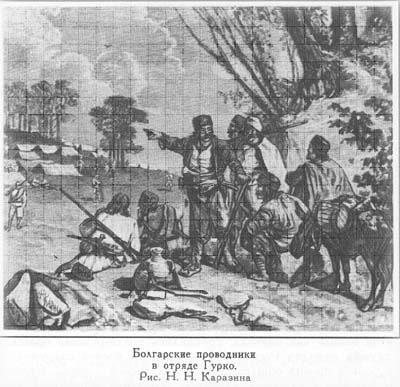
Source of the illustration:Bulgarian pathfinders in Gurko’s detachment. Ritz. N., N. Karazin. – Source: Vinogradov V.I. Russo-Turkish War 1877-1878 and liberation of Bulgaria. – M.: Mysl, 1978. – p. 203.
When we pass from the Gospel to the Acts of the Apostles and the Epistles, we are obliged to stop our attention to the second person of the New Testament. As a French scholar says, the New Testament is composed of two biographies: of Jesus Christ and of His follower Paul Tarsian, the Apostle Paul. Each of you, passing from the Gospel to Paul’s epistles, seems to fall from heaven to earth. Although Paul is in many ways superior to the evangelical writers. He was a man of enormous talent, spiritual power, education. This person has created personal works. His messages are things written in his heart’s blood. In any case, it is difficult to compare them with the Gospels. Because the four gospels reflect not so much the literary gift of the apostles-evangelists, as the Model they saw before them. And if app. Paul stands before us as a man, then Christ is the Revelation of God. However, how is the apostle Paul important to us? Why did the Church place him next to Christ in the New Testament? Why are the majority of the epistles—fourteen—written by him? Why does his biography occupy a central place in the Acts of the Apostles? Because app. Paul apparently never saw the face of Jesus during His earthly life. There are, of course, historical hypotheses that their paths could have crossed in Jerusalem. He himself was born in the first years of the Christian era in Asia Minor, but he studied in Jerusalem, and then he was able to see Jesus. However, it is more credible to consider that he never saw Christ. I think this is precisely what draws the Church to his person. And we ourselves have not seen this Person. However, Christ appeared to Paul with such credibility that it greatly surpassed any external contact. Christ’s appearance was seen by His enemies, the scribes, the Pharisees, and Pilate. But that didn’t save them. Paul was also an enemy, but Christ stopped him on the road to Damascus and called him to become an apostle. This event changed not only his destiny, but also the destiny of the entire early Church, because Paul became one of those who carried the Gospel from Syria and Palestine to the wider world. They called him “apostle to the nations” and “apostle to the Gentiles”.
Brought up in Judaism, he knew very well that it is impossible to merge with God, that the man of the East who thinks that by experiencing ecstasy he merges with the Absolute is delusional. He only touches the divine, because in the bowels of the Godhead boils an eternal fire, dissolving everything in itself.
Between the Creator and the creation lies an abyss, like the abyss between the absolute and the conditional; it cannot be crossed, overcome – neither logically nor existentially. Paul himself discovered that there is a bridge over the chasm, because he saw Christ and was inwardly united with Him; through infinite love he was bound to Him so that it seemed to him as if he bore upon himself the wounds of Christ; that he died with Him on the cross and rose with Him. That is why he said: “It is no longer I who live, but Christ lives in me.” With Him I died, and with Him I come back to life.” If it is impossible to merge with God, then with the God-man it is possible, because He belongs to two worlds at the same time – ours and the other world. The path of Christian mystics from Paul to the present day is built entirely on this. The way to the Father is through the Son. “I am a door,” says Jesus, “I am the gate, the door to heaven.”
By repeating various prayers, the Christian ascetics could be likened to the Eastern, the Indian, who repeat various mantras. One of the main prayers of Christian asceticism is called the “Jesus Prayer”, in which the Name of the one who was born on earth, crucified and resurrected is constantly repeated. And it is precisely this Christ-centeredness of the basic Christian prayer that radically distinguishes it from all other meditations and mantras, because here there is an encounter – not just a concentration of thought, not just a focus, not a simple immersion in the ocean or the abyss of spirituality, but an encounter of the personality with the Face of Jesus Christ, who stands above the world and in the world.
I remember a prose poem written by Turgenev when he was standing in a village church and suddenly felt that Christ was standing next to him. When he turned, he saw an ordinary person behind him. After turning away, however, he again felt that He was there near. This is true because it is true. Christ’s Church exists and develops because He dwells within it.
Note that He has not left us a single written sentence, as Plato left us his “Dialogues.” He has not left us tablets on which the Law was written, like the tablets of Moses. He did not dictate to us, like Muhammad’s Koran. He did not form orders like Gautama-Buddha. But He has told us, “I am with you to the end of time.” When it came time for Him to leave us, He spoke the eternal words: “I will not leave you orphans, but I will come to you.” And this continues and happens today. All the deepest experience of Christianity is built on this, the rest are some superficial layers. In everything else, Christianity prays like all other religions.
Religions in the world are part of culture. They arise together with the urge of the human spirit towards eternity, towards imperishable values. Here the direction is from heaven, and therefore one of the theologians of our century rightly says that “Christianity is not one of the religions, but a crisis (judgment) of all religions.” It rises above all else, as defined by Ap. Paul, “no one is saved by the works of the Law, but only through faith in Jesus Christ.”
In conclusion, I must explain this key phrase to you. What are the works of the Law? I am talking about the system of religious rites and rules. Are they necessary? Yes, they are needed as an educational tool. They are created by people. Sometimes, as a result of great insights, sometimes by virtue of tradition, sometimes – by delusion. Sometimes these laws come by revelation from God, as in the Old Testament. They serve a certain phase in mental and spiritual development.
And what does it mean to save yourself? It means uniting your ephemeral temporal life with immortality and God. This is salvation. Incorporation into the Divine life. The thirst for such inclusion lives in us, in every person. It is hidden, hidden, but it is there in man anyway. Therefore the apostle speaks that the Law is holy. The Old Testament Law is holy and good, and was given by God, but participation in the Divine life is possible only through faith in Jesus Christ.
What does faith in Christ mean? Belief that He lived on earth? This is not faith, but knowledge. His contemporaries remembered that he lived. The evangelists have left us reliable testimonies. Today’s historians will say that he lived, that there was such a person. Attempts by various propagandists to assert that this is a myth have long been debunked. Only in our country, as in some reserve of various miracles, this concept is still preserved. What does it mean to believe in Him? Faith in Jesus Christ? That He existed, then, is not faith? Belief that He came from other worlds? And this is just another theory.
Let us remember this faith that is revealed in the Old Testament: trust in being. Even when Abraham says “yes” to God, he rather does not say, but silently obeys His call – that’s when faith was born. In the ancient Hebrew language, the word “faith” sounds like “emunah” and comes from the word “omen” (faithfulness). “Faith” is a very close term to “faithfulness”. God is faithful to His promise, man is faithful to God; weak, sinful, but nevertheless faithful to God. But whose God? Of treasures, fearful as the universe, too far from man, like the ocean. But Christ reveals another image of God through Himself. He does not call Him by any other name than Father. Jesus Christ almost never uttered the word God. He always calls Him Father. And in His earthly life He used for this that tender and flattering word which children use in the East, addressing their father. Although untranslatable, but it is so. Christ reveals God to us as our heavenly Father and thus creates brothers and sisters, because brothers and sisters exist only with a common father.
The common spiritual Father is God. And an open heart knows Jesus Christ – this is the secret of the Gospel. Everyone knows how confused man is, how weak he is, to the extent that all sorts of complexes and sins have nested in him.
There is a power that Christ left on earth, and it is freely given to us. It is called grace. A good that is freely given. It cannot be earned, it is given. Yes, we are bound to make an effort; yes, we are bound to fight sin; yes, we must strive for self-improvement, not forgetting that we will not succeed in pulling ourselves out by the hair. This in just the preparatory work. Herein lies the fundamental difference between Christianity and Yoga, a teaching which believes that man can reach and enter God, so to speak, of his own volition. Christianity teaches – you can improve yourself, but reaching God is impossible until He Himself comes to you.
Behold, Grace surpasses the Law. The law is the initial stage in religion that begins with the child. This should not be done, this may; rules, norms… Is this necessary? Yes, of course. But then Grace comes – in the way of the inner experience of meeting God. She is a new life. And the apostle Paul said: “Look, people argue with each other. Some are supporters of preserving the ancient rites, the Old Testament. Others, third – against it. And actually, neither one nor the other is important. All that matters is…faith working through love.”
This is true Christianity. Everything else in it is merely a historical shell, a frame, an entourage; that which is related to culture.
I am talking to you about the very essence of the Christian faith. The boundless value of the human person. The victory of light over death and decay. The New Testament that grows like a tree from a small seed. The New Testament leavens history as leaven leavens dough. And even today this Kingdom of God secretly manifests itself among people when you do good, when you love, when you contemplate beauty, when you feel the fullness of life. The kingdom of God has already touched you. It is not only in the distant future, not only in futurological contemplation; it exists here and now. This is what Jesus Christ teaches us. The kingdom will come, but it has already come. The judgment of the world will come, but it has already begun. It began when Christ first proclaimed the gospel.
He also said: “And the judgment is concluded in the fact that the light has come into the world, and people have loved the darkness more.” This judgment began during His preaching in Galilee, in Jerusalem, on Calvary, and the Roman Empire, in medieval Europe and Russia, today, in the 20th century, and in the 21st century, and throughout the history of mankind. The judgment will continue because this is the Christian story – the story through which the world walks with the Son of Man.
And if we once again ask ourselves the question: what is the essence of Christianity? – we must answer: this is God-manhood, the union of limitations and temporary human spirit with the infinite Divine. This is the sanctification of the flesh from the moment when the Son of Man accepted our joys and sufferings, our love, our work – nature, the world. Everything in which He was, in which He was born as a man and God-man, was not rejected, was not destroyed, but was raised to a new level, sanctified. In Christianity we have sanctification of the world, victory over evil, over darkness, over sin. But this victory belongs to God. It began on the night of resurrection and continues as long as the world exists.
Note: A lecture delivered in the Moscow Technical House on September 8, on the eve of the tragic death of Father Alexander Men; published on a tape recording in “Literaturnaya Gazeta”, No. 51 of 19.12.1990, p. 5).
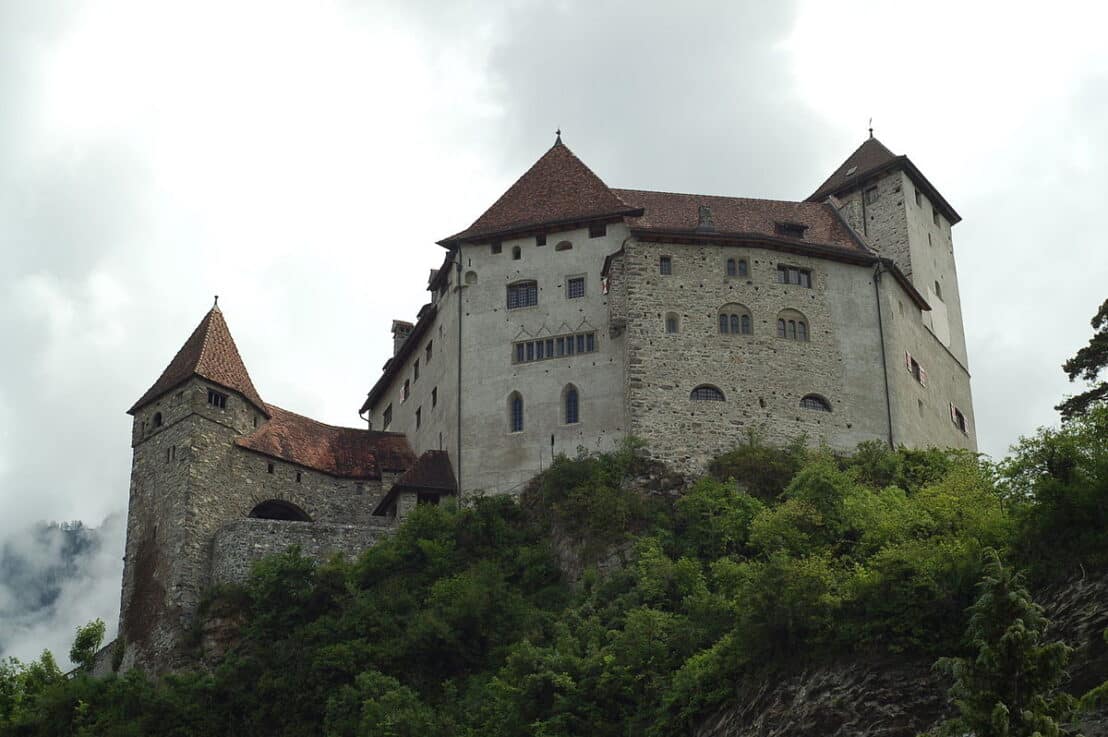
Liechtenstein is a small country left entirely to the locals. In the last year, the number of tourists did not exceed more than 60 thousand people. This is strange, especially since it is said to be one of the largest and most beautiful museums of modern art – yes it is a challenge for most people to understand what the artists are trying to say, but still. It is strange that this country can be visited in only two hours from Zurich, and since its area is not that big, there is room for everyone, and tourists can enjoy a real beauty.
Liechtenstein exists as one of the smallest countries in Europe. It has a length of 24 kilometers from end to end and is about 12 kilometers in width. In practically a day, a person can create a bicycle race for the Tour of Liechtenstein and see everything necessary. The country is located in the valley between Austria and Switzerland. The rulers are Austrian, but the currency is Swiss.
It allowed women to vote in 1984 and was the last country in history to enact this law. Their national stadium can only hold 6,127 people. The curious thing is that people arrive here who are very happy to register their companies. After all, Liechtenstein has more companies than population. The capital has a population of only 5,000 people. However, it has art from all over the world, making it quite an interesting place to explore.
Liechtenstein has another positive – it offers one of the most beautiful views of Austria, as well as several ski resorts. At the outbreak of World War II, Liechtenstein had no army. Prince Franz Joseph II met with Hitler in Berlin and managed to negotiate the country’s neutrality. After the end of the war, about 500 whiteguards will request asylum. Joseph II refused to hand them over to Stalin, despite his insistence. And right here comes one of the funniest moments in Liechtenstein’s fighting history.
The only time this tiny country ever fought was way back in 1866. The Austro-Prussian War was raging and with Liechtenstein on the way, it stands to reason that it would have to defend itself. About 80 soldiers were sent to guard the Tyrolean border. After fulfilling their duty, the soldiers are now 81. They have no losses, and what is even more amusing is that they manage to befriend one person who decides to sign up as a volunteer. That is, the army increases by one more person. It turns out that the army, or rather the humble detachment, managed to avoid all kinds of battles.
Liechtenstein even leaves 20 men in the army reserve. The humble squad reaches the limit and realizes that there’s not much they can do. No one even thought of fighting Lichtenstein, and with morale already high and the beauty of the mountain beckoning, the gentlemen simply decided to drink wine and beer, smoke pipes, and relax. Meanwhile, the Prussians will continue to wage war, but far from it.
The 81st man is believed to be an Austrian officer, but in some other versions he is believed to be Italian. There are also claims that the man in question is a deserter who found the best army in the world. There is no evidence of man’s origins, but despite this, Lichtenstein’s entire military campaign is considered a resounding success.