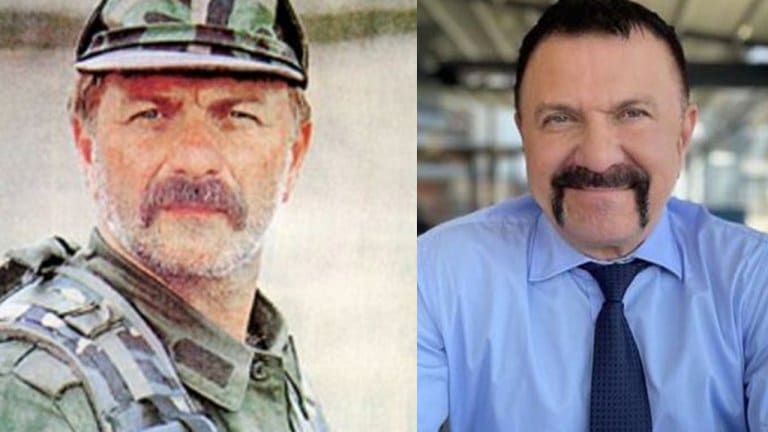
Reserve Colonel Levent Göktash is believed to have been a member of what Ankara considers a terrorist organization FETO
Colonel Levent Göktash from the reserve of the Turkish Army was captured in Bulgaria, leading Turkish media reported.
The man was wanted on a red notice by Interpol for the murder of the intellectual writer Necip Hablemitoglu. Göktaş is the main suspect in the death of the writer, who was shot dead in his home in December 2002.
The killing went unsolved for many years, but authorities had come to suspect it was carried out by members of preacher Fethullah Gulen’s FETO group, which Ankara says was also behind the July 2016 coup attempt.
It was after the failed coup that the authorities in Turkey renewed the investigation into the writer’s death. Thus, in 2021, the indictment against Colonel Göktash was filed in the court in Ankara for participating in the assassination plot. A charge of membership in FETO has also been brought against him.
He is also believed to have had ties to alleged mob boss Sedat Peker.
Then the military man managed to escape, but the Turkish authorities submitted to Interpol documents for his search with a red notice.
According to the Turkish media, the Turkish Ministry of Justice has already submitted a request to the Bulgarian authorities for the extradition of Levent Göktash to Turkey, and actions along these lines have already begun.
Necip Hablemitoglu was one of the first intellectuals in Turkey who spoke about the danger of the actions of Fethullah Gülen’s organization as a network that, under the guise of religion, aims to seize positions of power in the state, as well as the expansion of Gülen’s network abroad, mainly in Germany.
Turkey’s Interior Minister Süleyman Söyliu revealed that the country has reached agreements with Hungary and France to print their biometric passports, with 250,000 copies of the document to be printed for Hungary within a year.
Soylu made the revelation during a press conference in the capital Ankara to explain the introduction of Turkey’s new biometric passports, Turkish daily Hürriyet reported.
Turkish passports were previously printed by a European country that could not keep up with demand due to a shortage of chips at some point during the coronavirus pandemic, the publication noted.
During a press conference, the official also showed a sample copy of the new Turkish passports, saying they have 27 security features, small and large embedded chips and design features that highlight the country’s tourism and cultural assets.
“On the middle pages there is a picture of the Hagia Sophia mosque.” There are also pictures of other landmarks of the country, such as Canakkale Bridge, Camluja Mosque, Ishaq Pasha Palace and the famous houses of the Black Sea province of Amasya,” Soylü said.
The minister added that about 1.6 million of the new passports have already been produced. The new production unit recently opened in Turkey has a huge capacity, being able to issue over a million passports in just one day, if needed.
Apart from the passport, Soylu said the government has also made good progress in issuing national ID cards with an embedded chip, delivering about 77 million of them since 2018, including 6.7 million since the beginning of 2022. During this period chip supply challenges have affected the issuance of many digital IDs around the world.
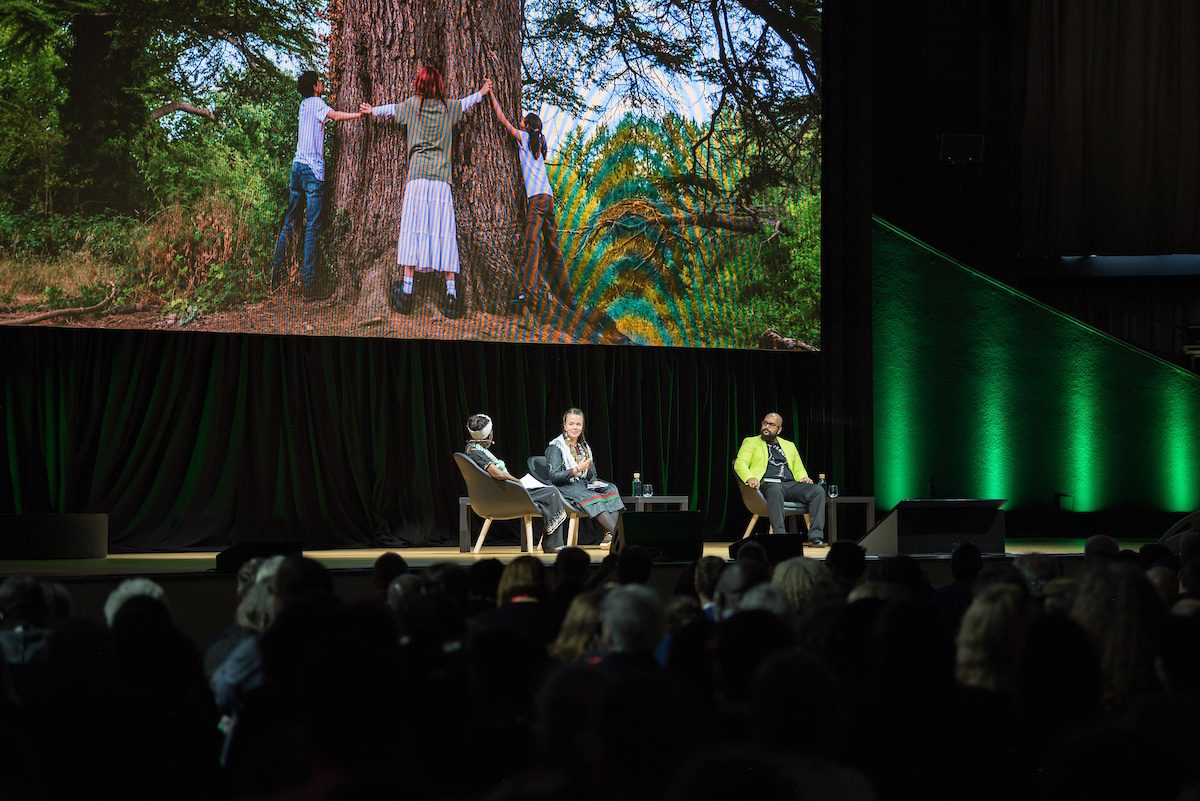
1 September 2022, Karslruhe, Germany: Moderator of the WCC central committee Dr Agnes Abuom (left) leads a dialogue session with Julia Rensberg (centre), a delegate of the Church of Sweden, representing the Sámi Council within the Church of Sweden and Rev. Bjorn Warde, a delegate of the Presbyterian Church of Trinidad and Tobago (right) during the first thematic plenary of the 11th WCC Assembly. The 11th Assembly of the World Council of Churches is held in Karlsruhe, Germany from 31 August to 8 September, under the theme "Christ's Love Moves the World to Reconciliation and Unity."
In 1998, the Orthodox Church, followed by several churches, set aside 1. September as a day dedicated to creation.
With the symbol of water, without which there would be neither physical nor spiritual life (eg. baptism) on earth, the morning prayer introduced the assembly to this theme in a lively and prayerful way. At the heart of the liturgical action were containers of water from every continent, a “gathering of the waters” reflecting the act of creation in the first chapter of Genesis (v. 9)
As the waters intermingled, the assembly affirmed both our dependence on creation and our union with the risen Christ through baptism. Through him, in whom all fullness dwells, God has reconciled everything on earth and in heaven, as the Bible reading for the day from Colossians 1:9 states
“The Green Patriarch
In his address, the “green patriarch” of Constantinople Bartholomew – “green” because of his commitment to the environment – stresses that the resurrection of Christ leads us to change our view of the world: “The heart of the universe is Christ, not ourselves. When we are transformed by the light of his resurrection, we become able to discover the purpose for which God created each person and thing”.
He calls for a radical change, refusing to reduce our spiritual life to our personal interests and questioning our consumption habits in relation to the resources of creation.
Christian unity calls for common ecological action.
In line with Bartholomew, Metropolitan Emmanuel of Chalcedon (also of the Patriarchate of Constantinople) is convinced that the search for Christian unity must also lead to a conversion with regard to creation. We are stewards not only of the Church but also of Creation.
Last year, together with Pope Francis and Archbishop of Canterbury Justin Welby, Bartholomew signed a joint statement calling on the churches to reconcile and commit together to be good stewards of creation. “If we do not become more sober now, we will pay terrible consequences. The current situation calls for common action. Ecology is a consequence of our faith in Christ,” says Bishop Emanuel.
In his report, the Orthodox theologian Ioan Sauca, acting General Secretary of the WCC, also shared his conviction that climate and ecological issues are a theological issue. Through his incarnation, Christ has indeed taken on everything. God’s purpose in Christ also includes reconciliation and the healing of creation. “I will not mince my words: our planet will be uninhabitable in 50 years if we do not change our behaviour.
The voice of youth
The assembly gave the floor to young people from north to south, east to west. Julia Rensberg, a delegate from the Church of Sweden, comes from the Sami people in northern Scandinavia. The indigenous people of the Arctic see global warming much more than elsewhere. Climate justice and respect for indigenous peoples are intimately linked. For her, reconciliation starts with telling the truth. The truth must be told about the colonization of indigenous peoples. Christ loves all creation and wants to heal it through our practice of truth.
Bjorn Warde, a delegate from the Presbyterian Church in Trinidad and Tobago, loves the Caribbean, a beautiful place that he wants to care for, but which is undergoing severe environmental degradation. It’s the result of our thoughtless actions. “We know we have not been good stewards of creation. Cooperation between churches is essential and the voice of young people is not heard enough”.
“It is very important for me to raise awareness about climate change,” said Subin Tamang, a 25-year-old Nepalese. “I see the effects in my country where farmers cannot harvest wheat and rice because of drought.
Along with 25 other young people under 30, he participated in the “Climate Group” during the Youth Assembly preceding the General Assembly. “What struck me most was hearing from people in Fiji, the Philippines and the Pacific region. The high ocean levels have already affected them, and this is an anticipation to what will happen to us. I fear that the Caribbean islands will disappear,” said Tia Phillip, adding: “In 50 years’ time, that’s a lifetime for me and my nieces and nephews”.
In Nepal, Tamang leads a Baptist church youth group on climate change. He is committed to ensuring that churches have a role to play in helping communities adapt to climate change.
Carbon conversations
At the large stand of the Protestant Church of Switzerland, a “Brunnen” (the name of the workshops during the assembly) presents the “Carbon Conversations”, an awareness-raising project to reduce the carbon footprint, supported by the Swiss Protestant Aid Agency and the Catholic Lenten Fund. https://voir-et-agir.ch/pour-les-paroisses/conversations-carbone/ The method originates from England and has become popular in churches as well as in secular organizations
It is based on the observation that knowledge of the facts is not enough to change one’s habits in food, consumption, or mobility. You must meet to talk about it. Groups of 8 to 10 people meet four times for two hours with two facilitators.
This method allows for discussion without conflict or guilt. In an analysis, the University of Bern found that people who participated significantly reduced their footprint
Monasteries as models of integral ecology.
An assembly allows you to meet countless people, known or unknown, near or far. I had the joy of meeting a long-time friend, Sister Anne-Emmanuelle, prioress of the Grandchamp community. She shared with me what is happening there in terms of ecology. Inspired by the work of the Catholic theologian Elena Lasida, she and her sisters believe that monasteries, in their way of life, can be a model of integral ecology, a source of inspiration for all.
For her, the link between ecology and monastic life is not primarily at the level of “organic” practices; it is at the level of the four relationships: to God, to oneself, to others, to nature.
S. Emmanuelle also refers to the teaching of Pope Francis in “Laudato si” which she summarises as follows: everything is linked, everything is a gift, everything is fragile. Monastic life, in its deepest intention, is a factor of unification of the person and of people among themselves, whereas in today’s world everything is fragmented. In this sense, a monastery is a paradigmatic place of integral ecology, a place where it can be fully incarnated. Monasteries are true ecosystems.
A tree, a walk and a prayer
At the end of the plenary on God’s love in creation, a cedar tree is presented by Agnes Abuom, President of the WCC, to Frank Mentrup, the Mayor of Karlsruhe. It will be planted in the “Garden of Religions”, which was created a few years ago to mark the city’s 300th anniversary. Another cedar as old as the city is already there. This tree has this message: “You can’t live without me”!
After this event, the youth climate group has organized a symbolic march along the exhibition tent area, with a call for solidarity and action on our lifestyle: “Our creation is not for sale. It is time to talk less and act more,” concluded the Indian speaker.
At the end of this rich day, the participants in the Orthodox Vespers for Creation Day said this prayer, with which I conclude this second article:
“Protect the environment, you who love us, for it is thanks to it that we live, that we are animated and that we exist, we who inhabit the earth according to your will, that we may be preserved from destruction and annihilation!
Surround the whole of creation, Christ the Saviour, with the power of your love for humankind and save the earth we inhabit from imminent destruction, for in you we, your servants, have placed our hope!”
Author: Martin Hoegger
Picture: The session on creation during the WCC Assembly / credit to Albin Hillert, WCC.
Germany’s President, Frank Steinmeier, has taken aim at Russia as he stressed that the leadership of the Orthodox Church of Russia justifies and supports ‘war of aggression’ of his country’s political leadership in Ukraine.
Steinmeier attended the first day of the 11th Assembly of the World Council of Churches in Karlsruhe on Aug. 31 evoking criticism for his remarks from the Russian church, for interference.
He said he was happy that the first assembly of the World Council of Churches in Europe after 50 years was being held in Germany.
“The heads of the Russian Orthodox Church are currently leading their members and their entire church down a dangerous and indeed blasphemous path that goes against all that they believe,” said the German leader.
The Russian Orthodox Church is the biggest Orthodox church in the WCC.
The WCC represents over 580 million Christians and includes most of the world’s Orthodox churches, scores of Anglican, Baptist, Lutheran, Methodist and Reformed churches, and many United and Independent churches..
Referring to the Russian Orthodox Church Steinmeier said, “They are justifying a war of aggression against Ukraine – against their own and our own brothers and sisters in the faith.”
‘SPEAK OUT’
He noted, “We have to speak out, also here in this room, in this Assembly, against this propaganda targeting the freedom and rights of the citizens of another country, this nationalism, which arbitrarily claims that a dictatorship’s imperial dreams of hegemony are God’s will.”
The German president said, “How many women, men and children have become victims of this hatemongering, hatred, and criminal violence?
“Carpet bombings targeted attacks on civilian buildings, apartment blocks, hospitals, shopping centers, stations, and public spaces. War crimes take place in full view of the world.”
“Here, today, we cannot remain silent. We must call it by its name. We must denounce it. As a Christian community, we must express our commitment to the dignity and the freedom and the security of the people of Ukraine.”
The Russian Orthodox Church hit back, however, in a statement from the Department for External Church Relations chairman of the Moscow Patriarchate, Metropolitan Anthony of Volokolamsk.
“The President of Germany’s address contained completely unsubstantiated accusations fully ignoring all the humanitarian efforts the Moscow Patriarchate made in the context of the confrontation in Ukraine as well as an outright demand that the WCC Assembly should condemn the Russian Orthodox Church,” said Anthony.
The Russian church leader said he believes Steinmeier’s position “is an example of rude pressure made by a high-ranking representative of state power on the oldest inter-Christian organization.
“It is interference in the internal affairs of the World Council of Churches, an attempt to question the peace-making and politically neutral nature of its work.”
Pope Francis meets with international film, media and music celebrities at the first “Vitae Summit” in the Vatican, and reminds artists that they should use beauty to preach the Gospel.
By Vatican News staff reporter
Thursday marked the final day of a two-day meeting in the Vatican’s Casina Pio IV aimed at promoting a conversation on how to use the arts to foster a culture of hope and unity.
The “Vitae Summit”, organized by the Vitae Global Foundation, was animated by a host of celebrities of the arts, media and entertainment industries gathered to discuss their role in triggering a cultural transformation that promotes the common good, universal values and a culture of encounter.
Preachers of beauty
Pope Francis joined participants at the end of the summit and encouraged them to be “preachers of beauty”, because he said, “Beauty is good for us; beauty heals; beauty helps us go forward on our journey.”
A Holy See Press Office communiqué revealed that during their conversation, the Pope and those present focused on the need to reach out to young people, communicate the message of the Gospel, and share stories of witness and accompaniment that stem from an encounter with God.
The Pope, the statement said, pointed to the need to undertake paths of communication that lead to truth, goodness and, particularly for artists, beauty and the path of contemplation.
“A person on a journey is on a quest,” the Pope said, noting that art can provide inspiration for those who undertake a journey in the awareness that the Lord is awaiting us.
Pope Francis speaks at the Vitae Summit
Ethics of art
The Pope also expressed his hope that “art may open doors, touch hearts and help people to go forward”, and he spoke of the need for an ethical conscience for artists.
Art, he said, must stimulate “respect for people” and encourage them “to go forward rather than to buy.”
“The role of art,” he said, “is to put ‘a thorn in the heart, which moves us to contemplation, and contemplation puts us on a path.”
MEPs will scrutinise the work of the European Commission on 14 September to ensure the EU addresses Europeans’ key concerns. Follow the State of the EU debate live.
What is the State of the European Union debate?
Every September, the President of the European Commission comes to the European Parliament to discuss with MEPs what the Commission has done over the past year, what it intends to do in the coming year and its vision for the future. This is known as the State of the European Union debate or SOTEU.
Following the Commission President’s presentation, MEPs, as the elected representatives of EU citizens, hold the Commission to account and scrutinise its work to make sure that the key concerns of Europeans are being addressed.
The State of the EU debate influences the Commission’s work programme for the coming year.
The Parliament, in line with Europeans’ proposals for EU change adopted by the Conference on the Future of Europe, expects the EU to listen to people’s demands and react with ambitious policies, particularly in moments of crisis.
How to follow the State of the EU debate?
The debate will be streamed live on our website on Wednesday 14 September from 9.00 CET. Interpretation will be available in all of the EU’s 24 official languages – simply select the language of your choice.
You can also watch it live on Facebook and join the discussion on our other social media channels, including Twitter, LinkedIn and Instagram.
A heart attack occurs when an artery carrying blood and oxygen to the heart becomes obstructed.
Short, repeated bouts of restricted circulation using a blood pressure cuff may be beneficial to one’s health.
The majority of heart attacks and strokes worldwide are ischemic, meaning that a clot or accumulation of plaque in an artery stops oxygen-rich blood from getting to the cells in the heart or brain. When blocked for too long, tissues die.
But an increasing number of studies suggest that brief, repeated periods of reduced circulation using a blood pressure cuff may help minimize tissue damage and avoid the worst consequences of heart attacks and strokes, similar to how exercising helps muscles adapt to more rigorous workouts. According to the research, the straightforward, noninvasive surgery may improve heart and vascular function, slightly decrease blood pressure, and lessen the workload of the heart.
In a recent review study that was published in the Journal of Physiology, James Lang, an assistant professor of kinesiology at Iowa State University, compiled the results of roughly 100 studies, some of which were his own. He said that “remote ischemic preconditioning” (RIPC) typically comprises five minutes of high pressure on a person’s arm followed by five minutes of relaxation, repeated three to four times.
A study participant sits in James Lang’s lab at Iowa State during a microvascular test. Credit: James Lang/Iowa State University
Numerous studies have demonstrated that a single RIPC session creates a protective window that peaks 48 hours later, but research from Lang’s team and other scientists has shown that preconditioning several days in a row may enhance the protection and support additional health benefits.
“I think there are a lot of possible applications and potential with RIPC: someone preparing for an upcoming surgery; people who have already had a heart attack or stroke, which puts them at higher risk of it happening again; people who can’t exercise, are pre-hypertensive or have sleep apnea,” said Lang.
RIPC could be helpful even for astronauts as well. To prevent cardiac and muscle atrophy brought on by microgravity in space, they often exercise for up to two hours every day, according to Lang. It could be a good idea to include blood pressure cuff sessions into their fitness routines.
Filling the gap
However, Lang noted that much more research is required to ensure that RIPC is effective in different contexts and for various population subgroups. Animal models from the 1980s and 1990s provide the majority of the knowledge on the underlying mechanisms and duration of protective effects.
“Unfortunately, a lot of researchers jumped quickly to large clinical studies in the early 2000s, and their results were inconsistent due to a host of outside influences like the participants’ medications, physical and genetic factors, age, and sex,” said Lang, adding a follow-up study from other researchers found propofol, a common form of anesthesia used in surgeries, suppresses the effects of RIPC, as well.
Since then, researchers like Lang have been working to fill the gap between animal research and big clinical trials.
“In the lab, we can do more controlled studies with human participants, try to figure out what factors influence RIPC and when the best time is to administer RIPC.”
Lang’s lab
In one study, Lang and his research team found a week of RIPC increased participants’ micro-circulatory capacity by as much as 50%. In another, they measured a modest blood pressure drop and a less active “fight or flight” response while the participants were resting.
“Together, it was improving the participants’ blood vessels and potentially reducing the workload of the heart.”
One of the ways Lang tests the effect of RIPC is by measuring how well a study participant’s blood vessels dilate when their skin is warm. Before and after RIPC, Lang attaches a small, nickel-sized device to a participant’s arm. A tiny heater warms up the skin while a doppler bounces a laser light into the micro-vessels below.
Like a weather radar picking up changes in the atmosphere, the doppler Lang uses in his lab measures changes in the flow of red blood cells as the participant’s blood vessel widens in response to the heat.
Lang explained a loss of blood vessel elasticity (i.e., the extent to which arteries can constrict or dilate) increases the risk of high blood pressure, heart attacks, and strokes, as well as dementia.
Currently, Lang is working with a researcher at Des Moines University to study how RIPC could help people with diabetes struggling with slow-healing wounds. High blood glucose levels can damage small blood vessels and nerves, and coat arteries with plaque, making it harder to get white blood cells and nutrients to cuts and sores.
While the side effects from RIPC are very low, Lang says anyone interested in trying it on their own, outside a research study, should talk to their physician first.
Reference: “Remote ischaemic preconditioning – translating cardiovascular benefits to humans” by James A. Lang and Jahyun Kim, 21 May 2022, The Journal of Physiology. DOI: 10.1113/JP282568
The European Laudato Si’ Alliance (ELSiA) invites you to participate in the online meeting on the “Fit for 55” Package to implement the Green Deal. The event will take place on Thursday 8 September 2022 with the participation of Dr. Gregor Erbach from the European Parliamentary Research Service. Click here to register
The “Fit for 55” Package is a legislative proposal of 13 interlinked measures aimed to implement the Green Deal allowing the EU to reach climate neutrality by 2050, starting with reducing its greenhouse gas emissions by 55% by 2030.
The European Commission presented the package in 2021, you can find more information here. The European Parliament and the Council have adopted their positions on the “Fit for 55” package during the first half of 2022.
All co-legislators are now discussing these measures together to finalize them. The topics discussed include, among others, social and climate funds, effort sharing regulations, land use, and forestry regulations.
To better understand what is at stake, the event will feature the participation of Dr. Gregor Erbach, Head of the Climate Action and Tracking Service of the European Parliamentary Research Service, who will present the Package. The online meeting will be moderated by Stefan Lunte, General Secretary of Justice and Peace Europe. The event is organised in the context of the Season of Creation 2022.
What is ELSiA? ELSiA is a network of Catholic organizations committed to joining forces to adapt the comprehensive approach of Pope Francis’ Encyclical Letter Laudato Si’ and related Church teachings to a European context with a special focus on the institutions of the European Union. The alliance is composed by COMECE, CIDSE, Don Bosco International, JESC, Justice and Peace Europe, Caritas Europa, and the Laudato Si’ Movement.
War in Ukraine, church dialogue, and humanitarian response were in sharp focus on third day of the World Council of Churches 11th Assembly. Church leaders from Ukraine together with heads of ecumenical organisations emphasised the need for reconciliation, unity, and peacebuilding.
The Europe plenary held on 2 September in Karlsruhe was rooted in the biblical parable of the Good Samaritan, Luke 10, reflecting the context of Christ’s compassionate love.
“For more than three centuries, the Russian Empire and the Soviet Union has tried to erase the uniqueness of Ukrainian people,” said Archbishop Yevstratiy of Chernihiv and Nizhyn from the Orthodox Church of Ukraine. “But, we are successfully fighting for our freedom, for our independent future.”
Archbishop Yevstratiy appreciated the ecumenical organisations for their strong position about the Russian aggression and their appeals to the Russian Patriarch Kirill. “No one has the right to bless aggression, no one has the right to justify war crimes and acts of genocide,” he said.
Prof. Sergii Bortnyk from the Ukrainian Orthodox Church shared how his church is helping. “Many faithful have become volunteers. Our church receives and distributes different kinds of humanitarian help – especially from the neighbour countries and from our sister churches,” he said.
General secretary of the Conference of European Churches Dr Jørgen Skov Sørensen highlighted how “Ukraine is a concern not only for Europe but for the world.”
“Due to our recent European past, war on European soil brings connotations that transcend their actual time and place in history. It evokes long-gone memories. And it challenges a strong European trust that this part of the world has – or had – developed into a post-war continent of lasting peace,” he said.
Sørensen shared how the Conference of European Churches organised a European Pre-assembly in February after the Russian invasion of Ukraine, where the programme was set overnight to accommodate the fears, uncertainty and shock that engulfed Europe at the time. “We listened to voices. We analysed. We prayed together,” he said.
Rev. Dr Dagmar Pruin, president of Bread for the World and Diakonie Katastrophenhilfe shared how the war in Ukraine has brought immeasurable suffering to the people. “Destruction, displacement, torture and violent deaths are the reality for millions,” she said.
Pruin spoke about significant challenges faced by church agencies in providing aid to the victims of war, especially when there is a great need arising from other catastrophes, including climate change. She stressed that churches’ humanitarian work is, and must continue to be, rooted in the vision of diakonia.
Chairman of the World Union of Old Believers Leonid Sevastianov recently said that Pope Francis intends to visit Moscow – and then Kyiv. We invited Leonid Sevastianov to comment in more detail both on this case and on his relationship with the Pope in general.
JLB: Your statements about the position of Pope Francis on the war in Ukraine often appear in the media, and in fact, you act as a public mediator of the Pope. We learn more about his position and plans from you than from him. Are you authorized by the Holy Father to make such comments?
LS: My family has known the Pope for 10 years. Our acquaintance with him took place in the context of organizing a concert for peace in Syria in the Vatican in 2013. My wife Svetlana Kasyan, an opera singer, participated in the concert with a solo program. I myself dealt with organizational issues. Since then, peace, peacemaking is exactly what our relationship with the Pope is based on. In addition, my wife and I have been actively involved in the prolife movement. In 2015, we created the Save Life Together Foundation, which works to protect the dignity and rights of unborn children. For her activities, Svetlana was elevated by Pope Francis to the rank of Dame of the Order of St. Sylvester. My wife and I greatly value our relationship with Pope Francis and even named our newborn son after him. When the war began, the Pope gave me the obedience to work in the cause of peace. I am his goodwill ambassador for the promotion of peace. You know that the Pope is a Jesuit. Jesuits spirituality emphasize the role of the individual, the little man, his autonomy in promoting the Gospel throughout the world. Pope Francis, I think, trusts me, realizing that I do not have any skeletons in the closet, and my motivation for him is clear and obvious. Pope has told me that he was ready for any step so that peace reigned in Europe. For him, a trip to Russia and Ukraine has great symbolism. He is sure that this trip will help Ukraine and Russia to agree on a world that is fair for all.
JLB: During the protests in Belarus, you unequivocally supported the Belarusian people in the struggle for peace, freedom and justice. Whose side is the truth in Russia’s war in Ukraine now? How justified do you think Russia’s territorial claims are in relation to Ukraine, including in relation to the Crimean Peninsula?
LS: A few years ago, I would have tried to answer your question in the way in which you would like to hear my answer. But my relationship with Pope Francis helped me to understand myself as a Christian, or, if you like, to understand Christianity itself. I will answer you with a question to the question: on which side is the Pope on the issue of the destruction of the Papal States, on the issue of the conquest of Rome by Garibaldi and Victor Emmanuel? Or on which side did Jesus Christ and the apostle Peter stand in the matter of the fall of Jerusalem in the year 70? My point is that Christianity as such does not answer the questions of geopolitics. Rather, it is not the competence of Christianity. Viewing Christianity as patriotism is not part of the gospel. I am not saying that a person should not be a patriot, I am only saying that Christianity cannot be drawn into the issue of patriotism and national interests. Christianity operates with questions of eternity – even when the Earth itself and the solar system will not exist. Therefore, many do not understand the Pope, they want to see him as a politician, just as many of His contemporaries saw in Christ. Being disappointed in Him as a politician, some people betray Him, others deny Him, and still others are ready to crucify Him. Let’s look at the Pope as a preacher of the Gospel, not as a politician.
[Leonid Sevastianov already gave his personal opinion on the war, stating that from a Christian point of view, supporting it is a heresy. And on August 30, 2022, the Vatican issued a statement which contained: “As for the large-scale war in Ukraine initiated by the Russian Federation, Pope Francis’ interventions are clear and unequivocal in condemning it as morally unjust, unacceptable, barbaric, senseless, repugnant and sacrilegious.”]
JLB: You regularly give comments to TASS, which is perceived abroad as one of the mouthpieces of the Kremlin propaganda. Why do you cooperate with this particular media?
LS: There are only 3 news agencies in Russia: TASS, RIA Novosti and Interfax. No others. I cannot be responsible for others. I can only answer for myself. Only because there is no political motivation and political propaganda in my words.
JLB: You have known Patriarch Kirill for a long time, ever since he was Metropolitan of Smolensk. What is your relationship with him now? What can you say about the phrase of Pope Francis that he is Putin’s altar boy? What are your relations with Metropolitan Hilarion and the new head of the DECR Vladika Anthony (Sevryuk) now? Do you keep in touch with them?
LS: I have known Patriarch Kirill since 1995. I was sent by Metropolitan Alimpiy Gusev, chairman of the Russian Old Believers Orthodox Church, to study at the Moscow Theological Seminary through Metropolitan Kirill. At the same time, the Patriarch sent me to study in Rome at the Gregorian University, I went there in 1999 through the monastic community in Bose, which is located in northern Italy. I studied in Rome with the money of this very community under the supervision of its leader Enzo Bianchi. Then I continued my studies at Georgetown University in Washington on a scholarship from the American Bradley Foundation. I worked at Georgetown University as a chaplain, as well as at the World Bank. When I returned to Moscow in 2004, I did not want to work for the Department of External Affairs of Moscow Patriarchate (DECR). On this basis, we had a misunderstanding with Metropolitan Kirill, who then headed this structure, which, one might say, persists to this day (the misunderstanding). In 2009, after the election of Metropolitan Kirill as Patriarch and the appointment of Metropolitan Hilarion (Alfeev) as chairman of the DECR, I created and headed the Gregory the Theologian Foundation, which sponsored the activities of the DECR and the creation and restoration of buildings and premises, of the All-Church postgraduate and doctoral studies, as well as its daily activities. Due to the fact that I did not support the rupture of communion with the Greek churches in 2018 and was also indignant at the unworthy attitude of the Moscow Patriarchate towards Old Believers, funding was stopped on our part, and I left the foundation. In 2018, the only World Congress of Old Believers in history took place, at which I presented the concept of the World Union. This concept was approved by the Congress, and in 2019 I created the organization of the World Union of Old Believers. Since then, within the framework of this organization, I have been engaged in the protection and promotion of the world’s Old Believers. I am also very much involved in Russia on promoting religious freedom for all domestically. As regards Vladyka Anthony (Sevryuk), the new head of the DECR, I know him well, from the time when he was still a student. I can’t say anything bad about him. I know him only from the best side. He never did anything bad to me or to anyone I know.
JLB: Why does the Pope intend to visit Moscow first, and not Kyiv? Did you try to discuss with him the possibility of first coming to Kyiv, and only then conveying the position of the Ukrainian authorities to the Kremlin, and not vice versa?
LS: I think that for the Pope the order of the visit is not of fundamental importance: he just wants to connect the visit to the two capitals within the framework of one trip. That is, to go to Ukraine and Russia, and whether he enters Russia from the territory of Ukraine or, conversely, to Ukraine from the territory of Russia, this is not important for him. It is important that the two visits be part of a common trip in order to emphasize the peacekeeping and humanitarian nature of the trip. I think that the Russians will not be offended if he flies to Russia from Ukraine.
JLB: How much does the Pope listen to your opinion? How important is it to him?
LS: The Pope listens to any opinion. And for him, the smaller the person, the more important his opinion. I have seen this from my own experience. My opinion for him, I am absolutely sure of this, is no more important than the opinion of Ukrainians or those Belarusians with whom he communicates.
JLB: The Ukrainian flock reacts very painfully to the words and actions of the Pope, believing that he is acting in the wake of the Kremlin’s policy. Does the pope see a threat to lose the Ukrainian flock by his flirting with Moscow?
LS: Regarding the so-called “flirting” of the Pope, I would like to remind you once again that the Pope is about the Gospel, not about politics. Remember how the disciples came to Christ and told Him that many had moved away from Him because of His politically incorrect words? Then Christ asked them: And you, don’t you also want to leave Me? And it was then that Peter answered that they had nowhere to go, because He is Christ. The Pope speaks of the Gospel. And it is for everyone, both Russians and Ukrainians. Christ hung on the cross, and to the right and to the left of Him were thieves. But one of them said he wanted to be with Christ, and the other said he didn’t. Here is the story about the Pope. The Pope cannot be compared with George Washington, the Maccabee brothers, Prince Vladimir, Monomakh or King Stanislaus. The Pope can only be compared with Christ. And to ask whether His behavior corresponds to Christ or not, to ask the question, what would Christ have done in His place. It is not the healthy who need a doctor, but the sick. The whole Gospel is about it!
JLB: Do you agree with the Pope’s statement that the deceased Daria Dugina is an innocent victim of the war? Did you know Daria when she was a parishioner of one of the churches of the Russian Orthodox Church? How did it happen that she became one of the propagandists of the war?
LS: You know, I would like to answer the words about Daria with the speech of the Godfather to the undertaker, who came to ask the Godfather to kill the criminals who raped his daughter. The undertaker said that justice would be served. The Godfather asked: is it fair to kill those who have not killed anyone? Even the Old Testament had a tit-for-tat rule. Daria did not kill anyone, she did not participate in the war on the front line. Therefore, her death is unjust. In this sense, she is an innocent victim of war. This is what the Pope said. I didn’t know Daria. Prior to her death, very few people knew her at all. She did not have any significant influence on the ideology in Russia.