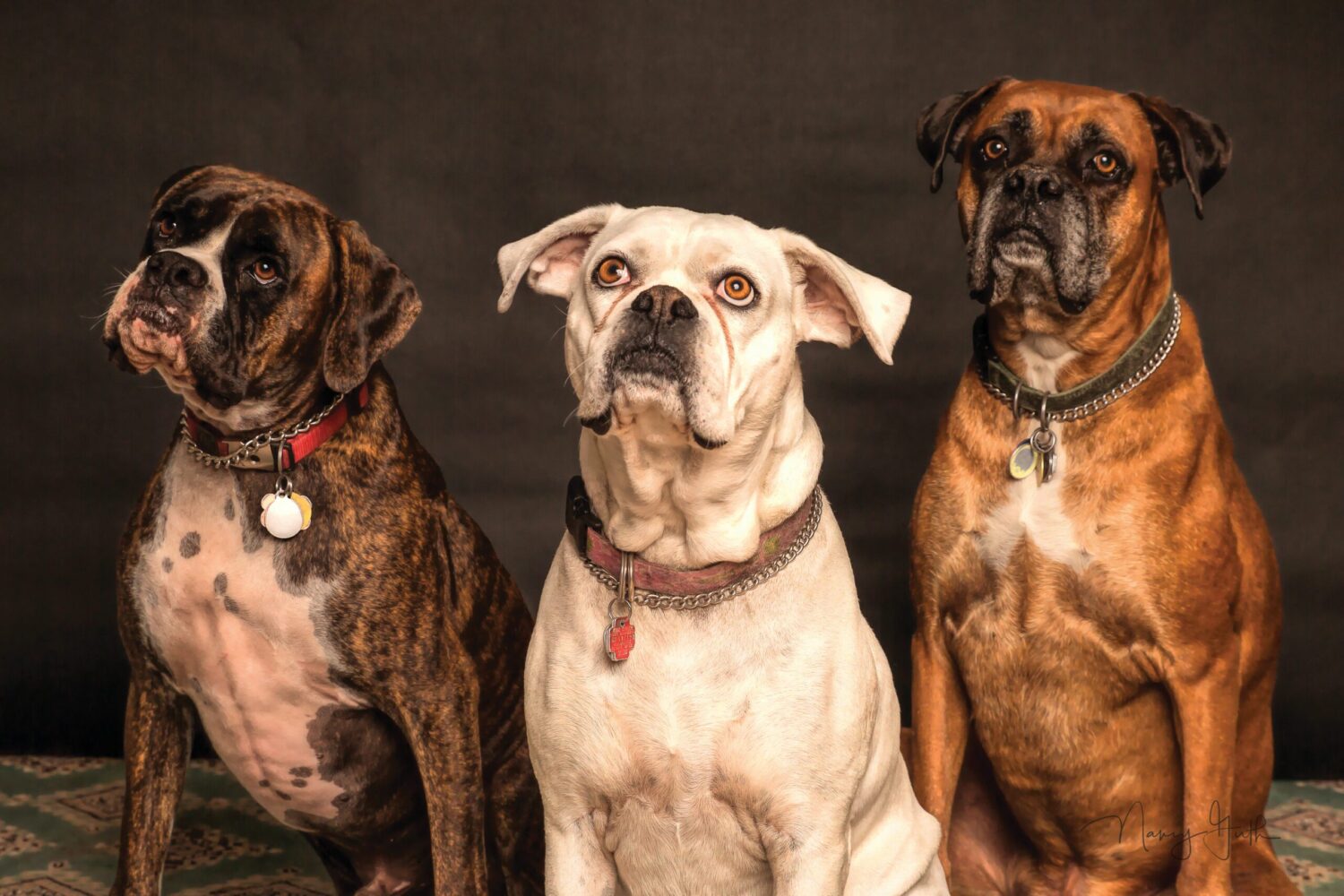
Specialists from the University of Veterinary Medicine in Vienna investigated whether four-legged dogs would prefer a generous trainer to one that does not reward them with treats
Dogs don’t bond more when they receive rewards because they don’t remember the generosity and don’t build an image based on what they received, the Daily Mail reported.
Specialists from the University of Veterinary Medicine in Vienna investigated whether four-legged dogs would prefer a generous trainer to one that does not reward them with treats. They found that neither the dogs nor the wolves showed preferences after seeing the human give or keep the treat.
The conclusion of the specialists is that “creating a reputation may be more difficult than expected among animals”.
According to some research, patterners cooperate with people because they form an image of them by watching them interact with others. Dr. Hoi-Lam Jim examines this ability and whether it evolved through domestication or existed in wolves as well.
She has worked with nine wolves and six dogs. Experiments show that most animals do not have preferences after observation or direct experience. Three dogs and two wolves, however, showed some inclination towards the more generous one.
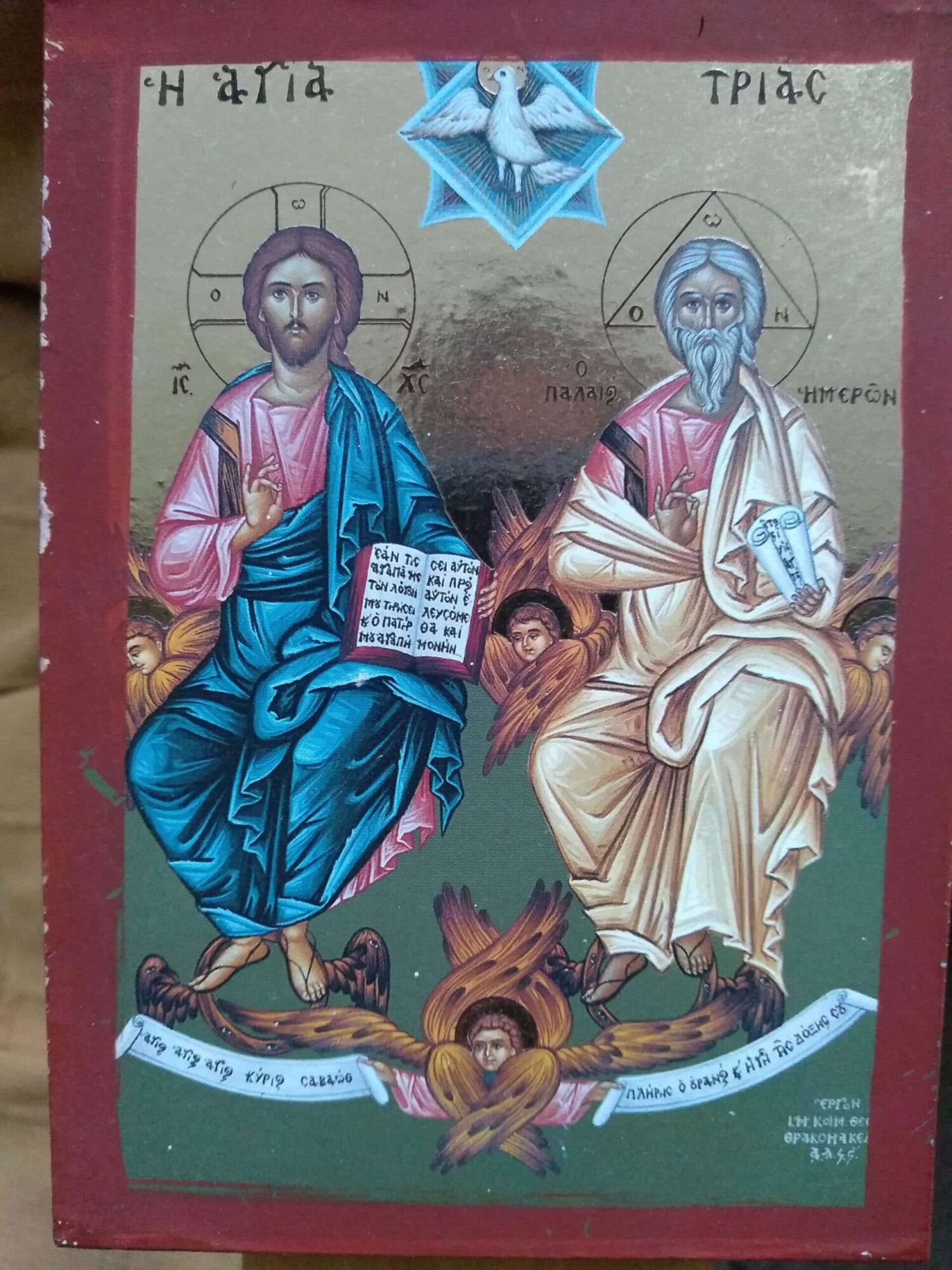
The further life of man, as we have seen above, consists in the development of that seed of eternal life which is laid in baptism. A person is gradually cleansed from sin, gradually perfected and strengthened in goodness, and ascends to the perfect age of a husband. However, even then “the beginning of his life” (Isaac the Syrian), that “salt that keeps a person intact,” continues to be faith. “Faith is the mother of every good deed, and with it a person achieves the fulfillment on himself of the promise of the Lord and Savior of our Jesus Christ, according to what is written:” without faith it is impossible to please God “(Ephraim the Syrian). Even if a person happened to fall: let him only keep his faith – the broken harmony of his soul will be restored, his disparate forces will again be gathered and rush against sin with new energy. “Faith,” says St. I. Chrysostom, – there is a head and a root; if you keep it, then, even though you have lost everything, you will gain everything again with greater glory. “Faith is power for salvation and power for eternal life” (Clement of Alexandria).
On the other hand, it is clear what happens if faith is lost by a person. “Without oil the lamp cannot burn,” without the root every tree will wither. “Without Me,” said the Lord, “you can do nothing.” Once faith is taken away, every meaning of life and every power to do good is taken away. There is no center that would bind the efforts of a person and comprehend them. A person does not feel the closeness of God, he cannot understand His goodness, God again for him is only a punisher of untruth. Will such a person turn to God? And if he does not turn, then he cannot accept God’s help, His grace. So, having lost this “eye that enlightens every conscience” (Cyril of Jerusalem), his faith, a person loses all his spiritual property – and perishes. Remarkable in this regard are the features with which the Lord depicts the righteous and sinners at the last judgment. Meanwhile, how the righteous, who have kept their faith, marvel at the mercy of God: “When did you see thee hungry, and drink?” – For sinners, God’s sentence seems unfair: “when did I see you hungry, and not serve you?” God appears either as hostile to them, wanting, looking for an excuse to condemn them, to deprive them of eternal bliss. The first lived in faith, and therefore their whole soul is filled with a feeling of the undeserved mercy of God, and now they confess their unworthiness. The latter, however, have lost their faith, they do not recognize the mercy of God, they lived only for themselves, and therefore they are now rising to the defense of their “I”. The first in their faith always saw the way to God open to themselves, because they saw the mercy of God. Seeing this, they always aspired to God and were constantly in spiritual unity with Him: this unity, of course, becomes their lot even after leaving this life. The latter, having lost their faith, naturally also lost their strength for spiritual union with God, alienated themselves from God: therefore, even after their transition to the future world, they do not have the ability to surrender to God, their lot is in the gloomy realm of selfishness, which gnashes its teeth about its death. , not finding the strength to come to terms with this, even if, like a righteous man, in the thought that he suffered according to the will of God (Rom. 9:3).
So, faith revived a person, faith developed and educated him in spiritual life, faith will lead him to eternal bliss. By believing, a person accepted here the grace of God and could accept communion with God, despite the fact that until then he had lived in sin. The same faith in the love of God will enable a person to maintain this fellowship with God in the coming kingdom. “On the day of judgment,” says St. Neil of Sinai, “we ourselves will be our own accusers, convicted by our own conscience. Therefore, in this extreme case, will we find any other protection or help, except for one faith in the most philanthropic Lord Christ? This faith is our great defense, great help, security, and boldness, and an answer for those who have become unanswerable because of an inexpressible multitude of sins.”
Faith that saves is free and active
In order to avoid misunderstandings, it must be repeated here once again that the Orthodox Church, assuming in faith all the blessedness of man and considering faith as the cause of man’s spiritual growth, never imagines this faith in the form of some kind of self-acting force, which, as something extraneous, would almost force man to a virtuous life and to communion with God. Of course, a believing person perceives the grace of God, with which he goes to fight against sin. However, the instrument for receiving this grace is not the knowledge or contemplation of the mercy of God and His readiness to forgive and help, but certainly the free desire and decision of a person. In the same way, faith is “a worker of goodness, the basis of righteous conduct” only because it “is the free consent of the soul” (Clement of Alexandria). Faith only inspires the will of a person, but by no means frees him from efforts on himself. “You should not only believe in Christ,” said St. Macarius of Egypt, “but also suffer, according to what is written: “as it was given to you … not only believe in Christ, but also suffer for Him” (Phil. 1, 29 ) To believe only in God is characteristic of those who think earthly, even, I would not say, and unclean spirits who say: “We know Thee, who art the Son of God” (Mk. 1.24; Mt. 8.29)”. Faith requires the free choice of good and the decision to do it.
Not by its contemplative side, not as a state of perceiving, faith saves a person, so that a person can only inactively experience his salvation, Faith saves with its active side, the constant participation of good will in it (John 7:17). The believer in his faith finds the boldness to turn to God and, thus, enters into communion with God, accepts this communion. The believer, strengthened by the power of God, aspires to the life of a saint and thereby begins it. Faith in this sense is “the beginning of our hope and the beginning of Divine mercy towards us, like a door and a way” (Cyril of Alexandria).
Faith and deeds
In order to bring into view precisely this vital (and not formal) meaning of salvation, and precisely where it is necessary to protect itself from Protestant fabrications, our Church chooses from two formulas worked out in the West the one that ascribes salvation not to faith alone, but to faith with works. . “We believe,” says the 13th member of the Epistle of the Eastern Patriarchs, “that a person is justified not simply by faith alone (i.e., as will be seen later, not by its theoretical, perceptive side), but by faith, aided by love (faith, as active force, by the fact that it produces love), i.e. through faith and deeds “… “Not a ghost, – the fathers explain even more specifically, – only faith, but the faith that exists in us through deeds justifies us in Christ.” Thus, it is undoubtedly faith that justifies a person, but only real, true faith, that which leads a person to true life, makes him work out his salvation. The teaching of the Rev. Theophan that faith saves by deeds. “Salvation,” says the Saint, “from good deeds; but it is impossible to succeed in good deeds, as it should be, without faith. Faith inspires good deeds, faith points them out, faith also leads to obtaining strength for doing good deeds. Therefore, faith is an accomplice to good deeds. The main thing is deeds, and she is a benefit.” Salvation, therefore, lies in the fact that a person creates it himself, but he does not come to this creation except by faith.
The Orthodox should not understand this definition in the Catholic way, i.e. so that by deeds a man earns his salvation. Deeds in themselves, as outward acts or separate deeds, have no meaning in Christianity. Behavior is valued here only as an expression of the corresponding mood of the soul, a certain direction of the will, although, in turn, it influences the formation of this mood. The entire Conversation on the Mount is built on the thought of the insufficiency of one external good deed and the need for an internal change, which actually assimilates the Kingdom of Heaven to a person. Therefore, the mercy shown to a prophet or disciple is only appreciated when it is rendered “in the name of the prophet or disciple”, in the name of faith (Matthew 10:41-42). “If,” says St. Apostle Paul, “I give away all my possessions, and give my body to be burned, but I do not have love, it does not profit me at all” (1 Corinthians 13:3). You can’t look at the outside. The apostle explains in more detail: the essence of salvation is not in ascetic labors, as such, not in outward zeal; and exploits, and zeal should flow from a regenerated, changed soul; otherwise they are nothing before God (Rom. 4:2). Therefore, it may happen that two mites brought by a widow will outweigh the entire multitude of offerings from the rich, and a sinner-publican will be closer to God than a righteous Pharisee; those who come at the eleventh hour and do nothing will receive an equal reward with those who worked all day and endured the heat of the day. From a legal point of view, this cannot be explained: more work requires more rewards (unless we generally deny the possibility of any kindness on the part of a person). With the Orthodox, this does not require explanation: the Lord wants to save everyone equally and the whole aspires to everyone equally, but one has more aspiration for God, the ability to perceive His communion more, the other has less. In such a case, it may happen that the newly converted and who has done nothing will be equal or even higher in reward than the one who has grown old in faith and accomplished feats. The kingdom of God is not a reward for labors, but a mercy offered to the tun and assimilated according to the acceptability of each.
The question, therefore, is where the soul is directed, what it wants, how it lives. If its aspiration is towards God, if it does not live for itself, then it, in addition to its external deeds, is justified; this is the guarantee of future pardon, and deeds and labors are important only for the return and strengthening of this aspiration. “Recompense,” says St. Isaac the Syrian, “is no longer for virtue, and not for labor for its sake, but for humility born from them. If it is lost, then the former will be in vain.”
The soul is saved not from its external deeds, but because its inner being is renewed, that its heart is always with God. Of course, at the last judgment the book of everyone’s life will be opened, and everyone will give an answer for every deed and word, for every thought, no matter how insignificant and fleeting it may be: the perfect cannot be called imperfect. But this revelation of life for some will only be a source of humility, it will only lead them to the realization of the undeserved pardon, and will bind them even more closely to God; for others, the conviction of conscience at the judgment will bring despair, and finally tear them away from God and the Kingdom. “And these go into everlasting punishment, but the righteous into eternal life.” Whoever directed his soul where he goes, goes there.
Thus, in faith – all the blessedness of a Christian. Faith is not only the cause, the driving force in the spiritual development of man, it is rather the focus, the very heart of spiritual life. As faith grows, love grows, as love grows, faith grows: the moral development of a person finds both its expression and its fruit in the strengthening and growth of faith. Faith promotes deeds, and faith is perfected by deeds (James 2:22). Faith is truly the alpha and omega of moral life, just like the Lord Himself, Whom it reveals to man*. Leading to love, in which the essence of eternal life (1 John 3:14; John 17:26), faith thus gives a person the opportunity here on earth to begin eternal bliss. Upon passing into the next world, faith turns into knowledge, and love, which connected a person with God, continues into eternity.
By the word invisible in the first article of the Creed we must understand the invisible or spiritual world to which the angels belong.
Angels are spirits, disembodied beings, endowed with mind, will and feeling. They are ministering spirits (Heb. 1:14), who are more perfect than man in mind, power, and might, but are still limited.
The word angel is Greek and means messenger. The disembodied spirits are so called because God sends them to inform men of His will. For example, Archangel Gabriel was sent by God to the Holy Virgin Mary to inform her that she would give birth to the Savior of the world (Luke 1:26-35).
Divine Revelation indicates that the number of angels is too great. Thus, in one of his visions, the prophet Daniel observes:
“Thrones were set up, and the Ancient of Days sat down… a thousand thousands served Him, and tens of thousands by ten thousands stood before Him; judges sat down, and books were opened” (Dan. 7:9-10)
At the capture of Jesus Christ, when one of His disciples took out a knife to protect Him, He said to him:
“Put your knife back in its place…or do you think I cannot now ask My Father, and He will present me with more than twelve legions of Angels?” (Matt. 26:52-53).
Guardian angels
According to the teaching of the Orthodox Church, every person has his own guardian angel (Angel-franititel, Guardian angel), who invisibly stays with him from the cradle to the grave, helps him in good and protects him from evil. We can be sure of this truth from the words of Jesus Christ Himself:
“See that you do not despise one of these little ones, for, I say to you, their Angels in heaven always behold the face of My Heavenly Father” (Matt. 18:10).
“Take heed that ye despise not one of these little ones; for I say unto you, That in heaven their angels do always behold the face of my Father which is in heaven” (KJV Mat 18:10).
“Look, do not despise one of these little ones; for I say to you that their angels in heaven always see the face of my heavenly Father” (Mat. 18:10)
By little we must first understand children, and then all true Christians, who in their gentleness and humility resemble children. That the Angels always look at the face of the heavenly Father means that they are especially close to God, and their closeness is determined by their moral purity.
Apparently, believers in the early Christian Church also believed in the real existence of the guardian angel. After the Angel of the Lord delivered St. Ap. Peter from prison, he went to the home of John Mark and his mother “where many were gathered and praying”.
“When Peter knocked on the road enemy, a servant girl named Rhoda went to listen. And, recognizing Peter’s voice, she did not open the door for joy, but ran and called that Peter was standing at the door. And they said to her: you you are out of your mind! But she claimed that it was so. And they said: this is his Angel. At that time Peter kept knocking. And when they opened it, they saw him and were amazed” (Acts 12:13-15).
That they used the possessive pronoun “his” certainly indicates their belief that St. Peter had his personal angel.
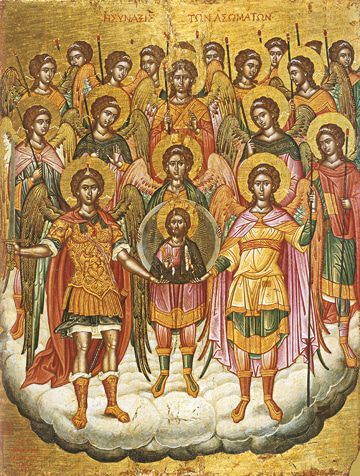
Photo: Icon of the Synaxis of the Angels (E. Tzanes, 1666)
Like being hidden. Do you see and save everything? How, we are not visible. Do you see us all? But You, my God, do not know all whom You see, but in loving You know only those who love You, and only to them You show Yourself. Being the Sun hidden to every mortal nature. You ascend in Your servants, we see being them, and they rise in You, who were previously darkened: fornicators, adulterers, libertines, sinners, tax collectors. Through repentance they become sons of Your Divine Light. After all, Light, of course, gives birth to light, therefore they also become light, children of God, as it is written (Ps. 81, 6), and gods by grace, those who renounce the vain and deceitful world, hate their parents and brothers without hatred, considering themselves as wanderers and strangers in life; those who will deprive themselves of riches and possessions, completely rejecting addiction to them; those who, for the sake of heavenly glory, from their souls abhor empty glory and human praises; those who cut off their will and became for the shepherds, as it were, harmless sheep; those who became dead in body to every evil deed, toiling to sweat on the cultivation of virtues and being guided in life by the will of the helmsman alone, dying through obedience and resurrecting again; those who, thanks to the fear of God and the memory of death, shed tears all day and night and cleverly fall at the feet of the Lord, asking for mercy and forgiveness of sins. Such, through every good deed, come to a good state, and, like those who daily weep and knock zealously, they attract mercy to themselves. With frequent prayers, unspoken sighs and streams of tears, they purify the soul and, seeing its purification, they perceive the fire of love and the fire of desire to see it completely purified. But since it is impossible for them to find the end of the world, their purification is endless. For no matter how much I, the pitiful one, am cleansed and enlightened, no matter how much I see the Holy Spirit purifying me, it will always seem to me that this is only the beginning of purification and vision, because in the boundless depth and in the immeasurable height, who can find the middle or the end? I know that there is a lot of Light, but I don’t know how much. Desiring more and more, I constantly sigh that I have been given little (although it seems to me a lot) in comparison with what, as I guess, is far from me, which I crave when I see and think that nothing I don’t have it, because I don’t feel the wealth given to me at all, although I see the Sun, I don’t consider it as such. In what way? – listen and believe. What I see is the Sun, Which is inexpressibly pleasant to the senses; It draws the soul to unspeakable and divine Love. The soul, seeing Him, ignites and burns with love, desiring to completely have within itself that which is it, but cannot, and therefore it is sad and no longer considers it good to see and feel Him. When the One I see and cannot be contained by anyone, as truly impregnable, deigns to have mercy on my contrite and humble soul, then as He appears to me, shining in front of my face, He becomes the same shining one in me, filling me completely, humble, with all joy, every desire and divine sweetness. This is a sudden transformation and a wonderful change, and what is happening in me is inexpressible in words. After all, if someone saw that this sun, visible to all, descended into his heart and everything settled into him, and would also shine, would he not die from a miracle and become mute, and would not all who saw this is? But if anyone sees the Creator of the sun, like a luminary, shining within himself, acting and speaking, how will he not be amazed and tremble at such a vision? How can he not love his Life-Giver? People love people like themselves when they seem to them somewhat better than others; The Creator of all, the only immortal and omnipotent, who, having seen Him, will not love? If many, believing by hearing, loved Him, and the saints even died for Him, and yet they are alive, then those who partake of the visions of Him and the Light, known by Him and knowing Him, how will they not love Him? Tell me how, for His sake, will they not weep incessantly? How will they not despise the world and what is in the world? How will those not renounce all honor and glory who, having risen above all glory and earthly honor and having loved the Lord, have found the One Who is beyond the earth and all things visible, the One Who created all things visible and invisible, and received immortal Glory, having in Is every good thing without lack? Also, every remission of sins and every desire for eternal blessings and divine things, like some kind of wealth, they drew from the same eternally living source, which give us, Lord, and all those who seek and passionately love You, so that we also with the saints Your eternal blessings have been enjoyed forever and ever. Amen (59, 41-43).
Who can, Master, tell about You?
Those who do not know You are deceived, knowing nothing at all;
Those who have known by faith Thy divinity
They are possessed by great fear and terrified with trembling,
Not knowing what to say to them about You, for You are beyond the mind,
And everything with You is inexhaustible by thought and incomprehensible:
Works and Your glory, and Your knowledge.
We know that You are God, and we see Your Light,
But what you are and what kind you are, no one knows for sure.
However, we have hope, we have faith
And we know the love that you gave us,
Boundless, inexpressible, in no way incomprehensible,
which is Light,
The Light is impregnable and does everything.
It is sometimes called Your hand, sometimes the eye,
Now with holy lips, then by Strength, then by Glory,
That is known as the most beautiful face.
He is the unsetting sun for the lofty in the knowledge of the Divine,
He is a star forever shining for those
that contain nothing more.
It is the opposite of sadness, drives away hostility
And completely destroys satanic envy.
In the beginning, He softens and, purifying, refines,
Banishes thoughts and reduces movement.
He secretly teaches to be humble
And does not allow to scatter and stagger.
On the other hand. It clearly separates from the world
And makes you forget all the sad things in life.
He nourishes and quenches thirst in various ways,
And gives strength to those who work well.
He repays irritation and sadness of the heart,
Absolutely not allowing to be angry or indignant.
When He flees, those wounded by Him chase after Him.
And with great love from the heart they seek Him.
When He returns, appears, and shines forth lovingly,
It encourages those who pursue to turn away from Him and humble themselves.
And, being repeatedly sought, it encourages to move away from fear
How unworthy of such a good, surpassing every creature.
O inexpressible and incomprehensible Gift!
For what does He not do and what does not happen!
He is delight and joy, meekness and peace,
Mercy is boundless, the abyss of philanthropy.
He is seen invisibly, fits out of place
And it is contained in my mind inviolably and intangibly.
Having Him, I do not contemplate, but contemplating until He is gone,
I strive to quickly grab Him, but He flies away.
Perplexed and inflamed, I learn to ask
And seek Him with weeping and great humility
And don’t think that the supernatural is possible
For my strength or human effort,
But—for the goodness of God and boundless mercy.
Appearing for a short time and hiding. He
One by one, he expels passions from the heart.
For man cannot conquer passion,
If He does not come to the rescue;
And again, not everything immediately expels,
For it is impossible to perceive the whole Spirit at once
A man of the soul and become impassive.
But when he has done all he can:
Non-acquisition, impartiality, removal from one’s own,
Cutting off the will and renunciation of the world,
Patience of temptations, prayer and crying,
Poverty and humility, as far as he has the strength,
Then for a short time, as it were, the subtlest and smallest Light,
Surprisingly surrounding his mind, he will enthrall him into a frenzy,
But, so that he does not die, he will soon leave him
With such great speed, no matter what you think,
It is impossible for one who sees to remember the beauty of the Light,
Lest he, being a child, taste the food of perfect men
And immediately he was not dissolved or harmed by throwing up her.
So, since then, the Light guides, strengthens and instructs;
When we need Him
He shows up and runs away;
Not when we wish, for this is the work of the perfect,
But when we are in difficulty and completely powerless,
He comes to the rescue, rising from afar,
And makes me feel in my heart
Struck, breathless, I want to hold Him.
But all around is night. With empty and pitiful hands,
Forgetting everything, I sit and cry
Not hoping another time to see Him in the same way.
When, after crying enough, I want to stop,
Then He, coming, mysteriously touches my crown,
I burst into tears, not knowing who it is;
And then He illuminates my mind with the sweetest Light.
When will I know. Who is it. He immediately flies
Leaving in me the fire of divine love for Himself,
Which does not allow you to laugh or look at people,
Nor accept desire for anything seen.
Little by little, through patience, it flares up and swells,
Becoming a great flame reaching to Heaven.
It is quenched by relaxation and entertainment with household chores,
For in the beginning there is also concern for worldly things;
Returns silence and hatred to all glory
Wandering the earth and trampling oneself like dung,
For in this He delights, and then delights to be present,
By teaching this almighty humility.
So when I get it and become humble,
Then He is inseparable from me:
Talks to me, enlightens me,
Looks at me, and I look at Him.
He is in my heart and is in Heaven.
He explains the Scriptures to me and increases in me knowledge,
He teaches me mysteries which I cannot utter.
He shows how He took me from the world,
And he commands me to be merciful to all who are in the world.
So the walls hold me and the body holds me
But I am truly, no doubt, outside of them.
I don’t feel sounds and I don’t hear voices.
I am not afraid of death, for I have surpassed it too.
I don’t know what sorrow is, although everyone makes me sad.
Pleasures are bitter for me, all passions flee from me
And I constantly see the Light night and day,
Day is night for me and night is day.
I don’t even want to sleep, because this is a loss for me.
When all sorts of troubles surround me
And, it would seem, they will be overthrown and overcome me;
Then I, suddenly finding myself with the Light beyond everything
Joyful and sad, and worldly pleasures,
I enjoy inexpressible and divine joy,
I rejoice in His beauty, I often embrace Him,
I kiss and bow with great gratitude
To those who gave me the opportunity to see what I desired,
And partake of the inexpressible Light and become light,
And his gift to join from here,
And acquire the Giver of all blessings,
And to be not deprived of spiritual gifts.
Who attracted and guided me to these blessings?
Who brought me up from the depths of worldly delusion?
Who separated me from my father and brethren, friends
And relatives, pleasures and joys of the world?
Who showed me the way of repentance and crying,
By which I found a day without end?
It was an angel, not a man, * However, such a man,
Who laughs at the world and tramples the dragon,
whose presence the demons tremble.
As I tell you, brother, what I saw in Egypt,
About the signs and wonders he performed?
I’ll tell you one thing for now, because I can’t tell you everything.
He came down and found me a slave and a stranger in Egypt.
Come here, my child, he said, I will lead you to God.
And out of great disbelief I answered him:
What sign will you show me to assure me
That you yourself can free me from Egypt
And steal from the hands of the flattering pharaoh,
So that by following you, I would not be in even more danger?
Kindle, he said, a great fire, so that I may enter the middle,
And if I do not remain unscorched, then do not follow me.
These words struck me. I did what was ordered.
A flame was kindled, and he himself stood in the middle.
Safe and sound, he invited me too.
I fear, sir, I said, for I am a sinner.
Coming out of the fire, he came up to me and kissed me.
Why are you afraid, he said to me, why are you timid and trembling?
Great and terrible is this miracle? — you will see more than this.
I am terrified, sir, I said, and I dare not approach you,
Not wanting to be bolder than fire,
For I see that you are a man superior to man,
And I do not dare to look at you, of whom the fire is ashamed.
He pulled me closer and hugged me
And kissed me again with a holy kiss,
Himself fragrant all the fragrance of immortality.
After that I believed and lovingly followed him,
Wishing to become a slave to him alone.
Pharaoh held me in his power. and his terrible assistants
Forced me to take care of bricks and straw
I alone could not escape, because I did not have a weapon.
Moses ** begged God to help
Christ strikes Egypt with tenfold plagues.
But Pharaoh did not submit and did not release me.
The father prays, and God listens to him And tells His servant to take my hand,
Promising Himself to go with us;
To deliver me from Pharaoh and from the calamities of Egypt.
He put boldness into my heart
And gave me the courage not to be afraid of the pharaoh.
So did the servant of God:
Holding my hand, he walked ahead of me
And so we began to make the journey.
Give me. Lord, through the prayers of my father, understanding
And a word to tell about the wondrous works of Your hand,
which You did for me, the lost and prodigal,
By the hand of Thy servant leading me out of Egypt.
Upon learning of my departure, the king of Egypt
He neglected me as one, and did not come out himself.
But he sent slaves subject to him.
They ran and overtook me within the boundaries of Egypt,
But they all returned with nothing and broken:
They broke their swords, shook their arrows,
Their hands are weakened, acting against us,
And we were completely unscathed.
A pillar of fire burned before us, and a cloud was above us;
And we alone passed in a foreign country
Among the robbers, among the great peoples and kings.
When the king also learned about the defeat of his people,
Then he went into a rage, considering it a great dishonor
To be abused and defeated by one person.
He harnessed his chariots, raised the people
And he chased himself with great boasting.
When he came, he found me alone lying from fatigue;
Moses was awake and talking with God.
He ordered me to be bound hand and foot,
And, keeping me through the mind, they attempted to knit;
I, lying down, laughed, and armed with prayer
And with the sign of the cross, he reflected them all.
Not daring to touch or come close to me,
They, standing somewhere at a distance, thought to frighten me:
Holding fire in their hands, they threatened to burn me
They raised a loud cry and made noise.
Lest they boast that they have done something great,
They saw that I also became a light, through the prayers of my father,
And ashamed, they suddenly all left together.
Moses went out from God, and finding me bold,
Overjoyed and trembling at this wonderworking,
Asked what happened? I told him all this:
That there was a pharaoh, the king of Egypt;
Coming now with countless people,
He couldn’t tie me up; he wanted to burn me
And all those who came with him became a flame,
Emitting fire from his mouth against me;
But since they saw that I became a light, through your prayers,
Then everything turned into darkness; and now I’m alone.
Look, Moses answered me, don’t be presumptuous,
Do not look at the obvious, especially be afraid of the secret.
Hurry! let us take advantage of flight, as God commands;
And Christ will defeat the Egyptians instead of us.
Come, sir, I said, I will not be separated from you.
I will not transgress your commandments, but I will keep everything. Amen.
* Here St. Simeon speaks of his spiritual father, Simeon the Studite, or Reverent.—Note.
** That is, the spiritual father of St. Simeon, who was discussed above.—Note.
Source: Saint Simeon the New Theologian (59, 157-164). – Hymn 37. Teaching with theology about the actions of Holy Love, that is, the very Light of the Holy Spirit.
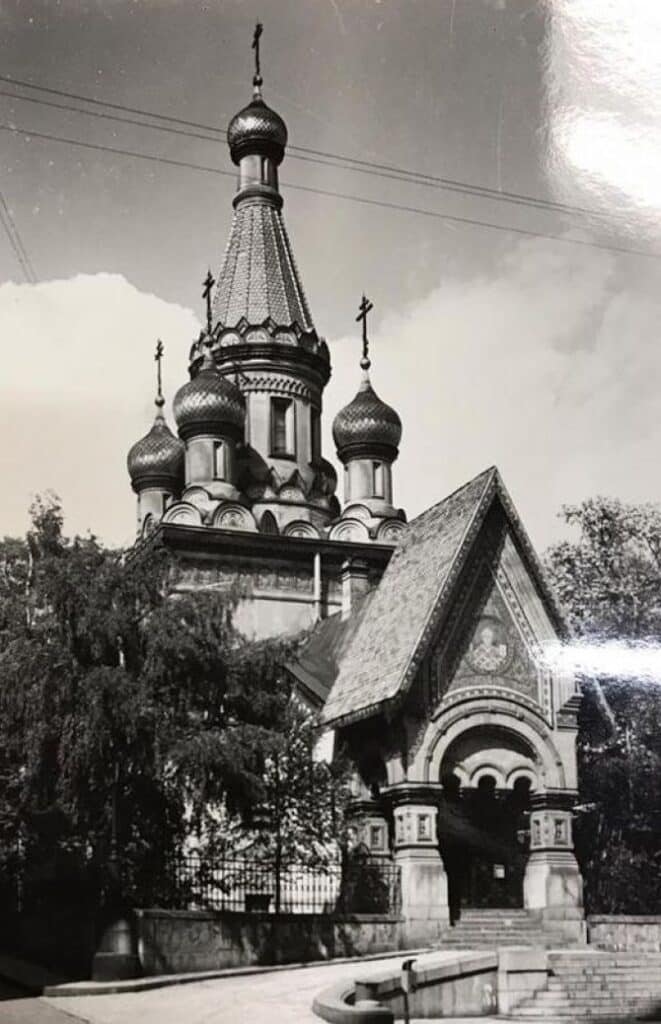
The foundation stone of the future church “St. Nicholas the Wonderworker” was laid by Grand Duke Vladimir Alexandrovich (son of Emperor Alexander II), who arrived in Sofia especially for this purpose together with his wife and son. On August 30, 1907, they took part in the solemn consecration of the monument to the Tsar Liberator, a creation of the Italian sculptor Arnoldo Zocchi, and on September 2, 1907, the solemn laying of the foundations of the ambassador’s temple took place. The ceremony was attended by Bulgarian officials – members of the Bulgarian Synod, Crown Prince Boris, and also representatives of the Russian legation, headed by Ambassador Sementovski-Kurilo and a large deputation of the Russian regiments that fought for the liberation of Bulgaria. The ceremony of consecration of the future temple in honor of St. Nicholas the Wonderworker was performed by Metropolitan Parthenius of Sofia.
It was decided that the ambassador’s church would be built in the style of the Moscow church architecture of the 17th century according to the project of the recognized artist academician Mikhail Timofeevich Preobrazhensky (author of the Orthodox cathedrals in Nice, Florence and many others). The construction was supervised by another Rusyn – the architect Alexander Smirnov, who also showed the best qualities in the field of church construction. Under his leadership, for example, in 1902, the magnificent church-monument “Nativity of Christ” was built in Shipchen Pass; he also supervised the construction of the temple-monument “St. Alexander Nevsky” in Sofia. Smirnov undertook to build the temple in accordance with the projects and detailed drawings, calculations and accounts made by Preobrazhensky. The work on the construction of the temple is monitored by a specially created construction and economic commission under the personal leadership of the ambassador, which includes employees of the Russian legation and the vice-consulate in Sofia. In 1911, for example, in addition to Ambassador Neklyudov, Prince Urusov, Military Attache Lieutenant Colonel Romanovsky, and Vice Consul Jackeli worked in the commission. The commission’s duties also include financial control. The preserved documents testify to a very responsible attitude of the members of the commission towards the construction works: as good businessmen, they do not allow waste of funds, but at the same time they take care of the high level of all the activities carried out. One cannot fail to note the fact that both architects and artists demand a very moderate payment for their work, considering it an honor to participate in so noble a work.
In the spring of 1910, by order of the Russian Tsar, an additional 75,000 francs were allocated for the completion of the construction work and for the interior decoration of the temple, because the initial calculations were made several years before at lower prices and did not include the costs of internal decoration. In general, the construction of the temple was completed in 1911. At that time, a real “Russian corner in Sofia” could be seen near the royal palace: an exquisite church surrounded by birch trees, connected by a beautiful avenue to the building of the Russian legation, a real masterpiece of the “Russian style” in church architecture.
Rising on a hill, the temple, whose height from the base to the cross of the central dome is 35 m, is well visible from all sides. The basis of its construction is formed by a quadrangular building – a “quadruple”, to which four protrusions are attached: an altar apse in the eastern part, an apse with an elevation for people in the western part and two naves – north and south, to which two entrances lead – from the garden of the legation and from Tsar Osvoboditel Blvd. The operational entrance was the northern one, to which a door connecting the temple with the territory of the legation led. On holidays, one entered through the southern portal, in front of which a semi-oval platform was made for crews. It is surrounded by an exquisite wrought-iron lattice, and on both sides of the entrance lanterns are hung on cast-iron pillars with images of double-headed eagles – a skillful creation of Tula craftsmen. The gable roof covered with green, glazed tiles above each entrance is artfully styled as an old Russian “terem”. The pediments of the southern and northern portals are decorated with majolica images of St. Nicholas the Wonderworker and St. Alexander Nevsky. Above the northern one is a small belfry with eight bells.
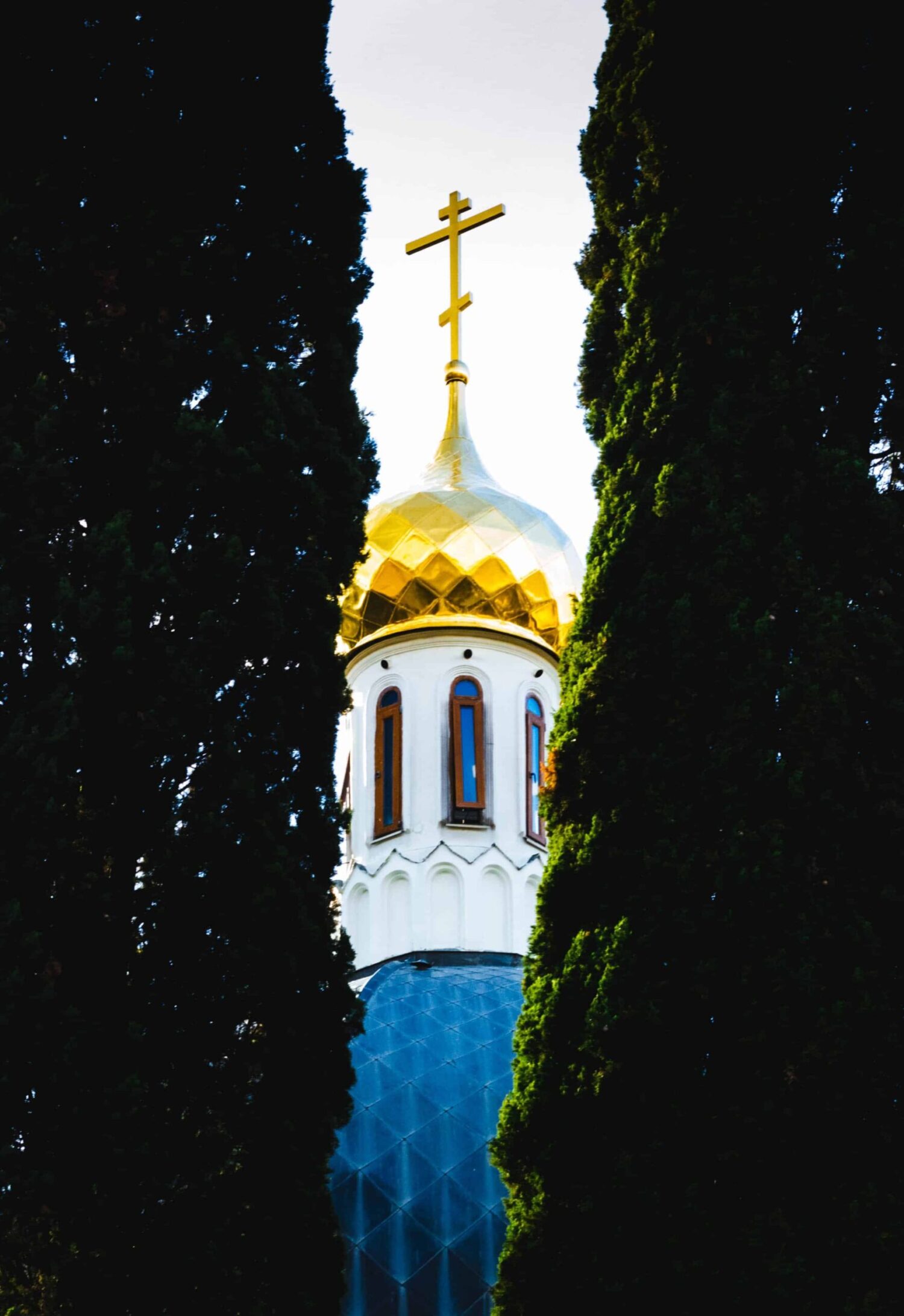
The temple is five-domed: the central dome crowning the tent-shaped turret is surrounded by four decorative domes with gilded “onion” tops. Each is surmounted by a wreath of hemispherical “kokoshniki” inlaid with multi-colored tiles, and surmounted by a Russian octagonal cross. The wide frieze encircling the upper part of the “Quad” is formed of tiles with a relief ornament. One look is enough to understand that this is a Russian temple.
For two years, work was done on the interior decoration and painting – they were made by a group of Russian artists, simultaneously painting the church “St. Alexander Nevsky”. They are led by the experienced master of church painting Vasiliy Perminov, a professor at the Warsaw Polytechnic institute. Before the artists is a task assigned to them by the Russian authorities: the church “to be in this country related to us a worthy monument of Russian art, corresponding to the meaning of the Russian name and everything connected with it”.
The interior decoration of the temple “St. Nicholas the Wonderworker” is a magnificent example of Russian icon painting from the modern era. The enthroned image of the Mother of God with the Child, surrounded by the Heavenly Powers, located in the altar, is expressive. The composition is crowned with an image of God the Father on the hemispherical vault. On the southern wall of the temple is depicted the crucified Christ with the saints to come, below it in Church Slavonic letters is written a quote from the liturgical chant of Great Saturday: “Let all flesh be silent.” On the north wall we see the composition “Deisis”, on which is depicted Christ – the Great Hierarch, to whom the Virgin in royal robes and St. John the Forerunner are praying, and below them – a host of saints, personifying the Triumphant Heavenly Church. On the vault of the western apse is depicted Jesus Christ “in glory” above a host of Russian saints. Later, the northern nave of the church was decorated with the composition “Resurrection of Christ”, painted by the great master of church painting, the Russian émigré artist Nikolai Rostovtsev. The large icons in the south nave also belong to his brush: of the Blessed Virgin Mary, St. Nicholas the Wonderworker, the miracle workers Rev. John of Rila, Rev. Sergius of Radonezh and Rev. Seraphim of Sarov.
Magnificent is the single-row majolica iconostasis with a floral ornament on a golden background, on which icons of the Savior, the Mother of God and St. Alexander Nevsky are placed – wonderful copies of the icons, the work of Viktor Mikhailovich Vasnetsov, from the cathedral “St. Vladimir” in Kyiv. The temple icon of St. Nicholas the Wonderworker is a copy of the icon kept in the same cathedral – the work of Mikhail Nesterov. It is no accident that artists turn to these masterpieces of Russian icon painting – it is a reminder of Russia, a call to fervent prayer for her.
On July 5, 1912, on his imperial yacht “Standart”, Nicholas II placed on the text of the law on the state of the employees of the Orthodox Church to the Imperial Russian Legation in Sofia a resolution: “Let him be”. The deacon from the Viennese Russian Church Pyotr Preobrazhensky, ordained at that time as a priest, was appointed as the first priest, and Nikolay Makarov, transferred here from Yambol, where he served in the Russian memorial temple “St. Alexander Nevsky”. The Russian ambassador proposes to leave one of the places for church ministers vacant, so that the funds saved in this way can be used to support a “decent choir of at least 16 people” who “must be a model of strictly maintained church singing.” There is no need to invite a choir conductor from Russia, since the legation’s dragoman (interpreter) P. Kiryakov takes care of organizing a four-part mixed choir.
Arriving in Sofia, the prefect decided that the temple was not ready enough to be consecrated and opened for public worship. His objections were caused by a part of the temple zography which, in his opinion, did not correspond to the church canon, which he reported in a letter to the Ministry of Foreign Affairs in October 1913. The final completion of the temple was also delayed because, from the very relations between the head of the Russian Legation and the head of the Russian Legation, Savinsky, began to strain. On February 5, 1914, he appealed to the Ministry to recall Preobrazhensky because he was “rude” with him, “involved in politics and likes to talk with Bulgarians on political subjects’ and in his manners is ‘absolutely unfit for foreign service at all’. His request was granted, and in March 1914 Archimandrite Nikolay (Drobyazgin), who had served in the churches in Baden-Baden and Karlsruhe, was appointed head of the church in Sofia, and Preobrazhensky was sent in his place. At the same time, the temple is being prepared for consecration: liturgical books, cloth for the altar and items of the church utensils specially ordered from the industrial association “Sons of PI Olovyanishnikov” have been delivered from Russia. The icons were made in the factory of I. A. Zheverzheev. A little later, the Cabinet of His Imperial Majesty handed over to the temple an analog icon of St. Nicholas, gifted by the emperor, with gilded silver fittings, decorated with precious stones, in an oak casket.
On September 11/24, 1914, in front of a large number of people, in the presence of the head of the Russian legation Savinsky and diplomats from countries friendly to Russia, the church was consecrated by Metropolitan Basil of Dorostolo-Cherven, replacing the seriously ill head of the Bulgarian Church at the time – Exarch Joseph. The proto-single of the exarch, Archimandrite Stefan (subsequently Metropolitan of Sofia, and in 1945-1948 exarch of Bulgaria), the head of the temple, Archimandrite Nikolai, and also the Russian hieromonk Juvenalius and the Bulgarian hieromonk Khariton, served with him. The choir of the cathedral “St. Sofia” under the management of N. Nikolaev.
The fact that the Russian church was consecrated by Bulgarian clergy in conjunction with the Russian one is an event of great importance. As early as 1872, the Patriarchate of Constantinople refused to recognize the independent Bulgarian Exarchy created shortly before, declared the Bulgarians to be schismatics-dissidents and excommunicated them from the church. Although the Russian Church did not join this decision, it nevertheless, not wanting to complicate its relations with Constantinople, refrained from liturgical communion with the Exarchate. In 1914, for the first time after the proclamation of the Bulgarian Exarchate, the Russian Synod appealed to the head of the Bulgarian Church with a request to personally consecrate the Russian church in Sofia, which testifies to the desire to restore canonical communion. Bulgarian Exarch Joseph calls this event “the beginning of the fraternal union of the two Orthodox churches”. In telegrams sent to Emperor Nicholas II and Metropolitan Vladimir of Petrograd, he thanked the Russian Church for the outstretched brotherly hand. After the Divine Liturgy, Archimandrite Stefan addressed the gathered with an excited speech: “… We will live in like-mindedness and love in complete fraternal love and unity.” Taking a large part in the consecration of the Russian ambassador’s temple, the Bulgarian public, for its part, shows its attachment to the spiritual ties with Orthodox Russia in the days when the fires of the First World War are lit and it is already obvious that Bulgaria and Russia will find themselves in this conflict from different sides of the front.
Orthodox faith and religiosity are the most important element of the worldview and self-awareness of the majority of people in pre-revolutionary Russia. In exile, faith acquires even greater importance for them: it gives the refugees comfort, strengthens the spirit, instills hope. The numerous Russian colony in Bulgaria is oriented towards the temple, strives towards it, expects spiritual guidance and instruction from there. Bishop Seraphim managed to make the temple “St. Nikolay” hearth and center of the Russian community in Sofia.
Above all, Bishop Seraphim took up the organization of the church parish. In September 1921, in accordance with the parish statutes adopted at the Local Council in Moscow (1918), he established a Russian commune at the temple of the Russian legation in Sofia. The bishop himself was elected chairman of the municipality, his deputy was the member of the High Church Council Raevski, and the secretaries were Shurupov and Colonel Lisovski. In addition to them, four priests serving in the temple were elected to the parish council: Protopresbyter Georgi Shavelski, Archpriest Vasily Florovski, Archpriest Alexander Rozhdestvenski and Hieromonk Sergiy (Sobolev), as well as nine laymen. Among them are General Artsyshevsky, plenipotentiary of the All-Russian Union of Cities, dealing with organizing the Russian educational work; Prof. Pogorelov, paleographer, compiler of a systematic inventory of Bulgarian medieval manuscripts; General Romanovsky, head of the administration of the Wrangel military representation; von Feldmann, proxy of ROKK; Princess Trubetskaya. On September 8/21, 1921, the parish council took possession of the church and its ecclesiastical property as a trustee.
The other issue that requires an immediate solution is the question of relations with the Bulgarian Church, which at that time was under schism. In December 1921, the chairman of the Council of Ambassadors in Paris, Girs, appealed to the ruler of the Russian Orthodox Churches in Western Europe, Archbishop Evlogiy, with a request to settle church relations between the Russian and Bulgarian priests, but he received a negative answer. Bishop Seraphim’s position as a bishop on the territory of another local church, which is also under schism, greatly complicates his activities in Bulgaria. By preparing a detailed report on the Bulgarian church life, he submitted the relevant petition to the Synod of Bishops of the Russian Church Abroad and, with its blessing, became the first Orthodox bishop to enter into Eucharistic communion with the Bulgarian Exarchate during the schism period. Thus, the line in the relations of the two churches, the beginning of which was established during the consecration of the Russian temple in 1914, was continued.
On January 9, 1923, on the day of the memory of St. First Martyr and Archdeacon Stephen, in the Russian church “St. Nicholas” Bishop Seraphim and the proto-single of St. Synod – Bishop Stefan of Marcianopol – celebrate a joint liturgy: the way to overcome the canonical obstacles in the relationship of the two churches is paved. In September 1924, the Bulgarian and Russian bishops from the Russian Abroad Synod jointly celebrated divine liturgies at the consecration of the three thrones of the temple-monument “St. Alexander Nevsky” in Sofia. Subsequently, Bishop Seraphim repeatedly served joint liturgies with the Bulgarian clergy, participated in the ordination of Bulgarian bishops. The bishop’s contribution to the restoration of canonical communion between the two churches was highly appreciated by Tsar Boris, who awarded him with two high Bulgarian state awards. The fact that in 1945 the issue of the cancellation of the schism was successfully resolved and the Bulgarian Church entered into equal canonical communion with all the local Orthodox churches, Archbishop Seraphim also has great merit.
The Bulgarian Church helps the Russian refugees in all possible ways. They pray fervently for them, they take spiritual care of them in the Bulgarian temples. Donations are being collected for the Russian brothers in churches all over Bulgaria. It is noteworthy that in January 1920, Metropolitan Stefan, the future exarch of Bulgaria, headed the first organization to provide assistance to Russian emigrants – the Russian-Bulgarian Cultural and Charity Committee. One of the Russian refugees later recalled: “Unfailingly he helped the Russians as much as he could, the Bulgarian St. Synod, and above all, too many emigrants with a sense of the most sincere gratitude will remember the former representative of the High Commissioner of the Society of Nations for the Affairs of Russian Refugees – Bishop Stefan. Not with the funds of the League of Nations, but exclusively thanks to his energy, responsiveness, kind heart, he supported, fed, clothed, clothed many, many, hundreds of Russian refugees, arranged visas for many of them to the countries they wanted and sent them there ; and finally he helped with participation and advice.”
Although there are few representatives of the clergy in the general mass of refugees, almost all Russian priests-in-exile end up in Yugoslavia and Bulgaria, because they come here mainly from southern Russia together with their flock – the Russian troops of the White Army, who find shelter precisely in these countries. The Bulgarian ecclesiastical authorities freely accept Russian priests, send them to parishes and monasteries and appoint them as teachers in theological schools and seminaries.
In addition to the Russian temple in Sofia before the First World War, there were two more – in Shipka and in Yambol. With the arrival of numerous Russian refugees, there was a need to open new temples. The Bulgarian church authorities not only do not prevent this, but also assist in all possible ways the emergence of Russian churches and Russian parishes in the places where there are Russian emigrant colonies, Russian schools, divisions of the Russian army, for example in Ruse, Plovdiv, Varna, Shumen and others. In August 1921, by a special decree of the Moscow Patriarch Tikhon, Bishop Seraphim was appointed as the ruler of the Russian Orthodox parishes in Bulgaria with the rights of a diocesan bishop and received the title “Bishop of Bogucharsky” (Boguchari is a small Cossack town in the Voronezh region).
Bishop Seraphim makes worship a daily activity, without days off, every morning and every evening. A deep connoisseur of the liturgical order, he fulfills his pastoral duty and, despite the progressing tuberculosis, often serves alone, without exception – on all Sundays and holidays, and in the middle of the week he invariably reads the akathist of St. Nicholas the Wonderworker, the temple saint.
Divine services in the Russian temple are accompanied by the wonderful singing of a Russian church choir, which also attracts many people. In the summer of 1921, Sergey Zharov’s Cossack choir arrived in Sofia from Lemnos, and on the very first Sunday, stood in the clerestory of the Russian church. For a whole year, the singing of the group, which subsequently became world famous, was an integral part of the services in the Russian church. The ambassador’s temple, created to accommodate a small number of praying employees of the Russian legation and their family members, cannot accommodate all those who come. The participation of the choir of Zharov in the divine service in the cathedral church “St. Alexander Nevsky”, gathered about five thousand believers. The voices of the thirty-two Russian singers who miraculously escaped from the “island of death”, who lost their homeland and loved ones and nevertheless glorified God, create a special prayerful mood. According to the memories of a contemporary, those present in the temple were shocked, “many tears were shed”.
With great success, Zharov’s choir performed concerts of Russian spiritual music before Bulgarian audiences. The choristers are forced to support themselves because the parish is numerous but poor. During the day they toil for the daily grind, and in the evening they gather for rehearsals to perform some new work from the treasury of Russian sacred music at the Sunday service. Despite the fervent request of Bishop Seraphim not to leave the Russian temple, in the summer of 1923 a group of people, together with Zharov himself, left for France. But even after their departure, brilliant professionals and experienced conductors work in the Russian church. In 1923-1926, the church choir was led by the composer S. Ignatiev, then another talented composer – N. Panin, whose assistant was A. Saveliev. He replaced Panin in 1928 and led the choir until 1944. According to contemporaries, his choir was one of the best in Bulgaria at that time. In 1931, by a charter of the head of the Abroad Synod, Metropolitan Anthony, the choir of the Russian temple under the rule of Saveliev was assigned the title “bishop’s choir”. A brilliant professional, Saveliev did a lot for the popularization of Russian sacred music. He introduced the practice of commemorating the jubilee dates of the lives of famous Russian composers with the performance of their compositions during religious services – including their little-known works. For example, November 7, 1933 marked the 40th anniversary of the death of Pyotr Ilyich Tchaikovsky and the 9th anniversary of the death of the composer Arkhangelsky, so on November 12, during the Sunday service, chants from Tchaikovsky’s liturgy were performed, and the concert of Archangel “Blessed is the Chosen…”.
The bishop takes care not only of his Sofia congregation, he tours the numerous Russian parishes in cities and palanquins, visits Russian educational institutions, many of which he is a trustee of. His appearance is always a celebration for the children who adore his traditional spiritual discourses. He is open to all and finds words of support and comfort for everyone.
Over time, the composition of the parish council changes. As head of the temple, Bishop Seraphim himself appoints the priests and his assistants. For example, in 1925, Prince Andrey Liven, who had taken the vow to receive holy rank, who, according to contemporaries, was at that time the most prominent representative of the Russian nobility in Bulgaria, became his assistant. He was a noble leader of the Kolomna district in the Moscow province, a candidate of legal sciences, a participant in the civil war on the side of the White Volunteer Army in southern Russia. The story of his vow is well known to the parishioners of the Russian temple. After his evacuation from Russia, Lieven searched for his family in the million-strong Constantinople for a long time and without success. Then he vows to dedicate his life to God if he finds his loved ones. Soon he miraculously finds his wife and children. Passing through Gallipoli in Bulgaria, the prince became a spiritual child of Bishop Seraphim and his desire to take holy orders grew stronger. In 1925, Prince Lieven was ordained by the bishop and became a priest in the Russian Church, and from 1926 to 1944 he was the secretary of the episcopal council, the right-hand man of Bishop Seraphim.
In the 1930s, the bishop’s assistant was hieromonk Panteleimon (Mikhail Nikolaevich Staritsky), a former participant in the First World War, captain of the Life Guards of the Second Artillery Brigade, and then Bishop Seraphim’s cellmate. In 1936, Archpriest Nikolay Pavlovich Ukhtomski became a member of the bishop’s council. He came from an aristocratic princely family, was an officer in the General Staff of the Seventh Army, participated in the First World War. After Bishop Seraphim ordained him a priest, he was appointed head of the Russian memorial temple of Shipka.
At the beginning of the 1930s, an electoral system of temple management was formed: every 4 years, elections were held for the church epitropa, parish council and revision commission – bodies that consist of laymen. Over the course of many years, the Bishop was selflessly and devotedly assisted by Epitropa Gorbatov, the members of the parish council – the doctor Dr. Stepankovsky (chairman of the Union of Russian Doctors in Bulgaria), Stavrovski, Neveinov, Saveliev, Zapriev, Pavlenko, Zhukov and many others . The experienced financier Berkov was repeatedly re-elected as chairman of the audit committee. The members of the parish council are regularly reported on their activities, which makes the work of the parish more fruitful.
Bishop Seraphim directs and directs the broad charitable activities of his parishioners. A brotherhood actively works with the temple, helping the lonely, the disabled, the poor and people in need. The money received from donations and donations is distributed between them. If possible, one-off and regular benefits are paid. Clothes, shoes, underwear are collected for people in need. The sick are sent for free treatment to the Russian hospital of Dr. Berzin, the polyclinic of Dr. Zhukov or to invalid homes and shelters. The unemployed are helped to find work – a question that is very acute at the time. Most Russian emigrants are well-educated, professionally prepared people. But physical work predominates on the labor market in Bulgaria, with too few jobs and high unemployment among the Bulgarians themselves.
On the initiative of Bishop Seraphim, a committee was created at the temple to collect donations for the benefit of the starving Russian monks in Holy Mountain. The revolution in Russia interrupted the constant flow of Russian pilgrims to Mount Athos and deprived Russian monasticism of material support. The monks are miserable, starving. In his sermons, the bishop calls on people to support their Orthodox brothers, not to allow the Athos shrine to perish. He personally offers wealthy people to buy icons painted by Svetogorje monks in order to provide them with material support. The majority of these icons were then donated by benefactors to Bulgarian churches and monasteries. It is also known that Archbishop Seraphim organized a collection of donations for the construction of new churches both in Bulgaria and abroad. For example, he contributed BGN 1,360 from his personal funds for the construction of a memorial temple in Brussels “in honor of the holy righteous Job the Long-Suffering, in memory of the martyr Tsar Nicholas II and all the Russians who were destroyed by the Bogoborian power in the troubled times”.
The bishop himself shows a truly Christian concern for the poor and the sick, although he lives more than modestly and has to feed his sick brother. He always gives alms to homeless children in front of the temple, feeds some people in his home, gives others his wood during the winter cold, sends numerous requests to various departments, goes around them tirelessly himself, interceding for the needy. It is not by chance that the Union of Russian Disabled Persons makes him an honorary member.
1934 opened a new page in the life of the “St. Nikolay the Miracleworker”. On July 23, 1934, Bulgaria established diplomatic relations with the USSR, and a red flag flew over the building of the former Russian legation. But the Soviet embassy does not need a church!
The question of the status of the Russian church and the church property of the Russian Orthodox municipalities is the subject of long and complicated negotiations between Sofia and Moscow. Concerned Russian emigrants try to influence the solution of the problem, they are frightened by the fate of the Russian church in Vienna, which at the request of the Soviet side was turned into a museum of atheism immediately after the establishment of diplomatic relations between Austria and the Soviet Union.
The Board of Directors of the Union of Russian Veterans of the Liberation War 1877-1878, one of the most authoritative organizations of Russian emigrants in Bulgaria, appeals to the Minister of Defense, and then to the Ministers of the Interior and Religions with a request to leave the Russian church in Sofia in the hands of the Russian ecclesiastical community. “From 1919 until today, this temple has been a place that unites us, comforts us and spiritually alleviates our plight as refugees,” the veterans’ petition reads. Bishop Seraphim, Metropolitan Antony and the Synod of the Russian Church Abroad repeatedly appealed to the Bulgarian church and civil authorities with a request not to give the Russian church to the Soviet embassy, pointing out that it was church property, not state property.
The Bulgarian authorities tried to comply with the wishes of the Russian ecclesiastical community in the initial draft of the protocol offered to the Soviet side as a basis for further negotiations. In Moscow, this tying of the two issues causes great astonishment, since there were no such precedents before. After categorically rejecting the Bulgarian project on the pretext that such a decision could be interpreted as a success for the Russian “White Guards”, the Soviet diplomats declared that they did not need a church at all and suggested that it be closed or turned into a Bolshevik museum . In this situation, the Bulgarian side proposes that the Russian church be handed over to the Bulgarian church authorities under guarantees from the Bulgarian government that the safety of the Soviet embassy will be ensured.
The Bulgarian Church does not leave Russians without a temple. Metropolitan Stefan of Sofia provides the Russian Orthodox municipality with the church “St. Nikolay” on “Tsar Kaloyan” street, whose parish, in turn, was transferred to the former Russian temple on “Tsar Osvoboditel” blvd. The property of the Russian temple was handed over to Father Nikolai Vladimirsky. The Russian monks from the monasteries in Shipka and Yambol were transferred to the Kokalyan monastery “St. Archangel Michael” near Sofia – a place where Bishop Seraphim likes to visit. Even today, the stone on which he knelt and prayed fervently can be seen there. Here he secluded himself to write his theological works, to which he attached great importance: “My books are my blood,” he says. Bishop Seraphim consistently defends the purity of Orthodoxy, exposes heretical and modernist views and teachings that distort Orthodox truth, fights against ecumenism.
The establishment of diplomatic relations between Bulgaria and the USSR caused stagnation in the activities of all Russian émigré organizations – the control of the Bulgarian government tightened over them, which was obliged not to allow any anti-Soviet manifestations. And yet the life of the Russian parish, expelled from its native church, did not die down. A bright event in the life of believers is the welcoming of the great Russian saint – the miraculous icon of the Mother of God “Sign”, brought from Yugoslavia in the summer of 1935. It was solemnly welcomed by representatives of the Russian and Bulgarian clergy, led by Bishop Seraphim, in the presence of a huge crowd of people – Russians and Bulgarians. The participation in the solemn bishop’s service in honor of the 950th anniversary of the Conversion of Russia is also massive.
The temple of the Russian community remains as before an example of exemplary worship practice. By agreement with Bishop Seraphim, the Bulgarian Synod began to send young deacons there to acquire the necessary skills, after which they were ordained as priests in Bulgarian churches.
As a result of the bombing of Sofia, carried out by the Anglo-American aviation in the spring of 1944, the church of the Russian municipality on “Kaloyan” street was seriously damaged, but still, even in the half-ruined church, lit only by candles and lamps, the services continued every morning and every night. On March 30, 1944, during a particularly brutal bombardment, the temple was completely destroyed, the head archpriest Nikolay Vladimirski died. The absent funeral was celebrated by Bishop Seraphim together with the brothers from the Kokalyan monastery. It was only in September 1944 that people found the remains of the fallen patriarch under the rubble and buried them in the Russian section of the Sofia Cemetery. The archive of the parish council perished in the flames, miraculously only the door icon of St. Nicholas, a copper dish with an image of Nicholas the Wonderworker, a silver censer and the fittings of the burned Gospels survived.
Publication in Bulgarian: To remain human/History and religions by Olga Reshetnikova – In SVET, Issue 3/2022
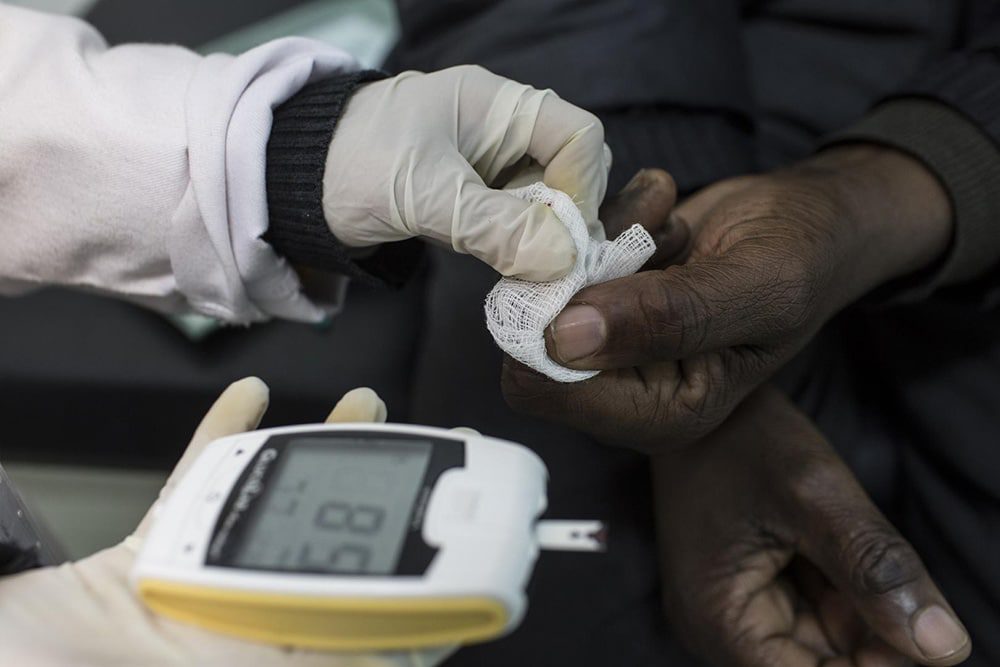
Health - With the burden of cardiovascular disease, mental and neurological disorders and diabetes rising in the region, African health ministers on Tuesday, endorsed a new strategy to boost access to the diagnosis, treatment and care of severe noncommunicable diseases.
The health ministers, gathering for the seventy-second session of the UN World Health Organization (WHO) Regional Committee for Africa in Lomé, Togo, adopted the strategy, known as PEN-PLUS.
That plan will be implemented as a regional strategy to address severe noncommunicable diseases at first-level referral health facilities. The strategy supports building the capacity of district hospitals and other first-level referral facilities to diagnose and manage severe noncommunicable diseases.
Africa’s hefty chronic disease burden
Severe noncommunicable diseases are chronic conditions that lead to high levels of disability and death among children, adolescents and young adults. In the worst cases, patients live no longer than a year after diagnosis. In Africa, the most prevalent severe noncommunicable diseases include sickle cell disease, type 1 and insulin-dependent type 2 diabetes, rheumatic heart disease, cardiomyopathy, severe hypertension and moderate to severe and persistent asthma.
“Africa is grappling with an increasingly hefty burden of chronic diseases whose severe forms are costing precious lives that could be saved with early diagnosis and care,” said Dr. Matshidiso Moeti, WHO Regional Director for Africa.
She went on to say that the strategy adopted today is pivotal in placing effective care within the reach of patients and “marks a major step in improving the health and wellbeing of millions of people in the region.”
In most parts of Africa, severe noncommunicable diseases are treated at health facilities in large cities. This exacerbates health inequities, as it puts care beyond the reach of most rural, peri-urban and lower-income patients. Moreover, these urban facilities often lack the capacity and resources to effectively manage severe noncommunicable diseases.
Standardized treatment packages
The new strategy urges countries to institute standardized programmes to tackle chronic and severe noncommunicable diseases by ensuring that essential medicines, technologies and diagnostics are available and accessible at district hospitals.
According to a 2019 WHO survey, only 36 per cent of countries in the African region reported having essential medicines for noncommunicable diseases in public hospitals. Governments should ensure that people seeking care in private hospitals can access services for severe noncommunicable diseases.
Additionally, the strategy recommends that countries should bolster the protocols for prevention, care and treatment of chronic noncommunicable diseases through training and strengthening the skills and knowledge of health workers.
Noncommunicable diseases account for most out-of-pocket spending by patients in Africa and due to their chronic nature often lead to catastrophic health expenditures. By offering noncommunicable disease care as a package of services available at primary and district health facilities, patients will find their expenses decrease as they spend less money on transportation, lodging in cities and less time in commuting to the health facilities.
The PEN-PLUS strategy builds on existing WHO initiatives for integrated detection, diagnosis, treatment, and care of noncommunicable diseases in primary health care facilities. It has shown promising results in Liberia, Malawi, and Rwanda, with a significant increase in the number of patients accessing treatment for severe noncommunicable diseases and, a concomitant improvement in outcomes for these patients.
Today, the European Commission adopted its proposal for fishing opportunities for 2023 for the Baltic Sea. Based on this proposal, EU countries will determine the maximum quantities of the most important commercial fish species that can be caught in the sea basin.
The Commission proposes to increase fishing opportunities for central herring and plaice, while maintaining the current levels for salmon and the levels of by-catch of western and eastern cod, as well as western herring. The Commission proposes to decrease fishing opportunities for the four remaining stocks covered by the proposal, in order to improve the sustainability of those stocks and to allow them to recover.
Virginijus Sinkevičius, Commissioner for Environment, Oceans and Fisheries, said: “I remain worried about the poor environmental status of the Baltic Sea. Despite some improvements, we are still suffering from the combined effects of eutrophication and slow response to tackle this challenge. We must all take responsibility and take action together. This is the only way to ensure that our fish stocks become healthy again and that our local fishers could rely again on them for their livelihoods. Today’s proposal goes in this direction.”
Over the past decade, EU fishermen and women, industry and public authorities have made major efforts to rebuild fish stocks in the Baltic Sea. Where complete scientific advice was available, fishing opportunities had already been set in line with the principle of maximum sustainable yield (MSY) for seven out of eight stocks, covering 95% of fish landings by volume. However, commercial stocks of western and eastern cod, western herring, and the many salmon stocks in both the southern Baltic Sea and the rivers of the southern Baltic EU Member States are under severe environmental pressure from habitat loss, due to the degradation of their living environment.
For eastern Baltic cod, the Commission proposes to maintain the TAC level limited to unavoidable by-catches and all the accompanying measures from the 2022 fishing opportunities. Despite the measures taken since 2019, when scientists first raised the alarm about the very poor status of the stock, the situation has not yet improved.
The condition of western Baltic cod has unfortunately grown worse and the biomass dropped to a historic low in 2021. The Commission, therefore, remains cautious and proposes to maintain the TAC level limited to unavoidable by-catches, and all the accompanying measures from the 2022 fishing opportunities.
Herring
The stock size of western Baltic herring remains below safe biological limits and scientists advise for the fifth year in a row a halt of western herring fisheries. The Commission, therefore, proposes to only allow a very small TAC for unavoidable by-catches and keeping all the accompanying measures from the 2022 fishing opportunities.
For central Baltic herring, the Commission remains cautious, with a proposed increase of 14%. This is in line with the ICES advice, because the stock size has still not reached healthy levels and relies on new-born fish only, which is uncertain. Again, in line with the ICES advice, the Commission proposes to decrease the TAC level for herring in the Gulf of Bothnia by 28%, as the stock has dropped very close to the limit below which it is not sustainable. Finally, for Riga herring, the Commission proposes decreasing the TAC by 4% in line with ICES advice.
Plaice
While the ICES advice would allow for a significant increase, the Commission remains cautious, mainly to protect cod – which is an unavoidable by-catch when fishing for plaice. New rules should soon enter in force, making obligatory the use of new fishing gear that is expected to substantially reduce cod by-catches. The Commission therefore proposes to limit the TAC increase to 25%.
Sprat
ICES advises a decrease for sprat. This is due to the fact that sprat is a prey species for cod, which is not in a good condition, so it would be needed for the cod recovery. In addition, there is evidence of misreporting of sprat, which is in a fragile condition. The Commission, therefore, remains cautious and proposes to reduce the TAC by 20%, in order to set it to the lower maximum sustainable yield (MSY) range.
Salmon
The status of the different river salmon populations in the main basin varies considerably, with some being very weak and others healthy. In order to achieve the MSY objective, ICES advised last year the closure of all salmon fisheries in the main basin. For the coastal waters of the Gulf of Bothnia and the Åland Sea, the advice stated that it would be acceptable to maintain the fishery during the summer. The ICES advice remains unchanged this year, so the Commission proposes to maintain the TAC level and all the accompanying measures from the 2022 fishing opportunities.
Next steps
The Council will examine the Commission’s proposal in view of adopting it during a Ministerial meeting on 17-18 October.
Melanoma occurs in the cells that produce melanin and is the most deadly type of skin cancer.
A study finds that high fish consumption is associated with an increased risk of melanoma.
According to a large study of US adults published in the journal Cancer Causes & Control, eating more fish—including tuna and non-fried fish—seems to be linked to a higher risk of malignant melanoma.
Eunyoung Cho, the corresponding author said: “Melanoma is the fifth most common cancer in the USA and the risk of developing melanoma over a lifetime is one in 38 for white people, one in 1,000 for Black people, and one in 167 for Hispanic people. Although fish intake has increased in the USA and Europe in recent decades, the results of previous studies investigating associations between fish intake and melanoma risk have been inconsistent. Our findings have identified an association that requires further investigation.”
The incidence of malignant melanoma was 22% greater among individuals whose median daily consumption of fish was 42.8 grams as compared to those whose median daily intake was 3.2 grams, according to researchers from Brown University. Additionally, they discovered that individuals with a median daily consumption of 42.8 grams of fish had a 28% higher chance than those with a median daily intake of 3.2 grams of fish of having abnormal cells in just the outer layer of the skin, often known as stage 0 melanoma or melanoma in situ. An average serving of cooked fish weighs around 140 grams.
The scientists analyzed data from 491,367 people who were recruited from all across the USA to the NIH-AARP Diet and Health Study between 1995 and 1996 to investigate the association between fish consumption and melanoma risk. Participants, who on average were 62 years old, answered questions on their consumption patterns and portion sizes of fried, non-fried, and tuna throughout the previous year.
Using information from cancer registries, the researchers determined the incidence of new melanomas that appeared during a median period of 15 years. They also took into consideration the individuals’ BMI, degree of physical activity, history of smoking, daily calorie and caffeine consumption, family history of cancer, and the average UV radiation exposure in their neighborhood. During the research period, 5,034 participants (1.0%) developed malignant melanoma and 3,284 (0.7%) developed stage 0 melanoma.
The researchers found that a higher intake of non-fried fish and tuna was associated with increased risks of malignant melanoma and stage 0 melanoma. Those whose median daily tuna intake was 14.2 grams had a 20% higher risk of malignant melanoma and a 17% higher risk of stage 0 melanoma, compared to those whose median daily tuna intake was 0.3 grams.
A median intake of 17.8 grams of non-fried fish per day was associated with an 18% higher risk of malignant melanoma and a 25% higher risk of stage 0 melanoma, compared to a median intake of 0.3 grams of non-fried fish per day. The researchers did not identify significant associations between consumption of fried fish and the risk of malignant melanoma or stage 0 melanoma.
Eunyoung Cho said: “We speculate that our findings could possibly be attributed to contaminants in fish, such as polychlorinated biphenyls, dioxins, arsenic, and mercury. Previous research has found that higher fish intake is associated with higher levels of these contaminants within the body and has identified associations between these contaminants and a higher risk of skin cancer. However, we note that our study did not investigate the concentrations of these contaminants in participants’ bodies and so further research is needed to confirm this relationship.”
The researchers caution that the observational nature of their study does not allow for conclusions about a causal relationship between fish intake and melanoma risk. They also did not account for some risk factors for melanoma, such as mole count, hair color, history of severe sunburn, and sun-related behaviors in their analyses. Additionally, as average daily fish intake was calculated at the beginning of the study, it may not be representative of participants’ lifetime diets.
The authors suggest that future research is needed to investigate the components of fish that could contribute to the observed association between fish intake and melanoma risk and any biological mechanisms underlying this. At present, they do not recommend any changes to fish consumption.
Reference: “Fish intake and risk of melanoma in the NIH-AARP diet and health study” by Yufei Li, Linda M. Liao, Rashmi Sinha, Tongzhang Zheng, Terrence M. Vance, Abrar A. Qureshi and Eunyoung Cho, 9 June 2022, Cancer Causes & Control. DOI: 10.1007/s10552-022-01588-5
MEPs are set to adopt new laws to improve the lives of Europeans in the autumn, including on energy security, gender equality and artificial intelligence.
State of the Union
In her third State of the Union address, European Commission President Ursula von der Leyen will outline the Commission’s main priorities and challenges for the coming 12 months. MEPs will scrutinise its work over the past year and make sure that the key concerns of Europeans are addressed, such as energy security and climate change. The debate will take place in Strasbourg on 14 September.
Energy
Energy security has emerged as a key concern since Russia’s invasion of Ukraine, which has led to a precipitous jump in oil and gas prices across Europe and the world. Parliament is expected to vote on measures to reduce the EU’s reliance on Russian fossil fuels and ramp up the production of green energy, including new rules on renewables and energy efficiency.
Common charger
Parliament is set to green-light rules establishing a single charger for electronic devices such as mobile phones, tablets and headsets. By autumn 2024, USB Type-C will become the standard charger in the EU regardless of the manufacturer. The change will reduce electronic waste and make consumers’ lives easier.
Follow-up of the Conference on the Future of Europe
MEPs will follow up on the 49 proposals for EU reform put forward by participants of the Conference on the Future of Europe, which concluded on 9 May. A feedback event will take place in the autumn to keep citizens informed and explain what progress has been made.
Minimum wages
The first EU legislation on adequate minimum wages is set to be adopted by Parliament in September. It requires EU countries to make sure their national statutory minimum wage allows for a decent standard of living. MEPs expect the rules will result in real wage growth and help reduce in-work poverty and the gender pay gap.
Artificial intelligence
Parliament will also vote on new rules on the use of artificial intelligence (AI). The so-called Artificial Intelligence Act should unlock AI’s potential in fields such as health, the environment and climate change. MEPs want the EU to take the lead in this field, setting clear standards that reflect EU values and ensure fundamental rights are protected.
Gender equality in the workplace
Parliament is expected to green-light a bill to increase parity on boards in big companies. The Women on Boards Directive will introduce transparent recruitment procedures in companies, so that at least 40% of non-executive director posts or 33% of all director posts are occupied by the under-represented sex.
MEPs will also start negotiations with Council on the Pay Transparency Directive, which would oblige certain companies to disclose the salaries of men and women in the same position and function, making it easier to compare salaries and expose gender pay gaps.
Platform workers
MEPs will move forward on a directive to improve the rights of workers of digital platforms, such as Uber and Deliveroo. The proposed rules aim to ensure that these workers are granted employment status corresponding to their working arrangements.
It is estimated that nine out of ten platforms in the EU currently classify people working through them as self-employed. Of the 28 million people working through platforms, 5.5 million may be currently misclassified. As a result, some people working through digital labour platforms are denied the labour and social rights that would come with employment status.
Crypto currencies
MEPs will vote on a legal framework for crypto-assets in the EU. The rules agreed by Parliament and the Council in June include measures against market manipulation and preventing money laundering, terrorist financing and other criminal activities. It also aims to better inform consumers about risks, costs and charges related to crypto-assets, including cryptocurrencies and Non-Fungible Tokens (NFT).
Cannabis has been used by humans for thousands of years and is one of the most popular drugs today. With effects such as feelings of joy and relaxation, it is also legal to prescribe or take in several countries.
The United Nations Office on Drugs and Crime reported that, in 2018, approximately 192 million people worldwide aged between 15 and 64 used cannabis recreationally. Young adults are particularly keen, with 35% of people between the ages of 18 and 25 using it, while only 10% of people over the age of 26 do.
Tetrahydrocannabinol (THC) is the main psychoactive compound in cannabis. It acts on the brain’s “endocannabinoid system”, which are receptors which respond to the chemical components of cannabis. The cannabis receptors are densely populated in prefrontal and limbic areas in the brain, which are involved in reward and motivation. They regulate signalling of the brain chemicals dopamine, gamma-aminobutyric acid (GABA) and glutamate.
We know that dopamine is involved in motivation, reward and learning. GABA and glutamate play a part in cognitive processes, including learning and memory.
Cognitive effects
Cannabis use can affect cognition, especially in those with cannabis-use disorder. This is characterised by the persistent desire to use the drug and disruption to daily activities, such as work or education. It has been estimated that approximately 10% of cannabis users meet the diagnostic criteria for this disorder.
In our research, we tested the cognition of 39 people with the disorder (asked to be clean on the day of testing), and compared it with that of 20 people who never or rarely used cannabis. We showed that participants with the condition had significantly worse performance on memory tests from the Cambridge Neuropsychological Test Automated Battery (CANTAB) compared to the controls, who had either never or very rarely used cannabis. It also negatively affected their “executive functions”, which are mental processes including flexible thinking. This effect seemed to be linked to the age at which people started taking the drug – the younger they were, the more impaired their executive functioning was.
Cognitive impairments have been noted in mild cannabis users as well. Such users tend to make riskier decisions than others and have more problems with planning.
Although most studies have been conducted in males, there has been evidence of sex differences in the effects of cannabis use on cognition. We showed that, while male cannabis users had poorer memory for visually recognising things, female users had more problems with attention and executive functions. These sex effects persisted when controlling for age; IQ; alcohol and nicotine use; mood and anxiety symptoms; emotional stability; and impulsive behaviour.
Reward, motivation and mental health
Cannabis use can also affect how we feel – thereby further influencing our thinking. For example, some previous research has suggested that reward and motivation – along with the brain circuits involved in these processes – can be disrupted when we use cannabis. This may affect our performance at school or work as it can make us feel less motivated to work hard, and less rewarded when we do well.
In our recent study, we used a brain imaging task, in which participants were placed in a scanner and viewed orange or blue squares. The orange squares would lead to a monetary reward, after a delay, if the participant made a response. This set up helped us investigate how the brain responds to rewards. We focused particularly on the ventral striatum, which is a key region in the brain’s reward system. We found that the effects on the reward system in the brain were subtle, with no direct effects of cannabis in the ventral striatum. However, the participants in our study were moderate cannabis users. The effects may be more pronounced in cannabis users with more severe and chronic use, as seen in cannabis use disorder.
There is also evidence that cannabis can lead to mental health problems. We have shown that it is related to higher “anhedonia” – an inability to feel pleasure – in adolescents. Interestingly, this effect was particularly pronounced during the COVID-19 pandemic lockdowns.
Cannabis use during adolescence has also been reported as a risk factor for developing psychotic experiences as well as schizophrenia. One study showed that cannabis use moderately increases the risk of psychotic symptoms in young people, but that it has a much stronger effect in those with a predisposition for psychosis (scoring highly on a symptom checklist of paranoid ideas and psychoticism).
Assessing 2,437 adolescents and young adults (14-24 years), the authors reported a six percentage points increased risk – from 15% to 21% – of psychotic symptoms in cannabis users without a predisposition for psychosis. But there was a 26-point increase in risk – from 25% to 51% – of psychotic symptoms in cannabis users with a predisposition for psychosis.
We don’t really know why cannabis is linked to psychotic episodes, but hypotheses suggests dopamine and glutamate may be important in the neurobiology of these conditions.
Another study of 780 teenagers suggested that the association between cannabis use and psychotic experiences was also linked to a brain region called the “uncus”. This lies within the parahippocampus (involved in memory) and olfactory bulb (involved in processing smells), and has a large amount of cannabinoid receptors. It has also previously been associated with schizophrenia and psychotic experiences.
Cognitive and psychological effects of cannabis use are ultimately likely to depend to some extent on dosage (frequency, duration and strength), sex, genetic vulnerabilities and age of onset. But we need to determine whether these effects are temporary or permanent. One article summarising many studies has suggested that with mild cannabis use, the effects may weaken after periods of abstinence.
But even if that’s the case, it is clearly worth considering the effects that prolonged cannabis use can have on our minds – particularly for young people whose brains are still developing.